In the autumn of 1823, the most respected musician in Vienna lay gravely ill in a hospital ward, and the city was repeating a story about him. Antonio Salieri — Imperial Kapellmeister for thirty-six years, teacher of Beethoven and Schubert — had, so the whisper went, confessed to the crime everybody had always half-suspected: he had poisoned Mozart.
The whisper reached Beethoven’s rooms, where visitors scribbled it into the conversation books the deaf composer used to communicate. It reached the newspapers. It eventually reached Pushkin, an opera stage, a London theatre, and finally a film that won eight Academy Awards. Two hundred years later, “Salieri” is shorthand for the envious mediocrity who destroys what he cannot equal — which would have startled the people who actually knew him.
So let’s do this properly: what the record shows, where the story actually comes from, and — because this is the part every retelling skips — what Salieri’s own music sounds like when you finally play it.
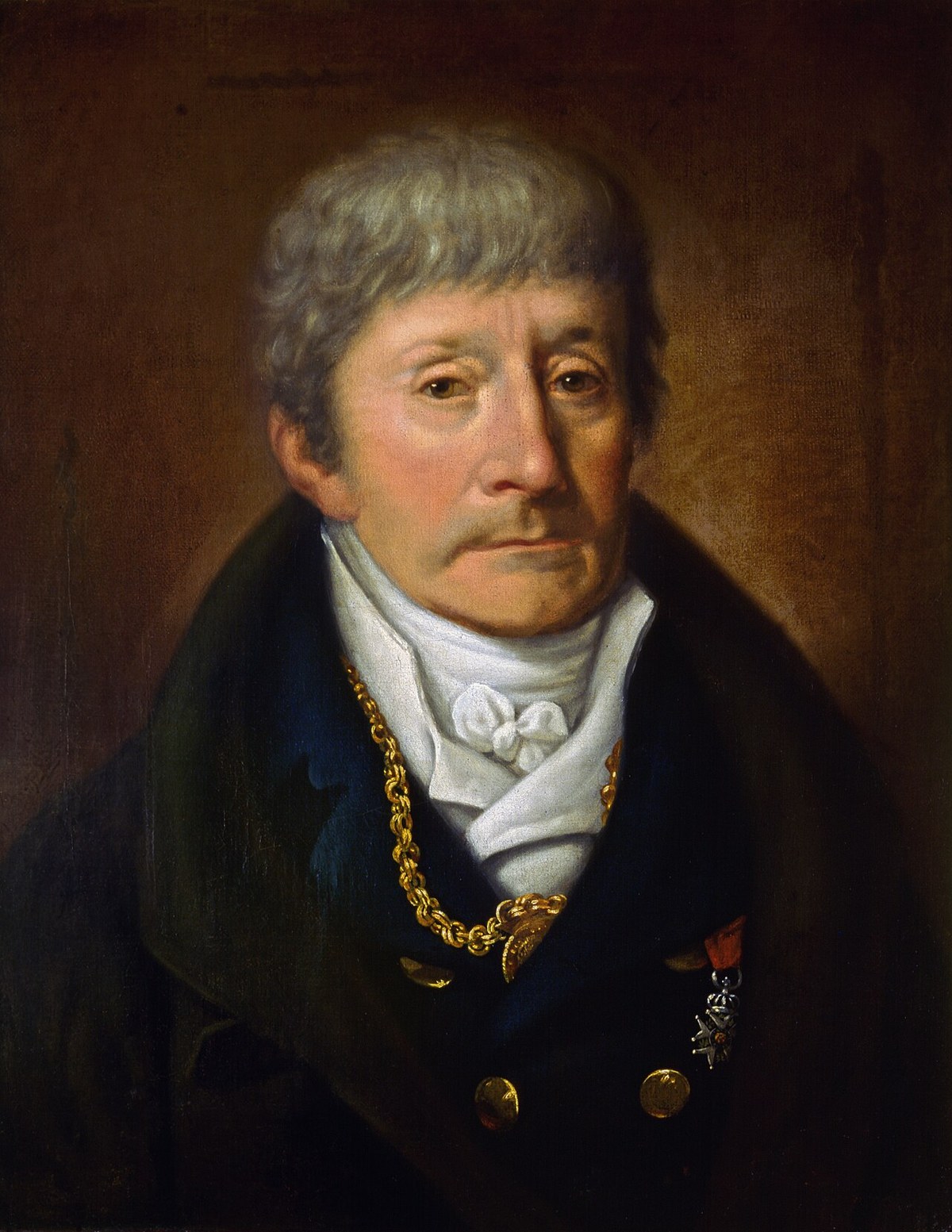
The deathbed confession that wasn’t
Here is what can actually be documented about 1823. Salieri, seventy-three and in rapidly failing health, was admitted to Vienna’s general hospital. Reports circulated that he had tried to take his own life; reports also circulated that, in his delirium, he had accused himself of Mozart’s murder. Neither report comes to us firsthand. What does come to us firsthand is the gossip itself — entries in Beethoven’s conversation books show his circle passing the rumor along, one visitor noting that Salieri was “in a very bad way” and raving about being responsible for Mozart’s death.
And we have something better: a denial, delivered in person. In the autumn of 1823 the pianist Ignaz Moscheles, a former pupil, visited Salieri in the hospital. Salieri, by Moscheles’ own account, told him: “I can assure you on my word of honour that there is no truth in that absurd rumour; you know — that I am supposed to have poisoned Mozart.” A dying man, in his last meeting with a student he loved, spending his strength on a denial. Moscheles published the account in his memoirs, and it is as close to Salieri’s own voice as the record gets.
Notice the shape of the thing: the “confession” is hearsay about a delirious man; the denial is a named witness quoting him directly. The myth is built on the weaker of the two documents.
What actually killed Mozart
Mozart died in his apartment in Vienna in the early hours of 5 December 1791, at thirty-five. The register of deaths recorded the cause as hitziges Frieselfieber — “severe miliary fever,” a description of symptoms rather than a diagnosis. He had been ill for about two weeks: swelling, fever, vomiting. No autopsy was performed, which is precisely why the vacuum has been filled by two centuries of retrospective diagnosis.
Modern medical literature has proposed rheumatic fever, a streptococcal infection ending in kidney failure, and a long list of other candidates. What that literature does not propose is poison. The symptoms fit acute illness of a kind that killed people routinely in eighteenth-century Vienna, and no physical evidence of any kind supports foul play. No serious Mozart scholar treats the poisoning story as anything but legend.
The one genuinely eerie detail — the anonymous messenger who commissioned a Requiem from a composer who then died writing it — has a mundane solution. The messenger came from Count Franz von Walsegg, an aristocrat with a documented habit of commissioning works and passing them off as his own. He wanted a Requiem for his late wife. Mozart’s unfinished Requiem in D minor became the most mythologized torso in music, but the commission itself was a vanity project, not an omen.
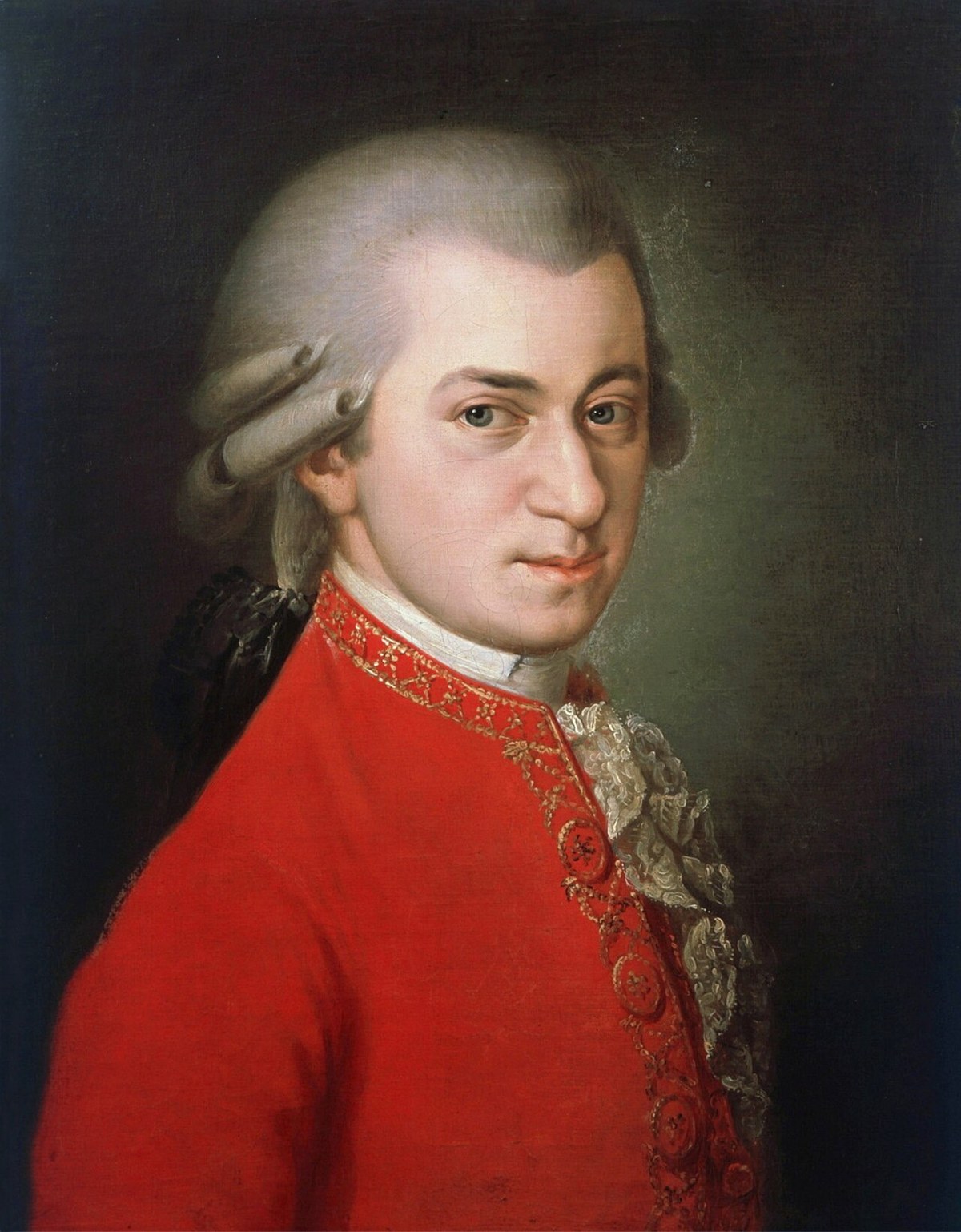
The rivalry was real. The hatred is fiction
The frustrating thing about this myth — and the reason it survives fact-checking — is that it is not built on nothing. Mozart and Salieri were genuine professional rivals in a city with one court and limited money.
The grievances were real and specific. In 1781, the post of music teacher to Princess Elisabeth of Württemberg went to Salieri rather than Mozart — Salieri held the inside track as the court’s favored vocal composer, and Mozart fumed about it in letters home. The Italian faction at court was a real force, Salieri was its most prominent member, and the Mozarts, father and son, wrote about it as a standing conspiracy against them. If you want the full flavor of that Vienna — the same crowded opera market that produced Don Giovanni — the cabal talk is part of the furniture.
But hold that next to what the record shows from 1791, the last year of Mozart’s life. In October, weeks before his death, Mozart wrote to his wife Constanze that he had personally driven Salieri and the soprano Caterina Cavalieri to a performance of The Magic Flute — and that Salieri watched the whole opera with loud enthusiasm, calling it an operone, “a grand opera,” applauding number after number. Mozart reports this with obvious delight. It is one of the last letters he ever wrote, and in it the supposed enemy is a guest in his carriage, cheering.
Two more facts sit even less comfortably with the murder plot. In 1785 the two men had composed music together — a short cantata, Per la ricuperata salute di Ofelia, celebrating the recovery of the soprano Nancy Storace, on a text by Lorenzo Da Ponte, with a third, still-unidentified contributor credited as “Cornetti”. The jointly signed score was lost for two centuries and resurfaced only in 2015, in the collection of the Czech Museum of Music. And after Mozart’s death, Constanze sent their younger son, Franz Xaver, to study composition — with Salieri. Whatever the widow believed about her husband’s death, she trusted the alleged murderer with the boy’s education.
Listen to Salieri and judge the “mediocrity” yourself
The murder is only half the myth. The other half — in some ways the more durable slander — is that Salieri was a talentless hack whose envy was the envy of the small. That is the frame Amadeus needs to work as drama, and it is flatly at odds with his standing: Kapellmeister of the Habsburg court from 1788 to 1824, director of Italian opera in the musical capital of Europe, and the teacher a remarkable share of the next generation chose — Beethoven, Schubert, Liszt, Czerny, Hummel, Meyerbeer.
Mediocrities do not accumulate that student list. But don’t take the résumé’s word for it — here is his Piano Concerto in C major, written in 1773:
Listen to the opening movement with one question in mind: would you have flagged this, blind, as the work of a fraud? What I hear — and this is my judgment as a listener, offered for you to argue with — is elegant, confident, galant-style writing: clean melodic manners, well-schooled orchestration, real charm in how the solo part converses with the orchestra. What I do not hear is the thing that makes middle-period Mozart frightening — the harmonic left turns, the sudden shadows, the sense that the music knows more than it says. Salieri at his best sounds like a very good composer of his generation. Mozart sounds like nobody. That gap is real. It is also a gap that separates Mozart from everyone, which is rather the point: measured against Mozart, the entire eighteenth century is Salieri.
If you want a second data point, his operatic overtures show the theatrical instincts that made him the court’s opera man — try the overture to Axur, re d’Ormus (▶ Listen on YouTube). And for the strangest listening experience of all, the jointly written Storace cantata itself has been recorded since its rediscovery (▶ Listen on YouTube) — a few minutes of music with Mozart’s and Salieri’s names on the same manuscript, which is more documentary refutation than most myths ever get.
How a rumor became a masterpiece factory
If the story is baseless, why does everyone on earth know it? Because it kept getting adapted by geniuses. The transmission chain is short and traceable:
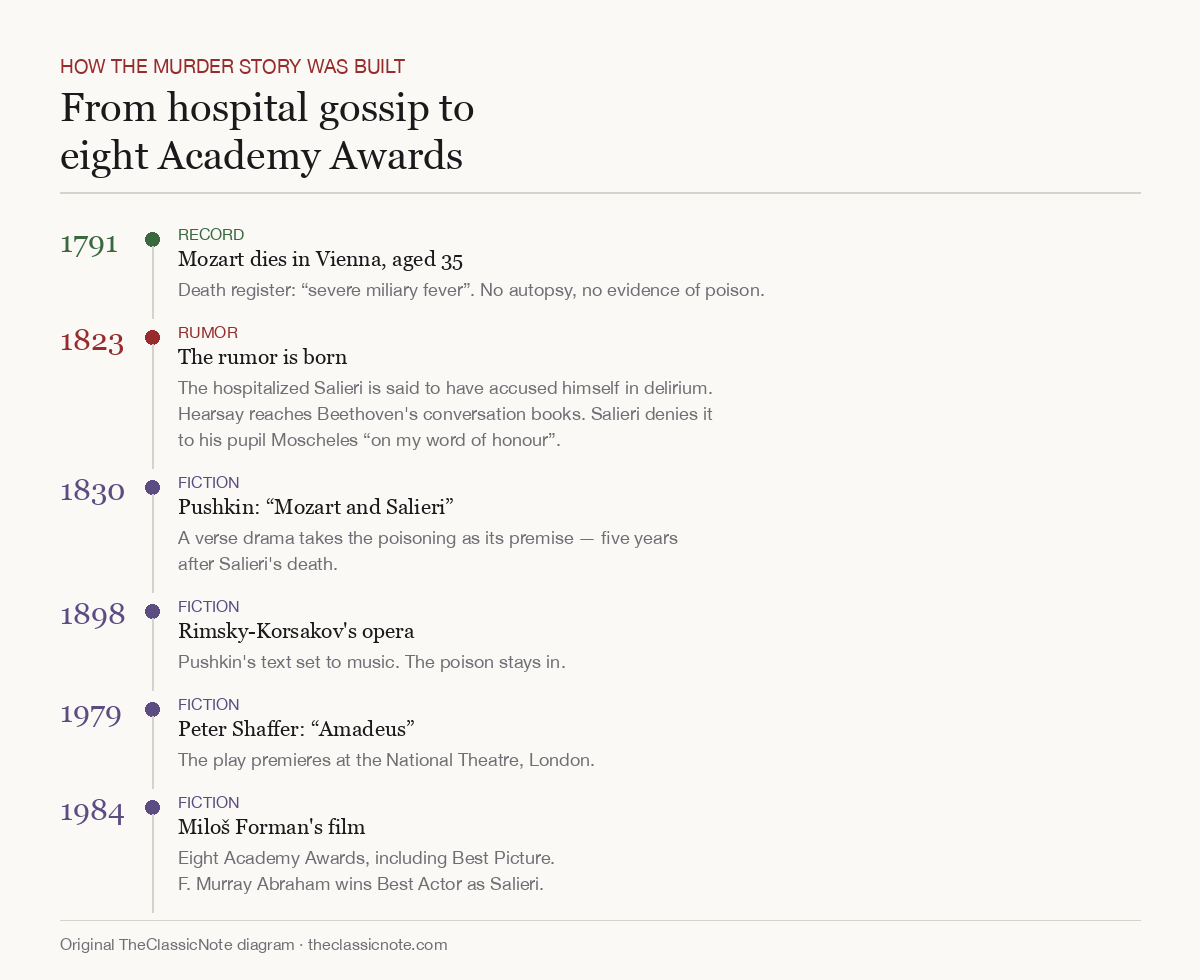
Pushkin got there first. In 1830, five years after Salieri’s death, he wrote Mozart and Salieri, a compact verse drama that takes the poisoning as its premise — not as history, but as a laboratory for the question that actually interested him: what does divine, effortless genius do to the devout craftsman standing next to it? Rimsky-Korsakov set Pushkin’s text as an opera in 1898, keeping the poison and the theology. Peter Shaffer’s play Amadeus, premiered at the National Theatre in London in 1979, rebuilt the same engine at full scale; Miloš Forman’s 1984 film version carried it to the widest audience drama has ever delivered a classical composer, winning eight Academy Awards including Best Picture — with F. Murray Abraham taking Best Actor for his Salieri.
Note what happened across that chain: each retelling was less interested than the last in whether the poisoning occurred. Pushkin used it as a thought experiment. Shaffer’s Salieri destroys Mozart through intrigue and confesses out of a warped need to be remembered for something — the play openly presents him as an unreliable narrator seeking an audience. The film is a masterpiece about envy, and it says so; it never claims to be a documentary. The trouble is that masterpieces outshout footnotes. Ask a hundred people how Mozart died and the film has reached more of them than any biography ever will. We’ve written before about how a good story attaches itself to a famous piece and becomes unremovable — this is the same disease, at pandemic scale.
The verdict
Did Salieri poison Mozart? No — nothing in the medical record, the documentary record, or the behavior of anyone involved supports it, and Salieri denied it on his word of honour to a witness who wrote it down. Did Salieri resent Mozart? At times, professionally, in a city where they were competing for the same commissions — and Mozart gave as good as he got. Was Salieri a mediocrity? Put the concerto on and decide, but the eighteenth century didn’t think so, and neither did Beethoven, Schubert, or the widow Mozart, who hired him to teach her son.
The real story is in some ways stranger than the myth: a respected, generous, successful musician spent his final years — he lived on until May 1825 — hearing Vienna whisper that he was a murderer, protested his innocence to the end, and then had the verdict overturned in the wrong direction by three of the best dramatists who ever touched the subject. Salieri’s actual tragedy isn’t that he killed Mozart. It’s that Pushkin, Shaffer, and Forman were so good that no correction will ever catch up.
Sources and notes
The 1823 rumor and its appearance in Beethoven’s conversation books, Moscheles’ hospital visit and Salieri’s denial, Salieri’s court appointments and student roster, and the October 1791 Magic Flute letter are drawn from the standard reference literature on Salieri and on the Mozart–Salieri relationship. Mozart’s death date, the register entry, the two-week illness and the range of modern retrospective diagnoses come from the reference literature on his death; the scholarly rejection of the poisoning story is uniform across it. The Walsegg commission is standard Requiem scholarship. The joint cantata’s 2015 rediscovery in the Czech Museum of Music was widely reported at the time. The assessments of Salieri’s music are my own judgment as a listener and are marked as such in the text; where the historical record is hearsay — including the reports of Salieri’s suicide attempt and self-accusation — I have said so rather than hardening gossip into fact.