Nearly every graduation playlist online is the same six pieces in the same order, and most ceremonies sound like it: one march on loop, a slideshow scored by whatever the AV volunteer had on their phone, and a recessional that fizzles out while half the room is still filing through the doors. Music is the cheapest part of the day to fix.
Below are 12 pieces that do an actual job at a ceremony, grouped by where they go — walking in, the long middle, walking out — with running times and one specific recording for every pick. There is also one very famous piece I would keep off the list, and I will make that case at the end.
The short answer
If you read no further, program these six and you have a ceremony that works.
| Moment | Piece | Why it works | Listen |
|---|---|---|---|
| Processional | Elgar — Pomp and Circumstance March No. 1 | The big trio tune sits at a steady walking pulse and loops without an obvious seam. Default for a reason. | ▶ |
| Processional (small ceremony) | Clarke — Prince of Denmark’s March | Two and a half bright minutes for a trumpet and an organ. Scales down to a chapel without sounding thin. | ▶ |
| Faculty entrance | Charpentier — Prelude to the Te Deum | Ninety seconds of drums and trumpets — the fastest way to tell a room that something official is starting. | ▶ |
| Slideshow / reflection | Vaughan Williams — The Lark Ascending | Rises and rises with no climax to trip over. You can fade it anywhere. | ▶ |
| Recessional | Widor — Toccata from Organ Symphony No. 5 | Six minutes of pure exit energy. Nothing else empties a hall this happily. | ▶ |
| Awards / diploma handout | Handel — The Arrival of the Queen of Sheba | Busy, cheerful, and repetitive by design — perfect under 200 names being read. | ▶ |
Walking in: the processional
A processional has one requirement above all others: it has to survive being longer or shorter than planned. Somebody will trip on a gown. A row will be seated out of order. Pick music that can loop or be cut without anyone noticing.
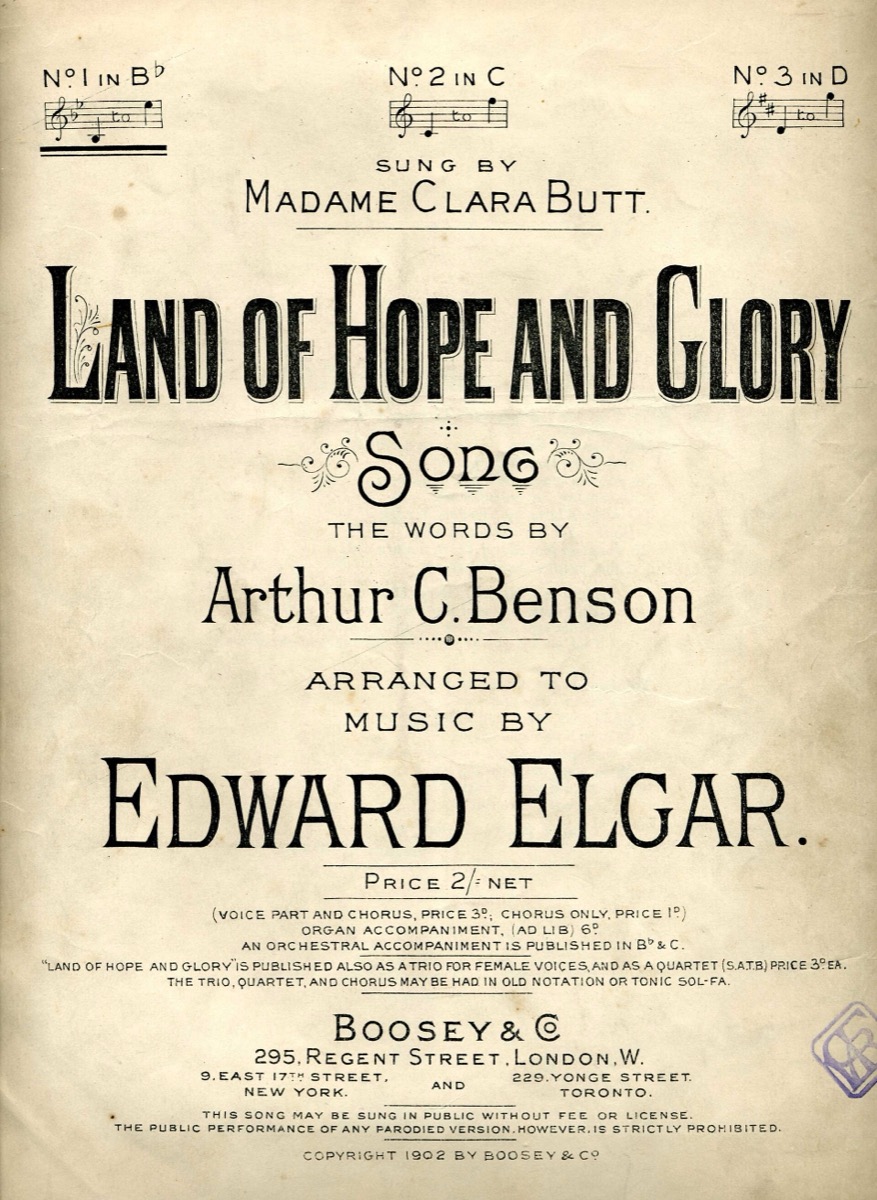
Edward Elgar — Pomp and Circumstance March No. 1 in D, Op. 39
The obvious one, and I am not going to pretend otherwise. Elgar wrote it in 1901 and it was premiered on 19 October 1901 in Liverpool by the Liverpool Orchestral Society under A. E. Rodewald, the march’s dedicatee. Henry Wood conducted it in London days later and remembered the audience refusing to let it go — by his account the only orchestral item in the history of the Proms to be given a double encore. The graduation connection came in 1905, when Yale gave Elgar an honorary doctorate and sent the ceremony out to this march. Princeton, Chicago and Columbia followed.
What you actually want is the trio — the broad tune everyone knows, which is not the opening. Cue it at the trio, let it repeat, and it walks a class of any size. Roughly six minutes for the full march. ▶ Listen on YouTube
Jeremiah Clarke — Prince of Denmark’s March
Written around 1700 by the first organist of the rebuilt St Paul’s Cathedral, and printed under the wrong name for about seventy years: an organ arrangement published in the 1870s by William Spark of Leeds credited it to Henry Purcell, and the attribution stuck until the 1940s. You will still see it billed as Purcell’s Trumpet Voluntary.
Use it when the room is small. A single trumpet over an organ fills a chapel or a school auditorium in a way a recording of a hundred-piece orchestra never does — it sounds like it belongs to the building. About two and a half minutes, so plan on two passes. ▶ Listen on YouTube
Marc-Antoine Charpentier — Prelude (Marche en rondeau) from the Te Deum, H. 146
Here is the one nobody puts on graduation lists, and it is the single most useful ninety seconds in this article. Charpentier probably wrote it in the 1690s; after the score resurfaced in 1953 the European Broadcasting Union adopted the prelude as its anthem in 1954, which is why it has opened Eurovision broadcasts ever since. Europeans hear it and instantly sit up straight.
That is exactly what you want for the faculty procession or the moment the platform party walks on. It is short, it is unmistakably ceremonial, and it does not compete with the main processional that follows. ▶ Listen on YouTube
George Frideric Handel — The Arrival of the Queen of Sheba
The sinfonia that opens Act III of Solomon, which was first performed on 17 March 1749 at Covent Garden. Two oboes chase each other over busy strings for about three minutes and it never gets heavy.
Its real use is not the processional at all — it is the diploma handout. Reading 200 names is fifteen minutes of dead air, and this piece is cheerful, rhythmically constant and repetitive by design, so it runs underneath speech without demanding attention or turning maudlin. ▶ Listen on YouTube
The long middle: speeches, awards, the slideshow
This is where ceremonies die. Somebody picks a piece with a huge climax, the climax lands in the middle of a name being read, and the whole thing sounds like an accident. What you need here is music that rises without arriving.
J. S. Bach — Jesu, Joy of Man’s Desiring, from Cantata BWV 147
The chorale from Bach’s 1723 cantata Herz und Mund und Tat und Leben, better known in the English title that came with the piano transcriptions. Listen for what the orchestra is doing rather than the choir: the tune everyone hums is the flowing triplet line underneath, and the chorale melody enters over the top of it in long, slow notes. That is why the piece feels like it is walking and floating at once.
Programme it for a moment that needs weight without volume — an honour society induction, a moment of silence, a name read for a student who is not there. About three and a half minutes. ▶ Listen on YouTube
Ralph Vaughan Williams — The Lark Ascending
Composed in 1914, revised in 1920 for Marie Hall, and first heard with orchestra on 14 June 1921 under Adrian Boult. The solo violin opens and closes unaccompanied, with no bar lines to speak of — it drifts.
For a slideshow this is close to perfect, and for a specific technical reason: the piece has no single peak, so you can fade it out at almost any point and it sounds intentional. Try that with a symphony finale and you will chop a cadence in half. Fifteen minutes if you let it run; nobody will notice you started three minutes in. ▶ Listen on YouTube
Gustav Holst — Jupiter, from The Planets
The one you want is the broad tune in the middle of the movement, not the scampering music around it. Holst adapted that melody in 1921 to carry Cecil Spring Rice’s poem I Vow to Thee, My Country, and the resulting hymn tune took the name Thaxted after the village where he lived — which is why it sounds like a hymn even when an orchestra plays it.
That hymn quality is the point. It is the most singable big tune in the orchestral repertoire, and if your ceremony has a choir, this is the number that will actually move a gymnasium. Cue just the central section, about two and a half minutes. For the full movement and the recordings worth owning, see our guide to the best recordings of Holst’s The Planets. ▶ Listen on YouTube
Edward Elgar — Nimrod, from the Enigma Variations
Four minutes, one long crescendo, and a British institution for anything solemn. I am putting it here with a warning attached: it is the single most effective piece in this article and also the most dangerous, because it is emotionally enormous and does not stop building until the last twenty seconds.
Use it for one thing only — an in memoriam moment, or a retiring teacher walking off. Do not put it under a slideshow of prom photos. It will steamroll whatever is on screen. ▶ Listen on YouTube
Walking out: the recessional
The recessional is the part everyone under-plans, and it is the part people remember, because it is the last thirty seconds of sound attached to the whole day. It should be faster and louder than the processional. Full stop.
Charles-Marie Widor — Toccata from Symphony for Organ No. 5, Op. 42 No. 1
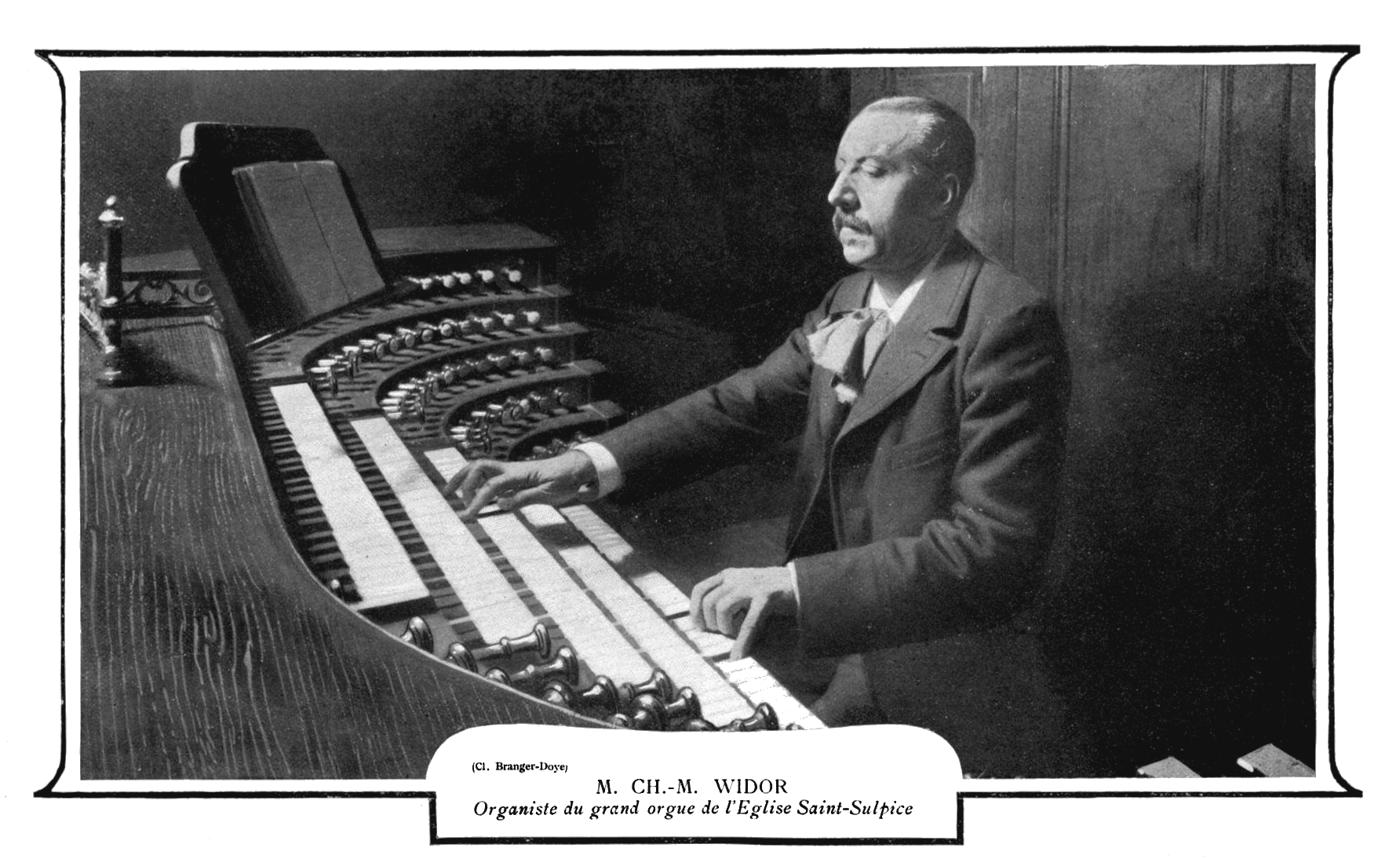
Composed in 1879 while Widor was organist at Saint-Sulpice in Paris and first performed publicly on 19 October 1879 at the Trocadéro. It runs about six minutes: rippling right hand over a pedal melody, building to a final page that sounds like the building is taking off. It replaced Mendelssohn’s Wedding March at Princess Margaret’s 1960 wedding, and Robert Quinney played it at Westminster Abbey in 2011 for William and Catherine — not as the recessional, which was Walton’s Crown Imperial (below), but as the organ music after the service, carrying the congregation out. Which is exactly the job it does best.
It is my pick for the best graduation recessional there is. It has no dignified restraint in it at all — it is joy at full volume, and it lasts exactly as long as it takes a hall to empty. If your venue has a real organ, use it; if you are on speakers, this still works better than a march. Organ fans should also read our piece on Saint-Saëns’ Organ Symphony. ▶ Listen on YouTube
William Walton — Crown Imperial
Walton wrote this coronation march for Edward VIII, who abdicated before he could be crowned; it was first performed at the coronation of George VI in Westminster Abbey in 1937 instead, and Walton revised it in 1963. Roughly eight minutes, built on the Elgar model — brisk outer sections, a broad tune in the middle, an ending with the brass wide open.
Choose it over a second Elgar march if you want the same grandeur without the audience mentally singing along to Land of Hope and Glory. It is the ceremonial sound with none of the baggage. ▶ Listen on YouTube
Aaron Copland — Fanfare for the Common Man
Written in 1942 and premiered on 12 March 1943 by the Cincinnati Symphony Orchestra under Eugene Goossens, who had commissioned eighteen fanfares from eighteen composers during the war. Copland’s is the only one that anybody still plays.
Three and a half minutes of timpani, bass drum and brass, with no strings at all, which is why it cuts through a noisy room where a full orchestra turns to mush. Its best use is not the recessional but the twenty seconds before the first speaker — as a curtain-raiser it makes a hall go quiet on its own. And the title does the work: a ceremony honouring ordinary people finishing something hard is the right home for it. ▶ Listen on YouTube
Jean Sibelius — Finlandia, Op. 26
The surprise pick, and the one I would fight for. Most of Finlandia is snarling brass and agitation — not graduation music. But late in the piece the storm drops away and a hymn arrives out of nowhere, quiet at first, then taken up by the whole orchestra. It is two minutes long and it is the sound of something being survived.
That is the emotional shape of a graduation more honestly than any march. A class that went through a hard year does not need triumph; it needs the tune that comes after the trouble. Cue the hymn section only, and put it after the last speech rather than under it. ▶ Listen on YouTube
The one to skip: Barber’s Adagio for Strings
It shows up on graduation lists constantly, and it is a great piece. It is also the wrong piece. Ask a roomful of people what Barber’s Adagio sounds like and most will say a funeral — decades of films and news broadcasts trained that association, and no amount of context on the day undoes it. Play it under a slideshow of graduating students and a lot of the room will read it as mourning.
If you want the same slow-building intensity without the funeral coding, use Nimrod, which does the same job and reads as tribute rather than grief. If you want to hear the Barber properly, in a context where it belongs, read our guide to the Adagio for Strings instead.
Practical notes: sequencing, timing, sound
Build the running order around uncertainty, not a stopwatch. Processionals always run long. Assign one piece that loops (Elgar, Handel) and hold a second in reserve rather than timing a single track to the second.
Two marches maximum. Three brass-heavy pieces in a row and the ear stops registering any of them. Alternate weight: Charpentier (short and bright) into Elgar (long and broad) into something quiet for the middle.
Fade at a phrase end, never mid-bar. If you must cut a piece, listen for where the melody lands and cut a beat after. This is the single difference between a ceremony that sounds produced and one that sounds improvised.
Watch the words, even when nobody is singing. The Elgar trio is Land of Hope and Glory in Britain, and the Holst tune is a patriotic hymn there too. Instrumentally they are neutral almost everywhere, but in the UK, know what half the room is silently singing. The same instinct applies in reverse to overtly liturgical repertoire at a public school ceremony.
If there is a live musician, give them the recessional. An organist or a single trumpeter playing badly still beats a perfect recording, because the room can see where the sound is coming from.
Test the speakers in the actual room, at the actual volume. Pieces with quiet openings — the Vaughan Williams especially — vanish into the noise of 800 people finding their seats. Start those tracks after the room settles.
If you are also assembling music for a wedding this year, our guide to classical music for a wedding ceremony covers the processional-to-recessional arc with a different set of constraints — much of the same repertoire, sequenced completely differently.