- Composer
- Barber
- Work
- Adagio for Strings, Op. 11
- Key
- B♭ minor
- Composed
- 1936
- Movements
- 1 movements
Adagio molto espressivo (B♭ minor) - Instrumentation
- String orchestra (violin I·II, viola, cello, double bass)
- Premiere
- November 5, 1938, NBC Symphony Orchestra, Arturo Toscanini
The Day the President Died, This Song Played on the Radio
On the afternoon of November 22, 1963, John F. Kennedy was shot in Dallas. The moment the news hit the airwaves, every radio station in America stopped what it was doing. Music shows, talk shows, commercials—everything went silent. And then, one piece of music began to play.
Samuel Barber’s Adagio for Strings.
No one gave an order. Station by station, almost simultaneously, they all chose the same piece. A seven-minute work for string orchestra became the soundtrack for a nation’s grief. Without a single word spoken. Think about that: program directors across the country, without consulting each other, all made the exact same decision. You can’t explain that without acknowledging the power of the music itself.
If this were just another sad song, that never would have happened. It was played at Kennedy’s funeral. Before that, it was used in the news reports of Franklin D. Roosevelt’s death. It was there for Albert Einstein’s memorial, Grace Kelly’s funeral, and the coverage of Princess Diana’s death. It was played at the 9/11 memorial services. There is no other piece in music history that has so consistently served as a nation’s unofficial funeral march. It’s America’s de facto anthem of mourning.
The funny thing? The person who wrote it was a 26-year-old on vacation in Italy.
What Happened at 26, by an Italian Lakeside
In the summer of 1936, Samuel Barber was in Italy, near Rome. He was there on a fellowship from the American Academy in Rome (the Rome Prize), living and working in Europe. With him was Gian Carlo Menotti, his classmate from the Curtis Institute and his lifelong partner. They met at Curtis in 1928, when Barber was 18, and would spend the next 40 years together.
Barber’s background was anything but ordinary. His aunt was Louise Homer, a legendary contralto at the Metropolitan Opera. His uncle, Sidney Homer, was a composer. Barber started composing at age six and declared his intention to write an opera at seven. At nine, he wrote a letter to his mother: “I think I am meant to be a composer. Please don’t make me do athletics.” A nine-year-old with that level of self-awareness. And his premonition was dead on.
He entered the Curtis Institute of Music at 14, triple-majoring in piano, composition, and voice. His vocal skills were so proficient that recordings of him singing baritone still exist. The man could do everything in classical music: play piano, sing, and compose. “Versatile” doesn’t even begin to cover it.
Barber went to Europe on pure merit. The Rome Prize was one of the highest honors for a young American artist at the time. The fellowship allowed him to focus entirely on composition for two years, free from financial worries and distractions. This young man from West Chester, Pennsylvania, was absorbing the European air and finding his own musical voice.
What’s interesting is that Barber showed zero interest in the avant-garde music fashionable in Europe at the time. In 1936, the 12-tone technique of Schoenberg, Berg, and Webern was shaking up the European music scene. Many American composers went to Europe to learn this “new music.” Barber did the opposite. He saw himself as an heir to Brahms and Rachmaninoff, insisting on the beauty of melody and harmony. This would later draw criticism from academics, but the universal appeal of the Adagio comes directly from this stubbornness.
In Italy, Barber was working on his String Quartet in B minor, Op. 11. It was a three-movement chamber piece, but the second movement was a problem. It was too good. So good it made the other two movements sound awkward by comparison. The first and third movements are technically well-written, but they pale next to the second. Barber himself must have felt it.
The Real Reason Toscanini Didn’t Reply
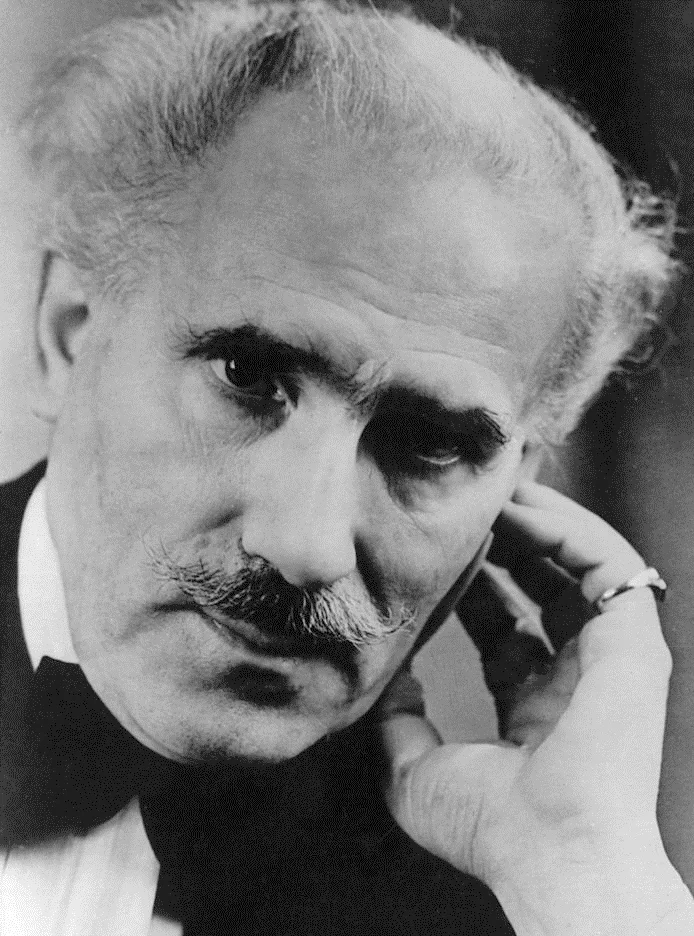
In 1938, Barber made a bold move. He sent a score to Arturo Toscanini. At the time, Toscanini was the most famous and most feared conductor in the world. He was known for breaking batons during rehearsals and tearing up scores if he disliked a performance. And a 26-year-old American wrote to this man, essentially saying, “Would you mind taking a look at my piece?”
Toscanini received the score and sent no reply. Weeks went by without a word. Barber assumed he’d been rejected. He must have been disappointed. But the truth, revealed later, was completely different.
Toscanini had memorized the entire score after a single reading. He didn’t reply because he was already conducting it in his head. This was typical for him. Due to extreme nearsightedness, he conducted everything from memory, which inadvertently became part of his legend. The moment he saw Barber’s Adagio, Toscanini knew it was something special, later calling it “dolce e bella” (sweet and beautiful).
The premiere took place on November 5, 1938. But it wasn’t in a concert hall. It was a live NBC radio broadcast. Toscanini was the music director of the NBC Symphony Orchestra and gave regular broadcast performances. This meant millions of people heard the piece for the first time, all at once. The audience wasn’t 2,000 people in a hall; it was the entire nation listening by their radios.
A 71-year-old maestro premiering a 26-year-old composer’s work on national radio. You’d be hard-pressed to find a more dramatic debut in American classical music history. Toscanini’s choice sent a signal to the music world. The fact that the world’s top conductor programmed a piece by an unknown American youth was news in itself. After that broadcast, Barber became one of the most talked-about young composers in America overnight.
The first movement of Barber’s Symphony No. 1 was also premiered on the same broadcast, but the only thing anyone remembered was the Adagio.
What Happens in Seven Minutes
This piece is a single movement. There are no sections, almost no change in tempo, and the time signature (a slow 4/2) remains constant from start to finish. A piece like this could easily become monotonous. Yet almost no one finds it boring. What happens inside the music is clear and can be broken down into three parts.
The Slow Ascent from the First Note
A single violin section quietly begins the melody. A slow line in B-flat minor. The first few bars might not seem particularly special; they could almost feel like a simple scale.
But then the melody passes from one voice to another. The violas pick up the line started by the violins, and while they play, the violins add a new layer in a higher register. Then another violin section enters on top of that. The technique Barber uses here is a variation of a canon, where voices imitate each other.
This is effective because listeners feel a growing sense of constriction without being able to pinpoint why. Even someone who knows nothing about music theory feels a physical reaction: a tightness in the chest, a sense that something is about to break. This is exactly what Barber intended. As each section passes the melodic baton, the overall pitch of the music slowly, relentlessly climbs.
Another thing to notice is the harmony. Barber works within the familiar framework of tonal music, but he constantly delays resolution. Just when you expect the harmony to “land,” it sidesteps. This repeated deferral prevents any release of tension, causing it to build continuously. He sustains this single mechanism for the entire seven minutes.
The all-string instrumentation is another key feature. No woodwinds, no brass, no percussion, no piano. Just the sound of bows on strings for seven minutes. This is a significant constraint for a composer. Usually, an orchestra can use brass or woodwinds for tonal variety, but Barber gave up those tools. This limitation becomes a strength. Because the timbre is uniform, changes in register and dynamics become far more dramatic. The climax isn’t a trumpet blast; it’s a collective scream from the strings.
Climax, and Silence
About five minutes into the piece, all the strings reach their highest register at ff (fortissimo, very loud). It’s the moment where every player is pushing their sound to its absolute limit. The first violin’s highest note tears through the air.
And then, suddenly, nothing.
A General Pause. Every instrument stops at the same time. This isn’t just a rest in one part; it’s a simultaneous silence across the entire score. Complete stillness.
People who have experienced this moment in a concert hall all report the same thing: you hold your breath. Physically. A space holding two thousand people is plunged into a soundless vacuum. It’s the kind of silence where a single cough would make the entire hall turn. Hearing it on a recording doesn’t compare. The moment you realize that the silence is part of the music, your understanding of the piece changes completely.
Letting Go
After the grand pause, the music returns to the opening theme. But the same melody doesn’t evoke the same emotion. Where the beginning had an upward, striving energy, the end is about letting go. It’s too serene to be called resignation, yet still too tinged with pain to be called peace. It occupies a space somewhere in between.
The final chord is almost inaudibly soft: ppp (pianississimo). The string players are barely resting their bows on the strings. The sound doesn’t just stop; it dissolves into the air.
Listeners often observe that applause doesn’t start immediately after the final note. At most classical concerts, applause erupts within a second or two. Not with this piece. A silence of three, four, sometimes five seconds or more follows the final fade. It’s not because the conductor is holding the pose. It’s because the audience is still inside the music. That silence is part of the performance.
How a Conversation for Four Became a Chorus for Dozens
This piece was originally one movement of a string quartet. Two violins, one viola, one cello. Chamber music for four players. The String Quartet, Op. 11 was, in fact, premiered in Rome in December 1936.
It was Toscanini who requested that Barber arrange it for a full string orchestra. Barber agreed, and what was once played by four people was now performed by dozens.
This decision changed the destiny of the music. When you hear the string quartet version, it feels like a conversation among four people. It’s intimate and personal, like four friends talking quietly in a room. But the moment you hear the string orchestra version, it becomes something else entirely. It transforms from one person’s sorrow into a collective grief. It’s the feeling of an entire community quietly weeping. This is precisely why the piece could become “America’s funeral march.” It became a vessel large enough to hold everyone’s emotions, not just an individual’s.
Barber didn’t actually change much in the arrangement. He expanded the four parts to five (Violin I, Violin II, Viola, Cello, and Contrabass) and had multiple players perform each part. The notes themselves are almost identical. But this “minor” difference creates a monumental sonic shift. The friction of four voices becomes the resonance of dozens. The difference is most stark at the climax. In the quartet, it feels like four people straining with all their might. In the orchestra, it feels like a single, massive wave crashing down.
Later, a choral version also appeared. Barber himself arranged it in 1967 under the title Agnus Dei, setting the Latin liturgical text “Lamb of God” to the music. This version is performed only by human voices. The original quartet, the string orchestra arrangement, and the choral version—the same melody dressed in three different outfits. Listening to all three is a powerful demonstration of how arrangement can completely alter the character of a piece.
The 7 Minutes That Swallowed a Composer
Barber’s relationship with this piece was likely a mix of gratitude and torment.
The success was immediate. After the premiere, the Adagio became one of the most frequently performed contemporary classical works in America. With this one piece, Barber secured a firm place in the American compositional landscape. He went on to win the Pulitzer Prize for Music twice (for his opera Vanessa and his Piano Concerto) and consistently produced high-quality works like his Violin Concerto and Piano Sonata.
The problem was, no matter what else he wrote, the “composer of the Adagio” label stuck. Barber once expressed his frustration in an interview: “They always play that piece. I wish they’d play some of my other pieces.” He also disliked its association purely with funerals, arguing it wasn’t intended as a dirge. For a composer whose entire career was defined by a seven-minute piece written at 26, the feeling must have been complicated.
Barber’s musical style itself occupied a unique space in the American music scene. In the 1930s and ’40s, American composers were gravitating toward Schoenberg’s 12-tone technique or Stravinsky’s neoclassicism. Barber refused to join that trend. He remained a staunchly tonal composer, writing within the harmonic system familiar to our ears. While some in academia dismissed this as “old-fashioned,” audiences loved his music. The Adagio is proof. It demonstrated that music doesn’t have to be theoretically “advanced” to move people and endure.
In 1966, the premiere of his opera Antony and Cleopatra, commissioned for the opening of the new Metropolitan Opera House, was met with harsh criticism, a blow from which Barber never fully recovered. He struggled with depression and alcoholism, and his output slowed. He died of cancer in 1981 at the age of 70.
Ironically, after his death, the stature of the Adagio only grew. The composer was gone, but the piece continues to attach itself to new historical moments with each passing decade, renewing its vitality.
Film, War, Memorials, and the Club
The usage history of this piece is astonishing. It’s hard to think of another work that has been consumed in so many different contexts.
Oliver Stone’s film Platoon (1986). The Adagio plays during the film’s definitive scene about the Vietnam War. Even if you haven’t seen the movie, you’ve probably seen the image: a soldier in the jungle, arms outstretched, falling in slow motion. After this film, the Adagio became cemented as a symbol of the tragedy of war.
It was also used in David Lynch’s The Elephant Man (1980), and its emotional weight was borrowed for films like Terrence Malick’s The Thin Red Line (1998). The BBC played it during its coverage of Princess Diana’s death, and after 9/11, it became a staple at memorial concerts.
But the piece is alive and well in a completely opposite world. In 1999, British producer William Orbit remixed it as a trance track. The music of memorials was now booming in nightclubs, and it reached No. 4 on the UK singles chart. DJ Tiësto also famously incorporated a remix into his live sets, and in the electronic scene, it’s considered a textbook example of a classical remix.
A piece that plays at funerals and in clubs. A piece that appears in war films and is used in YouTube memes. This means the melody isn’t tied to one specific emotion. It contains something universal that fits sorrow, tragedy, and even euphoria.
The piece even appears in video games. In the space strategy game Homeworld (1999), the Adagio plays at a pivotal moment. Gamers often cite this as one of the most impactful uses of music in gaming history, as it underscores the discovery of a destroyed homeworld. For many teenage gamers, this was their first encounter with Samuel Barber.
More recently, it was performed at a memorial for the victims of the 2018 Parkland, Florida school shooting. In early 2020, as the COVID-19 pandemic raged, it was shared widely on social media the day The New York Times reported that U.S. deaths had surpassed 100,000. This isn’t just an “old classic”; it’s living music, still intertwined with history in the making.
Why Is This Piece Chosen, Again and Again?
This begs the question: there are thousands of sad classical pieces, so why is this the one that gets summoned every time a national tragedy strikes?
There’s Mozart’s Requiem, Mahler’s Adagietto, and Albinoni’s Adagio. All are sorrowful, all are beautiful. But when a president is assassinated or a terrorist attack occurs in the U.S., the piece that radio stations play is Barber’s Adagio. Not Mozart’s.
There are a few likely reasons.
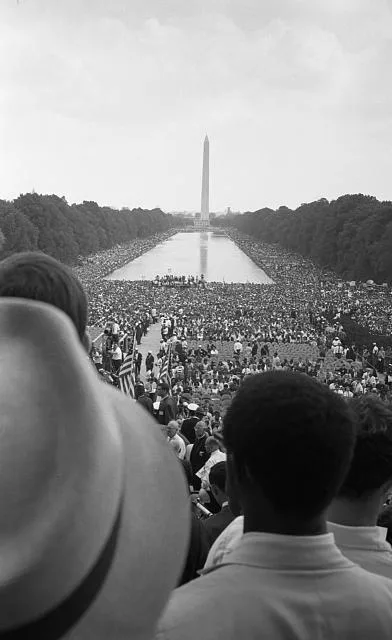
First, it has no words. No religious text, no specific narrative. Mozart’s Requiem is tied to the Catholic liturgy, and Mahler’s Adagietto has a backstory as a love letter to his wife. Barber’s Adagio has no text. It’s a blank canvas onto which any emotion can be projected. It’s an empty vessel that fits whatever you pour into it.
Second, the structure of the piece mirrors the process of grief. It begins with quiet sadness, builds to an emotional crescendo, breaks, and is followed by silence. Then comes a state of calm that feels like acceptance. This trajectory closely matches the emotional arc of someone experiencing a profound loss.
Third, the length is perfect. Around seven minutes. For a broadcast producer, it’s the ideal length to insert between news segments. You can’t play a 30-minute symphonic movement. Seven minutes is enough time for listeners to collect themselves before the next news report.
Fourth, the instrumentation is practical. Performed only by strings, it can be played by smaller ensembles. You don’t need a full symphony orchestra; a string group of just ten players can perform it. This makes it easy to program for sudden memorial events.
These four factors have combined to give Barber’s Adagio a unique and unrivaled position as America’s national song of mourning.
If You’re Listening for the First Time, Just Remember This
First, speakers are better than headphones. The resonance of a string orchestra is a sound that fills a space. With headphones, you get the musical information, but it’s harder to feel the “room-filling sorrow” this piece embodies. If you can, play it on speakers in a quiet room. Start with the volume low; you’ll find yourself turning it up as the music progresses.
Second, don’t stop in the middle. It’s seven minutes long. The time it takes to make a cup of coffee. The piece moves in a single breath from beginning to end. Stopping halfway cuts its meaning in half. Don’t miss the silence after the climax—that General Pause is the core of the work.
Third, focus on how the melody moves between the sections. The theme starts in the violins, passes to the violas, then to the cellos, as the register climbs higher and higher. If you consciously follow this journey, the piece will sound completely different. When all the strings finally reach their peak, you’ll understand physically why they had to climb that high.
Fourth, compare it with the original string quartet version. Same notes, completely different feeling. If the orchestra version is the “grief of a crowd,” the quartet version is closer to a “soliloquy of one.” Comparing the two is a great way to experience how arrangement changes musical meaning.
Fifth, check out the Agnus Dei choral version. Performed only by human voices, it’s another experience entirely. Comparing the three versions is one of the best ways to appreciate this piece.

Recommended Recordings
Leonard Bernstein / New York Philharmonic (1971, Columbia)
Bernstein’s Adagio is slow. Deliberately slow. He stretches a piece that other conductors finish in seven minutes to nearly nine. This gives the climax an extraordinary explosive power. It feels like he waits until the absolute limit of tension before letting it break.
Arturo Toscanini / NBC Symphony Orchestra (1938, RCA)
This is the premiere recording. The sound quality is, predictably, not great by modern standards. There’s noise, and the dynamic range is narrow. But this recording has something no other does: it’s the interpretation Barber himself approved. Toscanini’s tempo is faster than Bernstein’s, and the climax is more restrained. There’s a unique value in hearing the performance to which the composer nodded and said, “That’s it.”
Andris Nelsons / Boston Symphony Orchestra (2017, DG)
Among modern recordings, this one by Nelsons and the Boston Symphony is highly recommended. The sound quality is excellent, and the balance of the string sections is superb. It’s a great entry point for first-time listeners. The interpretation is moderate—not too slow, not too fast—allowing you to focus on the piece itself.
Listen with the Score
Following the score as you listen allows you to see how the melodic line is passed between sections. The gradual ascent in register leading to the climax becomes visually clear on the page. What might feel like a vague “tightening sensation” when listening becomes a clear architectural design when you see the score.
Frequently Asked Questions
Why is Barber’s Adagio for Strings so often played at funerals?
What is the original version of Adagio for Strings?
How long is the piece?
What famous movies have used Barber’s Adagio?
Is there a club remix of Adagio for Strings?
Further Reading
– Tchaikovsky’s Symphony No. 6 ‘Pathétique’: A Final Confession
– Mozart’s Requiem: The Truth Behind the Unfinished Funeral Mass
– Mahler’s Symphony No. 5: The True Meaning of the Adagietto