You have a slot to fill — the walk down the aisle, the pause while the register is signed, the moment you turn and leave as a married couple — and you want music that fits the room without turning your ceremony into a film score. Classical music is built for exactly this: it can hold a mood for two minutes without shouting. Here is what to play, moment by moment, with the obvious choices, a few you won’t have seen on every other list, and a couple to think twice about.
The short version, by moment:
| Moment | Safe classic | The less obvious pick | Listen |
|---|---|---|---|
| Seating / prelude | Bach, Air (Suite No. 3) | Tchaikovsky, Serenade for Strings — Waltz | ▶ Air · ▶ Serenade |
| Processional | Pachelbel, Canon in D | Handel, Arrival of the Queen of Sheba | ▶ Canon · ▶ Sheba |
| Signing / interlude | Bach–Gounod, Ave Maria | Rachmaninoff, Vocalise | ▶ Ave Maria · ▶ Vocalise |
| Recessional | Mendelssohn, Wedding March | Widor, Toccata (Symphony No. 5) | ▶ March · ▶ Toccata |
Before the walk: seating and prelude
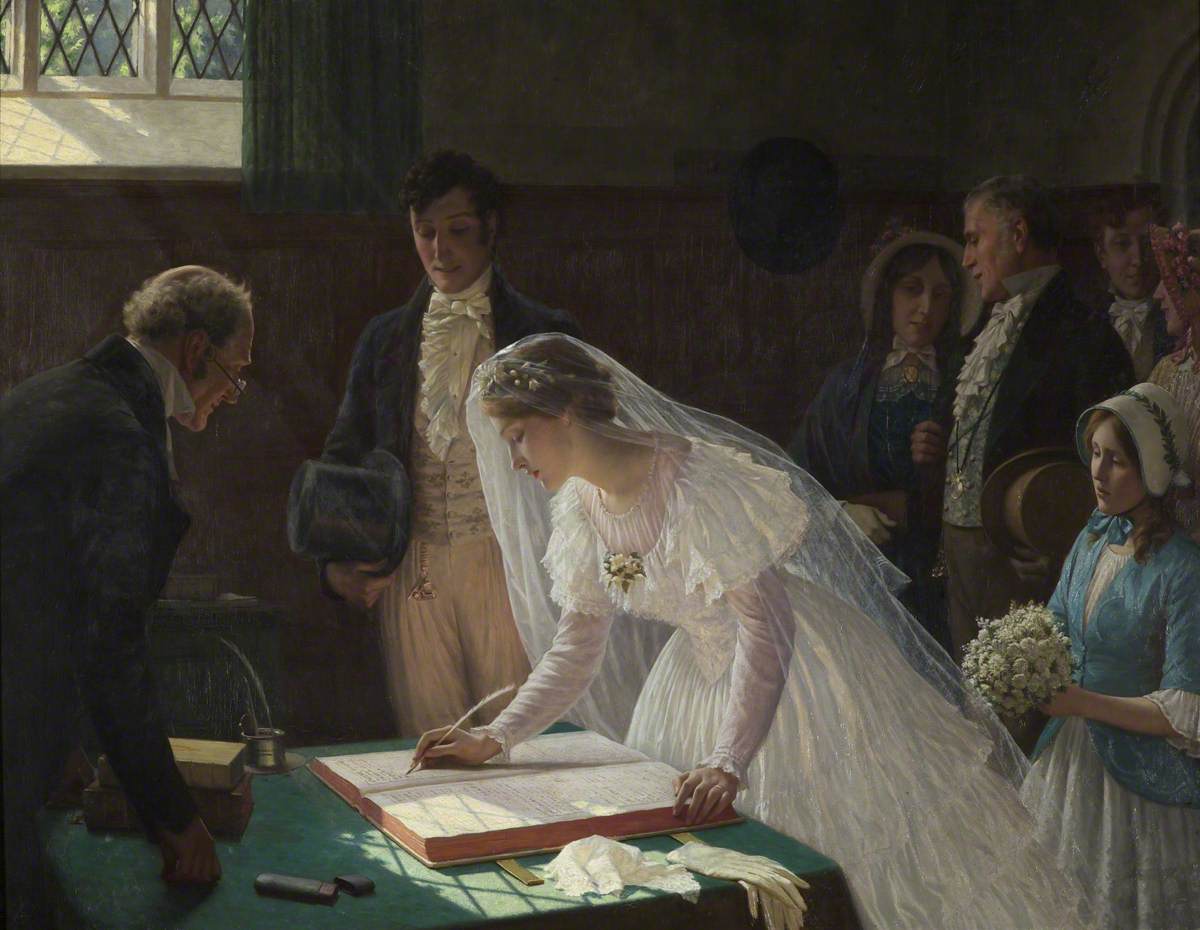
Guests arrive over fifteen or twenty minutes, and the music’s only job here is to fill the silence without competing with conversation. You want warmth, a steady pulse, and nothing that peaks. This is the part of the ceremony where you can be generous with length, because it simply loops until the room is full.
Bach — Air (from Orchestral Suite No. 3 in D, BWV 1068)
The piece everyone calls “Air on the G String,” after a 19th-century violin arrangement that dropped it onto a single string. Forget the nickname: what matters is that it’s one long, unhurried melody over a walking bass, with no big arrival to catch anyone off guard. It sets a tone of quiet occasion the moment the first violin enters. ▶ Listen on YouTube
Mozart — Eine kleine Nachtmusik, K. 525 (Romanze)
The first movement is a bit too jaunty and recognizable for a room you’re trying to settle; the second-movement Romanze is the better seating choice — courtly, even, and easy on the ear. It reads as “something nice is about to happen” without announcing it. If you want the full picture of this endlessly borrowed serenade, we wrote about Mozart’s Eine kleine Nachtmusik in detail. ▶ Listen on YouTube
Tchaikovsky — Serenade for Strings, Op. 48 (Waltz)
Here’s a seating pick most lists skip. The Waltz from Tchaikovsky’s Serenade for Strings lilts along at exactly the tempo of people finding their seats and greeting each other — elegant, a little nostalgic, and long enough to run without an obvious loop point. It earns its place because it does the seating job with more character than yet another slow adagio, and a string quartet or small ensemble can play it live beautifully. ▶ Listen on YouTube
The processional: walking down the aisle
This is the music people actually remember, and it has one hard constraint the seating music doesn’t: it has to last exactly as long as the walk, and it should build gently rather than arrive at a climax you’ll be standing awkwardly through. Pick something with a clear, repeating pulse so your ensemble (or your sound person) can stretch or trim it to fit the aisle.
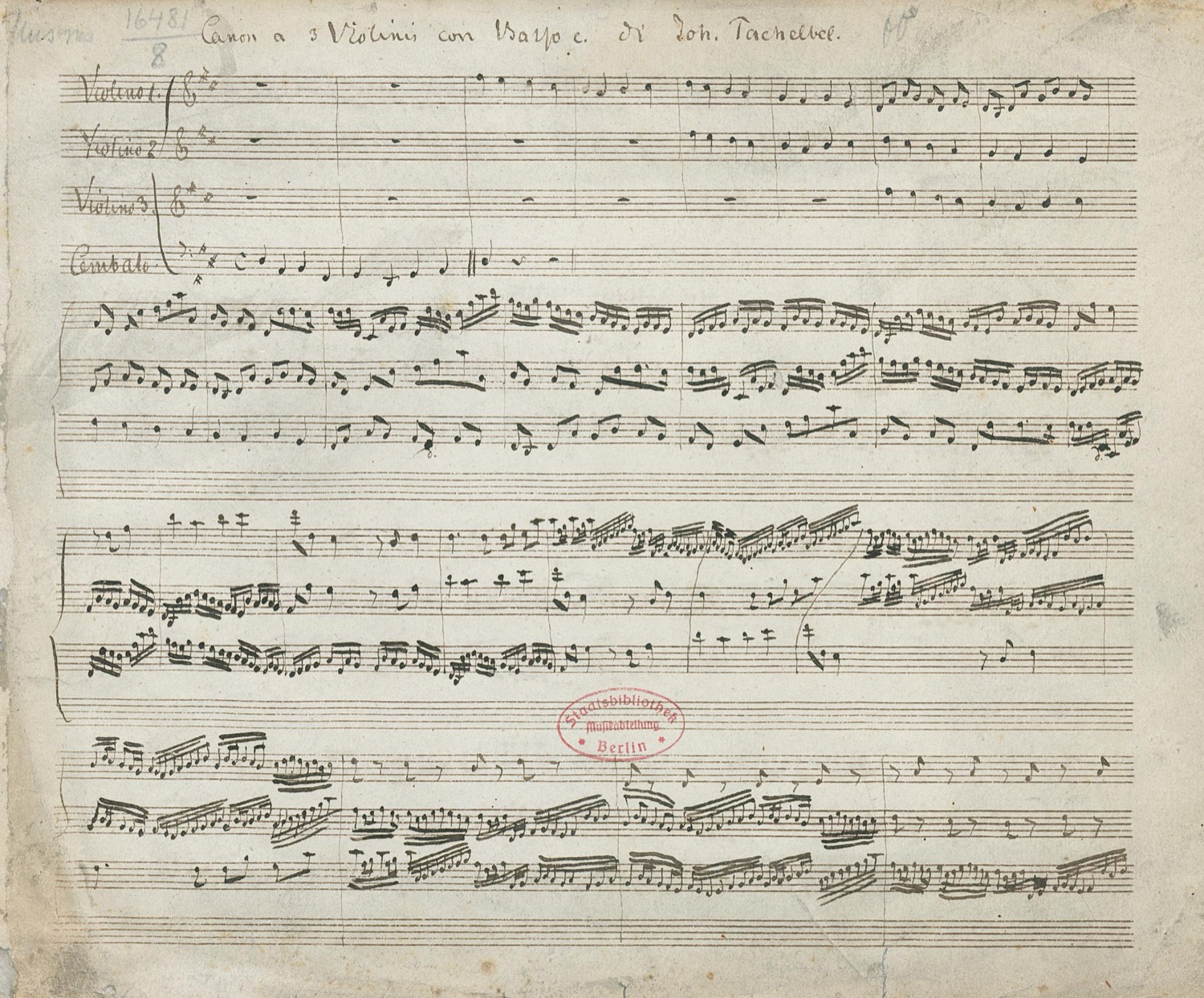
Pachelbel — Canon in D
The default, and for good reason: it’s built on a ground bass — the same eight notes cycling underneath — so it can loop for as long or as short a walk as you need, with no seams. What surprises people is how recent its fame is. The Canon was virtually unknown until the 20th century; a 1968 recording by the Jean-François Paillard Chamber Orchestra, in a slow, romantic arrangement on the French label Erato, is what pulled it out of obscurity and into every wedding of the 1970s and after. If it feels overused, that’s a fashion problem, not a music problem — the piece itself is patient and lovely.
Pachelbel’s Canon on period instruments — Voices of Music. Closer to the sound Pachelbel would have known than the lush string arrangements most couples grew up with.
Wagner — Bridal Chorus from Lohengrin (“Here Comes the Bride”)
The most famous four bars in any wedding, from Wagner’s opera Lohengrin, which premiered in Weimar in August 1850 under Franz Liszt. Worth knowing before you commit: in the opera this isn’t a wedding march at all — it’s sung by the women of the bridal party as they lead the bride to her chamber, and the marriage it precedes falls apart within the act. That backstory is why some churches quietly discourage it; the Roman Catholic Diocese of San Diego, for instance, advised against it for being theatrical rather than sacred. None of that changes how instantly it signals “the bride is here.” Just go in with eyes open. ▶ Listen on YouTube
Handel — Arrival of the Queen of Sheba
If you want the opposite of a slow, solemn entrance, this is it — bright, busy, and grinning, with the two oboes chasing each other over a fast string pulse. It opens Act III of Handel’s oratorio Solomon (HWV 67), first performed in London on 17 March 1749. It’s fast, so it suits a shorter aisle or a whole wedding party bustling in rather than a single slow procession; try it for the bridesmaids and let something calmer carry the bride. This is my pick for couples who want joy over gravity.
Handel’s Arrival of the Queen of Sheba — The English Concert under Trevor Pinnock, crisp and quick on period instruments.
Clarke — Prince of Denmark’s March (“Trumpet Voluntary”)
The great trumpet entrance. Written around 1700 by Jeremiah Clarke, organist of St Paul’s Cathedral, it spent generations misattributed to the more famous Henry Purcell — the mix-up came from a 19th-century organ arrangement. It’s built on a proud, repeating fanfare, so a live trumpeter can spin it out to your exact aisle length. It carried the 1981 wedding of Charles and Diana to a global television audience, which is precisely why it still reads as “state occasion.” Best with a real trumpet; a synth patch flattens it. ▶ Listen on YouTube
Bach — Jesu, Joy of Man’s Desiring
The gentlest of the grand-entrance options: a chorale melody floating over rocking triplets, from Bach’s Cantata BWV 147. It has forward motion without any pomp, which makes it ideal if you want something processional-length that feels tender rather than ceremonial. It also works as a prelude if you’d rather save a bigger piece for the walk. ▶ Listen on YouTube
The signing and the quiet interlude
Almost nobody plans this one, and then there’s an awkward silence while the couple and witnesses sign the register. You need two or three minutes of something reflective that doesn’t demand attention — a held breath, not a statement.
Bach–Gounod / Schubert — Ave Maria
Two different pieces share the title. Gounod’s version lays a soaring melody over the first prelude of Bach’s Well-Tempered Clavier; Schubert’s is a self-contained song of aching simplicity. Either fills the signing beautifully, especially with a singer. One caution: both are sacred texts with strong church associations, so read the room — lovely in a religious ceremony, potentially a mismatch at a secular one. ▶ Listen on YouTube
Rachmaninoff — Vocalise, Op. 34 No. 14
My favorite unexpected choice for this moment. It’s a song with no words — just a voice (or violin, or cello) tracing one long, sighing line — so it carries deep feeling without any text to commit you to a mood or a meaning. That wordlessness is exactly why it fits a secular signing where an Ave Maria would feel too churchy. We go deeper on it in our piece on Rachmaninoff’s Vocalise. It earns its spot by being profoundly moving and almost nobody else’s cliché. ▶ Listen on YouTube
The recessional: walking out married
Now you can let loose. The recessional is the one moment that should peak — you’ve just been married, you’re walking out, and the music should feel like the doors flying open. Bright, fast, and unapologetic is the brief.
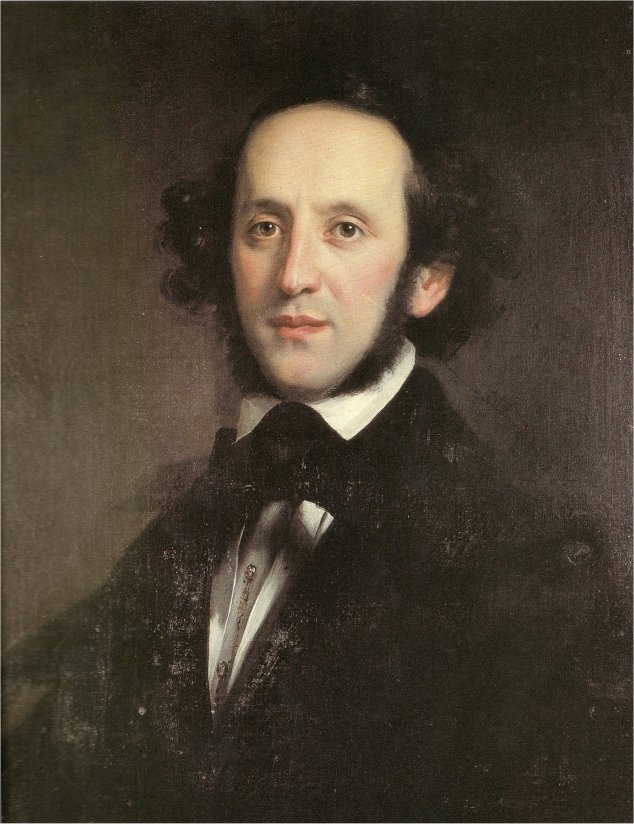
Mendelssohn — Wedding March (from A Midsummer Night’s Dream)
The other half of the wedding-music duopoly, and the definitive triumphant exit. Mendelssohn wrote it as part of his 1842 incidental music to Shakespeare’s play; it became a wedding fixture after Victoria, Princess Royal — Queen Victoria’s eldest daughter — chose it as her recessional when she married Prince Frederick William of Prussia on 25 January 1858. From those brass fanfares on, everyone wanted them. It is loud, joyful, and completely unsubtle, which on the way out is exactly right. ▶ Listen on YouTube
Widor — Toccata (from Symphony for Organ No. 5)
If your venue has a real pipe organ, this is the showstopper. The finale of Charles-Marie Widor’s Fifth Organ Symphony (Op. 42 No. 1, composed 1878–79) is a torrent of rippling figuration under a hymn-like tune in the pedals, and it builds to a wall of sound that fills a stone church like nothing else. It has genuine wedding pedigree, too: it famously replaced Mendelssohn’s march at the 1960 wedding of Princess Margaret and Antony Armstrong-Jones. The catch is honest — it needs a good organ and a real organist; on anything smaller it collapses. But in the right room, nothing beats it for a recessional.
Widor’s Toccata on the Cavaillé-Coll organ at Saint-Sulpice in Paris — the instrument Widor himself played for decades.
Practical notes: timing, sequence, and what to avoid
How long each slot really runs. A processional is usually 2–4 minutes — time the actual walk at a rehearsal and match the music to it, not the other way around. Pieces built on a repeating bass (the Canon, the Trumpet Voluntary) are forgiving because a live player can add or drop a cycle on the spot; a through-composed piece with a fixed ending is riskier unless your walk is predictable. The signing runs as long as the paperwork — budget three minutes and have your musicians ready to vamp or stop cleanly.
Sequence for contrast. The trick is to shape an arc: calm seating, a warm build for the entrance, something still and intimate at the signing, then the biggest, brightest thing you’ve got on the way out. If you play the Canon coming in, don’t also play something gentle going out — the exit should lift. For a fuller cue-by-cue walkthrough with timing, see our companion guide to classical music for a wedding.
What to think twice about. Mind the words and the origins. The two Ave Marias are sacred and can feel out of place at a non-religious ceremony. Wagner’s Bridal Chorus comes with the operatic baggage above and is banned outright in some churches, so check with your officiant before you count on it. And resist stacking three slow, similar pieces in a row — the ear needs contrast, or the whole ceremony sags into one long, pretty blur. One calm choice per moment, one brighter one, and you’ll never bore the room.