No other symphony in the standard repertoire splits conductors this badly. Tchaikovsky’s Sixth ends with a slow movement that dies away to nothing, and the score gives you almost no protection: get the tempo wrong and the finale either sounds rushed and unfelt, or it sags into fifteen minutes of self-pity. Recorded finales run from about ten minutes to over seventeen. That is not interpretive nuance. That is two different pieces of music.
So this is a decision article, not a catalogue. I have listened through six well-known recordings with the same question each time: does this conductor trust the notes, or does he lean on them? Below are the six, what each actually does, and one clear pick — plus the famous version I would not hand to anyone hearing the piece for the first time.
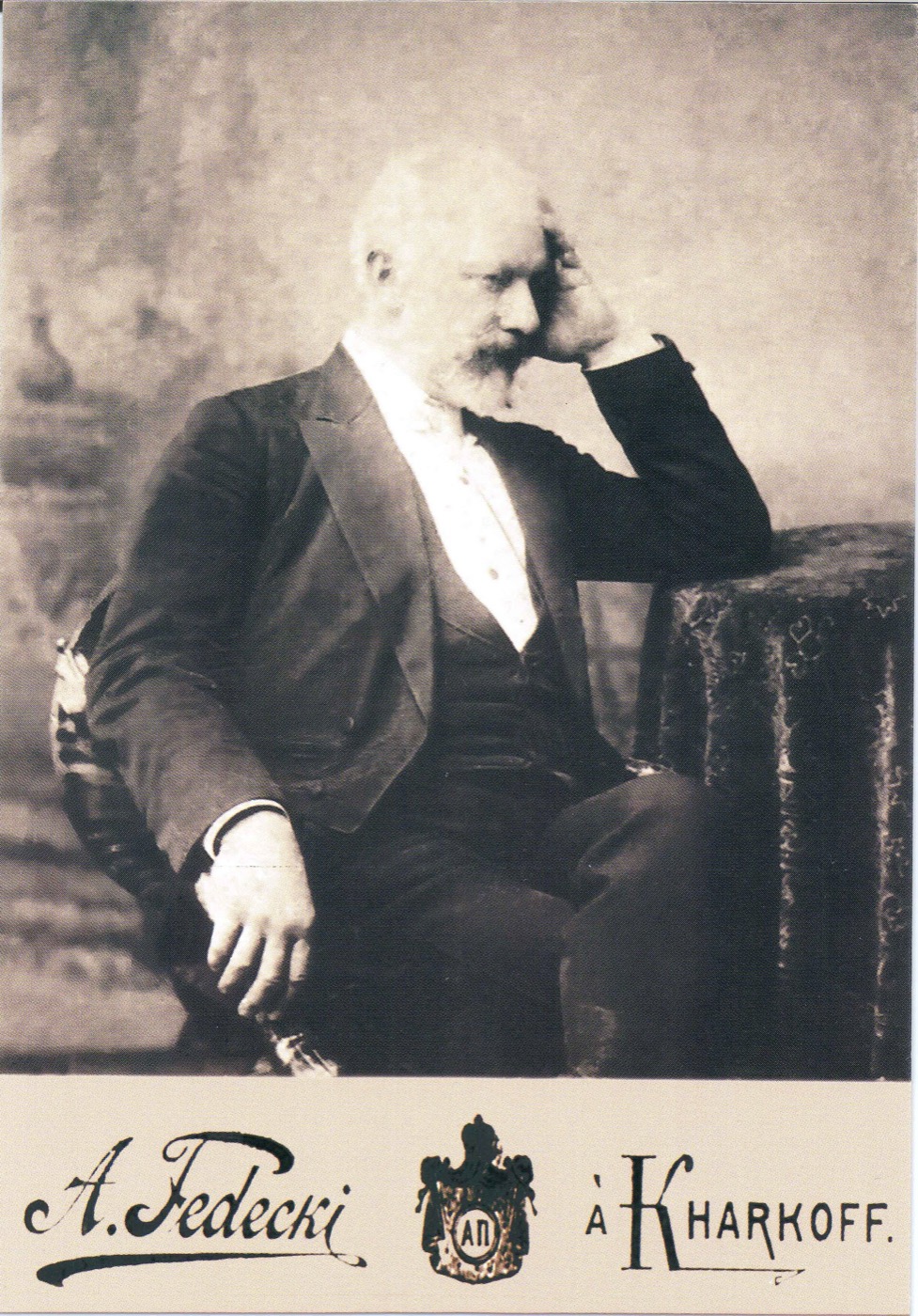
Why this piece breaks conductors
Tchaikovsky conducted the premiere himself in Saint Petersburg on 28 October 1893, and died nine days later, on 6 November. The official cause was cholera; that diagnosis has been argued about ever since, and the suicide theories remain disputed rather than settled. What matters for listening is simpler: the piece was written and first performed by a man who then abruptly stopped existing, and roughly a century of performers have been tempted to conduct that fact instead of the score.
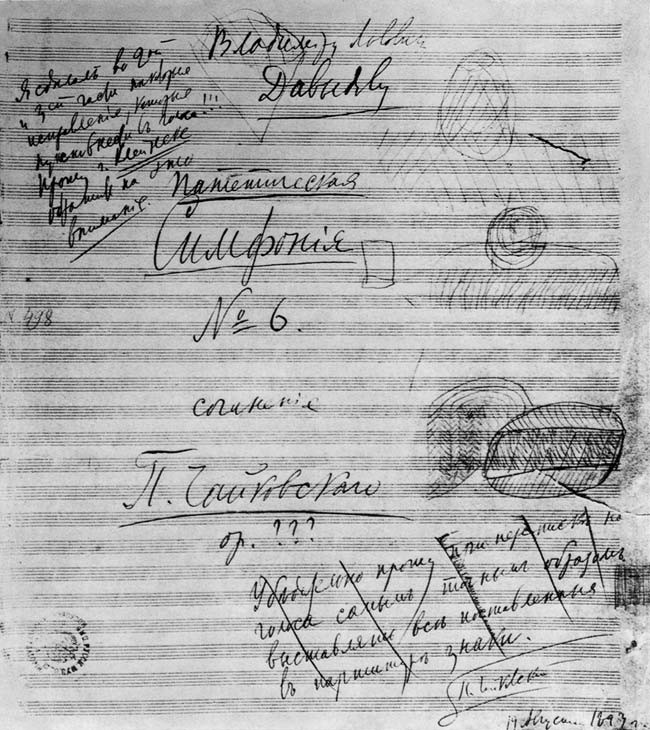
The title feeds the same temptation. The Russian word Tchaikovsky’s circle used, Патетическая, sits closer to “impassioned” than to the English “pathetic,” and the French Pathétique that stuck carries a mournfulness the Russian does not insist on. Modest Tchaikovsky later said he proposed the name the morning after the premiere, but the Tchaikovsky Research archive notes that the publisher Jurgenson’s correspondence from September and October 1893 already discusses a “pathétique” title page — so the standard story about where the name came from is not as settled as program notes suggest.
The symphony is dedicated to Tchaikovsky’s nephew Vladimir “Bob” Davydov. His name is on the autograph title page below.
What to listen for
First movement. It opens in the dark, low bassoon over divided basses, then builds a long string melody that everyone recognises. The moment to watch is the seam before the development: the bassoon line sinks through four descending notes marked pppppp — six p’s, a marking most players regard as unplayable — and the orchestra detonates. There is a long-standing performance tradition of handing those four notes to a bass clarinet, an instrument the score does not otherwise call for, and plenty of orchestras still do it. When you compare recordings, listen for whether that transition is a genuine shock or a scheduled one. Deeper into the development, the trombones play a quiet chorale that echoes “With the Saints Give Rest” from the Orthodox funeral service. Tchaikovsky left no note explaining why; the sound of it is unmistakable.
Second movement. A waltz in 5/4. Five beats, so it can never quite settle — every bar has one beat too many or one too few, depending on how you count it. Conductors either let the limp show or smooth it into something like a normal 3/4.
Third movement. A scherzo that turns into a blazing march and finishes with a full-orchestra hammering that sounds exactly like the end of a symphony. It is not. Audiences applaud here constantly — we wrote about that in the applause trap Tchaikovsky built — and how a conductor handles the silence afterwards tells you a lot.
Finale. Marked Adagio lamentoso. The opening theme does not exist in any single instrumental line: first and second violins alternate notes, each section playing every other note of a melody neither one of them actually has. You hear a descending line; nobody is playing it. That is the whole movement’s character built into the orchestration.
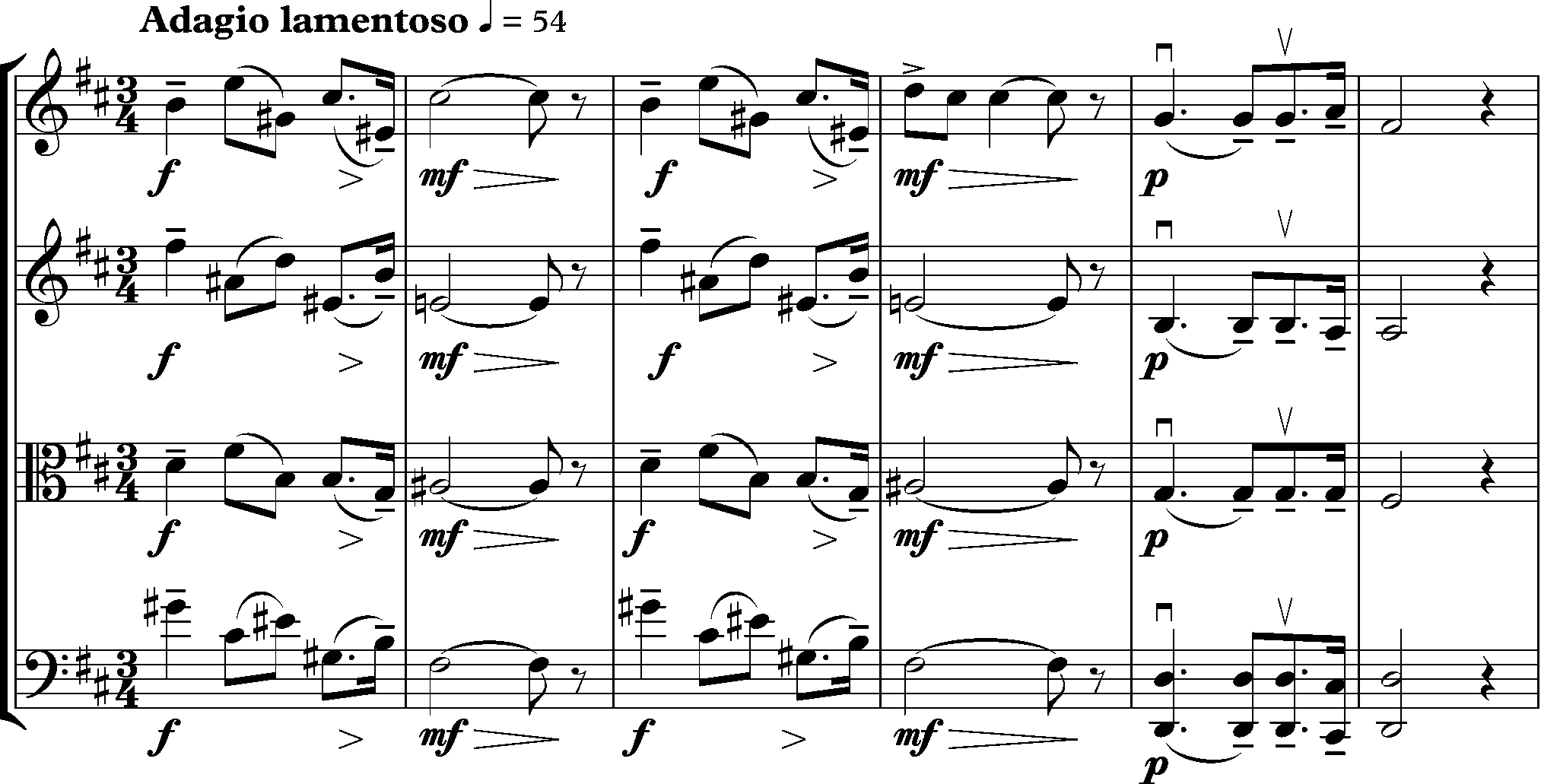
After the tam-tam stroke and the trombone chorale near the end, the music falls to the double basses and simply stops being audible. There is no final chord to land on. Every recording lives or dies on those last two minutes.
The six recordings
Evgeny Mravinsky / Leningrad Philharmonic / 1960 / Deutsche Grammophon
Recorded in Vienna in November 1960, while the Leningrad Philharmonic was touring the West and Deutsche Grammophon grabbed the chance to capture them in better sound than Soviet studios could manage. It is the least sentimental Pathétique on record and the most frightening.
Mravinsky does not slow down for the sad parts. The march is taken at a speed that forces the strings to articulate rather than sweep, and the Leningrad brass play with a hard, vibrato-heavy edge that no Western orchestra of the period produced. The finale runs fast by modern standards and refuses to swell; the effect is not grief so much as somebody stating a fact and then leaving the room. The tam-tam stroke near the end lands like a door closing.
Be honest about the sound: it is early stereo, the bass is thin, and in the loudest passages the violins turn wiry. If you need modern engineering, this will annoy you within a minute. Who it’s for: anyone who thinks the piece has been over-emoted to death, and everyone who wants to know what it sounded like before that happened.
Herbert von Karajan / Berlin Philharmonic / 1976 / Deutsche Grammophon
Karajan recorded this symphony repeatedly across four decades; the May 1976 Berlin Philharmonie session is the one I keep going back to. It is the opposite of Mravinsky in method — everything is legato, everything connects, the string tone is upholstered.
The payoff is the 5/4 waltz, which Karajan makes flow as a genuine dance instead of a limp, and the first movement’s big tune, which he shapes in one continuous line rather than a series of phrases. The cost is the march: Berlin plays it magnificently and it never once sounds dangerous. The mid-70s DG engineering is close and slightly airless, so climaxes compress instead of opening out. Who it’s for: listeners who want the piece to sound gorgeous, and who are not looking for it to hurt.
Mariss Jansons / Oslo Philharmonic / 1986 / Chandos
Recorded in Oslo in August 1986, part of the cycle that made Jansons’s reputation outside Scandinavia. This is the version I recommend when someone wants one recording and does not want to think about it further.
Jansons’s virtue here is clarity of layer. Chandos gave him a lot of air around the orchestra, and the result is that the inner voices stay audible during the loud passages — you can follow the bassoon and clarinet exchange at the very opening instead of hearing a general low murmur. He paces the finale without dragging and without hurrying, and the falling-away at the end is genuinely quiet rather than fake-quiet.
The limitation is weight. Oslo’s brass in 1986 could not deliver the sheer mass that Berlin or Leningrad brought to the third-movement march, and the climaxes feel a size smaller than the music seems to want. Who it’s for: the reader who wants one safe, satisfying, well-recorded Pathétique and does not want a project. ▶ Listen on YouTube
Vasily Petrenko / Royal Liverpool Philharmonic / 2017 / Onyx
Released February 2017 on Onyx as the second half of Petrenko’s Tchaikovsky cycle, recorded at Liverpool Philharmonic Hall. Modern engineering, brisk tempos, and a striking absence of goo.
The third movement is the reason to hear it. Petrenko keeps the march light on its feet and the string figuration crisp, so the build works as accumulation rather than as sheer volume — by the time the full orchestra arrives you have heard every step that got you there. The first movement’s detonation is clean but not terrifying; that is the trade for the clarity everywhere else.
Who it’s for: anyone starting from streaming who wants current sound quality and a conductor who declines to wallow. ▶ Listen on YouTube
Teodor Currentzis / musicAeterna / recorded 2015, released 2017 / Sony Classical
The most argued-about Pathétique of the last decade, and the one that most rewards already knowing the piece. Currentzis pushes the dynamic range to its edges: pianissimos that force you to lean in, attacks that arrive with no cushion at all, and phrasing that lingers and then bolts.
It is a reading of details. The bass clarinet handoff before the development, the tiny hesitations in the 5/4 waltz, the way the finale’s divided violins are balanced so that you almost hear the seam between the two sections — all of it is deliberate and audible. Whether you find that revelatory or fussy is genuinely a matter of taste, and I do not think either reaction is wrong. My own view: it is fascinating on the fourth listen and exhausting on the first, because the micro-decisions keep asking you to notice them.
Who it’s for: listeners who already own a straight-ahead version and want the piece taken apart. ▶ Listen on YouTube
Leonard Bernstein / New York Philharmonic / 1986 / Deutsche Grammophon
Recorded at Avery Fisher Hall in August 1986. Bernstein takes the finale at 17:18 — roughly 70 per cent longer than the swiftest accounts, and several minutes beyond anything else on this list.
I want to be fair to it, because it is not a mistake. Bernstein was doing to this movement roughly what he had been doing to the closing Adagio of Mahler’s Ninth: stretching it until the harmonic motion nearly stops, so each chord change registers as an event. There are stretches where it works and the sound genuinely suspends.
But the movement is built out of a falling line that needs to keep falling. At this tempo the line stops being a line, the divided violins lose the illusion of a single melody, and the ending arrives as an absence of energy rather than as an ending. I would not give this to someone who has never heard the piece — they would learn the wrong shape. Who it’s for: people who know the symphony well and want to hear a great conductor test it to destruction. ▶ Listen on YouTube
The verdict
#1 pick: Mravinsky, Leningrad Philharmonic, 1960 (DG). It has the fewest apologies in it. Mravinsky treats the score as a set of instructions rather than a confession, and paradoxically that is what makes the last two minutes hit — nothing has been oversold in the preceding forty, so the ending has somewhere to fall from. Accept the 1960 sound and this remains the reference.
Streaming pick: Petrenko, Royal Liverpool Philharmonic, 2017 (Onyx). On every major service, in current sound, with a third movement that earns its climax. If you are auditioning the piece rather than collecting it, start here.
If you want beauty above all, get Karajan 1976. The Berlin string sound is the point, and no one else makes the 5/4 movement flow like that. If you want clarity and balance in one purchase, get Jansons. If you want the piece interrogated, get Currentzis. And if you want to hear how far a finale can be stretched before it breaks, Bernstein 1986 is the experiment — just don’t make it your first.
Where to hear them
The Mravinsky, Karajan and Bernstein recordings are Deutsche Grammophon catalogue and appear across the major streaming services, usually inside symphony-cycle collections rather than as standalone albums; the Mravinsky also circulates in several remasterings, and the newer transfers do help the bass. Jansons’s Oslo cycle is on Chandos and is easy to find as a boxed set. Petrenko’s Onyx volume streams complete. Currentzis is on Sony Classical and streams complete. Prices move around, but none of these six is a rarity — every one of them can be heard legally and immediately.
Sources and recording notes
Recording metadata here was checked against label catalogue pages and discography listings rather than reconstructed from memory. The Mravinsky sessions (Vienna, November 1960, originally DG 138 659) are documented in Deutsche Grammophon’s catalogue and in collector discographies; the Karajan is the May 1976 Berlin Philharmonie session issued as DG 2530 774. Bernstein’s 16 August 1986 Avery Fisher Hall recording and its 17:18 finale timing are confirmed by the Leonard Bernstein discography and by track timings on streaming services. Jansons’s Oslo sessions are dated 11–13 August 1986 in Chandos listings. Petrenko’s volume is Onyx 4162, released 17 February 2017, recorded at Liverpool Philharmonic Hall. Currentzis’s Sony release dates from 2017; published session details place the recording in 2015, and I have flagged the venue as unverified rather than assert it. The premiere date, dedication and title history come from the Tchaikovsky Research archive, which also records the uncertainty about who first proposed the word “pathétique.”
If you are working through the late symphonies, the Fifth is the natural companion, and our Beethoven Ninth recordings guide uses the same comparison method on a piece with an even bigger discography.