Put on two recordings of The Planets back to back and you may wonder if they’re the same piece. One Mars grinds forward like a tank with the brakes cut; another sounds brisk and almost polite. One Neptune dissolves into a chorus so distant you lose the moment it stops; another keeps the voices too close and breaks the spell. Holst’s suite is a recording engineer’s dream and an interpreter’s minefield, which is exactly why the catalog is so crowded and why picking a version actually matters.
The stakes split three ways. There’s sound — this is demonstration music, all organ pedal and eight horns and offstage women’s voices, and some labels chased it as pure spectacle. There’s character — how much menace a conductor is willing to put into Mars, how much tenderness into Venus. And there’s authority — a small number of these recordings come from people who stood in the room with Holst. Almost no single version wins all three. Below are five that each win at least one, ranked, with a clear pick at the end.
The piece in brief: what you’re actually listening for
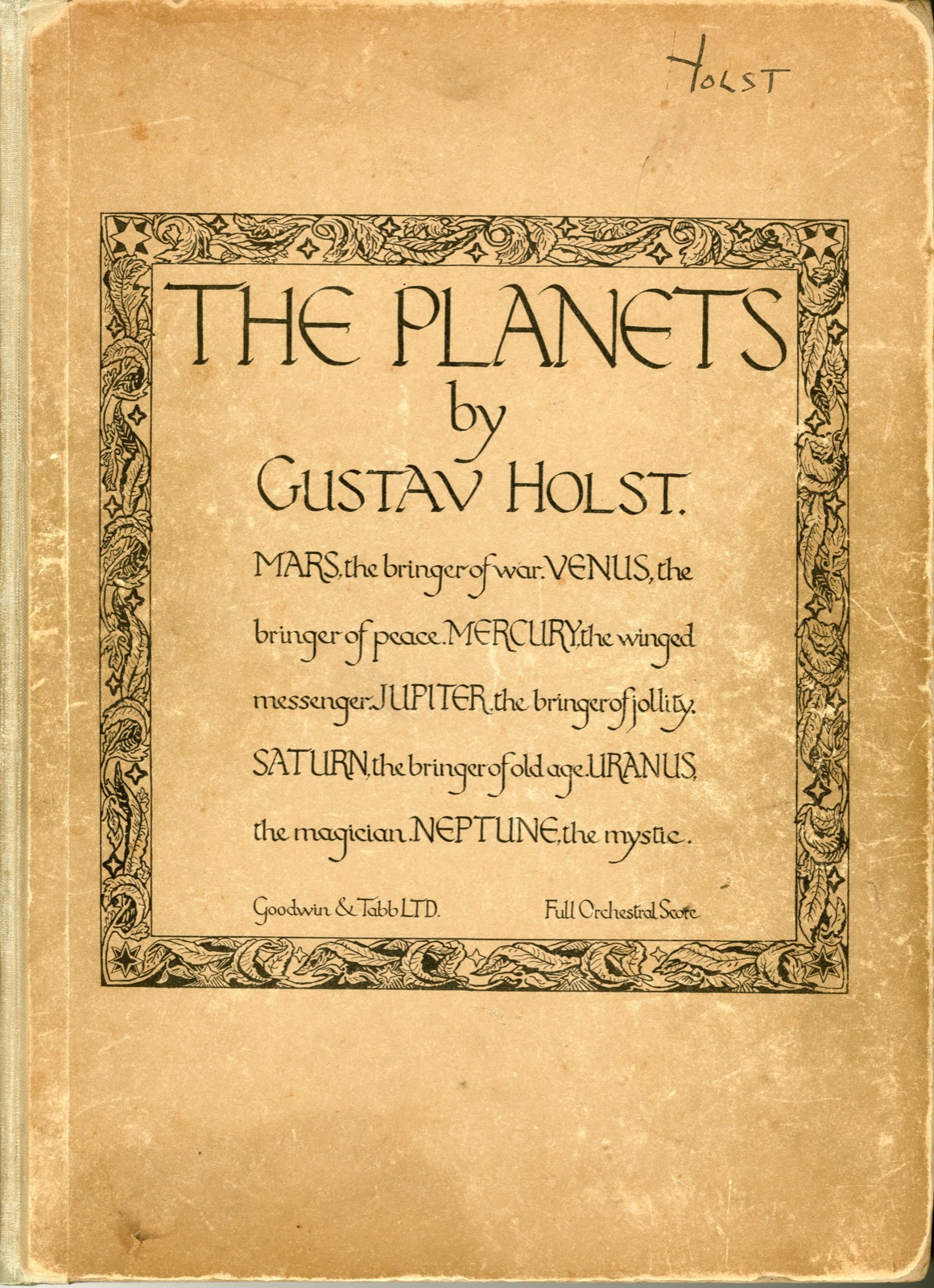
Holst wrote The Planets between 1914 and 1917, beginning with Mars and finishing with Mercury. Seven movements, one per planet known at the time — Earth is skipped, and Pluto wasn’t discovered until 1930, which is why the suite ends where it does. The organizing idea is astrological, not astronomical: Holst was interested in the character each planet was said to govern, not its orbit. So the movements are portraits of moods, in this order: Mars (war), Venus (peace), Mercury (the winged messenger), Jupiter (jollity), Saturn (old age), Uranus (the magician), Neptune (the mystic).
A few moments tell you almost everything about a given recording. Mars rides a hammering rhythm in an off-kilter five-beat meter — the test is whether it feels mechanized and frightening or merely loud. Jupiter plants a broad hymn tune in its middle section, the melody Holst later reworked into “I Vow to Thee, My Country” (for a completely different but equally famous Jupiter, see our guide to Mozart’s “Jupiter” Symphony). Uranus ends with a huge downward swoop on the pipe organ, a real glissando that should feel like the floor dropping. And Neptune closes the whole suite with an offstage wordless female chorus that fades to silence — Holst asked for the singers to be in an adjoining room with the door slowly closed on the final bar until the sound vanishes. How a recording handles that disappearing act is the single best gauge of whether the engineers understood the piece.
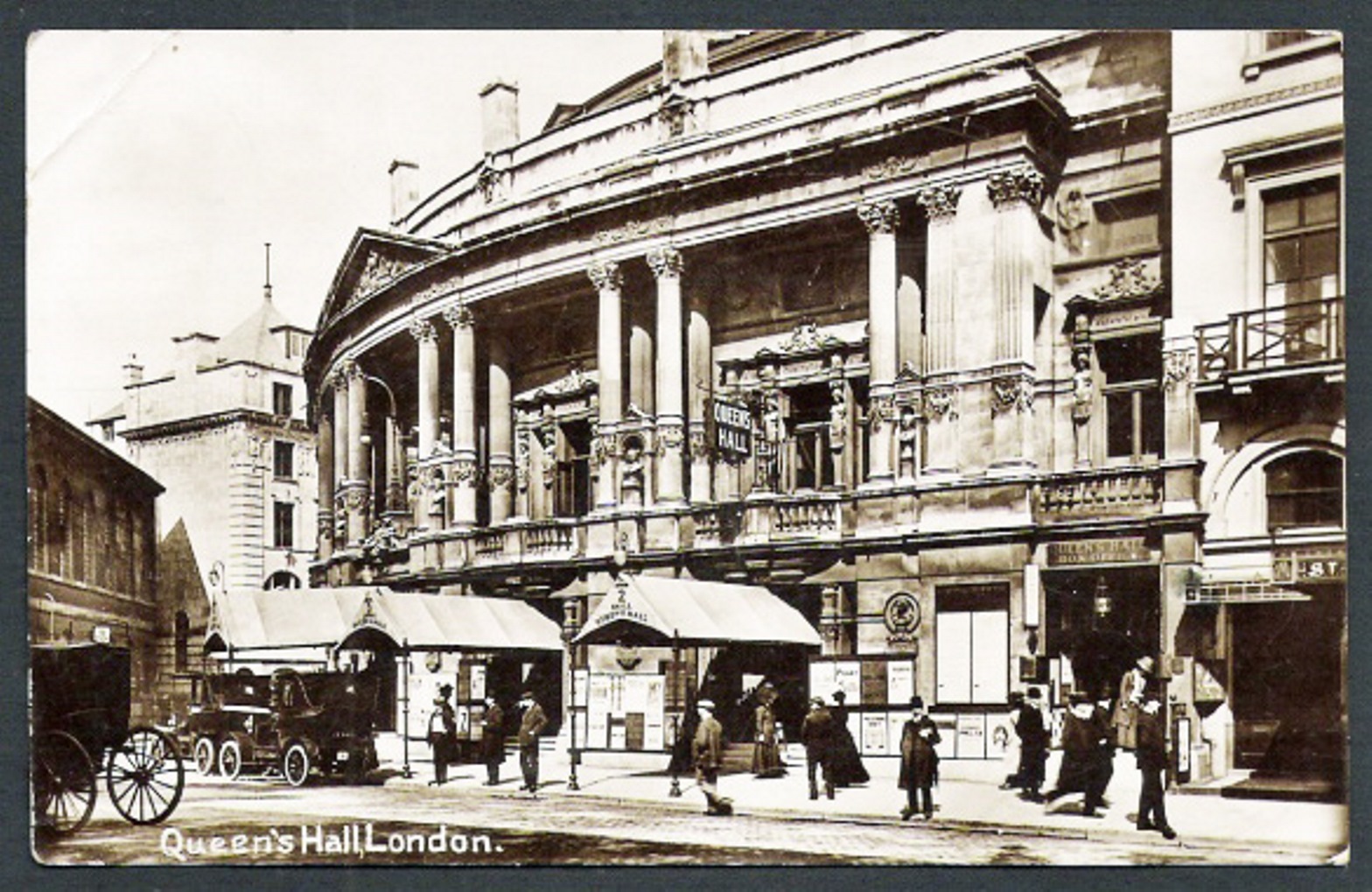
The work had an odd birth. Its first performance was a private one at the Queen’s Hall in London on 29 September 1918, conducted by Holst’s close friend Adrian Boult before an invited audience of around 250 people; the players reportedly saw the difficult score only a couple of hours beforehand. The first complete public performance came two years later, on 15 November 1920, given by the London Symphony Orchestra under Albert Coates. Boult’s involvement at the very start matters for the recordings, because he went on to commit the suite to disc more than once — and knowing the tempos the composer actually wanted turns out to be a genuine advantage.
The contenders
Sir Adrian Boult / London Philharmonic Orchestra / 1978 / EMI
🎧 Also on: Apple Music · Spotify
Verified metadata: studio recording made in London, May–July 1978, released 1979 on EMI (now under the Warner Classics catalog). It was Boult’s fifth and final recording of the work, made when he was eighty-nine.
This is the reading I reach for first, and the reason is temperament. Boult conducted the 1918 premiere and never treated the suite as a showpiece to be inflated. Everything sits in proportion: Mars is relentless without tipping into noise, Jupiter strides instead of swaggering, and the big hymn tune arrives without being milked. What you notice most is that nothing is exaggerated to grab you — and paradoxically that restraint is what makes it wear so well over dozens of listens. The Neptune fade is beautifully judged. The one honest caveat: the 1978 sound, while very good, is a half-step less spectacular than the best digital rivals, and if raw sonic wallop is your priority you’ll want a demonstration disc alongside it. This is my top pick as an interpretation, not as an audiophile trophy.
Herbert von Karajan / Vienna Philharmonic / 1961 / Decca
🎧 Also on: Apple Music · Spotify
Verified metadata: recorded September 1961 at the Sofiensaal, Vienna, for Decca, produced by John Culshaw. It was among the first stereo accounts of the suite and has been reissued repeatedly, including in Decca’s “Originals” line.
If Boult is the sane center, Karajan is the personality. From the first bar the Vienna strings have a sheen and weight that no British orchestra of the era quite matched, and the reading has a coiled tension that feels almost predatory. Mars is the calling card — heavy, remorseless, faintly sinister, the brass leaning into the menace rather than just playing loud. This is a recording to come to for interpretive character and vintage Decca glamour, not for the last word in fidelity: the 1961 stereo shows its age, and there’s tape hiss and a slightly congested climax or two. Worth noting for the curious — Holst’s own daughter, Imogen, is frequently reported to have admired this account, though that’s a line passed down through the label’s own history rather than something I’d stake a fact on.
William Steinberg / Boston Symphony Orchestra / 1970 / Deutsche Grammophon
🎧 Also on: Apple Music · Spotify
Verified metadata: recorded at Symphony Hall, Boston, in 1970, released 1971 on Deutsche Grammophon, with the New England Conservatory Chorus in Neptune. It’s one of only three DG recordings Steinberg made during his short tenure as the orchestra’s music director.
This is the version for people who want The Planets to hit hard. Steinberg drives Mars and Uranus with a visceral force that many collectors still rank at the top for sheer impact, and Symphony Hall gives the brass and percussion a body that the recording captures cleanly for its date. It has been reissued recently as an all-analog audiophile cut, which tells you how well the original tapes hold up. The trade-off is subtlety: the quieter portraits — Venus, the inward stretches of Saturn — get less searching treatment than Boult gives them. Come here for adrenaline, not for the last degree of poetry.
Charles Dutoit / Orchestre symphonique de Montréal / 1986 / Decca
🎧 Also on: Apple Music · Spotify
Verified metadata: recorded June 1986 at the church of Saint-Eustache near Montréal, released 1987 on Decca.
Dutoit’s is the one to hand someone who cares first about sound. The Saint-Eustache acoustic and Decca’s engineering give the suite a spaciousness and richness that still functions as a demonstration disc decades later — put on a good system and this is the version that makes people ask what they’re hearing. It’s less about interpretive daring than about orchestral color as an end in itself, and on those terms it’s superb: Venus is serene and tender, among the loveliest on record, and in Neptune the women’s chorus enters almost unnoticed and trails away to nothing. If you find Boult a touch plain and Steinberg a touch blunt, Dutoit’s beauty is the answer. Because it streams widely in excellent digital sound, it’s also the easiest to recommend as a first purchase.
André Previn / London Symphony Orchestra / 1973 / EMI
🎧 Also on: Apple Music · Spotify
Verified metadata: recorded at Kingsway Hall, London, in September 1973, released 1974 on EMI, produced by Christopher Bishop.
Previn’s account is brass-forward and muscular, with a wide dynamic range and a full-bodied bass that made it a favorite on audiophile lists for years. It leans into impact — the loud movements are genuinely exciting — and the LSO plays with real bite. It sits a notch below the top four for me mainly because Boult, recorded by a similar EMI team a few years later, offers the same orchestra’s virtues with more interpretive wisdom. But as a forceful, well-engineered alternative from the analog golden age, it’s an easy one to live with, and copies are cheap.
The verdict
Best overall — Boult / LPO / 1978 (EMI/Warner). For a single version to own, this is it: authoritative, perfectly proportioned, and connected directly to the composer through the man who premiered the work. It’s the reading that keeps giving on repeat listens.
🎧 Also on: Apple Music · Spotify
Best for sound and easiest first buy — Dutoit / Montréal / 1986 (Decca). If you’re new to the piece or you want the version that shows off a hi-fi, start here. Gorgeous engineering, gorgeous Venus, and it streams everywhere in top-quality digital.
🎧 Also on: Apple Music · Spotify
If you want maximum menace — Steinberg / Boston / 1970 (DG), for the most physical Mars and Uranus on the list. If you want vintage character over fidelity — Karajan / Vienna / 1961 (Decca), for personality no modern recording quite duplicates. And if you simply want a cheap, punchy analog copy, Previn / LSO / 1973 (EMI) does the job.
🎧 Also on: Apple Music · Spotify
Where to hear them
All five are available on the major streaming services and as physical discs. The Dutoit is the most consistently present in high-resolution streaming tiers and makes the best starting point on a subscription. Boult’s 1978 recording circulates on the Warner Classics catalog; the Steinberg has been given a recent audiophile vinyl reissue by Deutsche Grammophon and is easy to find digitally as well. The Karajan and Previn turn up regularly in budget reissue sets, which is the cheapest way to add them once the Boult and Dutoit are on your shelf. If you’re assembling a shelf of orchestral and choral cornerstones this way, our companion guides to the best recordings of Beethoven’s Ninth and the best recordings of Carmina Burana take the same decide-don’t-catalog approach.
Sources and recording notes
Recording metadata here — conductors, orchestras, dates, venues, and labels — was verified against label pages (Decca Classics, Deutsche Grammophon), Discogs release entries, and the collector survey “Peter’s Planets,” cross-checked with published reviews. Composition and premiere facts follow the standard accounts, including the work’s Wikipedia entry and the composer’s biographical record. The interpretive judgments — which recording is “best,” most menacing, or most beautiful — are my own assessments, not received verdicts, and reasonable listeners rank these differently. The one item I’ve flagged rather than asserted is the frequently repeated remark attributed to Imogen Holst about the Karajan recording, which traces to the Karajan estate’s own history and I could not confirm from an independent primary source.
FAQ
What is the best recording of Holst’s The Planets?
For a single all-around choice, Sir Adrian Boult’s 1978 recording with the London Philharmonic Orchestra (EMI/Warner) is the strongest — well-proportioned, authoritative, and made by the conductor who led the 1918 premiere. If your priority is sound quality, Charles Dutoit’s 1986 Montréal recording on Decca is the better pick.
Is the Karajan recording of The Planets overrated?
Not overrated, but often misunderstood. Karajan’s 1961 Vienna Philharmonic account has more interpretive personality than almost any rival, especially in a genuinely sinister Mars. What it doesn’t offer is modern fidelity — the early-1960s stereo shows its age. Buy it for character, not for demonstration-quality sound.
Which recording of The Planets is best for a beginner?
Dutoit’s 1986 Decca recording. It has the most immediately appealing sound, a beautifully played Venus and Neptune, and it streams widely in high quality, so you can hear it before committing. Once you know the piece, add Boult’s 1978 version for its interpretive depth.
Why does The Planets have no movement for Earth or Pluto?
The suite is built on astrology, not astronomy, so Earth — which has no astrological character to depict — is left out by design. Pluto is absent because it wasn’t discovered until 1930, well after Holst finished the work; he reportedly had no interest in adding it later. In 2000 the composer Colin Matthews wrote a “Pluto” movement to follow Neptune, but it isn’t part of Holst’s original suite.