Most people meet Carmina Burana through about ninety seconds of it. “O Fortuna” — the hammering choir, the timpani landing like a door being kicked in — has scored movie trailers, talent-show eliminations, sports montages, and more than one aftershave ad. But the full work runs close to an hour, and the distance between great recordings of it is wider than you’d expect for music this blunt. Some conductors treat the score as a battering ram and just hit hard. Others find the sly, bawdy, occasionally tender thing underneath: the drinking songs, the roasting swan singing its own eulogy, the courtship that turns shy at exactly the wrong moment.
That gap is the whole problem with choosing a version. Carmina Burana rewards a conductor who can swing from brutal to delicate inside a single minute, and it exposes one who only owns the brutal. Pick the wrong recording and it sounds like a car alarm with Latin subtitles. Pick the right one and you hear why Orff is said to have wanted everything he wrote before it thrown out. Below are four recordings worth your time, ranked, plus the one I’d hand a complete beginner.
What you’re actually listening to
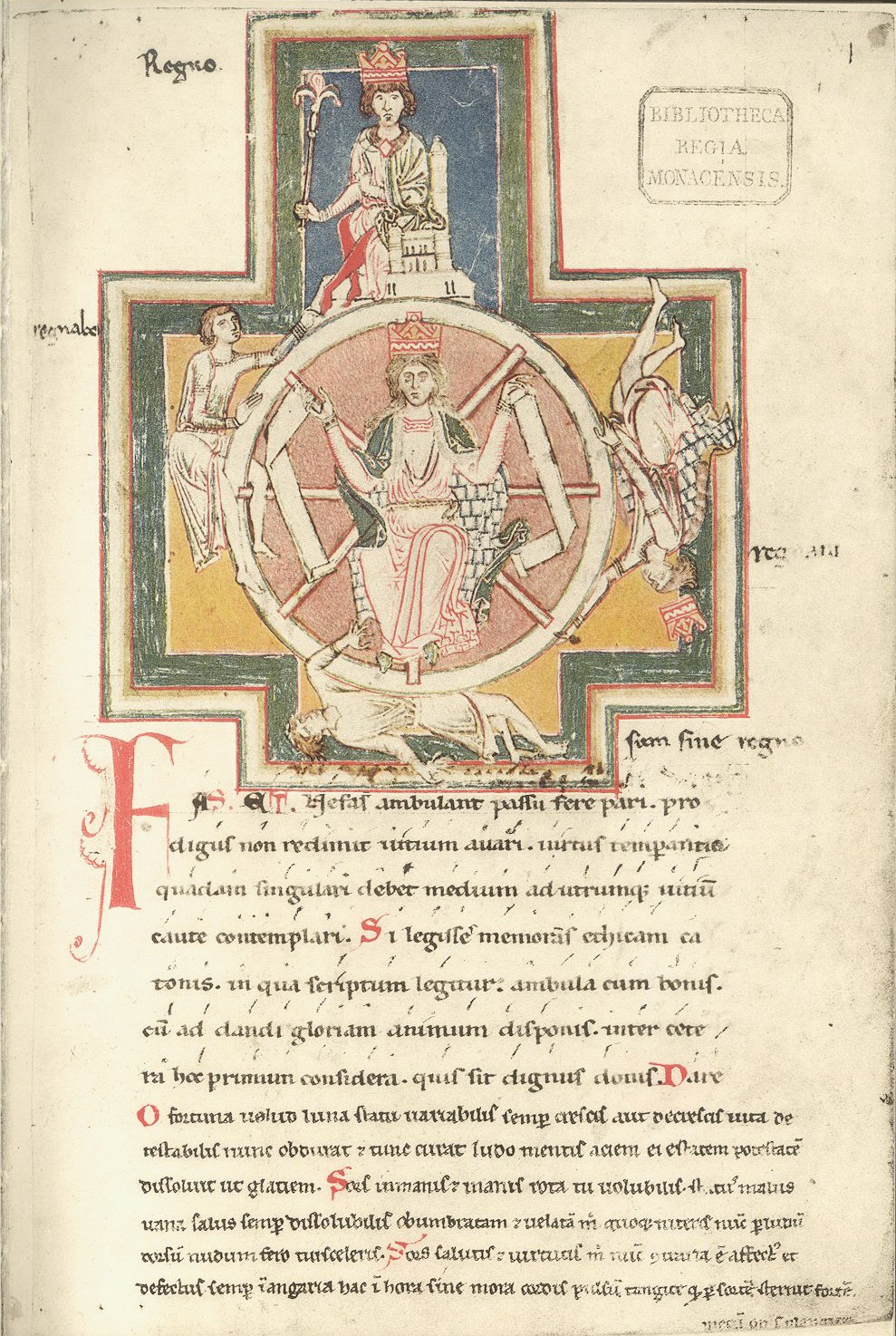
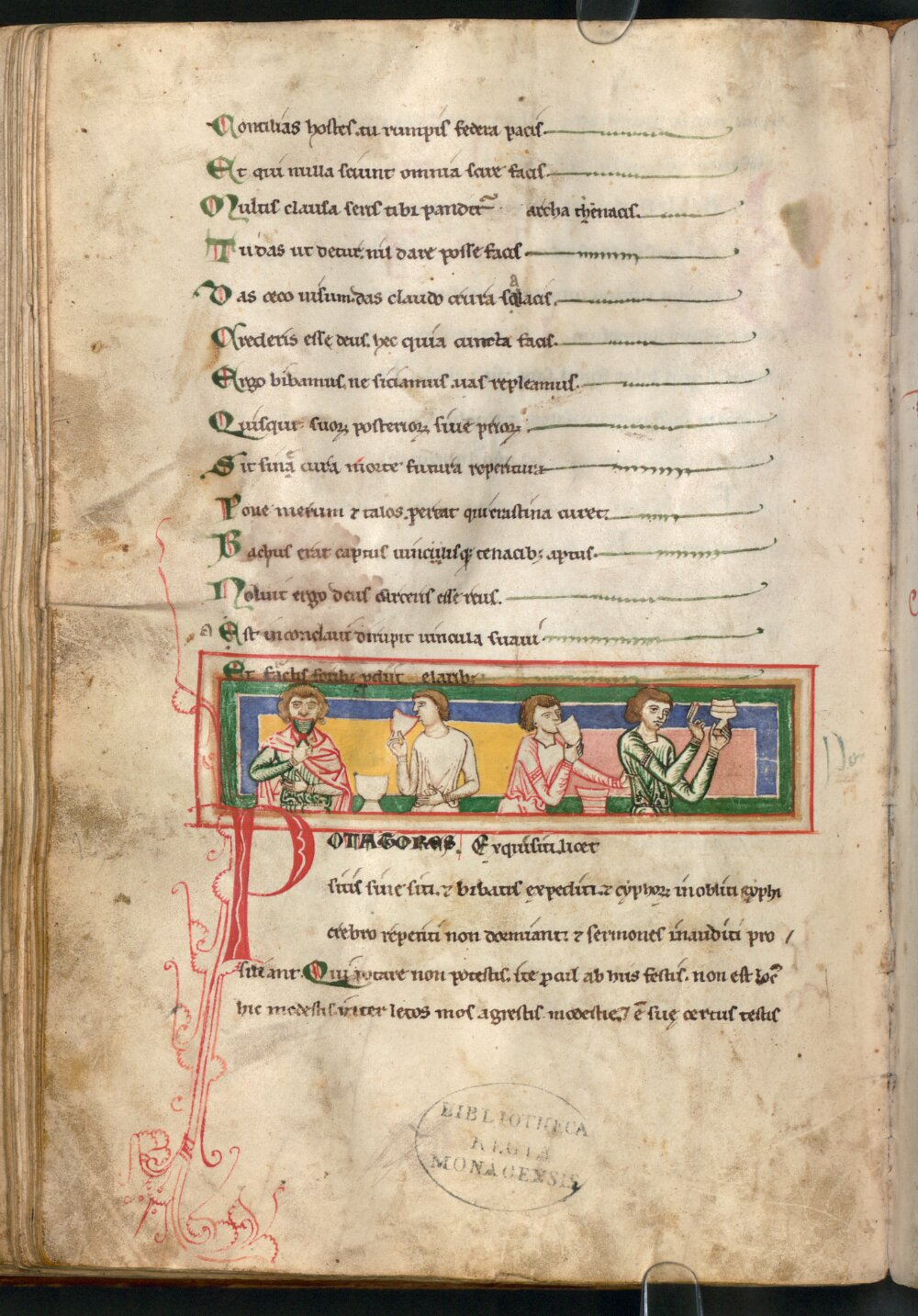
Orff assembled Carmina Burana in 1935 and 1936 from a stash of medieval poems — the Codex Buranus, a 13th-century manuscript discovered in 1803 at the Benediktbeuern monastery in Bavaria. The poems are written by wandering scholars and defrocked clerics, and they are not holy: they’re about luck, spring, sex, gambling, and getting catastrophically drunk. Orff set two dozen of them as a staged cantata for choir, soloists, and a huge percussion-heavy orchestra. It premiered at the Frankfurt Opera on 8 June 1937 under Bertil Wetzelsberger.
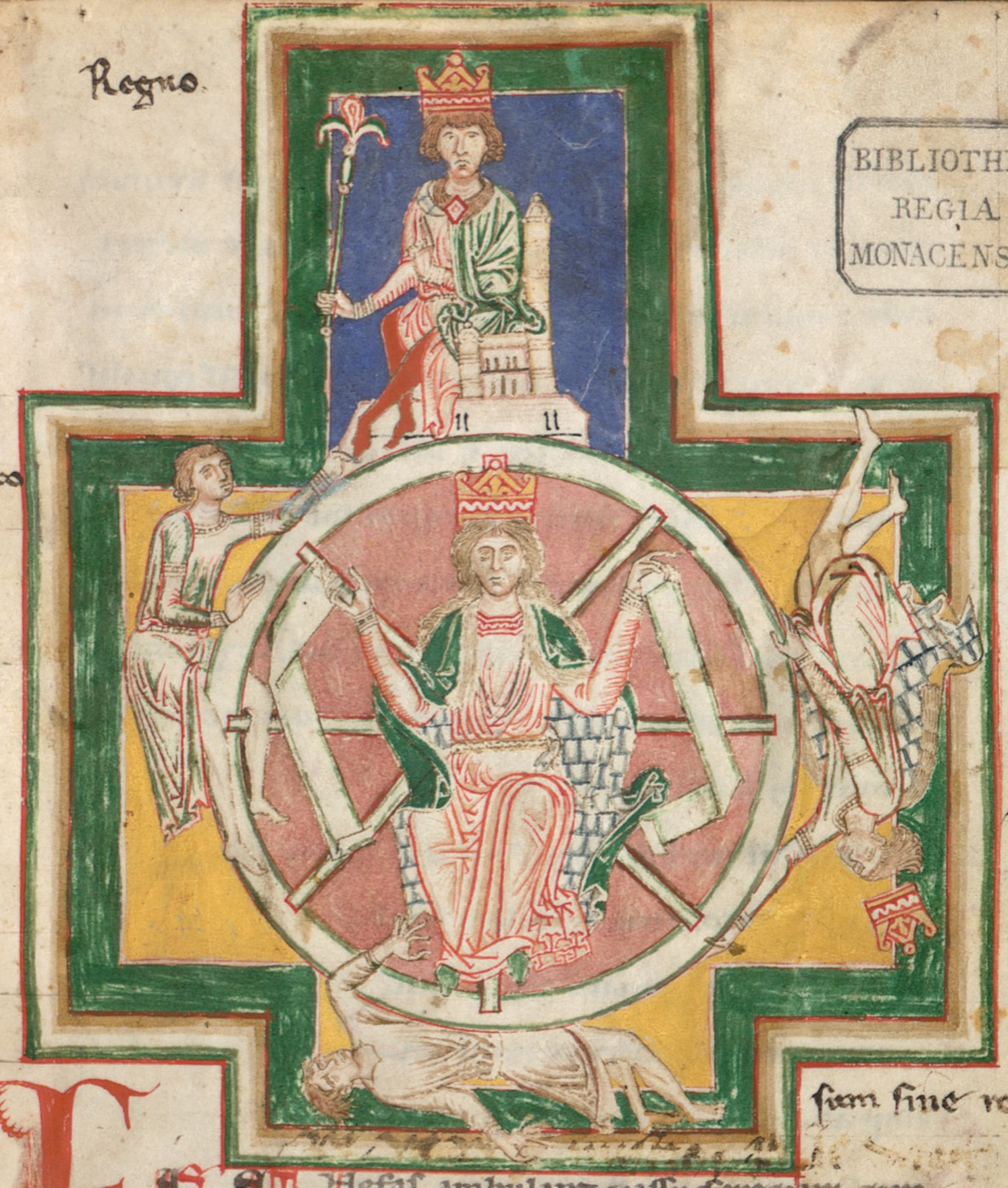
The structure is a circle. The work opens with “O Fortuna,” a hymn to the wheel of fate, then moves through three big panels — spring (“Primo vere”), the tavern (“In taberna”), and the court of love (“Cour d’amours”) — before slamming back into “O Fortuna” to close. So the famous part bookends everything. What sits between is more varied than its reputation: a baritone playing a self-pitying drunk, a tenor playing a swan being turned on a spit (sung in a strangled falsetto, on purpose), a soprano line in the love music that floats up to a high, exposed note and has to land it cleanly. A recording lives or dies on whether the conductor cares about those middle panels as much as the opening punch.
If you want three moments to test any recording against, use these. First, the drop right after “O Fortuna” opens: does the choir actually fall to a hush, or does the conductor keep everyone shouting? Second, “In trutina,” the soprano’s quiet aria in the love music — it should sound suspended, almost holding its breath, not merely soft. Third, “Estuans interius,” the baritone’s furious self-portrait: it needs swagger and bite, not just volume. A version that nails all three understands the piece. A version that only delivers the opening understands the trailer.
The contenders
Eugen Jochum / Chor und Orchester der Deutschen Oper Berlin / 1967 / Deutsche Grammophon
This is the one that’s sat at the top of the list for fifty years, and it earns it. Jochum recorded it in Berlin in October 1967 with three of the era’s best singers — Gundula Janowitz, Gerhard Stolze, and Dietrich Fischer-Dieskau — and the casting alone is a statement. Fischer-Dieskau, one of the great song interpreters of the century, sings the drunken Abbot and the lovelorn baritone as if every line had a meaning, not just a volume. Janowitz brings a silvery, almost weightless tone to the love music; her “In trutina” is the moment I’d use to convince a skeptic this piece has a heart. Jochum’s gift is rhythm with elasticity — he leans into phrases and pulls back, so the dance numbers swing instead of marching. It’s widely reported that Orff attended the sessions and gave the performance his approval, and the BBC’s “Building a Library” survey named it the top choice in 1995. Who it’s for: everyone, as a first and probably last word. The 1967 sound is still full and punchy.
🎧 Also on: Apple Music · Spotify
Riccardo Muti / Philharmonia Orchestra & Chorus / 1979 / EMI
If Jochum is the wise version, Muti is the dangerous one. Recorded at Abbey Road in March 1979 with Arleen Augér, John van Kesteren, and Jonathan Summers, this is Carmina Burana as a thriller — Muti builds tension in long, deliberate arcs and then detonates it. The Philharmonia Chorus sings with a ferocity that can genuinely startle you on a good system; the tavern scene has real menace, not just noise. Augér’s soprano is creamier than Janowitz’s, more Italian in line, and it suits Muti’s heated approach. The flaw is the flip side of the strength: subtlety is not the priority, and the 1979 sound, while big, is a touch harder and less transparent than the best modern engineering. Who it’s for: listeners who want maximum drama and don’t mind that the velvet glove has been left at home.
🎧 Also on: Apple Music · Spotify
Rafael Frühbeck de Burgos / New Philharmonia Orchestra & Chorus / 1965 / EMI
The longest-serving budget favorite, and for good reason. Frühbeck de Burgos recorded it at Kingsway Hall in June 1965 with a cast built around Lucia Popp, whose soprano is sweeter and more girlish than either Janowitz or Augér — for the love music alone, some collectors never let this one go. Gerhard Unger sings the roasted swan with a strange Lieder-like delicacy that makes the joke land harder, and baritone duties are split between Raymond Wolansky and John Noble. The performance feels the most spontaneous of the studio versions, as if caught live, with flexible tempos the chorus follows without strain. The catch is age: the 1965 sound is warm but narrower than the others, and the bass doesn’t hit the way modern listeners expect. Who it’s for: anyone who wants the singing first and the spectacle second, at a price that’s usually a fraction of full retail.
🎧 Also on: Apple Music · Spotify
Herbert Blomstedt / San Francisco Symphony & Chorus / 1990 / Decca
The one to reach for when you want the recording itself to be a demo disc. Blomstedt recorded it in San Francisco’s Davies Symphony Hall in 1990, with soloists Lynne Dawson, John Daniecki, and Kevin McMillan and a chorus prepared by Vance George; it won the 1993 Grammy for Best Choral Performance. The selling point is engineering — wide, deep, and clean, with percussion that has real weight and a chorus you can hear in individual rows. Blomstedt is more literal than Jochum, less theatrical than Muti; he plays it straight and lets clarity do the work. Some listeners find that approach a little cool, and they’re not wrong — there’s less risk here, less of the rubato that makes Jochum dance. Who it’s for: audiophiles, and anyone who wants to hear exactly what Orff wrote without a conductor’s fingerprints all over it.
🎧 Also on: Apple Music · Spotify
The verdict
If you buy one, buy Jochum (1967, Deutsche Grammophon). It’s the rare reference recording that’s also the most enjoyable — the cast is unbeatable, the rhythm has life, and nearly sixty years on nobody has bettered it as an all-round account. The fact that it remains the standard recommendation isn’t inertia; it’s that the alternatives each trade something away.
For a budget or first purchase, go with Frühbeck de Burgos (1965, EMI). You give up some sonic punch and gain Lucia Popp, which is not a bad trade for a fraction of the money.
And the “if you want X, get Y” pick: if you want it to sound spectacular on a real stereo, get Blomstedt (Decca); if you want it to scare you a little, get Muti (EMI). Both are doing something the safe choice doesn’t.
Hear the top pick
Below is the opening “O Fortuna” from Jochum’s Deutsche Grammophon recording — the bookend that frames the entire hour. Listen for how the chorus drops to a whisper after the first onslaught instead of staying at full roar; that contrast is the thing cheaper performances flatten out.
All four recordings are on the major streaming services (Spotify, Apple Music, Qobuz), so you can A/B the “O Fortuna” openings and the “In trutina” soprano solo before committing to a physical disc. If you like choral spectacle on this scale, our guide to the best recordings of Beethoven’s Ninth covers the same decision for an even bigger chorus, and the Bach Mass in B minor is the opposite end of the choral world — intimate where Orff is monumental.
Sources and recording notes
Recording metadata here was cross-checked against Deutsche Grammophon’s catalogue page for the Jochum set, label and discography listings (Discogs, MusicBrainz) for the Muti, Frühbeck de Burgos, and Blomstedt recordings, and contemporary reviews on Gramophone, Classics Today, and Classical Net. The Jochum recording dates (October 1967, released 1968) and its 1995 “Building a Library” win are documented by Deutsche Grammophon and Gramophone; the Frühbeck sessions (Kingsway Hall, June 1965) are listed in the EMI discography; the Blomstedt 1993 Grammy is a matter of record. The claim that Orff personally approved the Jochum performance is widely repeated by the label and reviewers but is harder to source to a primary document, so treat it as well-attested tradition rather than a verified quote. All character assessments — “menacing,” “girlish,” “demo disc” — are my opinion, not received fact.
Frequently asked questions
Is the Jochum recording overrated?
No. Its reputation is unusual in that the most-recommended version is also genuinely the most rewarding to listen to — the casting of Janowitz and Fischer-Dieskau is the kind of thing labels can’t assemble cheaply anymore, and Jochum’s rhythmic flexibility hasn’t been topped. The only honest knock is the 1967 sound, and even that holds up better than most recordings its age.
Which Carmina Burana recording is best for a beginner?
Start with Jochum if you want the single best version and don’t mind paying for it. If you want to spend less, Frühbeck de Burgos (1965) is the budget pick — slightly older sound, but Lucia Popp’s singing makes it an easy first listen. Both are on every streaming service, so you can try before buying.
What’s the difference between the recordings if it’s the same piece?
Tempo, balance, singers, and sound. Orff’s score leaves room for how hard the percussion bites, how much a conductor lingers in the love music, and how a soprano shapes the high lines. Muti plays up the drama; Blomstedt prioritizes clarity and modern sound; Jochum balances both; Frühbeck leads with the voices. Same notes, four different experiences.
Why is only “O Fortuna” famous?
Because it’s the loudest, shortest, and most self-contained number — perfect for trailers and ads, where you need an instant hit of doom. It opens and closes the work, so it frames the whole hour, but the tavern and love-court sections in between are where the variety and the jokes live. Hearing the full piece is the point of buying a recording at all.