- Composer
- Mozart
- Work
- Eine kleine Nachtmusik, K. 525
- Key
- G major
- Composed
- 1787
- Movements
- 4 movements
I. Allegro (G major)
II. Romanze: Andante (C major)
III. Menuetto: Allegretto (G major)
IV. Rondo: Allegro (G major) - Instrumentation
- String quintet (2 violins, viola, cello, double bass)
- Premiere
- Unknown
| Composer | Wolfgang Amadeus Mozart |
|---|---|
| Work | Eine kleine Nachtmusik (A Little Night Music) |
| Catalogue | K. 525 / KV 525 |
| Key | G major |
| Genre | Serenade |
| Movements | 4 (originally 5) |
| Instrumentation | String ensemble (2 violins, viola, cello, double bass) |
| Composed | August 10, 1787 |
| Duration | approx. 18–22 minutes |
Mozart wrote this piece on August 10, 1787, made a single note in his catalogue — “Eine kleine Nachtmusik” — and then apparently forgot about it. Nobody performed it publicly during his lifetime. Nobody talked about it. It sat in a drawer, unnoticed, while Mozart himself died four years later at 35.
Then, 36 years after his death, it was published. And it became one of the most recognizable pieces of music ever written.
Here’s the strange part: we still don’t know who he wrote it for. We don’t know when or where it was first performed. We don’t even know why he wrote it at all. The most famous serenade in Western music is essentially an orphan — no parents, no birth record, no family history.
The Summer Mozart Forgot to Grieve
May 28, 1787. Mozart’s father Leopold dies in Salzburg. Mozart is in Vienna. He doesn’t go to the funeral.
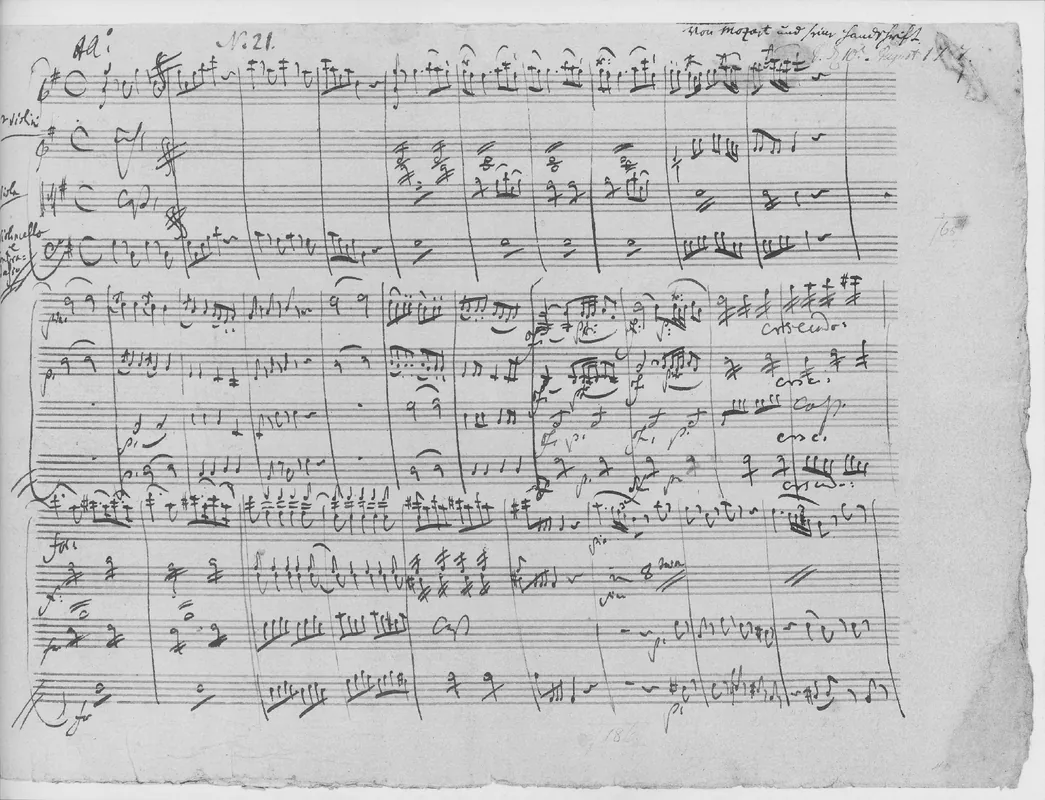
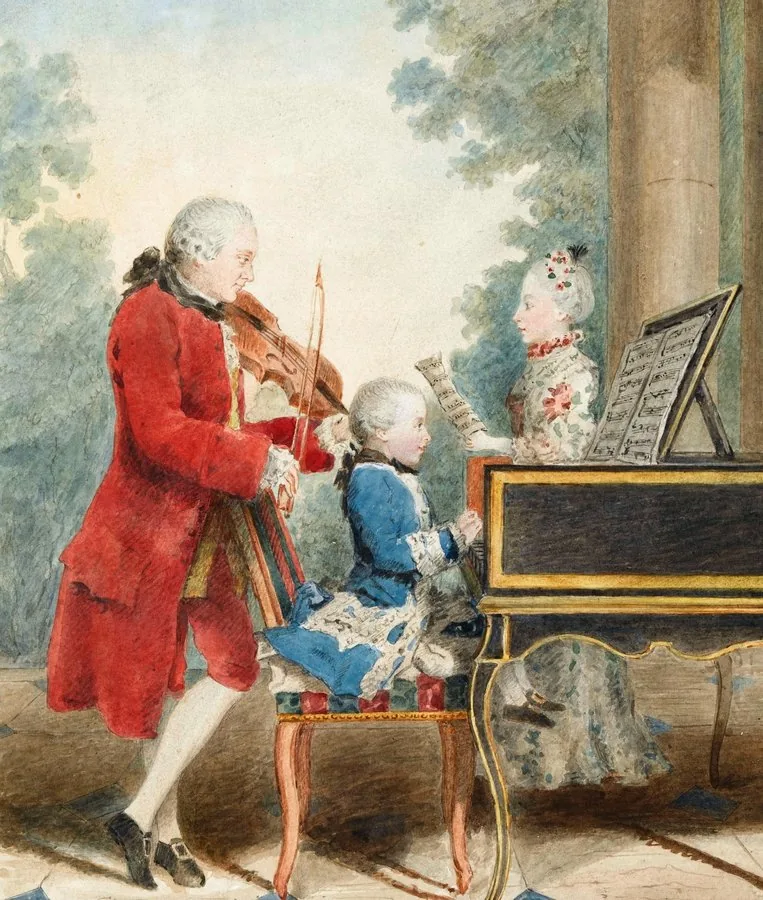
The relationship had been complicated. Leopold had engineered young Wolfgang’s entire childhood, dragging him across Europe from age six as the world’s first child music star — “this little boy,” he wrote in one letter, “is something extraordinary.” He made money, cultivated connections, and shaped his son’s career. But as Wolfgang grew up and started making his own decisions — moving to Vienna, marrying Constanze Weber against his father’s wishes, spending money Leopold thought was irresponsible — the letters turned sharp.
By 1787, they hadn’t seen each other in over a year. A month before Leopold died, Mozart sent him a strange, philosophical letter about death: “I make it a point,” he wrote, “to familiarize myself with this best friend of man.” He may have already suspected what was coming.
So what was Mozart doing in the weeks after his father died? Working. He was deep in Don Giovanni — an opera about a murderer who refuses to repent — and sometime around mid-August, he also dashed off this little serenade. On August 10th, he added it to his catalogue with minimal fanfare. No dedication. No explanation. Just: “Eine kleine Nachtmusik.” A little night music.
Most scholars believe it was written for private entertainment — a noble family’s garden party, an evening of social music. “Nachtmusik” was a generic German term for that kind of outdoor night performance. But nobody knows for sure. There was no commission recorded, no patron mentioned, no premiere date.
There’s another mystery built into the score. Mozart’s own catalogue says the work has five movements. But there are only four today. The first minuet — whatever it sounded like — is gone. Lost, misplaced, or possibly repurposed for something else. Three centuries later, no one has found it.
Four Movements, Four Different Moods
💡 First-time listener guide: The whole thing runs about 20 minutes. Don’t skip around — hear it straight through. Each movement has a distinct personality, and the payoff in the fourth movement lands better if you’ve sat through the second and third.
Movement I: The Melody Everyone Already Knows
The first movement opens with one of those rare melodies that sounds familiar even the first time you hear it. That bouncing, four-note figure — strings answering each other up and down the scale — is the opening argument, and Mozart states it immediately. No slow build. No introduction. Just: here it is.
What follows is textbook Classical-era sonata form, but that description doesn’t do it justice. The movement is a conversation between the violins and the lower strings — they toss phrases back and forth, interrupt each other, agree and disagree. There’s a moment in the development section where the music briefly tips into a minor key, a flicker of shadow across an otherwise sunny day. Then it snaps back to G major, as if the digression never happened.
Most performers repeat the exposition — meaning that opening statement plays twice before the development begins. If your recording includes the repeat, lean into it. The second time through, you’ll catch things you missed.
Movement II: The Art of Playing Quietly
This is where Mozart slows everything down to a near-whisper. The marking is Romanze — and in 18th-century German usage, that meant a slow, narrative melody, something with a story inside it. Mozart doesn’t tell us the story, but you feel like there is one.
The first violin carries the main theme almost alone, with the other instruments cushioning underneath. The middle section dips into minor — nothing dramatic, just a few degrees cooler — before the main melody returns. The whole movement stays so quiet that in a small concert hall, you can hear the audience breathe.
People who encounter this movement live for the first time often don’t realize it’s ended. That’s not a critique — it’s a compliment. Mozart found an ending so natural that the music seems to simply stop when it has nothing more to say. Most composers force the issue. Mozart knew when to quit.
Movement III: The Dance That Lost Its Partner
Remember: there should be two minuets. This is the one that survived. It’s structured the standard way — minuet, trio, minuet da capo — and it does exactly what you’d expect from an 18th-century dance movement: it bounces, it’s elegant, it moves at a speed appropriate for actual dancing.
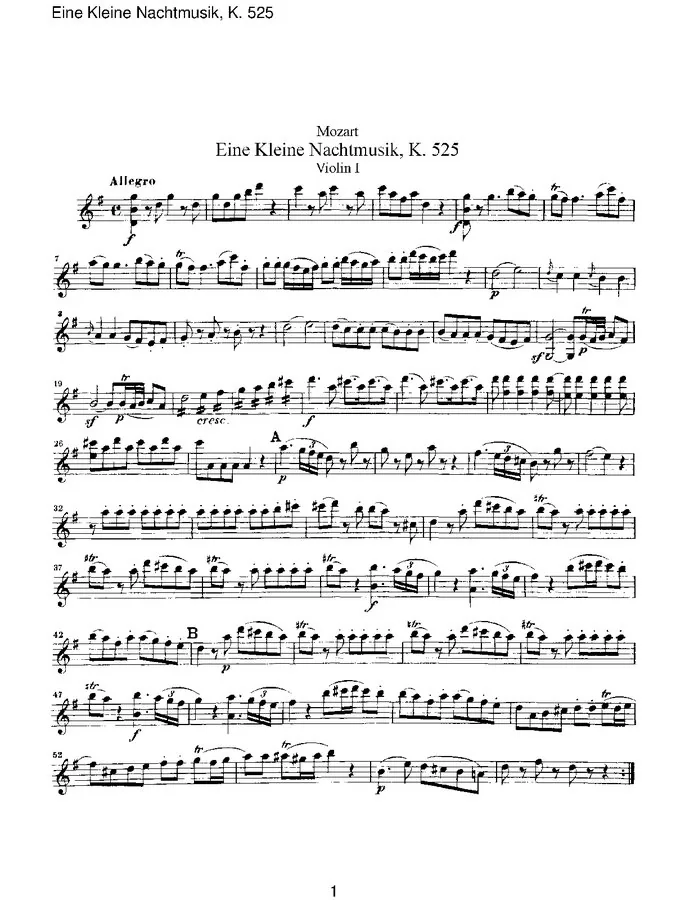
The trio section deserves attention. Where the minuet is assertive, the trio pulls back — softer, more yielding, with the second violin and viola taking a more prominent role. When the minuet returns, it sounds freshly energized. That’s the whole point of the trio: contrast. Make the main theme feel different when it comes back.
At roughly two minutes, this is the shortest movement by far. Think of it as the palate cleanser between the slow second movement and the sprint of the finale.
Movement IV: A Rondo That Won’t Sit Still
Rondo form is basically a pop song structure: there’s a catchy refrain (the rondo theme), and it keeps coming back between contrasting episodes. Once you hear the rondo theme here, you’ll spend the rest of the movement listening for its return — which is exactly what Mozart wants.
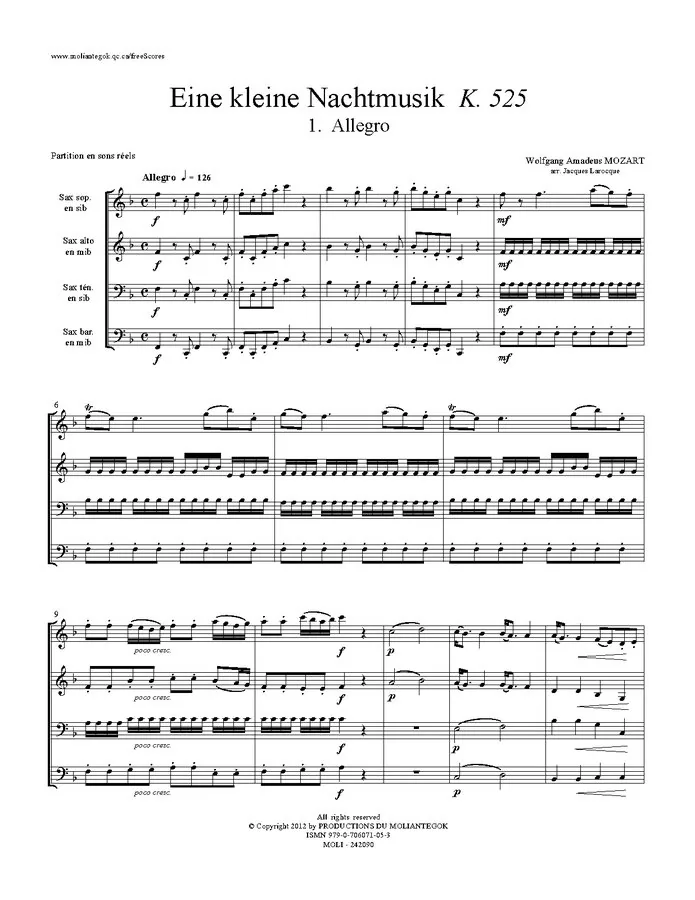
The finale moves fast. The first violin sets the pace, the others chase. Episodes interrupt the main theme — one quieter, one more dramatic — before the refrain cycles back again. If you’re counting, the main theme appears four times before the final cadence.
One detail worth noting: there’s a brief quiet moment right before the ending. The music suddenly hushes, as if taking a breath — and then the final chords land. It’s a classic misdirection. First-time listeners often start to applaud just before that last phrase, then catch themselves. Mozart wrote that trap deliberately.
What Makes This Piece a Landmark
Eine kleine Nachtmusik is notable not because it’s technically difficult or harmonically adventurous — it isn’t — but because it represents the Classical ideal carried out with near-perfect proportion. Listen for the way the string voices interlock in the first movement: the cello’s bass line doesn’t just provide harmonic support, it’s an active melodic participant, answering phrases from the violins above. That equality of voices was a hallmark of Mozart’s chamber writing, and it’s unusually clear here because the texture is so spare.
What’s striking about the musical history of this piece is how it influenced the genre of the light concert piece — the kind of thing orchestras still play as encores and openers. Its four-movement structure, compact duration, and immediately accessible themes became a kind of template. Not because Mozart consciously set out to create one, but because the piece worked so well that everyone who came after ended up writing something like it.
One remarkable detail: the second movement’s dynamic markings are unusually restrained for a serenade intended as background entertainment. Mozart asks the strings to play piano and pianissimo for extended stretches — not a typical demand for party music. This suggests he may have been writing something he cared about more than the occasion warranted. Or he simply couldn’t help himself.
For First-Time Listeners — What to Watch For
A few things that make the whole piece click:
- The first movement’s theme is already in your head. You’ve heard it in commercials, ringtones, and movie trailers. That’s fine — just hear it as the actual piece now.
- Turn the volume down for Movement II. This movement rewards quiet listening. Full blast is the wrong setting for it.
- The third movement is short on purpose. It’s not padding — it’s a structural reset before the finale.
- Count the rondo theme in Movement IV. Four appearances. Notice how each one feels slightly different depending on what came before it.
- Listen all the way through, in order. The ending hits differently if you’ve experienced the whole arc from Movement I.
The Victim of Its Own Fame
Here’s the awkward truth about Eine kleine Nachtmusik: it’s been so thoroughly annexed by background music culture that serious classical listeners often dismiss it. Hotels play it. Airlines use it. Every beginner’s playlist leads with it. If you tell a classical music snob that it’s your favorite Mozart, you’ll get a look.
But that dismissal misses something. The piece became ubiquitous for a reason: it works. The themes are irresistible. The proportions are perfect. Nothing overstays its welcome. It’s one of those rare pieces where every decision — tempo, structure, dynamics, orchestration — seems exactly right.
And consider what it actually is: a short instrumental piece, no program, no narrative, no famous soloist. Just five string players (or fifty, if you’re using a full orchestra) playing music that was apparently dashed off in a summer of grief and financial anxiety, never intended for public performance, and completely forgotten until decades after the composer’s death. That’s not a formula for immortality. Yet here we are.
There’s something appealing about a piece that was never supposed to be famous. Mozart didn’t write this for posterity. He wrote it because it needed to be written — or maybe because someone asked him to, or maybe because he just felt like it on August 10th, 1787. We’ll never know. And somehow, that uncertainty makes it more interesting, not less.
Three Recordings Worth Knowing
Neville Marriner / Academy of St Martin in the Fields (1969, Philips)
The benchmark recording. Marriner’s ensemble plays with transparent texture and clean articulation — you can hear every voice distinctly. If you want a reference version to measure everything else against, this is it.
Karajan / Berlin Philharmonic Orchestra (1965, DG)
The full orchestral approach. Where Marriner gives you intimacy, Karajan gives you scale. The Berlin strings are warmer and heavier, which changes the character of the slow movement especially. Some people prefer this; others find it too grand for what is, at its core, chamber music. Both camps have a point.
Harnoncourt / Vienna Concentus Musicus (1981, Teldec)
The period-instrument version. Gut strings and lighter bows give this a sharper, more transparent sound that’s closer to what an 18th-century audience would have heard. It’s more brittle than the modern-instrument versions and considerably less polished. Whether that’s a virtue depends on what you’re listening for.
Listening with the Score
The complete score for Eine kleine Nachtmusik, K. 525 is available for free at IMSLP (International Music Score Library Project). Following along with the score reveals how Mozart distributes material between the five parts — the way the cello and bass move together, how the viola bridges the upper and lower voices, and where the first and second violins split into independent lines.
Frequently Asked Questions
What does “Eine kleine Nachtmusik” mean?
Why did Mozart write Eine kleine Nachtmusik?
How many movements does Eine kleine Nachtmusik have?
What are the best recordings of Eine kleine Nachtmusik?
What instruments play Eine kleine Nachtmusik?
Further Reading
- Mozart’s Clarinet Quintet in A major, K. 581
- Mozart’s Clarinet Concerto in A major, K. 622
- Mozart’s Piano Concerto No. 23 in A major, K. 488
- Beethoven’s Violin Sonata No. 5 in F major ‘Spring’, Op. 24
- Beethoven’s Für Elise, WoO 59