- Composer
- Pyotr Ilyich Tchaikovsky (1840–1893)
- Work
- Piano Concerto No. 1 in B♭ minor, Op. 23
- Composed
- November 1874 – February 1875
- Premiere
- October 25, 1875, Boston (Hans von Bülow, soloist; Benjamin Johnson Lang, conductor)
- Movements
- 3
- Scoring
- Solo piano, strings, 2 flutes, 2 oboes, 2 clarinets, 2 bassoons, 4 horns, 2 trumpets, 3 trombones, timpani
- Dedication
- Hans von Bülow
The Storm on Christmas Eve
Christmas Eve, 1874
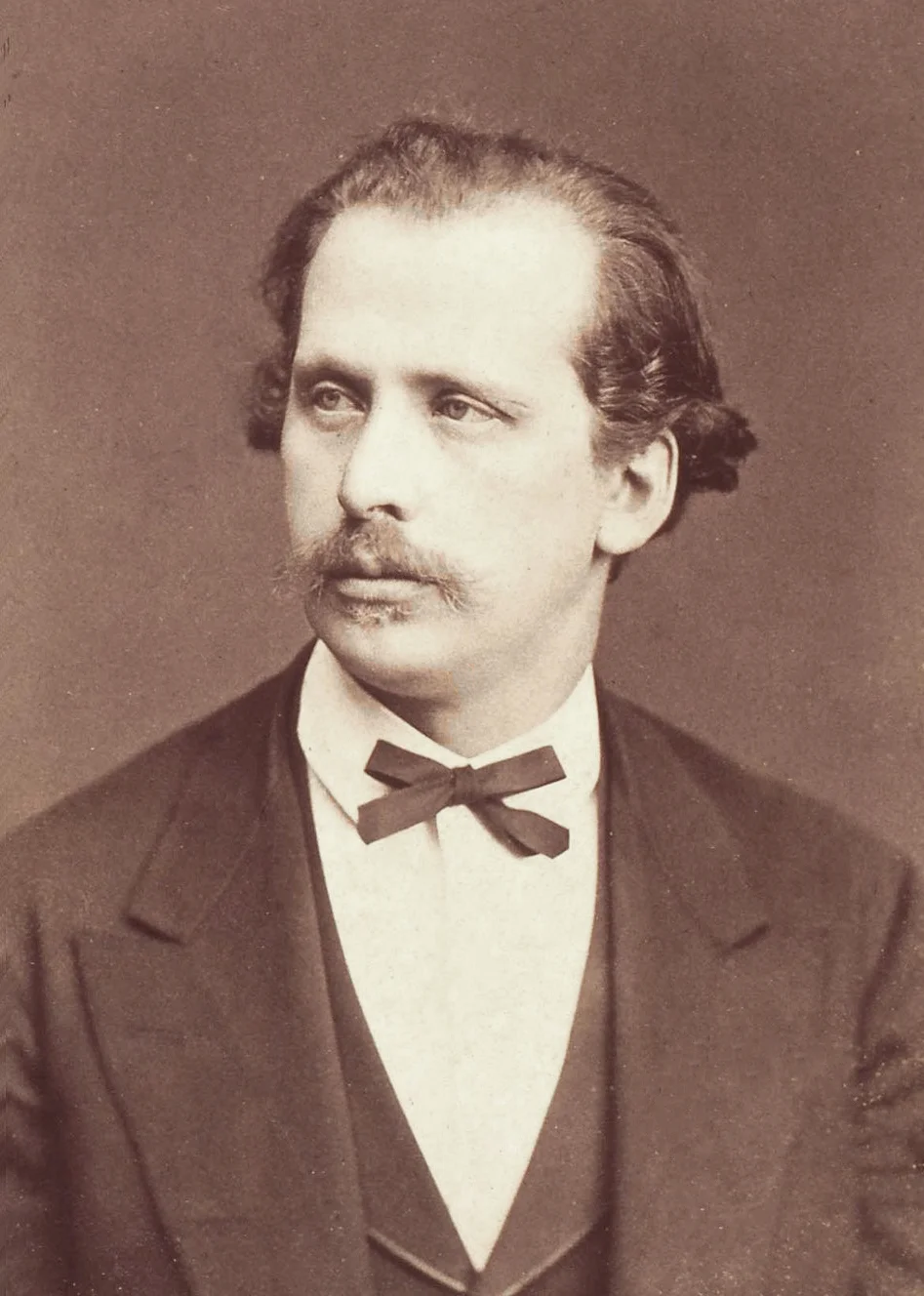
December 24, 1874. The Moscow Conservatory. Tchaikovsky sat at the piano with trembling hands, about to play through the first movement of a concerto he had poured himself into for over a month. His audience numbered exactly two: Nikolai Rubinstein, director of the Moscow Conservatory and one of Russia’s most formidable pianists, and fellow professor Nikolai Hubert. Tchaikovsky desperately wanted Rubinstein to give the work its first performance.
The first movement ended. Silence. Not a single word.
Ordinarily, you might expect some remark—”this passage works well,” or “that section needs trimming.” Instead, Rubinstein sat motionless as stone. Hubert watched nervously, waiting to see which way the wind would blow. Tchaikovsky steeled himself and played through to the end. When he finally asked, “Well?”—the torrent that poured from Rubinstein’s mouth was not praise.
“Worthless and utterly unplayable.”
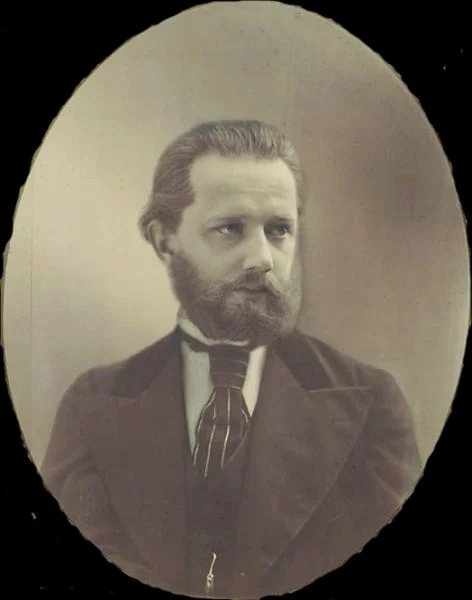
The passages were incoherent, the technique clumsy, the composition itself vulgar. He accused Tchaikovsky of stealing from other composers. Two or three pages might be salvageable; the rest should be discarded or entirely rewritten. Rubinstein sat at the piano and caricatured Tchaikovsky’s music, repeating “What on earth is all this?”
Three years later, Tchaikovsky recounted the scene in devastating detail in a letter to his patroness Nadezhda von Meck: “Had a disinterested person been in the room, they would have thought I was a talentless lunatic who had come to submit his rubbish to an eminent musician.” He left the room without a word. Rage and humiliation had rendered him speechless.
Rubinstein followed him into the corridor moments later, his tone slightly softer. He offered to perform the work if Tchaikovsky revised it according to his demands. Tchaikovsky’s answer was absolute:
“I will not change a single note. I shall publish the work exactly as it is.”
And that is precisely what he did.
Why Rubinstein Erupted
Rubinstein’s reaction was not mere spite. The concerto genuinely broke several conventions of the Russian musical establishment.
The most immediately striking departure comes in the first movement’s opening. This is a concerto in B♭ minor, yet its first grand melody appears in D♭ major—the “wrong” key. Moreover, this majestic introduction never returns throughout the entire work. For a musician schooled in classical sonata form, this was bewildering.
The piano writing was equally radical. Unlike the refined “salon-style” concertos of the era, Tchaikovsky pitted the piano against the orchestra with near-symphonic force. Certain passages were genuinely perilous even for virtuosi of the highest caliber. Rubinstein’s charge of “unplayable” was not pure hyperbole—it reflected real technical danger zones.
But perhaps what truly unsettled Rubinstein was the concerto’s unapologetically Russian character. The second subject of the first movement derives from a song sung by blind beggars on Ukrainian streets, while the third movement’s main theme directly quotes the Ukrainian folk song “Come Out, Come Out, Ivanku.” At a time when Moscow’s musical establishment still looked to German tradition as the gold standard, weaving folk melodies into a piano concerto’s structural fabric was an act of defiance.
The orchestration itself broke convention. Tchaikovsky deployed three trombones and timpani with symphonic weight, forcing the piano to collide with the orchestra as an equal. This approach would directly influence Rachmaninoff and Prokofiev in the coming century. The techniques Rubinstein dismissed as “clumsy” were, in fact, laying the groundwork for the modern piano concerto—an irony history would not let pass unnoticed.
Three Worlds Within B♭ Minor
The concerto unfolds across three movements:
I. Allegro non troppo e molto maestoso — Allegro con spirito (B♭ minor)
II. Andantino semplice — Prestissimo — Tempo I (D♭ major)
III. Allegro con fuoco (B♭ minor)
The first movement opens with one of the most recognizable introductions in all classical music. Four commanding horn notes, the piano crashing down in massive chords, the strings singing that universally known melody. Even listeners encountering the work for the first time feel an instant shock of recognition.
Then something strange happens. Once this magnificent introduction concludes, the music pivots into an entirely different world. That famous melody never returns. It functions like a film’s prologue—an arresting opening sequence after which the main narrative takes a completely different path. This audacious structural choice lies at the heart of what confounded Rubinstein.
The movement’s main body unfolds a spirited theme drawn from Ukrainian folk melody, driven by the piano’s sharp rhythmic attack. In the cadenza, the soloist commands the stage alone, reconstructing the movement’s material in a display of tension that must be experienced live to be fully appreciated.
The second movement is another world entirely. A flute intones a melody from a French chansonette, and the piano layers delicate ornamentation above it. Then, without warning, the music erupts into a Prestissimo—as if a storm had suddenly descended on a still lake. When this tempest subsides back into the opening tranquility, the entire movement feels like a single held breath.
The third movement is a celebration. The Ukrainian folk song “Come Out, Come Out” merges with the piano’s ferocious energy, and the interplay between soloist and orchestra feels like a genuine duel. When the coda drives both forces toward their combined climax, audiences rise to their feet. This is why the concerto remains a staple of international competitions.
Revenge Across the Atlantic
Rejected by Rubinstein, Tchaikovsky turned to an unlikely champion: Hans von Bülow, the German pianist and conductor. Tchaikovsky had heard Bülow perform in Moscow earlier in 1874 and been deeply impressed by his fusion of intellect and passion.
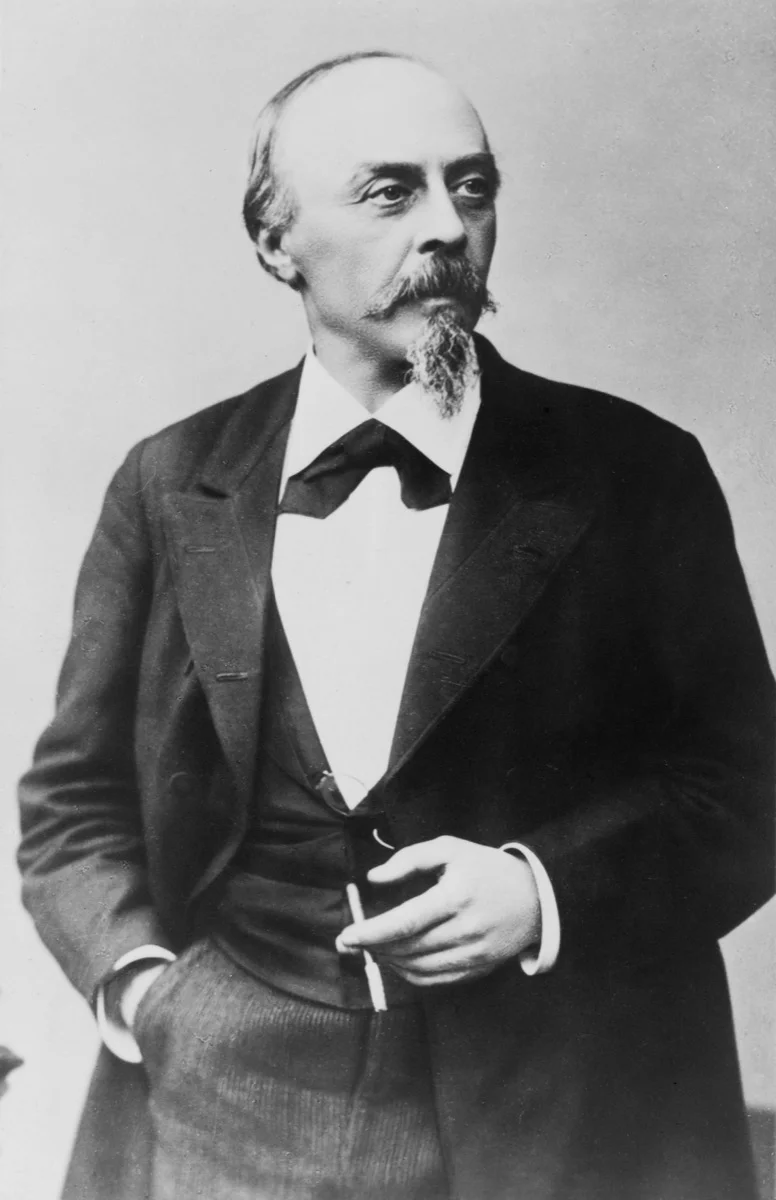
Bülow’s response was the polar opposite of Rubinstein’s. He called the work “so original and noble” and immediately programmed it for his American tour. Tchaikovsky rededicated the concerto to Bülow.
October 25, 1875. Boston. Benjamin Johnson Lang conducted; Bülow took the piano. The original conductor had been dismissed after a quarrel with Bülow, and Lang was brought in at short notice. Rehearsal had been insufficient. When the trombones entered at the wrong moment during the first-movement tutti, Bülow called out in a voice audible to the audience: “The brass may go to hell!”
Despite this chaos, the performance was a triumph. The audience’s reaction was so fervent that Bülow was compelled to repeat the finale as an encore. Tchaikovsky, receiving news from half a world away, could scarcely believe it.
A month later, on November 22, a second American performance under Leopold Damrosch in New York drew an even more enthusiastic response. One critic declared the piece “hardly destined to become classical”—a prophecy that history would demolish with particular relish.
Biographer David Brown suggests that Rubinstein’s attack had shaken Tchaikovsky’s confidence so deeply that he wanted the premiere to take place somewhere he would not have to personally endure any humiliation if the work failed—on the far side of the Atlantic. That instinct for self-preservation produced, ironically, one of the most spectacular debuts in music history.
Rubinstein’s Surrender
The reversal came swiftly after the premiere.
On November 13, 1875, the Russian premiere took place in Saint Petersburg, with pianist Gustav Kross and conductor Eduard Nápravník. By Tchaikovsky’s own account, Kross reduced the concerto to “an atrocious cacophony.”
The decisive moment arrived on December 3, 1875, at the Moscow premiere. The soloist was Sergei Taneyev; the man on the podium was Nikolai Rubinstein—the very person who had pronounced the work worthless just eleven months earlier.
Taneyev’s Moscow premiere was itself a minor revelation. Tchaikovsky’s student—later a professor at the Conservatory in his own right—delivered the concerto with such authority that Tchaikovsky seriously considered rededicating the work to him. The dedication ultimately remained with Bülow, but Taneyev’s interpretation proved the catalyst for Rubinstein’s change of heart.
What converted Rubinstein? Word of the rapturous American receptions had surely reached him. But more decisively, when he returned to the score with fresh eyes, he discovered what he had missed on first hearing. The structural gambits that had sounded alien now resolved into a coherent logic.
Rubinstein went on to perform the concerto across Europe. When Tchaikovsky’s Second Piano Concerto appeared, Rubinstein insisted on giving the premiere himself—a plan thwarted only by his sudden death in 1881. He died of tuberculosis in Paris at the age of forty-five.
Three Revisions, One Conclusion
Tchaikovsky’s declaration that he would “not change a single note” was spoken in the heat of fury against Rubinstein. In practice, he revised the concerto three times.
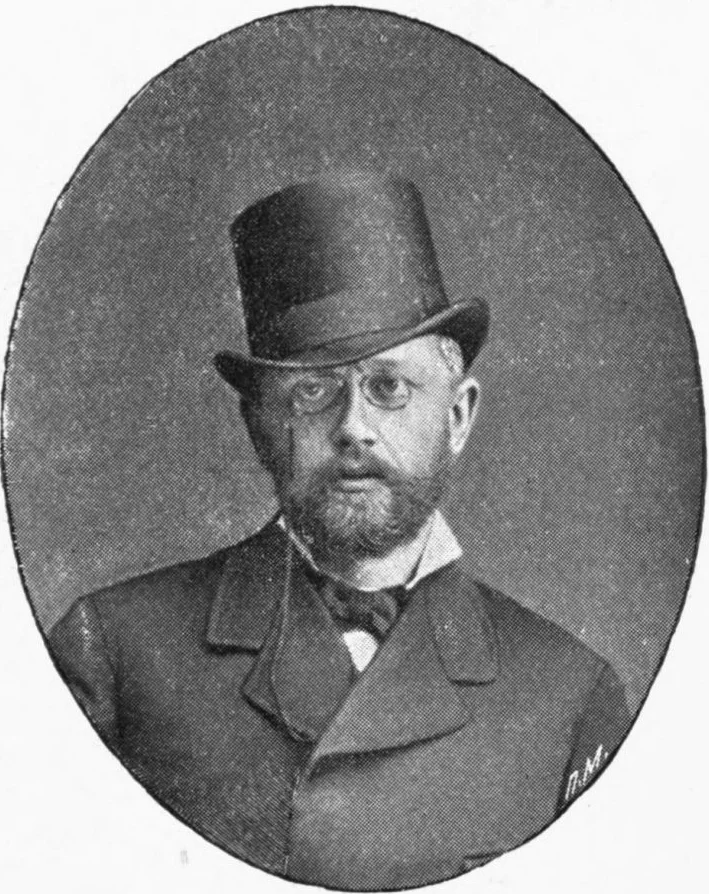
After the 1875 first edition was published, he gratefully accepted technical advice from Edward Dannreuther, who had given the London premiere, and later from his student Alexander Siloti. The most conspicuous change involves the opening piano chords. In the original, they were arpeggiated; in the final version, they became solid block chords. The thunderous “crash” that opens the concerto as we know it today is, in fact, the product of the third revision.
Siloti’s contribution merits special attention. A cousin of Tchaikovsky and a student of Liszt with formidable keyboard technique, Siloti proposed the transformation from arpeggios to block chords. By eliminating the rolled notes, the pianist’s vertical strike gained a dramatic impact that fundamentally altered the concerto’s first impression.
The 1879 revision and the 1888 final edition followed. The version performed in concert halls worldwide today is the 1888 text. American pianist Malcolm Frager unearthed and performed the 1875 original, and in 2015 Kirill Gerstein released the world-premiere recording of the 1879 revision, earning an ECHO Klassik award. Comparing all three versions reveals how meticulously Tchaikovsky refined his work—even through the haze of anger.
The Secret of the First-Movement Introduction
The concerto’s most debated mystery: why does that famous opening melody never reappear in the rest of the work?
Scholars remain divided. Some argue that Tchaikovsky deliberately subverted sonata-form convention. Others interpret the introduction as a self-contained prologue—the musical equivalent of a novel’s preface—while the main body constitutes a separate drama in a different key.
There is a further secret embedded in this introduction. The massive piano chords actually serve as accompaniment to the orchestra’s melody. In most concertos, the soloist leads while the orchestra supports. Tchaikovsky inverted this relationship entirely: the piano provides rhythmic propulsion while the strings sing. This reversal was profoundly unconventional in 1874, and likely another source of Rubinstein’s bewildered fury.
What is remarkable is that this “non-returning introduction” has enhanced rather than diminished the concerto’s popularity. Everyone recognizes the first thirty seconds, but what keeps listeners engaged through the entire work is the completely different musical adventure that unfolds from the exposition onward. If the introduction is bait, the rest is the prize.
In 2021, this melody found an unexpected new context. When Russia’s doping scandal resulted in a ban on the national anthem at the Olympics, the Russian Olympic Committee adopted this very theme as a substitute sporting anthem. One wonders what expression Tchaikovsky might have worn.
Why Every Pianist Must Face This Concerto
Tchaikovsky’s Piano Concerto No. 1 is not merely famous—it is one of the most frequently chosen concertos at international competitions, a crucible that can make or break a pianist’s career.
The reason is that this concerto demands everything. The massive chords of the first movement test raw power. The delicate ornamentation of the second requires poetic sensitivity. The relentless octave passages of the third examine stamina and precision simultaneously. Excellence in one movement is insufficient; three entirely different skill sets must be demonstrated on a single stage.
Martha Argerich’s lightning-fast finale, Evgeny Kissin’s overwhelming charisma as a teenager, Seong-Jin Cho’s meticulous tonal shading—the same concerto becomes an entirely different work in each pianist’s hands. This is why the piece has survived in concert halls for over 150 years.
The concerto also played a starring role in Cold War cultural history. In 1958, at the inaugural Tchaikovsky International Competition, twenty-three-year-old American pianist Van Cliburn performed this work in the finals. That a citizen of the rival superpower should win a competition bearing Tchaikovsky’s name in Moscow was an event that transcended music. When Cliburn returned to New York, he received a ticker-tape parade—the first and last time a classical musician has been honored in this way. His subsequent recording became the first classical album to reach number one on the Billboard chart. Yet another unforeseen victory for the concerto Rubinstein had called worthless.
Follow the Score
The full score is freely available at IMSLP. View the Piano Concerto No. 1, Op. 23 score on IMSLP
Frequently Asked Questions
Frequently Asked Questions
How difficult is Tchaikovsky’s Piano Concerto No. 1?
It demands a professional-level pianist with conservatory training or equivalent. The first-movement cadenza and third-movement octave passages require top-tier technique, while the lyrical demands of the second movement mean that raw virtuosity alone cannot carry the performance.
Why doesn’t the famous opening melody return later in the concerto?
Tchaikovsky appears to have deliberately broken with sonata-form convention. The introduction functions as an independent prologue, composed in D♭ major—a different key from the body of the work in B♭ minor.
Which recording should I listen to first?
Martha Argerich with Charles Dutoit is an excellent entry point. Evgeny Kissin’s legendary teenage performances remain essential listening. For a more recent perspective, Seong-Jin Cho’s live recordings offer exceptional refinement.
Why was this concerto used as Russia’s Olympic anthem?
During the 2020 Tokyo and 2022 Beijing Olympics, Russian athletes were barred from using their national anthem due to doping sanctions. The Russian Olympic Committee selected Tchaikovsky’s opening theme as the most universally recognized Russian classical melody—a fitting, if unintended, monument to the concerto’s global reach.
Who was Tchaikovsky’s Piano Concerto No. 1 written for?
Tchaikovsky originally dedicated the work in 1874 to pianist Nikolai Rubinstein, who famously rejected it as “unplayable.” Hurt by the criticism, Tchaikovsky re-dedicated it to Hans von Bülow, who gave the concerto its triumphant premiere in Boston in 1875. Rubinstein later recanted his initial judgment and became a famous interpreter of the concerto.
How long is the concerto and what are its movements?
Tchaikovsky’s Piano Concerto No. 1 in B-flat minor typically lasts around 32-35 minutes. It is composed of three movements: 1. Andante non troppo e molto maestoso – Allegro con spirito, 2. Andantino semplice – Prestissimo, and 3. Allegro con fuoco.
Where might I have heard this music before?
The dramatic opening theme is widely used in popular culture, appearing in films like “Misery” and “The Great Gatsby,” and was even featured in a Monty Python sketch. Its immediate, powerful recognition has made it a popular choice for soundtracks and events for decades.