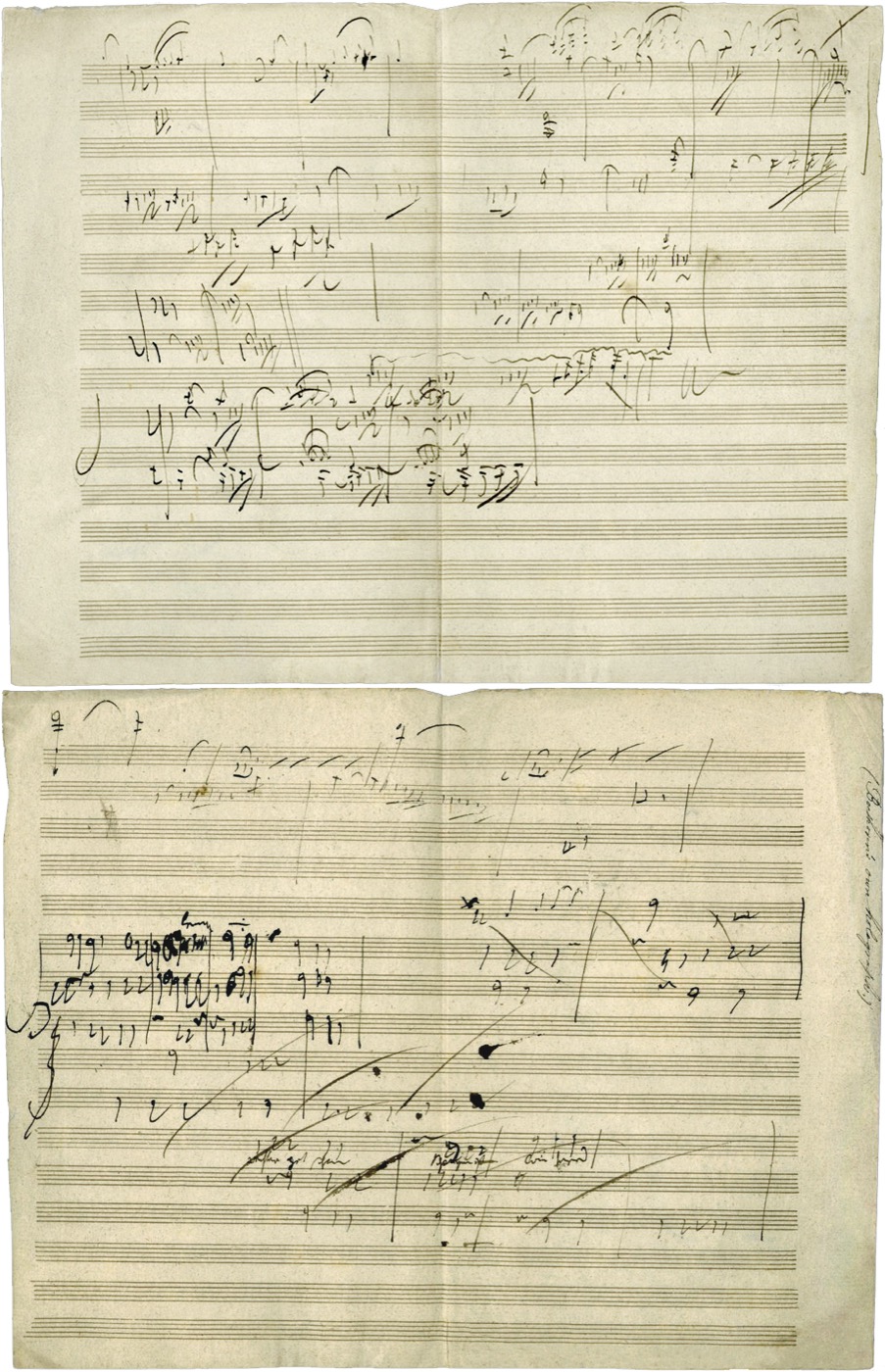
Beethoven Piano Sonatas: The Complete Guide to All 32 Works

32 Masterworks That Define the Piano

32 Masterworks That Define the Piano

Hans von Bülow, the great nineteenth-century pianist and conductor, once declared that Bach’s Well-Tempered Clavier was the Old Testament of keyboard music. The New Testament, he said, belonged to Beethoven’s thirty-two piano sonatas. That comparison has stuck for over a century, and for good reason. No other body of solo piano works spans such a vast emotional and structural range while maintaining the fierce coherence of a single artistic vision.

Ludwig van Beethoven composed his piano sonatas over a period of roughly twenty-seven years, from 1795 to 1822. They begin in the elegant drawing rooms of late eighteenth-century Vienna and end somewhere entirely different—in a spiritual realm that still puzzles and moves listeners two centuries later. Along the way, Beethoven shattered every convention of the Classical sonata form, expanded the piano’s expressive range beyond what anyone thought possible, and left behind a body of work that every serious pianist must eventually confront.

These thirty-two sonatas are not museum pieces. They are living documents of one composer’s restless evolution—from a brash young virtuoso determined to outdo Haydn and Mozart, to a deaf and isolated genius wrestling with questions of mortality, transcendence, and the limits of musical language. Each sonata presents its own world: some are compact and witty, others sprawling and revolutionary. A few have earned nicknames that make them instantly recognizable; many others remain unjustly overlooked.

This guide walks through all thirty-two sonatas in chronological order, grouped into three broad periods. Whether you are encountering Beethoven’s piano music for the first time or revisiting old favorites, the aim here is to provide a clear map of this extraordinary landscape—what makes each sonata distinctive, where the major landmarks fall, and how the whole cycle holds together as one of the supreme achievements in Western music.

Early Sonatas (Nos. 1–11) — The Young Lion in Vienna

Beethoven arrived in Vienna in 1792 and quickly established himself as the city’s most formidable keyboard player. His early sonatas, composed between 1795 and 1800, show a composer steeped in the language of Haydn and Mozart but already pushing against its boundaries. These works are unmistakably Classical in their formal outlines, yet they brim with a rhythmic energy and harmonic daring that signaled something new was coming.

No. 1 in F minor, Op. 2 No. 1 — Beethoven’s official debut in the genre, dedicated to Haydn and premiered at a private concert in the elder composer’s presence. The stormy F minor key—a signature tonality that would recur throughout Beethoven’s career—and the compact, driven Finale already hint at the composer’s dramatic instincts. The Mannheim rocket figure that opens the first movement is pure Classical convention, but the force behind it is entirely Beethoven’s own. Four movements where a twenty-four-year-old lays down a challenge to every pianist in Vienna.

No. 2 in A major, Op. 2 No. 2 — Lighter and more expansive than its predecessor, with a brilliant first movement that showcases Beethoven’s flair as a performer and improviser. The passagework is dazzling, clearly designed to let the young virtuoso show off. The slow movement is a surprisingly deep Largo appassionato—passionate and sustained in a way that goes well beyond salon entertainment. The Scherzo crackles with wit, and the Rondo Finale is ebullient and generous.

No. 3 in C major, Op. 2 No. 3 — The grandest of the Op. 2 set and the one that most clearly announces Beethoven’s ambition. He writes with the confidence of a composer who already feels the piano is too small for his ideas. The opening Allegro con brio is orchestral in scope, full of dynamic contrasts and wide-ranging modulations. The Adagio is noble and spacious, and the Finale is a brilliant tour de force that draws on both fugal technique and virtuoso display. Haydn, hearing this at its premiere, must have realized that his student had already outgrown the classroom.

No. 4 in E-flat major, Op. 7 — Published as a standalone work and sometimes called the “Grand Sonata,” a title justified by its scale. At nearly thirty minutes, it is Beethoven’s longest sonata to this point and one of his most emotionally varied. The first movement is expansive and confident, the slow movement—a Largo con gran espressione in C major—is one of his earliest genuinely profound Adagios, patient and searching in a way that foreshadows the late works. The Minuet that follows contains a shadowy, almost menacing Trio, and the Finale balances charm with unexpected harmonic detours.

No. 5 in C minor, Op. 10 No. 1 — Taut, fierce, and compressed. Beethoven in C minor always means business—this is the key of the Fifth Symphony, the third Piano Concerto, and the Pathétique—and this three-movement sonata packs a remarkable punch for its modest length. The first movement is built on a nervous, rising figure that generates tension through sheer rhythmic insistence. The Adagio molto provides lyrical relief, and the Finale drives forward with relentless energy, as if determined to resolve through pure momentum what the opening movement left unsettled.

No. 6 in F major, Op. 10 No. 2 — The most overtly humorous of the early sonatas, and a work that reveals Beethoven’s deep affinity for Haydn’s brand of structural comedy. The first movement plays elaborate games with expectations—themes arrive in the “wrong” key, cadences are deflected at the last moment, and passages that sound like endings turn out to be beginnings. The slow movement (a stern Allegretto in F minor, replacing the expected lyrical Adagio) carries an undercurrent of restless wit. The Finale is a perpetual-motion Presto that dissolves into a quiet, almost puzzled ending—as if the music has talked itself out and can’t quite remember how it got there.

No. 7 in D major, Op. 10 No. 3 — A major step forward and arguably the first fully great Beethoven sonata. The expansive first movement is confident and wide-ranging, already showing the kind of developmental mastery that would define the middle period. But the real revelation is the Largo e mesto (slow and sad) in D minor—one of the most desolate pieces Beethoven ever wrote. It plumbs depths of grief and isolation that nothing in Haydn or Mozart quite prepares you for. The ensuing Menuetto and playful Rondo Finale struggle to dispel the shadow that the Largo casts over the entire work.

No. 8 in C minor, Op. 13 — “Pathétique” — One of the most famous piano works ever written. The dramatic slow introduction, the thundering Allegro, the singing Adagio cantabile, and the urgent Rondo Finale made this sonata a sensation in 1799 and it has never left the repertoire since. Beethoven himself gave it the title “Grande Sonate Pathétique.”

Read more →

No. 9 in E major, Op. 14 No. 1 — Gentle and lyrical, a welcome respite after the Pathétique’s intensity. Three compact movements that trade drama for warmth and conversational elegance. The first movement has a singing quality that is closer to chamber music than concerto-style display. Beethoven later arranged this sonata for string quartet in F major, one of the very few times he transcribed one of his own works for a different medium—a sign that he heard textures in this music that the piano alone could not fully realize.

No. 10 in G major, Op. 14 No. 2 — A graceful, conversational work that opens with a theme built from a simple question-and-answer dialogue between the hands. The writing is transparent and unforced, closer in spirit to a Haydn divertimento than to the storm and stress of the Pathétique. The slow movement is a set of variations on a marching theme—simple but cleverly handled—and the Scherzo Finale is brief, lighthearted, and perfectly calibrated to send the listener away smiling.

No. 11 in B-flat major, Op. 22 — Beethoven considered this one of his best sonatas, writing to his publisher Hoffmeister that it “hat sich gewaschen” (really holds its own). Every movement is polished, confident, and perfectly proportioned—a summation of everything the Classical sonata could achieve. The first movement is brilliant without being flashy, the Adagio con molto espressione is deeply felt, the Menuetto is elegant, and the Rondo Finale sparkles with effortless virtuosity. If the Op. 2 set was a declaration of intent, Op. 22 is the fulfillment of that promise within Classical bounds. After this, Beethoven would break the mold entirely.

Middle Sonatas (Nos. 12–22) — The Heroic Expansion

The years between 1801 and 1814 saw Beethoven confront his worsening deafness, weather personal crises, and produce many of his most celebrated works in every genre. His piano sonatas from this period are bolder, stranger, and more experimental than anything that came before. Forms stretch and break. The four-movement plan gives way to two or three movements—or even a single movement that contains multitudes. Several of the most popular sonatas in the entire repertoire come from this era.

No. 12 in A-flat major, Op. 26 — “Funeral March” — A decisive turning point that signals Beethoven’s growing impatience with convention. He opens not with a sonata-form Allegro but with a gentle theme and five variations—a choice no Classical sonata composer would have made. The Scherzo is rough-edged and quirky. The third movement is the famous Marcia funebre sulla morte d’un eroe (Funeral March on the Death of a Hero), a solemn procession in A-flat minor that Beethoven would later orchestrate for a production of a play about a fallen general. The Finale is a restless, murmuring Allegro that seems to dissolve and dissipate like smoke—one of the strangest and most original endings Beethoven ever devised.

No. 13 in E-flat major, Op. 27 No. 1 — “Quasi una Fantasia” — The first of two sonatas bearing the subtitle “quasi una fantasia” (almost a fantasy). Its four movements flow into each other without pause, blurring the line between sonata and free-form improvisation. Often overshadowed by its famous sibling, this is a subtle and imaginative work.

No. 14 in C-sharp minor, Op. 27 No. 2 — “Moonlight” — The nickname came from a critic’s comparison of the first movement to moonlight on Lake Lucerne, and Beethoven reportedly disliked it. Yet the image stuck. The hushed, arpeggiated Adagio sostenuto is one of the most recognizable pieces in all of classical music. The brief, darting Allegretto provides contrast, and the Finale—a Presto agitato of extraordinary violence—reveals the sonata’s true emotional center.

Read more →

No. 15 in D major, Op. 28 — “Pastoral” — The nickname (added by the publisher Cranz, not Beethoven) suits the music remarkably well. The first movement unfolds over a steady, rocking bass pedal that suggests open countryside—or perhaps a slow walk through gentle terrain. The Andante provides darker contrast, but the Scherzo and Finale return to the prevailing mood of contentment. The entire sonata breathes with an unhurried calm that is rare in Beethoven’s output—spacious, sunlit, and deeply satisfying. It occupies a unique place in the cycle: a sustained idyll from a composer not generally known for relaxation.

No. 16 in G major, Op. 31 No. 1 — A playful, eccentric work that opens with deliberately “wrong” notes—the two hands entering slightly out of sync, as if mocking conventional propriety. Beethoven told his friend Wenzel Krumpholz that he was taking “a new path” with the Op. 31 sonatas, and the irreverent wit of this G major work makes the point immediately. The Adagio grazioso has an operatic, almost parodic elegance, and the Rondo Finale is full of sudden dynamic shifts and offbeat accents. Humor and formal ingenuity drive every movement.

No. 17 in D minor, Op. 31 No. 2 — “Tempest” — When asked about its meaning, Beethoven supposedly told his student Anton Schindler to “read Shakespeare’s Tempest.” Whether or not that story is true, the sonata does conjure a world of dramatic contrasts: the mysterious opening arpeggios, the agitated Allegro, the singing Adagio, and the perpetual-motion Finale that rolls forward like an unstoppable tide.

No. 18 in E-flat major, Op. 31 No. 3 — “The Hunt” — Bright, energetic, and rhythmically inventive throughout. The nickname refers to the galloping tarantella rhythm of the Finale, which bounds forward with the excitement of a horse chase. But every movement here sparkles with good humor and inventiveness. The opening Allegro is built on a rising question-mark gesture that keeps returning in new harmonic guises. The Scherzo is a brilliant staccato joke, all clipped chords and sudden silences. The Menuetto, unexpectedly, carries a wistful quality that momentarily darkens the prevailing mood before the galloping Finale sweeps everything along in its wake.

No. 19 in G minor, Op. 49 No. 1 — One of two “easy” sonatas (Sonates faciles) that Beethoven composed around 1797 but published much later, reportedly against his wishes—his brother Kaspar arranged the publication without consulting him. Brief and modest in scale, consisting of only two movements, it is a staple of the student repertoire. Yet even here, the G minor coloring lends genuine pathos to the Andante first movement, and the little Rondo Finale has a quiet grace that belies its simplicity.

No. 20 in G major, Op. 49 No. 2 — The companion to No. 19, equally compact and pedagogical in purpose, also published without Beethoven’s consent. The first movement Allegro ma non troppo is cheerful and transparent. The second movement recycles a Tempo di Menuetto theme that Beethoven also used in his popular Septet, Op. 20—one of the rare instances of self-borrowing in his catalogue. These two small sonatas are sometimes dismissed by scholars and performers, but they offer a window into Beethoven’s melodic gift at its most unadorned, stripped of all virtuosic pretension.

No. 21 in C major, Op. 53 — “Waldstein” — Dedicated to Count Ferdinand von Waldstein, Beethoven’s early patron. This is one of the most physically demanding and dramatically exhilarating sonatas in the repertoire. The first movement is built on a pulsating repeated-note motif that generates enormous propulsive energy. The slow introduction to the Finale unfolds into one of Beethoven’s most radiant themes—a long, singing Rondo that builds to a blazing coda with trills that seem to dissolve the boundary between piano and orchestra.

No. 22 in F major, Op. 54 — Tucked between the Waldstein and the Appassionata, this two-movement oddity is the forgotten middle child of the sonata cycle. It opens with a stately minuet in tempo that keeps getting rudely interrupted by fortissimo octave passages—as if two different pieces are fighting for control of the keyboard. The second movement is a flowing perpetual-motion Allegretto in 2/4 time, a continuous stream of sixteenth notes that builds quietly to a surprisingly powerful close. Pianists who take the time to explore Op. 54 tend to become devoted to its quirky, enigmatic charm. It rewards repeated listening in a way that its more famous neighbors do not always match.

Late Sonatas (Nos. 23–32) — The Inward Journey

Beethoven’s late piano sonatas, composed between 1805 and 1822, represent one of the most extraordinary artistic journeys in music history. As his deafness became total and his personal isolation deepened, his music moved inward—toward contrapuntal complexity, structural experimentation, and an emotional depth that still feels startlingly modern. Fugues reappear as a central compositional tool, connecting Beethoven back to Bach in ways that puzzled his contemporaries. Movements sometimes collapse traditional forms entirely. The piano is asked to sing, shout, whisper, and sustain sounds at the very edge of what the instrument can do.

These final sonatas were not universally understood in their time. Some critics found them eccentric or willfully obscure—the product of a deaf man who could no longer hear what he was writing. That judgment has been thoroughly overturned. Today, the last five sonatas (Opp. 101, 106, 109, 110, and 111) are regarded as the summit of the piano literature, works that opened doors other composers would spend the rest of the nineteenth century walking through. Schumann, Liszt, Brahms, and even the early Modernists all found seeds of their own music in these extraordinary pages.

No. 23 in F minor, Op. 57 — “Appassionata” — For many listeners, this is the definitive Beethoven sonata. The first movement builds from a quiet, ominous opening to shattering climaxes. The slow movement is a set of serene variations that lull the listener before the Finale erupts—a ferocious Allegro ma non troppo that drives relentlessly to one of the most devastating endings in the piano literature. The nickname “Appassionata” was applied by a publisher, but it fits perfectly.

Read more →

No. 24 in F-sharp major, Op. 78 — Beethoven reportedly preferred this intimate, two-movement sonata to the far more famous Moonlight. It opens with a tender Adagio cantabile that leads into a graceful Allegro, and the brief Finale dances with impish energy. The key of F-sharp major gives the whole work a luminous, slightly otherworldly quality.

No. 25 in G major, Op. 79 — “Cuckoo” — A compact, lighthearted sonatina in three short movements that Beethoven himself described as “Sonate facile” or “Sonatine.” The nickname comes from the descending third intervals in the first movement’s Presto alla tedesca, which evoke the call of a cuckoo. The Andante is a brief, elegant barcarolle, and the Finale is a vivacious little Vivace. It sits alongside the Op. 49 sonatas as one of the most approachable works in the cycle, and while it makes no pretense to profundity, its economy and wit are those of a master operating effortlessly within deliberately modest bounds.

No. 26 in E-flat major, Op. 81a — “Les Adieux” (The Farewell) — The only sonata for which Beethoven himself provided programmatic titles for all three movements: “Das Lebewohl” (The Farewell), “Die Abwesenheit” (The Absence), and “Das Wiedersehen” (The Return). Written for his patron and student Archduke Rudolf, who was forced to flee Vienna during the Napoleonic bombardment of 1809. The three-note horn-call motto that opens the work—descending and yearning—pervades the entire sonata.

No. 27 in E minor, Op. 90 — Two movements only, and the contrast between them could hardly be sharper. The first is restless and questioning in E minor, full of agitated syncopations and sudden dynamic shifts—music that struggles and searches without finding resolution. The second is a long, songlike Rondo in E major that Beethoven described (according to his associate Count Moritz Lichnowsky) as a “conversation between head and heart.” This second movement is one of the most purely beautiful things Beethoven ever wrote for the piano—a melody that unfolds with the naturalness of breathing. Its singing quality directly anticipates the lyrical intensity of the late string quartets and the final piano sonatas.

No. 28 in A major, Op. 101 — The gateway to the final group of five sonatas, which stand together as one of the pinnacles of Western keyboard music. Op. 101 opens with a dreamy, floating Allegretto that seems to begin mid-thought. A vigorous march follows, then a slow, searching Adagio that leads without pause into a Finale dominated by a fugal passage of impressive complexity. The writing here demands not just technical command but an unusual depth of musical thought.

No. 29 in B-flat major, Op. 106 — “Hammerklavier” — The colossus of the piano sonata repertoire. Nearly forty-five minutes long, it makes extreme technical demands and requires an intellectual stamina that few other works can match. The opening Allegro blazes with monumental energy. The Scherzo is brief but fierce. The Adagio sostenuto—sometimes lasting over twenty minutes—is one of the most profound slow movements in all of music, a vast meditation in F-sharp minor that seems to exist outside of time. The Finale begins with a bizarre, halting introduction before launching into a massive three-voice fugue that remains one of the most formidable challenges in the piano literature.

No. 30 in E major, Op. 109 — After the Hammerklavier’s monumental scale, Beethoven pivots to intimacy. Op. 109 opens with a gentle, improvisatory theme that is twice interrupted by stormy Adagio passages. The brief, explosive Prestissimo second movement leads to the heart of the sonata: a set of six variations on a hymn-like Andante theme. These variations journey through increasing complexity before returning, at the very end, to the simple, unadorned theme—a moment of extraordinary tenderness.

No. 31 in A-flat major, Op. 110 — Perhaps the most lyrical of all the late sonatas. The opening Moderato sings with quiet warmth. The Scherzo quotes a pair of popular songs from Beethoven’s time. But the emotional core is the Finale, which alternates between a deeply felt Arioso dolente (a lamenting aria) and a Fugue. The Arioso returns, broken and exhausted, before the Fugue re-enters in inversion—gradually building to a triumphant conclusion that feels like resurrection.

No. 32 in C minor, Op. 111 — Beethoven’s final piano sonata, and one of the most discussed pieces in all of music. Thomas Mann devoted pages to it in Doctor Faustus. It has only two movements. The first, in C minor, is a blazing sonata-form Allegro preceded by a slow introduction full of diminished-seventh fury. The second, an Arietta in C major, is a set of variations that progressively dissolve rhythm, melody, and conventional form into something approaching pure vibration. The trills in the final pages seem to hover between sound and silence, between the earthly and something beyond. When it ends, there is nothing more to say. Beethoven never wrote another piano sonata.

Beethoven and the Evolving Piano

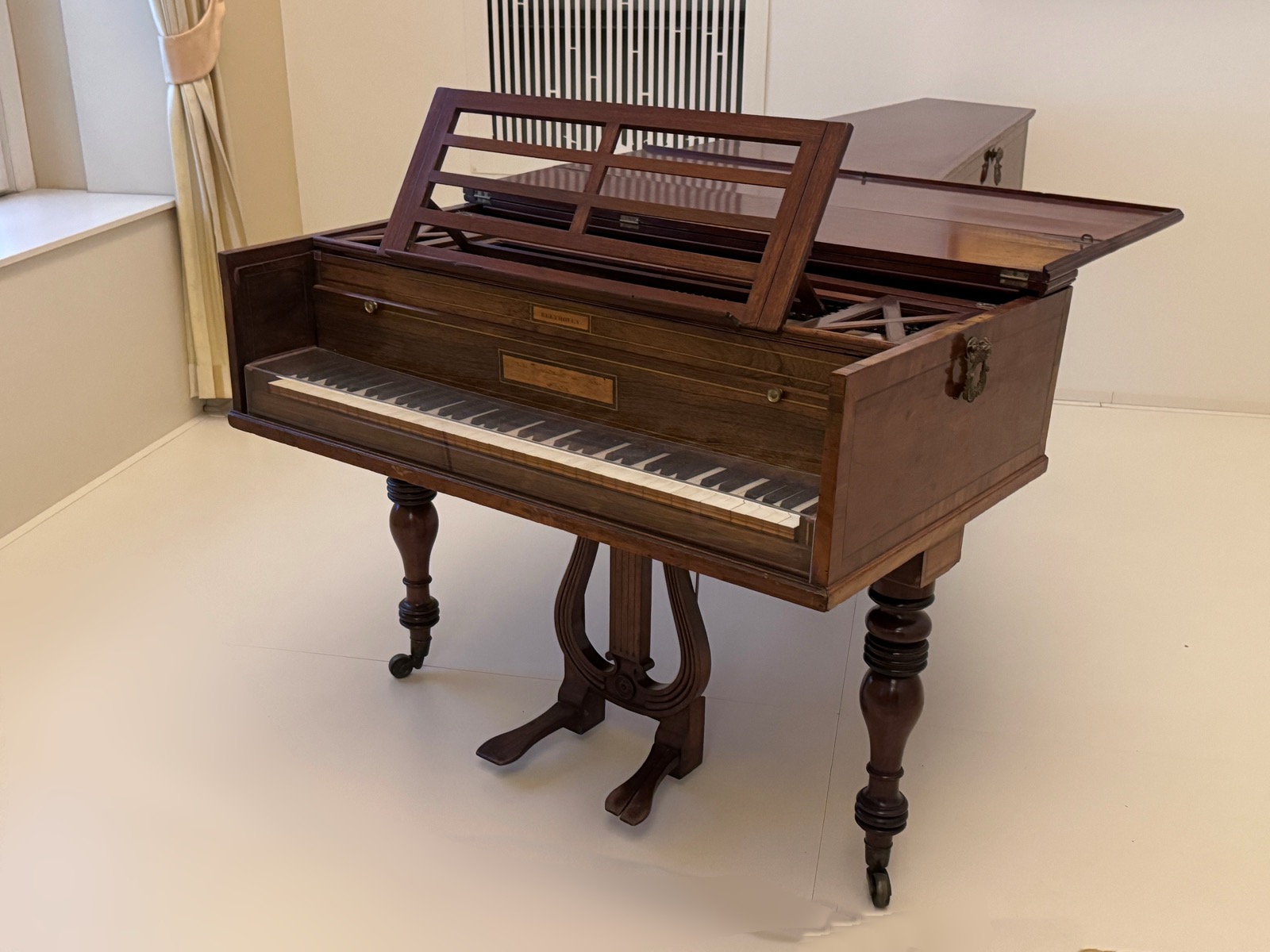
One dimension of the sonatas that is easy to overlook is the instrument itself. Beethoven did not write all thirty-two sonatas for the same piano. The keyboard instruments available to him changed dramatically over the course of his career, and his writing evolved in tandem with those changes.

The early sonatas were composed for the five-octave Viennese fortepianos of the 1790s—instruments with a light, clear action and a relatively delicate sound. By the time of the Waldstein and Appassionata (1803–1805), Beethoven was working with instruments of about five and a half octaves, and his writing already pushed them to their limits. The late sonatas, from Op. 101 onward, were written for the larger, more powerful six-octave instruments that were beginning to arrive from English and French makers—pianos with heavier hammers, thicker strings, and a wider dynamic range. The sustained singing tone of the late slow movements, the massive chordal textures, and the long trills that dissolve into overtones all reflect the capabilities of these newer instruments.

On a modern concert grand, all thirty-two sonatas can be played on a single instrument, and the differences in Beethoven’s keyboard writing across the decades become a matter of interpretive nuance rather than physical constraint. But knowing that the piano was changing beneath Beethoven’s hands helps explain why the sonatas sound the way they do—and why the late works, in particular, seem to be reaching toward an instrument that did not yet fully exist.

Where to Start — Five Essential Sonatas

Thirty-two sonatas is a lot of music—roughly ten hours in most complete recordings. If you are approaching this repertoire for the first time, these five works offer the most rewarding entry points, each representing a different facet of Beethoven’s art.

Sonata No. 8 in C minor, Op. 13 — “Pathétique” — The ideal starting point for listeners new to Beethoven’s piano music. Its dramatic arc is immediately gripping: the grave introduction, the turbulent first movement, the famous cantabile slow movement, and the propulsive Finale. Every element is strong, clear, and emotionally direct. Read our Pathétique Sonata guide.

Read more →

Sonata No. 14 in C-sharp minor, Op. 27 No. 2 — “Moonlight” — The most famous piano sonata ever written, and for good reason. The ethereal first movement is instantly recognizable, but the real revelation comes in the Finale—a movement of genuine ferocity that reframes everything that came before it. Read our Moonlight Sonata guide.

Read more →

Sonata No. 21 in C major, Op. 53 — “Waldstein” — If you want to hear Beethoven at his most physically thrilling, start here. The pulsating energy of the first movement’s repeated-chord motif and the radiant breadth of the Finale—with its celebrated trills that seem to open up the entire range of the keyboard—are unforgettable. This sonata captures the heroic Beethoven at full power: bold, expansive, and triumphant, with a sense of scale that goes beyond what most solo piano music even attempts.

Sonata No. 23 in F minor, Op. 57 — “Appassionata” — The darkest and most intense of Beethoven’s middle-period sonatas, and the one that Vladimir Lenin reportedly said he could not listen to too often because it made him want to say kind, tender things and pat people on the head—when what the revolution required was quite different. The cumulative force of its three movements—from the ominous, quietly stalking opening through the serene variations of the slow movement to the shattering, headlong Finale—is devastating. This is Beethoven at his most uncompromising, and it remains one of the most electrifying experiences in all of piano music.

Sonata No. 32 in C minor, Op. 111 — Beethoven’s farewell to the piano sonata is unlike anything else in the repertoire. Two movements that traverse the distance from violent struggle to transcendent calm. The second-movement Arietta variations are among the most profound pages Beethoven ever wrote. This is where to go when you are ready for the deepest experience these sonatas have to offer.

Recommended Recordings of the Complete Cycle

A complete Beethoven piano sonata cycle is a massive undertaking for any pianist—and choosing which one to listen to can feel equally daunting. Here are several benchmark recordings that have stood up to decades of scrutiny. Each brings a distinct interpretive personality.

Wilhelm Kempff (DG, 1964 stereo cycle) — Kempff’s Beethoven is lyrical, intimate, and never heavy-handed. His tone is luminous, his phrasing natural, and his tempos often on the brisk side. This is the cycle many pianists and critics reach for first. The mono cycle from the 1950s is also remarkable, but the stereo set is the one to start with.

Alfred Brendel (Philips, 1990s cycle) — Brendel recorded the complete sonatas three times over his career. The final Philips cycle, recorded in the 1990s, represents the distillation of a lifetime’s engagement with this music. Intellectually rigorous yet never dry, Brendel’s Beethoven balances structural clarity with deep feeling. His late sonatas are particularly distinguished.

Daniel Barenboim (DG, 1966–1969) — Barenboim’s first complete cycle, recorded in his twenties, remains one of the most spontaneous and vivid on record. The playing is technically brilliant and emotionally generous. He has re-recorded the cycle multiple times since, but this early set retains a freshness and urgency that is hard to match.

Annie Fischer (Hungaroton, recorded 1977–1997) — Fischer spent decades on her cycle, never quite satisfied. The result, released posthumously, is fierce, passionate, and deeply personal. Her readings can be uneven, but at their best—the Appassionata, the late sonatas—they reach an emotional intensity that few other pianists approach.

Maurizio Pollini (DG, recorded 1975–2014) — Pollini recorded the sonatas over nearly four decades. The early entries—especially the late sonatas from the 1970s—are among the most technically immaculate Beethoven recordings ever made. The Hammerklavier, in particular, is a benchmark performance. The later volumes are more variable but still carry the stamp of a formidable musical intelligence.

Rudolf Serkin (Sony, various recordings) — Serkin never recorded a formal complete cycle, but his individual sonata recordings from the 1960s through the 1980s are towering achievements. His Beethoven is muscular, direct, and profoundly serious. The Appassionata and the Hammerklavier are essential listening.

Igor Levit (Sony, 2019) — Among recent complete cycles, Levit’s stands out for its combination of deep musical thought and visceral power. His late sonatas are exceptionally fine—Op. 111 in particular has a controlled intensity that ranks with the best on record. A cycle for listeners who want to hear this music through a thoroughly contemporary sensibility.

Paul Lewis (Harmonia Mundi, 2005–2007) — Lewis, a student of Alfred Brendel, brings a warm, singing tone and exceptional clarity of texture to these works. His cycle is less overtly dramatic than some competitors but beautifully integrated—each sonata feels like part of a larger narrative. The middle-period sonatas are particular highlights, played with a flowing naturalness that never sacrifices structural integrity.

For individual sonata recordings rather than complete cycles, the landscape expands enormously. Sviatoslav Richter’s live performances of the Appassionata and the Hammerklavier are legendary. Emil Gilels recorded most of the sonatas for DG with an aristocratic grandeur that remains deeply compelling (his death in 1985 left the cycle incomplete). Glenn Gould’s unconventional Beethoven—particularly his Pathétique and the late sonatas—divides opinion sharply but demands to be heard.

Frequently Asked Questions

What makes Beethoven Piano Sonatas Complete Guide distinctive or unusual?

Each sonata presents its own world: some are compact and witty, others sprawling and revolutionary. Whether you are encountering Beethoven’s piano music for the first time or revisiting old favorites, the aim here is to provide a clear map of this extraordinary landscape—what makes each sonata distinctive, where the major landmarks fall, and how the whole cycle holds together as one of the supreme achievements in Western music. Beethoven in C minor always means business—this is the key of the…

Which recordings of Beethoven Piano Sonatas Complete Guide are recommended for first-time listeners?

32 Masterworks That Define the Piano Hans von Bülow, the great nineteenth-century pianist and conductor, once declared that Bach’s Well-Tempered Clavier was the Old Testament of keyboard music. They begin in the elegant drawing rooms of late eighteenth-century Vienna and end somewhere entirely different—in a spiritual realm that still puzzles and moves listeners two centuries later. The slow movement is a set of variations on a marching theme—simple but cleverly handled—and the Scherzo Finale…

What is the historical significance of Beethoven Piano Sonatas Complete Guide?

The keyboard instruments available to him changed dramatically over the course of his career, and his writing evolved in tandem with those changes. Many listeners find that the early and middle sonatas open up significantly after they have experienced the late works—certain gestures and ideas in the earlier pieces take on new resonance when you know where Beethoven was heading.

Why are Beethoven’s piano sonatas called the “New Testament” of piano music?

The comparison originated with Hans von Bülow, a prominent nineteenth-century pianist and conductor. He described Bach’s Well-Tempered Clavier as the Old Testament of keyboard music and Beethoven’s thirty-two piano sonatas as the New Testament. The analogy reflects the foundational importance of both collections: Bach’s work codified the art of keyboard counterpoint across all twenty-four keys, while Beethoven’s sonatas charted the full expressive possibilities of the piano across an entire creative lifetime. Together, they form the twin pillars of the solo keyboard repertoire.

How difficult are the Beethoven sonatas to play?

The difficulty varies enormously. A few sonatas—Op. 49 Nos. 1 and 2, the first movement of the Moonlight—are accessible to intermediate pianists. Others sit at the very summit of keyboard difficulty. The Hammerklavier (Op. 106) is widely considered one of the most technically and intellectually demanding works in the entire piano repertoire. The Waldstein and Appassionata require advanced technique and considerable stamina. Even the “easier” sonatas, however, present interpretive challenges that occupy professional pianists for decades.

Did Beethoven give nicknames to his sonatas?

Very few. Beethoven himself titled only the Pathétique (Op. 13) and Les Adieux (Op. 81a). The subtitle “quasi una fantasia” on Op. 27 Nos. 1 and 2 is also original to Beethoven, though it is a genre designation rather than a nickname. All other familiar names—Moonlight, Tempest, Waldstein, Appassionata, Hammerklavier—were applied by publishers, critics, or later tradition. “Hammerklavier” is a partial exception: Beethoven used the German word for “pianoforte” on several late works, but it became attached specifically to Op. 106.

What is the best order to listen to all 32 sonatas?

Chronological order works well, because it mirrors Beethoven’s own artistic development. You can hear him grow from movement to movement, opus to opus. That said, starting with the five essential sonatas listed above gives you an immediate sense of the range and power of the cycle. From there, fill in the gaps. Many listeners find that the early and middle sonatas open up significantly after they have experienced the late works—certain gestures and ideas in the earlier pieces take on new resonance when you know where Beethoven was heading. Another approach is to pick one sonata from each period—say the Pathétique, the Waldstein, and Op. 111—and use those three as anchors for exploring the rest of the cycle.

Which Beethoven sonata should a piano student learn first?

Most piano teachers recommend starting with the Op. 49 sonatas (Nos. 19 and 20), which Beethoven himself designated as “easy.” From there, the first movement of the Moonlight Sonata (Op. 27 No. 2) is an attainable next step for intermediate players, though the Finale of that same sonata is significantly more demanding. The Pathétique’s slow movement is another popular choice for developing pianists. For students ready for a complete sonata at an intermediate-advanced level, Op. 14 No. 1 and Op. 10 No. 1 are excellent choices that build both technical skill and musical understanding.

Further Reading

Explore individual sonatas in depth with our detailed guides:

More individual sonata guides are in progress. Check back regularly as we expand our coverage of Beethoven’s complete piano sonata cycle.

Copyright notice · The Classic Note does not permit unauthorized reproduction, reposting, redistribution, or translation of its articles. Brief quotations are allowed only with clear attribution and a link to the original page. Please contact us for reuse or collaboration requests.