- Composer
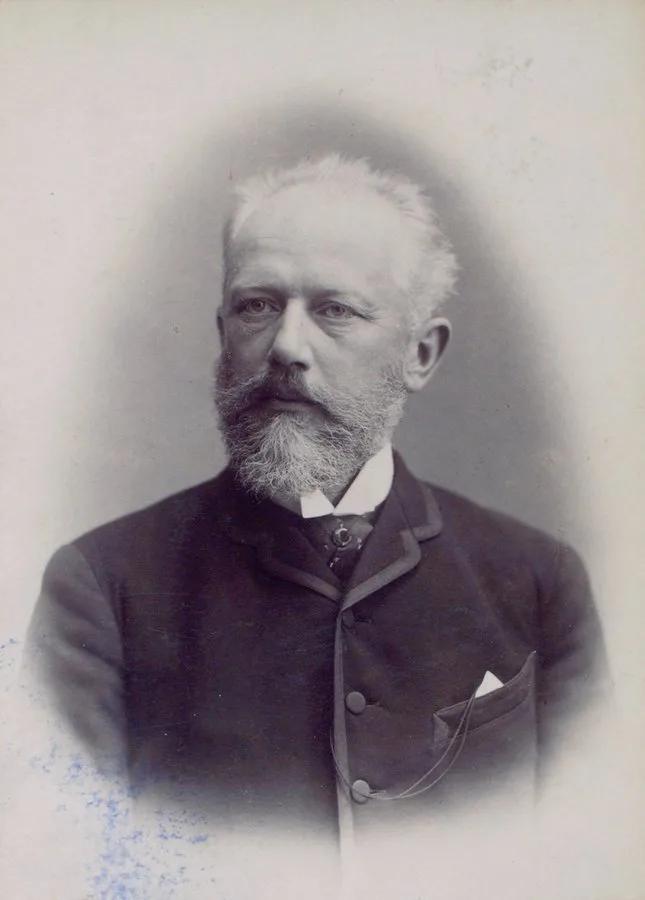
- Pyotr Ilyich Tchaikovsky (1840–1893)
- Work
- Piano Concerto No. 2 in G major, Op. 44
- Composed
- 1879–1880
- Premiere
- November 12, 1881, New York / Soloist: Madeline Schiller; Conductor: Theodore Thomas, New York Philharmonic
- Dedication
- Nikolai Rubinstein
- Movements
- 3 movements
I. Allegro brillante e molto vivace (G major)
II. Andante non troppo (D major)
III. Allegro con fuoco (G major) - Instrumentation
- Solo piano, flute 2, oboe 2, clarinet 2, bassoon 2, horn 4, trumpet 2, timpani, strings
- Duration
- approx. 38–42 min. (varies by edition)
A Debt Repaid to a Dead Man
Dedicating a concerto to the man who called your last one garbage—doesn’t that seem a little strange?
In 1875, when Tchaikovsky first presented his Piano Concerto No. 1, Nikolai Rubinstein’s verdict was swift and savage: “Unplayable, worthless, the whole thing needs to be rewritten.” Tchaikovsky swore he wouldn’t change a single note. Ice settled between them. But time rearranges things. Rubinstein quietly reversed course, began performing the First Concerto himself—and performed it brilliantly.
Tchaikovsky was moved. He wrote to his patron Nadezhda von Meck: “I am dedicating this new work to Rubinstein in recognition of his magnificent playing of my First Concerto and my Sonata.” The debt would be repaid with a brand-new concerto.
In October 1879, Tchaikovsky arrived at his sister’s estate in Kamenka, Ukraine, intending to rest—to do nothing at all. Within days, he was writing to von Meck again: “I am enjoying sweet idleness, but new musical ideas are beginning to grow in my head.” Inspiration ambushed him on holiday. That was how this concerto began.
The speed was remarkable. He sketched the first movement at Kamenka, crossed to Paris in November, and finished the third movement first. The second? “It’s already in my head,” he said—he’d write it down later. By early December, the entire sketch was done. Around this time, he made a telling remark: “I am particularly pleased with the Andante.” Remember that line. It turns bitter in hindsight.
By spring 1880, the orchestration was finished. The completed score reached Rubinstein, who was delighted and promised to give the premiere.
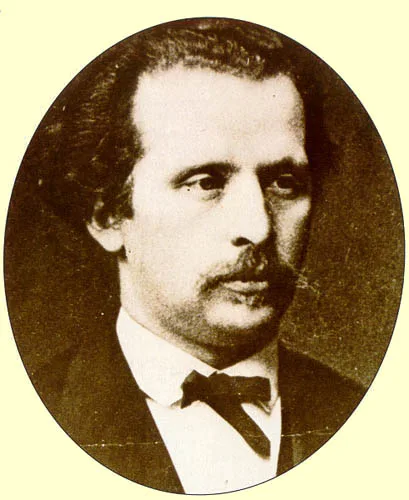
But Rubinstein’s reaction had an edge. The man who once dismissed the First as “unplayable garbage” now chose his words with surgical care: “The solo part seems a bit scattered, perhaps too much dialogue with the orchestra… though I’ve only played through it once, so I could be wrong.” That’s the language of someone who’s been burned. He was hedging so hard his opinion barely registered.
Tchaikovsky, too, was calmer this time. He brushed off the criticism without rancor. But his letter to von Meck revealed what he truly felt: “The thought of Rubinstein criticizing again makes me tremble, but if he does as he did with the First Concerto—criticizes it and then plays it magnificently—I’ll be satisfied. Only this time, I hope the gap between criticism and performance is a little shorter.”
The gap between criticism and performance. With the First, that gap had lasted years. Tchaikovsky didn’t want to wait like that again. But reality proved crueler. There would be no criticism and no performance. Rubinstein was dead.
In March 1881, Nikolai Rubinstein died of tuberculosis in Paris. Tchaikovsky rushed to the city the moment he heard. The man to whom this concerto was dedicated never played a single note of it on stage.
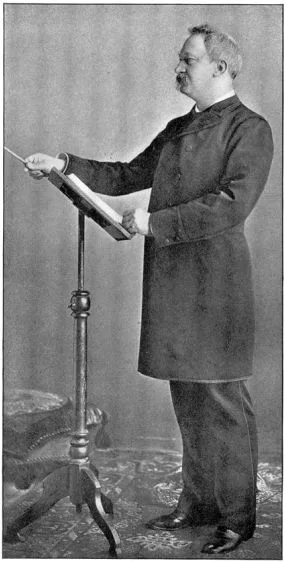
That November, the world premiere took place in New York—not Russia. Madeline Schiller was the soloist; Theodore Thomas conducted the New York Philharmonic. The Russian premiere followed in May 1882, in Moscow, with Nikolai’s brother Anton Rubinstein conducting and Tchaikovsky’s student Sergei Taneyev at the piano. A concerto whose dedicatee lay in the ground, premiered on a foreign continent. Tangled from the start.
The Student Who Cut His Teacher’s Score
Tchaikovsky had a student named Alexander Siloti. Siloti studied harmony under Tchaikovsky and piano under Nikolai Rubinstein at the Moscow Conservatory. After graduating, he traveled to Weimar to study with Franz Liszt. His younger cousin was Sergei Rachmaninoff, and Siloti served as Rachmaninoff’s piano teacher. A formidable talent with formidable connections.
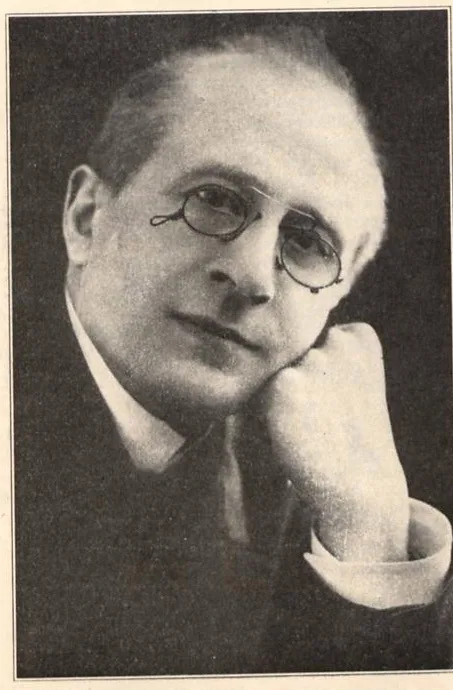
In 1888, when the publisher Jurgenson prepared a new edition of the Second Concerto, Siloti proposed sweeping revisions. His central argument: the first and second movements needed to be cut substantially.
Tchaikovsky’s response was blunt. “I absolutely cannot agree with your cuts. Especially regarding the first movement… When I heard your idea of moving the cadenza to the end, I felt a bitter taste in my mouth and my hair stood on end.”
Hair standing on end. That’s how a teacher rejects his student’s suggestion.
Siloti appeared to back down. “Of course I’ll perform it exactly as you instruct. With the long violin solo in the second movement cut out entirely!” Something doesn’t add up. Tchaikovsky had just opposed cuts, yet Siloti’s reply reads as though an agreement had been reached—”cut out entirely.” A subtle tug-of-war plays out between the lines.
In 1893, Siloti renewed his push and secured partial consent. But Tchaikovsky drew a firm line: “Cuts in the first movement are unnecessary. If you have your way, the form will become grotesque and incomplete.” Then he added something revealing: “Thank you for taking an interest in this unfortunate Second Concerto. In truth, I like it far more than the First.”
He liked it far more than the First. The world ignored that preference entirely.
In October 1893, Tchaikovsky died. Four years later, the edition Siloti published in 1897 included the very cuts and transpositions Tchaikovsky had forcefully rejected. Revisions refused while the teacher lived were released as the official score once he was gone.
This Siloti edition reigned for fifty-eight years. The original wasn’t restored until 1955, when Alexander Goldenweiser included it in the scholarly complete works based on Tchaikovsky’s autograph score. More than half a century—during which this concerto was performed in its truncated form, judged in its truncated form, and branded a “pale imitation of the First” in its truncated form.
The second movement bore the worst damage. Tchaikovsky’s original featured extended passages where piano, solo violin, and solo cello each unfolded long, independent melodies. Siloti slashed this section to the bone. The very core that Tchaikovsky said he was “particularly pleased with”—gone.
A Twenty-Minute Marathon for Piano Alone
Tchaikovsky once told his friend Hermann Laroche: “I cannot stand the sound of a piano and orchestra playing at the same time.” He even swore he’d never write another piano concerto. That he wrote three proves his words and actions didn’t match. But the complaint wasn’t entirely bluster—the first movement of the Second Concerto (Allegro brillante e molto vivace, G major) is the proof.
Throughout this movement, the piano and orchestra almost never play simultaneously. They take turns. When the piano speaks, the orchestra retreats. When the orchestra steps forward, the piano falls silent. Two speakers on the same stage with an unspoken agreement never to talk over each other. For the man who “couldn’t stand the sound” of both at once, this was the solution: separate them entirely.
That separation inflates the cadenza passages to abnormal proportions. In a typical concerto, the cadenza—the unaccompanied solo section—appears once near the end of the movement. Here, the pianist charges ahead alone in extended runs scattered across the entire span. A solo recital’s worth of virtuosity packed inside a concerto framework.
The movement runs to 668 bars. Even in Siloti’s trimmed version, it approaches twenty minutes; the original is longer still. That’s roughly the length of Beethoven’s entire Fourth Piano Concerto—compressed into a single movement. For the pianist, it’s a relentless marathon with no rest. For the orchestra, a peculiar experience of sitting as spectators through long stretches.
In 1886, Charles Hallé performed this concerto in Manchester—but dropped the first movement entirely, playing only the second and third. Conducting and playing the solo part simultaneously, Hallé judged the first movement’s piano writing beyond what he could manage under those conditions. An entire opening movement, abandoned as too demanding. That tells you everything about the difficulty involved.
The themes carry Tchaikovsky’s signature cantabile—singing melodies meant to pour from the instrument. Strings present the main theme first; the piano takes it up, following classical convention. But from there, the development breaks away. The piano charges ahead while the orchestra watches from the sidelines. The opposite of Beethoven’s concerto model, where piano and orchestra spar as equals. This unusual separation is why the first movement draws both the charge of “unfocused” and the praise of “unlike anything else.” It’s exactly the point Rubinstein was groping toward when he called it “a bit scattered.”
Chamber Music in the Middle of a Concerto
This movement (Andante non troppo, D major) is what makes Tchaikovsky’s Piano Concerto No. 2 unlike any other concerto ever written.
The opening seems conventional enough. The orchestra lays down a slow introduction; the piano enters. Then something unexpected happens. A solo violin emerges carrying a long, independent melody. A solo cello follows. The three instruments begin a conversation, each in its own voice, while the orchestra recedes into the background.
Wait. Is this still a piano concerto?
Technically, yes. But what you’re hearing is a piano trio—piano, violin, cello—coexisting with a full orchestra. A work labeled “piano concerto” that houses chamber music inside it is virtually without precedent. Beethoven’s Triple Concerto was designed from the start for three soloists—a fundamentally different proposition.
Reactions split sharply. Some call it the finest slow movement Tchaikovsky ever wrote. Others find the sudden transfer of leadership to other instruments unsettling. Here’s the curious pattern: listeners who prefer Tchaikovsky’s chamber music to his orchestral works tend to adore this movement. The intimacy of chamber music, raised onto the back of an orchestra—that combination strikes a particular nerve.
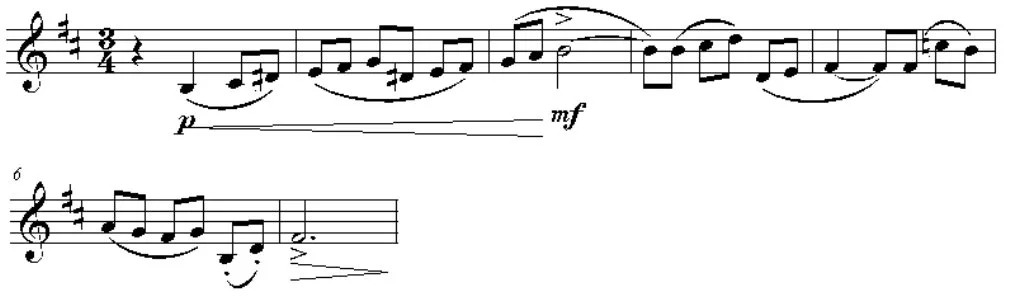
Practical concerns pile on. Performing this movement requires the concertmaster and principal cellist to function as soloists in their own right. One concerto, three de facto soloists. Rehearsals grow complicated; casting becomes a headache. For anyone programming an orchestra season, this work is far more trouble than slotting in Rachmaninoff’s Second or Tchaikovsky’s First. These logistics quietly chip away at how often the piece appears on stage.
In the original version, the second movement stretches past ten minutes—a sustained three-way dialogue that transforms the heart of a concerto into chamber music territory. First-time listeners often catch themselves thinking, “Is this the same piece I was hearing five minutes ago?” But once that initial disorientation fades, the depth of the melodies the three instruments trade pulls you deeper.
Siloti declared this section “too long” and cut it down, condensing the violin and cello solos and pulling the focus back to the piano. Hear the Siloti version and the original side by side—you’d struggle to believe they’re the same concerto. The very passages Siloti considered excessive are, to modern ears, the most original moments in the entire work.
Tchaikovsky’s chronic complaint—”I can’t stand piano and orchestra playing together”—reaches its fullest expression here. Rather than forcing them to play at once, he carved out separate space for each voice to sing alone.
A Russian Dance That Ends in Flames
Third movement. Allegro con fuoco, G major. “Fast, with fire”—and it delivers on every syllable.
The character flips. Gone is the separation strategy of the first movement. Piano and orchestra lock arms and sprint together. A rough-hewn, exhilarating Russian dance rhythm drives the entire movement, recalling the earthy energy of the finale of Tchaikovsky’s Violin Concerto.
There’s a compelling way to hear the concerto’s architecture as a single arc: progressive integration. In the first movement, piano and orchestra are separated. In the second, violin and cello draw the piano into an ensemble. By the third, everyone merges into one charging mass. Things that were apart come together. Whether Tchaikovsky planned this trajectory or arrived at it instinctively is unknowable, but by the time the third movement crashes to its close, the shape feels inevitable.
The movement spans 560 bars. For the soloist, this concerto means sprinting through 668 bars in the first movement, navigating a three-way dialogue in the second, then launching into another full-tilt run in the third—over forty minutes at the keys without ever fully letting go. The sheer physical toll shapes which pianists are willing to put this work on their programs.
The coda accelerates suddenly before the final bar, mirroring the close of the First Concerto. Place the two side by side and the family resemblance is sharp. On its own terms, the third movement holds its ground against the First’s finale without apology. “Why isn’t this piece more famous?” That question surfaces right here.
Why Balanchine Turned This Concerto into a Ballet
Here’s a story that rarely gets told.
In 1941, choreographer George Balanchine used this entire concerto as the score for a new ballet: Ballet Imperial. It was wartime. He was planning a South American tour and wanted to prove that American dancers could handle the classical Russian tradition.
His choice of music is telling. Balanchine trained in St. Petersburg, a direct artistic descendant of the tradition forged by Tchaikovsky and choreographer Marius Petipa. When he set out to create an homage to Petipa—and to Tchaikovsky—he bypassed the universally known First Concerto and picked the Second, the one nobody played. To his ear, it was the better fit for dance. Analysts have noted that the chamber-music texture of the second movement maps perfectly onto a pas de deux—the intimate duet between two lead dancers.
The premiere was on June 25, 1941, at the Teatro Municipal in Rio de Janeiro. The ballet went on to become a cornerstone of the New York City Ballet repertoire. In 1973, Balanchine stripped away all the visual trappings of imperial Russia, leaving only music and movement, and renamed it Tchaikovsky Piano Concerto No. 2.
A concerto all but forgotten in the concert hall has survived over eighty years on the ballet stage.
No Trombones. No Tuba.
Look at the instrumentation list again. Something is missing.
Leaving trombones and tuba out of a late-nineteenth-century orchestral concerto is a bold move. Tchaikovsky’s own Sixth Symphony gives the trombone section a defining role, and they appear in the First Concerto as a matter of course. Yet in the Second, they’re simply absent.
Tchaikovsky left no explicit explanation, but the reasoning isn’t hard to reconstruct. Trombones and tuba supply the orchestra’s low-end weight and volume. Include them and the sound thickens, easily overwhelming the piano. The man who “couldn’t stand piano and orchestra playing together” pared back the orchestra’s mass at its source.
The result is an orchestral sound noticeably lighter and more transparent than the First Concerto’s. The piano’s middle register comes through clearly, unclouded. This transparency pays off most in the second movement, where piano, violin, and cello converse—the timbral distinctions among the three instruments stand out with unusual clarity.
If the First Concerto’s orchestral sound is a rich steak, the Second’s is clean sashimi. Same composer, same genre, entirely different texture.
The Real Reasons It Disappeared
No single cause buried this concerto. It was a convergence of misfortunes.
The loss of its champion. Rubinstein died before the premiere, and with him went the strongest advocate this concerto would ever have. During Tchaikovsky’s lifetime, pianist Vasily Sapelnikov did perform it across St. Petersburg, Prague, Moscow, and London under Tchaikovsky’s baton. But that was never enough to rival the First’s global momentum.
The poison of the Siloti edition. For fifty-eight years, the truncated version was the standard. The concerto’s most original section was absent from concert stages for more than half a century. Audiences who heard only the cut version and dismissed it as “a weaker First” were making a reasonable judgment—based on incomplete evidence.
Practical barriers. The second movement demands violin and cello soloists. The total running time exceeds forty minutes. The piano part is ferociously difficult. For anyone programming an orchestra season, it’s far simpler—and more commercially reliable—to schedule Rachmaninoff’s Second or Tchaikovsky’s First. Box-office pull between “Tchaikovsky 1” and “Tchaikovsky 2” isn’t even a contest.
The composer’s own wavering. Tchaikovsky considered this concerto among his best work and took joy in writing it. But when early performances drew lukewarm responses, the wound stung. By the late 1880s, facing repeated complaints from pianists that it was “too long,” he began agreeing to cuts. The moment his conviction cracked under external pressure, Siloti stepped into the gap.
And yet. Despite everything, the concerto never vanished completely. Balanchine kept it alive on the ballet stage. Emil Gilels committed a defining recording to tape. After the original version was restored, a new generation of pianists—Stephen Hough, Mikhail Pletnev, Konstantin Scherbakov—started bringing the uncut score back to the concert hall. More than half a century of concealment is finally being undone.
Why Tchaikovsky Preferred This Over His First
When the Second Concerto was taking shape in 1879, Tchaikovsky’s mind was teeming. He had just finished correcting proofs for the opera The Maid of Orleans, and immediately after completing the concerto he plunged into revising his Second Symphony and composing the Capriccio Italien. Opera’s narrative sweep, the concerto’s structural experiment, the orchestral suite’s palette of color—he was working in all of them at once.
If the First Concerto bet on popular appeal, the Second placed its chips on formal innovation. The easier path—repeating the First’s winning formula—was right there. He walked the other way.
Within the history of the piano concerto, this work occupies a singular position. By the late nineteenth century, Liszt’s influence was pulling the genre toward maximum solo virtuosity. Tchaikovsky’s First rode that current to some extent. The Second ran a different experiment altogether. He kept the technical demands on the soloist but reimagined how soloist and orchestra relate. Separation. Conversion to chamber music. A lighter orchestration. None of these ideas were welcomed in his day. Viewed now, they’re exactly what makes this concerto unlike anything else.
Why did Tchaikovsky say he preferred it to the First? Hear the original version from beginning to end and the answer becomes self-evident. The First is a concerto that comes to you. The Second is one you have to go find. It doesn’t yield its rewards on a single hearing. It asks you to return, to notice the details hiding in its corners. That’s a different kind of music entirely—and for the man who wrote both, it was the kind he valued more.
Start with the Third Movement
If this concerto is new to you, try listening in reverse.
Begin with the third movement. Fast, flashy, and powered by Russian dance rhythms. If you enjoy the First Concerto, you’ll recognize the same propulsive energy here. This is the most immediately accessible movement—a natural starting point.
Then the second movement. The heart of the concerto, and its most radical section. Focus on the conversation between piano, violin, and cello. If possible, seek out a recording of the original version. The Siloti edition’s second movement and the original differ so dramatically they barely sound like the same piece.
Finally, the first movement. Nearly twenty minutes long, it’s the biggest stretch. Pay attention to how the piano and orchestra alternate rather than overlap. That separation creates a listening experience you won’t find in any other concerto.
Edition matters. The Siloti version and the original diverge most sharply in the second movement. Start with the original. Experience the uncut form first, then compare it with Siloti’s revision—and feel for yourself what was hidden for fifty-eight years.
Recommended Recordings
Emil Gilels / Philharmonia Orchestra, Lorin Maazel (1972, EMI)
Gilels owns this concerto. His command of the first movement’s cadenzas—precision and expression held in perfect balance—is rivaled by few. In the second movement, his sensitivity to the violin and cello soloists keeps the conversation alive and breathing. Based on the Siloti edition, this recording remains the clearest demonstration of how the work should sound. There’s a reason so many listeners name it as the place to begin.
Mikhail Pletnev (1998, live performance)
Pletnev illuminates structure rather than chasing spectacle. Under his hands, the first movement’s separation between piano and orchestra becomes almost diagrammatic—you hear the architecture as clearly as if someone drew it on a board. His technique is so transparent the musical skeleton shows through. For anyone who wants to understand why this concerto is built the way it is, this is the recording.
Listen with the Score
To follow along with the score, the video below synchronizes a performance with the sheet music.
The score is available for free on IMSLP.
→ View the score for Piano Concerto No. 2 on IMSLP