- Composer
- Schubert
- Work
- Symphony No. 9 in C major D. 944 ‘The Great’
- Key
- C major
- Composed
- 1825–1826
- Movements
- 4 movements
I. Andante – Allegro ma non troppo
II. Andante con moto
III. Scherzo: Allegro vivace
IV. Finale: Allegro vivace - Instrumentation
- 2 flutes, 2 oboes, 2 clarinets, 2 bassoons, 2 horns, 2 trumpets, 3 trombones, timpani, strings
- Premiere
- March 21, 1839, Gewandhaus, Leipzig Conducted by Felix Mendelssohn (10 years after Schubert’s death)
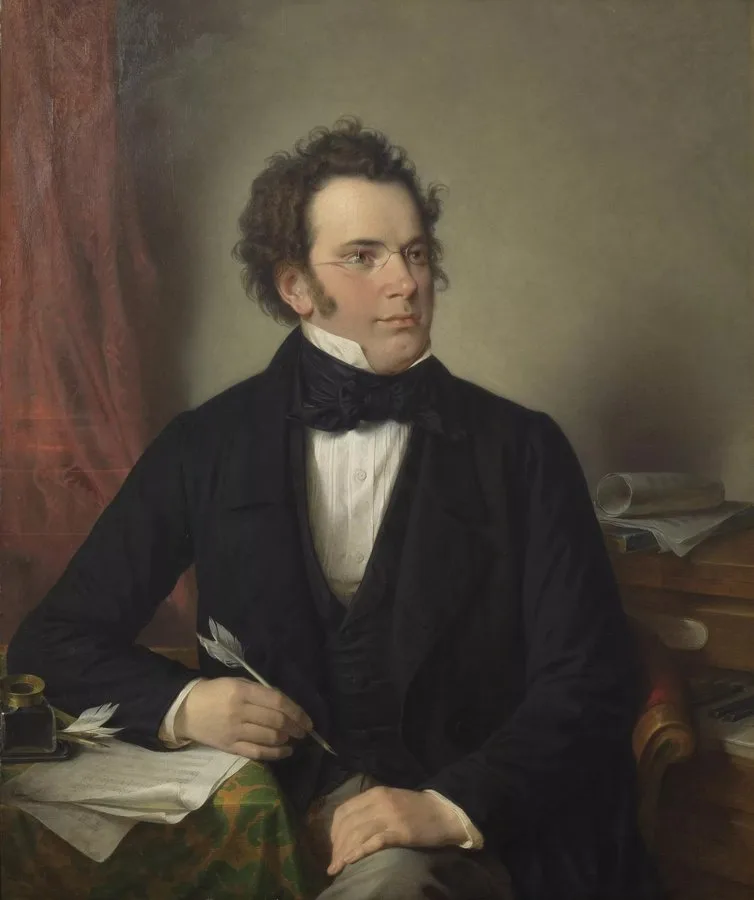
In 1826, the Vienna Music Society received a new symphony from Franz Schubert. After a brief rehearsal, they sent it back. The verdict: “too long and difficult.” The amateur orchestra under their purview simply couldn’t handle it. The score was filed away in a drawer, and Schubert, who would die less than two years later at the age of 31, never heard his magnum opus performed.
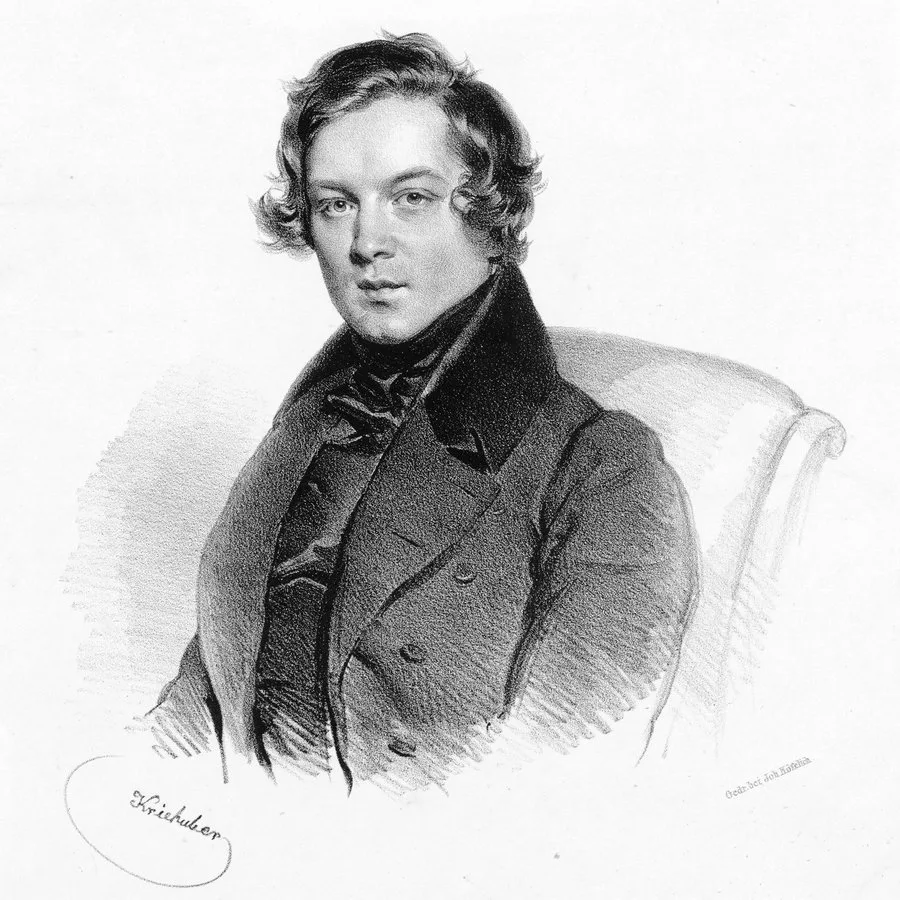
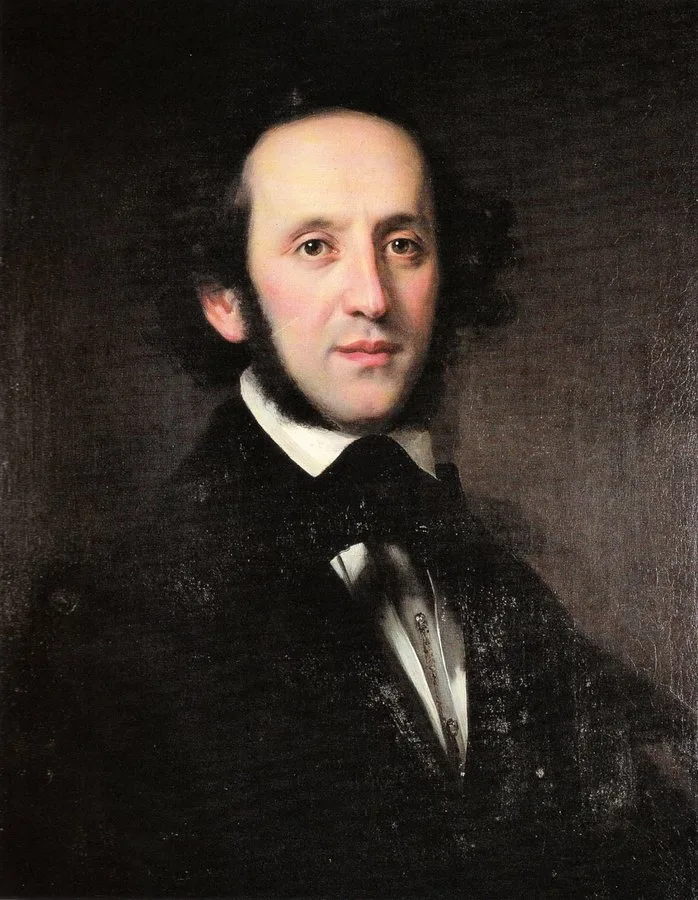
A decade passed. The symphony lay dormant, a forgotten monument. Then, in 1838, another composer, Robert Schumann, paid a visit to Schubert’s brother, Ferdinand. Sifting through a pile of dusty manuscripts, Schumann uncovered the score. His heart raced. He immediately recognized it not as a flawed, overgrown piece, but as a work of genius. He arranged for a copy to be sent to his friend, conductor Felix Mendelssohn, who premiered it in Leipzig in 1839.
In his review, Schumann famously described the work’s sprawling, hour-long duration not as a weakness, but as a “heavenly length” (göttliche Länge). The same quality that led to its initial rejection was now hailed as its defining virtue. The world, it seemed, had finally caught up with Schubert.
A Grand Ambition in Beethoven’s Shadow
To understand the Ninth is to understand Schubert’s ambition. By the 1820s, he was Vienna’s undisputed king of the art song (Lied), a master of intimate, poetic miniatures. But in the world of the symphony, one colossal figure loomed over everyone: Ludwig van Beethoven.
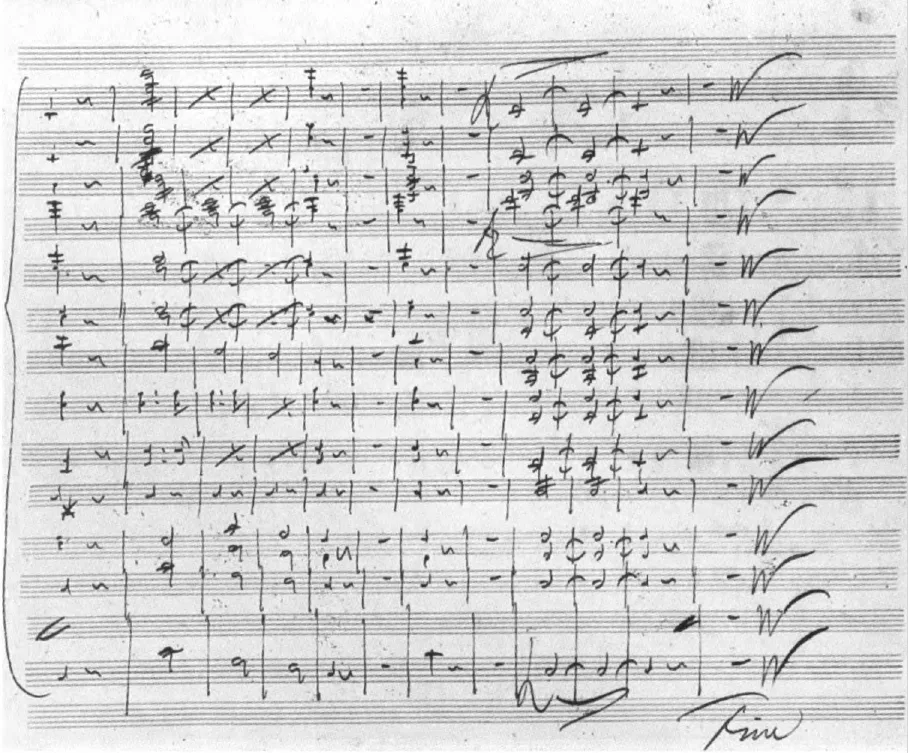
In a letter from March 1824, a 27-year-old Schubert confided in a friend, “I am preparing myself to write a grand symphony.” The choice of words was deliberate. This was not just another symphony; it was an attempt to step into the arena with a giant. Schubert lived in the same city as Beethoven, revered him, and was even a torchbearer at his funeral in 1827. Yet he was also intimidated, struggling to find his own symphonic voice in the wake of Beethoven’s revolutionary achievements.
The “Great” C major Symphony was his answer. Composed between 1825 and 1826, largely during a productive summer retreat in the Austrian countryside, it was a declaration of independence. Schubert wasn’t trying to out-Beethoven Beethoven; instead, he built a different kind of musical world—one founded not on terse, aggressive motifs, but on long-breathed melodies, leisurely repetition, and kaleidoscopic harmonic shifts. He created a symphony that unfolds like a novel, not a drama.
A Journey Through the Symphony
The symphony’s scale can feel daunting. Its power lies in its patient, cumulative effect. Schubert builds vast structures from simple, memorable material, creating a sense of an immense, continuous journey.
I. Andante – Allegro ma non troppo
The work begins not with a bang, but with a solitary, serene theme played by two horns. This melody is the seed from which the entire 60-minute symphony will grow. It functions as more than just an introduction; it is the work’s spiritual core, a motto that will return transformed at crucial moments, most powerfully in the finale.
When the main Allegro kicks in, it’s not with frantic energy but with a steady, marching rhythm that persists with hypnotic determination. Schubert repeats phrases with what might seem like obsessive insistence, but each repetition adds a new layer of color, instrumentation, or dynamic intensity. The trombones, an instrument Beethoven had only recently introduced to the symphony, are used here with unprecedented authority, lending a solemn, majestic weight to the sound.
II. Andante con moto
The second movement achieves a remarkable depth of lyrical melancholy. An oboe introduces a lonely, wandering theme in A minor. The music moves with the gait of a solitary traveler, full of poignant reflection. The movement’s dramatic core arrives in a sudden, catastrophic climax, a wall of sound that subsides as quickly as it appears, leaving the cellos to offer a moment of quiet consolation. Throughout, Schubert masterfully shifts between minor and major keys, subtly altering the emotional landscape like changing light on a cloudy day.
III. Scherzo: Allegro vivace
In Italian, “scherzo” means “joke,” but there is a powerful, almost rustic force to this movement. It’s less a witty jest and more a vigorous, heavy-footed dance. Its driving rhythms and bold orchestral colors have a Beethovenian energy, but the melodic grace is pure Schubert. The central Trio section provides a moment of pastoral calm, a warm-hearted Ländler (an Austrian folk dance) that offers a brief respite before the Scherzo’s relentless energy returns.
IV. Finale: Allegro vivace
The finale is an explosion of relentless, joyful energy. It is a perpetual motion machine, driven by a galloping rhythm that hardly lets up for its entire duration. The orchestra is pushed to its limits, with strings firing off torrents of notes and brass and timpani providing a constant, electrifying pulse.
Then, amid the exhilarating rush, Schubert brings it all home. The quiet horn theme from the very beginning of the symphony returns, now proclaimed fortissimo by the entire orchestra. It’s a moment of stunning revelation, connecting the end of the journey back to its origin. The symphony drives to a thunderous conclusion, hammering home its C major tonality with an affirmation of triumphant power. The amateur musicians of 1826 never knew the catharsis they were missing.
Why It Was Rejected, Why It Endured
The Vienna Music Society wasn’t necessarily wrong in 1826. By the standards of the day, the symphony was too long and difficult. Most symphonies clocked in at 30-40 minutes, and orchestral standards were far from what they are today. Schubert was writing for an orchestra of the future, one with the stamina and virtuosity to realize his vision.
He didn’t compromise. He wrote down the music he heard in his head, confident in its internal logic and epic scope. In doing so, he created the blueprint for the Romantic symphony to come. The sprawling, hour-plus symphonies of Anton Bruckner and Gustav Mahler are unthinkable without the precedent of Schubert’s Ninth. The very “heavenly length” that Schumann identified became a new ideal, proving that a symphony could contain worlds.
Recommended Performances
The “Great” C major has been a benchmark for conductors, each finding a different universe within its notes.
Carlos Kleiber / Vienna Philharmonic (1978)
The Vienna Philharmonic plays with exceptional precision and radiant beauty.
Wilhelm Furtwängler / Berlin Philharmonic (1942)
A live recording made in Berlin during the darkest days of World War II, this is a performance of immense weight and tragic grandeur. If Kleiber’s is a sleek sports car, Furtwängler’s is a granite monument. The tempi are broad, the sound is massive, and the interpretation carries the weight of its historical moment. It’s a profound, harrowing, and ultimately transcendent experience.
Karl Böhm / Berlin Philharmonic (1963)
For those seeking a classic, middle-of-the-road interpretation, Böhm’s recording is an excellent choice. It is perfectly proportioned, architecturally sound, and beautifully played. Without the extremes of Kleiber or Furtwängler, Böhm presents the symphony with a noble clarity, allowing Schubert’s masterful structure to speak for itself. It’s a performance that reveals more of its wisdom with every listen.
Listen with the Score
Following a score while listening might seem like a task for experts, but it offers a unique and rewarding experience. You can see how the melodies are passed between instruments, how the harmonies shift, and how Schubert builds his vast sonic structures. This video synchronizes a great performance with the full orchestral score, providing a visual guide to the symphony’s inner workings. As you follow along, you’ll begin to see the architecture behind the sound.