Elgar’s Enigma Variations, Op. 36 — Fourteen Friends and a Hundred-Year Joke

Fourteen friends and a hundred-year joke

Composer
Edward Elgar
(1857–1934)
Work
Variations on an Original Theme “Enigma,” Op. 36
Composed
1898–1899
Movements
Theme + 14 Variations

Theme — Andante
I. C.A.E. — L’istesso tempo
II. H.D.S-P. — Allegro
III. R.B.T. — Allegretto
IV. W.M.B. — Allegro di molto
V. R.P.A. — Moderato
VI. Ysobel — Andantino
VII. Troyte — Presto
VIII. W.N. — Allegretto
IX. Nimrod — Adagio
X. Dorabella — Intermezzo
XI. G.R.S. — Allegro di molto
XII. B.G.N. — Andante
XIII. *** — Romanza
XIV. E.D.U. — Finale
Scoring
Fl.2, Ob.2, Cl.2, Bsn.2 / Hn.4, Tp.3, Tb.3, Tu.1 / Timp, Bass Drum, Cymbals, Triangle / Organ / Strings
Premiere
19 June 1899, St James’s Hall, London
Conductor: Hans Richter
Duration
approx. 30 minutes
Dedication
“To my friends pictured within”

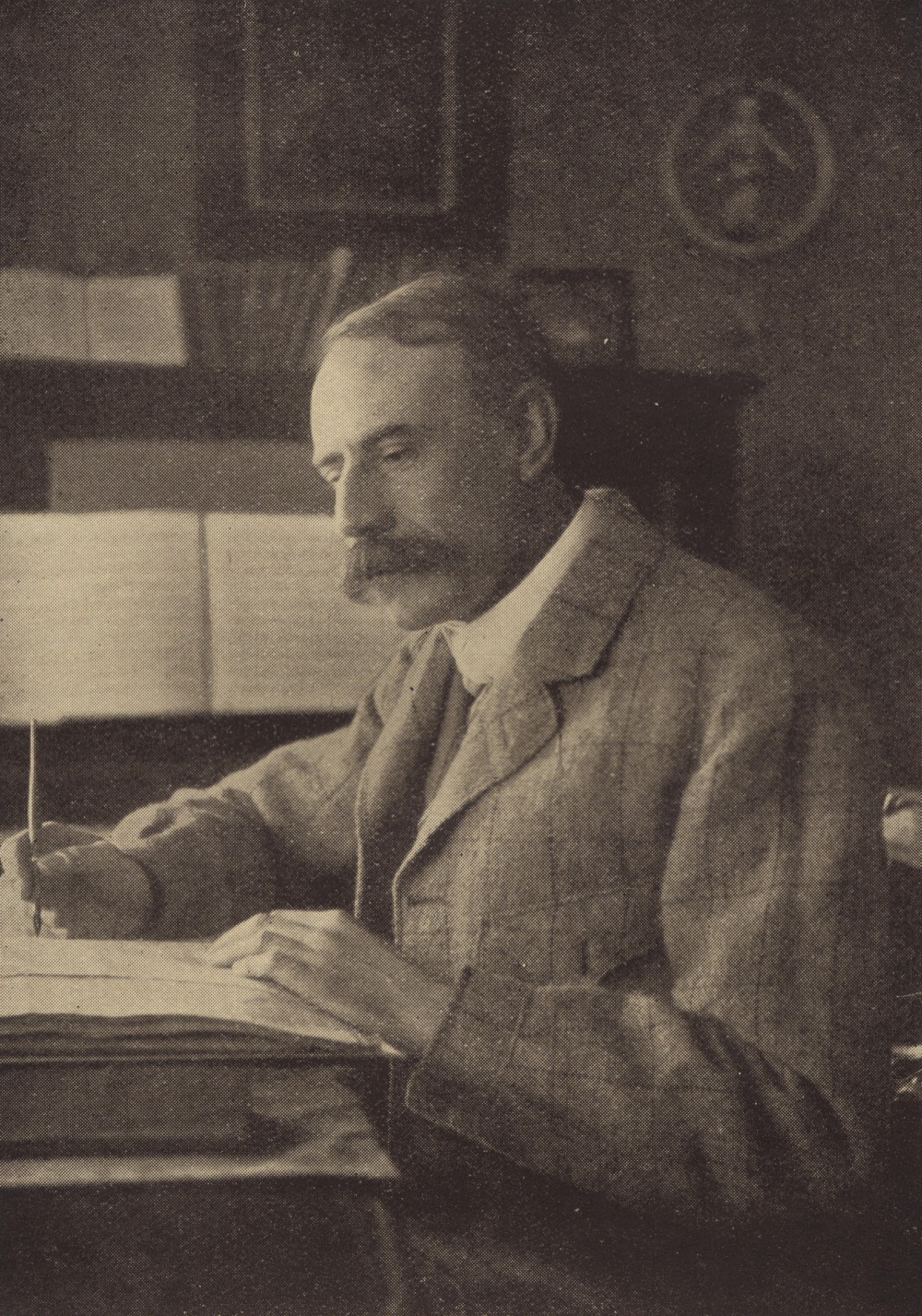
In 1934, Edward Elgar died with his mouth shut. He had buried a private joke inside a piece he wrote in 1899 — the Variations on an Original Theme, Op. 36, better known by the word he stamped on the front of it: Enigma. For thirty-five years after the premiere, he never once told anyone the punchline. When his friend Dora Penny asked him point-blank, he tossed her a single line — “I thought you, of all people, would guess it.”

Six musicologists have since written entire books claiming they cracked it. The shortlist of “answers” includes “Auld Lang Syne,” Mozart’s Requiem, and — I am not making this up — the number π. Each one wrote a full book convinced he was right. They cannot all be right. They can, however, all be wrong, and increasingly that is the theory winning ground: there was never an answer to give. Elgar was trolling. For life.

21 October 1898, One Hour in Worcester

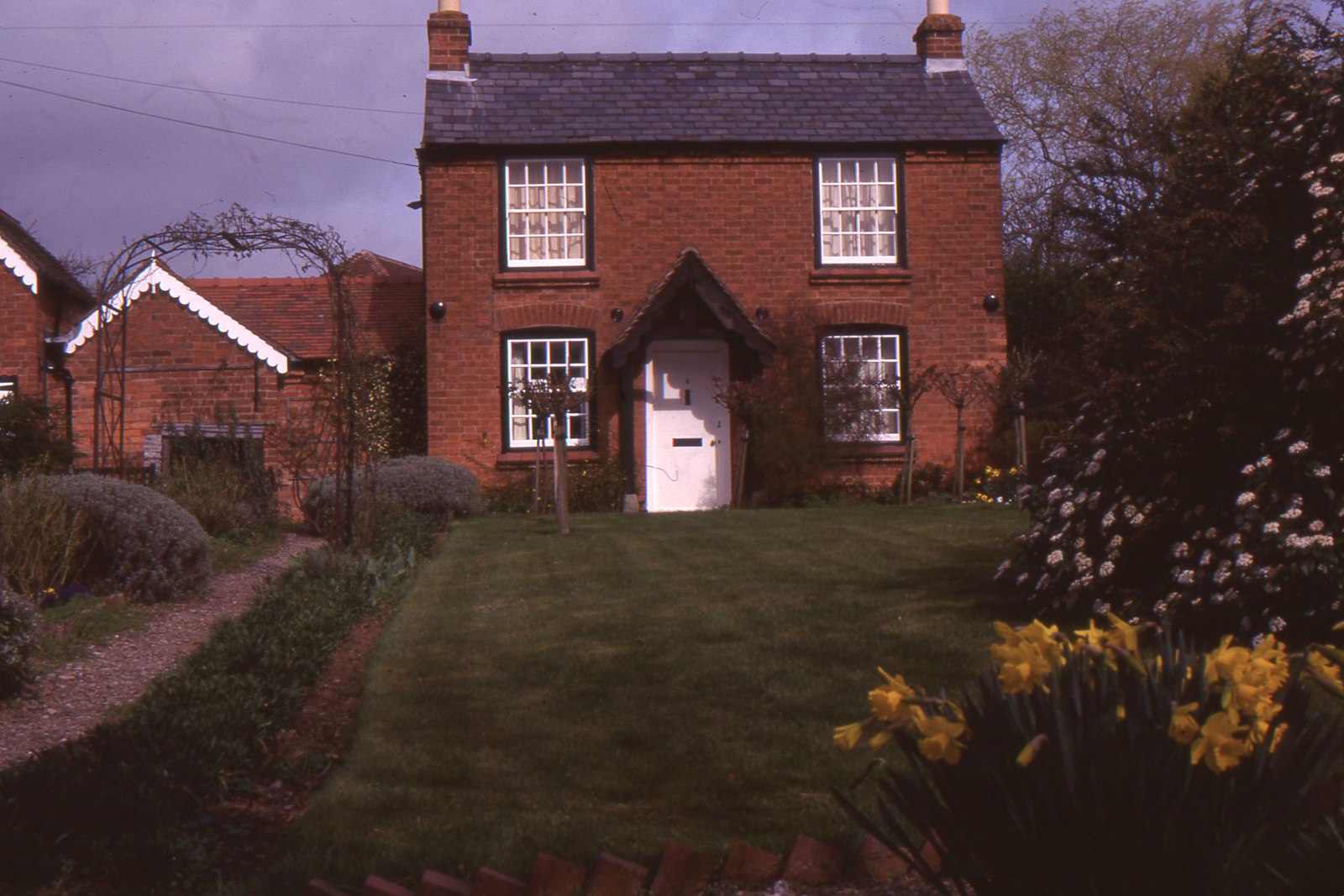
On the evening of 21 October 1898, Elgar was forty-one years old and a nobody. He had spent the day in Worcester teaching violin lessons, and he came home exhausted, sat at the piano, and let his fingers wander. His wife Alice — sitting across the room — looked up and said: “Edward, that’s a lovely tune.”

Elgar stopped. “How shall I develop it?” he asked. Then he started thinking through his friends, one by one. The friend who limbered up his fingers before any concert. The friend who slammed doors. The viola student who couldn’t manage one specific passage. A bulldog. By the end of that night, the skeleton of fourteen variations was on paper.

That one hour rerouted English music. The unknown country fiddle teacher who had been invisible for eighteen years would premiere this piece in London the following June, and by 1902 Richard Strauss would stand up at a banquet in Düsseldorf and declare him “the first English progressive composer.” Two centuries had passed since the Continent had taken an English composer seriously. The seed of that re-entry was planted in one hour at a piano, after a wife said one nice thing.

Fourteen Friends, Secretly Filmed in Sound

Ninety-nine percent of program notes stop right here, with a polite sentence: “Elgar painted musical portraits of fourteen friends.” It sounds dignified. It is also basically a lie. What Elgar actually made wasn’t a portrait gallery — it was something closer to a group chat full of caricatures, the kind of WhatsApp exchange where everyone roasts everyone, except the roasts have key signatures.

Each set of initials at the head of a variation is a real person. And nearly every variation freezes that person’s most annoying habit, physical tic, or recurring screw-up into orchestral score. Five examples follow.

Variation II — The Friend Warming Up His Fingers

H.D.S-P. is the pianist Hew David Steuart-Powell. Apparently, before any chamber concert he ever played, he ran the same chromatic warm-up routine — the same scale, the same fingering, the same ritual. Variation II is, from start to finish, that warm-up. Imagine writing a one-minute orchestral movement consisting entirely of the moment your friend cracks his knuckles before sitting down to actually play. That is what Elgar did, and then he handed it to a publisher.

Variation IV — A Slammed Door, in Thirty Seconds

W.M.B. is William Meath Baker, a country gentleman of the old school. He had a habit of marching out of the guest room and slamming the door behind him every single time. Variation IV is the shortest in the entire set — about thirty seconds — and the violent sf chord at its final bar is, quite literally, the door slamming shut. A friend’s poor manners, embalmed in thirty seconds of orchestral writing.

Variation VI — The Passage the Student Couldn’t Play

Ysobel is Isabel Fitton, Elgar’s viola student. Variation VI contains a deliberately tricky string-crossing passage that — and this is documented — is the exact figure Fitton kept blowing in her lessons. Read that again. The teacher took the spot the student couldn’t get right and turned it into a public monument. Picture your worst piano teacher publishing the chord you keep botching as track three of an album. That, in essence, is what Variation VI is.

Variation X — The Stutter She Didn’t Know About for Fifty Years

Dorabella is Dora Penny, later Mrs. Powell. She had a faint, gentle stutter. The little gasping woodwind figure that opens Variation X is — bar for bar — that stutter. Here is the part that’s almost too good: Dora herself did not realize this for nearly fifty years. She was happily attending performances of her own variation with no idea that the woodwinds were imitating her speech impediment. She only learned the truth shortly before publishing her 1937 memoir Edward Elgar: Memories of a Variation, when someone finally explained it to her. Imagine being at a wedding for half a century, dancing to a song that turned out to be about how you can’t pronounce your own name.

Variation XI — Not a Person. A Bulldog.

G.R.S. stands for George Robertson Sinclair, organist of Gloucester Cathedral. But Sinclair is not actually the subject of this variation. The subject is his bulldog, Dan. One day Dan fell into the River Wye, paddled along the bank in a panic, scrambled up onto solid ground, and barked in triumph. Variation XI’s first bar is the splash. The last bar is the bark. Sinclair himself barely shows up in his own variation.

Read that as the historical fact it is: a composer who would later be knighted by the King of England gave one of the fourteen slots in his most personal work to a wet dog. Most program notes politely omit this detail.

The Real Night Behind Nimrod — Beethoven, Played in a Living Room

The standard one-line description of Variation IX, “Nimrod,” reads: “A moving tribute to his friend Jaeger.” That single sentence cuts the actual weight of this piece roughly in half. Nimrod is not a tribute. Nimrod is a musical thank-you to the man who, on a specific night in 1898, talked Elgar down from quitting composition by sitting at a piano and playing Beethoven for him.

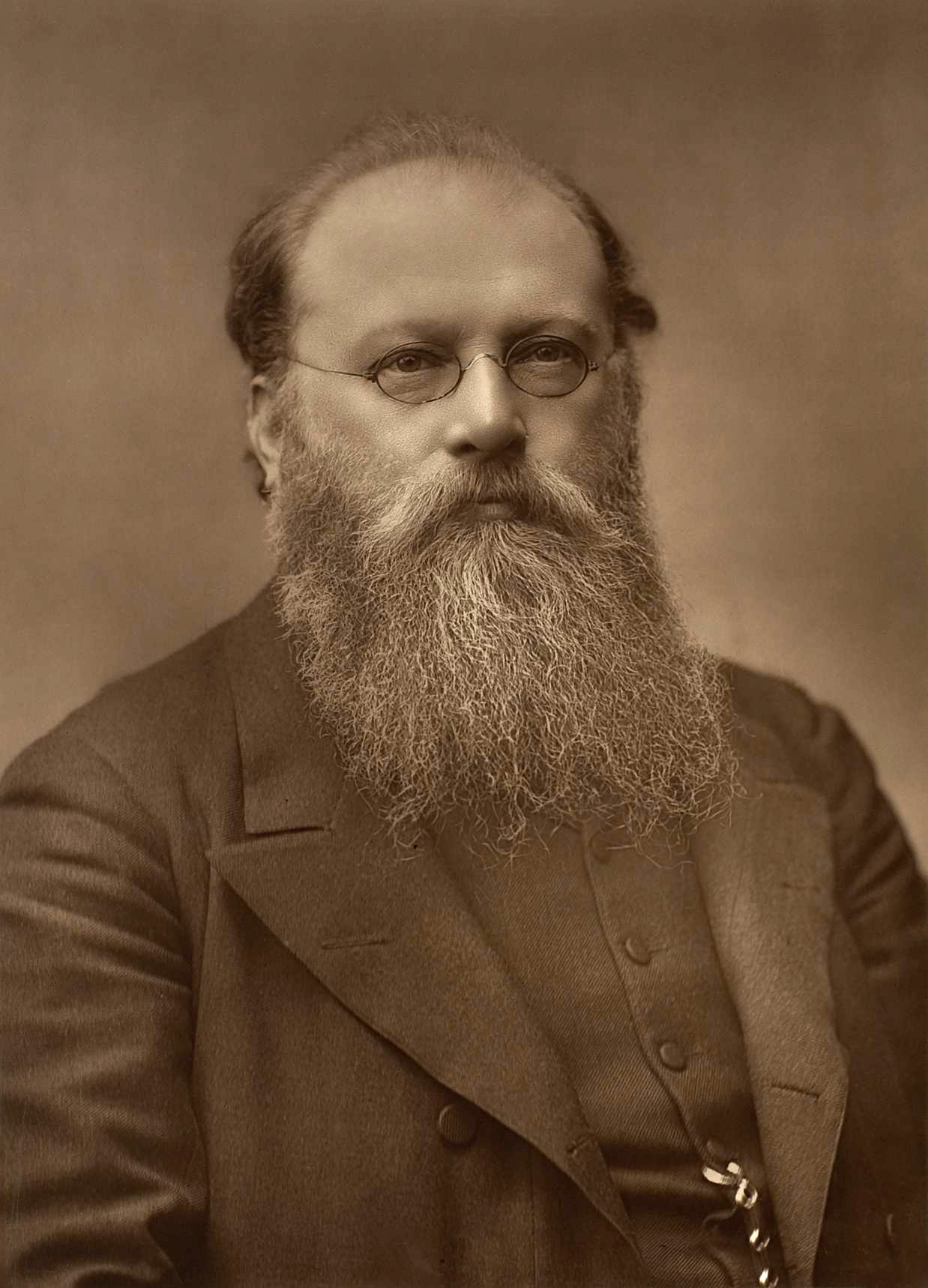
Here is what happened. Elgar, deep in a slump, vented to his friend August Jaeger: “I cannot write anything as good as Brahms’s Fourth. I would rather give up.” Jaeger listened, said nothing, then got up, walked over to the piano, and slowly played the opening bars of the second movement of Beethoven’s “Pathétique” Sonata — the Adagio cantabile. “Beethoven was miserable enough to want to die, and he kept writing. So will you.” The violinist W.H. Reed recorded this exchange in his 1936 memoir Elgar As I Knew Him. It is not legend. It is testimony from the room.

Lay the first four bars of Nimrod next to the opening of the Pathétique Adagio cantabile on a music stand and the relationship is obvious. They are the same shape. More precisely: Beethoven walked into Elgar’s living room through Jaeger’s fingers, and Elgar carried that exact contour around for the rest of his life and built a friend’s variation out of it.

What is “the same shape,” concretely? The Pathétique Adagio cantabile opens with a quiet step up from the tonic to the mediant, settles for a beat, and then curls back down through a long, sighing descent — a phrase that sounds like someone catching their breath after deciding not to weep. Nimrod opens on the same upward gesture: a hushed rise from the tonic, a held note, a descent shaped almost identically. The key is different (E-flat where Beethoven sat in A-flat), the orchestration is utterly different (a full string section in place of a solo piano), but the contour — the exact emotional architecture of the line — is Beethoven’s, transcribed from the night Jaeger played it in a room. This is not a vague resemblance, the kind musicologists invent over sherry. Lay the two on the same staff and a music student spots it in fifteen seconds. The interesting question is not whether Elgar borrowed it. The interesting question is what he meant by planting it, dead-center, in the variation named after the man who put it into his ear.

The name itself is a triple-decker pun. “Jaeger” is German for “hunter.” “Nimrod” is, in Genesis 10:9, “a mighty hunter before the Lord.” So a German friend with the surname “Hunter” gets a variation named after the Bible’s most famous hunter — and in this case the hunter has bagged the slump. German lexicon, scriptural reference, and personal anecdote, compressed into one title.

Jaeger died of tuberculosis in 1909, age forty-nine. In 1912, Elgar quoted the Nimrod theme again in The Music Makers, Op. 69, this time as outright requiem. Which means the four-bar phrase Jaeger played in a living room in 1898 traveled through Elgar’s death in 1934 and arrived, in 1997, on live BBC television, played at the funeral of Diana, Princess of Wales. A piece of private living-room therapy became, within a century, Britain’s unofficial second national anthem.

The Three Stars — A First Love, Smuggled In Next to the Wife

Variation XIII has no initials. It is labeled with three asterisks. The standard answer goes like this: “It refers to Lady Mary Lygon, who was sailing to Australia at the time, which is why Elgar quotes Mendelssohn’s Calm Sea and Prosperous Voyage.” Tidy, well-mannered, very English-garden. Since 1976, English-language scholarship has been quietly dismantling that tidiness.

The dismantling has a name: Helen Weaver. She was Elgar’s fiancée in 1884. She broke off the engagement and emigrated to New Zealand. And there is now substantial evidence that Elgar never got over her — not in 1884, not in 1899 when this piece was written, not ever. Cora Weaver’s 2005 book Elgar’s Other Lover and the 2004 revised edition of Michael Kennedy’s standard biography both treat the Helen Weaver hypothesis seriously. The English-language consensus has shifted to: “officially Mary Lygon, but the real model is more likely Helen Weaver.”

Why does the case for Weaver keep gaining ground? Three pieces of circumstantial evidence. First, the dates. Elgar and Helen Weaver were engaged in 1883 and broke it off in 1884 — exactly fifteen years before he wrote a piece in which the central, unnamed variation slips a Mendelssohn quotation about a sea voyage to a woman who had, in fact, taken a sea voyage to the other side of the world. Second, Elgar’s own diaries: as late as 1900, the year after Enigma’s premiere, he was still marking Helen’s birthday in his calendar. Third, what Mary Lygon herself was doing. The “official” inscription on the manuscript at one stage read “L.M.L.” — Lady Mary Lygon’s initials — and Elgar replaced them with three asterisks before publication, claiming he had not received her permission in time because she was at sea. The footnote does not survive scrutiny: Lygon had not yet sailed when the piece was being engraved. The asterisks were a substitution, not a placeholder. Whatever name Elgar took out, he replaced with stars he never replaced back.

If that is true, here is what it actually means. In a piece dedicated to “my friends pictured within” — a piece that opens with a variation portrait of his wife Alice (C.A.E.) and closes with a self-portrait (E.D.U.) — Elgar planted, dead center, three asterisks marking the woman who left him fifteen years earlier. Alice was thrilled to find herself at the front of the piece. She had no idea another woman’s name was buried in the middle of it, redacted to three little stars.

A Joke Nobody Has Cracked in 100 Years — From “Auld Lang Syne” to π

The title “Enigma” was Elgar’s own. In other words, the composer himself slapped a sticker on the front of the piece announcing “there is a riddle inside.” Then in a 1929 BBC radio program, “Elgar on his own works,” he dropped what is still the single most consequential clue in the history of this music: “the principal Theme never appears.”

That one sentence has split the field for a hundred years. Camp One reads “never appears” literally: there is some other, real, named melody hovering above the variations, never sounded by the orchestra but locked into them harmonically — find that melody and you’ve solved it. Camp Two reads it as metaphor: the “principal Theme” is something abstract — silence, friendship, God, Elgar himself — which is why it can’t be played out loud.

Camp One has been busy. Below are six of the most prominent candidate “real melodies” proposed over the past century. Each was advanced in a serious book or paper, by a serious person, who was very confident they had the answer.

  • “Auld Lang Syne” (Roger Fiske, 1969) — the oldest of the modern proposals, popular in the UK for decades.
  • “God Save the Queen” (Joseph Cooper, 1991) — a very English answer to a very English riddle.
  • “Rule, Britannia!” (Theodore van Houten, 1976) — a similar patriotic line of attack.
  • Bach’s “Ein feste Burg” (Hans Westgeest, 2007) — the argument being that a Catholic composer hiding a Lutheran chorale is exactly the kind of joke Elgar would enjoy.
  • Mozart’s Requiem, “Recordare” (Robert Padgett, 2009) — a piece about remembering the dead.
  • The number π = 3.14159 (Charles Santa, 2014) — yes, the actual number. The argument is that the hidden “theme” isn’t a melody at all but a number, encoded into pitches. There is a journal article. It is real.

This is the moment to start squinting. When six serious scholars across a century each declare victory, and their answers range from Auld Lang Syne to actual irrational numbers, you are entitled to wonder if the question itself was honest. The increasingly popular meta-theory is: there was never an answer. Elgar was trolling. For life.

The circumstantial case for that theory is strong. In 1897, Elgar sent Dora Penny — the Dorabella of Variation X — an eighty-seven-character letter consisting entirely of squiggles, now known as the Dorabella Cipher. Cryptanalysts including former NSA personnel have taken cracks at it. The American Cryptogram Association lists it on its unsolved roster. As of 2024, no public, agreed-upon decryption exists. So Elgar’s life contains, simultaneously, an undeciphered cipher mailed to Dora and an undeciphered variation containing Dora. Once is a riddle. Twice is a personality.

Reread the line he gave Dora when she asked him directly. “I thought you, of all people, would guess it.” That is not the tone of someone about to hand out an answer. That is the tone of someone who either has no answer to give, or whose answer is so private only one person could possibly recognize it — and that person, on hearing it, would understand exactly why he was never going to say it out loud.

From Asylum Bandmaster to Sir Edward — Eighteen Years in the Wilderness

On 19 June 1899, the day Enigma premiered, Elgar was a forty-two-year-old composer about three weeks past his birthday. Before that night, what had he been doing for a living? Most program notes soften this part. Here it is straight.

From 1879 to 1884, for five years, Elgar was the bandmaster of the attendants’ band at the Powick County Lunatic Asylum, a psychiatric hospital just outside Worcester. His annual salary was £32. His job was to compose and conduct polkas and quadrilles for the Saturday-night dances held for patients and staff.

The handwritten scores he produced over those five years still exist. Five volumes’ worth, catalogued at the British Library as the “Powick Asylum Music.” Which means the first regular composing job held by the man who would become Sir Edward Elgar, Master of the King’s Music, was: writing dance music for psychiatric patients.

What did this music actually sound like? Not therapy music, not anything experimental — Powick was a working psychiatric institution that ran a Saturday-night dance for patients and staff in the way a barracks ran a Saturday dance, and it needed exactly the kind of music a barracks dance needed. Polkas, quadrilles, lancers, the occasional waltz. Elgar wrote them by the dozens. The autograph volumes at the British Library are not curiosities; they are working scores, with parts cued for whichever attendants happened to be in the band that month, scribbled rebars where a particular performer needed a simpler figure, the occasional dynamic adjustment in pencil. They are the day-job pages of a composer who would, twenty years later, have his work declared the start of a new English musical era. The Powick years end with Elgar taking his last polka home and never writing another. By 1885 he was scraping a living teaching violin to small children in Worcester, and he would do that, with declining patience, for another fourteen years before Alice’s evening at the piano cracked the rest of his life open.

He was an outsider on three axes at once. He was Roman Catholic in a country whose musical and educational establishment was firmly Church of England. He had no Royal Academy training, no Leipzig credentials, no conservatory degree of any kind — his father ran a music shop in a provincial town. Religion, class, education: he was on the wrong side of all three lines.

The person who carried him through those eighteen years of obscurity is the woman in Variation I: Caroline Alice Roberts. They married in 1889. Elgar was thirty-two; Alice was forty. She was nine years older than him, the daughter of a British Army Major-General, and she had just married — by the standards of her family — a Catholic shopkeeper’s son with no degree and no income. Three social violations in one ceremony. Her family essentially cut her off. The reward for her eighteen-year bet on him was being able to sit in St James’s Hall in 1899 and watch Hans Richter premiere the piece that opens with her own variation.

Alice died in 1920. Elgar lived another fourteen years. He composed almost nothing of significant scale in that time. In a 1933 BBC interview he said, with the kind of finality you can’t argue with: “My music is dead. It died with my wife.” If Variation I was the opening bar of that marriage, his death in 1934 was the closing one of the same piece.

One footnote: in September 1899, at the Worcester Three Choirs Festival, Elgar added 96 bars and an organ part to the Finale (E.D.U.). The original ending was short and limp. Jaeger had been pushing him hard to fix it. On the autograph score now held at the British Library (Add MS 47900), Elgar wrote, in his own hand: “Owe much to A.J.J.” — August Johannes Jaeger. The friend who played Beethoven for him in 1898 was also the midwife of the final ninety-six bars of the same piece.

If You’re New to It — Start with Four Minutes of Nimrod

Thirty minutes is a lot to ask for a first encounter. Just listen to Nimrod. Four minutes. The variations are independent enough that cherry-picking gets you something like ninety percent of the experience. If you decide you want the whole thing, here is a sane path in.

Stage one: Nimrod alone. Four minutes. Stage two: Variation I (C.A.E., the wife) → Nimrod → Variation XIV (E.D.U., the self-portrait). About twelve minutes total, and now you have the marriage, the friend, and the composer in one trio. Stage three: Theme plus all fourteen variations, the full thirty minutes. From the second listen onward, treat the piece as a group chat full of caricatures and try to guess, in each variation, what the person’s annoying habit must have been. About half the piece opens up that way.

One specific reward at the end. Variation XIV (E.D.U., Elgar’s own initials, from Alice’s nickname for him “Edu”) quotes both the C.A.E. theme and the Nimrod theme inside its own music. So in his self-portrait, Elgar literally inscribes his wife and his best friend onto himself. The translation is: “I am here because of these two people.” Catching those quotations in the last five minutes is the cleanest possible exit from the piece.

Recordings — One Minute and Thirty Seconds of Civil War

The tempo of Nimrod is, in British music criticism, a periodically reignited culture war. The numbers tell the story. Boult clocks in around 3:25. Solti, 3:50. Slatkin, 4:30. Barenboim, 4:35. Colin Davis, 5:00. The same four-bar opening, recorded by major conductors with major orchestras, ranges across a minute and a half. Gramophone‘s 2014 “Building a Library: Enigma Variations” survey makes the point bluntly: this is not a difference in taste, it is a difference in identity — is Nimrod a memorial service, or is it a story about two friends?

  • Boult / LSO 1970, EMI — Nimrod around 3:25. Elgar himself recorded the piece for HMV in 1926 at roughly 3:30, so this is the camp closest to the composer’s own clock. It is also the recording least colored by the post-1997, post-Diana “this is a funeral piece” mythology. If you want to hear the version that thinks Nimrod is about a living-room conversation, this is it.
  • Colin Davis / LSO Live — Nimrod around 5:00. A full ninety seconds slower than Boult. The fair criticism is that the composer didn’t intend it this way. The fair counter is: that minute and a half is for us, not for Elgar. Sometimes the audience has rights too.
  • Barbirolli / Philharmonia 1962 — Nimrod around 4:10. “Standard” is usually a polite word for “boring.” This recording is evidence that standard doesn’t have to mean boring.
  • Barenboim / Staatskapelle Berlin — comparison case. Worth one listen specifically because it’s a German orchestra playing English self-portraiture. The fourteen friends sound a little less like family and a little more like people you’ve just been introduced to. That’s not a criticism; it’s a different angle.
  • Elgar himself / HMV 1926 — the reference. Either it confirms the myth that the composer knows his own piece best, or it complicates it. Listen and decide; it’s faster than reading another opinion about it.

Listening with the Score

Tracking these six moments with the score in front of you opens roughly half the piece a second time.

  • Variation IV (W.M.B.), final two bars — the slammed-door sf chord
  • Variation IX (Nimrod), first four bars — side by side with the opening of Beethoven’s “Pathétique” Adagio cantabile
  • Variation X (Dorabella), opening — the woodwind imitation of Dora’s stutter
  • Variation XI (G.R.S.), first six bars + final bark — Dan in the river
  • Variation XIII (***), the clarinet quotation of Mendelssohn’s Calm Sea and Prosperous Voyage
  • Theme bars 1–6 + the Finale (E.D.U.) section that combines C.A.E. and Nimrod — the moment Elgar signs himself with two other names

Frequently Asked Questions

So what’s the answer to the riddle? Did anyone ever solve it?

No one has, in a hundred years. Six serious candidates have been published, each by a scholar convinced they cracked it: “Auld Lang Syne” (Roger Fiske, 1969), “Rule, Britannia!” (Theodore van Houten, 1976), “God Save the Queen” (Joseph Cooper, 1991), Bach’s “Ein feste Burg” (Hans Westgeest, 2007), Mozart’s Requiem “Recordare” (Robert Padgett, 2009), and the number π (Charles Santa, 2014). Elgar himself, in a 1929 BBC broadcast, dropped one cryptic line — “the principal Theme never appears” — and then died in 1934 without saying anything else. When Dora Penny asked him directly, all she got was: “I thought you, of all people, would guess it.”

It’s thirty minutes long. Do I really have to sit through the whole thing?

No. Four minutes of Nimrod gets you about ninety percent of the experience. The variations are independent, and you can absolutely cherry-pick. If you want a more complete picture without committing to thirty minutes, try Theme → Variation I (C.A.E.) → Nimrod → Variation XIV (E.D.U.). That’s about twelve minutes, and Variation XIV literally quotes both Variation I and Nimrod inside itself, so the last five minutes acts as the composer’s own self-summary.

Why is Nimrod always compared to Beethoven’s “Pathétique”?

Because the first four bars of Nimrod are a clear variant of the opening of the second movement (Adagio cantabile) of Beethoven’s “Pathétique” Sonata. It’s not coincidence; it’s deliberate quotation. According to W.H. Reed’s 1936 memoir Elgar As I Knew Him, Elgar fell into a deep slump and told his friend August Jaeger he wanted to give up composing. Jaeger sat down at the piano, played the Pathétique Adagio cantabile, and said, “Beethoven was miserable enough to want to die, and he kept writing. So will you.” Nimrod is the musical record of that night. It is not a generic tribute — it is a thank-you to the man who talked him out of quitting.

Did Elgar really work in a psychiatric hospital?

Yes. From 1879 to 1884, for five years, Elgar was bandmaster of the attendants’ band at Powick County Lunatic Asylum near Worcester, on a salary of £32 a year. His job was to write and conduct polkas and quadrilles for the Saturday-night dances held for staff and patients. Five volumes of his autograph scores survive at the British Library as the “Powick Asylum Music.” The first regular composing position held by the future Sir Edward Elgar was writing dance music for psychiatric patients.

Who is the *** in Variation XIII? Was it really a former lover?

Officially, Variation XIII honors Lady Mary Lygon, who was sailing to Australia at the time, which is why Elgar quotes Mendelssohn’s Calm Sea and Prosperous Voyage. Since 1976, however, English-language scholarship has increasingly favored a different reading: that the real model is Helen Weaver, who was Elgar’s fiancée in 1884 and broke off the engagement to emigrate to New Zealand. Cora Weaver’s 2005 book Elgar’s Other Lover and the 2004 revised edition of Michael Kennedy’s biography both treat the Helen Weaver hypothesis as serious. If it’s right, it means that in a piece largely dedicated to his wife Alice, Elgar planted three asterisks at the very center marking the woman who left him fifteen years earlier.

If I only buy one recording, which one?

Boult / LSO 1970 on EMI. Elgar himself recorded the piece for HMV in 1926 at roughly 3:30 for Nimrod, and Boult sits closest to that — about 3:25. It’s also the recording least colored by the post-1997 “Diana funeral” mythology that turned Nimrod into pure elegy. If you want to hear the piece as the conversation between two friends in a Worcester living room in 1898, this is the version that still remembers that’s what it is.

How did Nimrod become Britain’s de facto national mourning music?

It started life as a private joke about a German friend who quoted Beethoven in a living room. After Jaeger died of tuberculosis in 1909, Elgar quoted the Nimrod theme again in The Music Makers (1912), and the elegiac coloring began to set in. After Elgar’s own death in 1934, the BBC used Nimrod in memorial broadcasts, which fixed it in public memory as a funeral piece. The decisive moment was Princess Diana’s funeral in 1997, broadcast worldwide, after which Nimrod became standard repertoire for British state occasions, war remembrance services, and Olympic ceremonies. A piece of personal therapy migrated, in roughly a century, into the country’s musical identity.

Further Listening

  • Beethoven, Piano Sonata No. 8 “Pathétique,” Op. 13 — the parent text of Nimrod, the piece Jaeger played on the night that mattered
  • Mendelssohn, Concert Overture Calm Sea and Prosperous Voyage, Op. 27 — the source of the quotation in Variation XIII
  • Brahms, Symphony No. 4 in E minor, Op. 98 — the piece Elgar said he could “never write anything as good as”
  • Elgar, Cello Concerto in E minor, Op. 85 — premiered 1919, effectively the last large-scale work of his life before Alice’s death

Copyright notice · The Classic Note does not permit unauthorized reproduction, reposting, redistribution, or translation of its articles. Brief quotations are allowed only with clear attribution and a link to the original page. Please contact us for reuse or collaboration requests.