If you came here for a list of ten cues, I have bad news first. Across the nine Jesse Stone films made between 2005 and 2015, there is exactly one piece of classical music the story stops to listen to: a Brahms intermezzo that Tom Selleck’s police chief drops onto a turntable in Sea Change. That is the entire classical inventory. Everything else you hear across those nine films is Jeff Beal’s original score.
Now the good news. That single cue is placed better than most of the classical needle-drops I have written about on this site. It is not set dressing and it is not a director showing off a record collection. Another character hands Jesse the idea, tells him what the music is for, and then the film sits there and watches him use it. I will take one cue like that over ten atmospheric ones.
Spoiler warning: this article discusses scenes from Jesse Stone: Sea Change, including how the character is doing late in the film.
The honest inventory: nine films, one classical cue
Here is the whole picture in one paragraph, because a lot of pages about this topic pad it out. Jesse Stone: Stone Cold (2005) was the first of nine television films built on Robert B. Parker’s novels, and Jeff Beal scored every one of them. Beal is a serious composer with five Emmy wins to his name and a 2016 nomination for the last film in the series, Jesse Stone: Lost in Paradise. His music is scored for a small ensemble and it leans acoustic and slow, which is almost certainly why people remember these films as being full of classical music. They are not. They are full of Beal.
The one genuine classical cue arrives in Jesse Stone: Sea Change, which aired on CBS on 22 May 2007. If a page tells you the series is packed with Bach and Chopin and Mozart, ask it to name the scene. It cannot, because those scenes do not exist.
Johannes Brahms — Intermezzo in A major, Op. 118 No. 2
The exact scene
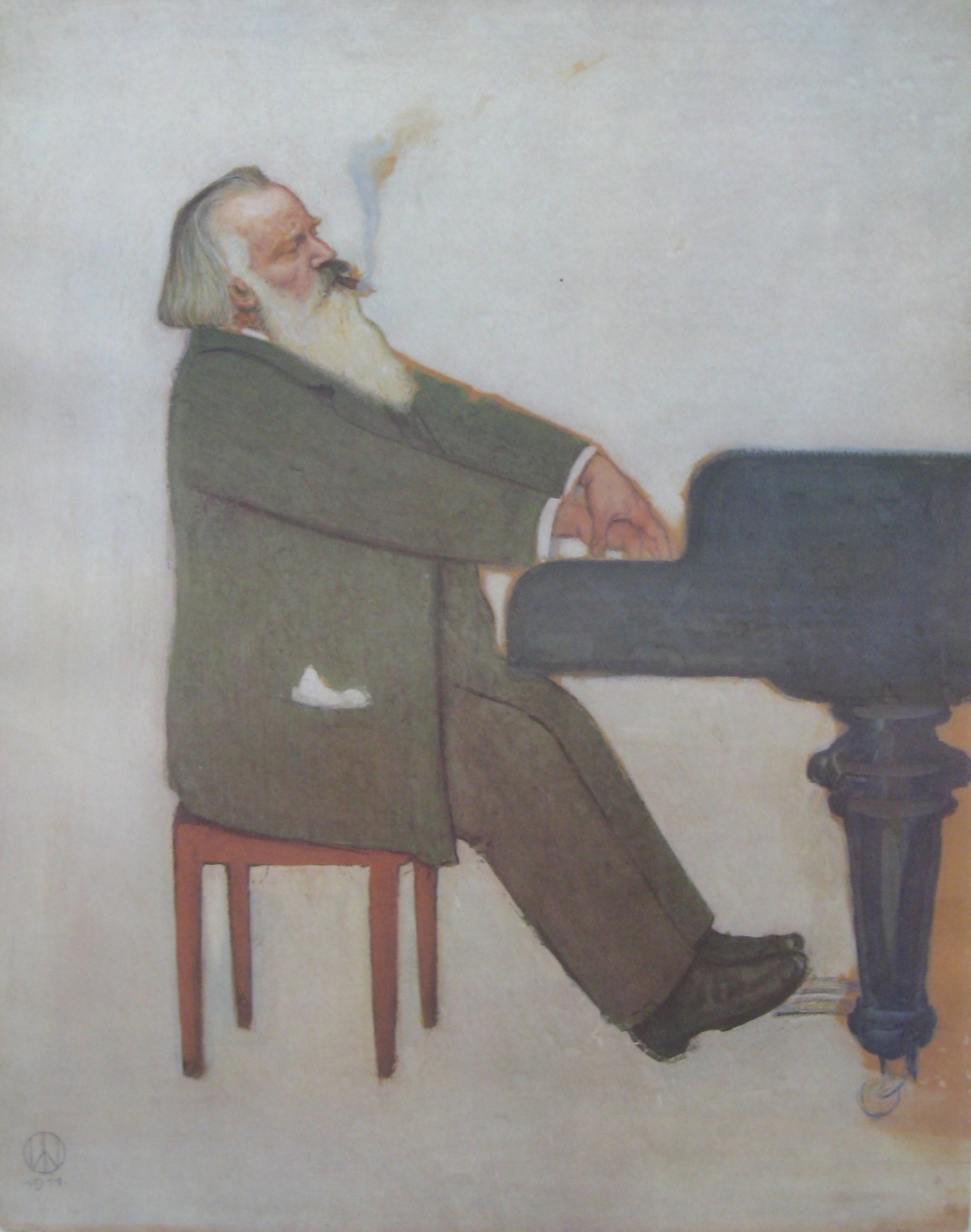
Jesse is drinking again and it is going badly. A neighbour, Hilda Evans, tells him that the music of Brahms is what she reaches for when things are hard. Later, after stopping at the hospital to read aloud to his injured deputy Luther “Suitcase” Simpson, Jesse comes home to an empty house, takes out an album of Brahms piano music, and puts it on. The camera does not cut away to a montage. It stays with a man in a chair, alone, listening to the record somebody told him would help.
That is a diegetic cue in the strictest sense: the music exists inside the room, on a physical record, and the character chose it. Half the classical cues in film are the opposite — an orchestra that nobody on screen can hear, borrowing prestige. This one is a prescription being filled.
What the piece actually is
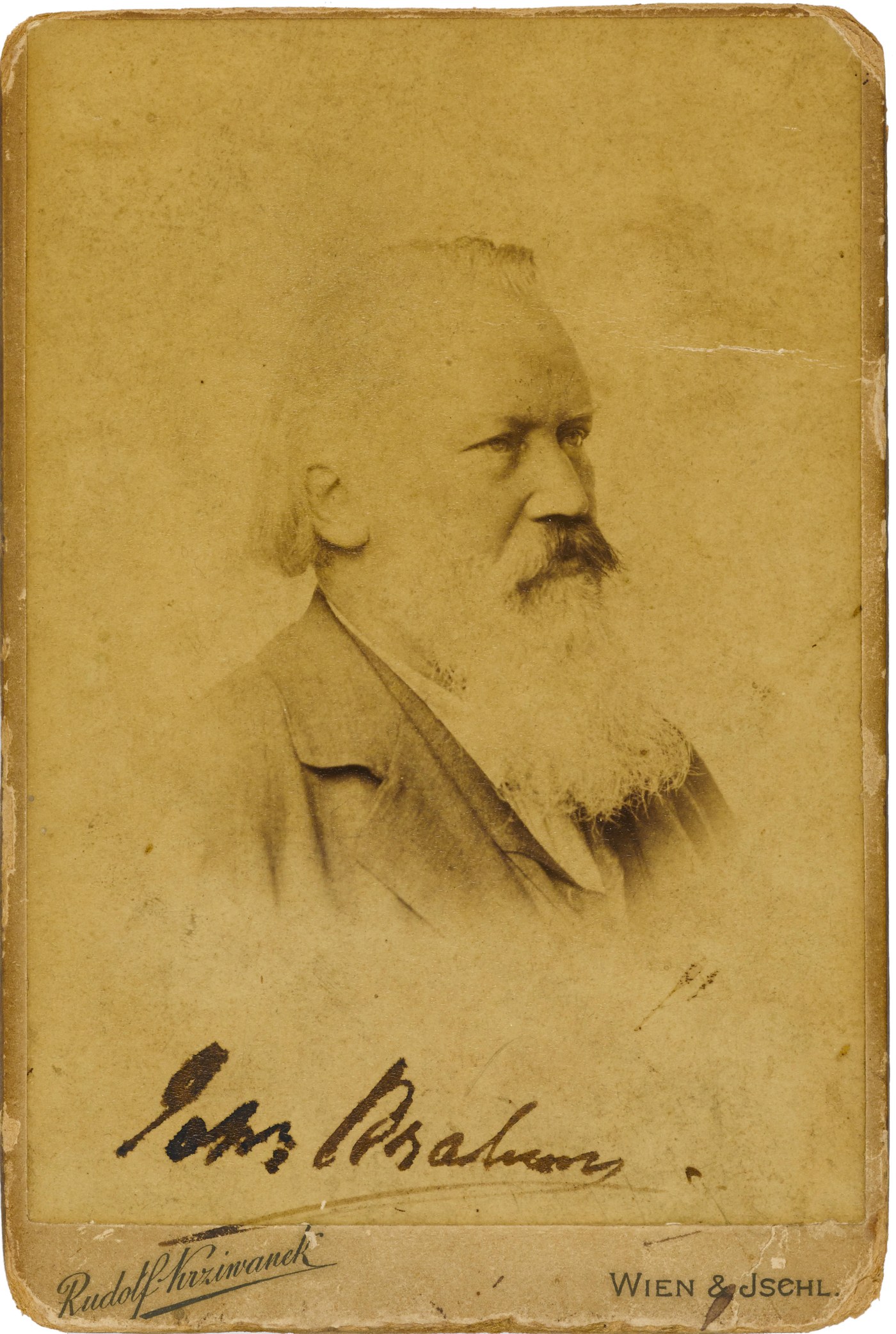
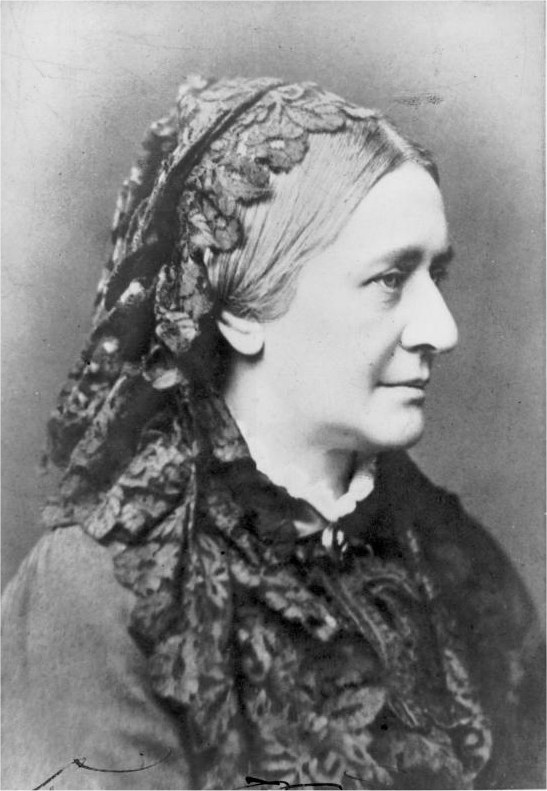
Brahms completed his Six Pieces for Piano, Op. 118, in 1893 at Bad Ischl and published the set with a dedication to Clara Schumann. It is the second-to-last set he wrote for solo piano; only Op. 119 came after. The A major intermezzo is the second of the six, marked Andante teneramente — roughly, walking pace, tenderly. It runs about six minutes.
What to listen for
The shape is a wide ternary: a long A major song, a middle episode in F sharp minor, then the opening comes back almost literally. The middle section is the part worth waiting for. Brahms writes it as a canon — the melody sings out in the right hand and an inner voice repeats it two beats later, so the texture is two people saying the same thing slightly out of step. It is the most argumentative music in the piece and it never raises its voice.
Then the opening returns essentially unchanged. Nothing has been solved. The tune simply comes back around and stops. If you want a musical description of an alcoholic’s evening, that structure is closer than anything a screenwriter could have written.
Why it works there, and why that is a reading rather than a fact
I have not found any interview where the production explains the choice, so treat the following as interpretation. The obvious move for this scene would have been something with a climax: Rachmaninoff, late Beethoven, anything that builds and releases. Op. 118 No. 2 refuses to build. It gives comfort without giving resolution, which is exactly the deal Jesse is being offered by everyone in his life at that point. The neighbour’s line — that Brahms helps — is true and insufficient at the same time, and the music proves it.
One note from the production side of the camera, since it changes what you notice on a rewatch. A scene where a character puts on a record is one of the harder things to get honest, because the music has to sound like it is coming out of speakers in a house rather than off a scoring stage. Room tone, a little dullness at the top, the sense that the piano is somewhere else in the building — those are choices someone makes in the mix, not accidents. Watch that scene once for Jesse and once for the speakers. The second pass tells you how much the film respects the record.
Where to hear the Brahms properly
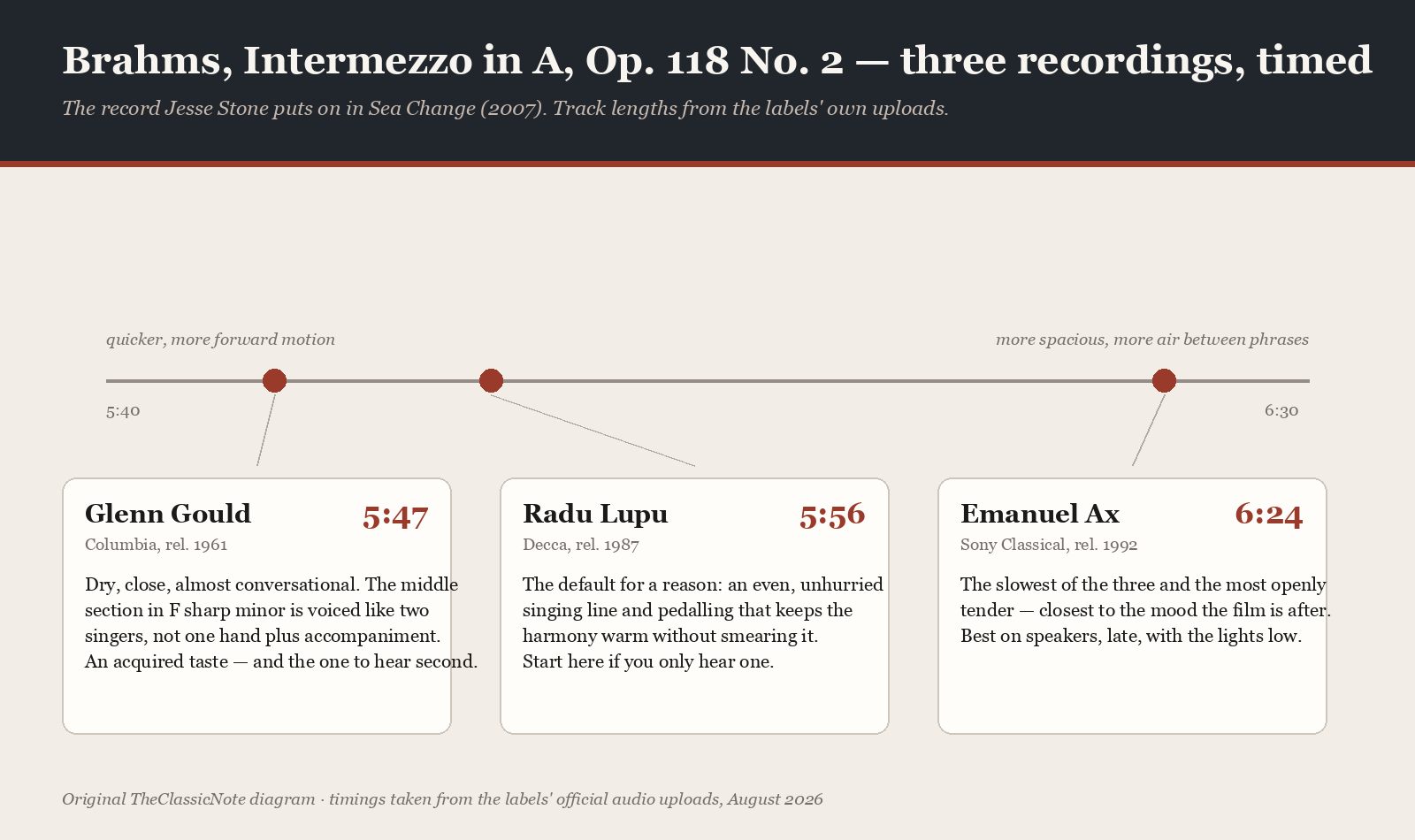
The film shows a record sleeve, but I could not verify which commercial recording the production licensed — no cue sheet or credit listing I could find names a pianist, and the forum threads that guess at it are guessing. So the picks below are how to hear the piece, not claims about the disc on Jesse’s turntable. Three good ones, timed, because timing is the one thing about this intermezzo you can check without taking anybody’s word for it.
Radu Lupu / Decca / 1987 CD issue of a 1970s session
Start here. Lupu takes 5:56 and spends it on line rather than effect: the melody is carried in one long breath, the pedalling keeps the harmony warm without smearing the inner voices, and the canon in the middle section stays legible instead of turning into a wash. If you only ever hear this piece once, hear it like this. The trade-off is that it is a touch reserved — Lupu will not push the F sharp minor episode into open grief, and some listeners want him to. One dating note, because the catalogues make this look newer than it is: the 1987 date attached to the Decca album is the CD reissue, not a fresh recording — the session behind it dates from the 1970s.
🎧 Also on: Apple Music · Spotify
Glenn Gould / Columbia / released 1961
Here is a fact that kills a cliché: Gould is the fastest of these three, at 5:47. The reputation says Gould’s Brahms intermezzi are impossibly slow and hushed; the clock says otherwise, at least in this piece. What he actually does is treat the middle section as two singers rather than a hand plus an accompaniment — the canon is voiced so clearly that you can follow the answering line without knowing what a canon is. The recorded sound is dry and close, and his humming is audible if you listen for it. Hear this one second, once Lupu has told you what the piece is.
▶ Listen on YouTube · Apple Music · Spotify
Emanuel Ax / Sony Classical / released 1992
The slowest of the three at 6:24, and the closest in mood to what the film is after. Ax puts air between the phrases and lets the reprise arrive quietly rather than pointedly, which makes the ending feel less like a conclusion and more like the record running out. That is the right effect for the scene. It is also the version I would put on at midnight rather than at a desk — the extra half-minute is all patience, and patience is easy to mistake for nothing happening if you are only half-listening.
▶ Listen on YouTube · Apple Music · Spotify
Everything else is Jeff Beal, and that is worth knowing
The reason people search for classical music in these films is that the score keeps behaving like chamber music. Beal writes for a small group and lets long single lines carry whole scenes, which is a classical instinct rather than a television one — most crime-drama scoring fills the space, and Beal empties it. He has scored all nine Jesse Stone films, and the Television Academy lists a 2016 nomination for Lost in Paradise in the original dramatic score category for a limited series, movie or special. He did not win that one; his five Emmy wins came from Monk, Nightmares & Dreamscapes, The Company and two for House of Cards.
Jeff Beal — Paradise (Jesse’s Theme)
If you want to test the point, put the main theme next to the Brahms. Both are slow, both are built on a single line, both refuse a big climax. The theme is film music and the intermezzo is not, but they are doing the same job in the same house, and that continuity is the most sophisticated musical decision this series made.
▶ Listen on YouTube · Apple Music · Spotify
The standout, and it is not a contest
With one classical cue in the series, naming a standout sounds like a joke. It is not, because the real question is whether that cue earns its place against nine films of original scoring — and it does. The Brahms is the only moment in the series where the music is a plot event. Somebody prescribes it, somebody takes it, and we watch the dose land. Beal’s themes tell you how to feel about Jesse; the Brahms is something Jesse does.
Compare that with how classical music usually gets used in crime television, where a Puccini aria or a Bach aria arrives to make a killer look cultured. There is a reason those cues feel interchangeable: the character is not listening, the audience is. In Sea Change the character is listening, and the film is honest enough to let the piece finish its own argument rather than cutting on the pretty bit.
Where to go next
If the Brahms is what brought you here, the natural next step is the piece where the same composer is doing the opposite — swinging at everything at once. Our guide to Brahms’s Piano Concerto No. 1 covers the concerto’s disastrous early reception and the recordings worth your time. If it was the function of the cue that interested you — music as something you take rather than something you admire — the picks in classical music for anxiety are chosen on exactly that basis, including two that get recommended constantly and should not be.
And if you want to see how a series with an actual classical appetite handles it, the cue list for NBC’s Hannibal is the other end of the spectrum: dozens of pieces, deployed with real intent, and a Bach aria that runs through all three seasons.