Four notes. Three short, one long. Every conductor alive has an opinion about them, and almost none of those opinions match. Beethoven’s Fifth is the most recorded symphony there is, and it’s also the one where two excellent performances can sound like two different pieces — one lean and snapping in about 31 minutes, another broad and granite-heavy at nearly 38.
The disagreements are concrete, not vague. How long do you hold the two fermatas in the opening bars — a beat, or as long as your nerve holds out? Is the second movement a walk or a procession? Do you take the repeat in the scherzo that Beethoven’s autograph appears to ask for and most printed editions quietly drop? And when the trombones finally arrive in C major, is that a hard-won victory or a machine switching on? Six recordings below answer those questions in six different ways. One of them is the one I’d hand to a person who has never heard the piece properly, and one of them is the famous version I’d tell you to skip.
What to listen for
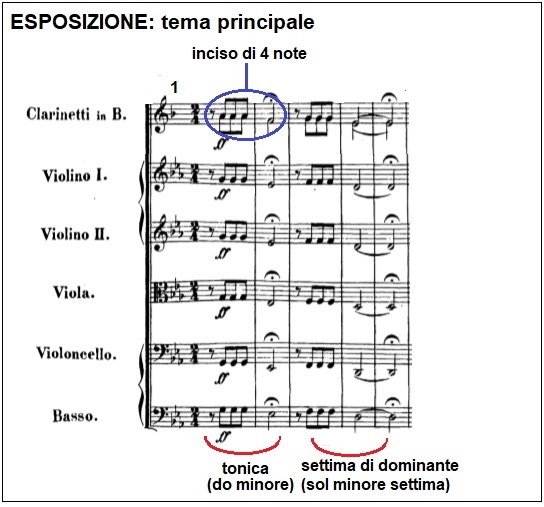
The four-note figure isn’t a tune. It’s a building block, and the first movement is mostly made of it. Listen past the opening statement and you’ll hear the same rhythm turned into an accompaniment under the second theme, hammered out by the horns to announce that theme, buried in the bass line, and used as the connective tissue between sections. There is very little material in this movement that isn’t that shape in disguise. That’s why tempo matters so much here: play it too broadly and the rhythm stops being a motor and becomes a series of separate thumps.
Two moments are worth waiting for. The first is a short unaccompanied oboe line in the recapitulation — a few bars where the whole machine stops dead and one player sighs. Conductors treat it as either a breath or a wound, and how much time they give it tells you most of what you need to know about their reading. The second is the passage that links the third movement to the finale: the scherzo dissolves into a held string chord over a soft, repeating timpani pulse, the strings start to climb, and the finale detonates without a break. Get the crescendo wrong — blaze too early — and the arrival is just loud. Get it right and it’s the best forty seconds in the symphony.
The finale also changes the orchestra. Piccolo, contrabassoon and three trombones enter here and play in no part of the first three movements, which is why the C major sounds physically wider rather than merely louder. And listen for the ghost: partway through the finale, the scherzo comes back, quiet and pale, before being shoved aside. Beethoven doesn’t let the victory be uncomplicated.
The premiere that went badly
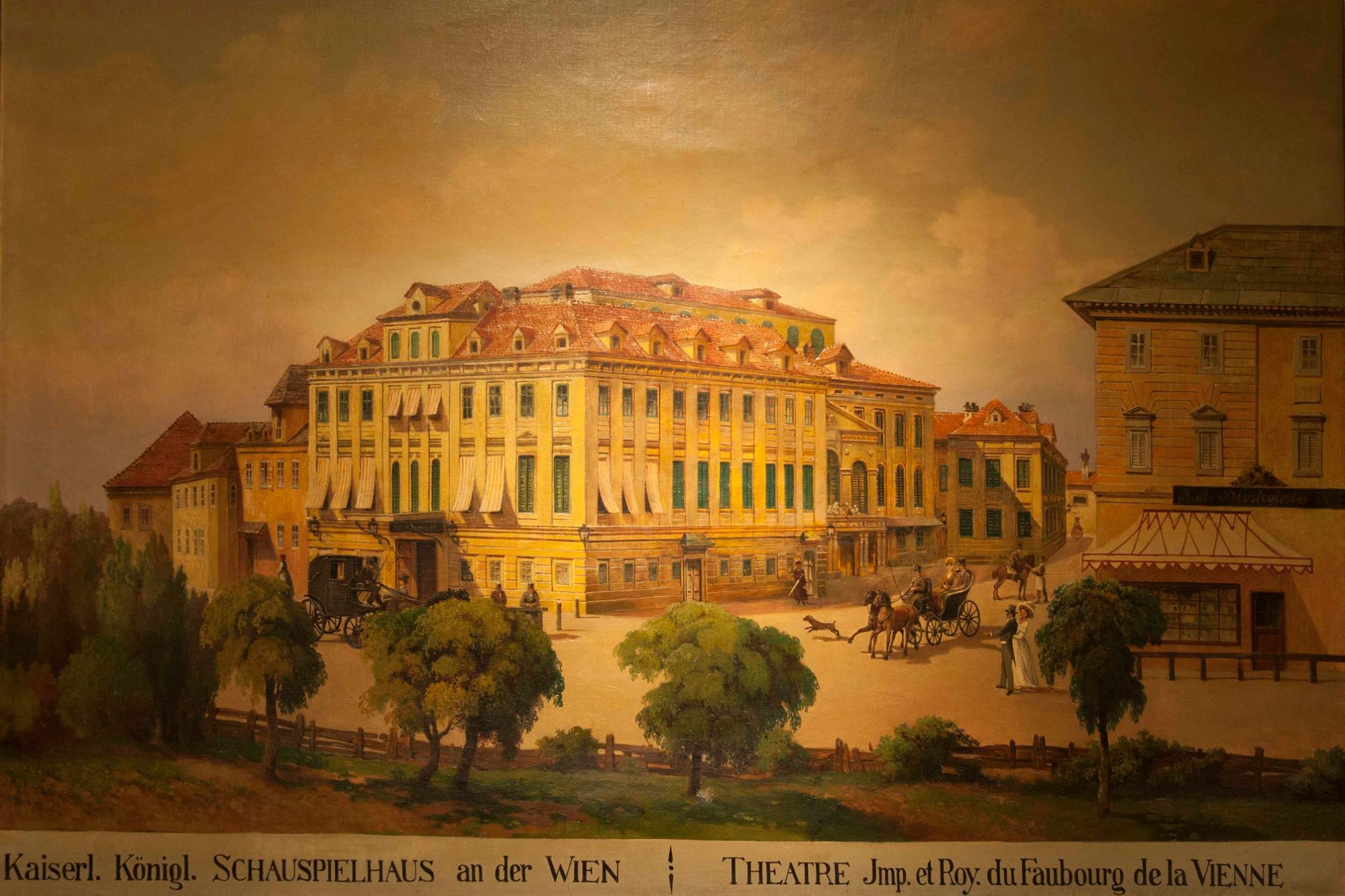
The Fifth was first performed on 22 December 1808 at the Theater an der Wien, in a concert Beethoven directed himself that ran more than four hours and consisted entirely of his own new music — the Sixth Symphony, the Fourth Piano Concerto, movements from the Mass in C, an improvised fantasia and the Choral Fantasy. The numbering that night was the reverse of ours: the Pastoral opened the evening as “No. 5” and the C minor symphony came after the interval as “No. 6.” The composer Johann Friedrich Reichardt, watching from Prince Lobkowitz’s box, recorded that he sat “in the most bitter cold, from half past six until half past ten.” The Choral Fantasy broke down mid-performance and had to be restarted.
So the piece did not conquer the world on the night. What made its reputation was print: E. T. A. Hoffmann’s 1810 review in the Allgemeine musikalische Zeitung, which treated the symphony as something closer to a metaphysical event than a concert item, and which more or less invented the way we still talk about it. As for the famous line about fate knocking at the door — that comes from Anton Schindler, Beethoven’s secretary and biographer, whose testimony scholars treat with deep suspicion, since he is known to have forged entries in the conversation books. We pulled that apart in Beethoven Never Said “Fate” — Symphony No. 5, Three Myths Dismantled.
The contenders
Carlos Kleiber / Vienna Philharmonic / 1974 / Deutsche Grammophon
This is the one. Kleiber’s tempos are quick but never hurried, and what makes the performance is articulation rather than speed: every short note is genuinely short, the Vienna strings attack with a snap you can hear in the room, and inner lines that usually vanish stay audible at full volume. Nothing is smoothed. The first movement sounds like an argument being won.
The moment to check is the bridge into the finale. Kleiber refuses to let the crescendo bloom early — the strings climb in a controlled, almost withheld way, so that when the C major hits, it lands as a change of state rather than a rise in volume. Flaws: the engineering is close and slightly dry, so there’s less hall around the orchestra than a modern recording gives you, and the second movement is brisk enough that listeners who want a hymn will feel short-changed. Who it’s for: everyone. If you own one Beethoven Fifth, own this.
🎧 Also on: Apple Music · Spotify
Wilhelm Furtwängler / Berlin Philharmonic / June 1943, live / widely reissued
A wartime radio performance from the old Philharmonie in Berlin, and the least comfortable Fifth in circulation. Furtwängler treats tempo as something that bends continuously — he pulls back into the second theme, then drives forward with a physical urgency that no studio recording quite reaches. The finale’s coda accelerates until the orchestra sounds like it might come apart, and the recording’s value is that it audibly doesn’t.
The flaws are real and you should know them going in: the sound is mono, the tape has audible wear, and loud tuttis distort. There are competing transfers of varying quality, so the copy you pick matters as much as the performance. Who it’s for: your second or third Fifth, when you already know the notes and want the piece to feel dangerous rather than admirable.
🎧 Also on: Apple Music · Spotify
John Eliot Gardiner / Orchestre Révolutionnaire et Romantique / 1994 / Archiv Produktion
Period instruments, and here that’s not a museum exercise — it changes what you hear. Gut strings and hard timpani sticks mean the accompaniment doesn’t blanket the winds, so the scherzo’s trio, that scrambling fugato for cellos and basses which usually turns into a low blur, comes through as actual counterpoint. Natural trumpets and horns give the finale a brighter, more brazen C major than modern brass produces; it sounds less like plush triumph and more like a military band arriving.
Gardiner is also among the conductors who restore the longer scherzo structure that Beethoven’s autograph appears to indicate — the version with the extra pass through scherzo and trio, rather than the shorter form most printed editions carry. This remains a genuinely contested editorial question, and hearing the long version is the most interesting reason to own this recording. The trade-off: if you grew up on big modern string sound, the tone will read as thin, and the slow movement is more plain-spoken than tender. Who it’s for: listeners who already like the piece and want to hear what it could actually have sounded like in 1808.
▶ Listen on YouTube · Apple Music · Spotify
Riccardo Chailly / Gewandhausorchester Leipzig / 2007–09 / Decca
The best-sounding Fifth on this list, and the easiest to live with. Chailly runs a modern orchestra at tempos close to Beethoven’s own metronome marks, which mostly means the second movement finally earns its marking: Andante con moto, with the emphasis on con moto. It moves. The variations stop feeling like a rest stop between the two big movements and start feeling like part of the argument. The Gewandhaus strings are precise at speed, and Decca’s engineering gives you depth and a real bass end.
My reservation is that it’s a little too well-run. Nothing frays, nothing risks anything, and the finale is exciting in the way a very fast train is exciting — impressive, but you never doubt the outcome. That’s also exactly why it’s the right pick for streaming and for a first listen at home on decent speakers. Who it’s for: the modern-sound listener, and anyone buying one cycle.
▶ Listen on YouTube · Apple Music · Spotify
René Leibowitz / Royal Philharmonic / 1961 / Reader’s Digest
A cult record, and a genuinely strange one to find in a mass-market subscription box set. Leibowitz — a composer and conductor best known as a champion of the Second Viennese School — drove a modern orchestra at Beethoven’s metronome marks decades before the period-instrument movement made that respectable, and the results still sound startling: dry, forward, unsentimental, with the finale taken at a clip that would raise eyebrows today. The engineering is 1961 stereo that embarrasses plenty of digital recordings.
Be honest about the weaknesses: the Royal Philharmonic is not the Vienna Philharmonic, and at these speeds you hear the seams — some scrappy ensemble, some thin string tone in exposed passages. Reissues differ a lot in transfer quality, so this is a recording where you should check which edition you’re buying. Who it’s for: the collector who wants to hear the fast-Beethoven argument made in 1961.
▶ Listen on YouTube · Apple Music · Spotify
Herbert von Karajan / Berlin Philharmonic / 1962 / Deutsche Grammophon
The most widely owned Fifth of the LP era, from the cycle Karajan recorded with the Berlin Philharmonic in 1961–62 and Deutsche Grammophon issued in 1963. It is beautifully played and beautifully balanced, and that’s my problem with it. Karajan’s Berlin strings blend into a single continuous tone, so the short notes lose their edge and the four-note figure turns into a legato swell. In the scherzo, the cellos-and-basses opening — which should sound like something muttering in the dark — comes out polished and even, and the unease goes with it.
My verdict is skip, with one exception: if you’re buying the 1963 cycle whole, keep it, because the same qualities that flatten the Fifth serve the Eroica and the Ninth far better. As a standalone Fifth, it’s the recording most often called definitive and least often the one people actually reach for.
▶ Listen on YouTube · Apple Music · Spotify
The verdict
Best overall: Carlos Kleiber, Vienna Philharmonic, 1974 (Deutsche Grammophon). It is fast without being frantic, detailed without being fussy, and it solves the two hardest problems in the piece — keeping the first movement’s rhythm alive at speed, and holding back the bridge into the finale until the last possible moment. Fifty years on, the competition has better sound and no better answers.
Budget and streaming pick: Riccardo Chailly, Gewandhausorchester Leipzig (Decca). It’s on every streaming service, the recorded sound is the best here by a distance, and the complete cycle is usually cheap. You give up danger and get clarity.
If you want to hear the piece as an 1808 orchestra would have played it, get Gardiner. Natural brass, gut strings, an audible trio fugato and the long scherzo structure — it’s the version that changes what you think the piece is, not just how it sounds.
If you want the performance that might fall apart, get Furtwängler’s 1943 broadcast. Accept the mono sound as the price of admission. Nothing in the stereo era takes those risks.
Where to hear them
Kleiber, Karajan, Gardiner and Chailly are all on the major streaming services — Spotify, Apple Music, Qobuz, Idagio, Presto — as part of catalogue that’s actively maintained, and all four are easy to find on CD. The Furtwängler 1943 broadcast exists in many editions because the source material has circulated for decades; look for a named restoration engineer or label rather than an anonymous upload, since the transfers vary enormously. The Leibowitz cycle is the awkward one: originally a Reader’s Digest mail-order set, it’s been reissued by several labels over the years with widely different sound, so check the specific edition before buying. All six can be sampled on YouTube, which is where the links above point.
Sources and recording notes
Recording details were checked against published discographies and label catalogue pages rather than memory. Kleiber’s sessions with the Vienna Philharmonic (March–April 1974, released by Deutsche Grammophon in 1975) are documented in his published discography. The Karajan cycle’s dates — studio sessions in Berlin from December 1961 to November 1962, released 1963 — come from the documentation of that set. Gardiner’s Fifth and Sixth are listed on the Archiv Produktion catalogue page, with the cycle first appearing in 1994. The Chailly cycle’s recording window (June 2007 to November 2009, Gewandhaus zu Leipzig) is given in contemporary reviews of the Decca release. The Leibowitz set’s label, orchestra and 1961 date are documented in archival copies of the original Reader’s Digest LP issue.
Two things I could not pin down as precisely as I’d like, and I’d rather say so: exact session dates for individual symphonies within the Chailly cycle are not published on the label’s own product page, and the Furtwängler broadcast is dated to June 1943 in the surviving documentation without a universally agreed day across every reissue. Everything about interpretation and character above is my own listening judgement, not received wisdom — you’re free to disagree, and on Karajan many people will.
Frequently Asked Questions
What is the best recording of Beethoven’s 5th Symphony?
Is Karajan’s Beethoven 5 overrated?
Which Beethoven 5 recording is best for a beginner?
Should the scherzo repeat be played in Beethoven’s Fifth?
How long is Beethoven’s Fifth Symphony?
If you want to keep going, our guide to the best recordings of Beethoven’s Ninth covers the same ground for the choral symphony, and what a symphony actually is is the place to start if the movement names are still doing you no favours.