You are almost certainly reading this with a form in front of you and a deadline measured in days. So the list comes first and the reasoning comes after.
The short answer
Take these three if you take nothing else. They cover the three moments every funeral has, any organist or sound tech can get hold of them, and none carries a meaning that will surprise you halfway through.
- People walking in: Bach, the Air from Orchestral Suite No. 3 (BWV 1068). About five minutes, no climax, and it can loop without anyone noticing.
- The still point in the middle: Fauré, Pie Jesu from the Requiem. Three and a half minutes, one voice, no thunder.
- People walking out: Tavener, Song for Athene. Six minutes that rise at the end instead of sinking.
The nine below fill in what those three leave out. Two more at the bottom are the ones I would talk a family out of, and I will say why.
Before the service: music while people come in
The hardest slot to fill. You need something with no shape — no build, no peak, no obvious ending — because you do not know whether it must cover four minutes or fourteen. Anything with a big arrival point will land while half the congregation is still finding a seat.
Bach — Air from Orchestral Suite No. 3, BWV 1068
The safest five minutes in the repertoire, and safe is the right goal here. The bass walks in even quarter notes from first bar to last while the melody hangs above it, stretching one phrase across four bars. Nothing dramatic happens — that is the point. It fills a room without asking anything of the people in it. The name you may know it by, Air on the G String, is a different thing: August Wilhelmj’s 1871 arrangement, which drops the key to C major and hands the tune to a solo violin so it can be played on the lowest string alone. The orchestral original is warmer and less syrupy.
🎧 Also on: Apple Music · Spotify
Elgar — Nimrod, from the Enigma Variations
Four minutes that start almost inaudibly and climb, in one unbroken line, to a full-orchestra chord near the end. That climb is the reason to use it and the reason to be careful: if it plays while people are still shuffling in, the peak is wasted. Cue it last, just before the service starts, and it does an opening hymn’s job without asking anyone to sing. Variation IX is a portrait of August Jaeger, Elgar’s friend and editor at the publisher Novello; the whole set was premiered in London on 19 June 1899 under Hans Richter. In Britain it is now the default music for public mourning — right to older mourners, slightly official to younger ones.
▶ Listen on YouTube · Apple Music · Spotify
Albinoni — Adagio in G minor
Ten to twelve minutes of slow organ and strings, and the most requested funeral piece that is not really by the composer whose name is on it. It was published in 1958 by the Italian musicologist Remo Giazotto, who said he had built it from a manuscript fragment of Albinoni’s found in Dresden. He never produced the fragment, and whether it existed is still disputed. None of which stops it working — the organ pedal underneath gives it church-sized weight. Just know you are playing a piece from the 1950s, not the 1720s.
▶ Listen on YouTube · Apple Music · Spotify
The still point: the piece everyone sits and listens to
Most services have one slot where nothing else is happening and the music is the only thing in the room — usually two to five minutes. This is where the piece that means something goes, and where a wrong choice is most exposed.
Barber — Adagio for Strings
The obvious pick, and it earns it. Toscanini and the NBC Symphony gave the first performance in a radio broadcast on 5 November 1938, and within a decade it was America’s public grief music: stations reached for it when Franklin Roosevelt died in 1945, and it scored Princess Grace of Monaco’s televised funeral in 1982. Listeners to BBC Radio 4’s Today programme voted it the saddest classical work ever written in a 2004 poll. What does the damage is the shape — one rising line that climbs past where you expect it to stop, then a full stop of silence before the strings sink back. Two warnings: it runs eight to ten minutes, long for a service, and plenty of people under fifty know it from Platoon and will hear the film rather than the funeral. Our guide to the Adagio and its recordings covers which version to use.
🎧 Also on: Apple Music · Spotify
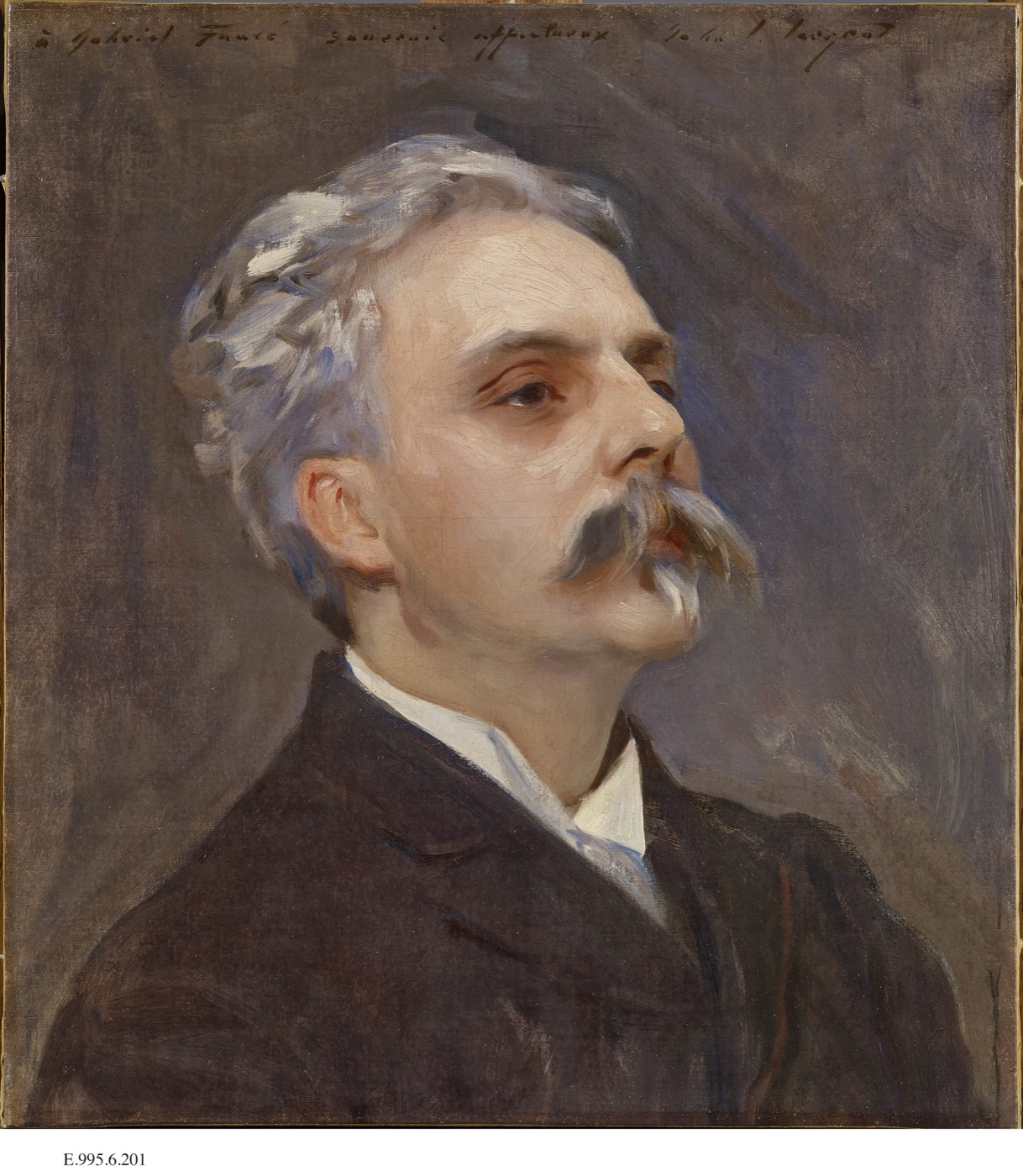
Fauré — Pie Jesu, from the Requiem
If Barber is the piece that makes people cry, this is the piece that lets them stop. Three and a half minutes for one soprano — traditionally a boy treble — over an accompaniment that barely moves. There is no fear in it anywhere: no Dies irae, no trumpets, no judgment. Fauré knew what he had written and repeated the charge himself: “It has been said that my Requiem does not express the fear of death and someone has called it a lullaby of death.” It is also the most useful item on this list, because it is short, it needs one singer and an organ, and almost every parish musician already has it. If the service is religious, this is your default.
▶ Listen on YouTube · Apple Music · Spotify
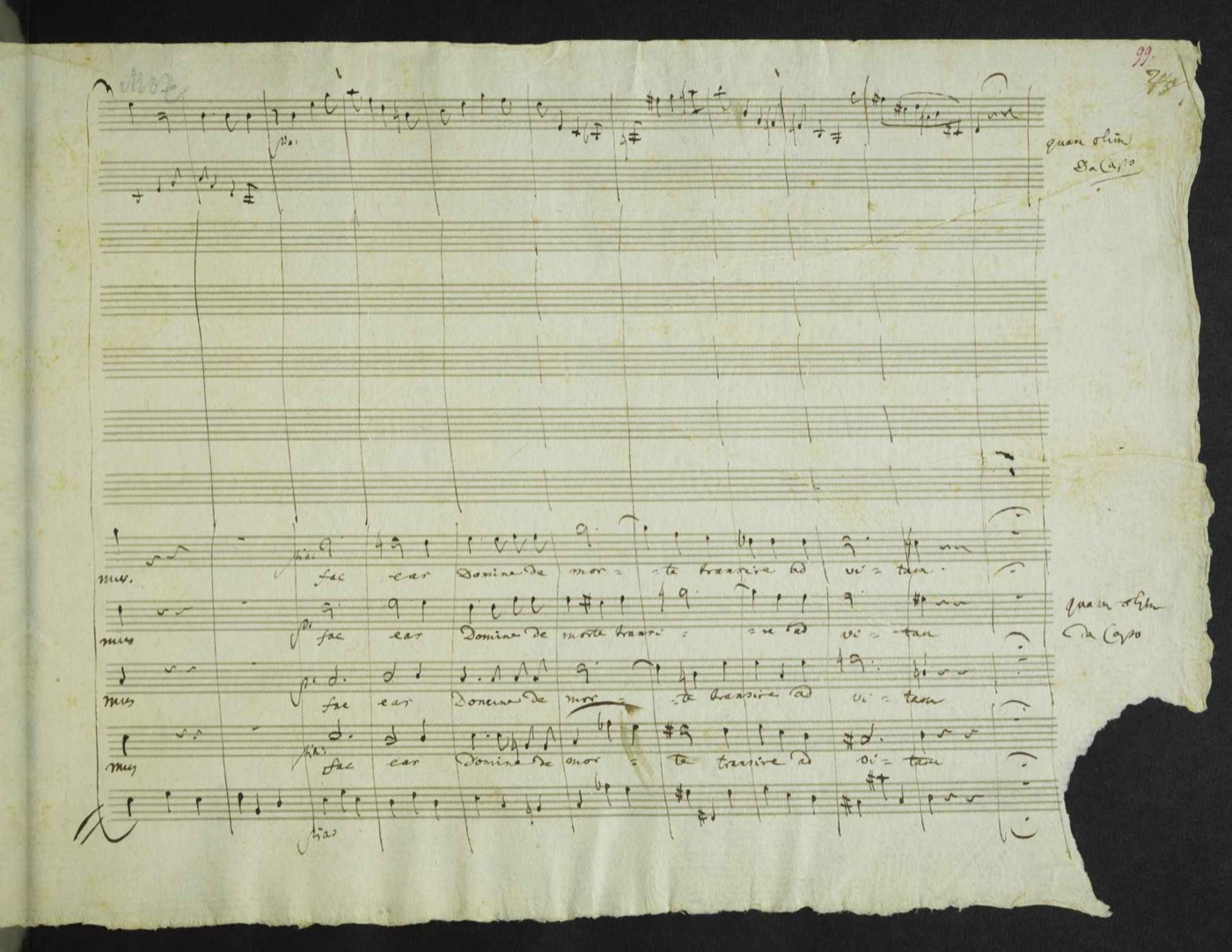
Mozart — Lacrimosa, from the Requiem
Three minutes, and the most theatrical thing here: rocking strings, the choir entering in a whisper and rising in steps until the whole ensemble is at full stretch. Choose it knowing that it does not comfort anyone — it grieves, loudly, and then stops. It works best for someone who died young or suddenly, where a consoling piece would feel like a lie. One detail worth knowing before you print it in the order of service: Mozart’s own writing breaks off eight bars into the Lacrimosa, and everything after that was completed by Franz Xaver Süssmayr.
▶ Listen on YouTube · Apple Music · Spotify
Vaughan Williams — Fantasia on a Theme by Thomas Tallis
The unexpected pick I would argue hardest for. It runs sixteen minutes, so it will not fit inside a service — but it is the perfect thing to play in the room before anyone speaks, or at a memorial held weeks later where there is no coffin and no schedule. Vaughan Williams splits the strings into two orchestras plus a quartet and sets them apart, so the same phrase returns quieter, from further away, like an echo in a stone building. That is not a metaphor I am imposing: he wrote it for the acoustics of Gloucester Cathedral, where he conducted the premiere at the Three Choirs Festival on 6 September 1910. The tune is Tallis’s, found while he was editing the English Hymnal. It sounds four hundred years old because half of it is.
▶ Listen on YouTube · Apple Music · Spotify
Górecki — Symphony No. 3, second movement
Nine minutes, and the piece I would use for a child. The text is a prayer scratched into a Gestapo cell wall by an eighteen-year-old girl, and the soprano sings it over the slowest possible harmony, mostly on one repeated note. It does not build and it does not resolve. Nor is it obscure: the 1992 Nonesuch recording with Dawn Upshaw, the London Sinfonietta and David Zinman sold more than a million copies, which almost nothing in contemporary classical music does. Use it when the room can take stillness rather than beauty — our guide to the Symphony of Sorrowful Songs explains what each movement does.
▶ Listen on YouTube · Apple Music · Spotify
The walk out: committal, and the last thing anyone hears
Whatever plays as the coffin leaves is the piece people remember, because it is the only music they hear standing up. It needs a clear beginning and it must not end before they are out of the room — err long, and fade it rather than letting it stop.
Tavener — Song for Athene
Six and a half minutes of unaccompanied choir over a held bass note that never changes, and it works as an exit because it does not end quietly — the last page climbs to a huge “Alleluia” and stops. Tavener wrote it in 1993 in memory of Athene Hariades, a family friend killed in a cycling accident, to a text assembled by the Orthodox nun Mother Thekla; the Choir of Westminster Abbey sang it on 6 September 1997 as Diana, Princess of Wales’s coffin was carried out of the Abbey, which is where most people first heard it. One caveat: it needs a real choir. A recording over a PA loses the low drone, and the drone is the piece.
🎧 Also on: Apple Music · Spotify
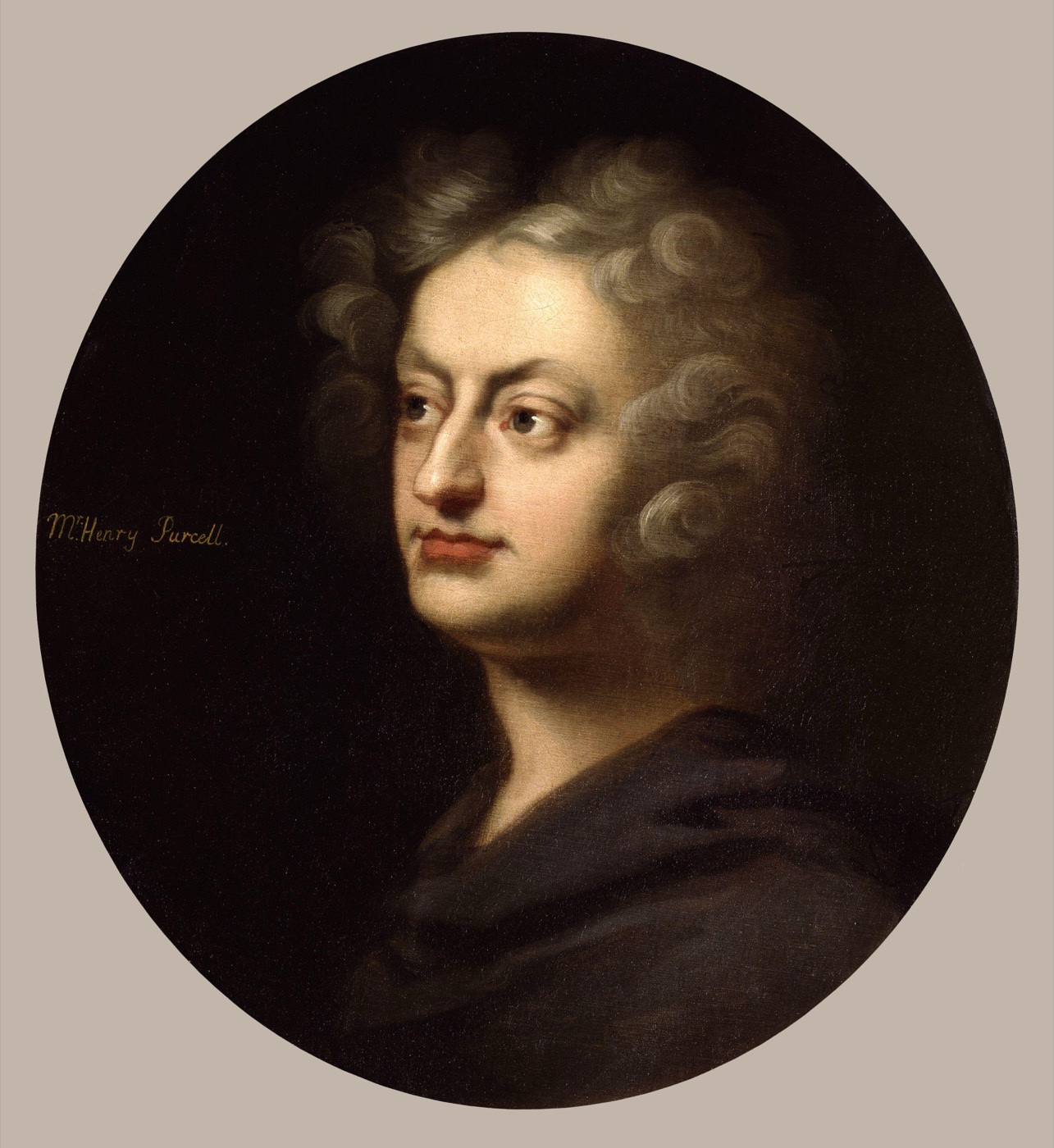
Purcell — When I am laid in earth, from Dido and Aeneas
Four minutes, and the oldest trick here. Underneath the singer a bass line falls by half-steps, over and over, without variation — a ground bass that will not let the music go anywhere. The voice rises against it and is pulled back each time. It is a farewell sung by someone dying, so the words fit a funeral literally: “Remember me, but ah! forget my fate.” That literalness is also the risk. If the death was hard, “when I am laid in earth” from the front of a chapel is a lot to ask of a family. Read the text before you book it.
▶ Listen on YouTube · Apple Music · Spotify
Pärt — Spiegel im Spiegel
Eight or nine minutes of violin and piano, and the least churchy thing here — which is why it suits a secular funeral or a woodland burial. The piano plays rising triads at a fixed pulse throughout; the violin adds one note at a time to a line that grows a step longer on each pass, then shrinks back. Nothing else happens. It sounds like a clock that has stopped being frightening. With no words, no liturgy and no national association, it is the safest choice when the family’s beliefs are mixed, and it sits under a spoken eulogy in a way nothing with a voice in it can.
▶ Listen on YouTube · Apple Music · Spotify
Ravel — Pavane pour une infante défunte
Six or seven minutes, and the pick that surprises people most. The title translates as Pavane for a dead princess, which is why it lands on funeral lists — and Ravel spent years telling anyone who asked that this was nonsense. Asked how he arrived at the title, he said: “Do not be surprised, that title has nothing to do with the composition. I simply liked the sound of those words and I put them there, c’est tout.” So it is not a lament; it is a slow court dance, and that is what makes it useful. A funeral that has already had one crushing piece cannot take another, and the Pavane is dignified and paced without a second wave of grief. Play the orchestral version — the horn opening carries in a large room where a piano does not.
▶ Listen on YouTube · Apple Music · Spotify
Two I would talk you out of
Chopin — Funeral March, from Piano Sonata No. 2
It is the piece the word “funeral” summons, and that is the problem. Three generations have heard those four notes under a cartoon character trudging to his doom, and part of the room will register the joke before the grief. There is a structural issue too: the march has a consoling middle section in the major, then the opening returns and slams the door. That is brutal in a chapel. Chopin’s own funeral at the Madeleine in Paris on 30 October 1849 used Mozart’s Requiem — a better steer than the march named after him.
Pachelbel — Canon in D
Requested surprisingly often, because it is slow, familiar and inoffensive. It is also, for anyone who has been to a wedding in the last forty years, the aisle piece — and a bride walking up it is not the association you want. Keep it where it belongs; we have a separate list of classical music for a wedding.
Practical notes: timings, sequencing, and what to check
Most funeral directors ask for three pieces: entrance, reflection, exit. Work to those slots.
Timings. Entrance music should run long — five minutes minimum, and pick something that survives being faded. Reflection is the only slot with a fixed shape: two to four minutes, and over five starts to feel like an interval. Exit music must outlast the walk, so budget four minutes even if the room empties in ninety seconds, and have the operator fade rather than let it finish into silence.
Sequencing. Do not use two devastating pieces. If Barber or the Górecki takes the reflection slot, the exit should be Tavener or the Ravel — something that moves. The commonest mistake in a printed order of service is three slow minor-key pieces in a row, which leaves people numb rather than moved.
What to check. Ask whether the venue has an organist, a sound system, or both — many crematorium chapels run a licensed digital music system with a fixed catalogue, and your piece may not be on it. Ask whether recorded music is allowed at all; some churches restrict the service to live performance. If the funeral is religious, check the text: Fauré’s Pie Jesu and Mozart’s Lacrimosa are liturgical and welcome, while an operatic death scene like Dido’s Lament may not be. For a memorial concert rather than a service, a full setting beats a single movement — Brahms’s German Requiem sets out to console the living rather than pray for the dead, and it is built for that occasion.
One last thing. None of these beats the piece the person actually loved. If they played the same Beethoven quartet movement every Sunday morning, use that — wrong key, wrong mood, wrong length and all. This list exists for when nobody knows, not to overrule someone who does.