Strip heavy metal down to its parts and you get a short list: distorted power chords stacked low, a rhythm section that hammers instead of swings, a taste for the minor keys and the tritone — the interval old theorists nicknamed diabolus in musica, the devil in music — and players who treat speed as a contact sport. None of that was invented in a Birmingham factory town in 1969. Composers were doing every one of those things with brass, strings, timpani and a pipe organ centuries before anyone plugged a guitar into a cranked amplifier.
This isn’t the lazy move of pointing at a loud symphony and calling classical the original heavy metal. Below are nine pieces where the specific mechanism — the harmony, the texture, the rhythm — is doing the same job a metal riff does, and I’ll name that mechanism each time so the resemblance is something you can hear, not just something I assert. They run from the obvious (a piece that literally seeded the first metal riff) to the one that shouldn’t work and completely does.
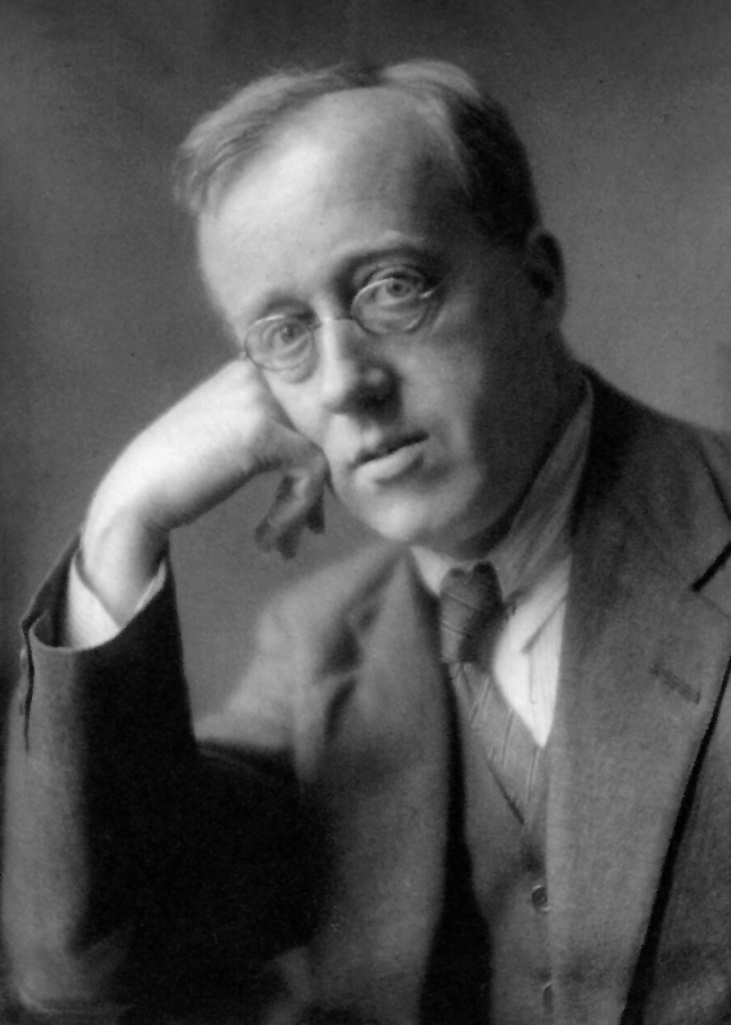
1. Gustav Holst — Mars, the Bringer of War (from The Planets)
Start here, because the line from this music to metal isn’t a metaphor — it’s a documented paper trail. Mars opens with the strings playing col legno, striking the string with the wood of the bow, over a rhythm hammered in 5/4: five beats, uneven, so it never settles into a comfortable march. On top of that, Holst piles brass and stacks dissonances that grind against each other, including the tritone. It’s mechanized, relentless, and genuinely menacing — a war machine, not a cavalry charge.
Here’s the receipt: Black Sabbath bassist Geezer Butler has said in interviews that he was fixated on the tritone in Mars and was already playing it before the band wrote anything, and guitarist Tony Iommi built the doom-laden opening riff of the song “Black Sabbath” around that same interval. The heaviest genre in popular music has a great-grandfather, and he was an English music teacher who wrote it during the First World War. The orchestral premiere was a private, hastily rehearsed performance at the Queen’s Hall in London on 29 September 1918, conducted by Adrian Boult — the players reportedly saw the music only two hours before.
2. Carl Orff — “O Fortuna” (from Carmina Burana)
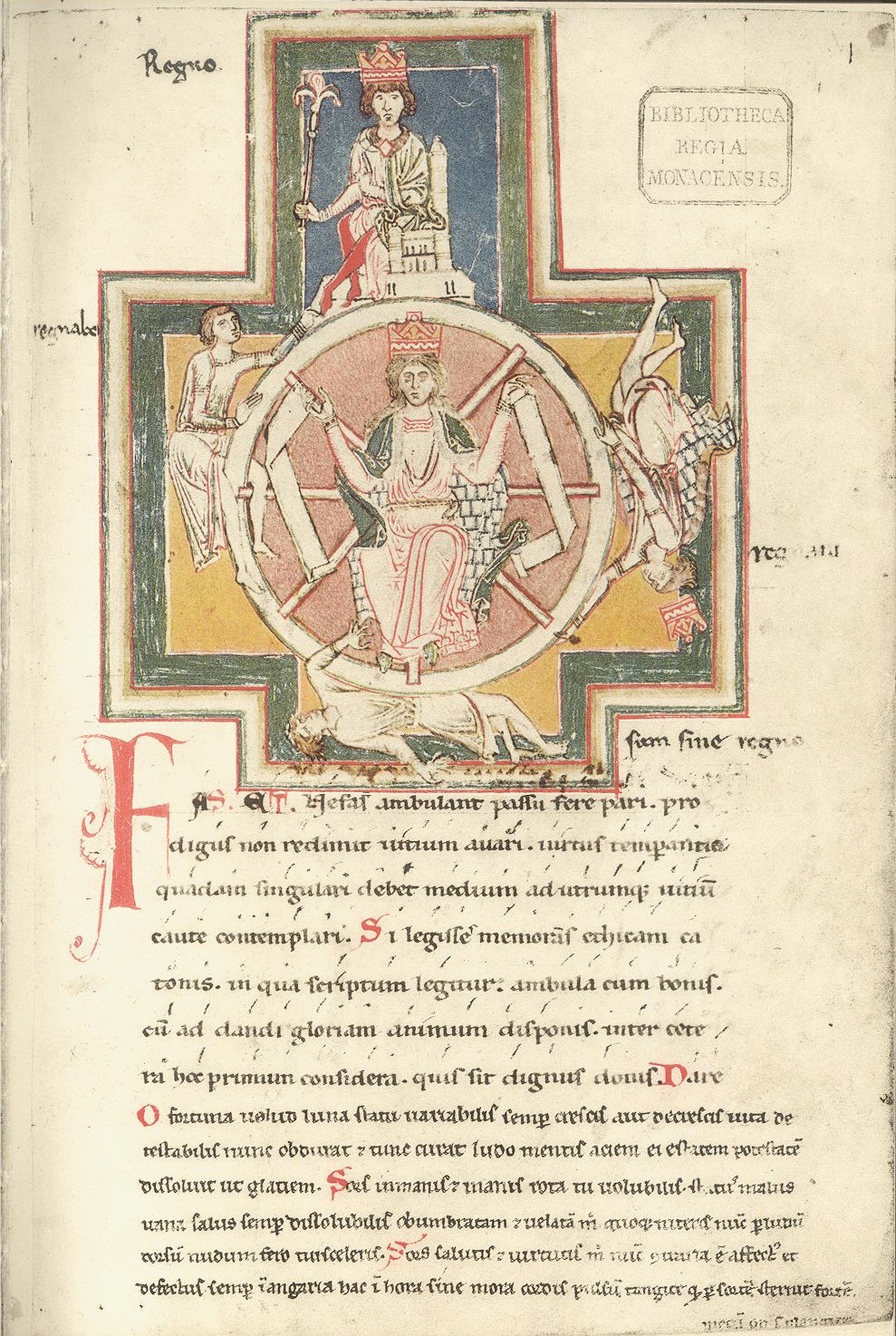
If Mars is the riff, “O Fortuna” is the breakdown — the moment a metal band drops everything to a slow, crushing, unison stomp. Orff’s device is blunt on purpose: a full chorus and orchestra pounding the same rhythm together, minimal harmonic movement, everything bent toward sheer impact. There’s no counterpoint to distract you, no melodic filigree. It’s a wall of sound advancing at you, which is exactly why it’s been strip-mined by trailer editors, sports arenas and, yes, metal bands for decades.
The medieval poem underneath it is a complaint about Fortune’s wheel crushing everyone under it, and the music treats that as a threat rather than a lament. Orff completed the score in 1936 and it was first staged at the Frankfurt Opera on 8 June 1937; “O Fortuna” frames the whole work, opening and closing it. Listen for how the chorus and timpani lock together on the downbeats — that shared, mechanical accent is the same thing a metal rhythm guitarist and drummer do when they “chug” in lockstep.
▶ Listen on YouTube (San Francisco Symphony)
3. Modest Mussorgsky — Night on Bald Mountain
A witches’ sabbath set to music, which puts it squarely in metal’s favorite subject matter. Mussorgsky’s engine here is chromaticism — melodic lines that slither up and down by half-steps instead of resting on a clean key — plus snarling low brass and strings scrubbing away in fast tremolo, that shimmering, unstable texture that horror scores have borrowed ever since. The effect is queasy and demonic in a way a straight minor key never manages, because nothing ever feels harmonically safe.
The version everyone knows isn’t quite Mussorgsky’s. He finished his original “St. John’s Eve on Bald Mountain” in 1867, but the familiar concert piece is Rimsky-Korsakov’s reworking, published in 1886, five years after Mussorgsky’s death — tidier, more brilliantly orchestrated, and fitted with a calm sunrise ending that dissolves the spook. For the full sabbath, cue up the central section, where the brass takes over and the whole orchestra seems to be grinning at you.
▶ Listen on YouTube (Lorin Maazel)
4. Sergei Prokofiev — “Dance of the Knights” (from Romeo and Juliet)
This is the heavy stomp, the piece that gets used whenever a film needs to signal “powerful people are walking in slowly and you should be afraid.” Prokofiev sets a heavy, plodding rhythm in the low brass and low strings, harmonized to sound arrogant and blunt-force — the musical equivalent of a downtuned guitar. The tread is deliberate and unhurried, which is what makes it feel so weighty; metal calls this register “the groove,” the slow riff that leans its full body weight on every beat.
The irony Prokofiev built in — the piece is a ballroom dance for two families who despise each other, elegance with a fist inside it — is very metal too: pomp and menace in the same gesture. He wrote it as part of the Romeo and Juliet ballet in 1935–36. When the brass theme lands, notice how little the harmony actually moves; the power comes from repetition and weight, not from going anywhere. That’s the riff principle exactly.
▶ Listen on YouTube (Berliner Philharmoniker)
5. Giuseppe Verdi — “Dies irae” (from the Requiem)
People expect church music to be gentle. Verdi’s “Dies irae” — the “day of wrath” — is the opposite: it opens with the full chorus screaming over hammer-blows on the bass drum, timpani and the whole orchestra crashing down on the beat, imagining the Last Judgment as an apocalypse rather than a prayer. In 1874 this was about as loud and physically overwhelming as an ensemble could get, and the bass drum here is doing precisely what a double-kick drum does in metal: putting a concussion under everything.
The device is dynamic shock — Verdi sets the fury against passages of near-silence, so the loud parts hit harder for the contrast. That whiplash between hushed and devastating is the same architecture a metal band uses when a quiet clean intro detonates into the first full-volume riff. The Requiem premiered at the church of San Marco in Milan on 22 May 1874, dedicated to the writer Alessandro Manzoni, one year after his death.
▶ Listen on YouTube (Riccardo Muti, Bavarian Radio Symphony)
6. Dmitri Shostakovich — Symphony No. 10, second movement
Barely four minutes long and played at a sprint, this scherzo is the closest orchestral music gets to a full-throttle thrash song. Shostakovich drives it with relentless, machine-gun repeated notes, screaming high woodwinds, and brass stabbing on the offbeats — no let-up, no lyrical relief, just brutal forward motion until it stops. If you handed a metal drummer a snare and this tempo, you’d get something recognizable.
It carries a political charge, too. Some listeners, following the memoir Testimony attributed to the composer by Solomon Volkov, hear the movement as a musical portrait of Stalin; other scholars, including Laurel Fay, have questioned that reading and found no contemporary evidence for a specific program. Whatever it “means,” the sound is pure aggression — Shostakovich wrote the symphony in 1953, the year Stalin died, and the violence in these four minutes needs no footnote to land.
▶ Listen on YouTube (Herbert von Karajan)
7. Igor Stravinsky — “Augurs of Spring” (from The Rite of Spring)
If any single passage of classical music invented the riff, it’s this one. Stravinsky takes one dissonant chord — two chords crushed together, so it sounds deliberately wrong — and pounds it over and over with the strings’ bows biting hard, but he throws the accents in unpredictable places: the hits land where you don’t expect them. That combination of a single crunching chord plus violent, off-kilter rhythm is, note for note, the design principle behind a huge amount of modern metal. Bands built entire subgenres (djent, in particular) on exactly this: one nasty chord, hammered in shifting patterns.
It was too much for 1913. The ballet’s premiere at the Théâtre des Champs-Élysées in Paris on 29 May 1913 caused an uproar in the hall, the audience reacting so violently to the music and choreography that the details have been argued over ever since. Roughly a century later, teenagers who’ve never heard of Stravinsky headbang to the same idea. Listen to the very start of “Augurs” — that stamping, repeated chord is the missing link.
8. J. S. Bach — Toccata and Fugue in D minor, BWV 565
You already know this one — the horror-movie organ that announces every mad scientist. What makes it metal isn’t just the spookiness; it’s the timbre. A big pipe organ at full volume is a wall of sustained, buzzing overtones, the closest thing the 18th century had to distortion, and a single player commands the whole thunderous mass alone. The piece opens with a dramatic downward flourish — a solo gesture flung out like a guitarist’s opening lick — before the fugue turns it into a dark, driving perpetual-motion machine in D minor.
One honest caveat, because it’s genuinely contested: the attribution to Bach has been questioned by scholars since 1981, and there’s still no consensus on whether he wrote it. That debate doesn’t change what the piece does to a listener. Play it loud on a real instrument, not a thin electronic one, and the low pedal notes will rattle your chest exactly the way a detuned riff is supposed to.
▶ Listen on YouTube (Peter Hurford, organ)
9. Niccolò Paganini — Caprice No. 24 in A minor
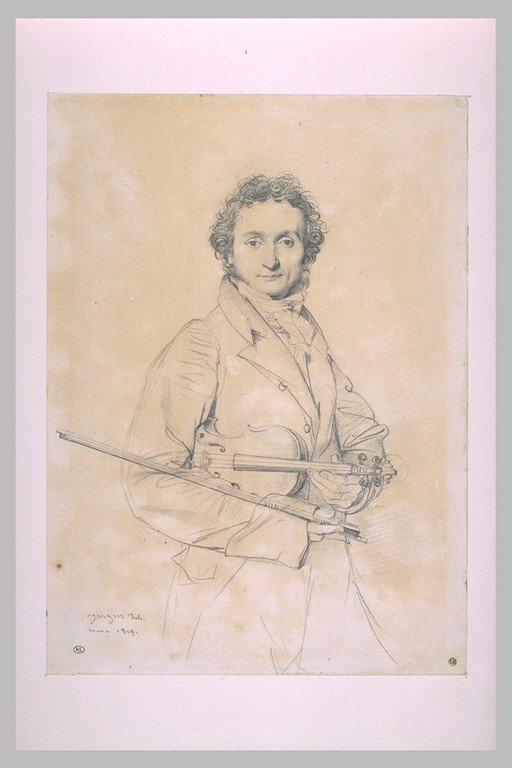
The “no way, but it works” pick — except it works so completely that it’s less a resemblance than a direct family line. Everything guitar shredders do — the blistering scale runs, the arpeggios sprayed across the whole range, the diabolical difficulty worn as a badge — Paganini was doing on a violin two centuries ago. Caprice No. 24 is a theme with eleven variations, each one a different flavor of virtuoso torture: leaping intervals, rapid-fire repeated notes, left-hand pizzicato, whole passages that sound impossible. Paganini was rumored in his own time to have made a deal with the devil to play like that, the exact myth metal would later wear on purpose.
This isn’t a stretch I’m imposing — the players themselves say so. Yngwie Malmsteen, who more or less founded neoclassical metal, cites Paganini as the single biggest influence on his style, importing the harmonic-minor scales, diminished arpeggios and sheer velocity straight from this repertoire onto the electric guitar. The caprices were first published as Paganini’s Op. 1 in 1820. Watch a violinist take the last variation at speed and tell me you’re not watching the first shredder.
Where to go next
If this bridge worked on you, the two most metal-adjacent entries here reward a full listen. Mars is only the first movement of a seven-part suite that swings from that war machine to the weightless drift of Neptune — we ranked the recordings in our guide to the best recordings of Holst’s The Planets. And “O Fortuna” is one number in an hour-long spectacle; if the stomp grabbed you, our best recordings of Carmina Burana will point you at the version worth owning. For sheer orchestral aggression on the largest scale, the finale of Beethoven’s Ninth is its own kind of overload — see our ranked Beethoven 9 recordings.