The Brahms First is the concerto that sounds like it wants to hurt you before it will console you, and then spends the rest of its length apologising in the most beautiful way available. That contradiction is not an accident of interpretation. It is baked into the piece, because the piece was assembled out of the worst years of its composer’s life and never quite decided what genre it belonged to.
Here is the whole problem in one image: a timpani roll on D, strings screaming in over it — in the wrong key — and no soloist anywhere. People who have never heard it lean forward at that opening. People who know it well still do.
The Piece Brahms Rewrote Three Times
Brahms started this music in 1854 as a sonata for two pianos. Two pianos could not carry it. He rebuilt it as a symphony, could not make the orchestration behave, and eventually recast the opening as the first movement of a piano concerto; the other movements of the two-piano sonata were dropped, and one of them surfaced years later in the German Requiem. He finished the concerto in 1858. Three genres, one set of themes, four years of indecision.
The reason the indecision matters is what happened in 1854, the year the sketches began. Robert Schumann — the man who had publicly named the twenty-year-old Brahms the coming force in German music in his essay Neue Bahnen — threw himself into the Rhine in 1854 and was committed to the asylum at Endenich, where he died in 1856. Brahms went to Düsseldorf to help Clara Schumann hold the household together. The D minor material dates from exactly that window.
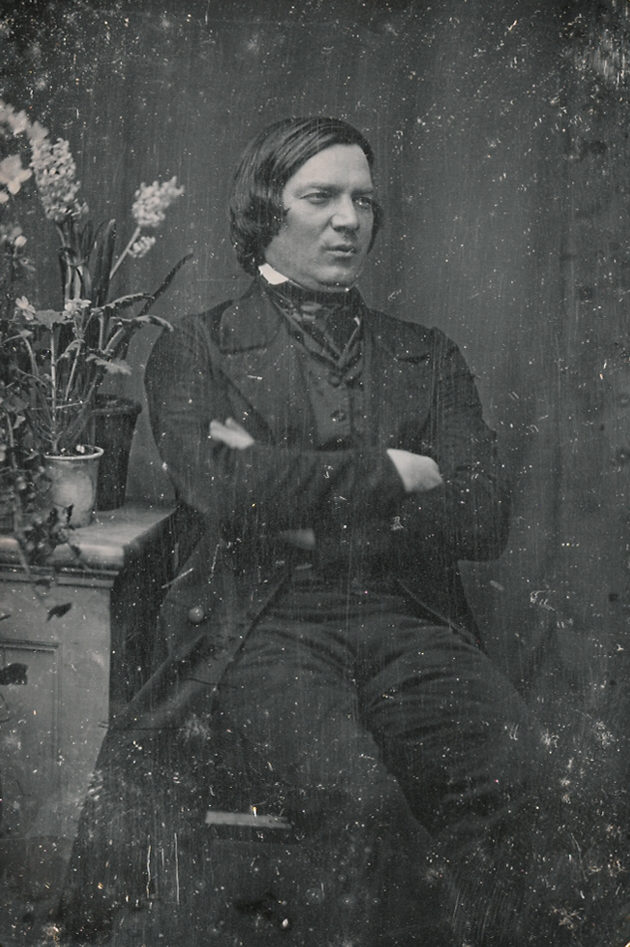
You will read in program notes that the opening bars are a direct musical response to Schumann’s jump. Treat that as an interpretation, not a documented fact — it is a story that hardened into standard commentary long after the people involved were dead. What is not in doubt is the chronology, and the chronology is brutal enough on its own.
What to Listen For
The key that refuses to arrive. The timpani hold a low D. The strings enter above it in B flat major. For a long stretch the piece will not commit to its own home key — the harmony grinds against the bass instead of confirming it. This is the single most identifiable thing about the concerto, and it is why the opening feels less like a beginning than like something already going wrong.
Two timpani notes, and that is all. Brahms scored for the Classical-era setup: 2 flutes, 2 oboes, 2 clarinets, 2 bassoons, 4 horns, 2 trumpets, timpani tuned to D and A, and strings. No trombones, no tuba, no extra percussion. All that thunder in the opening comes out of two available pitches. The orchestra sounds like it is straining against the size of its own equipment, and that compressed quality is a feature of the scoring, not a flaw in the recording you are hearing.
The piano waits. The orchestra gets a full, complete exposition before the soloist plays a note — long past the point where a Mozart or a Mendelssohn concerto would have handed over. When the piano finally enters, it does not enter with fireworks; it enters quietly, with material that sounds almost apologetic after what has come before. Early critics complained that the result was a symphony with a piano part attached. They were describing it accurately and calling it a defect.
The hole where the cadenza should be. There is no first-movement cadenza. In a nineteenth-century concerto that is a structural statement: the soloist is not going to get a vanity spotlight. Notice how the first movement ends without one, then notice that the finale does have a cadenza — the display Brahms suppressed across the whole first movement arrives only once the piece has earned it.
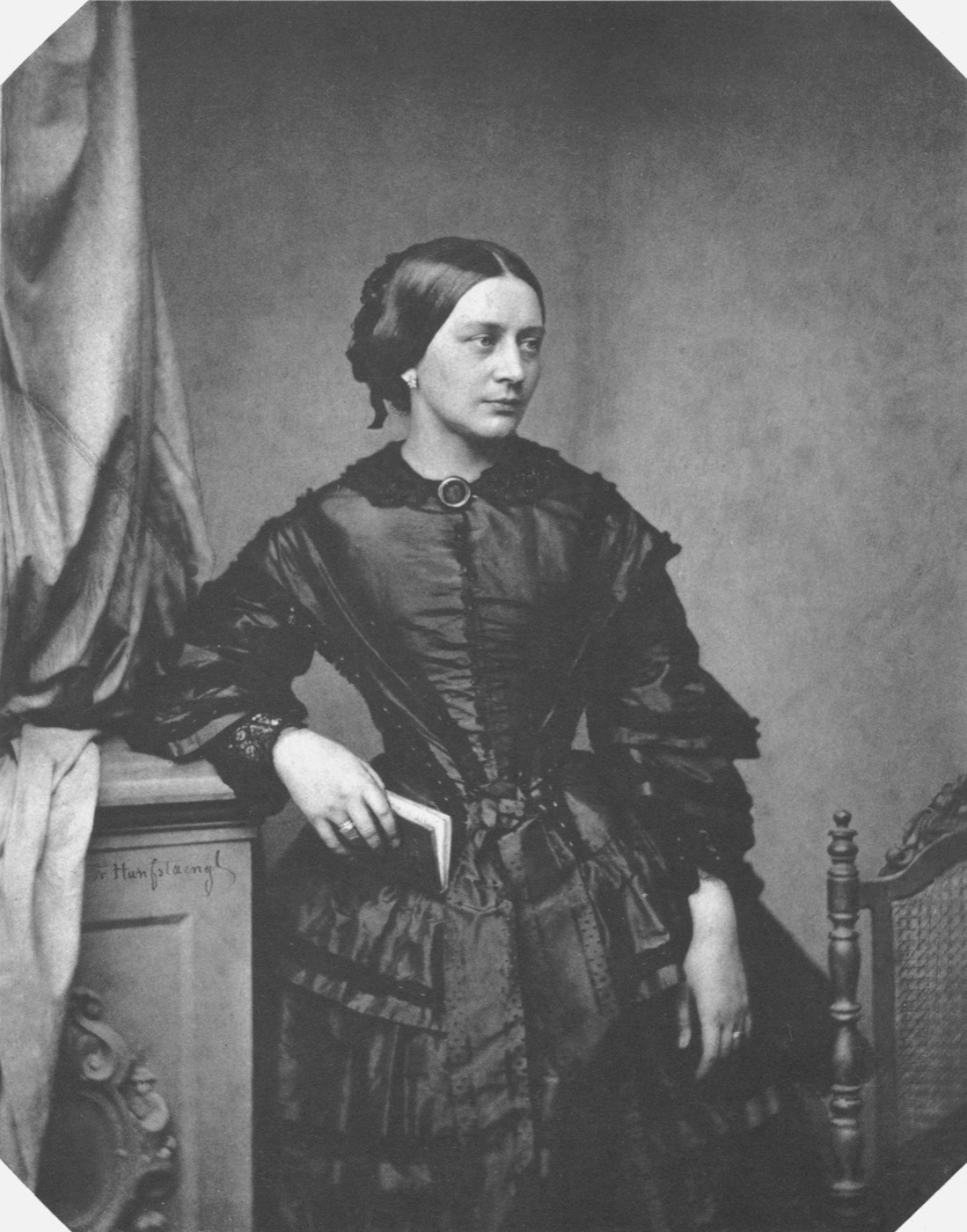
The Latin sentence in the slow movement. The manuscript of the Adagio carries the motto Benedictus qui venit in nomine Domini. Brahms’s biographer Max Kalbeck read this as pointing at Robert Schumann, whom Brahms had sometimes addressed as Mynheer Domine. Separately, Brahms wrote to Clara about this movement: “I am painting a gentle portrait of you.” Whether the two readings collide or coexist is a question annotators have argued over ever since. You can hear the ambiguity without resolving it — the movement sounds like both a love song and a service for the dead, and it never picks a side.
Movement by Movement
I. Maestoso
Roughly 20 minutes, and it is the movement that decides whether you like this piece. The opening tutti is the loudest, ugliest, most sustained argument Brahms had written to that point. The piano’s answer is the opposite: withdrawn, chorale-like, almost private. The whole movement runs on that mismatch — orchestra shouting, soloist refusing to shout back — until the development, where the piano finally opens up into cascading octaves and the two forces stop talking past each other.
Practical listening tip: on a first pass, track the timpani. Because it is limited to D and A, every entry lands as a structural marker. You can navigate the movement by drum alone.
II. Adagio
Roughly 13 minutes, and the reason people who dislike the first movement still keep the record. D minor gives way to D major, the strings settle into a slow hymn, and the piano enters as a singing voice for the first time in the piece. The texture is unusually plain for Brahms — long lines, little counterpoint, very few notes doing very heavy work. If a movement can be described as devotional without being liturgical, this is the one.
III. Rondo: Allegro non troppo
Roughly 11 minutes. Hungarian-flavoured rhythm, D minor at the start, D major at the end. This is the pattern Brahms would keep using for the rest of his life: a dark dance that outruns its own darkness. The suppressed virtuosity from the first movement detonates here, there is a genuine cadenza, and the coda is the sound of somebody getting out of a building alive. Together the three movements come to about three quarters of an hour.
Leipzig, and the Fight That Wasn’t About Brahms
The first performance took place on 22 January 1859 in Hanover, with Brahms, then twenty-five, as soloist and Joseph Joachim conducting. The audience was polite and cold. Five days later the second performance, in Leipzig with the Gewandhaus Orchestra, was met with hissing. A Leipzig critic wrote that the concerto could not give pleasure and complained of its dissonances. Brahms’s own letter to Joachim afterwards is the document everybody quotes, and the tell is not the gallows humour at the top but the sentence at the bottom: “all the same, the hissing was rather too much.”
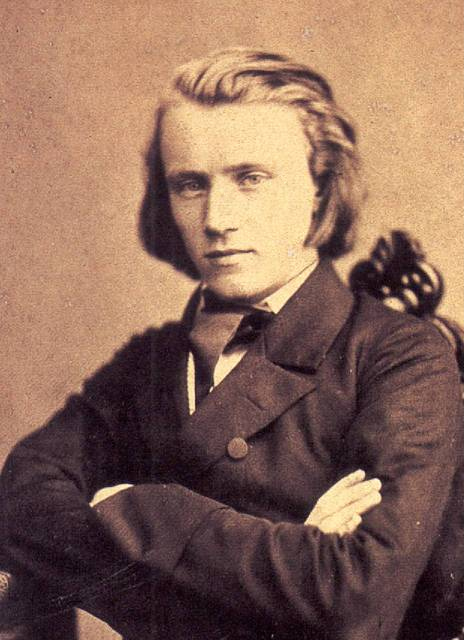
Two things get lost in the retelling. First, the failure was not universal: the third performance, in Hamburg on 24 March 1859, went well, with Joachim leading as concertmaster. Second, Leipzig in 1859 was not a neutral room. The German musical world was splitting over the Zukunftsmusik banner, and the Liszt–Wagner side had reasons to want a young conservative embarrassed. Reading the whole reaction as pure aesthetic judgment is, at minimum, incomplete. The concerto was eventually published not by one of the Leipzig houses but by the Swiss firm Rieter-Biedermann.
There is a private disaster wrapped around the public one. Brahms had proposed to the singer Agathe von Siebold in Göttingen at the start of 1859; within weeks of the Leipzig failure he wrote to her that he loved her but could not bear fetters, and the engagement ended. The chronology is documented; any causal link between the booing and the broken engagement is speculation, and I would not build a listening experience on it. But the compression of that single month explains why this concerto has never sounded to me like a young man’s calling card. It sounds like a young man’s reckoning.
Five Recordings, and What Each One Is For
Leon Fleisher / George Szell / Cleveland Orchestra (Epic, 1958) — start here
Recorded at Severance Hall in February 1958. This is the version I hand to anyone hearing the piece for the first time, and the reason is balance: Szell keeps the orchestra transparent enough that you can hear the inner parts grinding in the opening, and Fleisher plays the second movement without a drop of sentimentality. The tempi are neither indulgent nor rushed, which sounds like faint praise until you have heard how many versions get one or the other badly wrong.
The context is hard to unhear. Fleisher had made his Carnegie Hall debut in 1944, at sixteen, playing this concerto with Pierre Monteux and the New York Philharmonic; Monteux called him “the pianistic find of the century.” In 1965 focal dystonia took his right hand, and he spent about three decades on the left-hand repertoire and on teaching before Botox treatment let him return to two-handed playing in 1995. The 1958 recording sits right in the middle of that arc. Caveat: mono-era sound and Szell’s discipline mean this is a cool, lit-from-above reading. If you want heat, it is not here.
🎧 Also on: Apple Music · Spotify
Emil Gilels / Eugen Jochum / Berlin Philharmonic (Deutsche Grammophon, 1972) — the heavy one
Recorded in Berlin in June 1972. Slower than the field, and unapologetic about it. Gilels does not so much play the octave passages as lean his weight through them, and Jochum lets the Berlin strings sit on the beat rather than pushing. The first movement stops sounding like an argument and starts sounding like geology. If you already know the piece and want to hear its bones, this is the one to go to.
Caveat: this is not a recording you put on while doing something else. At these tempi the slow movement asks for your full attention or it drifts. And listeners who like the concerto to feel young and reckless will find it too settled.
🎧 Also on: Apple Music · Spotify
Clifford Curzon / George Szell / London Symphony Orchestra (Decca, 1962) — the clear one
Recorded at Kingsway Hall, London, in 1962. Szell again, but Curzon is a different animal from Fleisher: more inward, more willing to let a phrase taper off rather than land it. Decca’s engineering from this period gives you more air around the piano than the Cleveland set does, which matters in the Adagio. Pick this over Fleisher if you care more about hearing the architecture than about the emotional arc. Caveat: the finale is the one place I miss some abandon — everything is in its right place, and occasionally that is the problem.
▶ Listen on YouTube · Apple Music · Spotify
Krystian Zimerman / Leonard Bernstein / Vienna Philharmonic (Deutsche Grammophon, live 1983) — the dramatic one
Taped live in 1983 during Bernstein’s Brahms cycle with the Vienna Philharmonic. The most operatic account on the list: Bernstein shapes the orchestral tutti like a scene rather than a structure, and Zimerman answers with a tone that stays warm at full volume. The Adagio here comes closest to sounding like a vocal line with an accompaniment. My pick if you want the concerto to move you rather than convince you. Caveat: the pacing is elastic, and if you find Bernstein’s late Vienna manner indulgent elsewhere, you will find it indulgent here too.
▶ Listen on YouTube · Apple Music · Spotify
Glenn Gould / Leonard Bernstein / New York Philharmonic (live, 6 April 1962) — required listening, not a recommendation
The famous one. Gould wanted tempi far broader than standard practice; Bernstein disagreed and, rather than withdraw, addressed the audience from the podium before the downbeat. He opened by telling them not to be frightened — “Don’t be frightened. Mr. Gould is here.” — and then explained that he could not claim agreement with the soloist’s conception but thought it serious enough to be heard. The performance runs just over 53 minutes. Harold C. Schonberg went after both of them in The New York Times the next day, on the reasonable ground that a music director who programs a performance cannot then disclaim responsibility for it.
Do not start here. Once you know what the standard reading sounds like, come back and listen for what Gould is pushing against — the slow movement in particular stops sounding eccentric and starts sounding like an argument about how much time this music can hold. Whether he was right is still open; the performance is not a curiosity, it is a position.
🎧 Also on: Apple Music · Spotify
Sources and Recording Notes
Composition chronology, instrumentation and the three 1859 performances follow the work’s Wikipedia entry and the Los Angeles Philharmonic program note, which is also the source for Brahms’s letter to Clara about the Adagio. The Latin motto on the Adagio manuscript and Max Kalbeck’s reading of it are reported in Early Music Seattle’s program essay; treat that interpretation as one reading among several. Recording metadata comes from label and discography pages: High Definition Tape Transfers for the Cleveland sessions, Decca Classics for Curzon, Deutsche Grammophon for Gilels and for Zimerman. Details of the April 1962 New York concert follow the Wikipedia article on that concert, and Fleisher’s biography the Library of Congress and Britannica. The Agathe von Siebold episode rests on secondary accounts of her own later testimony rather than a surviving autograph.
Keep Reading
If the Schumann connection is what caught you, the concerto Robert wrote for Clara is the obvious next stop — see our guide to the Schumann Piano Concerto in A minor. For the other half of the cadenza question, Beethoven wrote his own into the score and closed the door on improvised display: the Emperor Concerto. And if you want to know how the composer who was hissed in Leipzig eventually faced down the symphony, the answer did not arrive until 1876 — Brahms’s First Symphony.