Someone mailed Rachmaninoff a poem and forgot to sign the envelope. He turned it into the piece he liked best of everything he wrote — and then spent the rest of his life with no idea who to thank.
That is the short version of The Bells, Op. 35, a choral symphony that sits outside the standard repertoire for reasons that have almost nothing to do with how good it is. It contains the loudest page Rachmaninoff ever wrote and one of the strangest quiet ones. This is a guide to hearing it properly: what actually happens in each movement, which recording to start with, and why the last two minutes are the whole argument.
The Letter With No Name On It
Rachmaninoff composed The Bells, Op. 35, in 1913, and conducted the first performance himself in Saint Petersburg on 30 November 1913. He later said it was his own favourite among his works — a sentence worth pausing on, given that the same catalogue contains the Second Piano Concerto and the Rhapsody on a Theme of Paganini.
The idea did not come from a commission or a patron. The suggestion came in an unsigned letter from Maria Danilova, a young cello student at the Moscow Conservatory, and she was identified only after the composer died in 1943. She had enclosed a typed copy of a Russian version of Edgar Allan Poe’s poem and thought it would suit him. She was right, and she never got to hear anyone say so.
Most big choral works arrive with paperwork attached — an anniversary, a cathedral, a fee. This one arrived in the post from a stranger. Rachmaninoff wrote it in Rome, in an apartment on the Piazza di Spagna; the biographical literature repeats that Tchaikovsky had worked at the same desk, a detail nobody retelling the story can bear to drop. He dedicated the score to the Dutch conductor Willem Mengelberg and the Concertgebouw Orchestra.
Poe Through Balmont: Not a Translation, a Rebuild
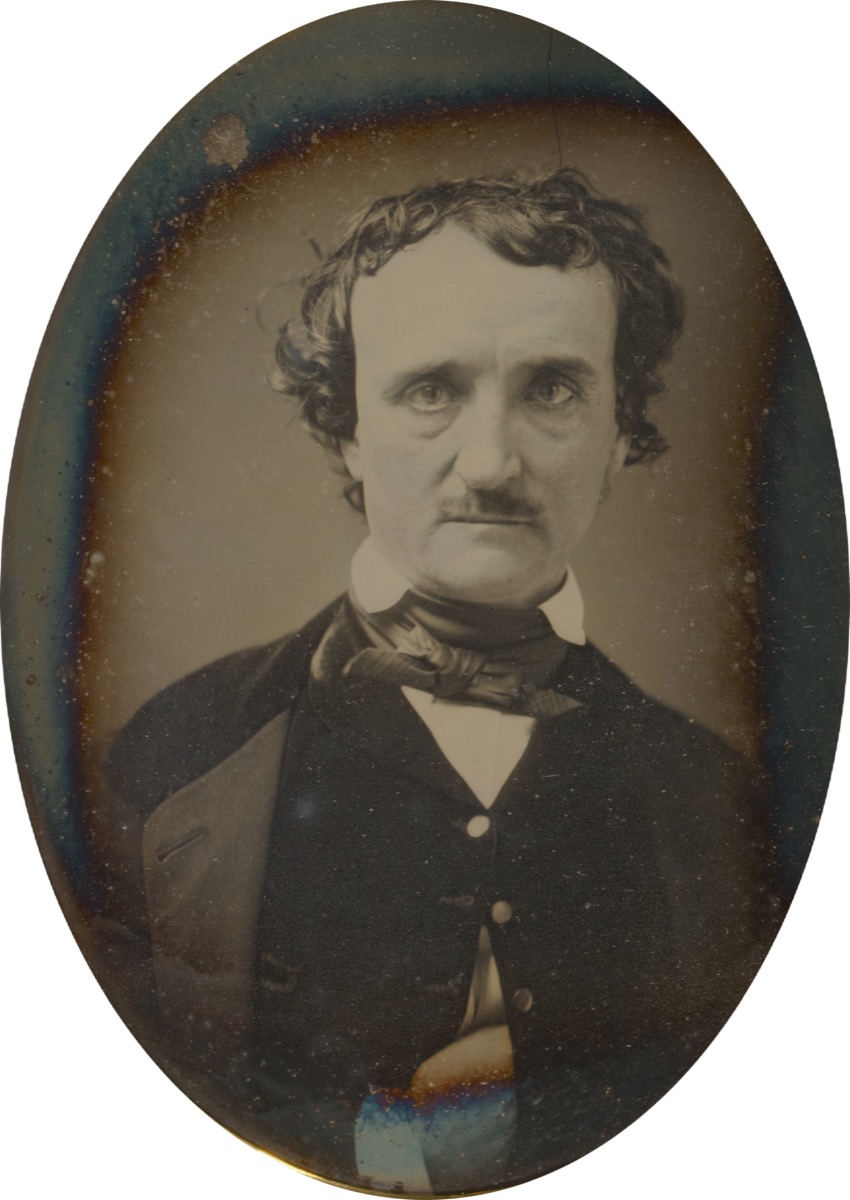
Poe wrote The Bells at the very end of his life, and it reached print only after he was dead. It is a sound poem before anything else — four stanzas of clanging consonants imitating four different bells.
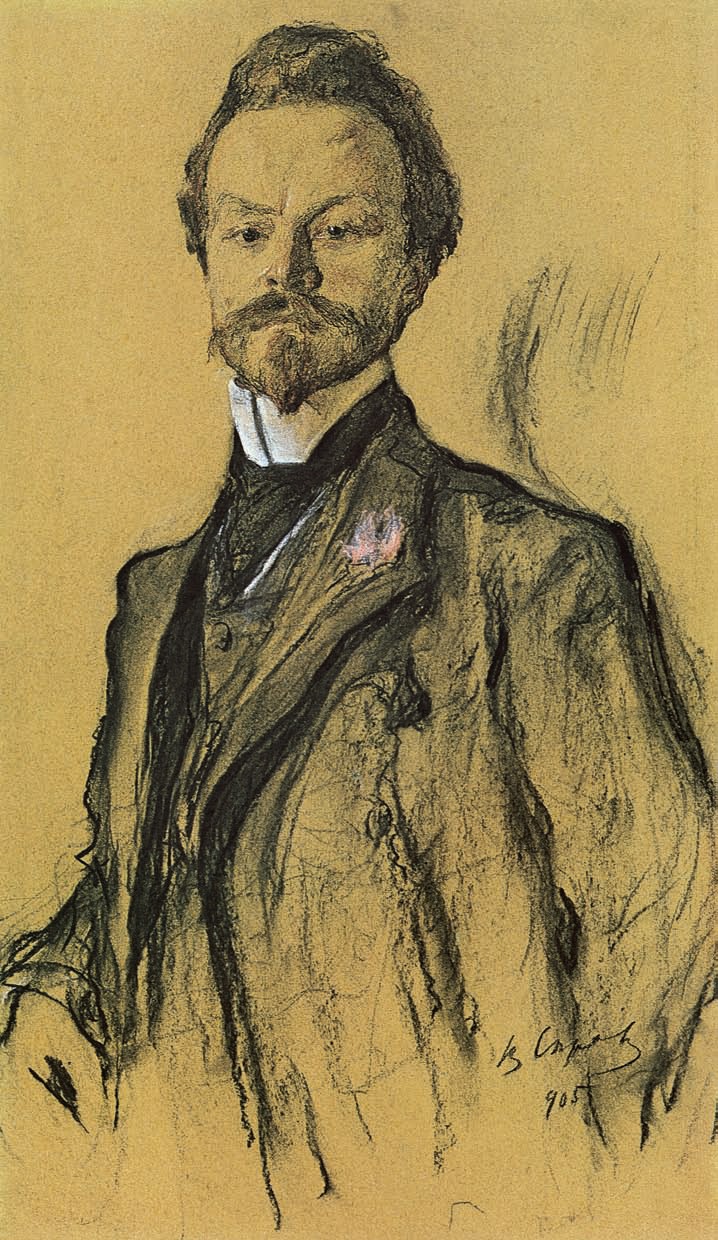
Konstantin Balmont’s Russian version is described everywhere, including by Rachmaninoff’s publishers, as a very free translation rather than a faithful one, and that matters more than it sounds. Balmont was a Symbolist, and for that circle the noise a poem makes counted at least as much as what it said. He did not carry Poe’s consonants across; he built new ones out of Russian. The scaffolding survives — silver, gold, brass, iron — but the surface is a different object.
The practical consequence is that reading Poe alongside a recording will mislead you. Poe gives you onomatopoeia. Balmont gives you allegory: a life in four stages, cradle to grave, with the bell as the clock. Rachmaninoff set the allegory. If you follow an English libretto sheet and wonder why the music keeps going darker than the words, that is why.
What To Listen For
Three mechanisms carry almost the whole work. Learn them and you will not need a text at all.
Bells built out of other instruments. The score asks for soprano, tenor and baritone soloists, full chorus and a large orchestra including celesta, harp, piano, glockenspiel, tubular bells and an optional organ, and it runs about 35 minutes. The interesting part is that Rachmaninoff mostly avoids the obvious move. Real tubular bells are held in reserve; what you hear ringing in the opening pages is celesta plus triangle plus harp, three instruments that individually sound nothing like a bell and collectively sound like nothing else. He is not imitating a bell. He is assembling one out of parts.
Harmony that will not settle. Rachmaninoff’s default gesture is a melody that keeps trying to resolve downward while the chords underneath slide somewhere adjacent instead. In the wedding movement this produces the specific effect the piece is famous for among people who know it: music that is unmistakably happy and unmistakably in mourning at the same time, without ever changing tempo or dynamic to tell you so.
The chant. The Dies irae, the medieval plainchant for the dead, runs through the work the way it runs through half of Rachmaninoff’s output. It is four notes down, then a turn. Once you can hum it you will hear it in the Symphonic Dances and the Paganini Rhapsody too, and the fourth movement here will stop being vague and start being specific.
Four Bells, Movement By Movement
The four movements run Allegro ma non tanto (silver sleigh bells, tenor solo), Lento (mellow wedding bells, soprano solo), Presto in F minor (loud alarm bells, chorus with no soloist at all) and Lento lugubre in C-sharp minor (mournful iron bells, baritone solo).
I. Silver — the sleigh ride
Bright, quick, and over before you have settled in. The tenor does not declaim; he half-sings across the top of the glitter, and the writing denies him a big note. Listen in the first minute for how the celesta strikes a pitch and the triangle answers a fraction behind it — that tiny smear is the bell. Use headphones: phone speakers eat the top register, which is where the movement lives.
II. Gold — the wedding that already knows
The soprano enters over a chorus moving in long horizontal waves. This is the slowest and, to my ear, the saddest music in the piece, which is an odd thing to say about a wedding. The melody is straightforwardly lovely; the harmony under it keeps declining to land where the melody expects. Rachmaninoff does this everywhere, but rarely this nakedly. It is joy with the memory of joy already attached — the same trick that makes the opening of the Second Piano Concerto land the way it does.
III. Brass — the fire, with nobody in charge
The alarm movement, and the structural decision that makes it work: there is no soloist. Movements one, two and four each hand you a human voice to follow. This one hands you a mob. Choral basses climb from below while trombones drive down from above and meet in the same low register, grinding rather than clashing; underneath, a tam-tam stroke and a bass drum land like something structural failing. No line is allowed to rise above the texture. A burning city does not have a lead singer, and Rachmaninoff scores it that way on purpose.
It is also the passage that has caused choirs the most grief ever since. In 1936 Rachmaninoff simplified the awkward choral writing in the Presto for a performance at the Sheffield Festival — a rare case of a composer conceding that he had asked for too much.
IV. Iron — the funeral that does not end like one
A baritone over a low, immobile floor of sound, and the Dies irae much closer to the surface than usual. Everything about the movement says ending. And then, in the last pages, the music moves out of C-sharp minor into D-flat major — the identical set of pitches, respelled, but the effect is night becoming morning rather than a modulation you can point at.
Track it by ear: the baritone drops out, the strings stop pulling downward and begin to hover, the harp returns with slow arpeggios instead of the sleigh-bell tracery of the opening. Same instrument, opposite meaning. What the ending means is genuinely open — resurrection, resignation, exhaustion, an old habit finally set down — and Rachmaninoff, characteristically, declined to explain. What is not open is that he wrote it. The composer who quoted the chant for the dead more obsessively than anyone since Berlioz closes his favourite score by walking away from it.
Why You Almost Never Hear It Live
It travelled fast at first. Leopold Stokowski gave the American premiere with the Philadelphia Orchestra and Chorus on 6 February 1920, and Sir Henry Wood led the British premiere with the Liverpool Philharmonic and Chorus on 15 March 1921. Then history got in the way — war, revolution, a composer in exile writing in a language his new audiences did not read — and the piece never quite recovered its place on the calendar.
The reason it stays off the calendar now is unromantic and entirely logistical. A chorus, three soloists and a large orchestra cost the same as Verdi’s Requiem or Beethoven’s Ninth. But those pieces fill an evening on their own and most professional choruses already have them in their bodies. This one is roughly half an evening and demands Russian — an entire extra layer of language coaching for singers who will likely never use it again. The arithmetic is brutal: more rehearsal hours, less programme filled, a title nobody is buying a ticket for. Quality has nothing to do with it.
So you will meet it on record, which is a smaller loss than it sounds. The bell textures survive engineering beautifully, and being able to rewind the third-movement collision twice is a genuine advantage over the concert hall, where it goes past once and is gone.
Recordings: Which One To Start With
Three genuinely different answers, and they disagree about what the piece is.
Previn / London Symphony Orchestra and Chorus (EMI) — start here
André Previn recorded The Bells with the London Symphony Orchestra and London Symphony Chorus, with soloists Sheila Armstrong, Robert Tear and John Shirley-Quirk. The Previn recording of The Bells won the Grammy Award for Best Choral Performance at the 1977 ceremony, with André Previn conducting the London Symphony Orchestra and Arthur Oldham as chorus master.
My pick for a first hearing, and it is not close. Previn treats the score as a symphony that happens to have words rather than as an oratorio that happens to have an orchestra, so the argument stays audible: the wedding movement is paced slowly enough for the harmony to ache, and the Presto is allowed to sound effortful rather than immaculate. Armstrong in particular sings the second movement as though she can already hear the fourth. The trade-off is an analogue soundstage from the LP era — warm, slightly recessed, less spectacular in the alarm bells than what modern engineering can do. If you want to hear where this reading’s tenderness comes from, the wedding movement on its own is the fastest sample: ▶ Listen on YouTube.
Kondrashin / Moscow Philharmonic (Melodiya) — the dangerous one
Kirill Kondrashin recorded it for Melodiya in 1962 with the Moscow Philharmonic Symphony Orchestra. This is the version to hear once you know the piece and want it to frighten you. The chorus sings Russian as a first language rather than as a phonetic exercise, which changes the consonants and therefore changes the rhythm — the alarm movement stops being loud and starts being fast in a way that sounds unsafe. It genuinely sounds like an ensemble that might not make it to the end of the movement.
Do not start here. The sound is compressed, the top end is glassy, and the choral diction turns to mud exactly where you most want to hear it. But nothing since has matched the third movement, and the fourth-movement chant has a bluntness that politer orchestras sand off.
Rattle / Berliner Philharmoniker (Warner Classics) — the one to follow with a score
Simon Rattle’s account with the Berliner Philharmoniker and the Rundfunkchor Berlin, with soloists Luba Orgonasova, Dmitro Popov and Mikhail Petrenko, was released on Warner Classics in 2013. This is the transparent reading: every inner line is placed, the celesta-triangle-harp weave in the first movement is audible as three separate things, and the fourth movement’s shift into major is executed as a slow release rather than a sudden reveal.
What it gives up is danger. The Presto is clarified to the point of being watchable rather than alarming, and if your first exposure is this one you may come away thinking the piece is more elegant than it is. Use it as the analytical pass — the video below runs the whole work against the score, which is the single most efficient way to learn the shape.
One more worth knowing about: Mikhail Pletnev’s version with the Russian National Orchestra and the Moscow State Chamber Choir was released by Deutsche Grammophon in 2001. It splits the difference — Russian chorus, modern engineering — and it is the safest recommendation if you want one disc and no compromises on sound. It is also, to my ear, the least characterful of the four: beautifully built, slightly under-lit. Details are on the label’s release page.
Where To Go Next
If the bell textures are what caught you, the obvious next stop is the piece that made Rachmaninoff famous for exactly this sound: the Prelude in C-sharp minor, which spent decades saddled with the nickname The Bells of Moscow. If it was the Dies irae, go to the Symphonic Dances, where he quotes it for the last time. And if what you liked was a composer using a large form to say something he would not say in words, Tchaikovsky’s Pathétique is the other end of the same conversation — a symphony that ends by fading out where this one ends by opening up.