- Composer
- Bach
- Work
- Toccata and Fugue in D minor, BWV 565
- Key
- D minor
- Composed
- c. 1703–1707 (estimated)
- Movements
- 1 movements (Toccata → Fugue → Coda)
- Instrumentation
- Pipe organ
Keyboard - Premiere
- unknown (c. 1703-1707)
Imagine a cavernous space, the air thick with anticipation, as a single, resonant note echoes, held in isolation, before plummeting into a dizzying cascade of sound. It’s a sound that has heralded the entrance of Dracula, underscored the surreal beauty of dancing mushrooms, and, for centuries, epitomized the raw, untamed power of the pipe organ. This is the entrance to a world both familiar and mysterious: Johann Sebastian Bach’s Toccata and Fugue in D minor, BWV 565.
More than just a piece of music, BWV 565 is a cultural phenomenon, a lightning rod for academic debate, and a gateway drug for countless listeners into the vast universe of classical music. Its opening bars are instantly recognizable, a primal scream from the depths of a Baroque master’s imagination—or is it? For a piece so universally acknowledged as a cornerstone of the organ repertoire, one that seems to perfectly embody the genius of Bach, it carries with it a fascinating, enduring secret: its very authorship is shrouded in a captivating, three-century-old mystery.
It is a work that transcends its origins, having broken free from the confines of the church loft to infiltrate concert halls, cinema screens, and the collective cultural consciousness. It is a testament to the enduring power of music to evoke drama, terror, and sublime beauty, all within the span of roughly ten exhilarating minutes. As we peel back the layers of its formidable reputation, we uncover a story not just of notes and chords, but of human curiosity, scholarly detective work, and the unexpected journeys a piece of music can take through time.
The 300-Year Mystery
For generations, the Toccata and Fugue in D minor has been attributed, almost without question, to Johann Sebastian Bach. It is one of the most famous pieces of classical music ever written, its dramatic flair and virtuosic demands seemingly a perfect fit for the composer often hailed as the greatest master of the Baroque era. Yet, beneath this seemingly solid foundation lies a fascinating and persistent academic debate that has simmered for decades, casting a shadow of doubt over its true origins.
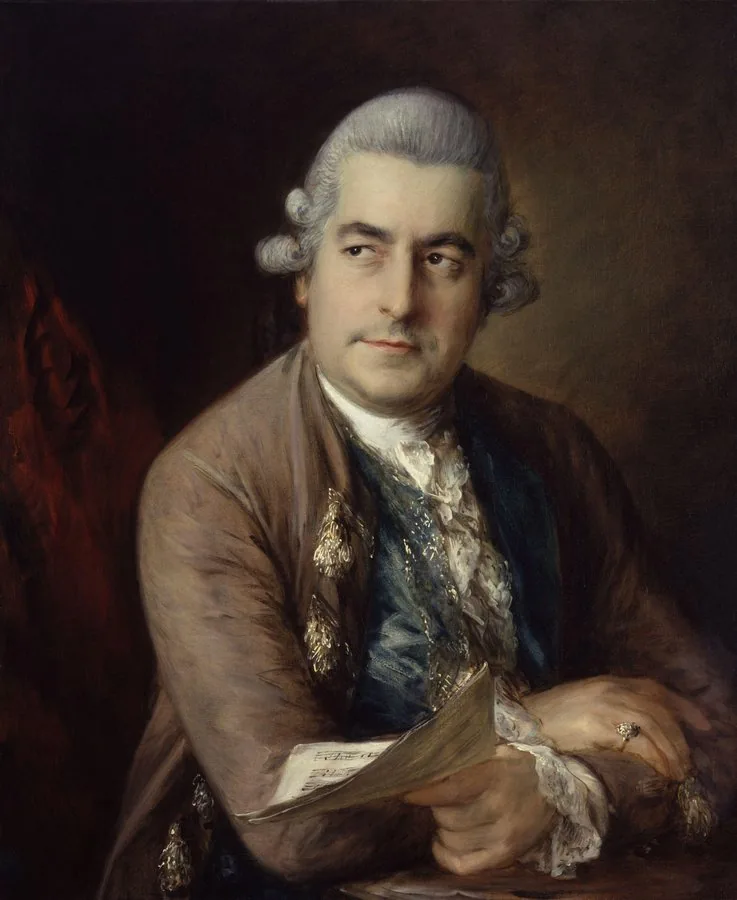
The first tremor of this controversy surfaced definitively in 1981, when the eminent British musicologist Peter Williams published a groundbreaking article titled “BWV 565 – A toccata in D minor for organ by J. S. Bach?” In it, Williams meticulously dissected the piece, pointing out numerous stylistic peculiarities that, he argued, were uncharacteristic of Bach’s known compositional practices, especially for his organ works. He questioned the piece’s seemingly simplistic harmony in places, its unusual parallel octaves, and the way its fugue subject develops—or, rather, doesn’t develop—compared to Bach’s typical rigorous counterpoint.
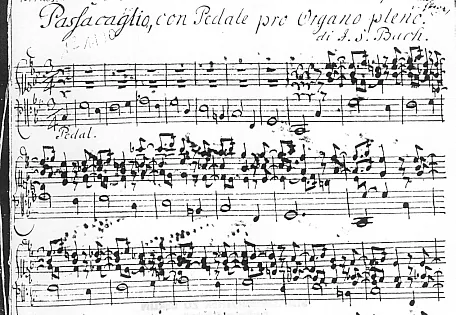
The core of the problem, and the fuel for the ongoing debate, is deceptively simple: no autograph manuscript of BWV 565 in Bach’s own hand has ever been found. The only known 18th-century manuscript copy, which serves as the primary source for all subsequent editions, was made by Johannes Ringk. Ringk was a student of Bach’s student, Johann Peter Kellner, but he was not a direct student of Bach himself. While Ringk was a known copyist of Bach’s works, the absence of Bach’s own handwriting, combined with Williams’s detailed musical analysis, opened a Pandora’s Box of questions.
As of 2026, over forty years after Williams first ignited the debate, there is still no scholarly consensus. Some musicologists, like Williams, continue to argue that the piece might be a transcription of a lost work by another composer, or perhaps even a pastiche or an arrangement by someone other than Bach. Others vigorously defend Bach’s authorship, suggesting that the “peculiarities” can be explained by the piece being an extremely early work from Bach’s youth (estimated c. 1703–1707, during his early Weimar period), a period when his style was still developing and prone to more flamboyant, less strictly academic experimentation. They argue that its remarkable skill and dramatic impact are undeniably Bachian, even if it doesn’t perfectly conform to the stylistic norms of his later, more mature works. The very possibility that such a monumental and beloved work might not be by Bach is, for many, almost unthinkable, yet the evidence remains tantalizingly ambiguous.
Adding another intriguing layer to this mystery is the “violin arrangement theory.” This hypothesis, championed by scholars such as David Humphreys and Robert Marshall, suggests that BWV 565 was originally conceived for a solo violin and later transcribed for the organ, possibly by Bach himself, or by someone else entirely. The theory gained traction due to several features in the score that seem more idiomatic to string playing than to traditional organ writing.
Consider the opening, for instance: the rapid arpeggiated figures and the descending scale passages are highly effective on the violin, where they can be executed with a thrilling sweep across the strings. On the organ, while still virtuosic, they demand a different kind of dexterity. More tellingly, the pedal part, which is played by the organist’s feet on a separate keyboard, often consists of single, sustained notes or simple octaves. This is atypical of much of Bach’s mature organ writing, where the pedals frequently carry complex melodic lines or form an integral part of the counterpoint. In contrast, a sustained bass line is a common feature when transcribing a string piece, where a single violin cannot sustain a continuous bass. The rapid chordal passages and broken chords in the Toccata also lend themselves well to a multi-stop violin technique or even a five-string cello.
If the violin theory holds true, it would explain many of the “un-Bachian” elements Williams identified. A transcription, especially one made by a younger Bach or an apprentice, might retain some of the original instrument’s characteristics while adapting others for the organ, leading to the stylistic inconsistencies. It would also highlight Bach’s incredible skill as an arranger, a talent he undoubtedly possessed, transforming a potentially dazzling violin showpiece into the grand organ spectacle we know today.
The authorship controversy and the violin arrangement theory are not mere academic footnotes; they profoundly affect how we listen to and understand the Toccata and Fugue in D minor. They invite us to consider the piece not as a fixed, immutable monument, but as a living, breathing entity with a complex, perhaps even uncertain, history. It forces us to confront the limits of our knowledge about one of music’s greatest figures and to appreciate the enduring power of a piece of music to spark debate and inspire endless fascination, regardless of who ultimately put pen to paper (or quill to parchment).
One Note That Changed Everything
The world of 18th-century organ music was, by and large, a realm of structured elegance, contrapuntal precision, and often, a certain devotional solemnity. Composers like Buxtehude, Pachelbel, and even the young Bach himself, crafted works that adhered to established forms and stylistic norms. Then came BWV 565, which shattered those expectations with a single, audacious gesture.
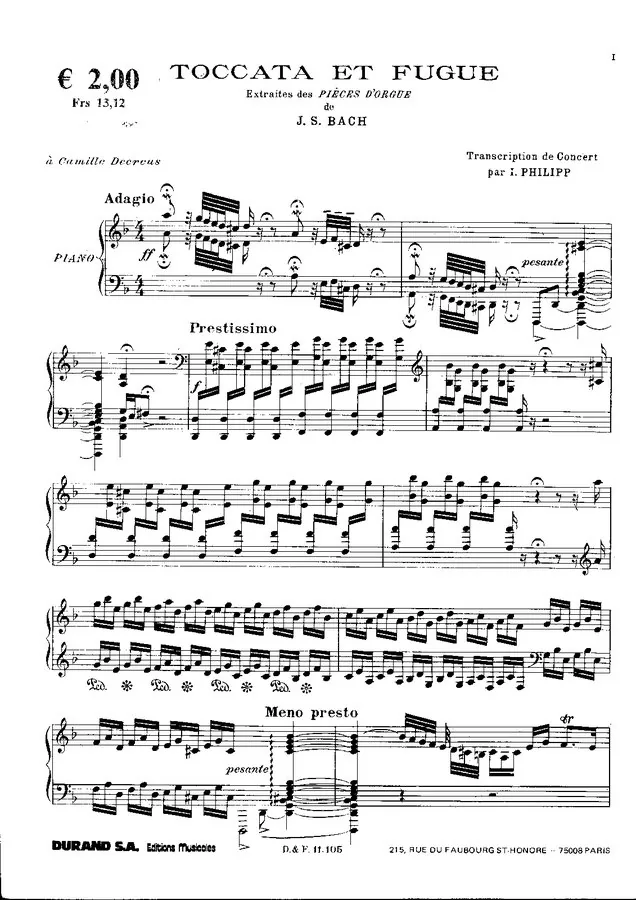
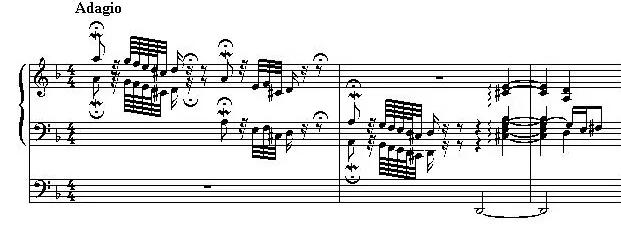
The piece begins not with a grand chord, a stately theme, or an intricate melodic line, but with a stark, solitary D note. It hangs in the air, held alone, an arresting silence before the storm. This single note, devoid of harmonic context, is like a dramatic intake of breath before an orator’s pronouncement. It immediately commands attention, creating a sense of foreboding and vastness. It is a moment of pure, unadorned sonic power, made all the more potent by the instrument it emanates from: the mighty pipe organ, an instrument capable of both whispers and roars, the “king of instruments.”
From this single D, the music plunges headlong into a descending cascade of notes, a virtuosic flourish that tumbles down the keyboard like a waterfall. This rapid, almost improvisatory descent is followed by a series of dramatic, diminished seventh chords, building tension with each thunderous articulation. For 18th-century organ music, this was a strikingly bold opening. It was unconventional, even provocative, for its sheer theatricality and its immediate demand for the listener’s full engagement. It wasn’t merely a prelude; it was a declaration.
This opening passage is the heart of the “Toccata” – a term derived from the Italian “toccare,” meaning “to touch.” Historically, a toccata was a piece designed to showcase the performer’s dexterity and the instrument’s capabilities, often characterized by rapid runs, arpeggios, and chordal passages that create a sense of improvisatory freedom. It’s a genre that values flash and virtuosity over strict thematic development. In the Toccata and Fugue in D minor, this improvisatory spirit is palpable from the very first note. The music flows with an almost untamed energy, shifting moods and textures with dramatic suddenness.
Following the initial descent, the Toccata unfolds as a series of distinct, yet interconnected, sections. There are thunderous pedal solos, where the organist’s feet dance across the pedalboard, articulating powerful bass lines that anchor the soaring lines above. There are intricate manual passages, where both hands engage in rapid figuration, creating a whirlwind of sound. And there are moments of stark, almost minimalist contrast, where the music briefly pauses, only to erupt again with renewed vigor.
One of the most characteristic features of this Toccata is its use of echo effects. Passages are often repeated at a lower dynamic, as if the mighty sound of the organ is reverberating through a vast cathedral. This creates a sense of spatial depth and grandeur, further enhancing the dramatic impact of the piece. The Toccata is not merely a technical showcase; it is a journey through a landscape of sound, from moments of terrifying power to fleeting glimpses of lyrical beauty, all unified by an underlying current of restless energy.
The key of D minor itself contributes significantly to the piece’s character. In the Baroque era, D minor was often associated with solemnity, drama, and sometimes, a certain melancholic intensity. It was a key frequently chosen for works of profound emotional weight, and in the hands of the composer of BWV 565, it becomes a canvas for a musical narrative that is both thrilling and deeply evocative. The Toccata, with its unbridled virtuosity and dramatic contrasts, perfectly embodies these qualities, setting the stage for the intellectual rigor and emotional depth of the fugue that follows. It is a testament to how a single, bold opening note can unleash a torrent of musical invention, captivating listeners for centuries.
The Fugue — Music in Conversation
If the Toccata is a wild, improvisatory outburst, a free-form display of raw power and virtuosity, then the Fugue is its intellectual counterpart: a structured, intricate conversation between voices. The transition from the Toccata’s free-spirited drama to the Fugue’s rigorous counterpoint is seamless, a masterstroke of compositional design that moves from expressive freedom to logical development within a single, continuous movement.
At its core, a fugue is a contrapuntal compositional technique where a short musical idea, called the “subject,” is introduced in one voice and then successively taken up by other voices. Imagine a group of people discussing a central idea: one person states it, another agrees and elaborates, a third adds their perspective, and so on, all while the original idea (or a variation of it) continues to weave through the conversation. This is the essence of a fugue.
The subject of the Fugue in D minor is instantly memorable: a distinctive, highly rhythmic figure, full of dotted notes and sharp contours, that sounds both assertive and slightly menacing. It’s a subject that practically demands attention, marching forward with an unwavering resolve. It begins in the upper voice, confidently stating its case. Then, a second voice enters, typically a fourth or fifth away, repeating the subject while the first voice continues with new material, often a “countersubject” that complements the main theme. This intricate interplay of voices is what gives a fugue its rich texture and intellectual depth.
In BWV 565, the subject is passed between the various voices of the organ – from the manuals (played by the hands) to the formidable pedalboard (played by the feet). This gives the fugue a three-dimensional quality, with the deep, resonant tones of the pedals grounding the more agile melodic lines above. As the fugue progresses, more voices enter, layering the subject and countersubject in a dense, interwoven combination of sound. The listener is invited to follow the journey of this central idea as it appears, disappears, and reappears in different registers and contexts.
However, true to the “mystery” surrounding the piece, this fugue is often considered somewhat atypical for Bach. While it certainly demonstrates contrapuntal skill, some scholars point out that it doesn’t develop its subject with the same rigorous complexity, the relentless thematic transformation, or the intricate stretto (overlapping entries of the subject) that characterize many of Bach’s later, more mature fugues. The subject, while striking, remains relatively unchanged throughout the piece, and the episodic material (the sections where the subject is not present, often used for modulation or development) tends to be simpler and more harmonically direct.
Despite these observations, the Fugue in D minor is undeniably effective. Its power lies not necessarily in its academic strictness but in its relentless drive and dramatic momentum. The insistent rhythm of the subject, combined with the sheer sonic force of the organ, creates an almost hypnotic effect. The “conversation” in this fugue is less about subtle intellectual argument and more about a forceful, almost aggressive declaration, building in intensity and grandeur.
The Fugue culminates in a dramatic, improvisatory-sounding coda. This final section breaks free from the strictures of the fugue, returning to the Toccata’s free style. It features a series of powerful, full-organ chords, rapid flourishes, and a final, thunderous D minor chord that brings the entire approximately 9-10 minute journey to a definitive, exhilarating close. This return to the Toccata’s style provides a satisfying sense of unity to the single-movement structure, marrying the improvisatory and the intellectual into one unforgettable musical statement.
The Fugue in D minor, with its iconic subject and powerful development, serves as a compelling counterpoint to the Toccata’s initial explosion. It demonstrates how even within a structured form, music can convey immense drama and emotional weight, solidifying the piece’s status as a landmark work, regardless of the ongoing debates about its exact origins or stylistic nuances. It is a testament to the enduring appeal of music as a profound form of communication, a conversation that transcends centuries.
From Fantasia to Horror Films
The Toccata and Fugue in D minor, BWV 565, might have remained a beloved but niche work within the organ repertoire had it not embarked on a remarkable journey through the annals of cultural history, transforming from a Baroque church piece into a global phenomenon. Its path to omnipresence is a testament to its intrinsic power and the serendipitous interventions of influential figures and popular media.
The first major step in its ascent came nearly a century after its estimated composition, during the burgeoning “Bach Revival” of the 19th century. While Bach was revered by musicians, his works had largely fallen out of public consciousness after his death. It was the young Felix Mendelssohn, a prodigious composer and conductor, who played a pivotal role in reintroducing Bach to the wider world. The Toccata and Fugue in D minor was first published in 1833 by Simon Richault in Paris, making it accessible to a broader audience of musicians. Mendelssohn, a fervent admirer of Bach, took up the mantle, performing BWV 565 in 1840 at the St. Thomas Church in Leipzig (Bach’s former workplace), an event that significantly contributed to the growing public fascination with Bach’s genius. Mendelssohn’s energetic advocacy, culminating in his famous 1829 performance of Bach’s St Matthew Passion, helped solidify Bach’s reputation as a towering figure in music history, and the Toccata and Fugue rode this wave of renewed interest.
However, the piece’s truly explosive leap into global recognition occurred a century later, thanks to an unexpected collaboration between classical music and groundbreaking animation. In 1940, Walt Disney released Fantasia, an ambitious and experimental animated film designed to bring classical music to a mass audience. For the film’s opening segment, Disney chose the Toccata and Fugue in D minor. But this was not the organ version; it was a lavish, full orchestral transcription by the legendary conductor Leopold Stokowski.
Stokowski, known for his opulent orchestral sound and dramatic interpretations, transformed the solo organ piece into a monumental symphonic work. His transcription retained the grandeur and power of the original but magnified it with the vast palette of the modern orchestra – swelling strings, blaring brass, and thunderous percussion. In Fantasia, this re-imagined BWV 565 became the soundtrack to abstract animation, a mesmerizing dance of light, shadow, and evolving shapes that visually interpreted the music’s dramatic flow. For millions, this was their first encounter with Bach, and the sheer spectacle of Stokowski’s arrangement married to Disney’s animation left an indelible mark. It proved that classical music, particularly this piece, could be both profound and incredibly entertaining, reaching far beyond the traditional concert hall.
Yet, even as Fantasia cemented its place in popular culture, another, darker association began to take root. The Toccata and Fugue in D minor, with its inherent drama, its powerful D minor key, and the imposing sound of the pipe organ, became the quintessential soundtrack for horror and the macabre in Western pop culture. Its iconic opening, with that solitary D note plunging into a dark cascade, was perfect for setting a chilling atmosphere.
This association began remarkably early in cinematic history. The piece was used to great effect in films like Rouben Mamoulian’s Dr. Jekyll and Mr. Hyde (1932), setting a tone of scientific hubris and lurking evil. It continued in Edgar G. Ulmer’s chilling The Black Cat (1934), starring Boris Karloff and Bela Lugosi, where the organ’s sinister tones perfectly underscored the film’s gothic horror. Its presence in various adaptations of The Phantom of the Opera, where the titular character is often depicted composing or performing at a grand pipe organ, further solidified the connection.
The pipe organ itself, an instrument historically found in churches and grand, often gothic, settings, already carried connotations of mystery and the sublime. When paired with the dramatic, sometimes unsettling, qualities of BWV 565, the equation became fixed: “pipe organ = horror/evil.” This cliché has been endlessly parodied and paid homage to, from cartoons to video games, ensuring the piece’s perpetual presence in popular culture, often divorced from its classical context but instantly recognizable for its atmospheric power.
From Mendelssohn’s revival efforts to Stokowski’s orchestral grandeur and its ubiquitous presence in horror cinema, the Toccata and Fugue in D minor has navigated a truly unique trajectory. It has proven its adaptability and its universal appeal, capable of evoking wonder, terror, and profound admiration across diverse audiences and contexts. It demonstrates to the enduring power of music to transcend its original purpose and become a living, evolving part of our shared cultural narrative.
For First-Time Listeners
Embarking on a journey with Bach’s Toccata and Fugue in D minor, BWV 565, for the first time is an exhilarating experience. To fully appreciate its genius and enduring appeal, here are a few key points to guide your listening:
1. Embrace the Drama from the Outset: Pay close attention to the very beginning. That single, held D note, followed by the dramatic descending cascade, isn’t just an intro; it’s a statement. Allow yourself to be pulled into its immediate sense of theatricality and foreboding. The Toccata section is designed for dramatic flair and virtuosity, so listen for the rapid runs, the thunderous chords, and the sudden shifts in dynamics and mood. It’s like a spontaneous, grand improvisation.
2. Follow the “Conversation” in the Fugue: Once the Toccata transitions into the Fugue, try to identify the main theme (the “subject”). It’s a distinctive, rhythmic idea. Then, listen as this theme is passed from one voice to another – up, down, and across the different parts of the organ, including the powerful pedals. It’s a musical conversation, and trying to track the subject as it “speaks” through the different layers of sound can be a rewarding challenge.
3. Appreciate the Organ’s Power and Versatility: This piece is a showcase for the pipe organ, an instrument of immense dynamic range and textural variety. Notice how the composer uses different registrations (combinations of stops) to create contrasting sounds, from delicate echoes to overwhelming, full-organ crescendos. The pedal part, often a robust bass line, adds a foundational power that is unique to the organ.
4. Feel the D Minor Mood: The key of D minor often carries connotations of seriousness, drama, and intensity in Baroque music. Let this emotional landscape wash over you. The piece is not always “happy” or “bright”; it delves into darker, more potent emotional territory, which is part of its profound impact.
5. Experience the Unity of Structure: While it sounds like two distinct sections (Toccata and Fugue), it’s a single, continuous movement that concludes with a brief, powerful Coda. Notice how the improvisatory nature of the Toccata returns at the very end, tying the whole piece together with a satisfying sense of completeness and grandeur.
Allow yourself to be swept away by its energy, its grandeur, and its almost cinematic quality. It’s a piece that demands attention and rewards active listening.
Recommended Recordings
1. Helmut Walcha / DG (1961)
The legendary blind organist, Helmut Walcha, is revered for his monumental interpretations of Bach’s organ works. Having memorized all of Bach’s organ repertoire, his 1961 recording of BWV 565 is a benchmark. Walcha’s performances are characterized by their clarity, architectural grandeur, and unwavering integrity, offering a profoundly spiritual and intellectually rigorous rendition that remains a touchstone for many.
2. Leopold Stokowski orchestral transcription (1940s)
This is the iconic version that introduced millions to the piece through Disney’s Fantasia. Stokowski’s orchestral transcription transforms the pipe organ original into a lush, dramatic symphonic spectacle. It’s a revelation to hear the familiar melodies and structures re-imagined with the vast palette of the modern orchestra, offering a completely different, yet equally powerful, experience of the work.
3. Leo van Doeselaar / Netherlands Bach Society
For a modern, historically-informed performance, Leo van Doeselaar’s recording with the Netherlands Bach Society is an excellent choice. Performed on period instruments or authentic replicas, these recordings strive for an interpretation that reflects the sound and performance practices of Bach’s own time. Van Doeselaar brings both scholarly insight and vibrant musicality, offering a fresh perspective on the piece’s original texture and character.
Follow the Score