- Composer
- Saint-Saëns
- Work
- Cello Concerto No. 1 in A minor, Op. 33
- Key
- A minor
- Composed
- 1872
- Movements
- 3 movements
I. Allegro non troppo (A minor)
II. Allegretto con moto — Minuet (B♭ major)
III. Tempo primo — Finale (A minor → A major) - Instrumentation
- solo cello, 2 flutes, 2 oboes, 2 clarinets, 2 bassoons, 2 horns, 2 trumpets, timpani, strings
- Premiere
- January 19, 1873
Paris Conservatoire Concert Hall
Conductor: Édouard Deldevez
Soloist: Auguste Tolbecque (cello)
The orchestra gives you no time to prepare. On January 19, 1873, at the Paris Conservatoire Concert Hall, the packed audience was expecting the usual concerto protocol: a grand orchestral theme to set the mood, building anticipation until the soloist makes a triumphant entrance. But when the conductor’s baton fell, something else happened entirely. The strings struck a single, sharp A-minor chord, and before anyone could blink, the cello leaped onto the stage. No hesitation, no introduction—just a voice bursting forth as if it had been holding its breath for far too long.
That was exactly what Saint-Saëns intended. He wrote the piece in 1872 at the age of 37, just after his native France had suffered a humiliating defeat in the Franco-Prussian War. Was it a coincidence that a concerto born from that national trauma began not with a formal orchestral prelude, but with the raw cry of a solo cello? This explosive opening is the first chapter of the story this concerto tells.
It’s telling how newcomers react to this piece. Many who first encounter the famous cello concertos by Dvořák or Elgar later discover this one and are stunned, asking, “How is this masterpiece not as famous as the others?” In just under 20 minutes, it delivers a tightly constructed, no-nonsense musical argument packed with all the technical fireworks and lyrical beauty a cello can offer. Once you fall for its charms, you’ll find yourself coming back to it again and again.
In Paris After the War — Why Saint-Saëns Wrote This in 1872
The Franco-Prussian War (1870–71) was a cataclysm that shook France to its core. With the surrender of Napoleon III, the siege of Paris by Prussian forces, and the subsequent rise of the Paris Commune, the French musical world was left in a state of shock. After the war, Saint-Saëns and a group of young composers decided to act. In 1871, they founded the Société Nationale de Musique (National Society of Music) under the motto “Ars Gallica,” or “French Art.” It was a powerful declaration of intent: they would no longer be overshadowed by German music.
_-_btv1b108612376_(1_of_2).jpg)
It was in this charged atmosphere that Saint-Saëns composed his cello concerto in 1872. The work is concise, fast-paced, and stripped of all excess. Running about 20 minutes, its length was a defiant statement in an era when German concertos often stretched well past the 40-minute mark.
An interesting figure is tied to the concerto’s creation. Saint-Saëns dedicated the work to Auguste Tolbecque, a cellist from a distinguished Parisian musical family. Tolbecque was not just a cellist; he was also a viola da gamba player and an instrument maker. He was less of a touring virtuoso and more of a dedicated craftsman.
Isn’t it remarkable that Saint-Saëns dedicated this piece not to a flashy star, but to a musician like Tolbecque, and that the resulting work would come to stand alongside the concertos of Dvořák, Elgar, and Schumann? Of course, it was much later that titans like Šostakovič and Rachmaninov praised it as “the greatest of all cello concertos,” but the seeds of that legacy were already being sown in Saint-Saëns’s workshop in 1872.
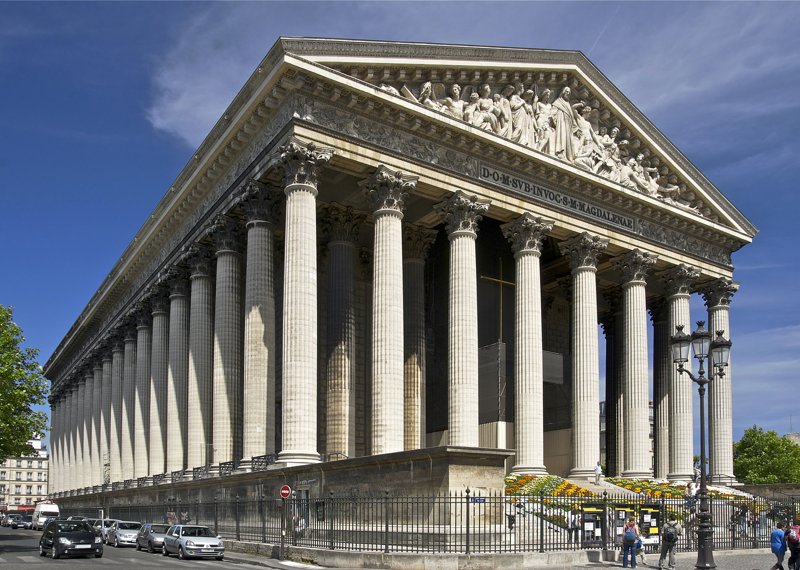
As the organist at the Église de la Madeleine, Saint-Saëns was one of the busiest musicians in Paris, juggling performing, conducting, writing criticism, and composing. In that whirlwind of activity, 1872 was the only year he wrote a cello concerto. While a second concerto exists, the one we all know and love was born from this single, focused effort. And that one attempt was enough to make history.
Not ‘Movements’ but ‘Sections’ — The Meaning of the Single-Movement Structure
The standard concerto format is a three-movement structure: fast-slow-fast. It’s a template used by masters like Beethoven, Brahms, and Dvořák. But in this work, Saint-Saëns boldly broke the mold.
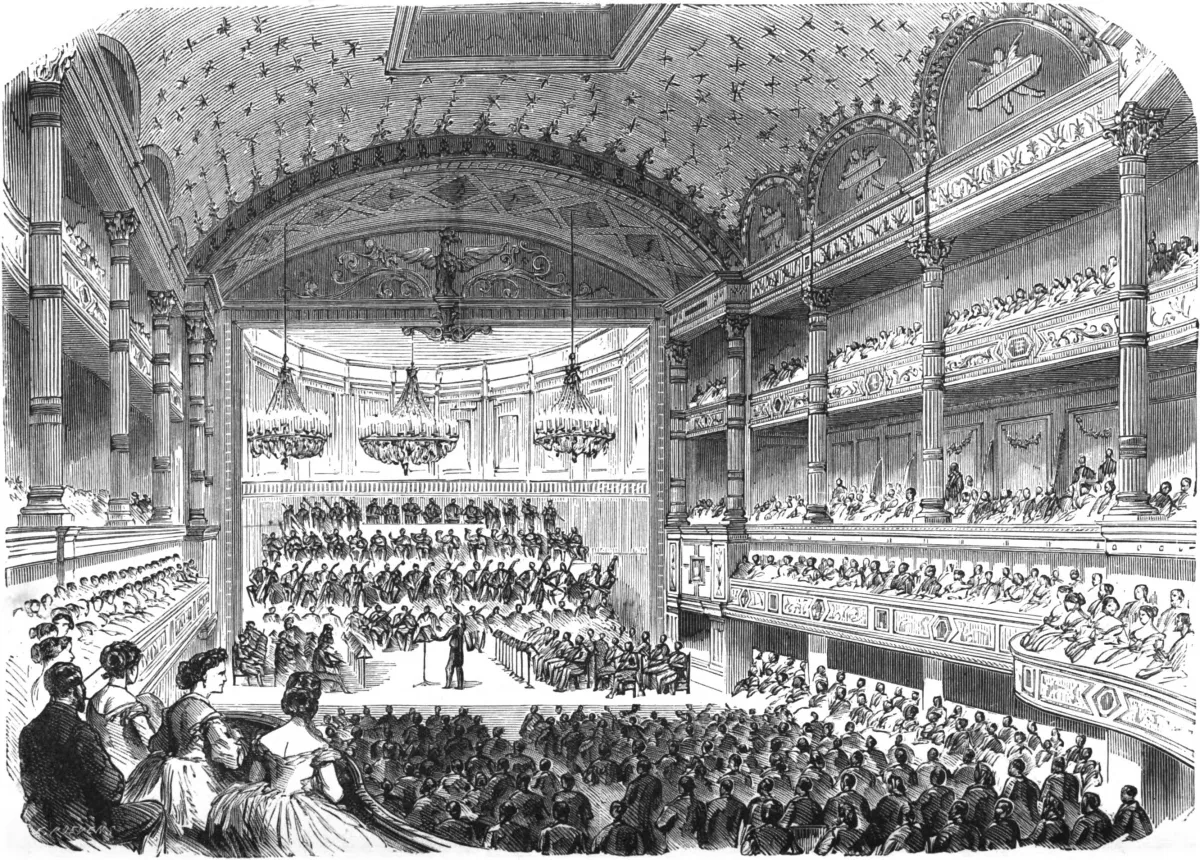
The concerto flows as one continuous piece from the first section to the third. Although the score is divided into three parts, the music never stops for its 20-minute duration. This is known as a “cyclic form,” a technique Saint-Saëns favored, influenced by Franz Liszt, with whom he had corresponded during his time as organist at La Madeleine.
Why choose this structure? It showcases Saint-Saëns’s architectural thinking. A theme from the first section reappears at the end, transformed with new meaning, like a well-crafted short story where all the foreshadowing pays off.
But here’s the good news for anyone new to classical music: this unique structure means you don’t have to worry about when to clap. There are no awkward pauses between movements. You just let the music carry you from start to finish. It’s a relief compared to a piece like the Dvořák concerto, where the distinct movements can make applause timing a bit of a guessing game.
A Guide to the Sections
Mvt. 1: Allegro non troppo — The Cello That Can’t Wait
As mentioned, the opening is immediate. A single orchestral chord, then the cello. It’s a truly assertive entrance. The first theme unfolds intensely in A minor, instantly establishing the soloist as the protagonist.

Saint-Saëns’s approach here is striking. He uses the solo cello as a declamatory instrument. While the orchestra provides the backdrop, the cello constantly pushes forward. The dialogue between soloist and orchestra is a rapid-fire exchange of questions and answers—short, quick, and to the point. The musicologist Sir Donald Francis Tovey once wrote that this is the cello concerto in which the solo instrument “has the least difficulty in penetrating the orchestra,” and he was right. Saint-Saëns utilizes the cello’s entire range without ever letting it get buried.
The cello, by its nature, can easily be swallowed by the full orchestra in its lower register. This is precisely why cello concertos are trickier to write than those for piano or violin. How did Saint-Saëns solve this? He kept the orchestration lean and meticulously planned the soloist’s range. Whenever the orchestra comes to the forefront, he sends the cello into its higher register, ensuring it never loses its presence.
Just as the section races towards a climax, it abruptly slams the door shut. A moment of silence hangs in the air before a new door opens into a completely different world.
Mvt. 2: Allegretto con moto — A Muted Minuet
This is where many first-time listeners get a little thrown. The tense, driving music suddenly transforms into a graceful, classical-style minuet. The strings attach mutes to their instruments, softening their sound and completely changing the atmosphere. The key shifts from A minor to B-flat major. It feels like stepping from a dark, sharp-edged world into a bright, elegant ballroom.
The minuet originated as a courtly dance—refined, restrained, and predictable. Why did Saint-Saëns place one here? Some say it was to provide a moment of respite after the intensity of the first section. Others see it as an homage to French elegance and classical form. I lean toward the latter. In 1872, at a time when French artists were searching for their identity, placing a symbol of French classicism like the minuet in the heart of a concerto was a statement in itself.
A key moment here is the cello cadenza. In the middle of the minuet, the solo cello is left completely alone. The orchestra falls silent. It’s a brief passage, but it’s the quietest and most introspective moment in the entire 20-minute work. The sound of the muted strings is dreamlike and hazy, but when the cello stands alone in the cadenza, it’s a moment that makes you hold your breath.
Mvt. 3: Tempo primo — The Theme Returns, But the Ending is Different
‘Tempo primo’ means ‘at the original tempo.’ The theme from the first section returns, and the energy erupts once more. Here, Saint-Saëns pulls off a brilliant trick: he not only brings back material from the first section but also throws in two completely new themes. Then, for the grand finale, he gives the cello yet another fresh idea.
The design here is notably clever. Introducing new themes in the final section is like a story that, while heading toward its conclusion, continues to open new chapters until the very end. It’s as if the composer is whispering, “It’s not over yet!” When the initial theme returns, it sounds completely different, having passed through the filter of the minuet.
Technically, this section is the most difficult part of the concerto. It’s filled with relentless fast passages that demand extreme virtuosity from the soloist. Even professional cellists admit the finale is “tricky.” But to the audience, that technical difficulty translates into pure, exhilarating energy.
Finally, the concerto, which began in A minor, concludes in a blaze of A major. This shift from minor to major, from darkness to light, has always provided a powerful emotional release for audiences. And when you remember this piece premiered in a somber, post-war France, that A-major ending feels like more than just a musical choice—it feels like a declaration of hope.
12-Year-Old Casals and Saint-Saëns — The People Behind the Music
Have you heard the name Pablo Casals (1876–1973)? He was the towering figure who set the standard for cello playing in the 20th century. It turns out that when he was just 12 years old, he performed this very concerto with Saint-Saëns himself on the conductor’s podium.
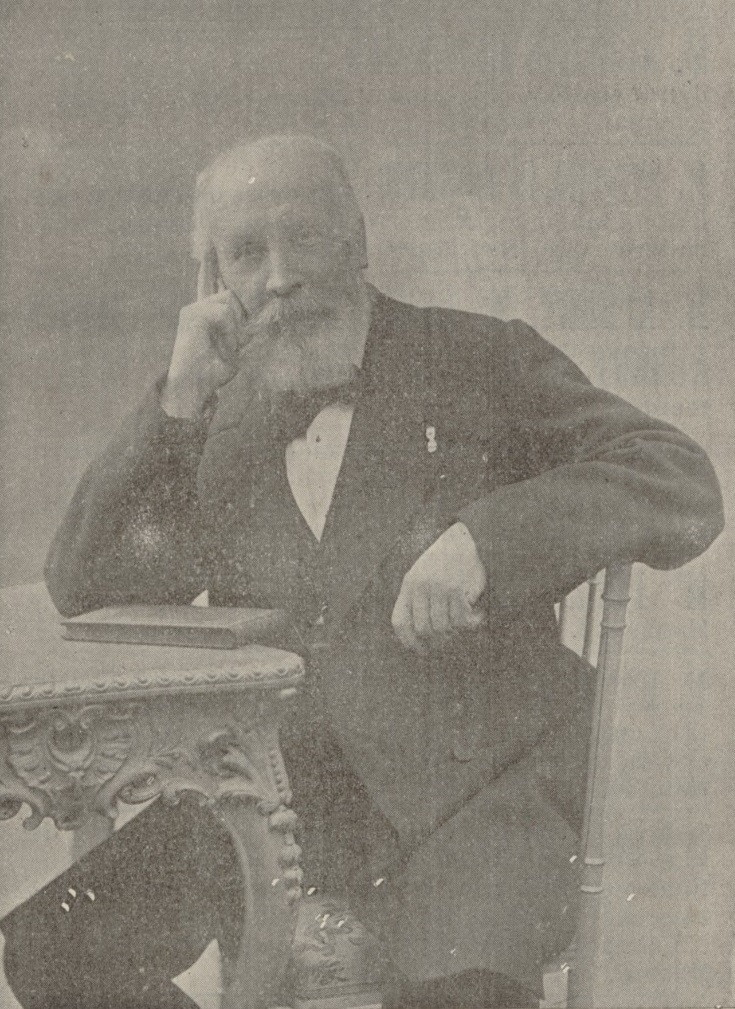
Just picture it: the composer holding the baton, and a young teenager as the soloist. Casals never forgot that intense experience, and he would go on to establish the definitive interpretation of the work. The seed planted by the composer blossomed through the hands of a legendary performer.
This story is significant because it reveals the dual nature of the concerto. It’s technically accessible enough for a gifted 12-year-old to tackle, yet it possesses a musical depth that world-class artists can spend a lifetime exploring. When you consider how rare it is for a concerto to have both technical brilliance and profound artistry, you understand why this piece is considered a pinnacle of the cello repertoire.
And we can’t forget Saint-Saëns himself. Born in 1835, he died in 1921 at the age of 86. He was a living bridge between eras, composing in the age after Chopin and Beethoven, born in the time of Delacroix, and living to witness the rise of Debussy and Ravel. He never stopped composing, right up until he passed away in Algiers just a few days before his 86th birthday.
The Cello Concerto No. 1, completed when he was 37, is a masterpiece of his middle period. This wasn’t the work of a seasoned master in his twilight years, nor that of a young man trying to make a name for himself. It was the creation of an artist at the peak of his powers, speaking his musical language with sharpness, honesty, and complete freedom.
For First-Time Listeners — Just Know This
First, it’s non-stop. You don’t have to worry about when to clap. The entire 20-minute piece is a single, continuous flow.
Second, there’s no long orchestral intro. The cello jumps in right at the beginning. If you listen while imagining how radical this was at the time, that first chord and cello entrance will sound even more special.
Third, the mood suddenly shifts in the middle. The minuet with muted strings marks the start of the second section. It might sound a little strange at first, but this dramatic contrast is exactly what Saint-Saëns intended.
Fourth, it ends in major. The concerto starts in A minor but finishes in A major. Why not try to pinpoint the exact moment of that transition? Even if it’s your first time hearing it, you’ll definitely feel the dramatic shift.
Fifth, it’s only 20 minutes long. There’s no need to brace yourself for a 40-minute epic like Dvořák’s concerto. You can listen to the whole thing on your commute.
Many classical newcomers find their way to this piece after hearing Dvořák or Elgar, and their reaction is often a mix of awe and regret: “Why did I only just discover this?” In 20 short minutes, this work delivers everything a concerto can offer. That concentrated power is its greatest magic.
The Traces It Left on Other Works
After its premiere in 1873, the concerto’s reputation spread quickly. In a European musical landscape dominated by German Romantic composers, this short, concise, and efficient work posed new questions about what a concerto could be.

The idea of a single-movement concerto continued to evolve. Bruch’s Scottish Fantasy, Liszt’s piano concertos, and many 20th-century works would build on the foundation Saint-Saëns laid. He was one of the first to truly show its potential.
The piece remains vital for cello students today. It’s a staple in international cello competitions and is often one of the first major concertos that advanced students tackle. It presents a significant challenge, but those who master it feel they have explored every expressive corner of the instrument.
Was it a casual choice when Yo-Yo Ma included this work alongside Dvořák, Elgar, Haydn, and Schumann in his “five great cello concertos”? It may lack the sheer scale or popular fame of the Dvořák or Elgar, but in terms of musical density and perfection of form, it absolutely deserves its place beside them.
Comparing it to other works makes its character even clearer. If Dvořák’s concerto embodies Czech national sentiment and nostalgia, Saint-Saëns’s No. 1 is a model of French rationalism and structural clarity. Where Elgar expresses a kind of English aristocratic sensibility, Saint-Saëns treats intellect and emotion as equal partners. They are all cello concertos, but they inhabit completely different worlds. Listening to the three side-by-side is one of the great pleasures of classical music.
Recommended Recordings
Rostropovich / London Philharmonic Orchestra / Giulini (1978, EMI)
Mstislav Rostropovich is, simply put, a living legend of this work. This recording with the London Philharmonic under Carlo Maria Giulini strikes a perfect balance between technical perfection and musical depth. Rostropovich’s cello tone is rich and authoritative, yet it carries a profound human warmth. This is the first version I’d recommend to anyone new to the piece.
Jacqueline du Pré / Philadelphia Orchestra / Barenboim (1971, EMI)
If you’re not familiar with Jacqueline du Pré (1945–1987), this recording is a fantastic introduction. Made with Daniel Barenboim, who would later become her husband, this performance is a celebration of life and spontaneity. Tragically, multiple sclerosis forced her to stop playing at the age of just 28. That fact makes every recording she left behind feel all the more precious.
Matt Haimovitz / Chicago Symphony Orchestra / Levine (1989, DG)
The greatest strength of this DG recording is its technical flawlessness. The power and precision of the Chicago Symphony under James Levine are matched by Haimovitz’s clean and accurate playing. In terms of sound engineering, it’s the clearest and most vivid of the three.
Listen with the Score
For those who want to follow along with the score, IMSLP offers free access to the original sheet music. You can find everything from the first edition published in 1873 to modern edited versions. Listening with the score open allows you to see for yourself how brilliantly Saint-Saëns constructed the cello part and how the orchestra weaves in and out of the texture.
→ View the score for Cello Concerto No. 1, Op. 33 (IMSLP)