A symphony is a large-scale work for orchestra, normally in four movements, played straight through by a group of strings, woodwinds, brass and percussion. Around forty minutes is the usual span. That is the definition, and it fits in one breath.
The definition is the easy part. The harder question is why a form worked out in the eighteenth century still asks a modern listener for forty uninterrupted minutes — no lyrics, no visuals, nothing to sing along to — and still gets them.
Here is the answer I have arrived at after years of playing this repertoire from inside a viola section: a symphony is an argument. It states something, complicates it, tries to escape it, and then decides. A pop song is built around a hook, and the hook arrives early. A symphony is built around consequence, and the consequence arrives late. Everything below is the mechanics of that.
Symphony at a Glance
| What it is | A multi-movement composition for full orchestra, performed without a featured soloist |
| Where the word comes from | Greek symphonia — a concord of sound; the musical form grew out of the Italian opera overture, or sinfonia |
| Standard shape | Four movements: fast (sonata form) — slow — dance (minuet or scherzo) — fast finale |
| Who plays it | Strings, woodwinds, brass, percussion; roughly 30 to 100 musicians depending on the era of the piece |
| Typical length | Classical-era works run 20 to 30 minutes; Romantic and later works commonly run 40 to 70, and Mahler pushes past 90 |
| What to listen for | A short idea in the opening minutes coming back later, changed |
The Parts of a Symphony: What Each Movement Is For
The four-movement plan is what people are really asking about when they search for the parts of a symphony. Each movement has a job, and the jobs are not interchangeable.
First movement — fast, and structurally the densest. This is where the material is introduced, usually in sonata form: two contrasting themes are stated, then pulled apart in a development section, then brought back altered. If a symphony has a famous opening, it lives here. Beethoven’s four-note hammer stroke, Dvorak’s rising horn call in the Ninth, the low brooding pulse that starts Brahms’s First — all first movements, all doing the same job of putting a problem on the table.
Second movement — slow, and where the emotional weight sits. The first movement runs; the second one stops and looks around. Composers tend to write their most exposed, most personal music here, and some of it is self-contained enough to leave home entirely: the Largo of Dvorak’s Ninth is a second movement whose English horn tune walked out of the symphony and became a song, after Dvorak’s pupil William Arms Fisher set words to it as Goin’ Home. Where the slow music sits is not fixed, though. The Adagietto from Mahler’s Fifth Symphony, better known now than the symphony around it, is the fourth movement of five.
Third movement — a dance, usually a minuet or a scherzo. This is the release valve. In Haydn and Mozart it is a courtly minuet in three; Beethoven sharpened it into the scherzo, faster and edgier, and later composers used it to be openly strange. The lightness is often a surface. Mahler in particular liked taking a folk tune or a nursery melody and letting something sour creep in underneath.
Fourth movement — the finale, where the argument is settled. Material from earlier can come back transformed. Some finales resolve into blazing major-key affirmation; some dissolve into nothing. Both are valid endings, and which one a composer chooses tells you what the piece was about.
Three movements happen too, and two, and five. Beethoven’s Sixth Symphony, the Pastoral, has five movements instead of four. The plan is a convention that composers work with and against, not a rule anyone enforces.
Where the Form Came From
The symphony began in the opera house, as the music played before the curtain went up. The opera sinfonia, also called the Italian overture, had settled by the eighteenth century into a standard structure of three contrasting movements — fast, slow, and fast and dance-like. Composers started writing these overtures for orchestra alone, detached from any opera, and the concert symphony is what grew out of that habit.
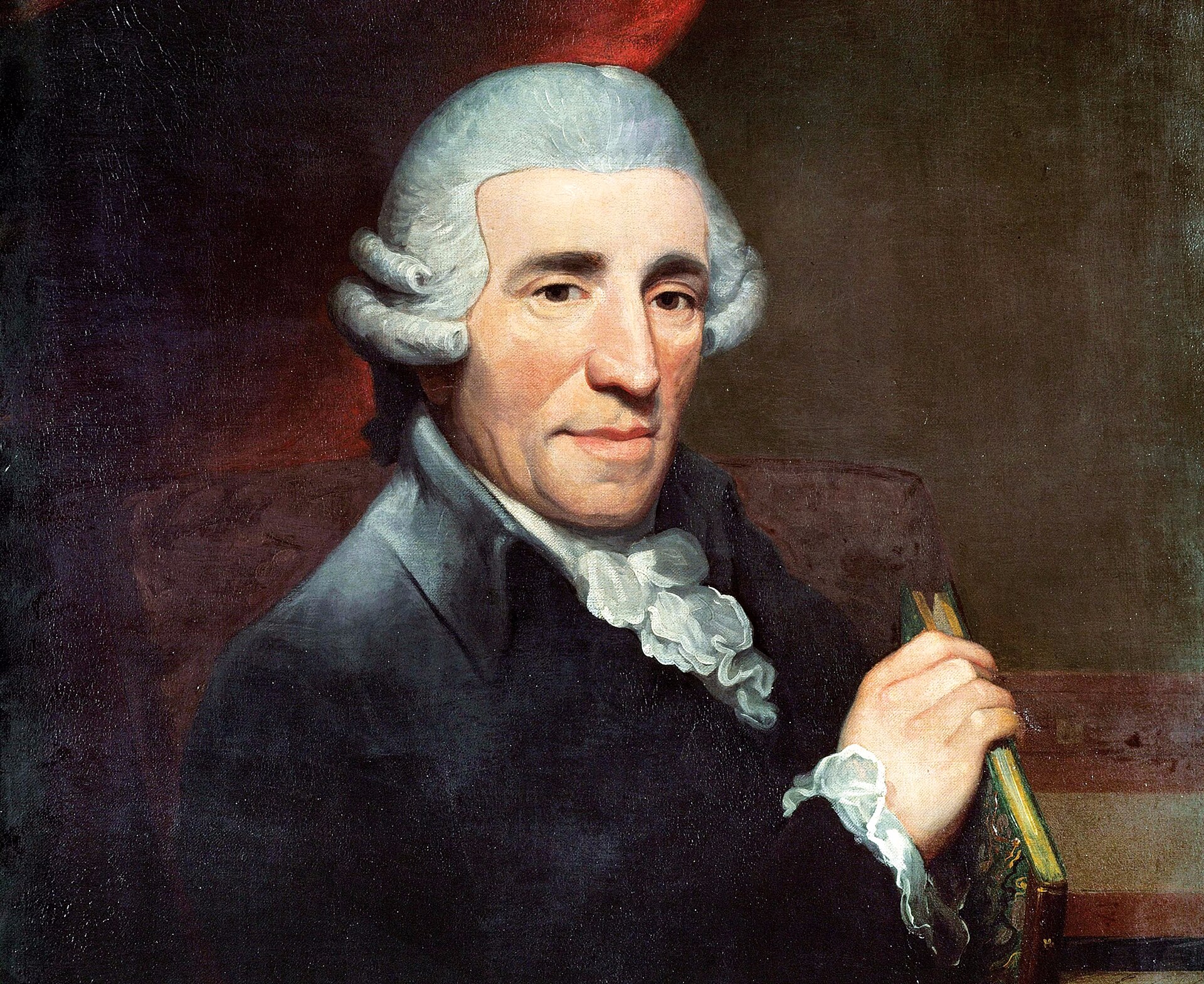
The step from three movements to four is usually credited to the Mannheim court orchestra; one standard account holds that Johann Stamitz and his colleagues added the minuet as a third movement and so produced the four-movement plan the Classical symphony inherited. What is not in dispute is who turned that plan into a working language. Joseph Haydn lived from 1732 to 1809 and wrote 104 numbered symphonies, which is less a catalogue than a research programme conducted in public across his whole career. Haydn’s Symphony No. 104 was composed in 1795 as the last of the twelve London symphonies, by which point the form he had spent his career testing was fixed enough for everyone after him to argue with.
Haydn also understood that a symphony is played to an audience that can lose interest. The famous fortissimo jolt in the slow movement of his Symphony No. 94 is a joke aimed at exactly that problem, and it still works on a room today. If you want the fuller historical map — who wrote what, and in what order — our complete symphony guide lays out the whole territory.
Who Is Actually Playing
The word orchestra stays an abstraction until you count the seats. Symphonies are almost always scored for an orchestra of strings, woodwinds, brass and percussion which altogether number about 30 to 100 musicians. An early Haydn symphony works with a modest band; a late-Romantic score wants the top of that range and then some.
Each family has a personality, and the writing exploits it. First violins usually carry the tune. Cellos answer an octave below with more weight behind them. An oboe can ask a question in two notes because its sound cuts through everything; a horn answers because it fills space instead of cutting through it. Timpani are punctuation.
The violas sit in the middle of that, and from inside the section you learn something that never shows up in a description of the piece: a lot of the emotional temperature of a symphony is set by an inner line nobody is consciously listening to. When a slow movement suddenly feels unstable, it is frequently because the violas and second violins have started moving in half-steps under a melody that has not changed at all. Listen underneath the tune, not at it. That single habit changes more about how this music lands than any amount of theory.
Sonata Form, Without the Theory Lecture
Sonata form is the engine of most first movements, and it is far simpler than its reputation. Statement, argument, return. A theme is presented. A second, contrasting theme is presented. Then the development section takes them apart — fragments them, moves them into unrelated keys, hands them to the wrong instruments — before the recapitulation brings both back, changed by what happened in between.
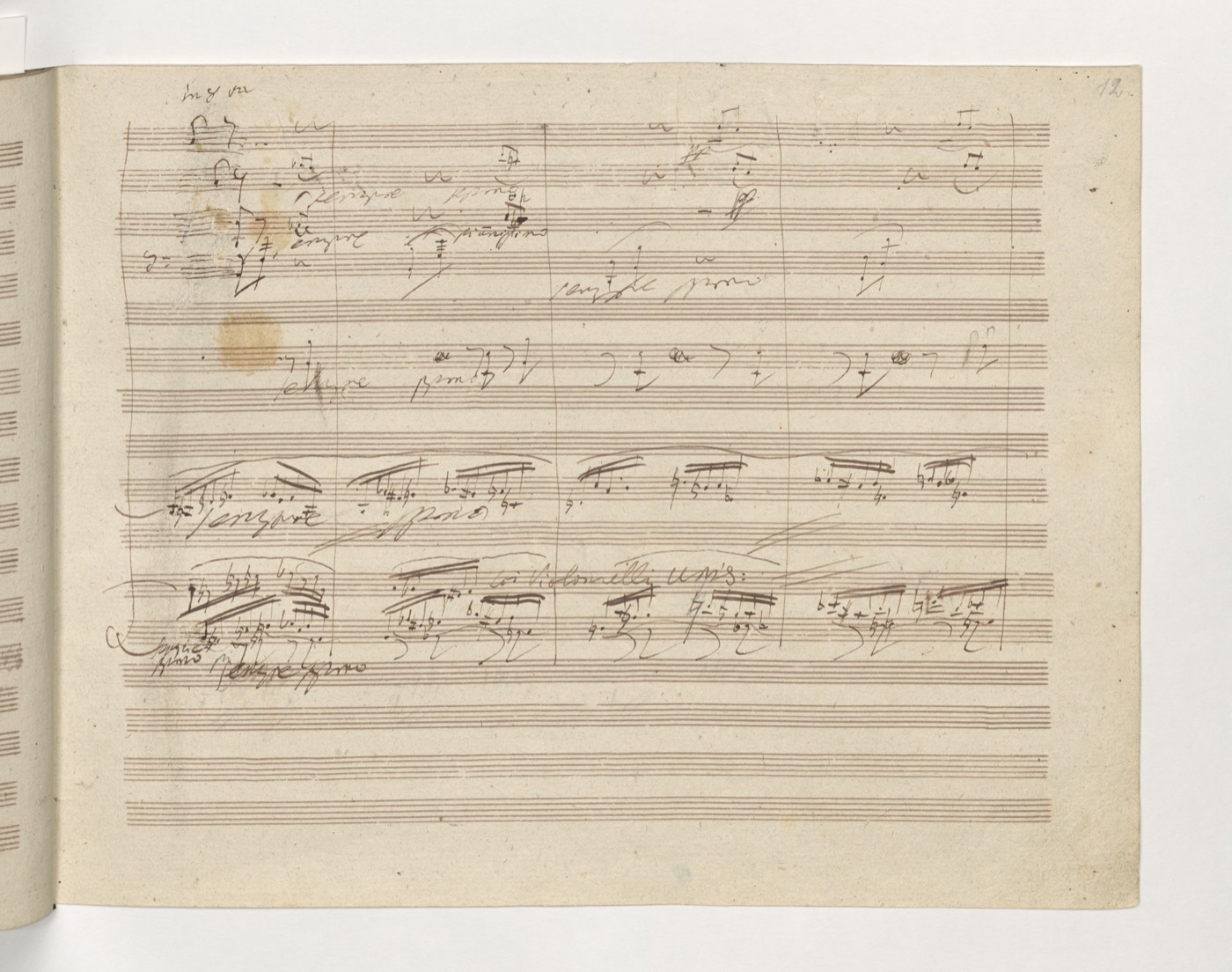
The reason this matters to a first-time listener is that it makes the payoff structural rather than decorative. When a theme returns in the finale, what you are hearing is the survivor — the same material, carrying everything that happened to it in between. Beethoven’s Fifth is the clearest demonstration in the repertoire — one rhythmic cell, four movements, four completely different emotional readings of the same handful of notes. We take apart what people get wrong about that piece in our piece on the Fifth’s myths.
Beethoven’s Fifth Symphony had its first performance on 22 December 1808 at the Theater an der Wien in Vienna, on a programme made up entirely of Beethoven premieres that ran more than four hours. The audience was cold, the orchestra under-rehearsed, and the piece that would become the most recognised symphony on earth landed with a shrug. Ludwig van Beethoven lived from 1770 to 1827, and by the end of his life he had also decided the form could hold voices: Beethoven’s Ninth Symphony was premiered in Vienna on 7 May 1824, with four vocal soloists and a chorus in the finale. That finale’s tune has had an unusual afterlife — the Council of Europe adopted the Ode to Joy theme as its anthem in 1972, and EU leaders adopted it as the anthem of the European Communities in 1985.
Symphony vs Concerto vs Orchestra: The Words People Mix Up
Symphony vs concerto. A symphony is written for the orchestra as a collective, with no featured soloist. A concerto puts one player — pianist, violinist, cellist — in front of that orchestra and builds the piece around the relationship between them. Both are usually multi-movement works; the concerto is typically in three rather than four, and it is a dialogue rather than a group argument.
Symphony vs orchestra. A symphony is the piece. An orchestra is the group of people playing it. The word symphony also gets used as shorthand inside ensemble names, which is where the confusion starts.
Symphony vs sonata. Sonata form is a structural plan for a single movement. A sonata is a work for one or two instruments. A symphony usually contains a movement in sonata form, which is exactly the sort of overlap that makes classical vocabulary feel deliberately unhelpful.
Hear the Shape: Two Performances That Show It Working
Reading about form is useless without sound attached. Two performances, chosen because both are complete, well-filmed, and free to watch.
Haydn, Symphony No. 103 — Frankfurt Radio Symphony, Ivor Bolton. Start here if you want to hear the template intact. The drum roll opens it, the four movements do exactly their assigned jobs, and the whole thing is over in around half an hour. Bolton keeps the textures light enough that you can follow individual lines, which is the point when the goal is learning what the parts are.
🎧 Also on: Apple Music · Spotify
Beethoven, Symphony No. 5 — Frankfurt Radio Symphony, Andres Orozco-Estrada. Then hear the template used as a weapon. Orozco-Estrada takes the opening fast and refuses to linger on it, which is the right call: here the four-note figure behaves like a nuisance, barging back in wherever the music tries to settle. Watch the transition from the third movement into the finale, where the music simply refuses to stop — that passage is the single best argument for why movements are not tracks.
🎧 Also on: Apple Music · Spotify
If you would rather have a curated running order than two examples, our symphony recommendations for beginners is built for exactly that, and Dvorak’s Ninth is the single friendliest first symphony we know of.
When Composers Broke the Template
The four-movement plan lasted because it was elastic. The most interesting symphonies are frequently the ones that treat the label as a challenge.
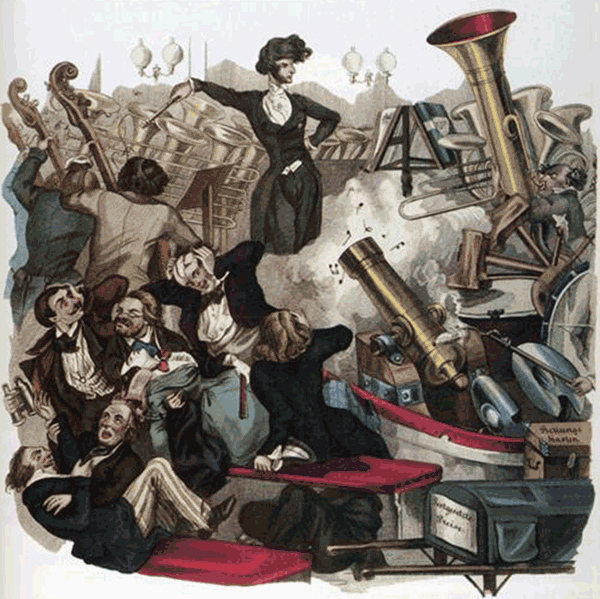
Berlioz’s Symphonie fantastique received its first performance at the Paris Conservatoire on 5 December 1830, conducted by Francois-Antoine Habeneck. It has five movements and a printed story attached: an artist, drugged and heartbroken, hallucinates his own execution and then a witches’ sabbath. A single melody representing the beloved returns in every movement, warped a little further each time. It is the symphonic argument stretched over a narrative, and the orchestral effects in it were unlike anything audiences had been handed before.
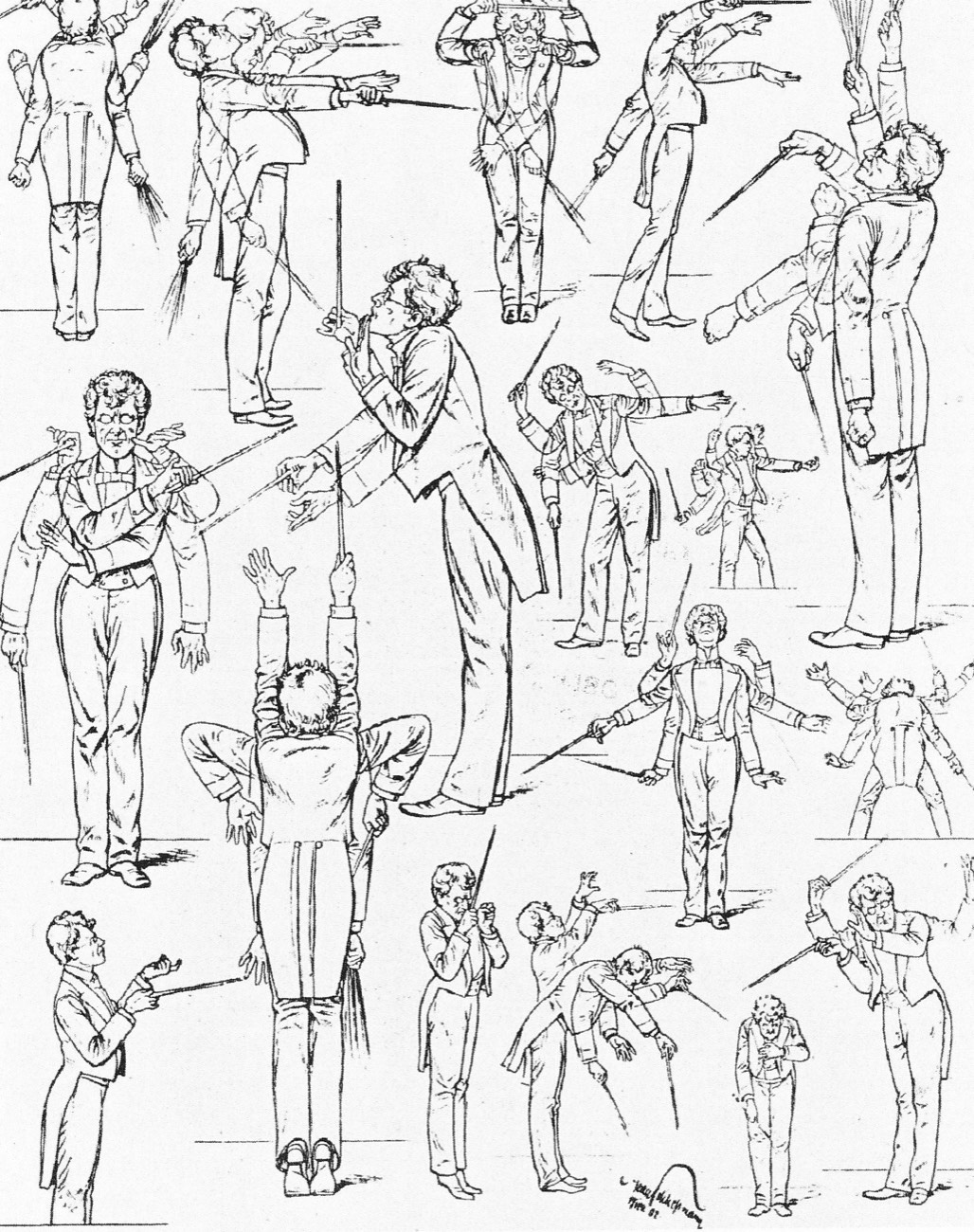
Gustav Mahler lived from 1860 to 1911 and treated the symphony as a container for absolutely everything — landscape, faith, irony, funeral marches, birdsong, despair. Mahler’s Symphony No. 3 is the longest symphony in the standard repertoire, with a typical performance lasting around 90 to 100 minutes. His Eighth went further in a different direction: Mahler’s Eighth Symphony had its first performance in Munich on 12 September 1910 with more than a thousand performers involved, which is why it picked up the nickname Symphony of a Thousand from a promoter Mahler did not thank for it.
And a symphony does not have to end in affirmation. Tchaikovsky conducted the first performance of his Sixth Symphony in Saint Petersburg on 28 October 1893, nine days before his death. It closes with a slow movement that sinks and fades out rather than resolving — the convention inverted, and the reason that piece still unsettles people who know exactly what is coming.
Dvorak’s Ninth Symphony, From the New World, was given its world premiere at Carnegie Hall on 16 December 1893 by the New York Philharmonic under Anton Seidl. The same season that produced the bleakest ending in the repertoire produced its warmest one. The form absorbs both without strain: same argument, opposite conclusions.
How to Listen to Your First One
Pick one piece and give it the whole running time. Do not shuffle movements, and do not start with a highlights compilation — a symphony with the connective tissue removed is a joke with the setup cut. Applause is held until the last movement ends, for the same reason you do not clap between chapters.
Expect the first hearing to feel like orientation rather than understanding. That is normal and it is how the music is built. The second hearing is where things start surfacing: an inner line you missed, a hinge between movements, a theme from the opening turning up in the finale wearing different clothes. The moment you catch that last one on your own is the moment the form stops being a definition and starts being a habit.