- Composer
- Dvořák
- Work
- Symphony No. 6 in D major, Op. 60
- Key
- D major
- Composed
- 1880
- Movements
- 4 movements
- Instrumentation
- flute 2, oboe 2, clarinet 2, horn 4, trumpet 2, trombone 3, timpani, strings (5 parts), bassoon 2, tuba
- Premiere
- March 25, 1881 — Adolf Čech, Czech Philharmonic, Prague
The Vienna Philharmonic refused to play it.
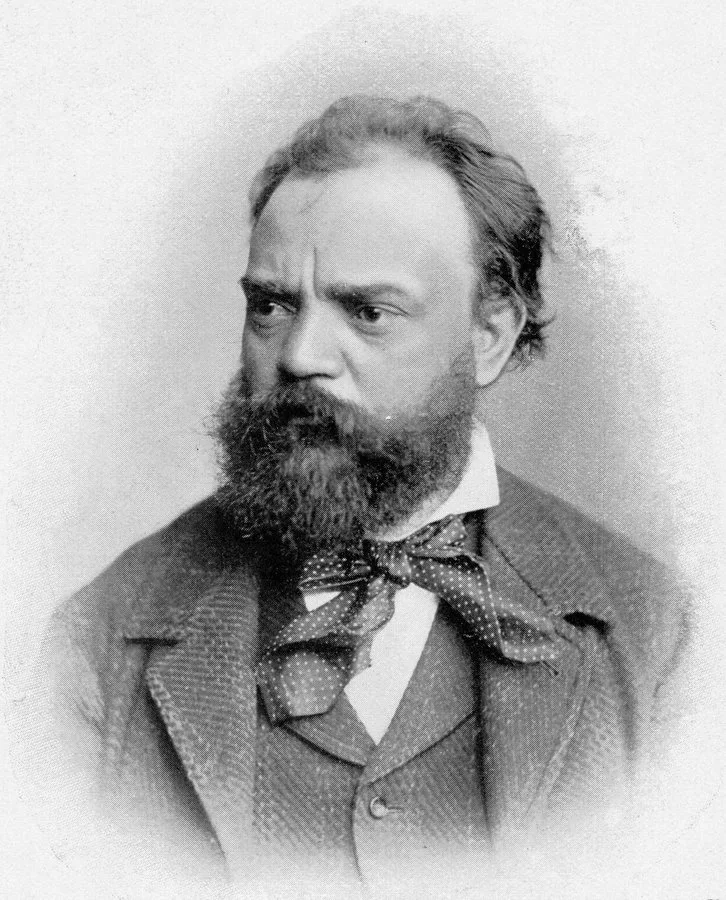
And not just a simple refusal. They dragged their feet for months with excuses like “the orchestra is too busy” and “a member is ill,” before finally shelving it for good. For a while, Dvořák didn’t know the real reason. Only much later did he learn the truth: the orchestra members simply didn’t want to perform a work by a Czech composer for two seasons in a row. He was rejected because of his nationality.
This is the story of how Dvořák’s Symphony No. 6 began.
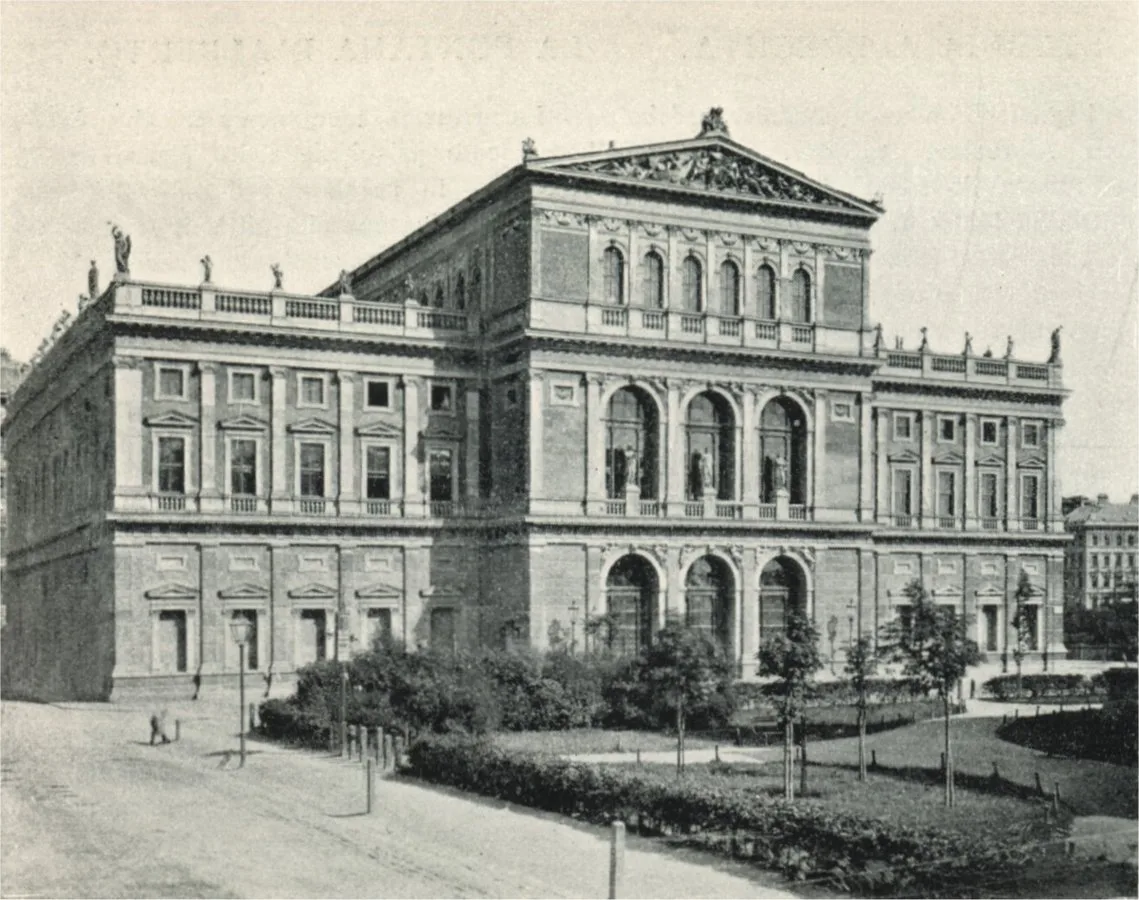
Hans Richter’s Kiss, and the Wall of Vienna
In the late autumn of 1879, Dvořák had a remarkable experience in Vienna. Hans Richter, the principal conductor of the Vienna Philharmonic, invited him to a rehearsal of his own Slavonic Rhapsody No. 3. Dvořák sat next to Brahms, watching the rehearsal, and Richter personally introduced him to the audience. That day, Richter kissed Dvořák. Then he said, “I am so very pleased to meet you. Please write a new symphony for me.”
Dvořák recounted this in a letter: “I immediately won the hearts of the entire orchestra, and of the 60 new works rehearsed, my Rhapsody was the most popular. Richter kissed me on the spot and said he was very pleased to meet me.”
Richter’s interest was genuine. He commissioned a symphony from Dvořák specifically for the Vienna Philharmonic. Dvořák seized the opportunity. By October 1880, in just ten short months, he had completed his Symphony No. 6. He traveled to Vienna to play it for Richter on the piano, and the conductor was thrilled. The premiere was set for December.
But December came and went with no word. News arrived that “a member of the orchestra is ill.” The next month, and the month after that, it was the same story. Dvořák began to suspect anti-Czech sentiment was at play. He was right. It was later revealed that the orchestra members were uncomfortable performing a work by a Czech composer in the season immediately following another.
In the end, the Vienna Philharmonic never premiered the symphony. Instead, it was first performed on March 25, 1881, in Prague, conducted by Adolf Čech with the Czech Philharmonic. The audience’s reaction was ecstatic. This symphony became the first major orchestral work to launch Dvořák onto the international stage.
Here’s the irony: Richter did eventually conduct the piece. Not with the Vienna Philharmonic, but in 1882 he led a successful British premiere with the London Philharmonic Society. This symphony was the starting point for Dvořák’s popularity in England. Richter, it turned out, had a far more forward-looking perspective than the members of the Vienna orchestra.
The Story of How ‘Symphony No. 1’ Became ‘No. 6’
There’s another layer of confusion surrounding this piece. The original publisher released it as ‘Symphony No. 1’.
Dvořák had already written five symphonies. But at the time, those works were not well known, and this D major symphony was the first to be released by a major publisher. The publisher, Simrock, simply labeled it ‘No. 1’. As Dvořák’s earlier symphonies were rediscovered and published, the numbering system was adjusted. That’s how it became the ‘No. 6’ we know today.
Because of this numbering chaos, older record labels sometimes list the work as ‘Symphony No. 1’ and sometimes ‘Symphony No. 6’. It’s the same piece. So if you ever find an old LP in a library and get confused, now you know why.
To add one more number to the mix, the symphony’s catalog number is B. 112. The ‘B’ stands for Jarmil Burghauser, who compiled the thematic catalogue of Dvořák’s works. When looking for Dvořák’s music, you’ll see both Op. (Opus) and B. (Burghauser) numbers. For his later works, the two often align, but for earlier pieces, they can differ significantly.
Using Brahms as a Model, but in the Czech Way
The first time you hear this symphony, it might feel strangely familiar. This is especially true if you’ve heard Brahms’s Symphony No. 2. Both are in D major, and both have a pastoral, cheerful character. Brahms’s Second was written in 1877; Dvořák’s Sixth in 1880.
This was a deliberate homage. Dvořák deeply admired Brahms, and Brahms, in turn, cherished Dvořák. It was Brahms who introduced Dvořák to the Viennese publisher Simrock, which kickstarted Dvořák’s international career. Their relationship was more than simple respect. Brahms even proofread Dvořák’s scores and played a decisive role in lifting him from obscurity.
If you listen to this symphony alongside Brahms’s Second, you can clearly hear what Dvořák learned and where he forged his own path. But calling it a mere ‘Brahms imitation’ is just wrong.
The horn theme that opens the first movement begins with a Brahms-like weight, but it soon transitions into the light, elastic rhythm characteristic of a Bohemian folk song. He poured the spirit of Czech folk music into the vessel of the German symphonic form. By the third movement Scherzo, this difference is undeniable. The scherzo in a Brahms symphony is thoroughly German Romantic, but Dvořák’s third movement directly incorporates a Czech folk dance, the Furiant.
When the symphony premiered, Viennese critics like Eduard Hanslick noted the Brahmsian influence but also acknowledged Dvořák’s unique voice. A review stating it was “in the shadow of Brahms, but shining brightly within that shadow” captures the mood of the time. That assessment still holds true today. It’s a symphony that starts from a Brahmsian point of departure but arrives at a distinctly different destination.
Movement-by-Movement Guide
Mvt. 1: The Thrill Before the Burst
The first movement begins with the horns gently presenting the first theme. Shortly after, the strings take up this theme and begin to run with it. It has the bright, open character of D major, and it bears a passing resemblance to the opening bars of Brahms’s Second. Given his reverence for Brahms, this similarity should be seen as an homage.
But here, Dvořák makes a crucial choice. Brahms would have logically developed this theme, building tension. Dvořák just changes the subject. The moment the second theme appears, the feeling shifts dramatically. A vitality, like that of a Czech folk song, suddenly springs forth. The cellos sing this second theme, and its texture is completely different from the weight of the first.
Sonata form, simply put, is a structure of ‘propose a theme, play with it, then bring it back home.’ It’s similar to the setup-twist-resolution of a mystery novel. In the development section of the first movement, Dvořák pits these two themes against each other as if they’re wrestling. Neither one dominates. When they reappear in the recapitulation, they feel as if they’ve already been colored by one another.
The coda (the ending) of this movement is particularly exhilarating. It carries an energy that feels like something is about to burst, leading into the second movement. There’s an interesting detail here: the exposition has a repeat. Many conductors omit it, partly to shorten the program and partly out of consideration for modern audiences’ attention spans. But if you listen to a performance that includes the repeat, the logical flow of the first movement becomes much clearer. Passages you might have glossed over the first time sound different on the repeat. Whether the repeat is included varies by recording, so it’s fun to compare.
The movement runs for about 14-15 minutes. It’s a long movement, but there’s not a single boring moment.
Mvt. 2: A Quiet Bohemian Evening
The second movement, which shifts to B-flat major, is the most lyrical moment in the symphony. The oboe sings the theme, and the strings echo and continue it. It’s a slow movement of exquisite beauty, easily holding its own against the Adagio of Brahms’s Second.
The character of this movement is richness within tranquility. There are no flashy brass explosions or dramatic dynamic shifts. The strings and woodwinds simply take turns singing the theme. Yet, the more you listen, the more you feel enveloped by the music. It evokes the atmosphere of an evening in the Bohemian countryside. The village of Nelahozeves, where Dvořák was born and raised—that rural landscape must have inspired such music.
In the middle, there’s a brief surge of emotion. It becomes intensely powerful for a short while before returning to quietude. This transition feels so natural that it’s all the more persuasive. It’s an unhurried movement. There’s a reason some people listen to the second movement on repeat.
In Dvořák’s Slavic-influenced symphonies, the slow movements almost always have this quality. A feeling of being grounded in the earth, of being in nature. This is what distinguishes Dvořák’s slow movements from those of German Romanticism. While the adagios of Schumann or Brahms turn inward toward private emotional struggle, Dvořák’s adagios open outward.
This movement was written 15 years before Dvořák’s Cello Concerto in B minor. It’s no coincidence that it feels like a preview of that concerto’s slow movement. Dvořák’s unique language for slow movements—where strings sing and woodwinds respond—was already perfected here in the second movement of his Sixth.
Mvt. 3: The Furiant That Stunned Vienna
The most distinctive movement of this symphony is, without a doubt, the third. Its title is ‘Scherzo: Furiant’.
A Furiant is a Czech folk dance. It’s characterized by a complex rhythmic structure that alternates between 3/4 and 2/4 time, which, when you hear it, creates a sensation of your rhythmic sense being thrown off balance. That moment of confusion—”Is this in three or in two?”—is the core of the music.
Dvořák placed this Czech folk dance in the spot traditionally reserved for the Scherzo in the German symphonic tradition. He filled the third movement not in the style of Beethoven or Brahms, but in a Czech way. The form is German, the content is Bohemian. This was Dvořák’s strategy.
It’s said that the Viennese audience and critics reacted particularly strongly to this movement. The rhythm was unfamiliar, yet it was catchy. It’s likely that many people who first became curious about Dvořák’s music did so because of this movement. It’s also highly probable that this was the movement that first excited Richter.
The Trio section offers a brief moment of gentleness. A sparkling, sweet passage goes by before the Furiant returns. It’s a structure that lets you catch your breath before plunging you back into the frenzy. For first-time listeners, the most entertaining way to experience this movement is to try counting the beats. Try counting 1-2-3, 1-2-3, and see if you can find the point where it suddenly becomes 1-2, 1-2.
For the record, Dvořák used the Furiant rhythm not only in his Symphony No. 6 but also in his Slavonic Dances and piano works. The Furiant is the most direct expression of his method of transplanting Czech folk music into German forms.
Mvt. 4: A Finale That Races Like a Village Festival
The finale returns to D major and unleashes its energy without restraint. It’s bright, exciting, and fast. A series of themes inspired by Czech folk melodies appear one after another, tangling and developing as they race forward.
Dvořák’s skill in orchestration is on full display in this movement. The woodwinds present a theme, the brass respond, and the strings join in, thickening the layers of sound. There are several moments of sudden dynamic contrast, where the music quiets down before exploding again—sections that can make you jump on a first listen. Just when you think it’s over, it’s not. And when you think it’s over again, it’s still not.
As it enters the coda, the tempo accelerates. It feels like a dance at a village festival, growing faster and faster. The entire orchestra joins forces, hurtling toward the conclusion. When it’s over, you’ll wonder where the last 40 minutes went.
This fourth movement is considered one of the most well-crafted finales in Dvořák’s output. While symphonies 7, 8, and 9 also have excellent finales, the finale of the Sixth is particularly solid. You can clearly feel the seeds planted in the first movement being harvested in the fourth. It’s the kind of symphony that makes you leave the concert hall with a spring in your step.
At the time, Dvořák’s finale sparked debate among critics. Some found it “too folksy and light.” Those expecting a tense, Brahmsian finale were disappointed. But Dvořák must have felt this was exactly the right conclusion. A symphony that begins pastorally and ends pastorally. That consistency remains persuasive even today.
The Paradox of the Symphony That Made Dvořák Famous in Europe
There’s a fascinating paradox about this symphony. Of Dvořák’s nine symphonies, the one that received the most attention in its day and was the first major orchestral work to make him internationally famous is now one of his least performed.
Today, the mainstays of Dvořák’s symphonic repertoire are Nos. 7, 8, and 9, the ‘New World’. The earlier works, despite being excellent compositions, are programmed less frequently. The Sixth is no exception.
When this piece was released, the atmosphere was different. After its 1881 premiere, it spread rapidly across Europe, receiving a particularly enthusiastic response in England. Following the London performance in 1882, Dvořák became a darling of the British music scene. The success of this symphony was one of the reasons Cambridge University awarded him an honorary doctorate.
However, his subsequent works were incredibly powerful. No. 7 was praised for being darker and more profound, earning it the nickname ‘Dvořák’s Brahms’s Third’. No. 8 was vibrant, folksy, and accessible. No. 9 became so famous that almost everyone knows it. The Sixth was naturally overshadowed by them.
Among those who are serious about classical music, the Sixth has consistently been well-regarded. The view is that “it was overshadowed by 7, 8, and 9, but it came first and was the launching pad for what followed.” If you listen to the Sixth thoroughly before moving on to the Seventh, Dvořák’s evolution becomes much clearer. Without the Sixth, you can’t understand where the Seventh came from.
People who undertake the project of listening to all of Dvořák’s symphonies in order feel that something changed with No. 6. While the first five symphonies are outstanding works, they still show signs of a learning process. Starting with the Sixth, a Dvořák who speaks in his own fully-formed language emerges. This symphony stands right on that dividing line.
One reason the Sixth is performed less today might be its character. It lacks dramatic conflict or dark depths. It’s bright, optimistic, and folksy. This is a slightly different texture from the “profoundly serious art” that audiences often expect in today’s concert halls. But that is precisely the virtue of the Sixth. There’s no rule that classical music has to be serious. It can be exhilaratingly good. And among symphonies that demonstrate this, the Sixth is top-tier.
First Time Listening? — Just Know This
If you’re new to Dvořák’s Symphony No. 6, just a few pointers will enhance your experience.
Listen to it alongside Brahms’s Second. Same key (D major), same pastoral mood. Brahms’s Second is from 1877, Dvořák’s Sixth from 1880. In those three years, you can hear what Dvořák learned and where he diverged. Brahms is German Romanticism; Dvořák is Czech folk music. Once you start hearing that difference, your appreciation for classical music will expand significantly.
Try counting the beats in the third movement Scherzo. If you count 1-2-3, 1-2-3, at some point it will become 1-2, 1-2. That’s the Furiant rhythm. It’s normal to feel your sense of rhythm get confused. That bewilderment is the charm of the movement. Czech people, who know the dance by heart, feel it naturally, but for a first-time listener, it feels like intentional chaos.
Try to distinguish the two themes in the first movement. The first theme is weighty and starts with the horn. The second theme is light and sung by the cello. Their characters are completely different. If you follow how these two themes mix in the development and return in the recapitulation, you’ll start to hear the sonata form (presenting, developing, and returning a theme) with your own ears.
Don’t compare it to the ‘New World’ Symphony No. 9. The Ninth is a work on another level. The Sixth should be appreciated on its own terms. The Sixth is the Dvořák before America, the Dvořák rooted in Bohemia. The two symphonies feel like they were written by the same composer on different continents.
Listen to the whole thing in one go. It’s a 40-minute investment. If you journey from the start of the first movement to the end of the fourth in one sitting, you’ll feel how well-designed this journey is. You’ll notice how the two themes from the first movement return in the fourth, and how the energy of the third movement explodes at a certain point in the finale. Things you miss on the first listen will reveal themselves on the second.
How This Symphony Changed Czech Music
Before Dvořák’s Symphony No. 6 found success, Czech composers were almost invisible on the international stage. Within the Austro-Hungarian Empire, German-language music was dominant, and it was exceptional for a Czech-speaking composer to have their work performed in Vienna or Berlin. If Smetana opened the door for Czech national music, Dvořák pushed that door open to the international stage.
After the Sixth Symphony’s success in London, British audiences and critics were ecstatic about Dvořák. It’s no exaggeration to say that the British music world’s interest in Czech music began with this symphony. Dvořák subsequently visited Britain several times to conduct his own works, and his deep connection with the British public continued until the end of his life.
The standing that Czech music enjoys on the international stage today was made possible by the path Dvořák forged. He laid the foundation for later Czech composers like Leoš Janáček and Bohuslav Martinů to step onto the world stage. And the first decisive orchestral work that made it happen was this one, his Symphony No. 6.
In the 1880s, when this symphony was published, Europe was in an era of musical nationalism. Grieg’s Norway, Sibelius’s Finland, Smetana’s Bohemia. It was a time when composers everywhere were discovering the unique musical languages of their own people and integrating them into the mainstream forms of Western music. Dvořák’s Sixth is one of the key examples of this movement. Its historical significance lies in being the first large-scale orchestral work to successfully transplant Czech folk music into the German symphonic form.
The Reason Dvořák Could Write ‘No. 6’ — Brahms’s Help
Brahms’s role in the creation of this symphony was decisive. Dvořák was able to launch his international career in the 1870s after receiving an Austrian state prize for “poor, talented artists.” One of the judges on that committee was Johannes Brahms.
Brahms saw Dvořák’s scores and immediately recognized his talent. He then introduced Dvořák to his own publisher, Simrock. Simrock was cautious at first, but their attitude changed after Dvořák’s Slavonic Dances became a massive hit. It was Simrock who published the Symphony No. 6. Without Brahms, the path this symphony took to the world would have been entirely different.
That’s why the shadow of Brahms’s Second in this symphony carries a meaning beyond mere influence. Dvořák used the work of his mentor and benefactor as a model, while simultaneously embedding his own identity within it. He set himself the task of ‘writing in the Brahmsian way, but making it Dvořák’s own.’ And with this Sixth Symphony, he succeeded for the first time.
What’s interesting is that there are almost no known records of what Brahms said about this symphony. The man who introduced Dvořák to Simrock and opened the door to the international stage—how did he react to a symphony so clearly stamped with his own influence? It remains a mystery. Was he jealous, or proud? Probably both.
Recommended Recordings
István Kertész / London Symphony Orchestra (1966, Decca)
This remains the benchmark cycle for Dvořák’s symphonies. Kertész, a Hungarian native, had an innate feel for Slavic music. The flow of the first movement is natural, and the Furiant of the third movement truly leaps like a dance. Every movement is perfectly balanced. It is one of the most brilliant legacies left by Kertész, who tragically drowned in 1973 at the age of 45.
Jiří Bělohlávek / Czech Philharmonic Orchestra (2012, Decca)
This recording has an impeccable pedigree. There’s a unique naturalness that comes from an orchestra from Dvořák’s homeland performing his music. The folk rhythms of the third movement are unlike those of any other conductor. Bělohlávek’s 2012 Decca cycle is one of the most highly recommended modern sets.
Andreas Delfs / Milwaukee Symphony Orchestra (2015)
This might seem like an unexpected choice, but one listen will convince you. The transparent and bright sound, rather than the weight of a famous legacy orchestra, suits the D-major character of this symphony perfectly. The full performance is available for free on YouTube, making it highly accessible.
Listen with the Score
Following along with the score allows you to see exactly how the two themes of the first movement develop and where the rhythmic shifts of the third movement’s Furiant occur.
You can view the original score for free on IMSLP.
View the score for Dvořák’s Symphony No. 6 (IMSLP))