- Composer
- Bedřich Smetana
(1824–1884) - Work
- Vltava (from Má vlast)
Also known as The Moldau - Composed
- November 20 – December 8, 1874 (18 days)
- Premiere
- 4 April 1875, Prague
- Scoring
- 2 flutes (piccolo), 2 oboes, 2 clarinets, 2 bassoons, 4 horns, 2 trumpets, 3 trombones, tuba, timpani, triangle, cymbals, harp, strings
- Duration
- c. 12–13 minutes
On the evening of 20 October 1874, in Prague, Bedřich Smetana’s world sank into silence. His left ear went completely dead. The right had already failed a fortnight earlier. The king of Czech opera, principal conductor of the Provisional Theatre, the man hailed as the father of Czech music — suddenly unable to hear a single piano key.
In most stories, that would be the ending. In Smetana’s, it was the beginning.
Exactly one month after losing his hearing, he began writing the greatest piece of his life. A song about a river he could no longer hear.
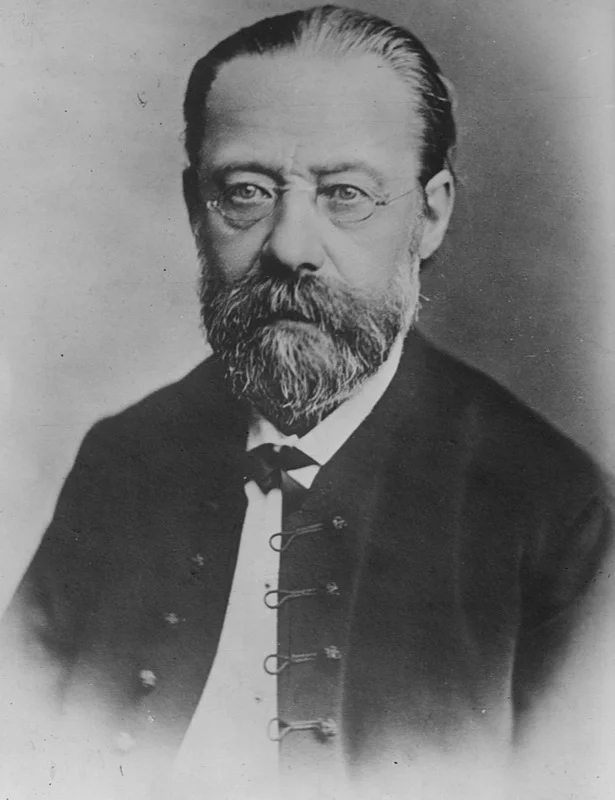
A Brewer’s Son Who Aimed for the Moon
Smetana’s father František was a brewer who had made a decent fortune selling uniforms and provisions to the French army during the Napoleonic Wars. Watching his son fall headlong into the piano, he was firm: “That’s a hobby, not a career.”
The six-year-old was already on stage. In 1830, at a concert given by the Philosophical Academy of Litomyšl, little Smetana performed his own piano arrangement of the overture to Auber’s opera La Muette de Portici. The audience erupted. He was six. At an age when most children can barely read a score, he had arranged an opera overture and performed it in public.
As a student in Prague, the boy witnessed a Liszt piano recital. Shaken to the core, the fifteen-year-old wrote in his diary:
“In composition I want to be a Mozart; in technique, a Liszt.”
It was not a modest ambition. And it turned out to be half a prophecy. He never matched Liszt at the keyboard, but in Czech music history he became a name that eclipses Mozart.
There’s a detail about Smetana’s origins that often gets omitted: he grew up in a country where Czech was not the official language. Bohemia was part of the Habsburg Austrian Empire. To advance in music meant composing in German, writing letters in German, thinking in German. Smetana himself wrote in German for years. The man who would become the defining voice of Czech national music started out more comfortable in the language of the empire that ruled his homeland. That paradox never fully resolved — it just transformed into something more interesting.
The Composer on the Barricades
In 1848, revolution swept Europe. Prague was no exception. Citizens threw up barricades against the Habsburg Empire, and Smetana stood among them. He composed revolutionary marches while the fighting was happening. Before he was a composer, he was a Czech.
The revolution was crushed. But a seed had taken root: to tell the story of his homeland not with guns, but with music.
Prague proved unforgiving. He opened a music school — students did not come. Three of his four daughters died in infancy. Friederika was only four. His Piano Trio in G minor was born from the grief of losing her. Even grief, apparently, he could only process through music.
In the end, Smetana left for Gothenburg, Sweden. The future father of Czech music spent five years in Scandinavia conducting choruses and giving piano lessons. It sounds like exile. In a way, it was. But those five years weren’t wasted. He spent them studying Liszt’s symphonic poems — learning how a single instrument family could paint a landscape, how program music could carry the weight of national feeling. The technical vocabulary for Má vlast was assembled in Scandinavia, one score at a time.
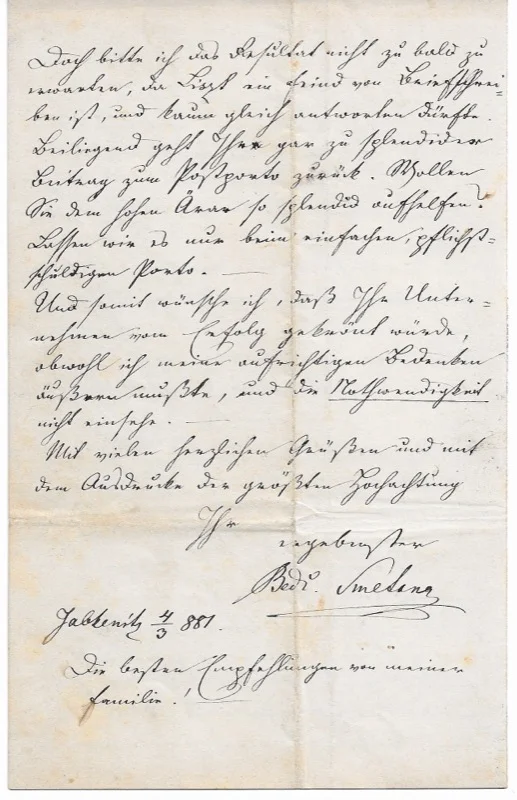
The Lion Returns — and Then Goes Deaf
In 1861, a political thaw reached Bohemia. Smetana returned to Prague immediately and, within five years, detonated two operas in rapid succession. The Brandenburgers in Bohemia, premiered in 1866, was a success. The Bartered Bride, which followed the same year, was an explosion. A vivid comic opera set in the Czech countryside, sung in Czech — it was instantly crowned the national opera. Czech audiences had never seen themselves reflected in the operatic form before. Now they had something to call their own.
That same year he became principal conductor of the Provisional Theatre. But Prague’s musical conservatives attacked him as “a man corrupted by Liszt and Wagner” — the irony being that nobody in the room was more committed to a distinctly Czech musical identity.
In the summer of 1874, Smetana’s ears began to fail. First noise, then relentless buzzing, then an inability to distinguish pitches. On 20 October the left ear, too, fell silent. He filed his resignation with the theater director. The doctor prescribed “complete isolation from all sound.” At that point, there was no sound left to isolate from.
Beethoven lost his hearing gradually over decades. Smetana lost his in four months, completely. The difference matters. Beethoven had years to adapt his compositional practice. Smetana had weeks — and then silence. What he did with that silence is the reason we’re still talking about him.
Eighteen Days, One River
November 20 to December 8, 1874. Exactly eighteen days.
Vltava — known in German as “The Moldau” — was complete. The longest river in Bohemia, 431 kilometers from the forests of the Šumava mountains through Prague and into the Elbe. E minor, approximately 13 minutes. Smetana left a program note that reads like a travel itinerary:
“The composition describes the course of the Vltava, starting from the two small sources, the Cold and Warm Vltava, to the unification of both streams into a single current, the course of the Vltava through woods and meadows, through landscapes where a farmer’s wedding is celebrated, the round dance of the mermaids in the night’s moonshine; on the nearby rocks loom proud castles, palaces and ruins aloft. The Vltava swirls through the St. John’s rapids; then it widens and flows toward Prague, past the Vyšehrad, and then majestically vanishes into the distance, ending at the Elbe.”
— Smetana’s program note for Vltava
A deaf man’s description of a river’s sounds. Someone who cannot hear a single note describing, in precise musical terms, what water sounds like as it passes through forests, past wedding celebrations, under moonlit water-nymphs, over rapids, and through the capital city. The audacity of it is almost incomprehensible.
What You’re Actually Hearing — A Listener’s Map
Vltava is 13 minutes long and architecturally precise. Here is what is happening at each stage.
The Two Springs (0:00–1:20)
Two flutes open in rapid arpeggios — one cold, one warm — representing the two tributary streams that form the Vltava. They run side by side, then gradually merge. Clarinet enters, then strings begin to swell. The river is being born.
The Main Theme (1:20–3:30)
The violins unleash that melody — broad, unhurried, unmistakable. This is one of the most recognized tunes in all of classical music. What most people don’t know: Smetana did not compose it from scratch. We’ll come back to that. For now, notice how the melody doesn’t feel rushed. It has the quality of water that has found its level and settled into a groove.
Hunt in the Forest (3:30–4:30)
The main theme pauses. Horns bark out a hunting call from somewhere in the trees. Short, sharp, military — brass fanfares suggest horsemen crashing through undergrowth. Then the river resumes, as if the interruption never happened.
Peasant Wedding (4:30–6:00)
A polka rhythm — Czech folk dance in 2/4 time — erupts from the oboe and clarinet. The river is passing a village where a wedding is underway. The music is genuinely festive, not decorative. Smetana knew the sound of Czech folk celebration intimately. Then the polka fades as the river moves on. Weddings don’t follow rivers; rivers don’t stop for weddings.
Moonlight and the Water-Nymphs (6:00–7:30)
The atmosphere shifts completely. Strings shimmer. Flute and oboe exchange phrases in the high register. Czech folklore is full of rusalky — water spirits who dance under moonlight. This is the most ethereal passage in the score, and arguably the most difficult to conduct: too fast, and it loses its quality of hovering; too slow, and it drags. When it’s right, the music genuinely sounds like something that doesn’t belong entirely to the waking world.
St. John’s Rapids (7:30–9:30)
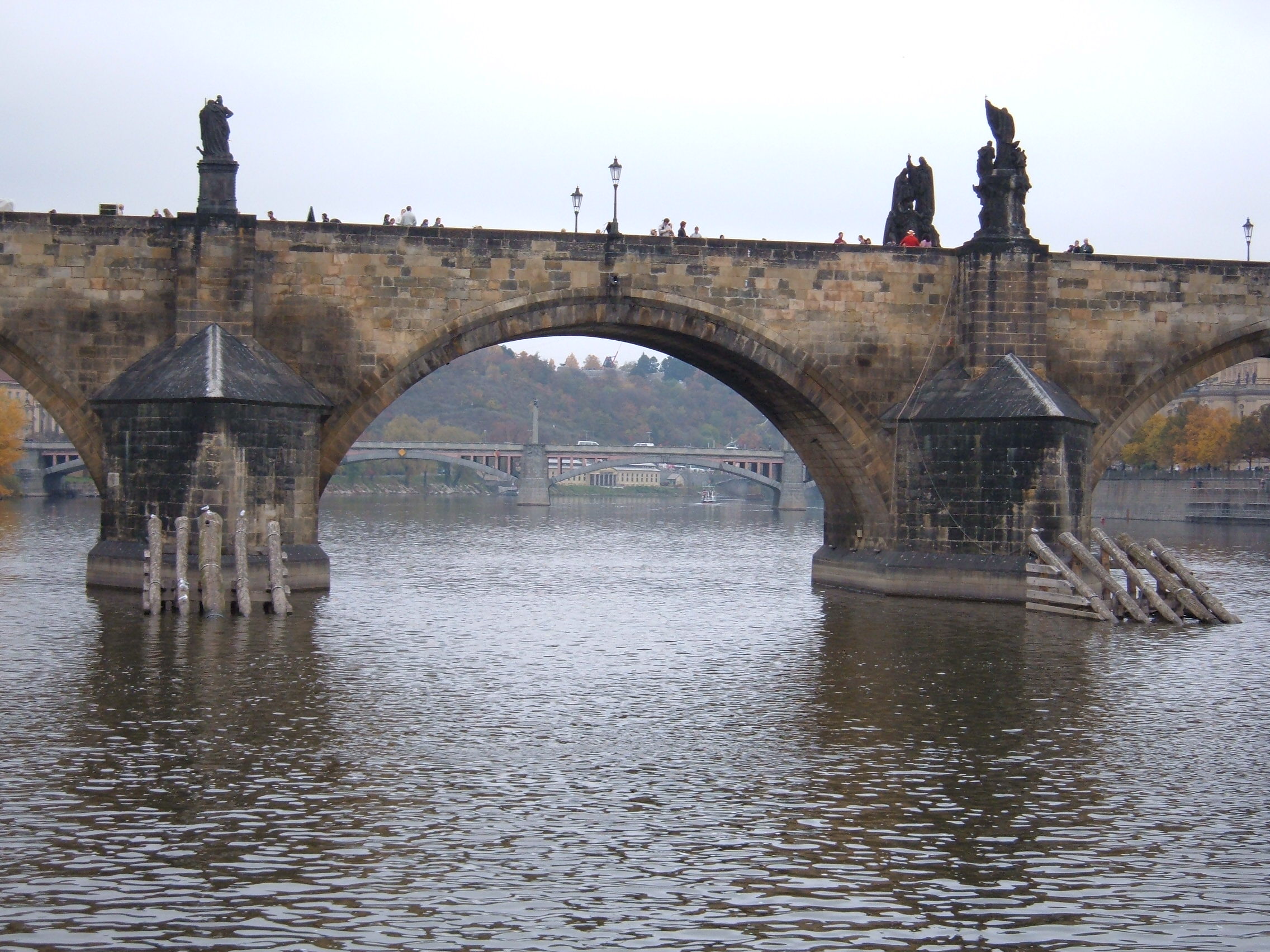
Dawn. The river accelerates, then crashes into the St. John’s Rapids — a series of cataracts on the Vltava that no longer exist (they were submerged by a dam in 1936, which feels symbolic). The full orchestra surges to fortissimo. Timpani pound. Strings spiral. This is the climax of the piece — the moment the composer was building toward. Everything before it was preparation; everything after it is resolution.
Prague and Vyšehrad (9:30–13:00)
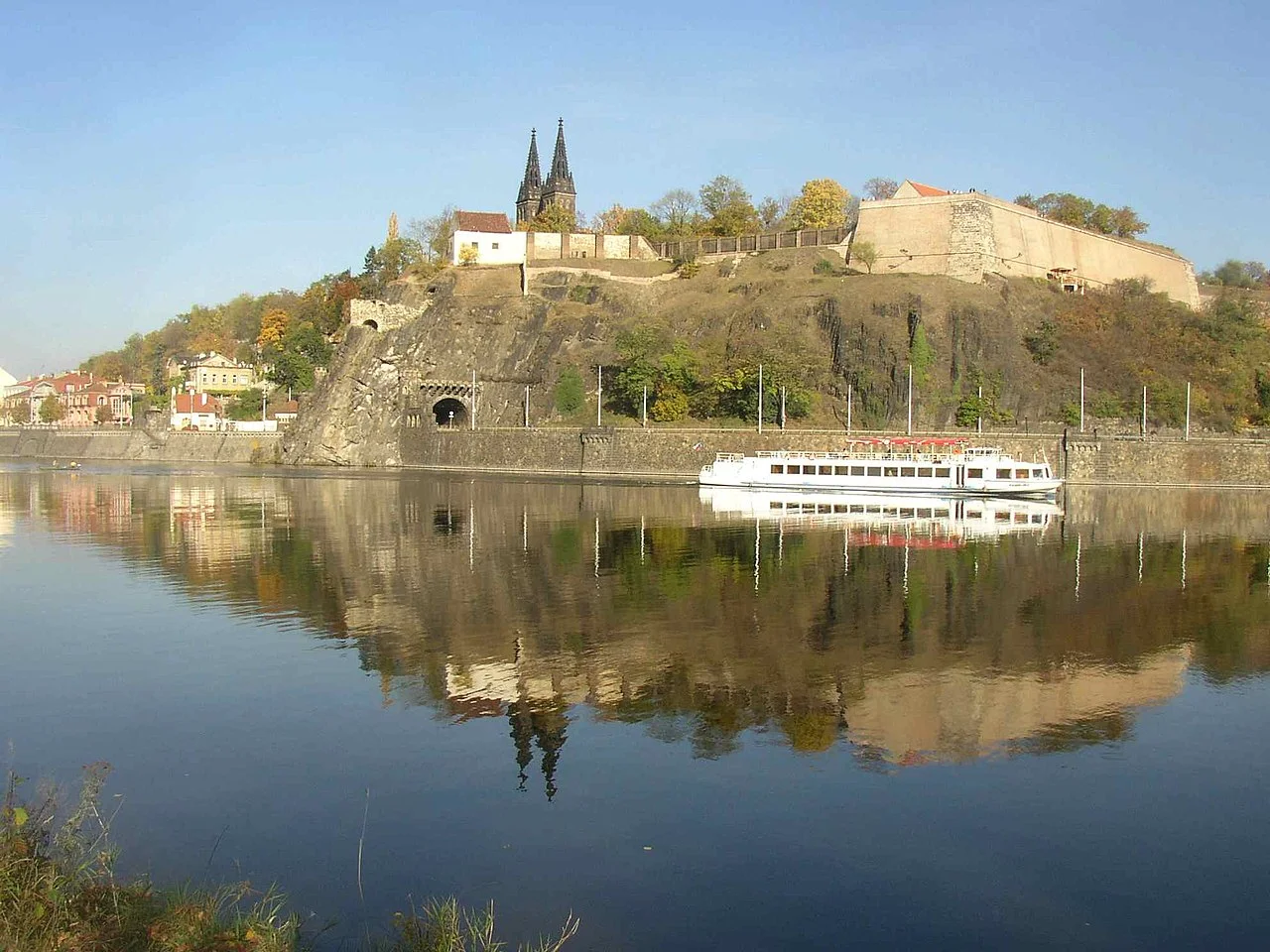
The river widens as it reaches Prague. Here Smetana does something structurally elegant: the main theme shifts from E minor to E major, and the opening motif from the first movement of Má vlast — “Vyšehrad,” the ancient fortress of Bohemian kings — emerges and blends with the Vltava theme. Natural time and historical time collide. The river passes the rock where Czech kings were once crowned. Then the music diminishes, the river disappears into the distance, and it’s over.
The Israeli National Anthem and a Czech River — A Strange Kinship
The main theme of Vltava is one of the most recognizable melodies in Western music. You’ve heard it. Probably dozens of times, without knowing what it was.
Here’s the part most people don’t know: Smetana didn’t write it.
The melody traces back to a 16th-century Italian madrigal called “La Mantovana” — likely composed by Giuseppe Cenci, a Mantuan tenor, around 1600. The tune spread across Renaissance Europe, picking up different texts and regional variations everywhere it landed: in Flanders it became “Ik zag Cecilia komen,” in Poland “Pod krakowem,” in Romania “Carul cu boi,” in Scotland “My Mistress is Pretty.” One melody traveled 400 years across a continent.
Then the story takes a stranger turn.
In the late 19th century, a Jewish immigrant from Moldavia named Samuel Cohen settled in Ottoman Palestine. He knew the Romanian version of “La Mantovana.” He set it to a poem called “Hatikvah” (Hope) by Naftali Herz Imber. That song became the national anthem of Israel.
The Czech national melody and the Israeli national anthem share a common ancestor — a Renaissance Italian love song from the 1600s. Whether Smetana was consciously quoting the melody or simply absorbed it through Czech folk music (where a version had long circulated) remains unclear. What is certain is that a single tune ended up carrying the emotional weight of two completely different national identities, separated by 2,000 kilometers and centuries of history. Music does strange things to geography.
Five Years of Work from Inside Silence
Vltava is the second movement of Má vlast (My Homeland) — a cycle of six symphonic poems that Smetana composed between 1874 and 1879, entirely without hearing. The full cycle runs roughly 80 minutes.
The other five movements are worth knowing:
No. 1, “Vyšehrad” opens the cycle with the legendary fortress south of Prague, evoking the mythic bard Lumír and the glory of ancient Bohemian kings. The Vyšehrad theme introduced here returns at the end of Vltava — which is why listening to both in sequence rewards the effort.
No. 3, “Šárka” recounts the myth of a warrior woman who lured men with beauty and then slaughtered them. Dramatically it is the most visceral movement in the cycle — operatic in its structure, violent in its resolution.
No. 4, “From Bohemia’s Woods and Fields” is what Vltava would be if it took its time. Pastoral, unhurried, with a polka that erupts from nowhere — it shares Vltava’s DNA but without the narrative urgency of a river going somewhere.
Nos. 5 and 6, “Tábor” and “Blaník” are the ideological heart of the cycle. Both draw on the Hussite chorale “Ye Who Are God’s Warriors” and envision a sleeping army of Czech knights who will rise in the nation’s hour of need. They are the most explicitly political movements — and the least-performed outside of Czech audiences.
Six movements, all composed in deafness. Smetana’s hearing loss, which looked like the end of his career, became the condition under which he wrote his most enduring work. Freed from conducting duties, removed from the professional quarrels that had exhausted him, he had nothing left but time, silence, and memory.
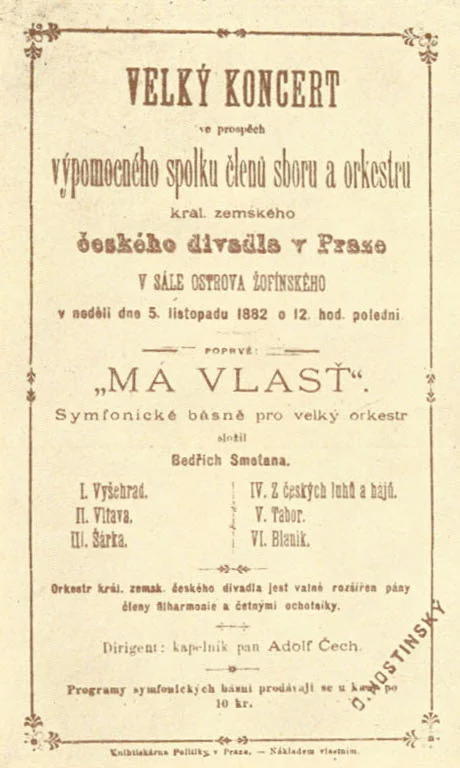
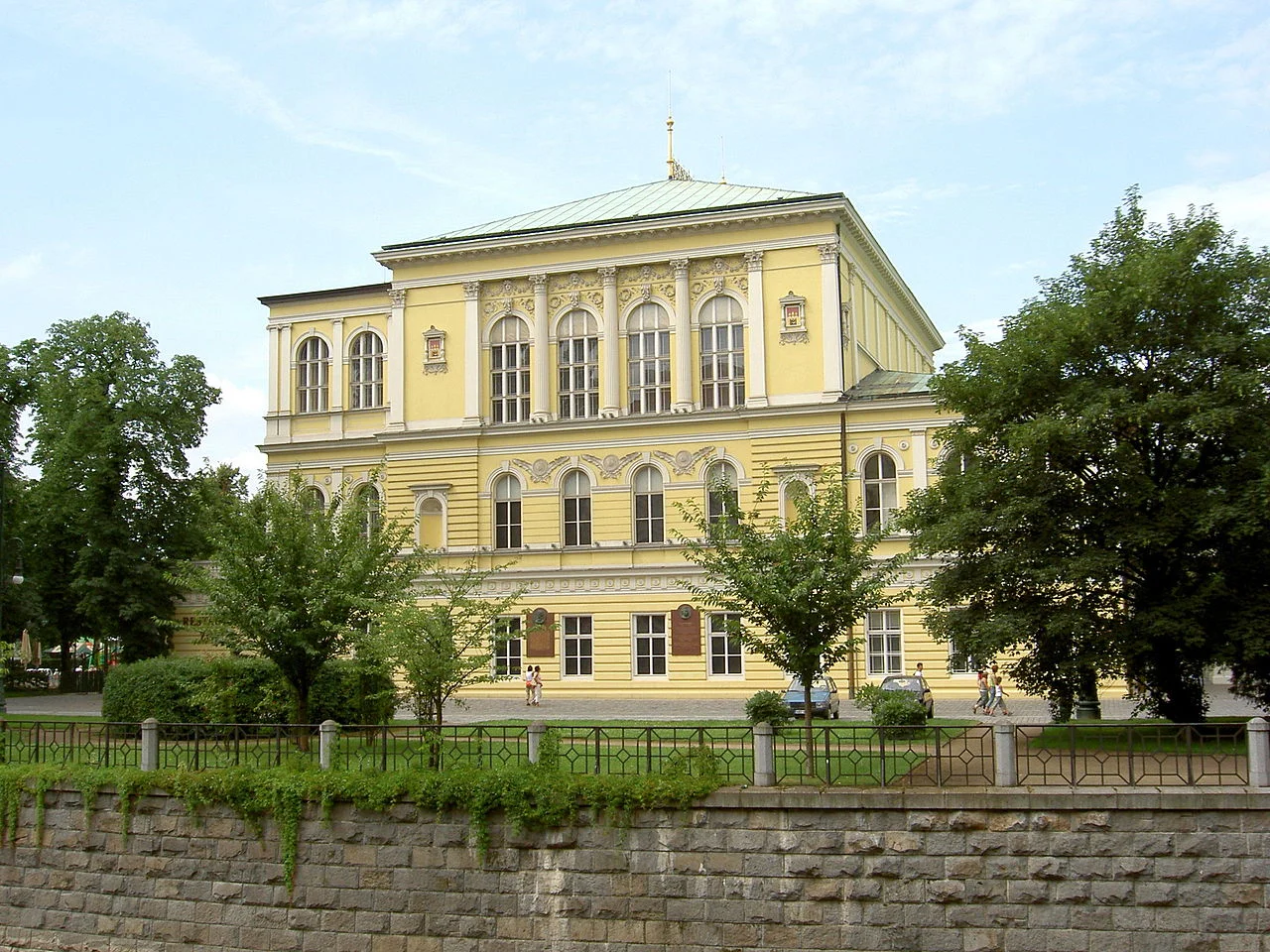
1882: The Palace on the River
On 5 November 1882, Má vlast received its first complete performance at the Žofín Palace in Prague — a concert hall built on a small island in the Vltava itself. The conductor was Adolf Čech.
Smetana was in the audience. He heard nothing.
He watched the orchestra play the piece he had written in silence. When the Vltava theme went out over the hall, he could not hear it. What he could feel was the vibration of applause through the floor, the sight of an audience moved. Whether that was enough, only he could say.
From 1946, the Prague Spring Music Festival has opened every year on May 12 — Smetana’s death anniversary — with a full performance of Má vlast. The tradition has held for nearly eight decades, through occupation, communist rule, and revolution. In 1990, the first Prague Spring after the Velvet Revolution, the conductor was Rafael Kubelík — a Czech emigrant who had fled the country in 1948 and spent 42 years in exile. When he raised his baton for the opening bars of Vyšehrad, the audience wept. The political meaning of the music collapsed into the personal meaning of the music, and neither could be separated from the other.
That’s what national music actually does, when it works.
Which Recording to Start With
There is no shortage of Vltava recordings. Here are three starting points, each with a different character.
Kubelík / Czech Philharmonic (1990, live): The one described above. The performance where a 42-year exile conducted his nation’s defining piece for the first time in a free Czech Republic. The sound quality is live-recording standard — not perfectly clean — but the emotional weight is unlike anything a studio session can manufacture. Start here if you want to understand what this piece actually means.
George Szell / Cleveland Orchestra (1970): The analytical choice. Szell’s ensemble was famous for precision, and it shows — every inner voice is audible, the structure is transparent. If you want to hear how the piece is architecturally built, this is the recording that shows its bones.
Carlos Kleiber / Bavarian State Opera: Fast, transparent, almost elastic. Kleiber’s Vltava has an urgency that some conductors avoid. The St. John’s Rapids section in particular sounds genuinely dangerous. If the Kubelík feels too weighted with history, Kleiber’s version is the antidote.
All three agree on one thing: the transition from the water-nymph passage into the St. John’s Rapids is the hinge of the piece. Any conductor who gets that contrast wrong — the sudden drop to near-silence followed by the full orchestra crashing in — loses the piece’s architecture. Any conductor who gets it right makes the first nine minutes feel inevitable.
Follow the Score
The full score is available free at IMSLP: Vltava (from Má vlast) — Full Score (IMSLP)
What Flows Will Not Be Stopped
In early 1884, Smetana’s mind began to collapse. He was committed to a psychiatric asylum in Prague. On May 12 — the same date that would later anchor the Prague Spring Festival — he died. He was sixty years old.
The common way to frame his story is as tragedy interrupted by triumph. The deafness, the isolation, the mental breakdown at the end. But that framing makes the music incidental to the biography, which gets things backward.
Vltava endures not because of what happened to Smetana but because of what he made. A precise, structurally coherent, emotionally direct piece of music that works for audiences who know nothing about Czech history and works differently — more deeply — for those who do. That’s a rare combination. Most nationalist music requires the nationalism to do the emotional work. Vltava does its own emotional work first, and the nationalism adds weight to something that already carries weight on its own.
The Vltava river is still there. The melody is still circulating — in concert halls, film scores, television commercials, ringtones. Written in eighteen days by a man who couldn’t hear it, in a language of sound he no longer had access to, about a river that runs through a city he could only remember.
That’s the piece. It’s enough.
🎼 Further reading: Free score at IMSLP