- Composer
- Bedřich Smetana
(1824–1884) - Work
- Má vlast (My Fatherland)
- Composed
- 1874–1879
- Premiere
- 5 November 1882, Prague
- Scoring
- 2 flutes (piccolo), 2 oboes, 2 clarinets, 2 bassoons, 4 horns, 2 trumpets, 3 trombones, tuba, timpani, triangle, cymbals, harp, strings
- Structure
- Cycle of 6 symphonic poems
1. Vyšehrad
2. Vltava (The Moldau)
3. Šárka
4. From Bohemia’s Woods and Fields
5. Tábor
6. Blaník - Duration
- Approx. 75 minutes (complete)
On 20 October 1874, in Prague, Bedřich Smetana’s left ear shut down.
Three months earlier, a strange noise had started in his right ear, soon hardening into a permanent ringing. Distinguishing individual notes was already impossible. When the last remaining ear — the left — went silent that day, the chief conductor of the Czech National Theatre was exiled from every sound in the world.
The doctor’s prescription: “Total isolation from sound.” For a man who could no longer hear a thing.
And it was precisely at that moment that he began composing the most colossal work of his life.
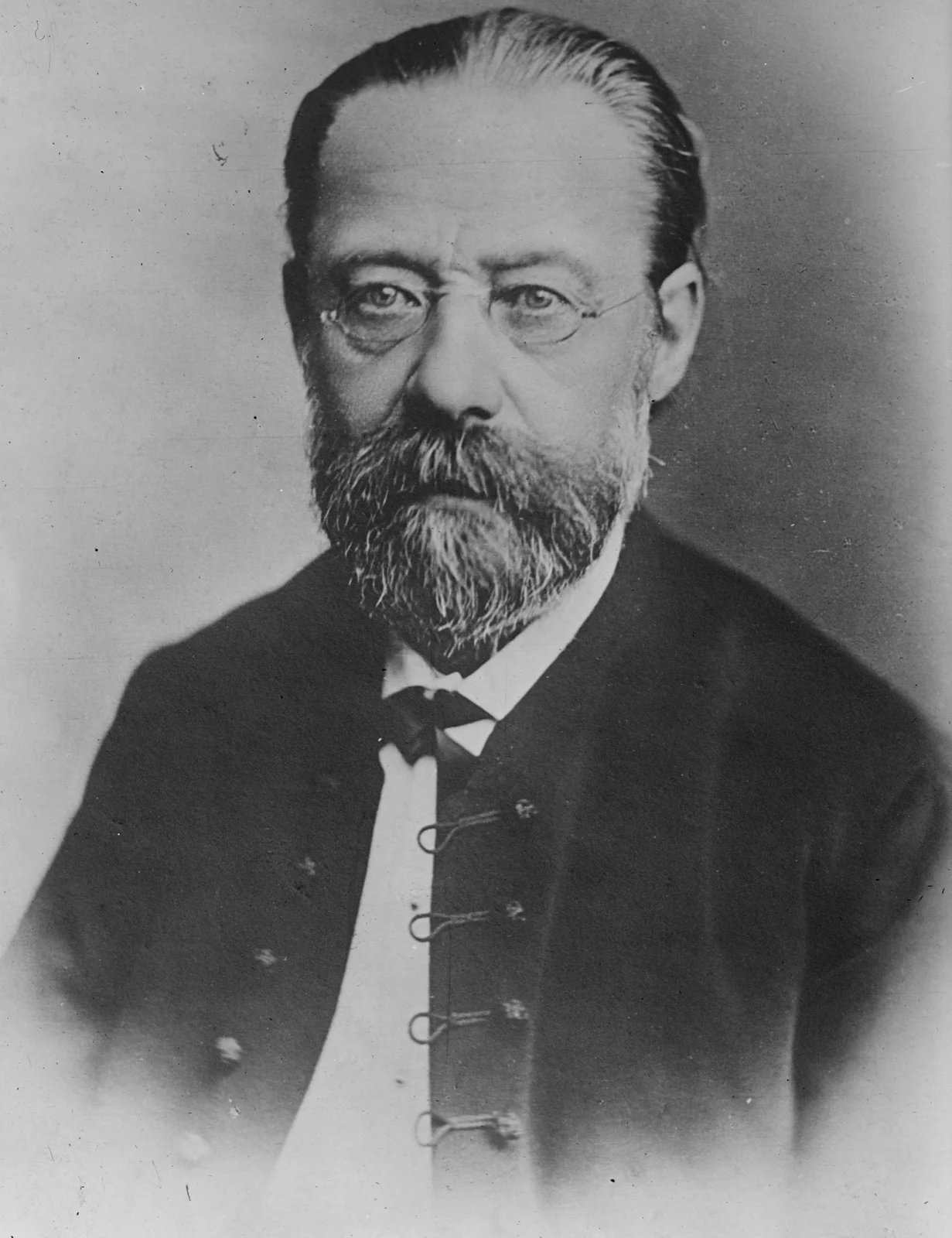
Putting an Entire Nation on Manuscript Paper
Most people would have considered retirement. Total deafness at fifty. And his standing in Prague’s music world was already under siege.
Smetana championed the progressive musical ideals of Liszt and Wagner, which infuriated Prague’s conservatives. “That is not Czech music — it is German,” came the constant attacks. The irony of a self-proclaimed pioneer of Czech opera being branded a Germanist was sharp. Sharper still was the fact that Smetana himself had barely spoken Czech as a child. Under Habsburg rule, German was the official language; his own father knew Czech but scarcely used it.
A man raised in German, setting out to become the father of Czech music. And deaf at that.
This is the backdrop of Má vlast (My Fatherland).
Six Epic Canvases
Smetana’s blueprint was monumental. Six symphonic poems weaving together the fortresses, rivers, legends, landscapes, wars, and mountains of Bohemia. Borrowing the symphonic-poem form pioneered by Franz Liszt, he declared his intention to pour the entire soul of the Czech nation into an orchestra.
A single motif runs through all six pieces: B♭–E♭–D–B♭. Four notes. Born in the opening piece, Vyšehrad, they return in the closing Blaník with majestic force — a heartbeat binding eighty minutes of epic narrative into one.
No. 1: Vyšehrad — A Throne That Begins with Harps and Ends in Ruins
Vyšehrad is the ancient fortress perched on cliffs above Prague’s Vltava river — the seat of Bohemia’s earliest kings.
Smetana opens with the harp of Lumír, a legendary bard. Two harps cascade in arpeggios, and centuries of glory rise like mist. Woodwinds take the theme, hand it to strings, and the full orchestra surges toward a climax — then a sudden descending passage paints the fortress crumbling.
The glorious throne lies in ruins. But at the very end, the harp returns and quietly fades. Dynasties fall; the song survives.
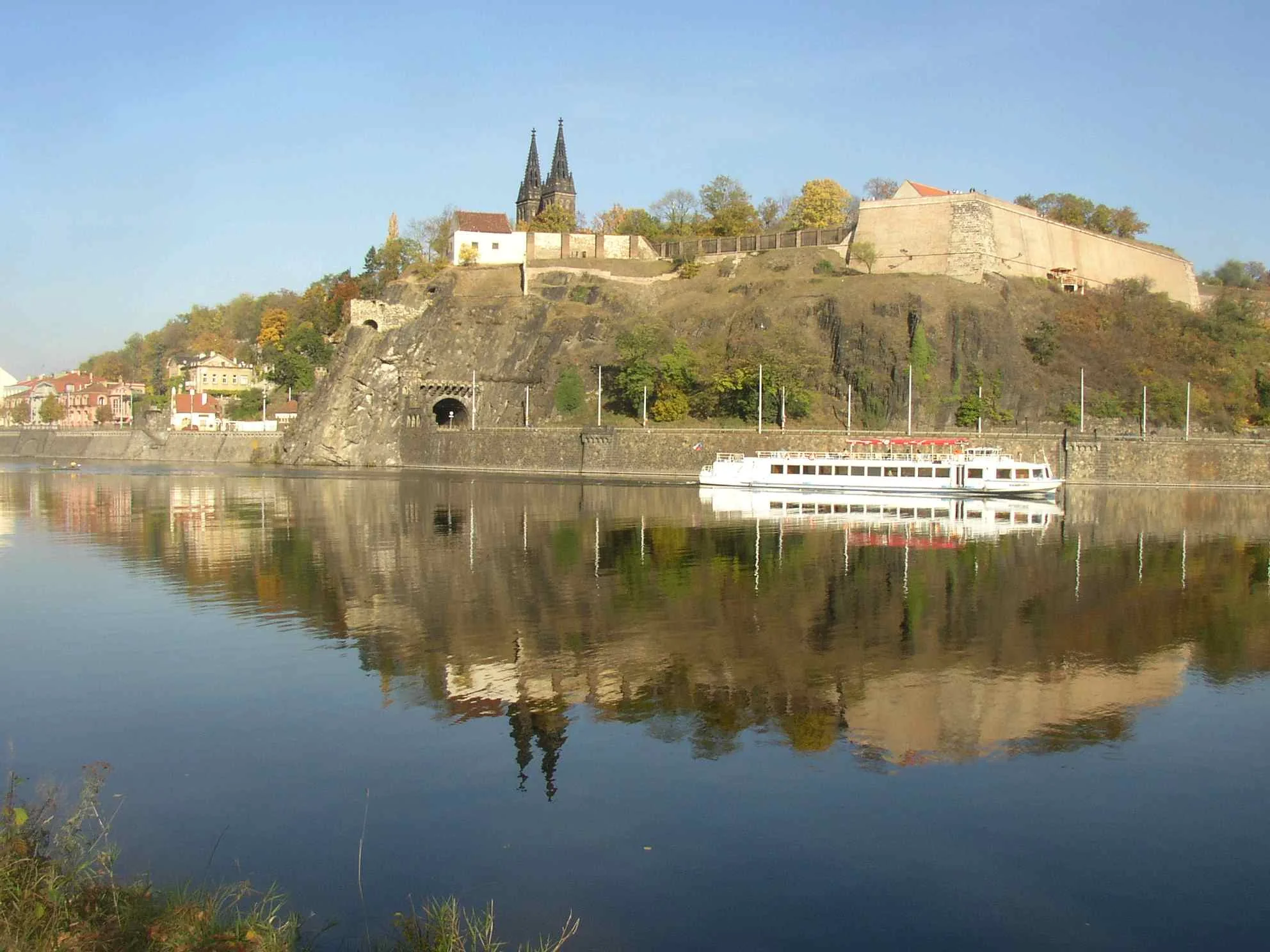
This piece was largely completed in the summer of 1874 — just before Smetana lost his hearing. It is, in effect, the last work he composed while he could still hear. Perhaps that is why the harp’s resonance feels so exquisitely fine.
No. 2: Vltava — From a Trickling Stream to a Mighty River
Vltava — known in German as “Die Moldau.” Even people with no interest in classical music have likely heard this melody.
Smetana himself described the journey: “Beginning with two small springs that merge into a single stream, flowing through forests and meadows, past a peasant wedding, through a moonlit dance of water nymphs, over the St John Rapids, sweeping past Prague, brushing the Vyšehrad, and vanishing majestically into the distance.” The entire biography of a river, compressed into thirteen minutes.
The melody’s roots are remarkable. It derives from a Renaissance Italian tune, La Mantovana, attributed to the tenor Giuseppe Cenci. The same melody travelled through Romania and became the foundation of Israel’s national anthem, “Hatikvah.” It surfaces in the Czech folk song “Kočka leze dírou” (The Cat Crawls Through a Hole), and jazz giant Stan Getz played it as “Dear Old Stockholm.” One melody spanning Italy, Czechia, Israel, Sweden, and America. Music, it seems, has never needed a passport.
No. 3: Šárka — A Czech Femme Fatale’s Perfect Revenge
Here the fun truly begins.
At the centre of the ancient Czech legend of the Maidens’ War stands the warrior maiden Šárka. Her plan: she ties herself to a tree as bait. The knight Ctirad discovers the “captive” and frees her. They fall instantly in love.
Šárka offers Ctirad and his men mead laced with a sleeping draught. When every last one is unconscious, she blows a hunting horn. At the signal, her warrior women charge and slaughter the sleeping men.
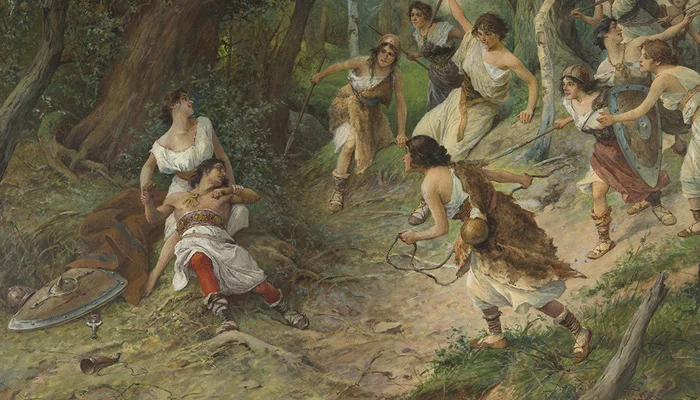
Smetana compresses the entire story into fifteen minutes. A furious opening → lyrical seduction → the drowsiness of drugged mead → a single horn blast → a frenzy of slaughter. An emotional rollercoaster completed within a single symphonic poem.
No. 4: From Bohemia’s Woods and Fields — A Landscape Without a Story
The fourth piece carries no particular narrative. The beauty of the Bohemian countryside is the protagonist.
A majestic forest drawn in a string fugue — voices stacking one by one in counterpoint. Horns paint a gentle woodland melody. In the second half, a festive village dance fills the orchestra.
Smetana originally planned this piece as the finale of Má vlast. But as composition progressed, he resolved to add two more. Landscape alone was not enough. He needed to speak of history.
No. 5: Tábor — The Song of a Burned Reformer Rises Again
Tábor is both a city in southern Bohemia and the heartland of the fifteenth-century Hussite Wars.
Jan Hus — a Czech religious reformer who denounced the corruption of the Catholic Church — was burned at the stake by the Council of Constance in 1415, a full century before Martin Luther. His followers, the Hussites, built the city of Tábor. Papal crusaders attacked five times, but each time the Hussite forces under the one-eyed general Jan Žižka repelled them.
Smetana took the first two lines of the Hussite hymn “Ktož jsú boží bojovníci” (Ye Who Are God’s Warriors) as the theme of this piece. A six-hundred-year-old song of resistance, reborn as orchestral music.
No. 6: Blaník — Sleeping Knights in the Mountain, and the Grand Return
The final piece begins with legend.
Inside Mount Blaník, a great army of knights led by St Wenceslas (the patron saint of Bohemia) lies sleeping. When the homeland is surrounded by enemies on all sides, these knights will awaken and save the nation — a Czech King Arthur legend.
Blaník begins where Tábor left off. In the aftermath of battle, the Hussite hymn sounds again — this time its third verse, “And with Him we shall always triumph at last,” rising as a majestic march.
Then, at the very end, the theme of the opening piece, Vyšehrad, returns.
B♭–E♭–D–B♭.
Four notes that began eighty minutes ago on two harps now thunder through the full orchestra. From a ruined fortress the music flowed along a river, through legends and landscapes, across wars and faith, returning at last to its beginning — a perfect circle. The past, present, and future of Bohemia, distilled into four notes.
The Premiere He Could Not Hear
On 5 November 1882, at the Žofín Palace in Prague, Adolf Čech conducted the first complete performance of Má vlast.
Smetana sat in the audience. He could not hear a single note.
Over roughly five years — from the autumn of 1874 to the spring of 1879 — he completed all six pieces relying solely on the sounds inside his head. Orchestral timbres, instrumental balance, dynamic gradations — all of it was achieved through imagined hearing.
A deaf composer inevitably brings Beethoven to mind. But Beethoven’s hearing loss progressed gradually over decades, and only a handful of works, including the Ninth Symphony, were completed after total deafness. Smetana lost his hearing in a matter of months, then composed a six-part epic from start to finish in silence.
And the subject of that work was “the sounds of the homeland.” He imagined, in silence, the sounds his country makes.
Follow the Score
The full score is freely available at IMSLP. View the Má vlast (My Fatherland) score on IMSLP
Frequently Asked Questions
Frequently Asked Questions
How many pieces make up Má vlast?
Six symphonic poems: (1) Vyšehrad, (2) Vltava (The Moldau), (3) Šárka, (4) From Bohemia’s Woods and Fields, (5) Tábor, (6) Blaník. A complete performance runs approximately 75–80 minutes.
Are “The Moldau” and Má vlast the same thing?
No. “The Moldau” (Vltava) is the second of the six pieces in Má vlast. Because it is the most famous, it is frequently performed on its own, but it is originally one part of a six-piece cycle forming a single epic narrative.
Why does the Prague Spring Festival open with Má vlast every year?
Since 1952, the festival has opened every 12 May — the anniversary of Smetana’s death — with a complete performance of Má vlast. As a work that embodies Czech history and landscape, it has become the nation’s musical symbol. Through the Soviet invasion of 1968, the Velvet Revolution of 1989, and beyond, the tradition has never been interrupted.
The First Note of Spring, for Over 140 Years
Smetana’s final years were tragic. In early 1884 his mental health deteriorated rapidly, and he was admitted to an asylum. He died on 12 May of that year, aged sixty. He was buried in the Vyšehrad Cemetery — the very setting of the opening piece of Má vlast.
But the music has outlived the composer.
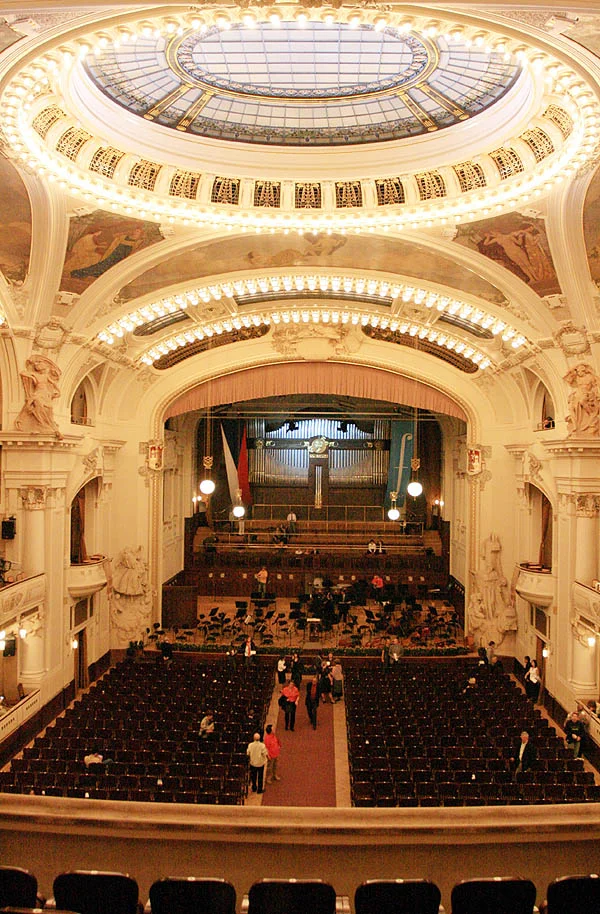
This music has long ceased to be merely a set of symphonic poems. So long as the Czech Republic exists, it will sound every spring — a ritual, and a portrait of the homeland painted in silence by a deaf composer over 140 years ago.
Whether the orchestra’s sound reaches Smetana in the Vyšehrad Cemetery each May, no one can say. But the sound of the homeland he imagined — the very sound he could not hear — still opens Prague’s spring.
🎼 View the score — Free download on IMSLP
What is Smetana’s “Má vlast”?
“Má vlast,” which translates to “My Fatherland,” is a set of six symphonic poems composed by Bedřich Smetana between 1874 and 1879. Each piece is a musical depiction of the landscapes, history, or legends of Bohemia (the present-day Czech Republic). The entire cycle represents a landmark of Czech nationalism in music.
What is the most famous part of Má vlast?
The second symphonic poem, “Vltava” (The Moldau), is by far the most famous part of the cycle. Composed in 1874, it musically charts the course of the Vltava river from its source to the city of Prague. Its main theme in E minor is one of the most recognizable melodies in classical music.
How long does a full performance of Má vlast take?
A complete performance of all six symphonic poems of Má vlast takes approximately 75 to 80 minutes. The work premiered in its entirety in Prague on November 5, 1882. Individual movements, especially Vltava, are often performed separately.
What are the six movements of Má vlast?
Má vlast is comprised of six distinct symphonic poems. The individual titles are 1. Vyšehrad (The High Castle), 2. Vltava (The Moldau), 3. Šárka, 4. Z českých luhů a hájů (From Bohemia’s Woods and Fields), 5. Tábor, and 6. Blaník.