At three o’clock in the morning on November 6, 1893, Pyotr Ilyich Tchaikovsky drew his last breath. He was fifty-three. The official cause of death was cholera — contracted, according to his doctors, by drinking unboiled water.
But the details didn’t add up. Under quarantine regulations, the body of a cholera victim was supposed to be sealed in a coffin immediately. Instead, Tchaikovsky’s body was displayed openly to the public, and mourners were even seen kissing his face. A man famously fastidious about personal hygiene — why would he have drunk unboiled water at the height of a cholera epidemic? And why, eighty-six years later in 1979, would someone finally allege that he had been forced to take his own life?
More than 130 years on, the death of Tchaikovsky remains one of the great unsolved mysteries of Western music. For anyone with an interest in classical music, this is a story impossible to pass by.
A Glass of Unboiled Water
On the evening of November 1, 1893, Tchaikovsky attended a performance of an Ostrovsky play at the Alexandrinsky Theatre in St. Petersburg, accompanied by his brother Modest, his nephew Vladimir Davydov, and the composer Alexander Glazunov. After the show, the group moved on to Leiner’s Restaurant on Nevsky Prospekt.
Cholera was sweeping through St. Petersburg. The epidemic, which had erupted in 1892, had struck across Russia; health authorities ordered all restaurants to serve only boiled water. When Tchaikovsky asked for a glass of water, the waiter told him there was none boiled.
The situation in St. Petersburg was severe. Since the first cases were reported in Vladivostok in 1892, the disease had spread to more than seventy regions. Of approximately 500,000 infected, 220,000 died — a fatality rate of forty-five percent. The poor were hit hardest, but the wealthy were by no means safe. On October 13, daily confirmed cases reached 200; by the date of Tchaikovsky’s death on November 6, the number had fallen to 68, but the danger was far from over.
Yet Tchaikovsky insisted on cold, unboiled water.
His companions tried urgently to dissuade him. He smiled and said:
“I’m not afraid of cholera.”
And drank.
This scene is described in the biography by Alexander Poznansky. Whether events unfolded in precisely this sequence cannot be confirmed, but multiple accounts agree on the essential fact: Tchaikovsky drank unboiled water.
The first question arises here. Tchaikovsky’s friend Hermann Laroche testified that the composer was scrupulous about hygiene: “He took extreme care of his health to avoid hospitals, and in my view he was a true master of hygiene.” A journalist at the Peterburgskaya Gazeta raised the same point: “How could Tchaikovsky, who lived in such impeccable sanitary conditions, possibly have contracted cholera?”
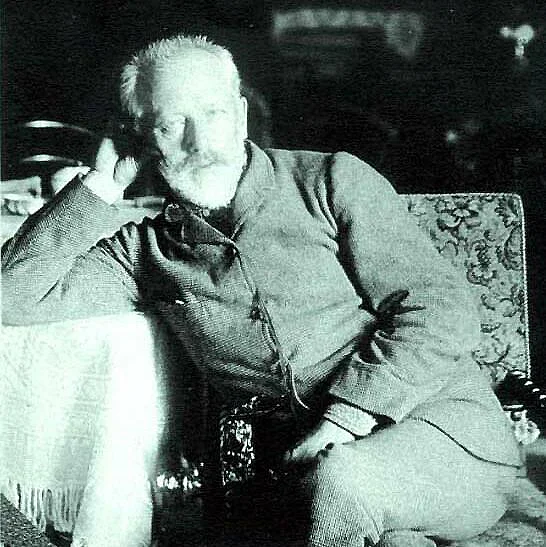
The Last Four Days of a Fifty-Three-Year-Old
The next morning, instead of taking tea in the sitting room as usual, Tchaikovsky was confined to bed with diarrhea and stomach cramps. Modest urged him to call a doctor. He refused, dosing himself with castor oil instead. It had no effect.
By the third day, classic cholera symptoms had set in. Despite the rapid deterioration, Tchaikovsky still resisted medical attention. A doctor was finally summoned, but his regular physician was away. Dr. Lev Bertenson arrived in his place and diagnosed cholera.
His condition seesawed — brief improvements followed by sharp declines — and his kidneys began to fail. A priest from St. Isaac’s Cathedral came to administer the last rites, but Tchaikovsky was already beyond awareness.
At three in the morning on November 6, 1893, he died. The premiere of his Symphony No. 6 in B minor, Op. 74 — the Pathétique, just nine days earlier, had been his final public appearance.
A second question surfaces. The Bertenson brothers — Vasily and Lev — who treated Tchaikovsky were society physicians accustomed to upper-class patients. Cholera was widely considered a disease of the poor, and there is reason to doubt whether they had ever treated a genuine case. Vasily Bertenson later admitted that he had “never actually seen a real case of cholera in practice” — despite having diagnosed Tchaikovsky’s illness with apparent confidence.
A Cholera Victim’s Funeral That Didn’t Look Right
What happened immediately after Tchaikovsky’s death only deepened the mystery.
Quarantine regulations were explicit: to prevent contagion, the body of a cholera victim had to be placed in a coffin and sealed at once. Public viewing was strictly forbidden.
Yet Tchaikovsky’s body was laid out in his brother Modest’s apartment, the door wide open. Mourners came and went freely. Alexander Verzhbilovich, a cellist and professor at the St. Petersburg Conservatory, arrived drunk and kissed the dead man’s head and face.
He kissed the body of a man supposedly killed by cholera.
Nikolai Rimsky-Korsakov recorded in his autobiography: “Although the cause of death was cholera, everyone was admitted to the memorial service. It was a most peculiar affair.” In some later editions, this passage was deleted. Someone, evidently, found it deeply inconvenient.
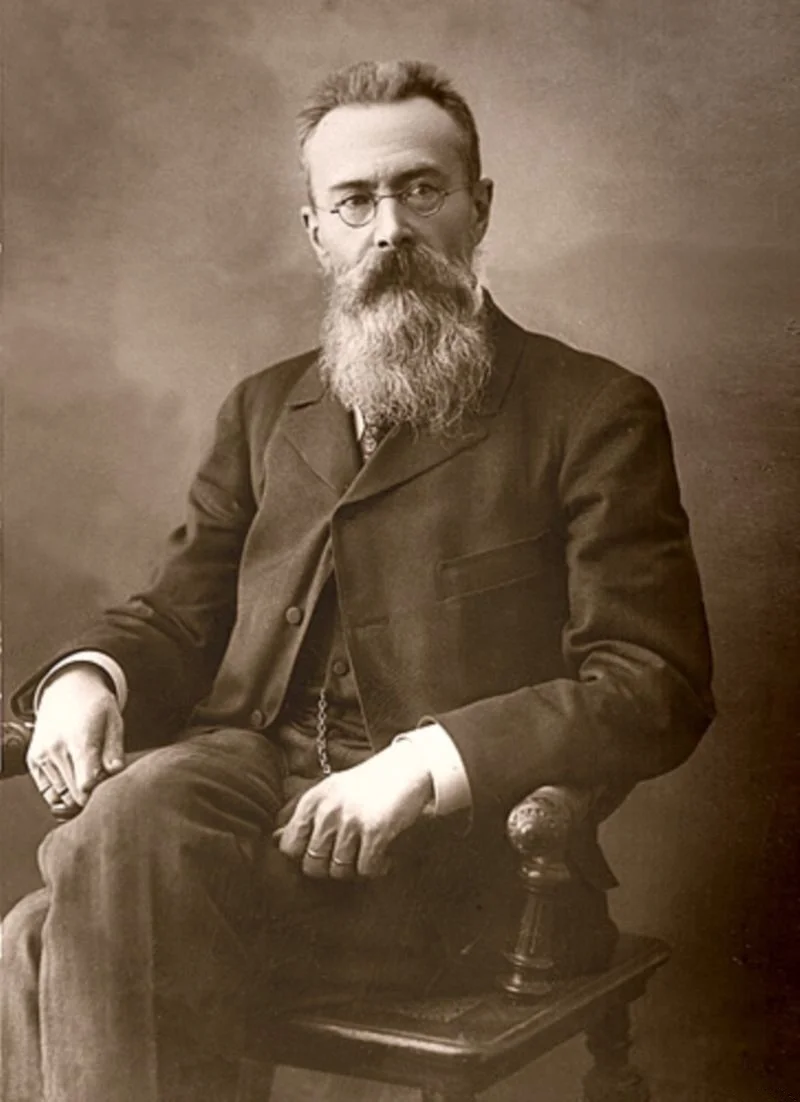
Sergei Diaghilev — then a university student, later the legendary founder of the Ballets Russes — rushed to the apartment on hearing the news. He recalled that the door was wide open but no one was inside. Rimsky-Korsakov, the singer Nikolai Figner, and Diaghilev ended up lifting the body — dressed in a black morning coat and lying on a sofa — onto a table. Diaghilev held the feet.
“There were only the three of us in the apartment. After Tchaikovsky died, everyone in the household had fled.”
A cholera victim dead — yet no quarantine measures in place, the body on public display, while the family and inner circle ran from infection. The facts do not cohere.
Poznansky offers a counter-argument. In the spring of 1893, the Central Medical Council issued a ruling that exceptionally permitted public memorial services for cholera victims. Moreover, the immediate cause of death was not cholera itself but the subsequent sepsis, which carried a lower risk of contagion. A medical report published in the Peterburgskaya Gazeta noted that cholera symptoms had already ceased by November 3 — three days before death. Disinfectant was continually applied to the corpse’s lips and nostrils, so even the drunken cellist’s kiss posed little danger, Poznansky argues.
A plausible case. Yet it does not explain why Rimsky-Korsakov’s “peculiar” remark was suppressed and deleted. Who removed it, and why?
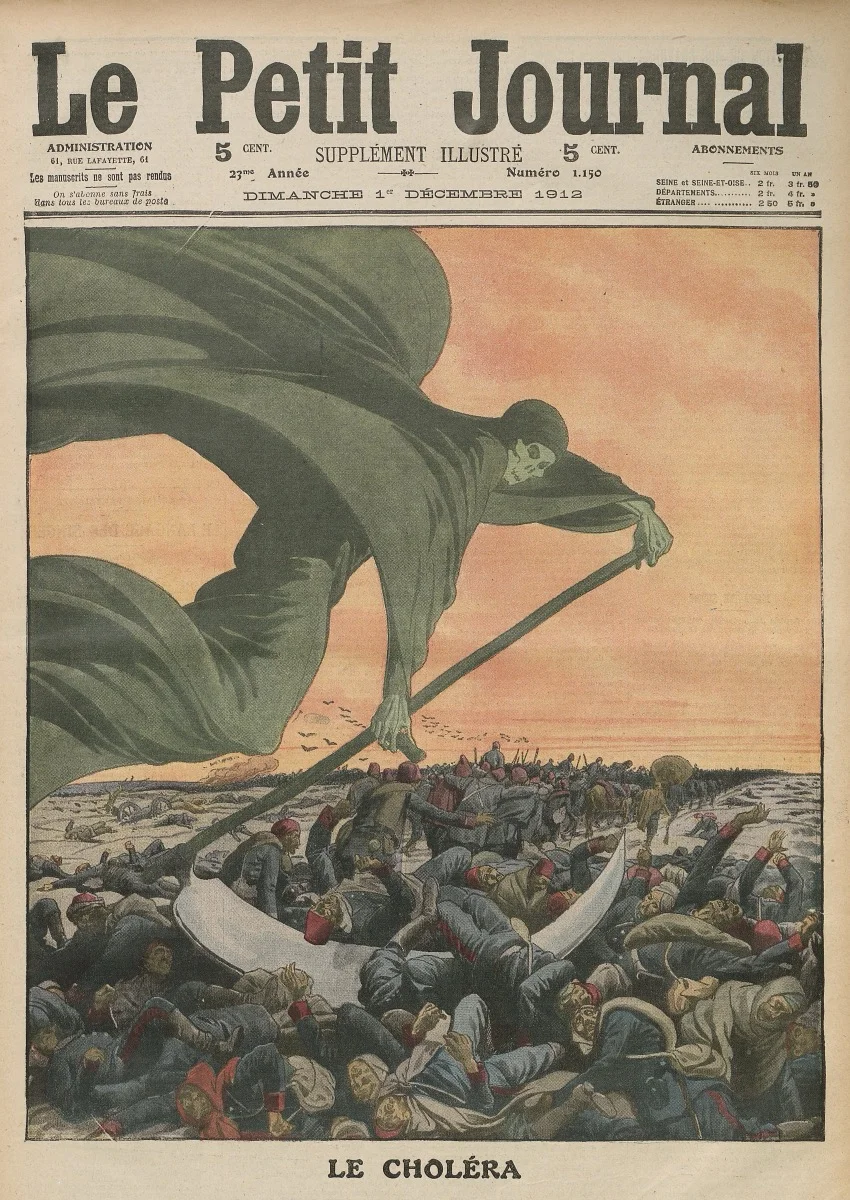
Another anomaly: Tsar Alexander III personally covered the entire cost of the funeral, instructed the Imperial Theatre administration to oversee the proceedings, and authorized a large-scale memorial service at Kazan Cathedral. The cathedral held 6,000, but 60,000 applied for admission; ultimately 8,000 packed inside. It was the first time since Pushkin’s death that a Russian emperor had taken such an intimate interest in the funeral of an artist.
An emperor paying for and presiding over the funeral of a man killed by a highly contagious disease, with 8,000 mourners crowded into a cathedral — if the cause of death truly was cholera, this was reckless beyond measure. If it was not cholera, the Tsar’s lavish funeral may have served a different, hidden purpose.
1979: The “Court of Honor” Theory Emerges
Eighty-six years after Tchaikovsky’s death, in 1979, the Russian musicologist Alexandra Orlova published a shocking hypothesis.
Tchaikovsky’s death, she claimed, was suicide — specifically, a suicide coerced by others.
Orlova’s theory runs as follows. Alumni of the Imperial School of Jurisprudence, Tchaikovsky’s alma mater, convened an unofficial “court of honor.” The issue was Tchaikovsky’s homosexuality — a criminal offense in Tsarist Russia. A fellow alumnus had discovered a compromising relationship and was preparing to petition the Tsar. Fearing that exposure would disgrace not just Tchaikovsky but the school itself, the alumni secretly ordered him to take his own life.
Orlova further speculated that he ingested poison and that the death was disguised as cholera. Arsenic is the most frequently cited candidate: its early symptoms — severe abdominal pain, vomiting, diarrhea — are virtually indistinguishable from cholera to the untrained eye. The Bertenson brothers, with no firsthand experience of cholera, may have misdiagnosed arsenic poisoning.
The hypothesis sent shockwaves through the musicological world. If true, the Pathétique was not merely a musical masterpiece but a literal suicide note. Tchaikovsky’s letter to his nephew Davydov — “The program of this symphony shall remain an enigma. Let them guess” — takes on an entirely different meaning.
But the theory has a fatal weakness: no direct evidence supports it. Orlova’s sole source was an oral account relayed by the widow of a former Jurisprudence School classmate. No minutes of the “court,” no firsthand testimony from participants, no identification of the poison has ever been confirmed.
Poznansky, on the other hand, strongly defends the cholera diagnosis. His argument is statistical: with over 500,000 infections and a fatality rate near forty-five percent in St. Petersburg alone, cholera spared no social class. Drinking unboiled water during an epidemic was, in his view, merely reckless — not evidence of suicide.
In summary:
- Cholera theory: Unboiled water → cholera infection → death. Consistent with the severe epidemic of 1893. Supported by Poznansky and a majority of biographers.
- Forced suicide theory: Court of honor → poison → disguised as cholera. Circumstantial evidence includes the irregular handling of the body, the attending physicians’ lack of cholera experience, and the implausibility of so hygiene-conscious a man drinking contaminated water. Supported by Orlova and biographers David Brown and Anthony Holden.
Neither side offers conclusive proof. The cholera theory is the “commonsense” reading given the historical context; the forced-suicide theory is a logical attempt to account for the anomalies the official story leaves unexplained. Both have gaps — and the evidence that might fill them was buried with history more than 130 years ago.
The Grave at the Alexander Nevsky Monastery
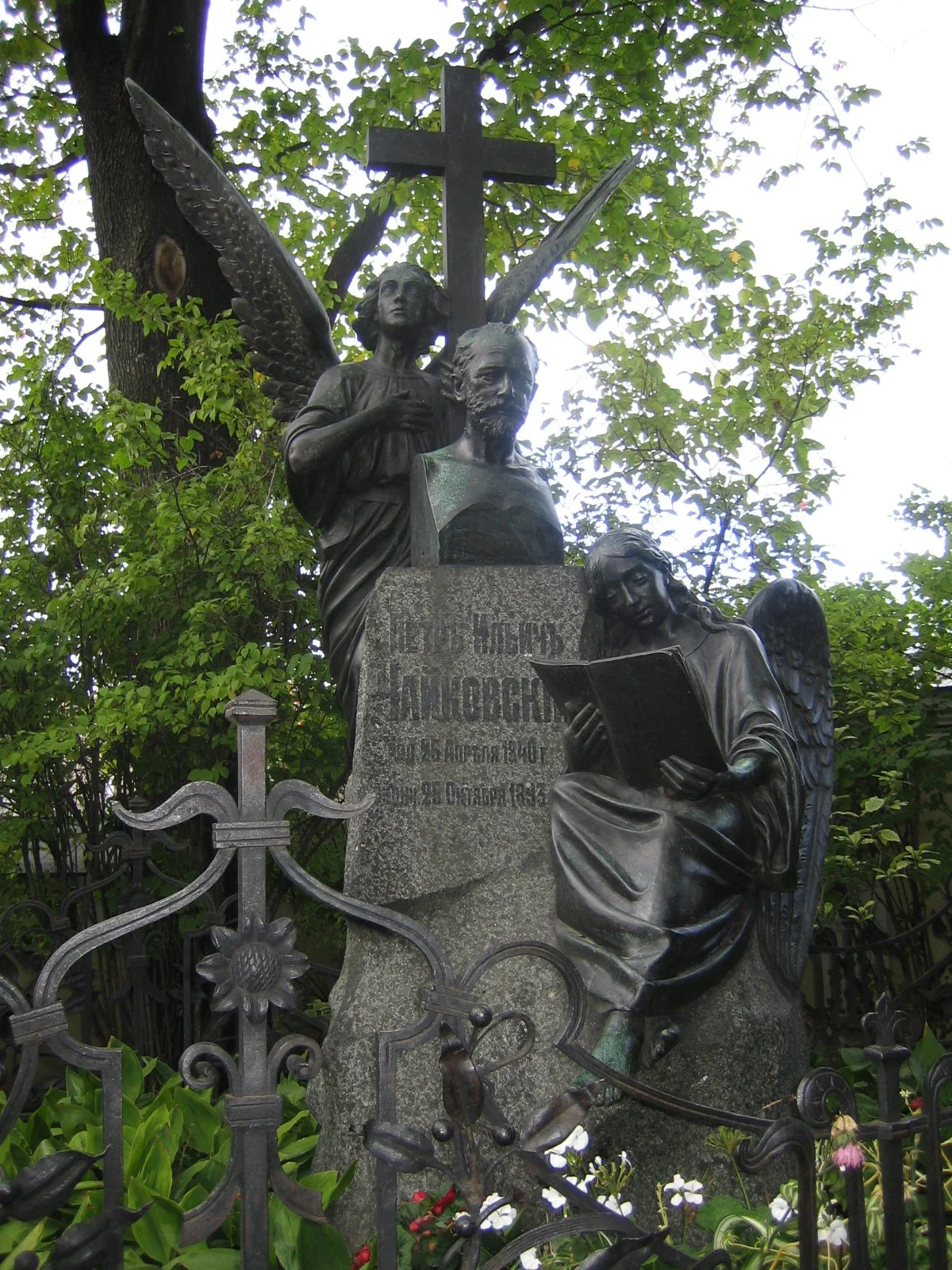
Tchaikovsky’s funeral was held on November 9, 1893, at Kazan Cathedral in St. Petersburg. His remains were interred in the Tikhvin Cemetery within the Alexander Nevsky Monastery, where earlier Russian masters — Borodin, Glinka, Mussorgsky — already lay. Rimsky-Korsakov and Balakirev would later join them.
Among the many illustrious headstones, Tchaikovsky’s grave draws a constant stream of visitors. Flowers are heaped year-round — tributes from those who love his music, but also, perhaps, from the curious drawn by a mystery that remains unsolved after more than 130 years.
As discussed in our listening guide to the Pathétique, the symphony’s finale fades like a guttering flame. The last note is marked ppp — barely audible — and dissolves into the air. Whether the composer foresaw his own tragic end while writing it, we cannot know. But the result is the most honest farewell he ever made.
Whether he died of cholera or of poison, one fact remains beyond dispute: his final symphony possesses the saddest, most desolate ending in all of Western music. Did the dramatic circumstances of his death make the music sound more sorrowful than it already was? Or was the despair always there, and we simply failed to fathom its depth? Either way, in the heavy silence that descends after the last note of the Pathétique‘s fourth movement fades to nothing — perhaps, in that stillness, the answer we seek has been hiding all along.
Frequently Asked Questions
Did Tchaikovsky really die of cholera?
Is the Pathétique Tchaikovsky’s suicide note?
What are the most reliable sources on the controversy?
Why is Tchaikovsky’s death so controversial?
What is the “court of honor” suicide theory?
When did Tchaikovsky premiere his “Pathétique” Symphony?
Who first proposed the Tchaikovsky suicide theory?
Further Reading
- Tchaikovsky’s Symphony No. 6 “Pathétique”
- Tchaikovsky’s Piano Concerto No. 1 in B-flat minor
- Tchaikovsky’s Piano Concerto No. 2 in G major