- Composer
- Tchaikovsky
- Work
- Symphony No. 1 in G minor ‘Winter Daydreams’, Op. 13
- Key
- G minor
- Composed
- 1866–1868 (revised 1874)
- Movements
- 4 movements
I. Allegro tranquillo (Dreams of a Winter Journey, G minor)
II. Adagio cantabile ma non tanto (Land of Desolation, Land of Mists, E♭ major)
III. Scherzo: Allegro scherzando giocoso (C minor)
IV. Andante lugubre – Allegro maestoso (G minor → G major)
1st movement. Dreams of a Winter Journey
2nd movement. Land of Desolation, Land of Mists
3rd movement. Scherzo
4th movement. Finale - Instrumentation
- flute 2, oboe 2, clarinet 2, bassoon 2 / horn 4, trumpet 2, trombone 3, tuba / timpani, bass drum, cymbals, violin I & II, viola, cello, double bass
- Premiere
- February 15, 1868, Moscow (world premiere of complete work), conducted by Nikolai Rubinstein
This symphony nearly broke Tchaikovsky.
In the summer of 1866, right after starting his job as a professor at the Moscow Conservatory, the 26-year-old composer literally collapsed while writing his first symphony. “No other work cost him such effort and suffering,” his brother Modest recalled. “During its composition, his nerves became more and more frayed.” The ordeal got so bad that he started having hallucinations. He’d wrestle with the score all night, only to wake up in the early morning in a state of absolute terror.
And after all that agony, his teachers told him it was trash.
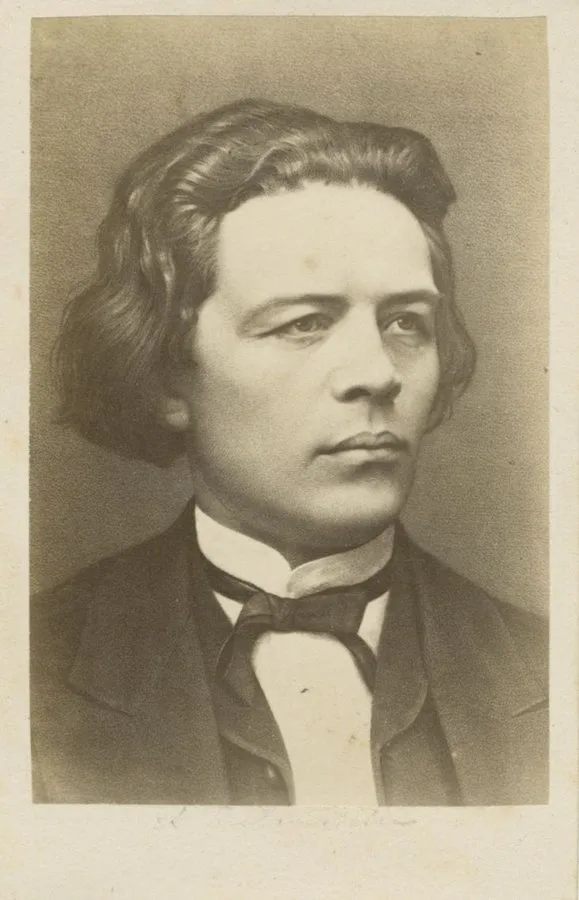
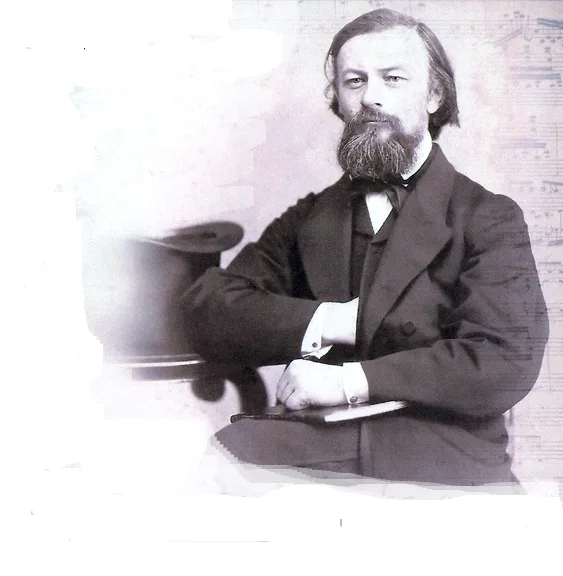
He showed it to his mentors, Anton Rubinstein and Nikolai Zaremba, and they tore it to shreds. Tchaikovsky felt most of their criticisms were completely unjustified. He ended up spending over a year revising the piece, and a full eight years passed between the first performance and the final version we hear today, which didn’t appear until 1874.
So why should you care about this symphony? Because every single thing we now call “Tchaikovsky-esque” started right here.
Twenty-six, and a Moscow Winter Night
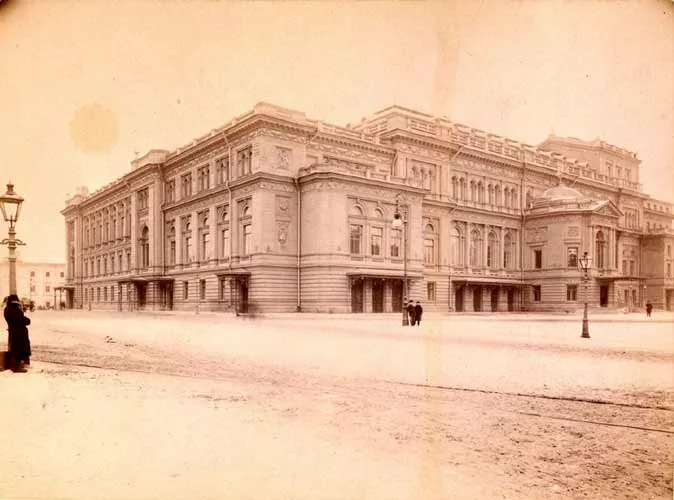
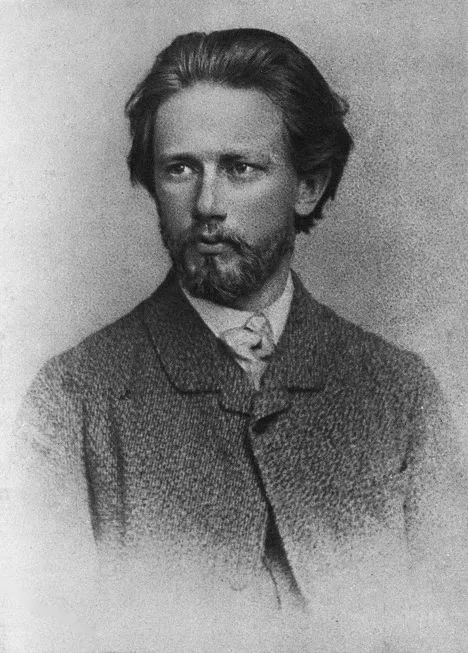
Tchaikovsky in 1866 was in a precarious spot. He was a late bloomer, having ditched a career in civil service after law school to pursue music. He enrolled in the Saint Petersburg Conservatory at 22 and had just landed his first real gig teaching harmony at the new Moscow Conservatory. He had to prove himself as both a teacher and a composer, all at the same time.
He started working on the symphony that summer in Peterhof. It’s a little ironic that he titled it ‘Winter Daydreams’ in the middle of a heatwave. The movement subtitles—’Dreams of a Winter Journey’ and ‘Land of Desolation, Land of Mists’—are said to be inspired by the Russian landscape, particularly his impressions from a winter trip through Siberia.
Tchaikovsky hated to even think about that summer in Peterhof for the rest of his life. The reason, his brother wrote, was “his G-minor symphony.” As he composed, his nerves wore thin, and he was plagued by insomnia. Doctors warned him about overwork, but he didn’t stop.
When he finally finished, he took it to Rubinstein and Zaremba, the gatekeepers of the Saint Petersburg Conservatory establishment. Their reaction was ice-cold. They declared it “unplayable.” In his diary, Tchaikovsky wrote that he found their critique “mostly unfair.”
This wasn’t just a simple disagreement between a student and his teachers. The Russian music world was split into two camps. You had the “Westernizers,” led by the Rubinstein brothers, who ran the conservatories. And you had the “Nationalists,” a group of self-taught composers led by Mily Balakirev, known as “The Mighty Handful.” Tchaikovsky was stuck in the middle. He was a conservatory professor who wrote music filled with Russian folk color.
In 1868, only the second and third movements were performed in Moscow. The full work was premiered later that year in Saint Petersburg, conducted by Nikolai Rubinstein. But Tchaikovsky still wasn’t happy. He undertook a major revision in 1874, and that’s the version that orchestras play today.
Why ‘Winter Daydreams’ is Different
Let’s be honest. When people listen to Tchaikovsky’s symphonies, they usually start with No. 4, 5, or 6. That’s what most people think of as “Tchaikovsky.” But the First? Most people have never even heard of it.
Yet, reactions from first-time listeners are surprisingly divided. Some people genuinely claim to like it more than the famous later symphonies. The reason is interesting: they feel that while the later symphonies are calculated dramas, the First is raw, unfiltered emotion.
Early critics, on the other hand, felt that while it showed flashes of Tchaikovsky’s skill, it lacked the strength, conviction, and substance of his later works. But that assessment is being reconsidered. The First Symphony has something you don’t find in the later ones: the raw texture of Russian folk melodies and an energy not yet tamed by formal perfection. That’s what makes it sound so fresh to modern audiences.
The LA Philharmonic’s program notes put it well: the work is “genuine Tchaikovsky, not merely in embryo but fully formed, particularly in its orchestration and thematic character.” They’re not wrong. You can already hear Tchaikovsky’s signature all over this piece.
Movement-by-Movement Guide
Mvt. 1: Dreams of a Winter Journey — A Distant View Before the Start
The title of the first movement is ‘Dreams of a Winter Journey’. The tempo marking is Allegro tranquillo—fast but calm. This paradox tells you everything you need to know about the movement’s character.
The opening is unique. Over a repeating figure in the violins, the flute and bassoon introduce a theme that sounds like a distant call. It has the atmosphere of predawn light. This is the first theme, and it’s infused with the kind of chromatic passing tones that are a hallmark of Russian folk music. You hear it and immediately think, “Ah, this is Russian.”
Then the mood shifts dramatically. The second theme is much warmer and more lyrical. The contrast between these two ideas drives the entire movement. In the development section, they collide and intertwine. It’s here that Tchaikovsky seems determined to prove a point—that he knew all the tricks in the academic book—unleashing a torrent of complex counterpoint. Some find it a bit much; others see it as the charming bravado of a young composer.
Just before the coda, there’s a moment that feels like pausing to gaze at a distant landscape before a journey. The timpani quietly pulses, and the strings sink to pppp (four p’s for pianississimo). A lone clarinet murmurs a fragment of the theme. It’s the stillness before the journey begins.
This happens around the 9 to 11-minute mark. When you get there, turn up the volume. The core of the movement is hidden in that near-silence. It’s a detail many first-time listeners miss, but it’s the most dramatic turning point in the sonata form—the boundary where the music holds its breath before starting to run again.
Mvt. 2: ‘Land of Desolation, Land of Mists’ — Solitude on a Frozen Lake
I’m convinced this is the most underrated slow movement in all of Tchaikovsky’s symphonies.
Adagio cantabile, ‘slowly, as if singing’. The title is ‘Land of Desolation, Land of Mists’. It’s in E-flat major, and within a G minor symphony, this bright key creates a strange sense of unfamiliarity, like a faint light in a winter fog.
It opens with a solo oboe. The melody is folk-like, and this movement is the closest Tchaikovsky ever got to the sound of the Russian Nationalist school, “The Mighty Handful.” But he doesn’t fully commit to nationalism. As the strings take over and develop the theme, a much more personal, lyrical quality emerges.
There’s a moment to listen for. In the middle section, the clarinet and flute have a conversation before handing off to the full string section. The volume doesn’t just get louder; it swells slowly, like a wave. It’s the sound of mist clearing over a vast Russian plain. If you could see that landscape through music, this is what it would sound like.
The movement ends as it began, with the oboe melody returning and quietly fading away, as if disappearing back into the fog.
What Tchaikovsky shows here is something like the origin of “Russian music.” He takes a folk-inspired melody and places it within a European-style slow movement. The experiment works. The broad, breathing quality of the folk tune fits the Adagio form perfectly. He would later refine this technique in his ballets (Swan Lake, The Sleeping Beauty), but the seed was planted right here.
Mvt. 3: Scherzo — A Russian Dance Party
The third movement is pure energy. Allegro scherzando giocoso—fast, playful, and joking. Scherzo is Italian for “joke,” and this movement lives up to its name. Considering how serious the first two movements were, it’s a huge shift in tone.
Rhythm is key. The strings lay down a pattern based on a Russian folk dance, and the woodwinds layer a cheerful melody on top. It’s not complicated, but it’s full of life.
In the middle, the Trio section arrives, and the atmosphere changes completely. It’s like the dance floor pauses for a moment. The oboe offers a more contemplative melody. Then the main scherzo theme returns, and the party kicks back into gear.
This movement’s job is to build up energy for the finale. In fact, the final chord of the third movement flows directly into the fourth without a break.
This is often the movement that gets the biggest reaction from new listeners. “Why is this classical music so fun?” they ask. Exactly. This movement is intentionally light. It’s designed to make you forget the weight of the first two movements and just dance. The feeling of a Russian folk festival is stronger here than anywhere else. If the finale is the big drama, the scherzo is the celebration before it.
Mvt. 4: Finale — An Over-the-Top Conclusion
One critic described the finale of Tchaikovsky’s First as an “irresistibly over-the-top conclusion.” “Over-the-top” isn’t an insult here. It’s exactly what Tchaikovsky was going for.
Andante lugubre, Allegro maestoso. ‘Slow and mournful, then fast and majestic’. The two tempo markings lay out the structure. It starts slow and heavy, then completely flips.
The Andante lugubre introduction is short, with the mood of a funeral march. It quickly transforms into the Allegro maestoso, where a theme based on the Russian folk song “The Gardens Bloomed” appears. This theme grows and gathers strength until the entire orchestra is blazing. In the coda, the trumpets, trombones, and timpani take center stage, racing toward a triumphant finish.
Some find this ending excessive, especially audiences accustomed to the tragic finale of his Sixth Symphony, the Pathétique. But think about it. This was the first symphony by a 26-year-old who had endured a nervous breakdown and his teachers’ scorn to write it. Wouldn’t you want to declare victory a little too loudly? The excess is precisely what makes it feel so honest.
It’s interesting to listen to the finale while remembering the first movement. The distant gaze from the beginning has transformed into a full-on sprint. The person who was dreaming of a winter journey is now shouting with joy at its end. That’s why Tchaikovsky subtly quotes a fragment of the first movement’s theme in the finale’s coda. It’s not just recycling; it’s a narrative conclusion, a return home.
A tip for first-time listeners: in the finale’s coda, there’s a moment where the trumpets lead and the timpani answer. The next two minutes are the climax of the entire symphony. You could argue that the previous 40 minutes exist just to set up those two minutes.
After the Teachers’ Criticism — The Long Road of Revision
The criticism from Rubinstein and Zaremba was a deep blow to Tchaikovsky’s pride. But in the long run, it probably made the symphony better. It’s worth noting that in his 1874 revision, he didn’t blindly follow their advice. He kept the parts he believed in and only fixed what he himself felt was a problem. The fact that this piece is still performed 160 years later proves he was mostly right. The audacity of a young Tchaikovsky who withstood criticism and stuck to his guns—that, too, is part of the music.
First Time Listening? — Just Know This
1. The titles are your guide. Each movement has a subtitle, like ‘Dreams of a Winter Journey’. Tchaikovsky planted images in the music. Follow them as you listen: a Russian winter, snow-covered plains, a day shrouded in fog. The landscape is right there in the score.
2. Listen for the folk tunes. Russian folk melody patterns are hidden everywhere, especially in the second movement’s oboe solo and the finale’s main theme. You’ll recognize the “Russian sound” immediately. This was Tchaikovsky’s first major declaration of his musical identity.
3. Wait for the finale. Almost every first-time listener has an “Oh!” moment during the last part of the fourth movement. It’s an unapologetically brilliant ending that’s impossible to ignore. Let the first three movements build your anticipation for it.
4. Compare it to the later Tchaikovsky. If you’ve heard the Pathétique or Symphony No. 5, listen for the things that are already Tchaikovsky in this piece: the orchestral colors, the melodic shapes, the uniquely Russian sentimentality. You’re meeting Tchaikovsky in his seed form. His command of orchestration, in particular, is already near-perfect.
Premiere History and Why It Was Forgotten
There’s a historical reason this piece isn’t better known.
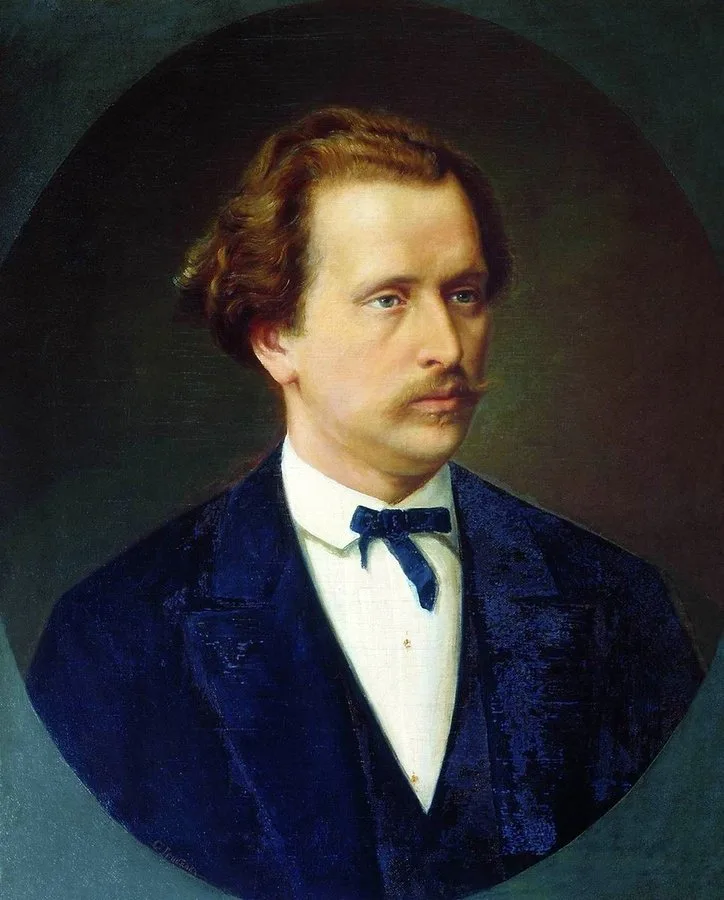
The premiere process was a mess. Only two movements were played in 1867, with the full premiere in 1868. Even then, Tchaikovsky wasn’t satisfied. The final version we know today wasn’t completed until 1874, a full eight years after he started.
The works that came next were also just too powerful. The First Piano Concerto (1875), Swan Lake (1876), the Violin Concerto (1878), and a string of symphonic blockbusters—No. 4 (1878), No. 5 (1888), and the Pathétique (1893). The First Symphony was naturally pushed to the back of the line.
For a long time, experts treated it as a student work. It was included in “complete symphony” box sets but rarely performed live. That only changed recently. In the late 20th century, conductors began to re-examine the piece, especially through the lens of its Russian nationalist colors. The consensus now is that this is the work where Tchaikovsky, while adopting Western forms, most honestly expressed his Russian soul.
He also had to write it almost entirely on his own. There were very few Russian composers writing symphonies at the time, and no real models to follow. Tchaikovsky had to teach himself the symphonic forms of Beethoven, Schumann, and Brahms while simultaneously inventing the Russian symphony. No wonder it took eight years. This piece laid the foundation.
What Tchaikovsky Was Trying to Prove — The Tension Between Two Languages
There’s a key detail here: Tchaikovsky seems to have consciously used this symphony to show off his academic chops, especially in the first movement’s development section.
This was important because of his position at the time. He was a conservatory professor, but his formal training was short. Some of his peers scoffed at his late start. The First Symphony was his answer: “I know sonata form. I know counterpoint. And I have my own voice.”
The irony is that while Rubinstein and Zaremba found the work “not academic enough,” to modern ears, it’s the overly academic parts that stand out. It’s the sound of a young composer trying to find a new musical language while also trying to perfectly obey the old rules. That tension is baked into the symphony.
This tension between two “languages”—Western European forms (sonata, symphony) and Russian content (folk songs, Orthodox harmonies)—is central to all of Tchaikovsky’s music. But this symphony is the first official attempt. Because it’s less polished than his later works, you can see the seams, and that makes the tension even more palpable. In some ways, it’s more honest music.
Why You Should Listen Now — The Resurgence of Symphony No. 1
For a long time, this piece was treated like a bonus track on a greatest hits album—the one you had to include to call it a “complete collection.” So why is it getting a second look now?
Two reasons.
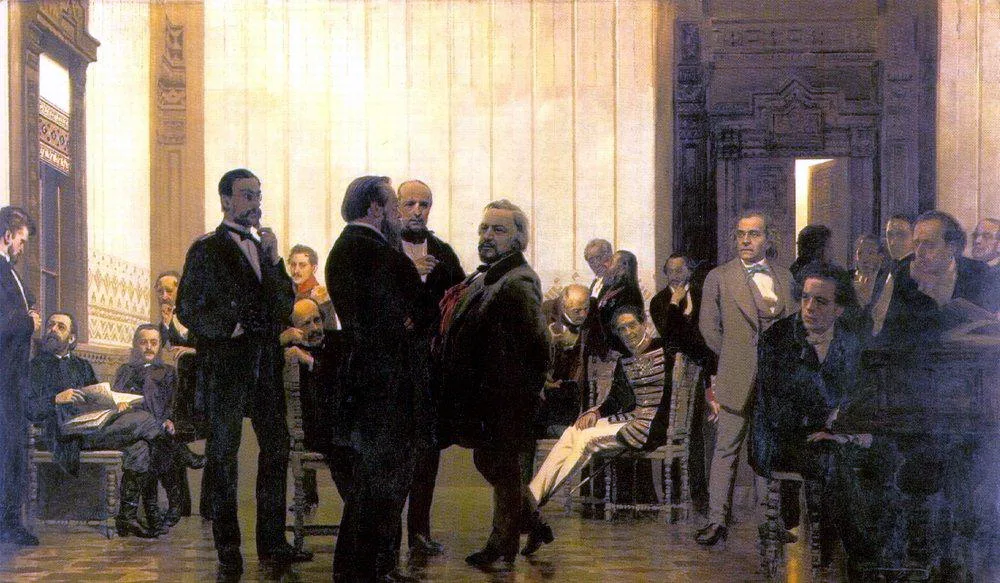
First, listeners’ ears have changed. For an audience already familiar with the Pathétique and No. 5, the First Symphony sounds fresh. It has a raw energy that feels “un-Tchaikovsky-like,” with melodies that are both familiar and strange. People often ask, “This is a Tchaikovsky symphony?” That surprise is part of its charm.
Second, there’s a growing tendency to re-read the piece in the context of “Russian music.” In the early 20th century, Tchaikovsky was often seen as a “Westernized” Russian composer. But when you listen to the First, that narrative falls apart. The folk melodies, the imagery of the Russian winter—Tchaikovsky was Russian from the very beginning, even as he mastered Western forms.
If there’s a third reason, it’s the music’s “pre-perfection” energy. It’s the sound of a young artist giving everything he has to prove himself. That intensity is infectious. For some listeners, this raw struggle is more powerful than the polished mastery of his later works. That’s the secret appeal of this symphony.
It’s still not a common sight on concert programs. But if you get a chance to hear it, don’t miss it. Experience the last 30 seconds of the finale live, and you’ll have a hard time forgetting this piece.
Recommended Recordings
Valery Gergiev / Mariinsky Orchestra (2007, Mariinsky)
Gergiev’s Tchaikovsky is in a class of its own. This is a Russian conductor leading a Russian orchestra with a direct lineage to the composer. When the folk melodies appear, Gergiev’s interpretation is noticeably different from others. The “Russian-ness” isn’t just a buzzword; you can actually hear it. The oboe solo in the second movement and the driving force of the finale are particularly impressive.
Valery Gergiev / Philharmonia Orchestra (2010, Live at Salle Pleyel, Paris)
It’s fascinating to compare this with the Mariinsky version. You can hear the difference when the same conductor leads a Western European orchestra. The sound is a bit more refined, while the raw Russian texture is slightly toned down.
Neeme Järvi / Scottish National Orchestra (1990s, Chandos)
This is often cited as a “standard” recording of Tchaikovsky’s First. Järvi’s interpretation is straightforward and faithful to the score, without exaggeration. It’s an excellent version for anyone new to the piece, with great sound quality and well-balanced movements.
Listen with the Score
Following along with the score is another way to appreciate the work. You can visually track how Tchaikovsky develops and transforms his themes, making his compositional choices much clearer. The full score is available for free on IMSLP.
Frequently Asked Questions
Why was Tchaikovsky’s Symphony No. 1 so difficult for him to compose?
Why is it called ‘Winter Daydreams’?
How many movements does Tchaikovsky’s Symphony No. 1 have?
Does the symphony use Russian folk music?
Which recording of Tchaikovsky’s Symphony No. 1 is recommended for first-time listeners?
Further Reading
- Tchaikovsky’s Symphony No. 6 ‘Pathétique’
- Tchaikovsky’s Symphony No. 5 in E minor
- Tchaikovsky’s Piano Concerto No. 1