- Composer
- Bach
- Work
- Violin Concerto in E major, BWV 1042
- Key
- E major
- Composed
- c. 1717–1723, Köthen period
- Movements
- 3 movements
I. Allegro (E major)
II. Adagio (C-sharp minor)
III. Allegro assai (E major) - Instrumentation
- Solo violin, string orchestra (violin I/II, viola), continuo (cello, harpsichord)
- Premiere
- Date unknown; likely performed at the Köthen court c. 1718–1720
When Bach wrote this piece, he wasn’t in a church.
In 1717, Bach wasn’t the Cantor of Leipzig or the court organist in Weimar. He was the Kapellmeister—the head of music—for a small court in Köthen. His boss, Prince Leopold, was a Calvinist. And Calvinist churches didn’t go in for elaborate music. This gave Bach the time and freedom to write whatever he wanted, which meant a flood of secular instrumental works, sonatas, and concertos.
One of those results is the Violin Concerto in E major, BWV 1042. But here’s the interesting part: the original manuscript is lost. The version we listen to today is a reconstruction, reverse-engineered from a later version Bach made himself—a harpsichord concerto in D major, BWV 1054. When a composer goes to the trouble of rearranging their own work, you know they thought it was worth saving.
Bach in Köthen, and the World That Made This Concerto
Back then, Italy owned the concerto scene. Vivaldi’s formula was king: a solo instrument trading themes with the full orchestra in a structure called “ritornello form.” Think of a ritornello as a recurring chorus or a catchy hook. The soloist does their thing, then the orchestra brings back the main theme, the soloist takes off again, and the orchestra returns. It’s a conversation.
Bach knew this formula inside and out. During his time in Weimar, he had transcribed 16 of Vivaldi’s concertos (and others by Italian composers) for the harpsichord. He wasn’t just copying them; he was taking them apart to see how they worked, absorbing the logic of Italian music through his fingertips. By the time he got to Köthen, he wasn’t just imitating the Italian style—he was ready to rebuild it his own way.
That’s why BWV 1042 sounds different from a Vivaldi concerto. On the surface, it uses the same framework. But Bach’s ritornello is a moving target. It changes keys constantly, and the solo violin isn’t just there for flashy decoration. The soloist introduces new thematic ideas, the orchestra picks them up and transforms them, and the dialogue never stops.
Prince Leopold wasn’t just a patron; he was a musician. He played the viola da gamba and harpsichord and often joined Bach for chamber music sessions. The court orchestra was small, so BWV 1042 was likely premiered in an intimate setting, with a small group of players. We don’t know if Bach played the solo part himself or if another court violinist did, but it’s almost certain the Prince was in the room, maybe even playing along.
The list of instrumental works from Bach’s Köthen period is staggering: the Sonatas and Partitas for Solo Violin, the Cello Suites, and the Brandenburg Concertos were all composed or completed during these years. BWV 1042 belongs on that list. It tells you just how creatively fertile this environment was for him. In a little over six years, he produced this incredible body of work.
A Movement-by-Movement Guide
Mvt. 1: Allegro — The Theme Keeps Coming Back, But Never in the Same Place
The first thing that hits you about the first movement is its confidence. The full ensemble throws down the main ritornello theme right at the start—it’s short, powerful, and impossible to forget. You think, “Okay, I’ve got it.”
But then the solo violin enters, does its virtuosic thing, and when the orchestra brings the ritornello back, the ground has shifted. It’s in a different key. It starts in E major, then reappears in B major, then in C-sharp minor. It’s the same theme, but it feels different every time. The confident theme from the opening sounds almost anxious when it shows up in C-sharp minor.
This is Bach hijacking Vivaldi’s ritornello form. In Vivaldi, the main theme usually returns home to the original key. There’s a satisfying, predictable pattern of tension and release. Bach messes with that predictability. The theme will return, but you’re never quite sure where it’s been or where it will land next.
The solo violin part is no walk in the park. It’s packed with rapid arpeggios and intricate figures. But this isn’t just showing off. While the soloist is flying through these passages, the orchestra is underneath, providing the harmonic road map. If you follow the dazzling solo line, you’ll notice the ensemble moving with military precision beneath it.
The movement ends when the original E-major ritornello finally returns, giving you a sense of “ah, we’re home.” It feels earned. After a 7-8 minute journey through different harmonic landscapes, you realize just how bright and clear that home key sounds. At around 7-8 minutes, this is the longest of the three movements.
For the soloist, the real challenge is navigating the technical fireworks while staying locked into the ritornello structure. If the soloist rushes or drags, the whole conversation with the orchestra falls apart. This is where you can really tell a great performer from a good one. Watch a video of a performance and see how the soloist and conductor exchange glances right before the ritornello returns—they’re lining up the re-entry.
Mvt. 2: Adagio — The Orchestra Counts Time, The Soloist Bends It
The second movement shifts to the dark, introspective key of C-sharp minor. The mood changes instantly.
The string orchestra lays down a stark, repeating bass line in staccato (short, detached notes). Above this relentless pulse, the solo violin sings a long, soulful melody. The two layers move at completely different speeds, creating a strange and beautiful tension. The orchestra is like a clock, ticking away, while the soloist seems to be trying to escape time, stretching and compressing the melody.
This is a perfect example of a Baroque concept called “basso continuo.” The bass line and a chordal instrument (like a harpsichord) provide the foundation for everything. In this movement, Bach takes that idea to an extreme. The orchestra’s pulsing beat both supports the soloist and seems to trap them.
Because of this structure, the solo melody feels incredibly lonely. It’s a private, introspective moment, a stark contrast to the friendly chamber music vibe of the Köthen court. Bach rarely wrote unaccompanied passages for the solo violin in his concertos, making this exposed moment within a work scored for strings and continuo all the more striking. Just before the movement ends, the violin holds a long, high note that hangs in the air before the third movement kicks in. The transition is electric.
At around 5 minutes, this is the shortest movement, but it often leaves the deepest impression. It’s the emotional center of gravity between the energy of the first and third movements.
Pay attention to the soloist’s phrasing here. In Baroque music, performers were expected to add their own embellishments (ornamentation) to the written notes. Bach provides the melodic skeleton, but it’s up to the player to decide how to flesh it out with trills, mordents, and other decorations. This is why one performance can sound so different from another. A player like Hilary Hahn, who uses ornamentation sparingly, will give you a very different experience than a period-instrument specialist who improvises more freely.
Mvt. 3: Allegro assai — Why the Siciliana Rhythm Never Stops
The finale is built on the rhythm of a Siciliana, a Baroque dance form. Usually, a Siciliana in 12/8 time has a gentle, lilting feel, often used for slow, pastoral movements. But Bach flips the script. The tempo marking is “Allegro assai”—very fast. This combination of a swaying rhythm at high speed creates the movement’s unique, driving energy. It doesn’t feel like the straight-ahead power of the first movement; it’s more like a wave, constantly surging forward.
The solo violin grabs this rhythm and runs with it, spinning out continuous variations. Short melodic fragments are tossed back and forth. When the orchestra jumps in with the ritornello, it feels like a brief chance to catch your breath before the soloist takes off again.
The solo part in the third movement is even more demanding than in the first. The biggest technical hurdles of the concerto are packed in here. It’s fun to compare how different violinists handle it. How do they maintain the rhythmic bounce while nailing the fiendishly difficult passages? Hilary Hahn and Vilde Frang, for example, take very different approaches.
One thing to listen for are the moments when the solo violin briefly pauses, just as the orchestra brings back the ritornello. How the soloist re-enters after that short break can make or break the movement’s momentum. It’s a tiny detail that makes a huge difference in a live performance.
The energy of the first movement’s ritornello returns here, but in a new form. A first-time listener might think, “The first and third movements sound kind of similar.” They’re not wrong—both movements share a similar energy, but they speak different rhythmic languages. The first is a straight line; the third is a dancing wave. Once you hear it, you can’t un-hear it.
The movement is the shortest of the three, at about 4 minutes, but it’s also the most intense.
This Concerto Has a Secret Identity: The Harpsichord Version
, Bach later rearranged this concerto for harpsichord, transposing it down from E major to D major (BWV 1054). Why the key change? E major is a fantastic key for the violin because it lets the player use the open E string, which resonates brightly and powerfully. That advantage disappears on a harpsichord, so Bach moved it to D major, a more natural and resonant key for the keyboard.
Listening to the two versions side-by-side is a revelation. It’s the same music, but the change in instrument gives it a completely different character. The violin version soars; the harpsichord version feels more grounded and integrated with the harmony. The first movement’s theme has more percussive punch on the harpsichord, and the second movement’s Adagio sounds even more stark and lonely with the instrument’s dry, plucked tone.
If you like BWV 1042, you have to check out BWV 1054. It’s one of the clearest examples of how instrumentation can completely change the feel of a piece.
Bach likely performed the harpsichord version in Leipzig in the late 1720s or 1730s. During his Leipzig years, he often repurposed secular instrumental works from his Köthen period, turning them into church cantatas or keyboard concertos. This practice shows just how universal he considered his musical logic to be. A piece written for violin could work for harpsichord or even be adapted for a choir. The music’s structure was so strong that it could survive a change of clothes.
This “self-cover” is also proof that the violin concerto was actually performed in Köthen and that Bach still valued it years later in Leipzig. After moving, Bach returned to the world of sacred music, but the instrumental expertise he honed in Köthen continued to influence his work for the rest of his life.
Bach’s Situation in Köthen: An Escape from a Weimar Prison
Just before moving to Köthen, Bach spent a month in jail.
No, really. His employer in Weimar, Duke Wilhelm Ernst, refused to let him leave for the new job in Köthen and had him arrested for insubordination. After a month, the Duke gave up and fired him, finally allowing Bach to leave.
This backstory makes the music he wrote in Köthen feel even more significant. Bach literally escaped a prison-like situation and landed in a place where he was free to write the music he wanted to write. There were no strict church formats to follow, and Prince Leopold was a supportive boss who genuinely loved music. Out of this newfound freedom came the Brandenburg Concertos, the solo violin works, and BWV 1042.
Some historians argue that the Köthen years were the happiest of Bach’s life. He only left for Leipzig in 1723 for practical reasons—better pay and better schools for his children—not because he was unhappy in Köthen. After his departure, he returned to writing primarily sacred music, leaving this period of brilliant instrumental concertos as a short but incredibly productive chapter in his career.
BWV 1041 vs. BWV 1042: The Two Violin Concertos
Bach left us two solo violin concertos: this one in E major (BWV 1042) and another in A minor (BWV 1041). People often listen to them together, but they have completely different personalities.
The A minor concerto, BWV 1041, is more introverted. The first movement is tense and serious, and the whole piece has a more cautious feel. It’s also less technically demanding, so it’s often one of the first Bach concertos violin students learn. Its second movement is particularly famous and is often played on its own.
The E major concerto, BWV 1042, is the extrovert. The key of E major itself sounds bright and confident, and the powerful opening theme of the first movement makes an immediate impression. The solo part is more virtuosic, and the dialogue with the orchestra is more energetic. The difference between them isn’t just the key; it’s about how Bach sets up the relationship between the soloist and the orchestra in each piece.
If you’re new to Bach’s concertos, I’d suggest starting with this one, BWV 1042. It’s more immediately welcoming and leaves a stronger first impression.
For what it’s worth, recordings often pair the two concertos on a single album. Hilary Hahn’s 2003 recording and Arthur Grumiaux’s classic 1960s recording both feature the pair. Listening to them back-to-back is a great way to understand Bach’s instrumental language. And yes, both were also rearranged for harpsichord. The fact that Bach recycled both of his Köthen violin concertos in Leipzig suggests they held a special place for him.
Why This Concerto Still Works Today
When people think of Baroque violin concertos, Vivaldi’s Four Seasons usually comes to mind first. When they move on to Bach, a common reaction is, “This feels more complicated than Vivaldi.” And honestly, it is. But it’s a richness, not a difficulty. That’s why you can listen to BWV 1042 again and again.
This concerto is the perfect answer to that observation. Bach and Vivaldi used the same ritornello form, but their logic was different. A Vivaldi concerto feels like driving on a well-paved highway. Bach’s BWV 1042 feels like you know the destination, but the route changes a little every time. The more you listen, the clearer that difference becomes.
Another reason this piece is still a concert hall staple is the freedom it gives the performer. Bach’s scores are often less detailed than Vivaldi’s, leaving decisions about articulation, dynamics, and ornamentation up to the musician. Those small decisions are what make Hilary Hahn’s performance sound so different from Vilde Frang’s. It’s the same score, but a completely different interpretation.
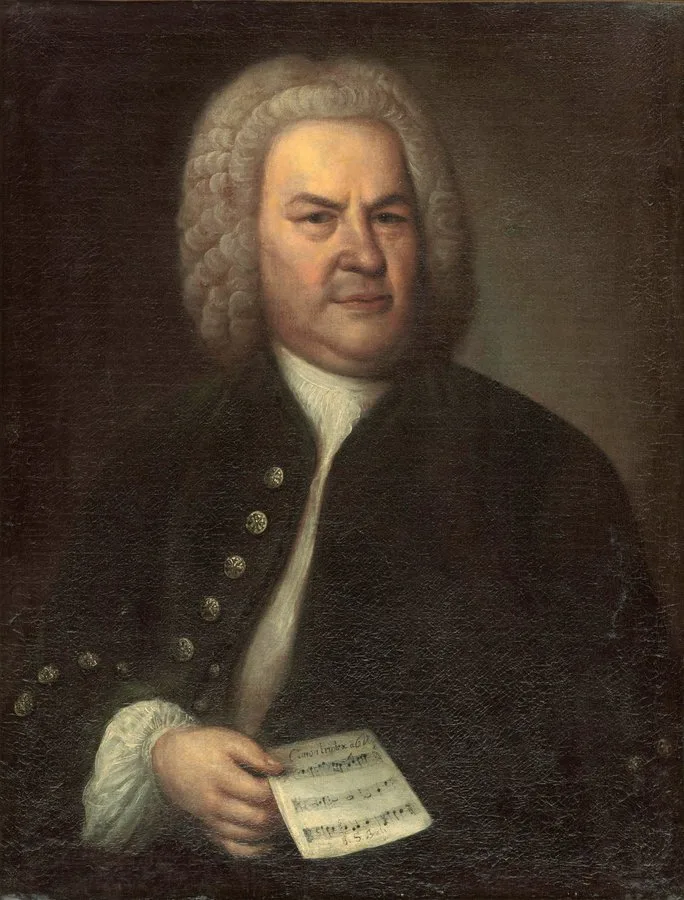
This flexibility is why Bach’s music has been so fertile ground for reinterpretation, especially since the rise of the period-instrument movement. From the “textbook” recordings of the 1960s and ’70s by violinists like Henryk Szeryng and Arthur Grumiaux to the historically informed approaches of players like Rachel Podger and Andrew Manze, BWV 1042 is constantly being rediscovered. The score stays the same, but the sound of the piece changes with the times. This adaptability is one of the secrets to its 300-year lifespan.
If you’re just getting into this piece, here’s a suggestion: listen to two different recordings back-to-back. Pick Hilary Hahn and Vilde Frang, or maybe one modern-instrument player and one period-instrument player. Compare just three things: how they play the main theme in the first movement, the speed of the exchanges between soloist and orchestra, and how they phrase the melody in the second movement Adagio. You’ll quickly get a feel for what makes a Bach concerto tick.
There’s a long tradition of approaching Bach’s music not as a sacred text but as a blueprint for interpretation. BWV 1042 is one of the best examples of that tradition, which is why new and exciting recordings are still being made. The piece never has a chance to get boring.
At around 17 minutes, it’s short and easy to digest. The three-movement structure is clear, and the distinct character of each movement makes it a great entry point for anyone new to classical instrumental music. But it’s also a piece that rewards repeat listening. Details you missed the first time suddenly pop out. The moment you can actually hear the first movement’s main theme returning in a different key is the moment the piece really clicks. It’s an incredible experience.
Recommended Recordings
Hilary Hahn / The Deutsche Kammerphilharmonie Bremen (2003, DG)
Hilary Hahn’s Bach is decisive. There’s no emotional excess or unnecessary ornamentation, just a laser-like focus on each note. This approach works brilliantly for BWV 1042, making the first movement’s structure sound incredibly clear. The balance between soloist and orchestra is perfect, and while she plays on a modern instrument, her sense of Baroque style is impeccable. The drive in the third movement is fantastic.
Vilde Frang / Frankfurt Radio Symphony · Philippe Herreweghe (2016, hr-Sinfonieorchester)
Philippe Herreweghe is an authority on Baroque interpretation. In this performance, Vilde Frang’s solo playing is a bit more free and breathable. It’s a great counterpoint to Hahn’s focused intensity. The interplay between soloist and orchestra in the second movement Adagio is particularly compelling. The full performance is available on the orchestra’s official YouTube channel.
Lars Ulrik Mortensen / Concerto Copenhagen (2006, Dacapo)
If you want to hear what this might have sounded like in Bach’s time, this period-instrument recording is an excellent place to start. The texture of the gut strings and the transparency of the small ensemble give you a vivid idea of the sound world of the Köthen court. The staccato bass line in the second movement sounds completely different here than on modern instruments—it’s a must-hear comparison.
Listen with the Score
The score for Bach’s Violin Concerto BWV 1042 is available for free on IMSLP. If you follow along while listening to the first movement, you can see exactly how often the ritornello theme appears and how it’s transformed. The complexity of the solo part also becomes much clearer when you see the notes on the page. Looking at the score for the third movement, you’ll understand why violinists find it so challenging.
View the score for Bach’s BWV 1042 on IMSLP)
Frequently Asked Questions
When was Bach’s Violin Concerto BWV 1042 composed?
Bach composed the Violin Concerto in E major, BWV 1042, during his Köthen period, approximately between 1717 and 1723. It was written for the court of Prince Leopold of Anhalt-Köthen, where Bach served as Kapellmeister and produced many of his most celebrated instrumental works.
What is the structure of BWV 1042?
The concerto has three movements: I. Allegro (E major), II. Adagio (C♯ minor), and III. Allegro assai (E major). The outer movements are energetic and rhythmically driven, while the slow second movement offers a deeply expressive melodic line that stands out as the emotional heart of the work.
Does BWV 1042 exist in a harpsichord version as well?
Yes. Bach later transcribed this concerto for harpsichord as BWV 1054, in D major. It is one of several violin concertos he adapted for keyboard, and the harpsichord version is frequently performed and recorded alongside the original. Comparing the two versions reveals Bach’s skill in idiomatic writing for different instruments.
Which movement should a first-time listener start with?
The second movement, Adagio, is often recommended as an entry point. Its lyrical, singing melody is immediately accessible and gives a strong sense of Bach’s expressive depth. The outer movements are equally rewarding once you have the slow movement as a reference point for the concerto’s overall emotional range.
What recordings of BWV 1042 are recommended?
Among the most admired recordings are those by Arthur Grumiaux, whose tone and clarity bring out the concerto’s Baroque elegance, and Hilary Hahn, who balances period-informed style with modern technique. Rachel Podger’s period-performance recording is also widely praised for its rhythmic vitality and stylistic authenticity.