Górecki’s Symphony No. 3 ‘Symphony of Sorrowful Songs’, Op. 36

The million-selling symphony of absolute slowness

Composer
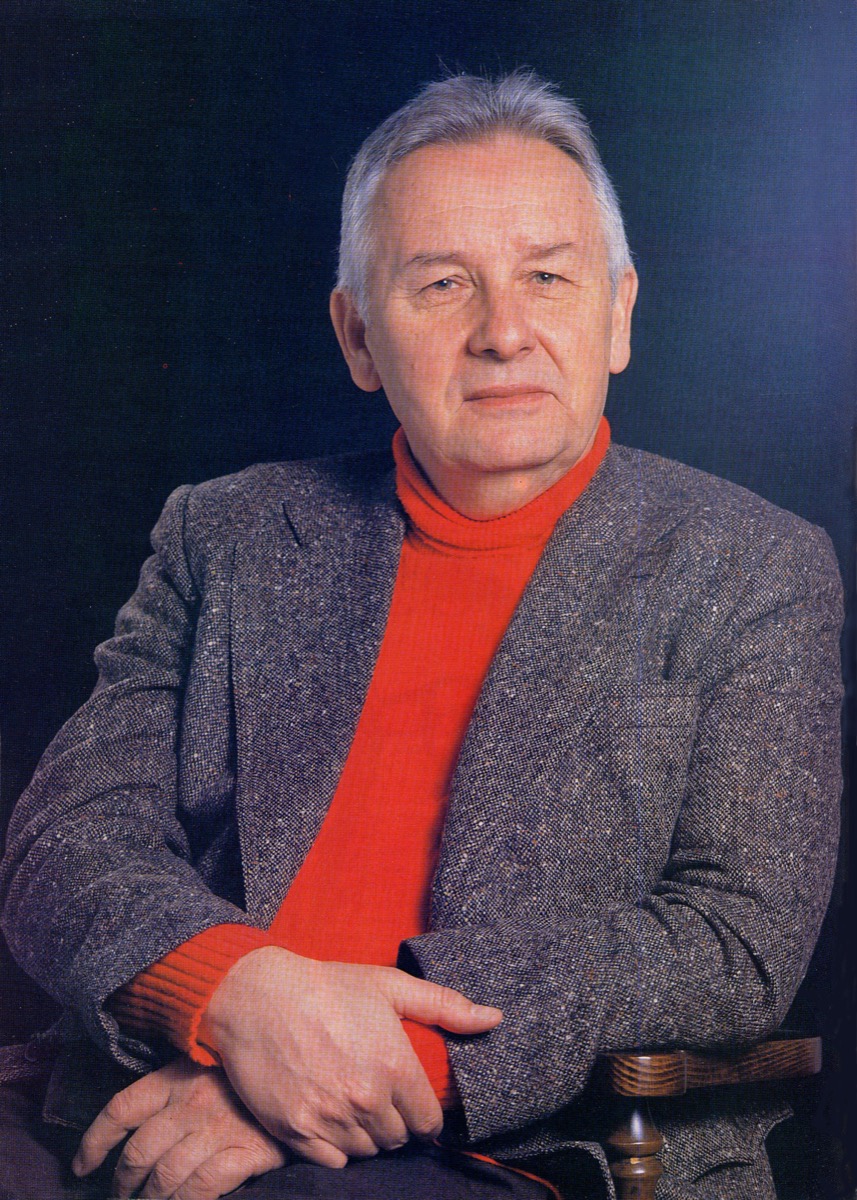
Henryk Mikołaj Górecki
(1933–2010)
Work
Symphony No. 3 ‘Symphony of Sorrowful Songs’, Op. 36
Composed
1976
Movements
3 movements (all Lento)
I. Lento – Sostenuto tranquillo ma cantabile
II. Lento e largo – Tranquillissimo
III. Lento – Cantabile-semplice
Instrumentation
soprano solo, string orchestra, piano
Premiere
April 4, 1977
Royan International Art Festival, France
Conductor: Ernest Bour, Südwestfunk Symphony Orchestra
Soprano: Stefania Woytowicz

The Symphony of Sorrowful Songs: Essential Background

In 1992, a bizarre thing happened: the slowest symphony in the world stormed the pop charts. In an era when a classical album cracking the Billboard charts was front-page news, Polish composer Henryk Górecki’s Symphony No. 3 sold over a million copies, shattering every rule in the classical music playbook. Written by a former standard-bearer of the avant-garde, this piece has no complex techniques, no flashy orchestration. Just three slow movements, a single soprano, and texts about loss.

But let’s be clear: this is not “easy listening” classical music. The first movement alone is 27 minutes long. And for those 27 minutes, all that happens is a melody in the low strings that slowly, painstakingly, builds on itself. Yet it was this slowness, this brutal simplicity, that grabbed millions of listeners and held them captive for an hour. How on earth did that happen?

If you think about what a symphony is supposed to be, this work’s strangeness becomes even clearer. Since Beethoven, the symphony has been an art of contrast and development. Fast movements clash with slow ones, tension builds and resolves, themes are twisted and transformed to create a dramatic narrative. Górecki threw all of that out. No contrast. No development. Not even the tension that begs for resolution. There is only a single emotional state, sustained for 54 minutes. And that is the most radical thing about it.

From a Prayer Scrawled on a Gestapo Prison Wall to a Symphony

Górecki was born in 1933 in Silesia, southern Poland. He lost his mother at age two and grew up experiencing the full horror of World War II. After the war, he studied at the Katowice Academy of Music and, by the 1960s, stood alongside Krzysztof Penderecki at the forefront of the Polish avant-garde.

헨리크 미코와이 고레츠키
Henryk Mikołaj Górecki (1933–2010)

In his early days, Górecki was as aggressive as they came. His Symphony No. 1 (1959) used twelve-tone techniques, while Scontri (1960) unleashed harsh, violent blocks of sound that shocked the music world. At this point, he was, without a doubt, a core figure of the modernist establishment.

Then, in the 1970s, everything changed. He suddenly returned to tonality and started writing beautiful melodies. His work became filled with material drawn from medieval Polish religious music. To the contemporary music scene, this felt like a betrayal. His colleagues in Warsaw were baffled, and he was gradually pushed out of the Polish compositional mainstream.

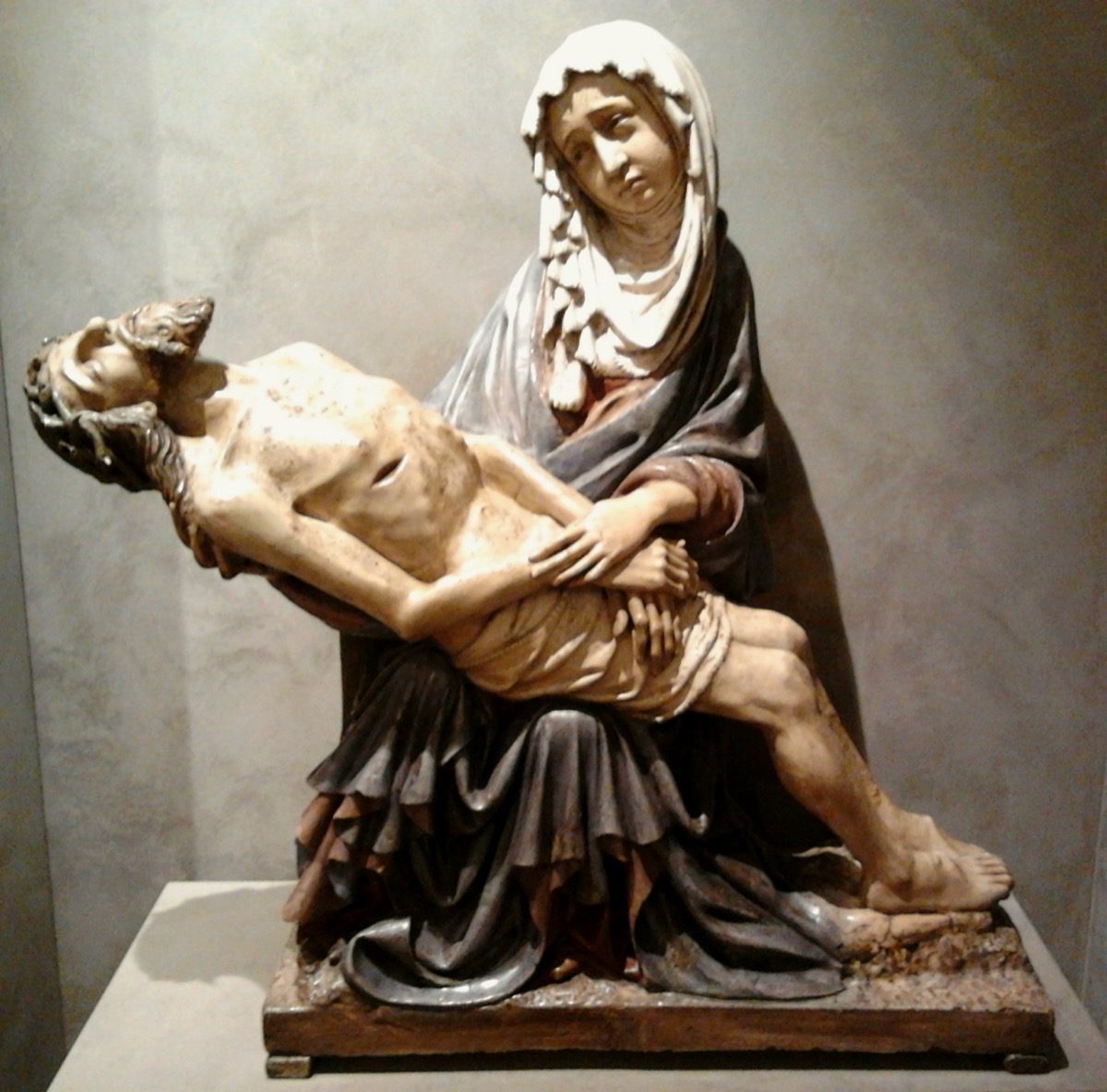
Symphony No. 3 was born at the peak of this dramatic turn. In 1976, Górecki selected three texts. The first was a 15th-century lament of the Virgin Mary, passed down in a monastery—a mother’s song as she watches her son on the cross. The second was a prayer scratched into the wall of a Gestapo prison cell in 1944 by an 18-year-old girl, Helena Wanda Błażusiakówna: “O Mamo, nie płacz, nie. / Niebios Przeczysta Królowo, / Ty zawsze wspieraj mnie. / Zdrowaś Mario.” (O Mother, do not weep. / Immaculate Queen of Heaven, / Support me always. / Hail Mary.) The third was a folk song about a mother searching for her son who went off to war.

A single theme runs through all three texts: the sorrow of a mother who has lost her child, the prayer of a daughter separated from her mother, and the call of a mother for a son who will not return. The settings jump 500 years, from the 15th to the 20th century, but the emotional core remains identical. Górecki saw this connection with absolute clarity.

How he found these texts is also telling. The first movement’s lament came from a 15th-century Polish literary anthology. He stumbled upon the second movement’s prayer while researching local history. The third movement’s folk song was chosen from a collection compiled by an ethnographer. None of these were “high literature.” They were the raw voices of the people: a monastery prayer, prison graffiti, a village song. Górecki deliberately chose these unadorned, unfiltered voices, and that choice gave the work a universal power that transcends its time.

How the World’s Slowest Symphony Climbed to No. 6 on the Pop Charts

All three movements of the symphony are marked ‘Lento’—very slow. There isn’t a single fast movement. This was a conscious choice to go against the grain of the traditional symphony, which relies on the contrast between fast and slow to build its dramatic structure. The first movement alone is 27 minutes; the total performance time is 54 minutes. There’s no sonata form, no development, no recapitulation. It just slowly builds, and then slowly fades away.

The story of how this piece became famous is as unique as the music itself. It premiered in France in 1977 to a lukewarm reception. At a festival for avant-garde music, this sudden appearance of a tonal, slow-moving symphony left both audiences and critics confused. A recording was made in Poland, but it remained virtually unknown in the West for 15 years.

The turning point came in 1992. The American label Nonesuch Records released a new recording with soprano Dawn Upshaw, conductor David Zinman, and the London Sinfonietta. The album had a quiet release. But then a new British radio station, Classic FM, started playing one of the movements on heavy rotation.

The result was something no one could have predicted. As one Classic FM insider recalled, the station was flooded with calls. “What was that piece you just played?” The album shot to No. 6 on the UK pop album charts. It flew off the shelves in the US, Germany, and Japan. Total sales eventually surpassed one million copies worldwide—an unprecedented success for a 20th-century contemporary work. One newspaper ad from the time shows it being marketed right alongside albums by Madonna, Prince, and R.E.M.

Why did this piece provoke such a massive response? The reason was surprisingly simple. The music demands no prior knowledge. You don’t need to know sonata form or understand counterpoint. You just have to sit and listen. A woman’s voice floats over a slow-moving tide of strings. You don’t even need to know what she’s singing about. The emotion of sorrow needs no translation.

The effect on first-time listeners is often physical. People describe being unable to move, unable to speak, realizing only after the music stops that tears have been streaming down their face. This is not an uncommon reaction. The word “cried” appears again and again in descriptions of listening to this symphony.

Górecki himself was bemused but calm about the commercial success. “It’s a good thing,” he said, “but it doesn’t change the music itself.”

The historical context also played a role in this unbelievable success. 1992 was just after the end of the Cold War. At a time of growing interest in Eastern Europe, here was a Polish composer with a symphony addressing the wounds of World War II. The early 1990s also saw the rise of New Age and World Music. The public’s ears were already open to meditative, repetitive music, and Górecki’s symphony arrived as a far more profound, artistically weighty alternative.

Classic FM’s role cannot be overstated. Launched in 1992, the station prioritized “accessibility” over the stuffy, authoritarian approach of traditional classical channels. Their strategy was to minimize commentary and play long stretches of music that demanded nothing but attention. Górecki’s Symphony No. 3 was a perfect fit. It was music that needed no explanation, music that could elicit an immediate response from a first-time listener. Classic FM put it on repeat, listener inquiries poured in, and a phenomenon was born.

After the success of the Zinman/Upshaw recording, other labels moved quickly. Naxos released a recording by Polish performers, and the forgotten first recording from 1978 was reissued. Dozens of other recordings followed. For a single work of contemporary music to generate such a vast discography was an exceptionally rare event.

Górecki – Symphony No. 3, Movement 1

Movement by Movement: Three Mothers, Three Prayers

Movement 1: A 27-Minute Canon, as the Virgin Mary Sings of Her Son’s Wounds

Lento – Sostenuto tranquillo ma cantabile. Approx. 27 minutes.

카토비체 음악원
Katowice Academy of Music (now Karol Szymanowski Academy of Music)

It begins with a melody from the double basses, sounding as if it’s rising from the deepest part of the earth. Soon, the cellos follow with the same melody, slightly delayed. Then the violas, second violins, and first violins join in, one by one. It’s a pure ‘canon,’ where every instrument plays the same melody at a different time. It takes about 10 minutes for these layers of sound to accumulate into one massive sonic structure.

The music builds with extreme slowness but relentless intensity. It draws a huge crescendo, starting from the quietest sound (pianissimo) and swelling to a point where the entire orchestra seems on the verge of exploding (fortissimo). At that peak, the soprano finally enters. She sings the 15th-century lament of the Virgin Mary: “My son, my chosen and beloved, share your wounds with your mother… Since, my dear son, I have always carried you in my heart.”

In the moment a medieval mother’s voice soars over the immense wave of a 20th-century orchestra, the distinction of time becomes meaningless. After the song ends, the music slowly deconstructs, returning to the initial silence. The structure of this movement is a perfect arch: a single, colossal 27-minute crescendo and decrescendo. It is a complete world unto itself.

The way Górecki builds this enormous sound is astonishing. He does it almost exclusively with strings, using almost no wind instruments. For 27 minutes, the music is driven not by changes in timbre, but by changes in volume and density alone. That is the true radicalism of this movement.

The canon technique itself is ancient. But Górecki expanded that old technique to a modern scale. While a typical canon might last a few minutes, this one mobilizes the entire orchestra for over 10 minutes. The result feels less like a canon and more like “sonic geology.” Layers of sound accumulate like sedimentary rock, until a climax erupts like a massive tectonic shift.

What’s even more surprising is the simplicity of the canon’s melody. Moving within a narrow range, it evokes medieval church music. But as the parts overlap, the harmonic density increases, and the color of sorrow deepens. To achieve monumentality without complex technique, through pure accumulation—that is what Górecki proved possible in this movement.

Movement 2: A Prayer on a Prison Wall, as an 18-Year-Old Calls for Her Mother

Lento e largo – Tranquillissimo. Approx. 9 minutes.

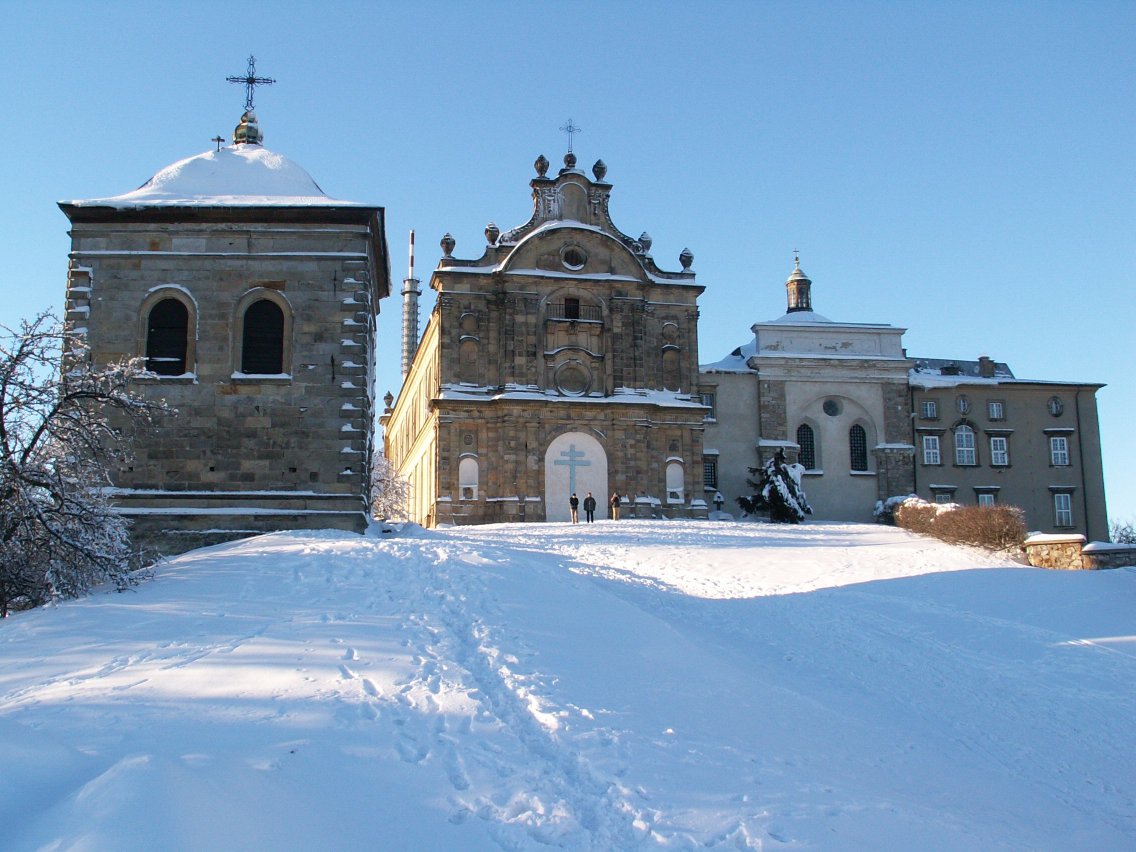
스비옹티 크시시 수도원
Święty Krzyż (Holy Cross) Monastery — source of the first movement text

This is the shortest movement of the symphony, but it carries the deepest resonance. Once you learn that these words were scratched into a Gestapo prison wall by an 18-year-old girl writing to her mother, the music becomes impossible to hear the same way again./p>

As the strings play simple, quiet chords, the soprano sings Helena’s prayer: “O Mother, do not weep. / Immaculate Queen of Heaven, / Support me always. / Hail Mary.”

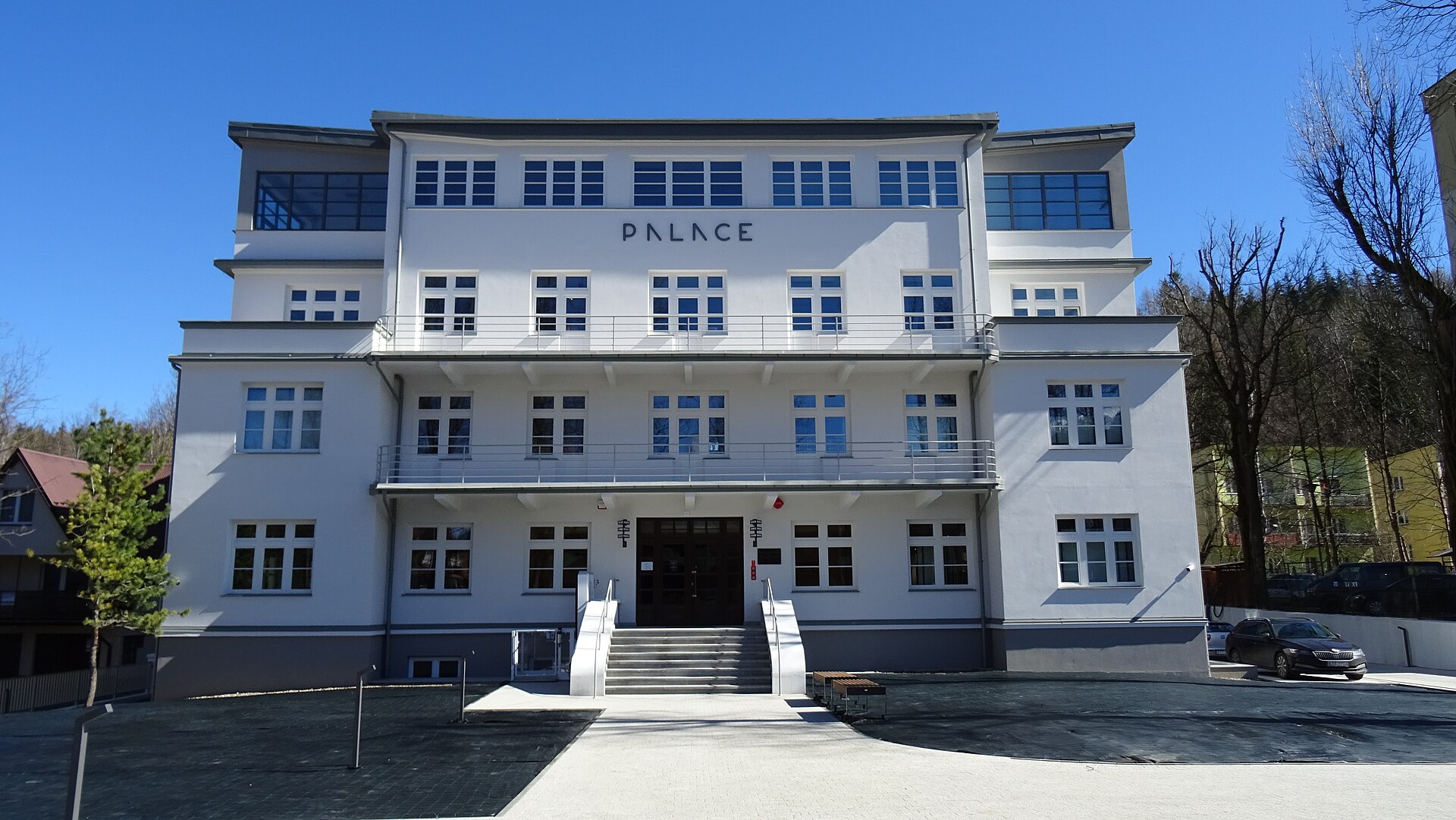
In 1944, Helena Wanda Błażusiakówna was 18 years old, arrested by the Nazis and imprisoned in the Gestapo headquarters in Zakopane. No definitive records of her ultimate fate exist. All that is certain is that a few lines of prayer, scratched into a cold wall, were discovered after the war, and that Górecki placed them at the very heart of his symphony.

Here lies the genius of Górecki’s choice. This movement is not a grand political statement about the Holocaust. It focuses not on the grand narrative of history, but on the most private moment of a single individual. A girl calling for her mother in the face of death. That’s it. By reducing the weight of history to an individual’s voice, Górecki achieves a more universal sorrow.

Musically, all excess is stripped away. There is no violent climax, no dramatic turn. Instead, in a quietness bordering on silence, the soprano’s voice alone fills the space. The orchestra seems to hold its breath, listening to the girl’s prayer. This is why these 9 minutes can feel heavier than the 27 minutes of the first movement. It’s the paradox of music: the less there is, the greater the weight of what remains. This movement is proof of that paradox.

The former Gestapo prison building in Zakopane, known as the “Palace,” still stands. Hundreds of Poles were imprisoned there; many were executed or sent to Auschwitz. Górecki never visited the site, but he said that reading the prayer was enough. In those few short lines, the horror of war, the power of faith, and the longing for a mother were all compressed.

Movement 3: A Mother’s Folk Song for Her Son, and a War That Never Ends

Lento – Cantabile-semplice. Approx. 18 minutes.

The third movement uses a folk song from the Opole region as its text. It is the song of a mother whose son has not returned from war: “Where has he gone, my dearest son? … Perhaps the cruel enemy has slain him. … You bad people, for God’s sake, tell me, where is my son?”

In the first movement, a medieval mother weeps for her son on the cross. In the second, a girl in prison calls for her mother. In the third, a mother again searches for her son. The three movements form a great circle. The grief of a parent who has lost a child, and the fear of a child separated from a parent, are repeated identically across 500 years. Górecki’s selection of these three texts was no accident. He pierced through three different eras, using the primordial relationship between mother and child as his axis.

The music of the third movement is more transparent and lyrical than the first. A single piano repeats a light, lullaby-like figure, while the strings gently embrace the folk melody. The melody itself is utterly simple. No virtuosity, no complex rhythms. But it’s this very simplicity that cuts straight to the listener’s heart, because this was a real song, sung in a real village in Silesia.

Pay attention to the piano’s role here. It only appears in this final movement of the entire symphony. It does nothing more than quietly repeat a short arpeggio, but it sounds like the accompaniment to a lullaby a mother would sing to her child. A song about searching for a lost son is layered over the faint memory of happy times, of a mother and child together. The child is gone, but the lullaby’s accompaniment still hangs in the air.

After the soprano’s final note, the music literally vanishes. It gets quieter and quieter, until at some point the sound is completely extinguished. It is not a conclusion, but a dissolution. At the boundary where you can’t tell if the music has ended or if your hearing has reached its limit, the symphony closes. In the moment the last note dissolves into the air, the audience usually sits in deep silence for several seconds. It’s difficult to even begin clapping. Anyone who has heard this piece live in a concert hall knows the immense weight of that silence.

Avant-Garde Traitor or Prophet Ahead of His Time?

Anyone who remembers the Górecki of the 1960s would be baffled by Symphony No. 3. How could the composer who created dissonant blocks of noise write music so simple and beautiful? Musicologists tried to explain this shift with the term “Holy Minimalism,” lumping him in with Estonia’s Arvo Pärt and Britain’s John Tavener. The category shared common traits: religious texts, simple harmony, and a meditative sense of time.

실레시아 풍경
Silesian landscape — the region where Górecki was born and raised

But Górecki himself disliked the label. “I am not a minimalist,” he said in an interview. “There are a great many notes in my music.” Indeed, the first movement is a massive structure where the entire orchestra takes 14 minutes to reach a climax. A more accurate description might be “radically focused music.”

Górecki never gave a clear reason for his change in style. Biographers point to two factors: lifelong health problems and his deep roots in the Catholic faith of his native Silesia. His musical turn wasn’t about following a trend; it was a return to his own deepest self.

What’s fascinating is that this shift was, in hindsight, ahead of its time. From the 1990s onward, popular musical taste moved increasingly toward simpler, more direct emotional expression. The fact that Górecki was already walking that path alone in 1976 is too significant to be a coincidence.

His choice becomes even more striking when compared to his Polish contemporaries. Penderecki also returned to a more Romantic language around the same time, but his transition was much more gradual. Lutosławski remained committed to his unique modernist language to the end. Górecki’s shift was the most radical, and ironically, it was his radical simplicity that reached the widest audience.

The immense attention given to Symphony No. 3 has, paradoxically, overshadowed his other major works. His 1979 work Miserere is a choral epic with an intensity that rivals the symphony. His Harpsichord Concerto is a unique piece where Baroque style collides with modern sonority. It’s a shame that these brilliant works are often lost in the symphony’s enormous shadow.

Premiere and Reception: 15 Years of Silence

The premiere of Symphony No. 3 took place on April 4, 1977, at the Royan International Festival of Contemporary Art in France, then one of the most avant-garde music festivals in Europe. On a stage that premiered new works by composers like Xenakis and Boulez, suddenly appeared this deeply tonal and slow-moving symphony.

The critical reaction was mixed. Some called it a “regression,” others a “bold new direction.” Either way, the piece failed to attract significant attention. The reaction within Poland was similar. Górecki was already seen as a defector from the avant-garde camp, and the Warsaw music establishment tended to treat him as a figure of the past.

The first recording was released in Poland in 1978 but circulated only among a small circle of enthusiasts. It remained almost completely unknown in Western Europe and the United States. This state of affairs lasted for 15 years. The world’s slowest symphony was also the world’s slowest to gain recognition.

Why This Symphony Still Stops People in Their Tracks

When you consider how we consume music in the 2020s, the existence of Górecki’s Symphony No. 3 is even more interesting. In an age where 15-second TikTok videos are the basic unit of content, the act of listening to a 54-minute slow symphony from start to finish feels like an act of resistance.

And yet, many people are still joining this resistance. On Spotify, Górecki’s Third is one of the most-streamed contemporary classical works by a huge margin. Full-length videos on YouTube have millions of views. A new generation continues to discover this piece through keywords like “slow listening” or “deep listening.”

The music also lives on in film and television. Its use in the plane crash scene of Peter Weir’s film Fearless (1993) is legendary. Since then, countless other media have borrowed this music for scenes of loss and mourning.

The piece is also notable for its role as “healing” music. It’s reportedly used frequently in grief counseling within the field of music therapy. There are many testimonials from people who have experienced bereavement, saying that listening to this symphony helped them fully confront their emotions.

But above all, hearing this piece live in a concert hall is a profoundly different experience from a recording. The acoustics of the space make the buildup of the first movement’s canon a physical sensation. The air vibrates, the seats tremble, and at the climax, you feel a pressure in your chest. The silence of the second movement creates an absolute tension, as if the entire hall is holding its breath. And then there’s the silence after the third movement ends. Those few seconds, when two thousand people hold their breath in unison, are a moment that no recording can ever replicate.

What Górecki’s Symphony No. 3 proves is perhaps simple. People don’t reject complex music; they reject false emotion. Communicating sincerity takes time, and the 54 minutes of slowness are a necessary condition for that communication, not an obstacle. This piece willingly opens its doors only to those who are “ready to listen.” That was true 30 years ago, and it’s still true today.

Recommended Recordings

* Dawn Upshaw / David Zinman / London Sinfonietta (1991, Nonesuch)

This is the one. The million-selling legend that made the piece a global phenomenon. Upshaw’s voice is crystal-clear, and Zinman’s interpretation is understated, allowing the music to speak for itself. If you’re hearing this symphony for the first time, this is the definitive recording.

The 1992 Nonesuch recording featuring soprano Dawn Upshaw and conductor David Zinman that sold over a million copies.

* Joanna Koslowska / Kazimierz Kord / Warsaw Philharmonic (1994, Naxos)

A Polish work interpreted by Polish performers. This version has more weight than Upshaw’s, and the climax of the first movement feels heavier and more massive. As a Naxos release, it’s also budget-friendly, making it an excellent second recording to explore.

* Beth Gibbons / Krzysztof Penderecki / Polish National Radio Symphony Orchestra (2019, Domino)

A radical recording featuring Beth Gibbons, the iconic vocalist of the band Portishead. The raw texture of her voice, untrained in the classical tradition, brings an unexpected and powerful conviction to the text. The fact that it’s conducted by Penderecki, Górecki’s onetime avant-garde comrade, adds another layer of meaning.

Listen with the Score

The score for Górecki’s Symphony No. 3 is published by Boosey & Hawkes. As a 1976 work, it is still under copyright and not available on free score websites like IMSLP. However, the structure of the piece is so transparent that following the musical flow without a score is not difficult. If you focus on how each string section enters and builds the sound in the first movement, your ears can easily do the work of the score.

Frequently Asked Questions

What is Górecki’s Symphony No. 3?

It is a symphony for soprano and orchestra composed in 1976. All three movements are set at a very slow tempo, and in each, the soprano sings Polish texts concerning loss and sorrow. The 1992 recording by Dawn Upshaw and David Zinman sold over a million copies, making it one of the most commercially successful works of contemporary classical music in history.

What does the subtitle ‘Symphony of Sorrowful Songs’ mean?

The original Polish title is ‘Symfonia pieśni żałosnych,’ which translates to ‘Symphony of Plaintive Songs.’ The subtitle comes from the fact that each of the three movements is a ‘song’ about loss: a 15th-century lament of the Virgin Mary, a prayer from a Gestapo prison cell, and a folk song of a mother who has lost her son.

What are the texts used in each movement?

The first movement uses a 15th-century lament of the Virgin Mary from the Holy Cross Monastery. The second movement uses a prayer scratched into a Gestapo prison wall in 1944 by an 18-year-old girl, Helena Wanda Błażusiakówna. The third movement is a folk song from the Opole region about a mother searching for her son lost in war.

Why did this piece suddenly become so famous in the 1990s?

Its fame is largely due to the 1992 Nonesuch recording featuring Dawn Upshaw and David Zinman. The new British radio station ‘Classic FM’ heavily promoted the album, leading to widespread word-of-mouth success. It climbed to No. 6 on the UK pop album charts and sold over a million copies worldwide.

How long is the performance?

The symphony lasts approximately 54 minutes. The first movement is about 27 minutes, the second about 9 minutes, and the third about 18 minutes. All three movements are marked ‘Lento’ (slow), maintaining a single, vast, meditative flow throughout the entire work.

Is this piece about the Holocaust?

While the text of the second movement comes from a Gestapo prison, deeply connecting it to the Holocaust, the composer intended the work not as a political statement about a specific event but as a piece about universal loss. By using texts that span from the 15th century to the modern era, it addresses the enduring sorrow between a mother and child.

Further Reading

Copyright notice · The Classic Note does not permit unauthorized reproduction, reposting, redistribution, or translation of its articles. Brief quotations are allowed only with clear attribution and a link to the original page. Please contact us for reuse or collaboration requests.