- Composer
- Sergei Prokofiev (1891–1953)
- Work
- Symphony No. 5 in B-flat major, Op. 100
- Composed
- He wrote most of the score during the summer of 1944 at the Composers’ House retreat at Ivanovo, and finished it in Moscow that autumn.
- Movements
- Four movements, about 40–45 minutes
I. Andante · II. Allegro marcato · III. Adagio · IV. Allegro giocoso - Premiere
- Prokofiev conducted the first performance of his Symphony No. 5 in B-flat major, Op. 100 on January 13, 1945, in the Great Hall of the Moscow Conservatory, with the USSR State Symphony Orchestra.
Artillery fire broke out as he raised his baton at that January 13, 1945 premiere, and the audience only learned afterwards that the guns were a Red Army salute marking the crossing of the Vistula. Prokofiev lowered his arms, stood there, and waited for the guns to stop. Then he started the symphony.
That story is in every programme note, and it is the least interesting thing about the piece. The Fifth is assembled from the standard equipment of a wartime propaganda score — the brass fanfare, the marching bass line, the big major-key finish — and Prokofiev spends forty minutes keeping all of it from settling into something comfortable. This is a guide to hearing that, movement by movement, plus four recordings that disagree with each other in useful ways.
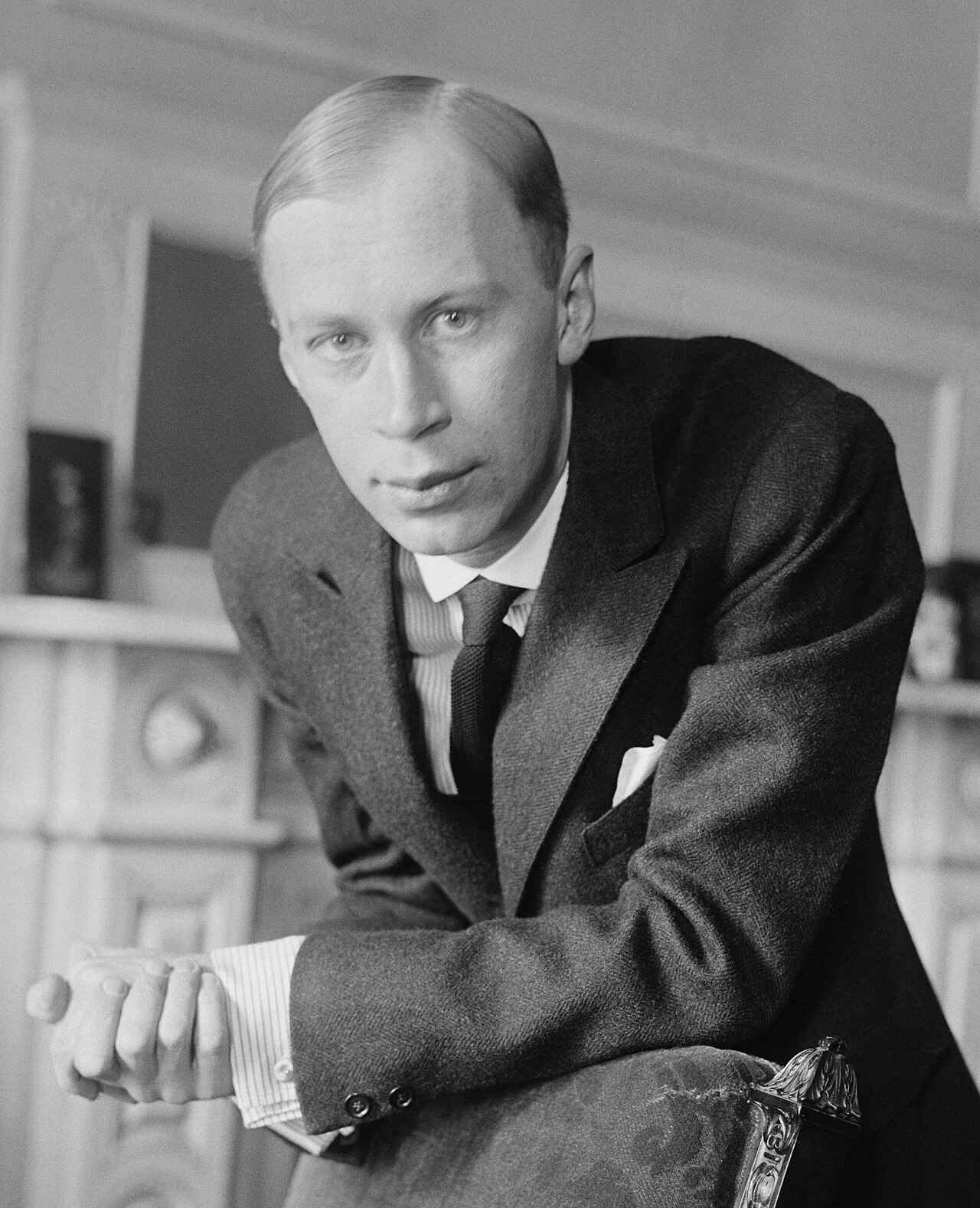
The symphony he didn’t write for fourteen years
His Symphony No. 4, Op. 47 had its first performance on November 14, 1930, played by the Boston Symphony Orchestra under Serge Koussevitzky, and fourteen years separate that 1930 premiere from the Fifth of 1944. That is an extraordinary gap for a composer who had produced four symphonies in twelve years and clearly enjoyed the form.
What sat in the gap was a relocation. Prokofiev spent the 1920s as an internationally mobile modernist and then settled back in the Soviet Union permanently in the mid-1930s, into a musical culture where abstract instrumental music was the most exposed thing you could write. A ballet has a story you can point at. A film score has pictures. A symphony has nothing to hide behind, and the charge of formalism was aimed precisely at music that could not explain itself in words. So he wrote ballets, film scores and cantatas, and left the symphony alone.
Then the war turned. Evacuated with other composers to a state retreat at Ivanovo, he drafted the Fifth in less than a month. His own description of the piece has become famous: he called it a hymn to free and happy Man, to his mighty powers, his pure and noble spirit. He also said something less quotable and more revealing about where the music came from: “I cannot say that I deliberately chose this theme. It was born in me and clamoured for expression.”
Read those two statements next to each other and you get the whole problem of this symphony in miniature. One is the sentence a Soviet composer says out loud in 1944. The other sounds like a man describing something he could not stop.
What to actually listen for
Four things carry this piece. Catch them and the Fifth turns from forty minutes of impressive noise into an argument you can follow.
Melodies that are too long. The opening theme, flutes and bassoons in octaves over almost nothing, keeps going past the point where you expect a cadence. Prokofiev writes phrases that outlast their own harmonic support, so the melody drifts a bar or two beyond the chord that was holding it up. That is where the strange, unhurried grandeur of the first movement comes from: the tune keeps going at its own rate and the harmony has to catch up to it.
The orchestra used as an amplifier. The scoring is huge but oddly plain: piano, harp and low brass are scored for mass and attack, with tone colour a distant second, and the piano mostly doubles bass lines and hammers accents. When Prokofiev wants weight he adds instruments playing the same notes instead of adding new harmony — the technique of a man who spent a decade writing for film, and the reason the loud passages hit like something mechanical.
Ostinato as a threat. The second movement runs on a repeating accompaniment figure that never stops adjusting itself — a clarinet-and-string motor with the accents shoved off the beat. A repeated figure that lands where you expect it settles the ear; this one shifts just enough that the ear has to keep re-fixing it, and the whole scherzo runs on that gap.
Big arrivals that never quite land. This is the one that matters most. Over and over, Prokofiev sets up a full-blooded B-flat major arrival and then puts a wrong note in the bass, or lets the tempo lurch, or hands the last word to a snare drum. The symphony ends in the home key at maximum volume, and it still does not feel resolved. That is craftsmanship, and it is the hardest thing in the piece to hear on a first pass.
Here is the whole symphony, free, in a complete studio performance from Rudolf Barshai and the Philharmonia Orchestra on the Collins Classics channel. It is a lucid, brisk, unsentimental reading — a good reference recording to follow the cues above.
🎧 Also on: Apple Music · Spotify
The four movements
I. Andante — the slow opening nobody expects
Starting a symphony with a slow movement in sonata form is a real structural decision, and it costs Prokofiev the one thing symphonic first movements normally rely on: momentum. He gets something else instead. Because the tempo never rushes, every increase in intensity has to come from texture and register instead of speed, so the movement grows by accumulation. Woodwinds state the theme almost bare; strings take it; then brass, piano, and percussion pile on until the coda is a wall of B-flat major with tam-tam and bass drum underneath.
Listen to how little the tune itself changes on the way. My reading: the movement does the whole symphony’s work in advance, showing you that one idea can sound like a landscape or like a war memorial depending only on how many people are shouting it.
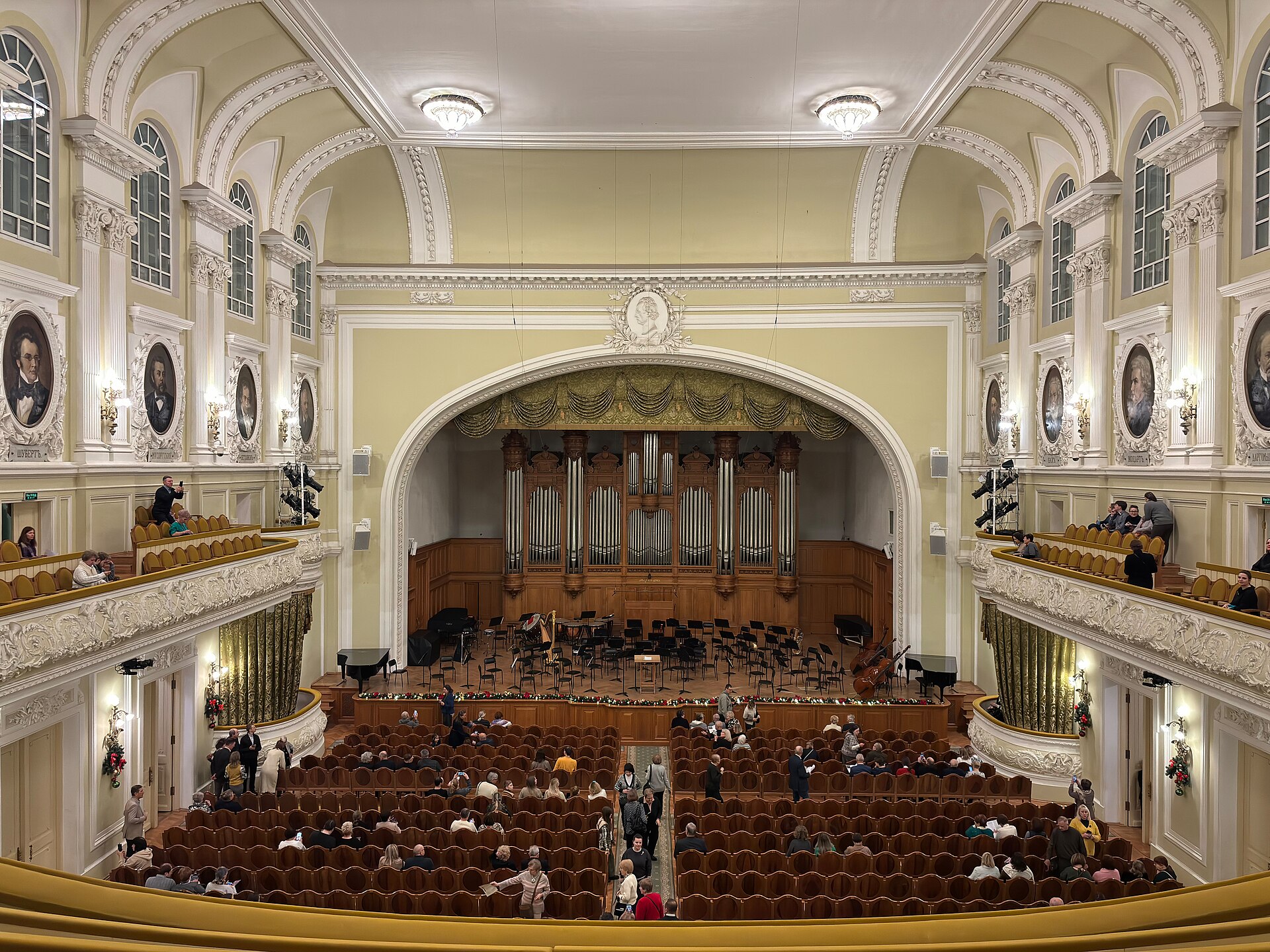
II. Allegro marcato — the machine that keeps slipping
The scherzo is the movement people quote when they call Prokofiev sarcastic, and the mechanism behind that impression is purely rhythmic: a clarinet figure sets up a tight, spinning accompaniment, and the melodic accents land consistently against it, never with it. Your ear keeps trying to lock the two layers together and Prokofiev keeps refusing.
The trio section in the middle drops into a heavier, swaying dance — slower, thicker, almost genial — before the opening motor returns and the movement accelerates itself apart. The final page is the clearest joke in the symphony: the machine seizes mid-stride.
If the stacked-brass, driving-ostinato side of orchestral writing is what you came for, this movement is the gateway drug, and our guide to classical music that sounds like metal picks up exactly that thread across the repertoire.
III. Adagio — the movement that earns the symphony
Three minutes into this movement you understand why people who dislike Soviet-era symphonies still keep the Fifth. It opens with a long descending string line over a slow, rocking accompaniment in the lower woodwinds, and the harmony under it will not commit to major or minor for bars at a time. Prokofiev holds the ambiguity by moving the bass in steps while the upper parts stay put, so chords keep changing colour without ever announcing a key change.
The central climax is genuinely violent — brass and percussion tearing through what has been an almost chamber-scaled texture — and then the opening material returns, quieter, with the accompaniment thinned out. Nothing is resolved. The movement simply stops insisting.
This is the passage I would put in front of anyone who thinks Prokofiev is all edges and irony. It sits in the same emotional territory as the finale of Tchaikovsky’s last symphony, and if that interests you, we have written about why the Pathétique ends in silence in detail.
IV. Allegro giocoso — the celebration with something wrong in it
The finale opens by quoting the first movement’s theme quietly in divided strings, then jumps into a fast rondo led by clarinets over a bouncing bass. For several minutes it behaves exactly like a victory finale: bright, tuneful, physically exciting.
Then the machinery from the second movement comes back. The rhythm tightens, the orchestration thickens, the phrases shorten, and the closing pages are strings sawing a repeated figure at high speed while brass hammer the tonic and percussion clatter over the top. It is loud, it is in B-flat major, and it sounds like a celebration that has been ordered to continue.
Whether Prokofiev intended that as criticism is not something anyone can prove, and I would treat confident claims in either direction with suspicion. What is on the page is verifiable: the material of the ending is the material of the scherzo, the movement that spent its whole length refusing to lock into place.
What the Fifth cost him
The symphony was an immediate success at home and abroad. Serge Koussevitzky and the Boston Symphony Orchestra gave the first American performances in November 1945, and the piece entered the international repertoire almost at once.
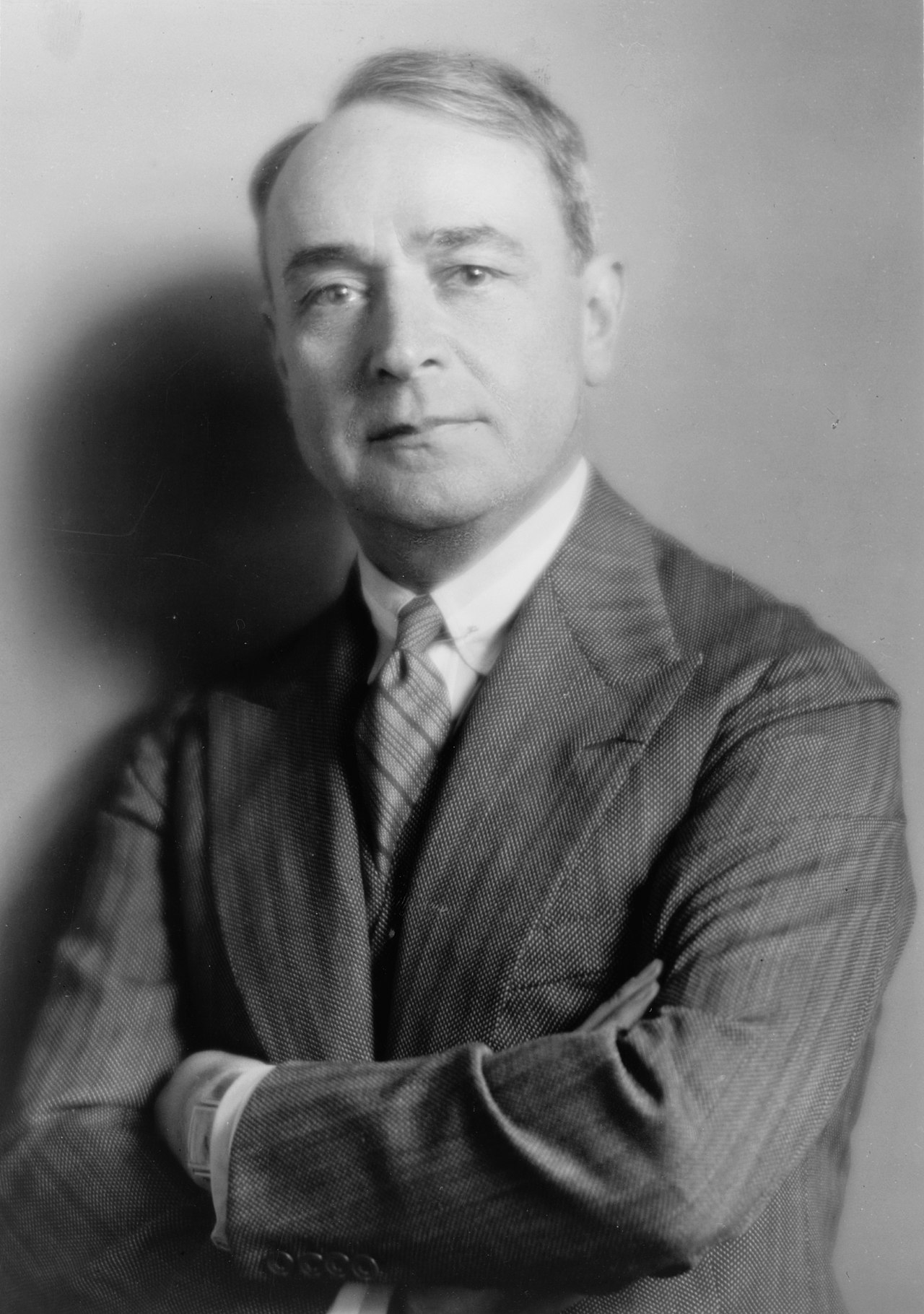
Prokofiev himself got almost none of the benefit. Within weeks of the premiere he suffered a fall and a concussion he never fully recovered from, and the Fifth Symphony was the last work he ever conducted. Doctors restricted his working hours for the rest of his life. He kept composing — the Sixth Symphony, the Seventh, the second version of the Fourth — but always as a partial invalid.
Then the political weather changed. On 10 February 1948 the Central Committee of the Communist Party issued the Zhdanov decree, which denounced Prokofiev, Shostakovich and Khachaturian for formalism, and several of his works were withdrawn from performance. Prokofiev died on March 5, 1953, the same day as Stalin; the state funeral for the dictator absorbed everything, and his own was a small affair.
Four recordings, and the one I would hand you first
The Fifth splits performers on one question: how much should the ending be allowed to sound like a genuine triumph? Conductors who take it as a victory finale push the tempo and open the brass. Conductors who hear something colder keep the rhythm rigid and let the percussion cut through. Both are defensible; they produce very different symphonies. It is the same fork we ran into writing about the best recording of Tchaikovsky’s Pathétique, where the argument is about how much despair a conductor is willing to let the last movement carry.
George Szell / Cleveland Orchestra / 1959 / Columbia — start here
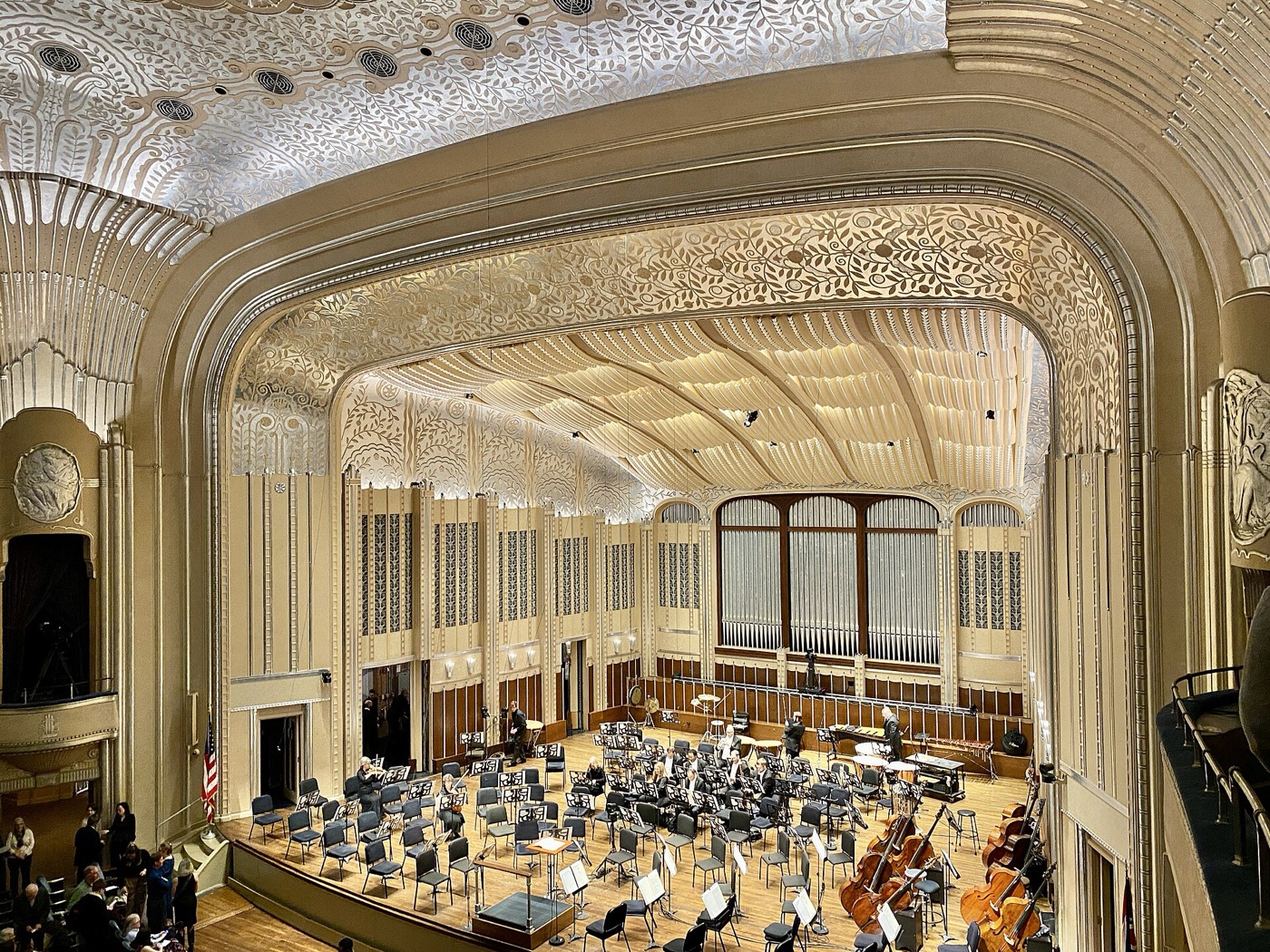
George Szell recorded it with the Cleveland Orchestra for Columbia on October 24 and 30, 1959, at Severance Hall, and it remains the version I put in front of first-time listeners. Szell’s Cleveland plays this music with a precision that makes the counterpoint audible — in the scherzo you can actually hear the accompaniment and the tune fighting over the beat rather than merging into a blur, which is the entire point of the movement. The Adagio is cooler than most, and some listeners will want more indulgence there. In exchange you get a finale that stays terrifyingly exact right up to the last bar, so the ending reads as pressure rather than joy. The mono-era stereo sound is bright and a little dry; it does not flatter the strings, but nothing is buried.
🎧 Also on: Apple Music · Spotify
Herbert von Karajan / Berlin Philharmonic / 1968 / Deutsche Grammophon — the maximal version
Herbert von Karajan recorded the Fifth with the Berlin Philharmonic for Deutsche Grammophon in 1968, and it is the opposite approach in almost every respect. Karajan smooths the string sound into a single continuous line, drives the first movement’s coda into something like a Bruckner climax, and lets the finale sound like an actual victory. The Adagio is gorgeous and long-breathed — better than Szell’s on pure beauty. The cost is the scherzo, where the sheer opulence of the orchestra buries the rhythmic slippage the movement depends on. Get this one second, once you know what the piece sounds like when it is sharp.
▶ Listen on YouTube · Apple Music · Spotify
Gianandrea Noseda / London Symphony Orchestra / 2022 / LSO Live — the modern pick
Gianandrea Noseda and the London Symphony Orchestra recorded it at the Barbican on 10 April 2022, and LSO Live released it in November 2023. This is the one to get if you want to hear the piece in genuinely modern sound with nothing sanded off: the low brass and the piano register properly, the percussion in the finale is present rather than implied, and Noseda keeps the Adagio moving instead of letting it sag. It is a live recording, so there is a little audience noise and the odd moment of ensemble looseness that Szell would never have permitted. Worth it for the bass end alone.
▶ Listen on YouTube · Apple Music · Spotify
Serge Koussevitzky / Boston Symphony Orchestra / 1946 / RCA Victor — the historical document
Koussevitzky and the Boston Symphony made the first recording of the symphony on February 6 and 7, 1946 at Symphony Hall in Boston for RCA Victor. Do not make this your only version — the sound is thin, the bass barely exists, and the percussion that matters so much in the finale is a rumour. Make it your second or third, because the performance is startlingly urgent, taken by musicians who had learned the piece within a year of its composition and clearly regarded it as news rather than repertoire. The Adagio in particular is played with a directness that later, more beautiful recordings tend to smooth away.
▶ Listen on YouTube · Apple Music · Spotify
If you only ever own one, own the Szell. If you want to know what the piece can sound like when a conductor believes the ending, own the Karajan too, and let the two of them argue.