- Composer
- Saint-Saëns
- Work
- Symphony No. 3 in C minor ‘Organ’, Op. 78
- Key
- C minor
- Composed
- 1886
- Movements
- 2 parts (4 movements)
Part I: Adagio – Allegro moderato / Poco adagio
Part II: Allegro moderato – Presto / Maestoso – Allegro - Instrumentation
- Strings, woodwinds, brass, percussion, pipe organ, piano 4-hands
- Premiere
- May 19, 1886, St. James’s Hall, London, conducted by the composer
—
After putting the final note to paper for his Symphony No. 3, Camille Saint-Saëns made a startling declaration: “I have given everything to it… what I have here accomplished, I will never achieve again.”
It’s rare for an artist to offer such a definitive self-eulogy. It often sounds like bravado or romantic exaggeration. But Saint-Saëns was serious. And remarkably, he kept his word. After completing the symphony at age 51, he never wrote another. He turned down every commission, every blank check, every plea for a successor. For the next 35 years until his death at 86, he composed prolifically, but the symphonic chapter of his life was closed, sealed by this one monumental work. It was as if he had hammered a sign on the door: “No symphony beyond this point.”
What did he pour into this piece that gave him such absolute certainty? And how did a symphony from 1886 become so ingrained in popular culture that even those who don’t know classical music recognize its triumphant finale?
Why is it called the ‘Organ’ Symphony?
The nickname comes from its prominent use of a pipe organ, which appears in two of the symphony’s four sections. In the Romantic era, integrating a “church” instrument like the organ into a “secular” symphony was a bold and unconventional move. Saint-Saëns himself subtitled the work “Symphony with organ,” cementing the instrument’s central role.
A Symphony of Shock and Awe
In the Paris of 1886, the symphony was largely German territory. The genre operated under the immense shadows of Beethoven, Schumann, and Brahms. While Parisians enjoyed symphonies, the ones they heard were almost exclusively imported. French composers who dared to write them often saw their work languish, unperformed. Bizet’s youthful symphony, for instance, wasn’t premiered until 58 years after his death.
It was against this backdrop that the Royal Philharmonic Society in London commissioned a new work from Saint-Saëns. Instead of playing it safe, he delivered a bombshell: a symphony built around a pipe organ.
In the 19th-century concert hall, the organ was strictly an instrument of the church. To have its sacred, stentorian voice erupt in the middle of a symphony was a radical act. It was the 1886 equivalent of bringing a cathedral choir on stage at a rock concert—a deliberate and shocking breach of convention. But this was no mere gimmick.
Saint-Saëns’s secret weapon was his own mastery. For nearly 20 years, he had been the chief organist at the prestigious Church of La Madeleine in Paris. He was one of the greatest organists alive. No one on earth knew better how to weave the organ’s immense power into the orchestral fabric—when to make it whisper and when to let it roar. The audacity of the concept was matched only by the precision of its execution.
The innovations didn’t stop there. He also brought a piano into the orchestra, but not for a flashy concerto. Instead, two pianists sit side-by-side, playing four-hands to create a percussive, shimmering texture that blends into the orchestra’s sound. He also dismantled the traditional four-movement structure. The symphony is cast in two large parts, played without a pause. This technique of seamlessly linking sections was a signature move of his mentor, Franz Liszt.
Finally, he built the entire work on a “cyclic theme”—a musical seed planted in the anxious opening bars that blossoms spectacularly in the finale, carried on the full-throated cry of the organ. It’s a masterful piece of architectural storytelling, where every element serves a dramatic purpose. This is why Saint-Saëns knew he was finished. He had thrown his entire arsenal into one perfectly engineered machine.
A Final Bow for a Fallen Mentor
The commission that sparked this symphony came from London, not Paris. The Royal Philharmonic Society had initially approached Charles Gounod, but when negotiations failed, the offer went to Saint-Saëns. He accepted in August 1885 and, after a nearly 30-year hiatus from the genre, poured out the symphony in just eight months.
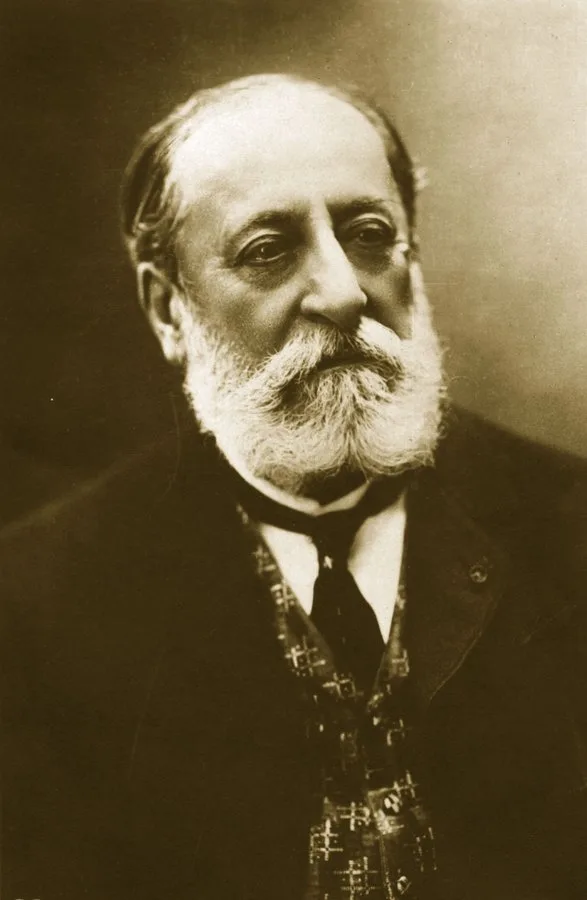
The premiere took place on May 19, 1886, at St. James’s Hall in London, with the composer himself conducting. It was a triumph. But just two months later, news arrived that would forever change the symphony’s meaning.
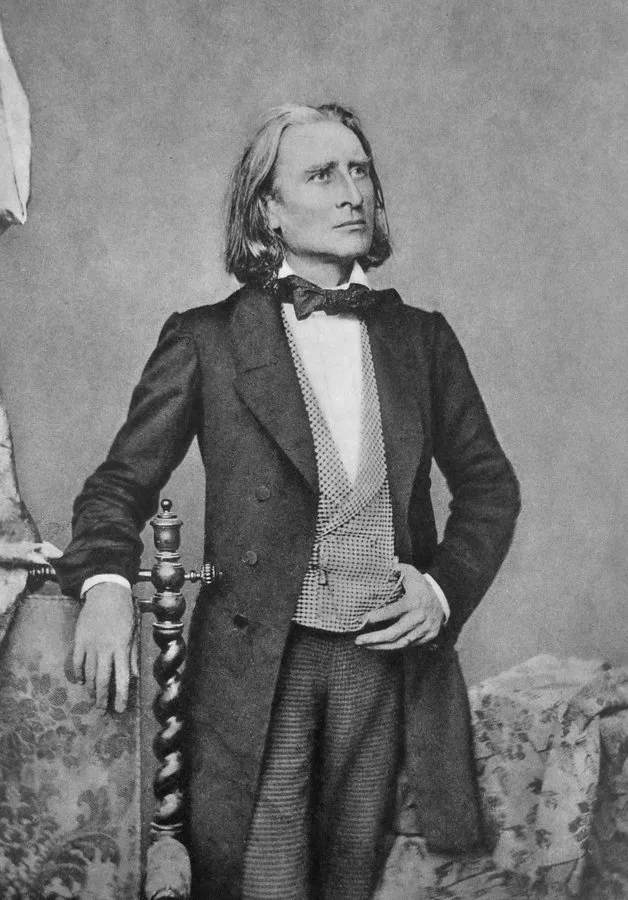
On July 31, 1886, Franz Liszt died suddenly of pneumonia in Bayreuth. Liszt was not just a superstar composer; he was Saint-Saëns’s hero and most important advocate. When Saint-Saëns was a young, unknown organist, it was Liszt who proclaimed him the greatest in the world. It was Liszt who pioneered the cyclic forms and thematic transformations that became the structural backbone of the ‘Organ’ Symphony.
As the score was being prepared for publication, Saint-Saëns added a simple, poignant dedication: “À la mémoire de Franz Liszt” (To the memory of Franz Liszt).
Whether he intended the dedication all along or added it in a moment of grief remains a mystery. But the timing transformed the work. This symphony, a monument to Liszt’s musical ideas, became his grandest eulogy. Knowing this, the music takes on a different weight. The organ’s first, hushed entrance in the slow movement no longer sounds merely beautiful; it sounds like a prayer, a personal farewell from a student to his master.
A Listener’s Guide: From Darkness to Blazing Light
You don’t need to be a musicologist to follow this symphony. All you need to remember is its core journey: from the stormy darkness of C minor to the brilliant, sun-drenched light of C major. The organ is the key that unlocks the final transformation.
Part I: Adagio – Allegro moderato & Poco adagio
There is no gentle introduction. The symphony opens with agitated, whispering strings, creating a sense of nervous tension. Hidden within this restlessness is the “cyclic theme,” a short melodic fragment that will become the triumphant anthem of the finale.
The storm eventually subsides, giving way to a more lyrical, hopeful section. This mood flows directly into the second movement, the Poco adagio. Here, the strings play pizzicato (plucking the strings) under a soulful woodwind melody. And then, it happens. The organ makes its first appearance.
It is not a thunderous blast but a soft, sustained chord that seems to emanate from the floorboards. The effect is magical. The acoustic space of the music suddenly expands, as if you’ve been transported from a room into a vast cathedral. It’s a moment of profound peace and reverence.
Part II: Allegro moderato – Presto & Maestoso – Allegro
The second half begins with a jolt. The orchestra launches into a driving, energetic scherzo. This is where the four-hand piano makes its presence felt, adding a bright, percussive edge to the furious string passages. The music builds in intensity, a relentless gallop that suddenly halts, holding its breath in a moment of tense silence.
Out of that silence comes one of the most electrifying moments in all of classical music: a single, colossal C major chord from the full organ. The darkness of C minor is vanquished in an instant. This is the symphony’s catharsis, a sonic sunrise. Brass and percussion join in a glorious fanfare, and the theme from the very beginning returns, no longer anxious but transformed into a majestic hymn of victory.
If the melody sounds familiar, it might be from the 1995 film Babe. Director Chris Noonan used this majestic finale to score the climax, introducing it to millions as the theme for a triumphant little pig. But hearing it through TV speakers is nothing like experiencing the physical pressure of the sound waves produced by a full orchestra and a massive pipe organ in a concert hall. The symphony ends with a final, crashing chord, and the ringing silence that follows is as powerful as the music itself.
The Symphony That Reopened a Door
While Saint-Saëns’s symphony was a personal farewell to the form, it was a thunderous new beginning for French music. At a time when French composers were struggling under the influence of German Romanticism, particularly the music of Wagner, the ‘Organ’ Symphony proved that a French voice could be both monumental and unique.
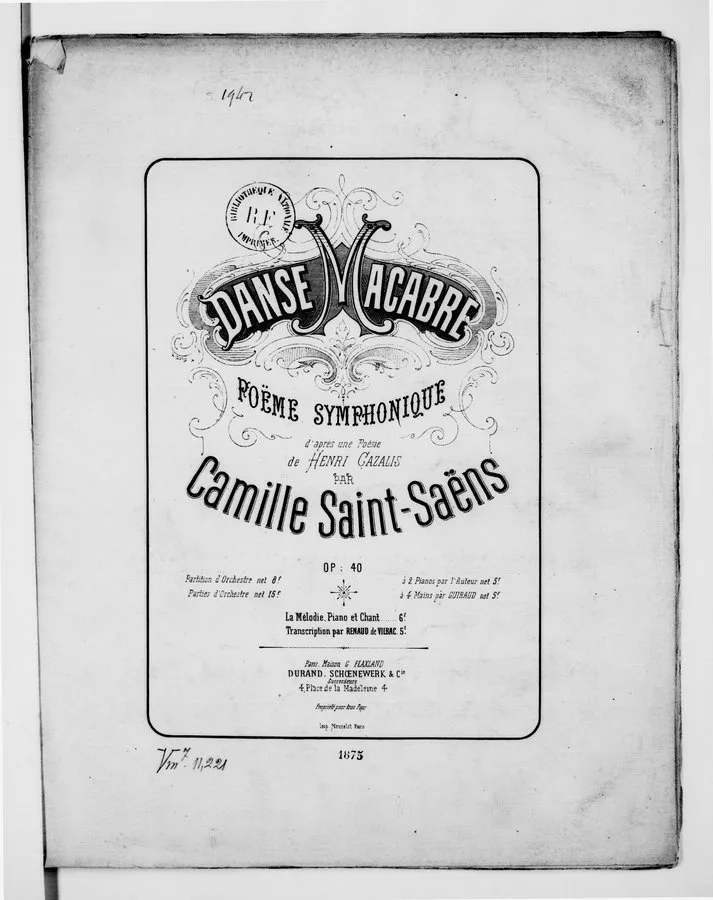
Its success broke a creative dam. In the years that followed, a wave of major French symphonies appeared from composers who had previously hesitated. César Franck (Saint-Saëns’s bitter rival), Vincent d’Indy, and Ernest Chausson all produced their landmark symphonic works in the wake of Saint-Saëns’s triumph. The man who quit the genre had inadvertently sparked its renaissance.
Today, the ‘Organ’ Symphony is a showpiece for any orchestra lucky enough to perform in a hall with a great pipe organ. It is a work of supreme confidence and spectacular effect, crafted by a composer who, for one last time, decided to leave everything he had on the stage. If you ever see it on a concert program, go. The moment that first organ chord hits, you’ll understand why.
Recommended Performances
The impact of this symphony hinges on the quality of the recording, especially how well it captures the immense sound of the organ.
Charles Dutoit / Montreal Symphony Orchestra (1982, Decca)
This is the benchmark recording, an audiophile classic for a reason. Decca’s sound engineering is legendary, and here it captures the perfect balance between the orchestra’s clarity and the organ’s weight. The moment the organ enters in the Poco adagio is deeply atmospheric. For a first-time listener, this is the place to start.
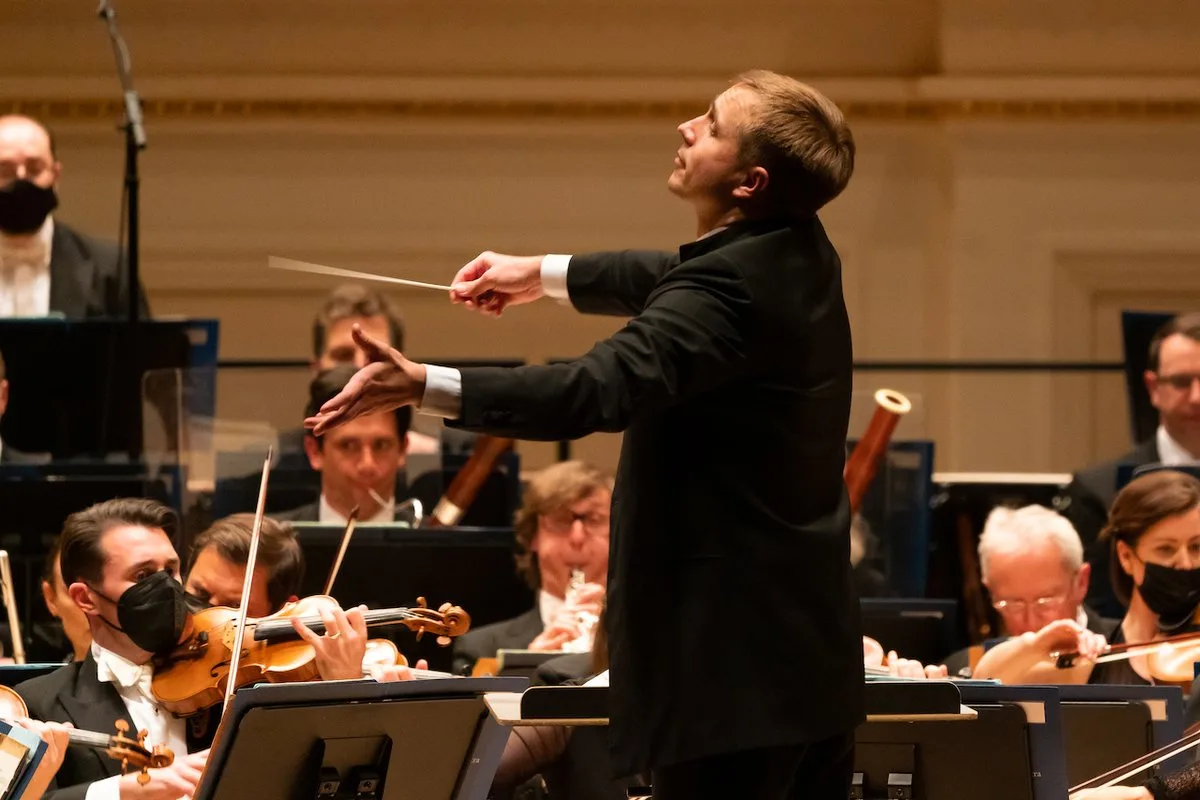
Paavo Järvi / Orchestre de Paris (2014)
For a modern, high-definition visual and audio experience, this performance from the Philharmonie de Paris is spectacular. Paavo Järvi leads a taut, thrilling account, and the hall’s magnificent organ sounds absolutely glorious. It’s a performance that captures both the fine detail and the overwhelming power of the work.
Listening with the Score
The full score for Saint-Saëns’s Third Symphony is available for free on the International Music Score Library Project (IMSLP). Even if you can’t read music, it’s worth scrolling through the pages. You can visually track the moment the part labeled “Orgue” (Organ) makes its quiet entrance, and later, see the dense, black ink that corresponds with the massive chords of the finale. It provides a visual dimension that clarifies the work’s four-section architecture and its orchestral forces, including the pipe organ, two pianos, and expanded percussion.