Dvořák finished his Eighth Symphony in the autumn of 1889, and then he wrote the piece that buried it. Living one symphony away from the New World is a bad address. Almost everybody meets the Ninth first, loves it, and never quite gets round to the one before.
Here is my position, and this whole guide exists to back it up: the Eighth is the better-made symphony. The Ninth has the bigger tunes and by far the better story. The Eighth has the better writing — a first movement that keeps refusing to settle into its own key, a slow movement that goes somewhere instead of just being beautiful, one wind solo placed so precisely it should be taught in orchestration classes, and a finale that fixes the problem Dvořák otherwise never fully solved. It is also, minute for minute, more fun to play.
The work at a glance
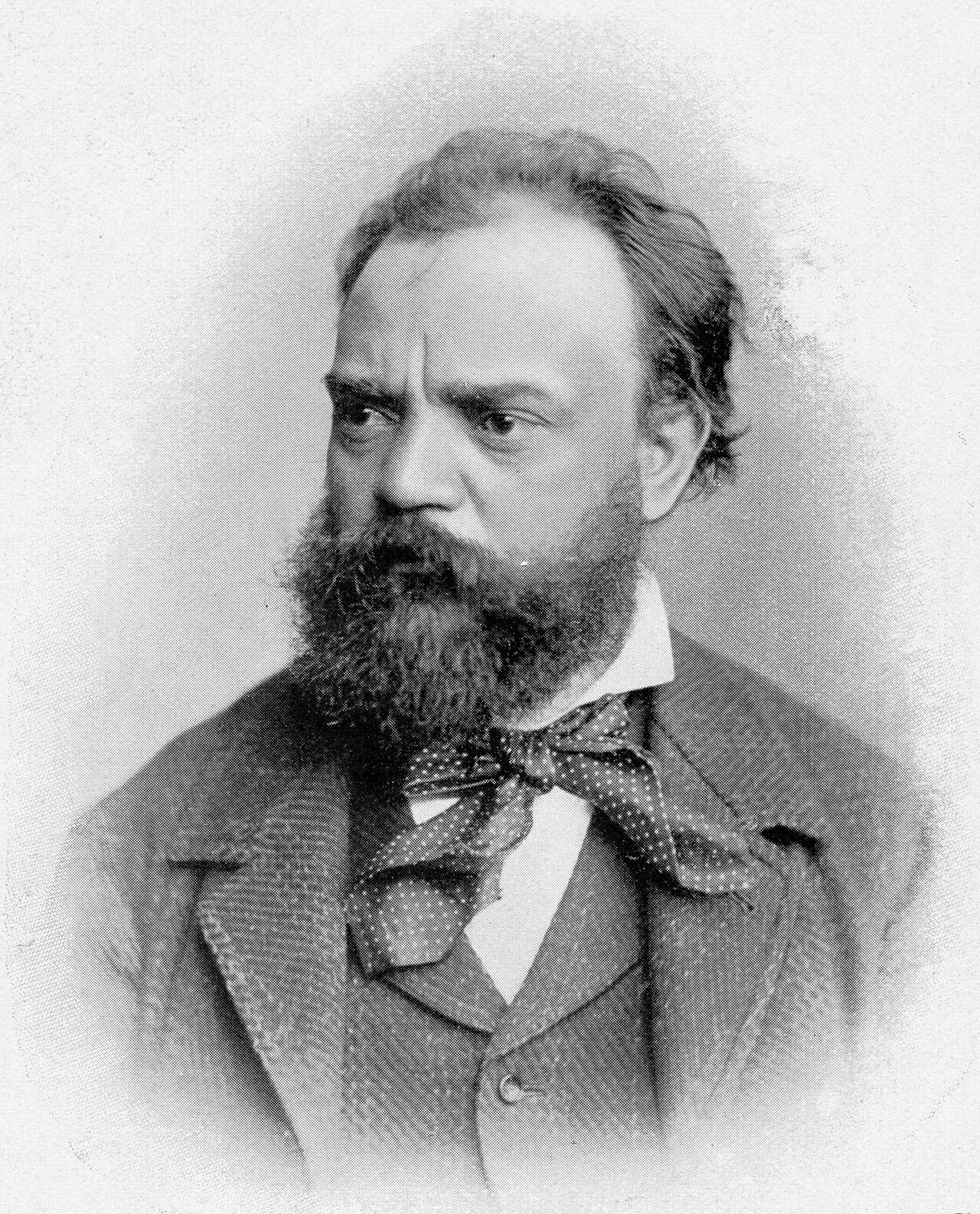
- Composer: Antonín Dvořák, who lived from 1841 to 1904
- Work: Symphony No. 8 in G major, Op. 88, catalogued as B. 163
- Written: 26 August to 8 November 1889, mostly at Vysoká in Bohemia
- Movements: Allegro con brio; Adagio; Allegretto grazioso – Molto vivace; Allegro ma non troppo
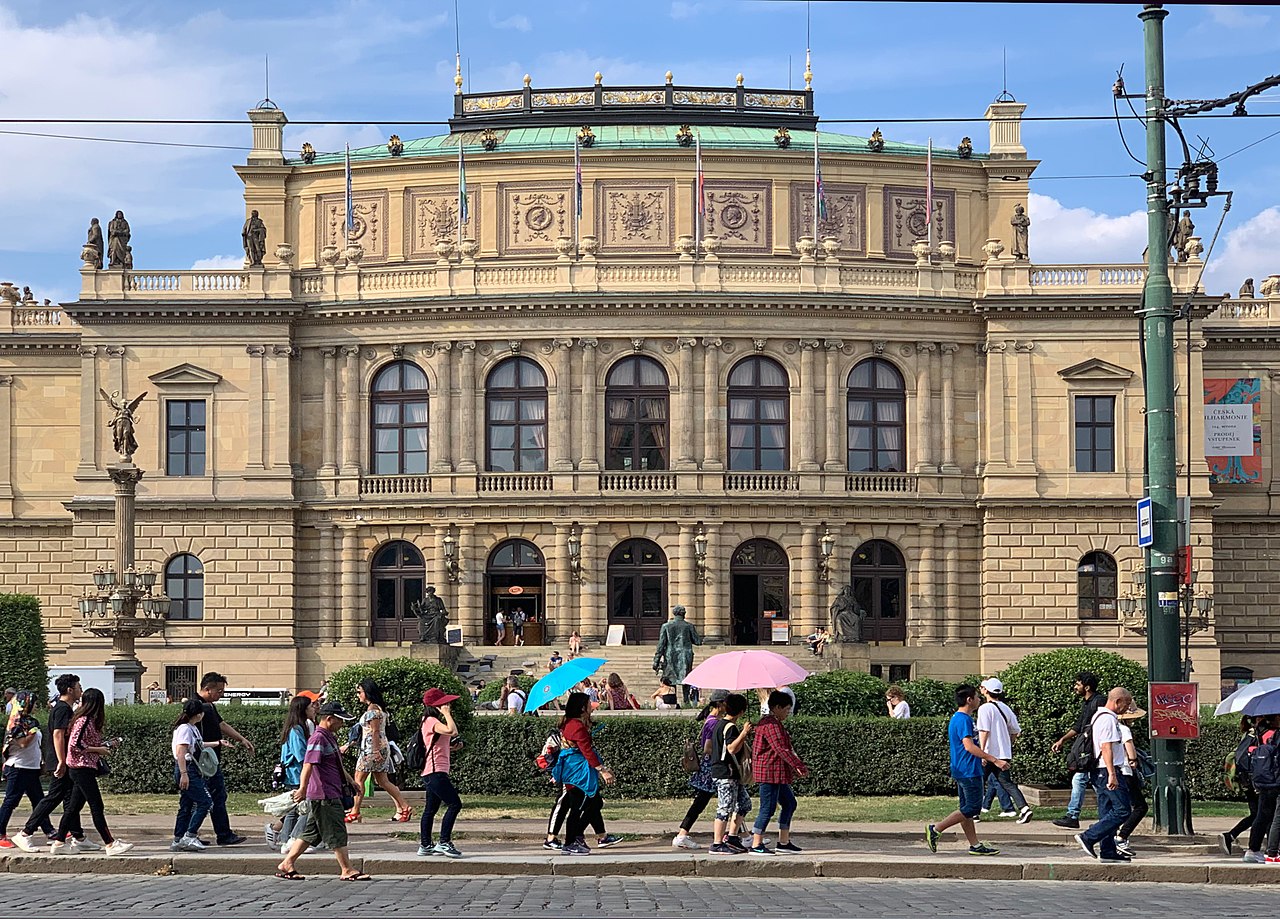
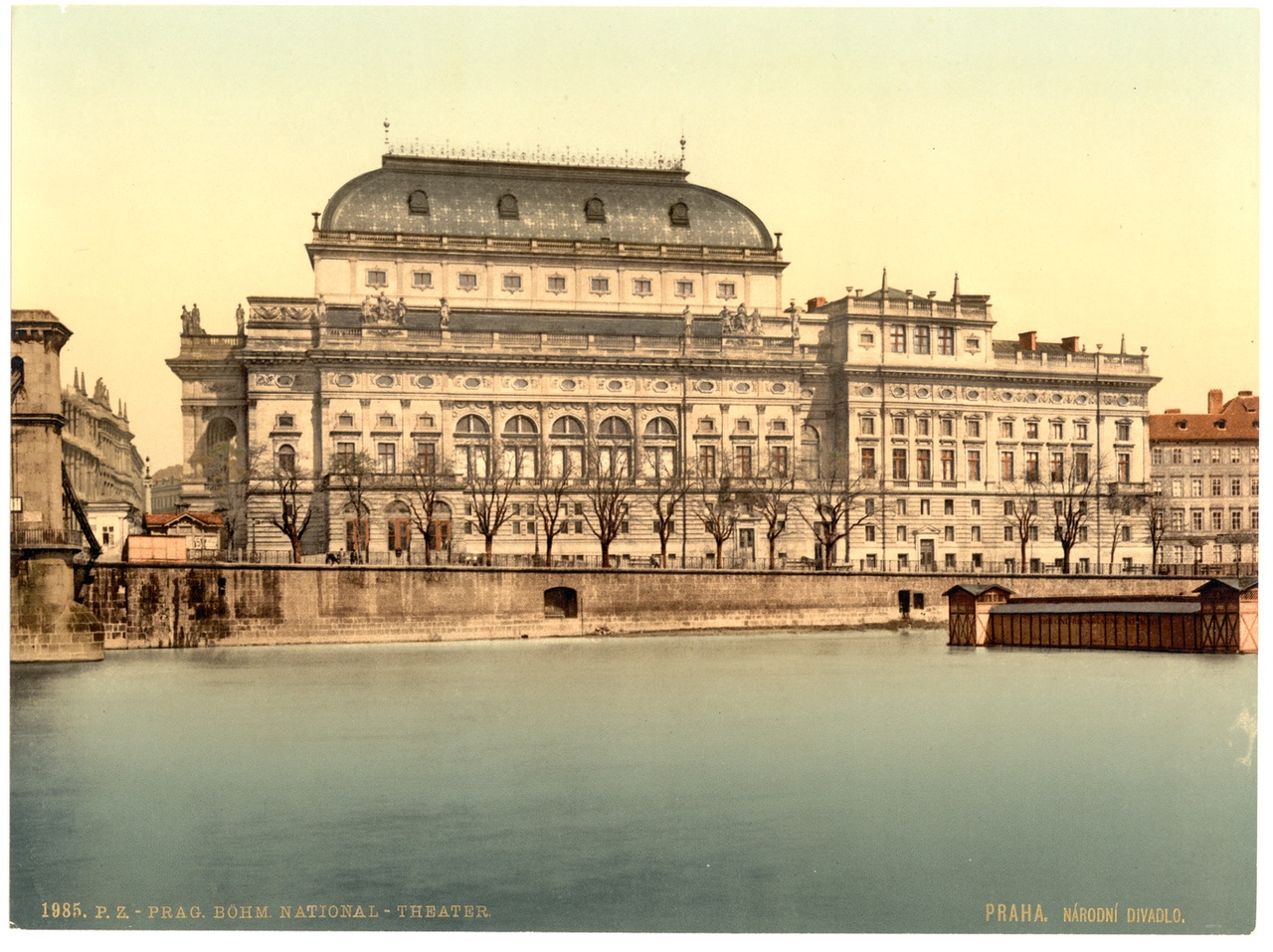
- First performance: 2 February 1890, at the Rudolfinum in Prague, Dvořák conducting the orchestra of the National Theatre
- Playing time: around 36 minutes
The summer that produced it
Dvořák composed and orchestrated the entire symphony within a two-and-a-half-month period, working at Vysoká, the country place south of Prague where he spent his summers. He had just been elected to the Bohemian Academy, and he dedicated the score to it in thanks for that election. So there was no commission behind this piece, no deadline, and nothing riding on it. That matters more than it sounds, because it explains the one thing that makes the Eighth strange.
Dvořák said outright what he was after: he wanted a work “different from the other symphonies, with individual thoughts worked out in a new way.” Read that next to the Seventh, which is a magnificent, tightly argued, faintly anxious piece of Brahmsian symphonic engineering, and you can hear what he was pushing against. The Seventh proves he can do the German thing. The Eighth stops proving anything.
In practice that means themes arrive and leave without the usual paperwork. Ideas get stated, admired, and dropped. Whole paragraphs are built from one short repeated shape rather than from a proper contrasting subject. It is looser than a textbook symphony and much harder to bring off: the formal scaffolding that usually carries a listener is barely there, so the material and the scoring have to hold attention on their own.
The publishing fight, and the number that confused everyone
Fritz Simrock in Berlin had made real money from Dvořák’s shorter pieces and had paid 3,000 marks for the Seventh Symphony. For the Eighth he offered 1,000. Dvořák walked. He took the score to London instead, where Novello, Ewer & Co. printed a full-size score carrying a copyright date of 1892.
Novello numbered it Symphony No. 4, because in 1892 the earlier symphonies were mostly unpublished and nobody outside Prague could count them properly. That is the entire reason old LP sleeves and concert programmes call this piece the Fourth, and it is also the entire reason it sometimes gets called the “English” Symphony — a nickname with nothing behind it. It was printed in London, and a publisher’s address is the whole story behind the name: the score holds no English tune and answered no English commission.
The work travelled fast anyway. Dvořák conducted it in London on 24 April 1890 at St James’s Hall, and again at Cambridge on 15 June 1891, the night before the university awarded him an honorary doctorate on 16 June 1891. The Boston Symphony Orchestra under Arthur Nikisch gave the first American performance on 26 February 1892, repeating it the following night.
What to listen for
A few things carry this symphony. Get these and the piece stops being background Czech sunshine and starts being a specific, argued object.
A G major symphony that keeps sliding into G minor. The opening theme — cellos, horns, clarinets, low and grave — is in G minor, and the movement returns to that shadow at every structural seam. The G major has to be won back each time, and Dvořák makes you watch it happen more than once.
The wind solo he only uses once. The flute answers that grave opening with the rising figure everyone calls the bird call, and it lifts the music into G major. Later, when that theme comes back, Dvořák hands it to the cor anglais instead. This is the instrument’s only appearance in the symphony: the cor anglais plays a short but exposed phrase during the second recapitulation of the main bird-call theme, and then it is gone for the remaining three movements. Same notes, completely different weather. Bringing in an extra player for one phrase is an expensive decision, and he made it anyway.
Rhythm doing the work harmony usually does. Listen to how often a passage changes character without changing key — the third movement lilts, then stiffens into something squarer at the end. Dvořák’s transitions are frequently rhythmic rather than harmonic, which is why the piece feels like folk music without quoting any.
The finale is variations, not sonata form. That trumpet call at the start of the last movement sounds like an ending because it is doing an announcer’s job: here is the theme, here come the variations. Once you know a set of variations is coming, the movement’s shape snaps into focus instead of feeling like a string of good ideas.
A movement-by-movement walkthrough
The performance embedded here is Manfred Honeck conducting the Frankfurt Radio Symphony, posted on the orchestra’s own channel. It is a clean, well-lit, well-balanced concert film, and Honeck lets the woodwind lines through in a way that suits a first careful listen.
🎧 Also on: Apple Music · Spotify
I. Allegro con brio
The cellos begin in the wrong key and the wrong mood, and it is the best minute in the symphony. Dvořák gives them a complete theme in G minor and then keeps bringing it back at the movement’s structural seams as a marker, rather than breaking it up and developing it the way a first subject usually gets treated. When the flute cuts in with the bird call and the music finds G major, the symphony sounds like it has just changed its mind about what kind of piece it wants to be.
From the stand, the give-away is what the inner strings are doing. Violas and second violins spend long stretches on repeated figures that are barely audible individually and completely load-bearing collectively; the tune moves around above and below them while the middle holds the harmony steady. When an amateur orchestra plays this movement and it turns to mud, that is almost always where it went wrong.
The development is short and the recapitulation is where Dvořák spends his invention — including the cor anglais cameo. Then the coda accelerates and the movement finishes in a hurry, without the grandeur the opening seemed to promise.
II. Adagio
This is the movement I would use to win the argument in the title. It opens as a calm E-flat major song and then, roughly at its midpoint, collapses into a minor-key episode with hammering repeated chords and a genuine sense of threat. Program notes like to call it a summer storm. Whatever you call it, the point is structural: the serenity afterwards is not the same serenity, because the music has been somewhere.
Compare that with the Largo of the Ninth Symphony, which is a more famous and frankly more beautiful piece of tune-writing, but which essentially states its melody, decorates it, and stops. The Eighth’s Adagio has a plot. A solo violin picks its way through the aftermath, and the ending is quiet in a way the opening was not.
III. Allegretto grazioso – Molto vivace
A waltz in G minor, and the most quietly sophisticated movement in the piece. Its melancholy is built into the rhythm: the melody keeps leaning on the beat rather than dancing over it, which is what gives it that dragging, wistful quality. The central trio in G major is brighter and squarer, and its melody is drawn from an aria in Dvořák’s one-act comic opera The Stubborn Lovers, which is why it sounds as though it wandered in from the theatre.
Then comes the coda, marked Molto vivace, where the metre snaps from three beats to two and the whole thing turns into a stamping village dance. It is a joke, it is over almost before you have registered it, and it works every time.
IV. Allegro ma non troppo
Trumpets, alone, playing a fanfare. Then cellos with a broad hymn-like tune, and then a set of variations that runs the theme through nearly every character the orchestra can produce: a fast triplet version for strings, a decorated woodwind version, a lumbering full-orchestra version with the brass on top, a hushed one. Near the end the fanfare returns and the coda simply detonates.
Variations were the right choice. Dvořák’s gift was melodic abundance, and sonata form punishes abundance — it wants two contrasted ideas argued over at length. Variation form rewards it. That is what I mean by the finale solving a problem: the Ninth’s last movement is a superb sonata-form finale that spends its final pages recycling earlier themes because it needs the weight. The Eighth’s finale never needs to borrow.
Four recordings worth your money
This symphony survives interpretive extremes better than most, so the differences below are real and audible.
Rafael Kubelík / Berlin Philharmonic (Deutsche Grammophon, 1966) — the one to buy first. Kubelík was Czech, conducted this repertoire his whole life, and had the Berlin Philharmonic at its glossiest. What he gets that almost nobody else does is the third movement’s rubato: the waltz breathes and pulls without ever sounding indulgent, because he is phrasing it the way a folk band would rather than the way a Viennese orchestra would. The recorded sound is warm and slightly recessed by modern standards, and the timpani are shy. Buy it anyway.
▶ Listen on YouTube · Apple Music · Spotify
István Kertész / London Symphony Orchestra (Decca, recorded February 1963 at Kingsway Hall) — the best-engineered classic. Kertész is faster and more athletic than Kubelík, and the Decca engineering is the reason this one has never left the catalogue: you can hear the inner woodwind lines in the finale’s variations without straining, which is not true of most versions. The trade-off is that the Adagio’s storm is a bit polite. If you only want one historic recording and you care about sound, take this one.
▶ Listen on YouTube · Apple Music · Spotify
George Szell / Cleveland Orchestra (Columbia, recorded April 1970 at Severance Hall) — for people who like precision. Szell drills the ensemble until every accompaniment figure is as clean as the tune, which is exactly the treatment this piece’s crowded middle voices need, and the finale’s variations are laid out with almost diagrammatic clarity. It is also cool-blooded. The village-dance coda in the third movement lands with a sort of magnificent disapproval. I love it and I would not recommend it as anyone’s first Eighth.
▶ Listen on YouTube · Apple Music · Spotify
Jiří Bělohlávek / Czech Philharmonic (Decca, released 2014) — the modern-sound pick. The Czech Philharmonic’s wind section has a specific reedy, slightly nasal colour that changes this music, and the cor anglais phrase in the first movement lands harder here than on any of the older recordings simply because you can hear the instrument’s character. Bělohlávek takes an unshowy middle path in modern sound: cooler than Kubelík, warmer than Szell. It comes as part of a symphonies-and-concertos box, which is either a bargain or an inconvenience depending on your shelf.
▶ Listen on YouTube · Apple Music · Spotify
The honest counter-case
If you want the argument against me: the Ninth has the melodies that make people fall in love with orchestral music in the first place, and no amount of admiring the Eighth’s craft changes that. The Eighth’s first movement really does end abruptly. Its third movement borrows from earlier work. Its charm can shade into amiability, and a conductor who does not commit hard to the minor-key material leaves you with a pleasant thirty-six minutes and nothing else.
So the recommendation is narrower than the title. If you already know the New World and want to know why musicians talk about the Eighth the way they do, this is where you look — and the Adagio is where you should start. If you want to hear Dvořák writing with the same freedom in a completely different medium, the Cello Concerto in B minor is the next stop. For a comparable case of a symphony that hides real formal argument under a friendly surface, try Prokofiev’s Fifth.
Sources and notes
Composition and premiere details were checked against the Antonín Dvořák catalogue at antonin-dvorak.cz and the Boston Symphony Orchestra’s programme notes; the London and instrumentation details against the work’s Wikipedia entry, which cites the standard catalogue. Two details get garbled routinely. The Cambridge concert is 15 June 1891 in the catalogue, with the degree the next day; the May date in circulation does not survive checking. And at the Prague premiere the hall and the band get swapped: the Rudolfinum is the concert hall, and the orchestra Dvořák conducted in it belonged to the National Theatre. Recording metadata — conductors, orchestras, years, labels — was confirmed from Discogs release pages and label catalogue listings. The conductor and orchestra for the concert film are as credited by the Frankfurt Radio Symphony on its own channel. Anything in this article about what the music does — the rubato, the balance problems, the reading of the finale — is my judgement, not a sourced fact, and you are free to disagree after listening.