Some symphonies are arguments. This one is an alibi — or it pretends to be. Shostakovich wrote his Fifth in the worst year of Stalin’s purges, not long after the state newspaper had told the entire country, in print, that his music was a kind of crime. Then he ended it with a blaze of D major that sends everyone home feeling fine. The question that has followed the piece ever since is whether he meant it.
My answer, before the history: the finale is neither a lie nor a triumph. It is a portrait of what forced celebration sounds like, built into the notes so plainly that you can hear it without knowing a fact about Soviet politics. Below is where it sits in the score, and which recordings are honest about it.
The year that produced it
The trouble started at the opera. Pravda ran an unsigned editorial titled Muddle Instead of Music on 28 January 1936, condemning Shostakovich’s Lady Macbeth of the Mtsensk District. Stalin had attended a Bolshoi Theatre performance of the opera two days earlier, on 26 January 1936. Where the Party newspaper decided what a citizen was, an unsigned attack was not criticism. It was a classification.
The consequences were practical. Commissions dried up, colleagues stopped calling, and his enormous, jagged Fourth Symphony was pulled during its rehearsal period: the orchestral version would not reach an audience until Kirill Kondrashin conducted its premiere on 30 December 1961 with the Moscow Philharmonic Orchestra. A quarter of a century of silence for a finished score.
Shostakovich composed the Fifth Symphony between April and July 1937. The first performance was on 21 November 1937 in Leningrad, played by the Leningrad Philharmonic Orchestra under Yevgeny Mravinsky, who was then a young conductor with no reputation to protect. The premiere received an ovation that lasted well over half an hour. Accounts of that night have hardened into legend, but the ovation itself is not in dispute, and it is a strange thing to hand a composer the state has just finished humiliating.
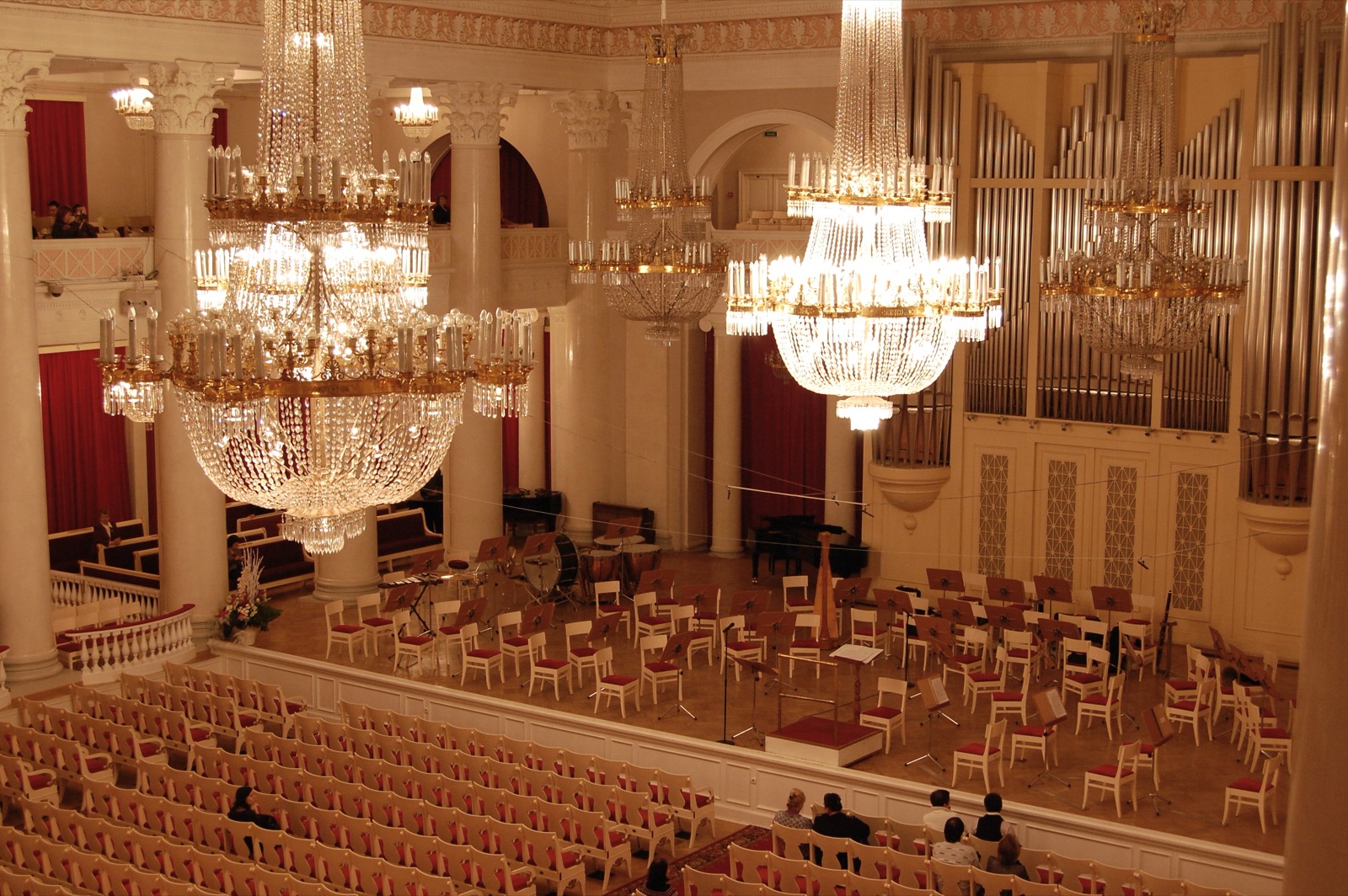
The famous subtitle is where most retellings go slightly wrong. The phrase was not stamped on the score by the composer as an act of grovelling. An article by Shostakovich appeared in the newspaper Vechernyaya Moskva on 25 January 1938, in which he singled out a review that had described the Fifth Symphony as a Soviet artist’s businesslike response to just criticism. He adopted a journalist’s formula and let it stand — a colder and more believable gesture than a confession, and a precise measure of how much of himself he was willing to spend.
One caution. The strongest version of the dissident reading comes from Testimony, the memoir published in 1979 by Solomon Volkov and presented as the composer’s own recollections, whose authenticity has been questioned ever since. I am not going to lean on it, and you do not need it: the ironies here are in the orchestration, and orchestration cannot be forged after the fact.
What to listen for
Four mechanisms carry almost everything this piece does. Learn them and the symphony stops being a mood and becomes a machine you can watch working.
1. Canon, then compression
The opening is a canon: strings chasing each other a beat apart on a jagged figure of leaping sixths. Within a page those wide leaps narrow to thirds. The shrinking interval is the drama — the music is being squeezed into a smaller space, and every later transformation inherits that pressure.
2. Tempo as meaning
Shostakovich rarely writes a second tune when he can ruin the first. The lyrical theme of the first movement returns as a stamping march under snare drum and piano, then collapses back into the lyric. Nothing new arrives; the same material is driven at a speed it cannot survive. Once you hear that, the finale becomes readable.
3. Instruments that are withheld
The Largo uses no brass at all. Trumpets, horns, trombones and tuba — the entire apparatus of parade — sit out the emotional centre of the symphony. In their place the strings are divided throughout the movement: violins in three groups, violas in two, cellos in two, basses in two. That division is why the sound feels like many separate people rather than a mass. From inside a section it is the most exposed writing in the piece: your line is one thread among nine, nobody doubles you, and there is nowhere to hide.
4. The quotation habit
Commentators have long noted that the first movement carries a motif related to Mahler’s song Des Antonius von Padua Fischpredigt, in which a saint preaches beautifully to fish who swim away unchanged. The same movement has been heard to fold in a shape from the Habanera in Bizet’s Carmen, a private matter connected to Elena Konstantinovskaya rather than a political one. And the symphony quotes Shostakovich’s own song Vozrozhdenie, Op. 46 No. 1, a Pushkin setting about a painting restored once a false image is scraped away, most audibly in the last movement. Together they suggest something better than coded protest: listening, love and restoration, in a piece officially about correction.
The scoring is worth knowing too. Alongside the standard orchestra he uses an E-flat clarinet for the sour, nasal caricature in the scherzo, a xylophone for the bone-dry rattle at the Largo’s climax, plus two harps, piano and celesta. The piano is not a soloist here. It is percussion with teeth.
To follow all of this in real time, this complete performance is free and well filmed — the camera holds on sections long enough that you can see the Largo string divisions happen.
The movements, one at a time
I. Moderato — the interrogation
The canon opens with the orchestra arguing with itself; the second subject then arrives high in the violins over a walking bass, floating and unanchored. The development is brutal: it takes both themes, hands them to low brass and snare drum, and marches them, with the piano hammering the bass line in octaves. This is the passage that separates orchestras — it has to sound mechanised without sounding merely loud, and the ensemble has to stay razor-tight while the tempo pushes.
The recapitulation is the real shock. Instead of resolution, the first theme returns in canon between flute and horn, exhausted, at half strength. The movement ends with a celesta picking out the theme high above nothing at all. A whole movement of argument and the answer is a music box in an empty room.
II. Allegretto — the sarcastic waltz
The shortest movement and the one people underrate. It is a scherzo shaped like a Landler, the rustic Austrian waltz Mahler loved, made deliberately clumsy: heavy downbeats, a solo violin scraping in the trio, the E-flat clarinet grinning through the tune. The joke is that everyone dances correctly and nobody enjoys it.
Listen for the trio’s solo violin over pizzicato strings. Played straight it is charming; played with a slight over-emphasis on the second beat it becomes a parody of charm, which is what the movement needs. The ending is a curt slam — no wind-down. The party is simply over.
III. Largo — the movement that stops the room
Nearly thirteen minutes with no brass. It opens with the third violins alone, then adds the second and first, so the effect is of a single voice being joined rather than a section playing. Flutes enter in wide, cold counterpoint; the oboe takes the solo; harp and tremolo strings hold the floor.
The climax turns violent without a single trumpet: clarinet, xylophone and piano cut across the strings with a hard clacking edge that sounds like breaking rather than swelling. Then it recedes, and the movement ends as the first one did — celesta, high, alone, fading.
This is the movement that broke the audience at the first performance, and it is not hard to see why. There is no rhetoric in it: mourning written by someone who could not say who had died, ending not in resolution but in exhaustion. If you compare recordings on one movement only, make it this one.
IV. Allegro non troppo — the ending everyone argues about
The finale enters like a door kicked open: timpani, then brass, then a driving march in D minor. Halfway through everything drains into a long quiet stretch where harp and solo horn hold a stillness the march has not earned, and where Vozrozhdenie surfaces. Then the coda climbs back to D major.
Here is the mechanism. Under the blazing major-key fanfare the violins are locked onto a single repeated note, hammered over and over while the brass proclaims victory above them. Not a melody, not a countermelody — one note, for pages. In a real triumph the strings would be singing. Here they are doing hard physical labour with no musical content at all, which is a fairly exact description of a compulsory parade. From inside a section the feeling is unmistakable: you are producing volume, not music, and your arm knows the difference before your ear admits it.
That is why the tempo argument matters. Take the coda fast and the repeated notes blur into brilliance: genuine victory. Take it slow and each repetition lands separately, like a hammer: coercion. Both are defensible from the printed page, and conductors have split on it for decades. That one choice is the biggest difference between the recordings below.
Four recordings, and what each one decides
Yevgeny Mravinsky / Leningrad Philharmonic Orchestra — live in Tokyo, 26 May 1973 (Altus ALT-002)
Start here. Mravinsky conducted the first performance and kept conducting this piece for decades, and the Tokyo concert captures an orchestra playing it as native speech: brass with a hard, vibrato-heavy edge no Western orchestra produces, strings that dig rather than glide. The Largo is severe instead of tearful, which I find more devastating. The coda is weighty and deliberate, and the repeated violin note lands as an ordeal.
The cost is sound quality and audience noise: this is a live radio-source recording, not a studio product. Take it anyway. Nothing else has this authority.
🎧 Also on: Apple Music · Spotify
Leonard Bernstein / New York Philharmonic — recorded 20 October 1959 at Symphony Hall, Boston (Columbia / Sony)
The opposite decision, made with total conviction. Bernstein drives the finale hard and the ending comes out as spectacle: thrilling, physical, gleaming. Purists have complained ever since. I would not want it as my only version and would not give it up either, because it is the clearest demonstration of what the fast reading buys and what it costs. The first movement march has a swagger that borders on fun — arguably wrong, undeniably exciting.
What it loses is dread. The Largo is beautifully played and slightly too warm, and the coda gives you no time to notice what the violins are actually doing. Hear it second, after Mravinsky — that comparison teaches more than any essay.
🎧 Also on: Apple Music · Spotify
Vasily Petrenko / Royal Liverpool Philharmonic Orchestra — recorded at Philharmonic Hall, Liverpool on 7 and 8 July 2008 (Naxos 8.572167)
The best modern all-rounder, and what I would hand to someone buying a first copy. Petrenko refuses to make the finale a party without turning it into a lecture: the coda is unflinching and heavy, but the earlier march keeps real forward drive, so the ending feels like a consequence rather than a thesis. The engineering is excellent, the Largo string divisions are clearly audible, and it costs almost nothing.
▶ Listen on YouTube · Apple Music · Spotify
Andris Nelsons / Boston Symphony Orchestra — Deutsche Grammophon, from the series Under Stalin’s Shadow
The audiophile pick. The Boston brass is glorious and the live Symphony Hall sound has a depth the Russian recordings cannot match, so if you want to hear the orchestration rather than fight tape hiss, start here. The album pairing Symphonies Nos. 5, 8 and 9 won the 2017 Grammy Award for Best Orchestral Performance.
My reservation is that the beauty smooths things over. The Largo is gorgeous where I want it bleak; the finale is magnificent where I want it grim. Nothing is wrong, but something is missing. Second or third version, not your first.
▶ Listen on YouTube · Apple Music · Spotify
The verdict
Mravinsky in Tokyo is the one I keep returning to and the strongest case for what the ending is. Petrenko is what I recommend for a single modern copy. Bernstein is the essential counter-example, not a mistake. Nelsons is for good speakers and the score itself.
Where to go next
If the Fifth lands for you, the sequel is the Tenth Symphony, written after Stalin’s death, where the sarcasm no longer has to hide. The Seventh, the Leningrad, is the opposite case: a wartime symphony whose politics were public rather than buried, and a useful control for anyone who suspects the coded readings are wishful thinking. And Prokofiev’s Fifth shows a very different Soviet composer solving a similar problem with almost none of the same anxiety.
Sources and notes
Composition dates, the premiere, the instrumentation and the movement structure were checked against the Boston Symphony Orchestra programme note and the reference article on the symphony, which also record the divided strings and the absence of brass in the Largo. The Pravda editorial date and Stalin’s Bolshoi visit come from the reference entry on Muddle Instead of Music, and the Vechernyaya Moskva article of 25 January 1938 for how the subtitle entered circulation.
Recording metadata was verified separately: the Mravinsky Tokyo date and Altus catalogue number from the label listing, the Bernstein session date and venue from the Bernstein discography, the Petrenko sessions from a review carrying full credits, and the Nelsons award from the conductor’s own announcement. The coda tempo debate is genuinely unsettled and I have kept it as a split among conductors. The Mahler, Bizet and Pushkin quotations are widely reported but remain interpretations, not documented statements of intent.