Schubert finished his Fifth Symphony on 3 October 1816. He was nineteen, spending his days teaching small children their letters at his father’s school on the edge of Vienna, and writing music at night. What came out of that autumn is the smallest orchestra he ever wrote for and, by some distance, the most likeable piece in his symphonic catalogue.
Look at the scoring and something jumps out immediately: no clarinets, no trumpets, no timpani, and a single flute. Beethoven was alive, working a short walk away, pushing the orchestra outward in every direction. Schubert went the other way. That decision is the key to the whole piece, and it has nothing to do with timidity.
My take, after living with this symphony for years: the Fifth is a nineteen-year-old writing back to a composer he had recently fallen in love with, in a room small enough that everybody in it could hear each other breathe.
The room came before the notes
Most composers write a symphony and then go looking for an orchestra. Schubert had the opposite problem, which is a very good problem. His family played string quartets at home — his father on cello, his brothers on the violins, Franz on viola — and that quartet kept picking up neighbours until it stopped being a quartet. By the time the Fifth was written, the group had grown into a small amateur orchestra meeting at the home of a violinist named Otto Hatwig, in the Schottenhof in central Vienna.
That ensemble gave the symphony its first performance, privately, in the autumn of 1816. No tickets, no critics, no aristocratic patron. Schubert sat inside the viola section and listened to his own piece from the middle of it.
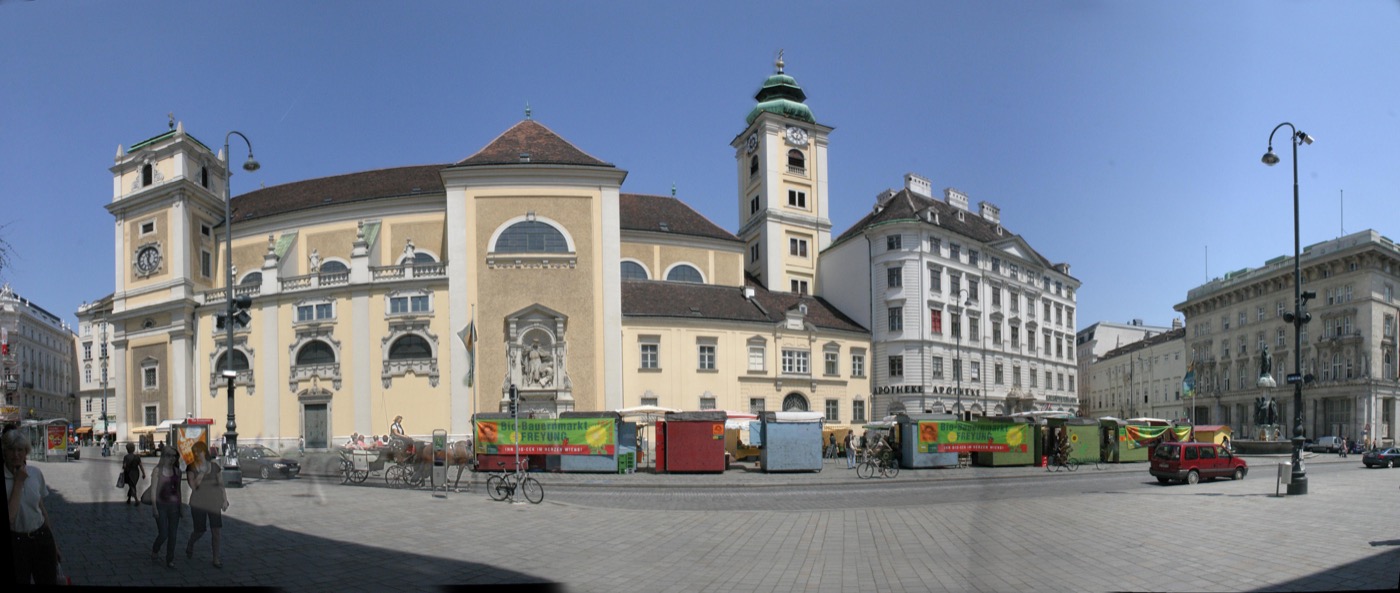
A private room sets hard limits. Two trumpets and a set of timpani in a domestic apartment is not chamber music, it is an assault. Whatever else was going on in Schubert’s head, the physical size of the venue is sitting right there in the instrument list.
Why exactly the clarinets vanish is less settled. One common argument is that Hatwig’s group simply had no clarinettist to hand, so no clarinet part appears. Another is that Schubert wanted a specific older sound and stripped the winds to get it. Those two explanations are not in competition, and I would not pretend either one is documented fact. What is not in doubt is the result: five string parts and seven wind players, a texture where the strings carry nearly everything and the winds colour the edges.
The letter to Mozart
A few months before he started the symphony, Schubert spent an evening listening to Mozart played by friends, went home, and wrote in his diary: “O Mozart! Immortal Mozart! what countless impressions of a brighter, better life hast thou stamped upon our souls!” That entry is dated 13 June 1816. The symphony was underway by September.
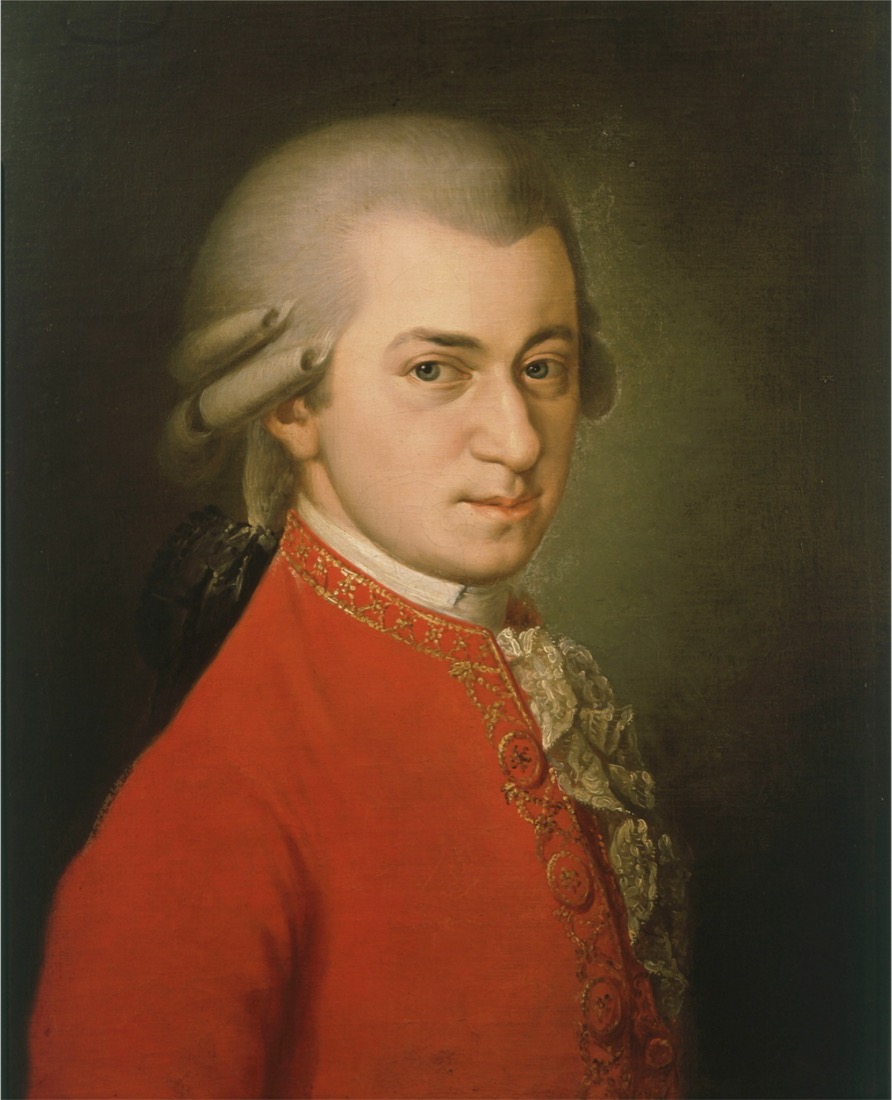
Here is the detail that turns a nice coincidence into an argument. Mozart’s Symphony No. 40 in G minor, completed in 1788, was first scored without clarinets — Mozart added them later. Schubert’s Fifth uses very close to that same wind band. The third movement is a minuet in G minor, which is the key and the movement type of the Fortieth’s minuet. The Andante sits in a lilting compound metre, like the Fortieth’s slow movement.
None of this is plagiarism and Schubert plainly was not hiding it. If you want to hear the model directly, our guide to Mozart’s Symphony No. 40 in G minor covers the piece Schubert had in his ears. Play the two slow movements back to back and the family resemblance is impossible to miss — and so is the moment the family resemblance breaks down, which is the interesting part.
Four things to listen for
1. The missing front door. Every Schubert symphony before this one opens with a slow introduction — a formal throat-clear before the music starts moving. The Fifth has none. Four soft bars of wind chords with a little falling flute figure, and you are already inside the first theme. It is the sound of someone walking into a room and starting to talk rather than knocking.
2. The recapitulation that comes back in the wrong key. In a standard first movement, the themes return at the end in the home key. Schubert brings his back in the subdominant instead — one step flatwards of home. The practical effect is that the whole return sounds slightly relaxed, a shade lower in energy, as if the music has sat down. It also saves him a modulation later, which is the kind of shortcut a nineteen-year-old with a deadline appreciates.
3. Major and minor swapping places without warning. Schubert’s fingerprint, already fully formed here. A phrase arrives in the sun, repeats in shadow, and the harmonic floor drops half a step under your feet. In Winterreise he would use that device to break hearts. In the Fifth he uses it to open a window for eight bars and then close it again.
4. The bassoons and horns as furniture. With no clarinets and one flute, the two bassoons and two horns become the entire middle of the sound. Listen to how often a phrase is held up from underneath by a bassoon line doubling the cellos, or a horn sustaining a single note while the strings move around it. This is why the piece sounds warm rather than thin, and it is why a large orchestra playing it at full weight loses something real.
The performance below is a good place to test all four. It is the Norwegian Chamber Orchestra playing the complete symphony at roughly the scale Schubert had in front of him.
Movement by movement
I. Allegro — the conversation already in progress
The opening theme is built out of a rising arpeggio and a curling turn, and the first thing Schubert does with it is hand it around. Violins state it, winds answer, the bass line comments underneath. Nothing is asserted; everything is passed.
The development is short and it is where the teenager stops being polite. The music slips toward the minor, the dynamic drops, and for a stretch of maybe twenty seconds the pleasant afternoon has a cellar under it. Then the subdominant recapitulation arrives and the shadow is gone. Beethoven would have made that darkness the subject of the movement. Schubert opens the door, lets you see in, and shuts it — and I have come to think that restraint is a choice rather than a limitation.
II. Andante con moto — the best four minutes he had written so far
In E flat major, in a swaying compound metre, and unmistakably the heart of the piece. The tune is a long, even, almost hymn-like line, and Schubert repeats it three times rather than developing it.
What he does between the repeats is the point. Each time the theme comes back, it comes back through a different harmonic door — one of them a sideways slide into a remote flat key that has no business being there and works perfectly. That trick, the sudden lurch into a key a classical composer would have approached carefully or not at all, is the first unmistakably Schubertian thing in the symphony. Mozart gave him the sentence structure. The harmony is his own.
III. Menuetto. Allegro molto — a minuet with the safety off
Marked Menuetto, played like a scherzo. Allegro molto is fast for a dance, the accents land off the beat, and the G minor tint gives it a grimness the rest of the symphony avoids. By this point Beethoven had already replaced the minuet with the scherzo in his own symphonies, so reaching for the older form looks conservative on paper. In the ear it is not: this is a minuet that has been sped up until it stops being danceable.
The trio, in the major, is the relief — a plain, rustic tune with the winds out front. It is the one moment in the symphony that sounds like the countryside rather than a city apartment.
IV. Allegro vivace — refusing to make a fuss
The finale runs on quick, skipping two-beat phrases and never stops smiling. Schubert drops in two or three of his sideways key changes along the way, and the striking thing is how little he does with them. A key that would have been a structural event for Beethoven is here a passing colour: in, out, back home, no comment.
The coda is tiny. Where a Romantic composer would pile up the ending, Schubert stops when the material stops. The last page has the same manners as the first. If you want a one-line description of this symphony’s character, it is right there: a piece that never raises its voice and never bores you either.
Recordings: what each one is actually for
The Fifth fitted comfortably onto one side of an LP, so almost every conductor with a contract has recorded it. The spread between readings is wider than you would expect from a twenty-eight-minute piece, because the central question — is this chamber music or is it a symphony? — has no agreed answer.
Claudio Abbado / Chamber Orchestra of Europe (Deutsche Grammophon) — my pick
Abbado taped the Fifth with the Chamber Orchestra of Europe at the Vienna Konzerthaus in December 1986, as part of his complete Schubert cycle for Deutsche Grammophon. It is the version I hand people first. The orchestra is small enough that the bassoon and horn lines stay audible as lines rather than blending into a wash, and Abbado lets the slow movement move — the tempo marking says con moto and he believes it.
Where it wins over everything else: the harmonic sidesteps in the Andante register as events. You hear the floor shift. In heavier performances that moment gets absorbed into the general beauty and disappears. ▶ Listen on YouTube
Thomas Beecham / Royal Philharmonic Orchestra (EMI) — the charm case
Beecham and the Royal Philharmonic set this down for EMI in sessions held in 1958 and 1959, and if anyone has ever told you the Fifth is Mozartian, this is probably the recording that put the idea into circulation. The phrasing is light to the point of weightlessness; the winds are placed with real care.
The trade-off is honest and worth stating: Beecham polishes the surface so thoroughly that the minor-key shadows barely register. Come here for the charm, not for the strangeness. The mono-era sound also asks a little patience. ▶ Listen on YouTube
Karl Böhm / Berliner Philharmoniker (Deutsche Grammophon) — the big-orchestra version
Böhm recorded the Fifth with the Berliner Philharmoniker for Deutsche Grammophon in 1966. This is the Fifth as a full symphony rather than an enlarged serenade: broad, beautifully upholstered, played by an orchestra that could do this in its sleep and audibly does not.
I would not start here, and I would not be without it. The finale in particular gains something from the sheer quality of the string playing. What it loses is the sense of a room — nothing about this sounds like an apartment in Vienna. ▶ Listen on YouTube
Frans Brüggen / Orchestra of the Eighteenth Century — the period-instrument shock
Gut strings, narrow-bore winds, natural horns, minimal vibrato. Brüggen’s reading is the one that most divides listeners: the string sound has grain in it, the accents bite, and the Menuetto sounds genuinely rough rather than elegant. Sceptics find the singing line gets sanded away.
Both camps are describing the same thing accurately. My view: this is the second recording to own, not the first — once you know how the piece goes, hearing it on the instruments of Schubert’s own decade rearranges your sense of what the score is asking for. Start it at the Andante if you want the fastest demonstration.
Maxim Emelyanychev / Scottish Chamber Orchestra (Linn) — the current one
Emelyanychev and the Scottish Chamber Orchestra released their account of the Fifth on Linn Records in 2024, paired with the Unfinished. It splits the difference between the period camp and the modern one: modern instruments played with historically informed articulation, quick tempi, very transparent balances.
It is also, straightforwardly, the best-engineered version on this list — if the bassoon-and-horn point in the listening section interests you, this is where you will hear it most clearly. ▶ Listen on Qobuz
The long wait, and where to go next
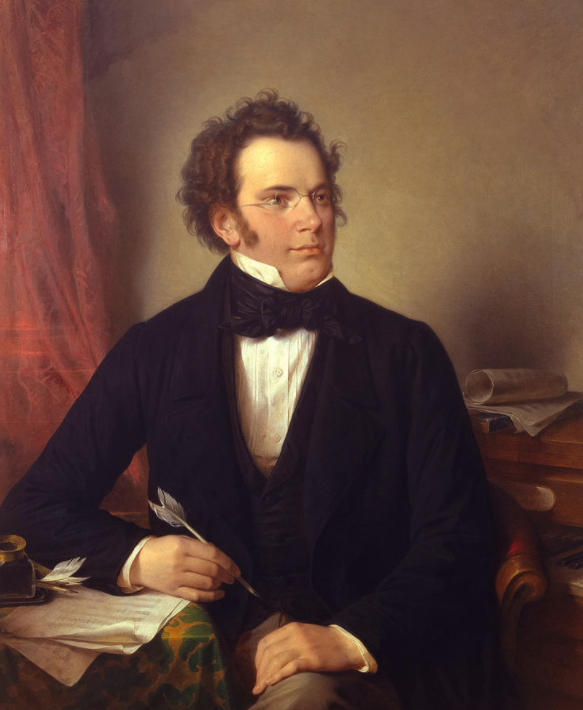
The Fifth had to wait a very long time to reach a paying audience. Its first public performance took place at the Theater in der Josefstadt in Vienna on 17 October 1841, conducted by Michael Leitermayer — thirteen years after Schubert died in 1828. The score was not printed until 1885, when it appeared in the first collected edition of Schubert’s works; Brahms edited the symphonies for that edition. Schubert never saw a page of it in print, and the autograph now sits in the Jagiellonian Library in Kraków.
If the Fifth lands for you, the obvious next step is the Symphony No. 8 in B minor, the Unfinished — same composer, six years older, and the shadows no longer close after eight bars. After that, the hour-long Great C major Symphony, which is where Schubert finally builds the big public statement the Fifth never tried to be. If you would rather widen out than go deeper, our starter list of symphonies maps the surrounding territory, and the Death and the Maiden quartet shows what the same man does when the room is even smaller.
One last suggestion. Do not listen to the Fifth on speakers turned up loud in a big room. Put it on at conversational volume, the way you would if a handful of amateurs were playing it twelve feet away. The scale of the piece stops being a limitation and starts being the point.