- Composer
- Ottorino Respighi
(1879–1936) - Work
- Pines of Rome
(Pini di Roma) - Composed
- 1924
- Premiere
- December 14, 1924, Rome
- Instrumentation
- 3 flutes (piccolo), 3 oboes (English horn), 2 clarinets (bass clarinet), 2 bassoons, contrabassoon, 4 horns, 3 trumpets, buccine, 3 trombones, tuba, timpani, various percussion, harp, celesta, piano, organ, gramophone (for a nightingale recording), strings
- Structure
- 4 movements
I. I pini di Villa Borghese
II. Pini presso una catacomba
III. I pini del Gianicolo
IV. I pini della Via Appia1st Mvt. The Pines of the Villa Borghese
2nd Mvt. Pines Near a Catacomb
3rd Mvt. The Pines of the Janiculum
4th Mvt. The Pines of the Appian Way - Duration
- Approx. 22 minutes
December 14, 1924, at the Teatro Augusteo in Rome. In this concert hall, built upon the mausoleum of the first Roman emperor, Augustus, the audience turned their heads, not towards the orchestra on stage, but to a sound coming from somewhere else entirely.
It was a gramophone.
The composer who wrote ‘play the gramophone’ into the score was Ottorino Respighi. What on earth was this Italian thinking?
The Violist from Bologna
Respighi was born in Bologna in 1879. His father, Giuseppe, had a unique dual career as a postal worker and a pianist. The young Ottorino showed little interest in music, only picking up an instrument when he was nearly eight years old.
The problem, however, was his violin teacher. After being struck on the hand with a ruler for playing a passage incorrectly, Respighi quit his lessons on the spot. Fortunately, he eventually started again with a more patient instructor.
As for the piano, he was entirely self-taught. One day, his father came home from work to find his son confidently playing Robert Schumann’s Symphonic Studies. He had learned it in secret. However, he could never properly play scales. As a result, Respighi consistently avoided using scale passages in his own compositions—a clever way of sidestepping a weakness.
Even more astonishing is that he taught himself to master the harp in just a few days. He read original texts in eleven languages, and when he met Albert Einstein in Berlin, he demonstrated such a precise understanding of his scientific theories that Einstein himself was taken aback.
He was less a musician and more a Renaissance man.
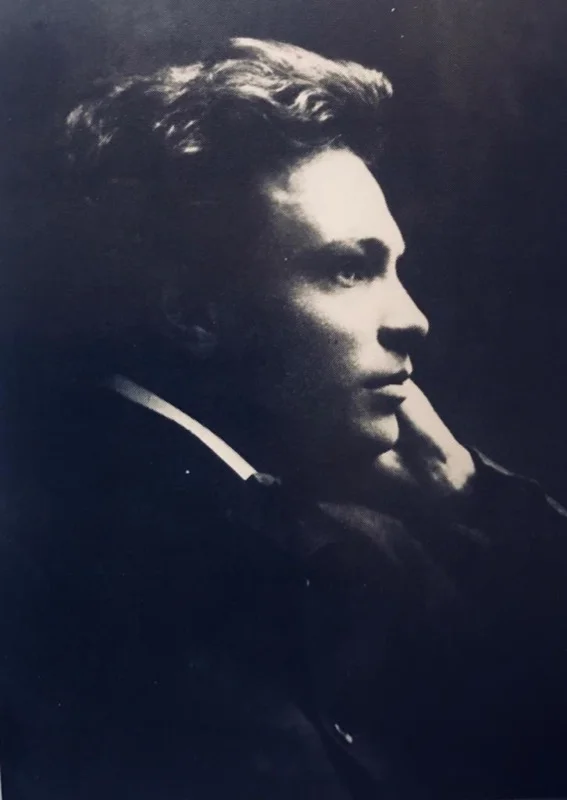
A Mentor in St. Petersburg
In 1900, the 21-year-old Respighi traveled to St. Petersburg as the principal violist for the Russian Imperial Theatre. It was there he met the mentor of a lifetime: Nikolai Rimsky-Korsakov.
The composer of Scheherazade and master of Russian orchestration taught Respighi for five months. This is the root of the brilliant, colorful orchestration that would later define Respighi’s style.
At his graduation examination from the Bologna Conservatory in 1901, the director, Professor Giuseppe Martucci, declared:
“Respighi is not a student. He is already a master.”
His graduation piece had been completed under the guidance of Rimsky-Korsakov.
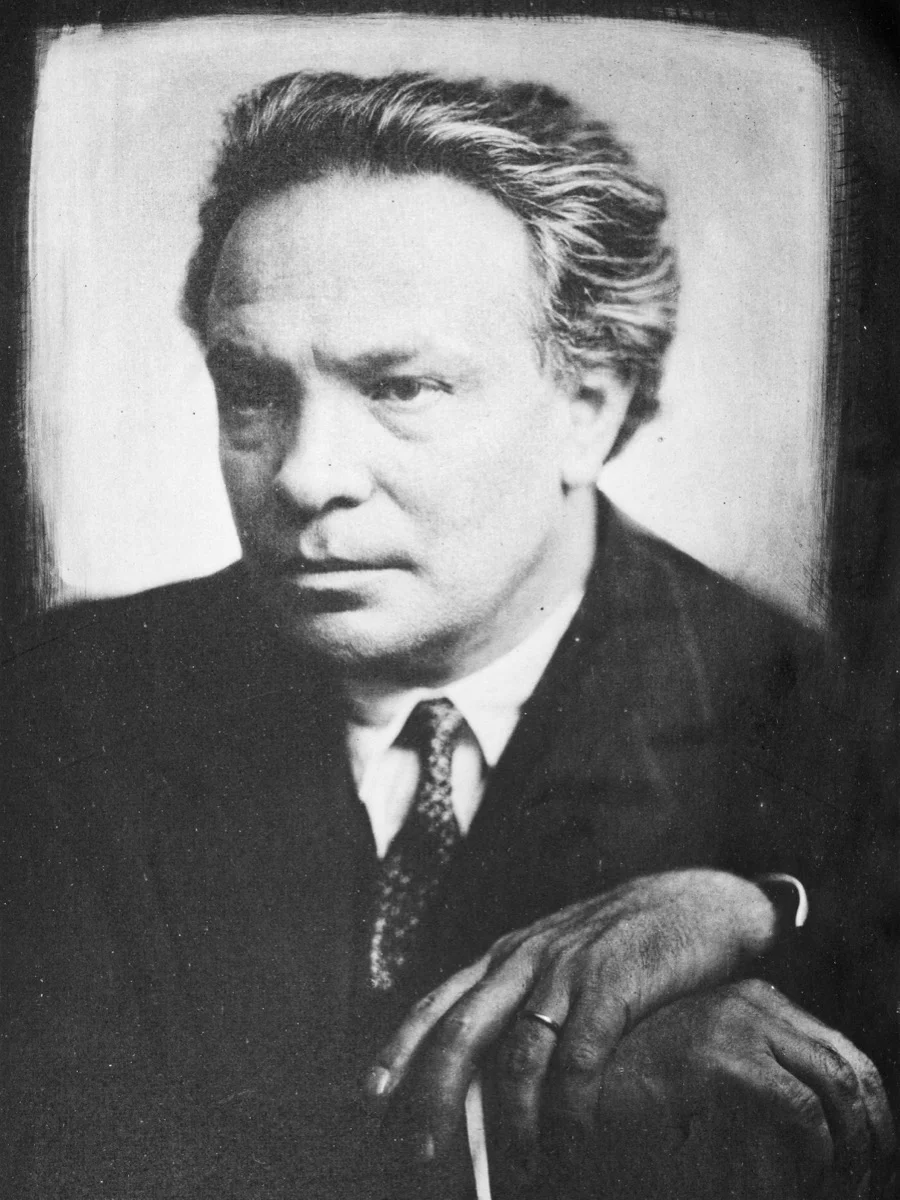
To Rome, and Among the Pines
In 1913, Respighi was appointed a professor at the Santa Cecilia Conservatory in Rome. Leaving his quiet home in Bologna for the bustling metropolis, he initially struggled to adapt. He suffered from insomnia and homesickness.
But two things in Rome captured his imagination:
Fountains and pine trees.
“The marvelous fountains of this city and the pine trees that spread like umbrellas across the horizon—these two things, above all, spoke to my imagination.”
The fountain-inspired Fountains of Rome (1916) brought him international fame. And eight years later, it was the pines’ turn.
Four Pines, Four Moments in Time
Pines of Rome (Pini di Roma, P.141) is a symphonic poem in four movements. Each movement depicts pine trees in different locations throughout Rome. But this is no mere landscape painting; it is a journey through time.
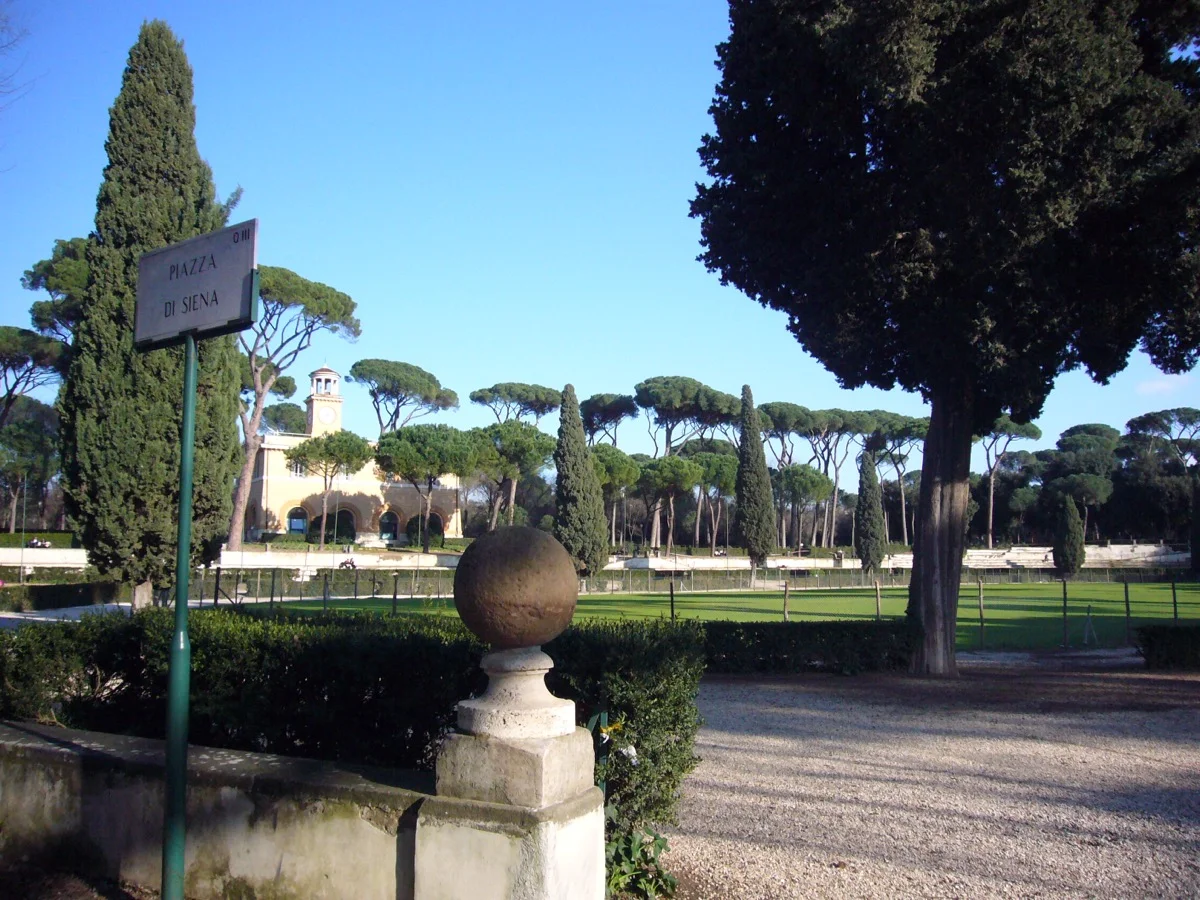
I. The Pines of the Villa Borghese — Children are playing beneath the pines of the Borghese gardens. They play tag, march like toy soldiers, and chatter like swallows.
Respighi’s wife, Elsa, shared an anecdote. One day in 1920, Respighi asked her, “Can you sing me the song you used to sing while playing in the Villa Borghese as a child?” As Elsa hummed the childhood tune, Respighi jotted down the melody. It became a principal theme of the first movement.
His wife’s childhood was woven into the music.
🎵 First Recommendation: hr-Sinfonieorchester · Juraj Valčuha — You can listen on the player above.
II. Pines Near a Catacomb — Suddenly, the children vanish. Only the shadows of pine trees loom over the entrance to a catacomb. A solemn chant unfolds. Hymns from the early Christian era—Kyrie and Sanctus—seem to rise from the depths.
A trumpet, placed offstage, plays the sacred melody. The organ, with its 16- and 32-foot pedals, creates the resonance of an underworld. The listener is enveloped in the darkness of the Roman catacombs.
III. The Pines of the Janiculum — A full moon illuminates the pines on Janiculum Hill. The movement opens with a clarinet solo, marked by Respighi with the instruction “come in sogno”—”as if in a dream.” It is a nocturne.
And at the end of this movement comes that famous moment.
The gramophone.
Respighi specified it in the score: play the Gramophone Company’s disc No. R.6105, “Il canto dell’Usignolo” (The Song of the Nightingale), on a Brunswick Panatrope gramophone. This record, made in Germany in 1910 by Karl Reich and Franz Hampe, was the first commercial recording of a live bird’s song.
In the middle of the orchestra, a gramophone plays. A nightingale sings. For the audience of 1924, this was a shock. It was the first time in the history of classical music that a recorded sound was incorporated into a live performance.
The modern equivalent would be hearing audio from a nature documentary suddenly play from speakers during an orchestral concert.
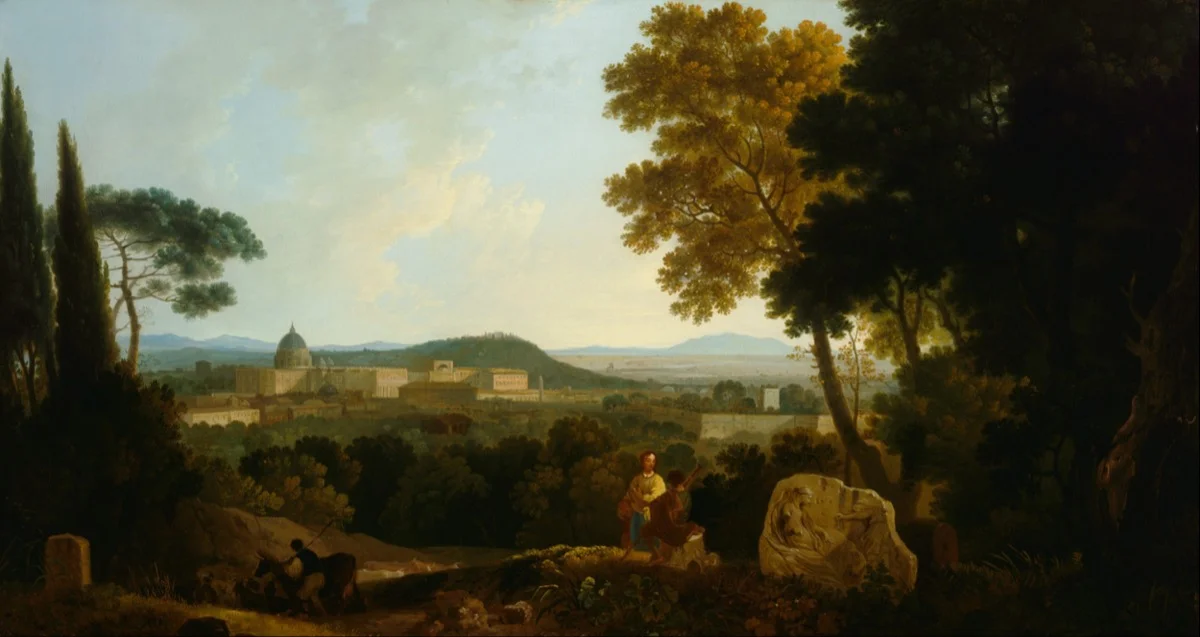
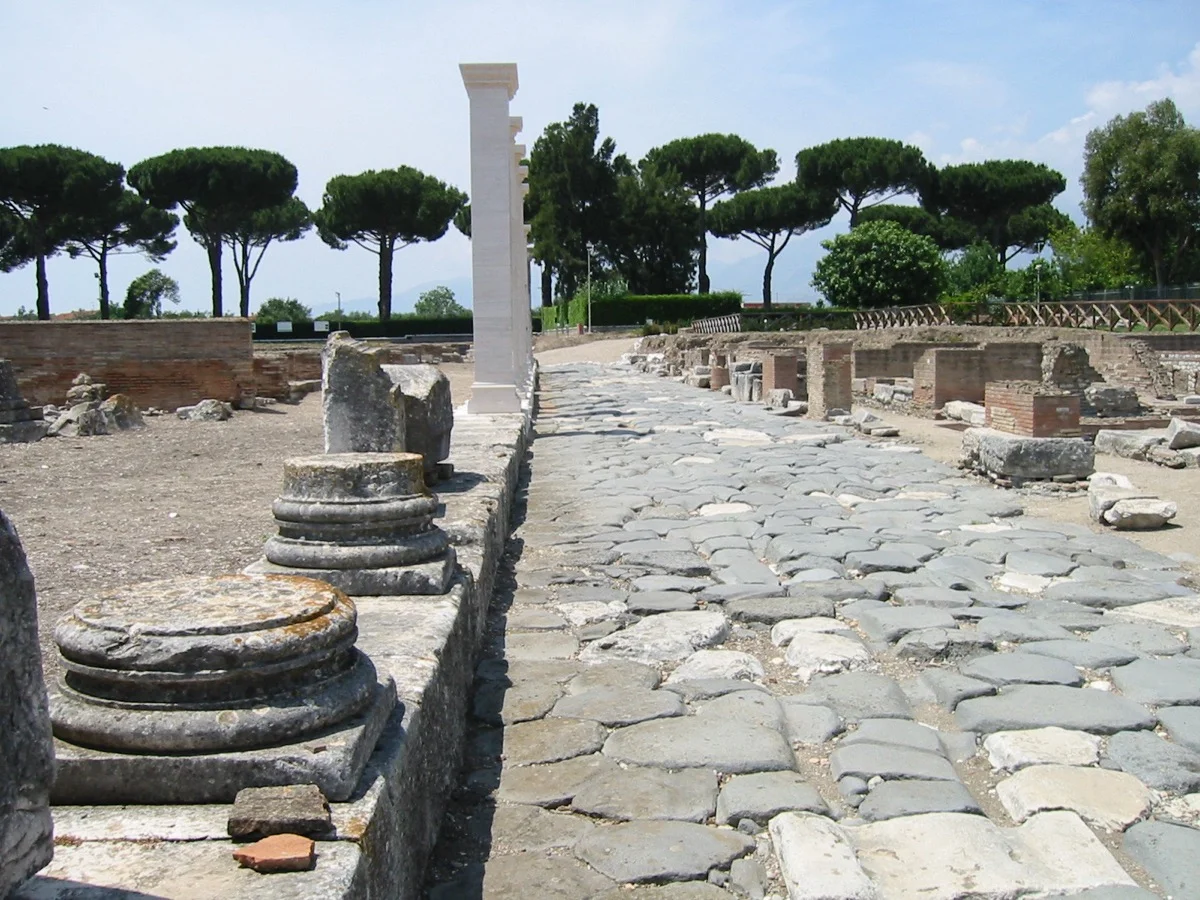
IV. The Pines of the Appian Way — Dawn breaks. Through the misty Appian Way, a Roman legion marches forth. Respighi demanded that the ground itself should tremble with their footfalls. The organ’s 8-, 16-, and 32-foot pedals simultaneously sound a low B-flat. Six buccine—ancient, circular Roman military horns—blare out. In modern orchestras, these parts are usually played by flugelhorns.
Trumpets roar as the consular army marches in triumph towards the Capitoline Hill.
After the final rehearsal before the premiere, Respighi told his wife, Elsa:
“Every time I hear the crescendo of the ‘Appian Way,’ I feel ‘something’ in my gut. This is the first time what I imagined has been realized so perfectly.”
🎵 A 2024 live performance by the KBS Symphony Orchestra. Conducted by Pietari Inkinen, the rendition sees the audience leap to a standing ovation as the doors of the hall are thrown open at the end of the crescendo in the fourth movement, “The Appian Way.” This video lets you witness firsthand that moment Respighi described as “something you feel in your gut.”
The Premiere and Toscanini
The premiere took place on December 14, 1924, conducted by Bernardino Molinari with the Augusteo Orchestra. According to Elsa’s recollections, the end of the final movement “was drowned out by the thunderous applause of the audience.” Two weeks later, on December 28, an encore performance was held for a sold-out crowd.
The American premiere was on January 14, 1926, in New York, with Arturo Toscanini conducting. This was also the day of Toscanini’s very first concert as the principal conductor of the New York Philharmonic. He chose this piece for his debut.
Toscanini’s connection with *Pines of Rome* didn’t end there. He also conducted it at his final performance with the New York Philharmonic in 1945, bookending his tenure with the same piece.
Meanwhile, Respighi himself conducted the work with the Philadelphia Orchestra on the very next day after Toscanini’s American premiere. Respighi was on a concert tour of the United States at the time.
🎵 A 2018 performance by the New World Symphony. Conductor Stéphane Denève leads these young musicians through all four movements. Listen for the moment the actual nightingale recording is introduced in the third movement, and experience the final, overwhelming crescendo as the legions march in the fourth.
A Blueprint Hidden Beneath the Umbrella Pines
*Pines of Rome* contains a hidden structure.
The four movements form a journey, a counter-clockwise tour around the outskirts of Rome. The path begins at the Villa Borghese, passes over the Janiculum Hill, and leads out onto the Appian Way.
Time also cycles: from day to night, and back to dawn. From the present to the early Christian era, then back to the Roman Republic. It begins with children at play and ends with the march of soldiers.
And then there is the Janiculum Hill, the setting for the third movement. This hill was dedicated to the god Janus, the god of beginnings and endings, who possessed two faces to look both forward and backward. Upon this hill that sees both past and future, a nightingale sings.
Did Respighi calculate all of this? He most likely did.
From Disney Whales to Rock Bands
*Pines of Rome* is the most recorded of Respighi’s works. As of 2018, more than 100 different recordings exist. The 1959 stereo recording by Fritz Reiner and the Chicago Symphony Orchestra is something of a bible for audiophiles.
But the work’s influence extends far beyond the classical music world. In Disney’s *Fantasia 2000*, the music accompanies a scene of humpback whales flying through the sky. The rock band Yes used the opening of the piece in the introduction to their song ‘City of Love’ on the 1983 album *90125*.
The composer’s experimental spirit, which led him to play a nightingale’s song on a gramophone, is still alive a century later, transcending genres.
🎵 A live performance of *Pines of Rome* that brings the house down. As the march of the Appian Way in the fourth movement reaches its climax, the audience leaps to their feet. This video shows why the work is often cited as having one of the highest ‘perceived volumes’ in the concert hall.
The Nightingale Is Still Singing
Respighi passed away at the age of 56 in April 1936 from bacterial endocarditis, while in the middle of composing his opera *Lucrezia*. His wife, Elsa, outlived him by nearly 60 years, dedicating her life until 1996 to promoting his music to the world.
When you listen to *Pines of Rome*, don’t just focus on the overwhelming crescendo at the end of the fourth movement. Listen closely at the end of the third. A nightingale, recorded a century ago, is still singing there—beneath the Roman moonlight, among the pines.
🎼 View the Score — Download the free sheet music from IMSLP
Follow the Score
The full score is freely available at IMSLP. View the Pines of Rome score on IMSLP
Frequently Asked Questions
Frequently Asked Questions
How is the nightingale sound produced in *Pines of Rome*?
Respighi specified in the score to play gramophone record No. R. 6105 on a Brunswick Panatrope gramophone. Today, orchestras mostly play a digital recording through speakers, or occasionally use an instrument that mimics bird songs (a bird call). It is inserted at the very end of the third movement and is the first instance in classical music history of a recorded sound being incorporated into a live performance.
What pieces make up Respighi’s “Roman Trilogy”?
The “Roman Trilogy” refers to *Fountains of Rome* (Fontane di Roma, 1916), *Pines of Rome* (Pini di Roma, 1924), and *Roman Festivals* (Feste Romane, 1928). All three are symphonic poems inspired by places in Rome, and they are often performed together in concerts.
Which recording of *Pines of Rome* is recommended for beginners?
The 1959 RCA recording by Fritz Reiner and the Chicago Symphony Orchestra is a perennial reference recommended for both audiophiles and classical fans alike. For a more modern recording, the EMI release from Antonio Pappano and the Orchestra dell’Accademia Nazionale di Santa Cecilia
The recording is also excellent.
Further Reading
- A Guide to Rimsky-Korsakov’s Scheherazade — A masterclass in orchestration from Respighi’s own teacher.
- A Guide to Holst’s The Planets
- A Guide to Mussorgsky’s Pictures at an Exhibition
- A Guide to Stravinsky’s The Rite of Spring — Another revolutionary work from the same era that pushed the orchestra to its limits.
What is the story behind Respighi’s “Pines of Rome”?
“Pines of Rome” is a four-movement symphonic poem composed by Ottorino Respighi in 1924, depicting scenes around Rome involving its iconic pine trees. The music programmatically portrays children playing at the Villa Borghese, the shadow of pines near a catacomb, a nightingale singing over the Janiculum hill, and finally, the vision of a Roman army marching down the Appian Way. The entire piece is performed without pause.
How long is Respighi’s “Pines of Rome”?
A typical performance of “Pines of Rome” lasts between 21 and 24 minutes. It consists of four movements which are connected and played one after the other without a break. This structure allows the listener to experience the different Roman scenes as a continuous journey.
What is unique about the instruments used in “Pines of Rome”?
Respighi’s 1924 score was innovative for its time, most notably for requiring a real recording of a nightingale’s song to be played in the third movement (“I Pini del Gianicolo”). For the final movement, the score also calls for six buccine—ancient Roman trumpets—to evoke the sound of a returning army. Modern orchestras often substitute these with flugelhorns or saxhorns to achieve the specified effect.
Is “Pines of Rome” part of a larger collection of music?
Yes, it is the second tone poem in Respighi’s celebrated “Roman Trilogy.” The first is “Fountains of Rome” (1916) and the last is “Roman Festivals” (1928). Each piece in the trilogy musically illustrates different aspects of the city of Rome, its history, and its life.