Rachmaninoff, The Bells, Op. 35 — An Anonymous Letter and a Funeral That Ends in Major

An anonymous letter and a funeral that ends in major

라흐마니노프
Library of Congress, Public Domain
Composer
Sergei Rachmaninoff
(1873–1943)
Work
The Bells, Op. 35 — Choral Symphony
Composed
1913 (Rome)
1936 — Movements I and IV substantially revised at Villa Senar, Hertenstein, Switzerland
Movements
Four

I. Allegro ma non tanto — D-flat major
II. Lento — D major
III. Presto — F minor
IV. Lento lugubre — C-sharp minor → D-flat major

I. Silver bells — sleighs and childhood
II. Golden bells — wedding
III. Brazen bells — fire alarm
IV. Iron bells — funeral
Forces
Soprano, tenor, and bass soloists; mixed chorus
Woodwinds · brass · percussion · full strings · celesta · harp · organ
Large orchestra
Premiere
30 November 1913 (Old Style) — 13 December 1913 by the modern calendar
Mariinsky Theatre, Saint Petersburg
Conducted by Rachmaninoff
Chorus: A. A. Arkhangelsky
Duration
Approximately 35–38 minutes
Dedication
Willem Mengelberg and the Concertgebouw Orchestra of Amsterdam

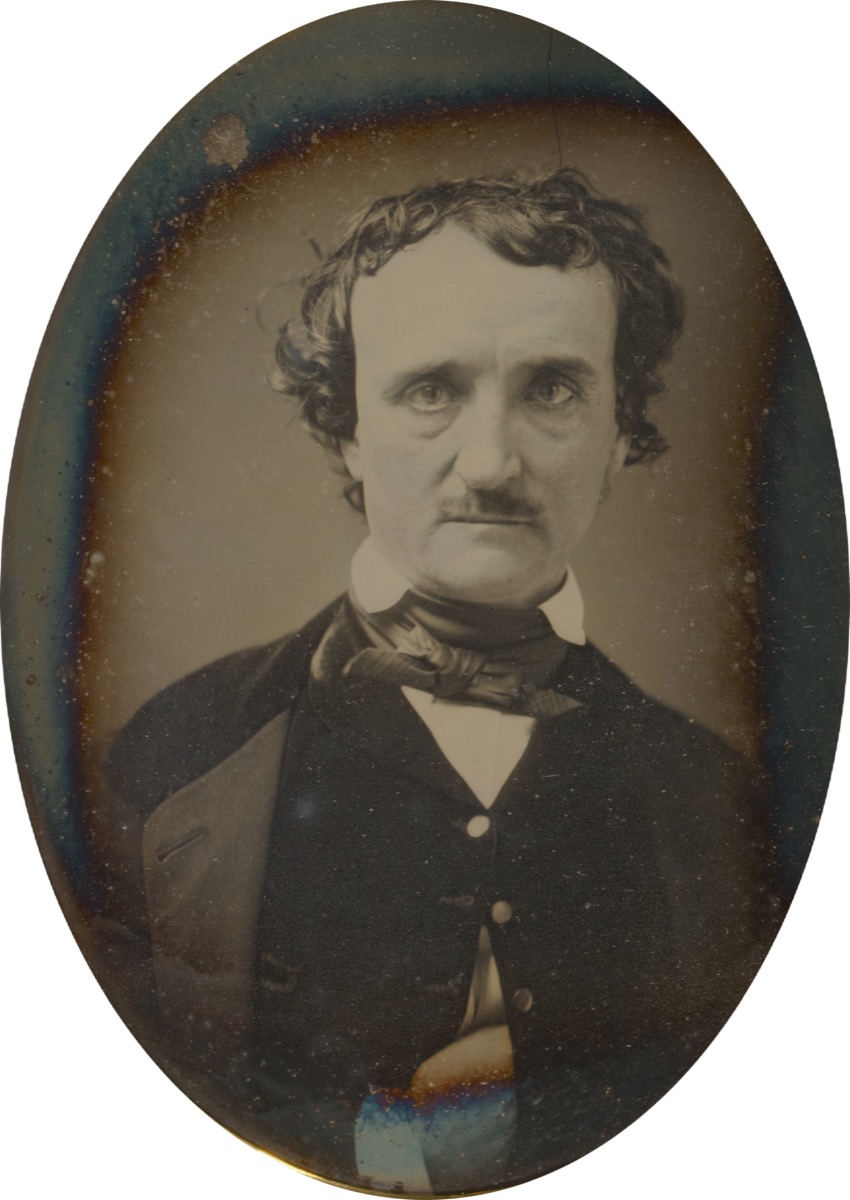
One day a letter arrived for Rachmaninoff with no name on it. Inside was a poem by Edgar Allan Poe. He used it to write a choral symphony in 1913. He spent the next thirty years not knowing who had sent the envelope.

Rachmaninoff told friends and interviewers, repeatedly, that this was the piece he loved most of everything he had written. And yet you have almost certainly never heard it live.

Thirty Years of Not Knowing Who Sent the Letter

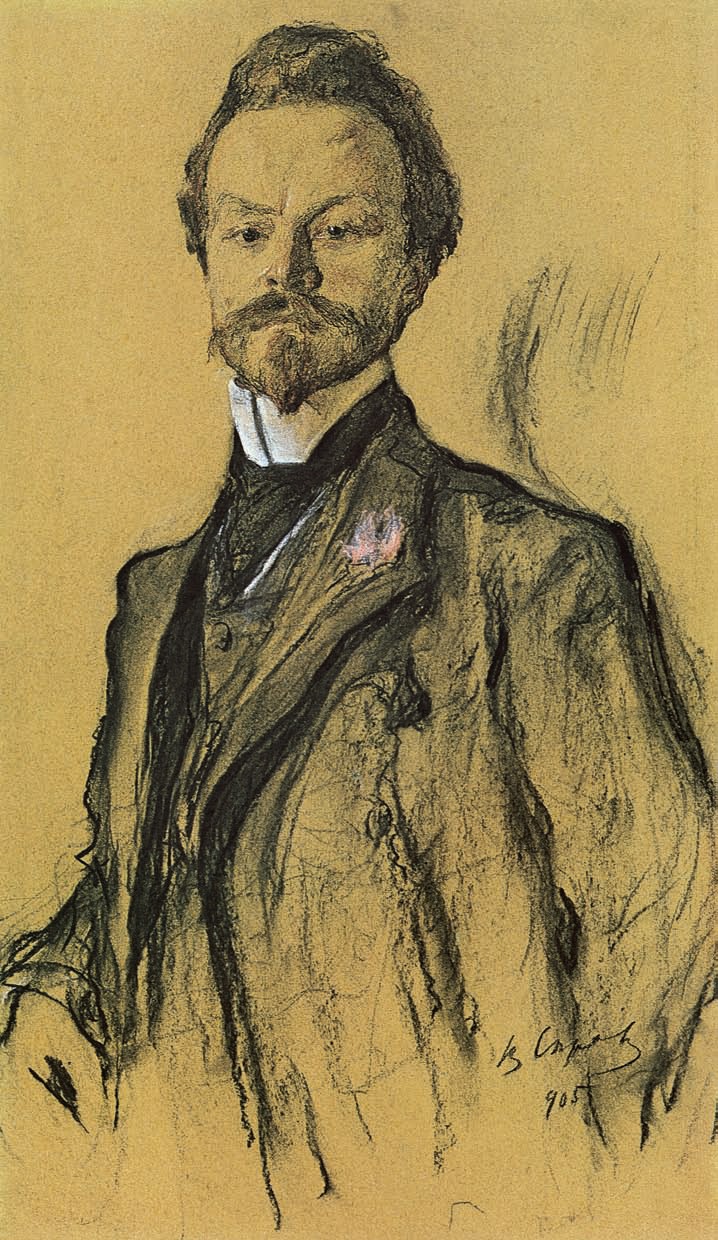
The envelope reached Rachmaninoff sometime around 1906 or 1907. Inside was Konstantin Balmont’s Russian translation of Poe’s “The Bells.” Rachmaninoff sat on it for years. Then, in 1913, in a borrowed apartment in Rome, he turned it into a four-movement choral symphony.

Here is the strange part. He did not know who had sent the letter. He never replied because there was no one to reply to. The envelope had simply arrived, and that was that. It was not until 1923 — already on a different continent, with most of his Russian life behind him — that his family finally connected the dots. The sender was Maria Danilova, a cellist at the Moscow Conservatory.

Try searching her name in English and you will find a paragraph or two; in most languages of the world, a near-total silence. The woman who put Poe in front of Rachmaninoff is one of music history’s quieter ghosts.

Composers usually have clear paper trails. They get commissions. They get patrons. They get specific events — a coronation, a funeral, a centenary — to write toward. Rachmaninoff spent thirty years owing a creative debt to someone whose face he could not picture and whose voice he had never heard. There is no other major piece in the standard repertoire that begins this way.

The Roman setting is its own kind of joke. The room he wrote in, in an apartment on the Piazza di Spagna, was the same one Modest Tchaikovsky — Pyotr Ilyich’s brother and operatic librettist — had used (Bertensson & Leyda 1956). A Russian-language version of an American poem, set to music in Italian sunlight, in the lingering atmosphere of the Tchaikovsky family. Four mismatched ingredients somehow turn into one of the strangest pieces of the early twentieth century.

Poe + Balmont — Not a Translation, a Rewrite

Poe wrote “The Bells” in 1849, the last year of his life. Balmont put it into Russian sometime in the early 1890s. Looked at side by side, the two poems are about the same length and follow the same outline — silver bells, golden bells, brazen bells, iron bells — but at the level of the line, of the syllable, they are barely speaking the same language.

That is because Balmont was not trying to translate in the bureaucratic sense of the word. He was a Symbolist, and the Symbolists believed the sound of a poem mattered as much as its meaning, sometimes more. Poe had used English consonants — those clanking k’s and t’s, the bright i’s and silvery e’s — to imitate church bells. Balmont rebuilt the imitation in Russian, with a different inventory of sounds, a different rhythm, and a different center of gravity. Sylvester (2014) calls the result a “re-creation” rather than a translation, and the term is precise.

The consequence is that the piece you hear in English-speaking concert halls — assuming you ever do — is not quite the same piece a Russian audience hears. The English-speaking listener follows along with Poe and gets onomatopoeia: bells imitating themselves. The Russian-speaking listener follows along with Balmont and gets allegory: bells walking through a human life from cradle to grave. Same skeleton. Different soul.

Balmont’s later life was no kinder than Poe’s. He emigrated after the Russian Revolution and was effectively banned from Soviet publication in the 1920s and 1930s for the crime of being an émigré (Bartlett 2007). He died in occupied Paris in 1942, in poverty. Rachmaninoff died in Beverly Hills the year after. They had been collaborators only in the loosest sense — Rachmaninoff inheriting the text through circulation rather than commissioning it from a partner — and after the symphony was finished, the two men never saw each other again.

Four Bells, Four Lives — A Movement-by-Movement Walkthrough

The allegory is almost embarrassingly clean. Four bells, four metals, four stages of a human life. Silver, gold, brass, iron. Change the metal and you change the sound; change the sound and the page of the life turns. There is something both childlike and devastating about reducing a biography to four ringing objects.

I. Silver Bells — Sleighs and Childhood

Silver chimes glide in. A tenor enters with a song about sleigh bells. These are the brightest thirty seconds in the four movements of The Bells.

Key: D-flat major · Tempo: Allegro ma non tanto · Soloist: tenor

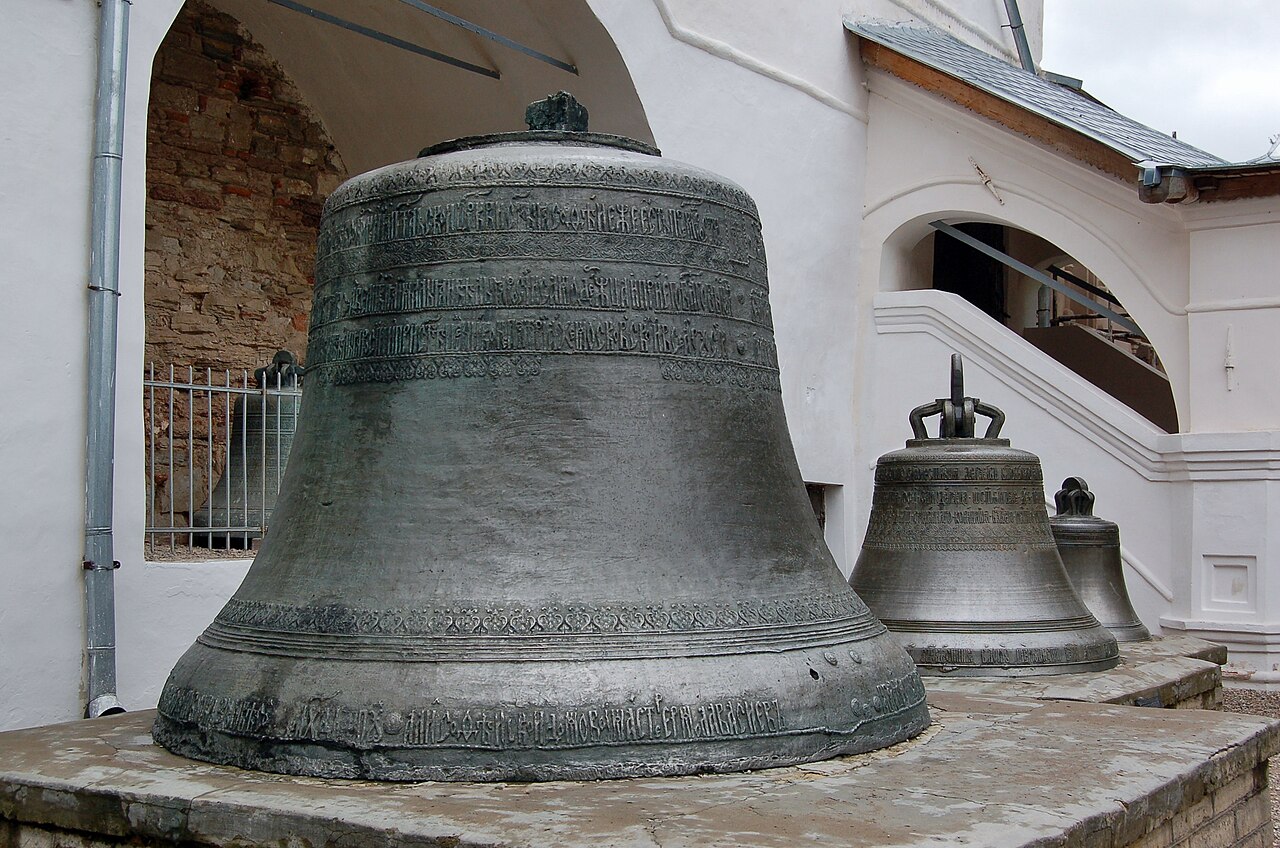
The first page mixes celesta, triangle, and harp into something you cannot quite identify. First-time listeners often spend a few seconds trying to figure out whether they are hearing a real bell, a bell-shaped instrument, or some kind of acoustic illusion built from those three glittering ingredients. In musicology this kind of woven-together sound is called texture, and the technical word earns its keep here, because Rachmaninoff is not painting bells from outside. He is composing the bells themselves. The blueprint goes back to his childhood at the Cathedral of Saint Sophia in Novgorod, where the bell tower’s overtones burrowed into a small boy’s nervous system for life.

The tenor line, when it finally enters, is closer to humming than to declaiming. There is no Wagnerian grandstanding here, no tenor-Olympics money note. He sings about the way the sleigh’s runners cut through snow and the way bells answer overhead with little glass-like jingles. It is one of the rare moments in Rachmaninoff where the air actually feels lighter than the listener’s body.

📜 악보 지점: The Bells movement I, mm. 1–16 (IMSLP 링크 미등록)

II. Golden Bells — A Wedding That Already Sounds a Little Sad

The second bell rings the wedding. A soprano enters; she sings about happiness; and yet the music keeps refusing to be entirely happy. The harmonies have a bruise on them. You can almost hear the next movement waiting offstage.

Key: D major · Tempo: Lento · Soloist: soprano

The chorus rolls in beneath the soprano like waves, in long horizontal lines that pull her melody this way and that. The melodic line is clear, but the chord changes keep drifting somewhere they aren’t quite supposed to go. This is Rachmaninoff being himself: even at maximum brightness, he cannot quite forget that the brightness ends. Joy in his music almost always carries a tail of memory, a faint nostalgia that the joy itself produces.

By the second half the soprano has receded and the choral writing thickens into something layered and ceremonial, bell-like and processional, with that same drifting harmony refusing to settle into ordinary happiness. It is the gentlest movement of the four, and arguably the saddest.

III. Brazen Bells — A City on Fire, and No Soloist in Sight

This is where the room collapses. The third bell is a fire alarm. And — pay attention to this — there is no soloist on this movement. None.

Key: F minor · Tempo: Presto · Soloist: none

Movement I has a tenor. Movement II has a soprano. Movement IV has a bass. Movement III has a chorus and an orchestra and that is it. No human face. The point is not subtle: panic in a city is anonymous. There is no protagonist when the building is on fire. Just bodies, smoke, ringing brass.

This is also one of the most violent pages Rachmaninoff ever set down. The chorus heaves up from below; the brass lunges over the top of it; somewhere underneath, the percussion section is doing something that resembles open warfare. First-time listeners do a small mental double-take when they remember the year: 1913. The same calendar year that gave us Stravinsky’s Rite of Spring premiere in Paris. The two pieces have nothing in common stylistically and yet they share the same atmospheric pressure — the sound of an old order whose joints have started to creak.

📜 악보 지점: The Bells movement III climax (IMSLP 링크 미등록)

IV. Iron Bells — A Funeral That Ends in a Major Key

The fourth bell is the funeral bell. A bass soloist enters and lays down something that sounds like a deep pedal point — the floor of the symphony. It is supposed to be the end. And then, in the final minutes, something completely strange happens.

Key: C-sharp minor → D-flat major · Tempo: Lento lugubre · Soloist: bass

A funeral movement that ends in a major key is one of the rarest gestures in Western music history (Cunningham 2001). Almost every requiem-shaped piece in the standard repertoire — Mozart, Brahms, Verdi — leaves you on some flavor of minor or, at best, an exhausted major lament. Rachmaninoff doesn’t. In the last thirty or forty bars, he slips out of C-sharp minor and into its enharmonic neighbor D-flat major (the same pitch on the keyboard, but written and felt as a different key), and the music exhales.

You could argue about what this means for the rest of your life and people have. Resurrection? Resignation? Some specific theological position about death? Rachmaninoff was not the kind of composer who spelled it out. What he did do, all his life, was quote the Dies Irae — that thirteenth-century Gregorian chant about the Day of Wrath. It shows up in the Symphonic Dances, the Paganini Rhapsody, all four piano concertos, and yes, in this fourth movement, more nakedly than almost anywhere else in his output. He carried that melody around like a rosary made of dread.

And then, in the last page of the last movement of the work he loved most, with the iron bell already tolling, he steps off the Day of Wrath and into D-flat major. It is the one moment in his entire catalog where Rachmaninoff blinks at his own obsession. The funeral bell does not get the last word.

📜 악보 지점: The Bells movement IV ending, D-flat major shift (IMSLP 링크 미등록)

Dies Irae and Novgorod — The Two Obsessions

Two sounds followed Rachmaninoff for his entire life. One was the Dies Irae chant. The other was the bells of Novgorod.

The Dies Irae, for the not-yet-Catholic-music-theory-nerd, is a thirteenth-century plainchant about the Day of Judgment. Berlioz quoted it once in the Symphonie fantastique and made it famous. Rachmaninoff quoted it everywhere. Symphonic Dances, Rhapsody on a Theme of Paganini, all four piano concertos, and again here, in the iron bell of the fourth movement (Cannata 1999). If Berlioz used the Dies Irae as a signature flourish, Rachmaninoff used it as a tic, the way some writers cannot stop using a particular punctuation mark.

The bells of Novgorod were different. They came from his actual childhood, not from a library. He grew up partly near the Cathedral of Saint Sophia in Novgorod, one of the oldest stone churches in Russia, and the bell tower’s specific overtones soaked into him before he could read. Then he spent the rest of his career reproducing them. The famous opening chord progression of the Second Piano Concerto — the one that has launched a thousand romantic-comedy soundtracks — is a bell. The Prelude in C-sharp minor, Op. 3 No. 2, nicknamed “The Bells of Moscow,” is a bell. The Corelli Variations, in places, are bells. Rachmaninoff was, more or less unconsciously, composing church towers his entire life (Norris 2001).

The Bells, Op. 35 — capital T, capital B — is where the obsession finally came clean. He gave it the name. He wrote it for chorus, soloists, and orchestra. He let himself off the leash. “I painted a life with bells,” he wrote in a letter, and you should read that as both confession and shrug.

A Twenty-Five-Year Project — 1913 → 1936 → 1943

The premiere on 30 November 1913 — 13 December by the modern calendar, since Russia was still on the old Julian system — was a success. Rachmaninoff conducted from the podium at the Mariinsky Theatre. The veteran choral conductor A. A. Arkhangelsky drilled the chorus. The audience approved. The reviews were warm. By every contemporary measure, it was a launch.

And then the world ate the piece alive. The First World War broke out the following summer. The Russian Revolution arrived three years after that. Rachmaninoff left Russia in late 1917 with his wife, his daughters, and not much else, and he never went back. A Russian-language choral symphony by an émigré composer about American Gothic poetry was, for a couple of decades, a thing nobody quite knew what to do with.

So in the spring of 1936, in the Swiss village of Hertenstein, in a villa called Senar, Rachmaninoff took the score back out and rewrote it (Martyn 1990). Not a polish. Not a touch-up. He rebuilt large stretches of the first and fourth movements. Twenty-three years after the premiere, with most of his composing career already behind him and the piece still chasing him, he sat down and revised it as if it were brand new. Most composers, when they bring a score back into their hands a quarter-century later, do so out of nostalgia or repair. Rachmaninoff did it because he could not let it go.

The 1936 version is the one nearly every modern recording uses. The 1913 version is the one that disappeared into Soviet archives. Balmont’s translation itself was banned from Soviet publication for most of those years on the émigré technicality — so for a long stretch, even when the music was technically permissible, the libretto wasn’t.

In 1942 Balmont died in Paris. In 1943 Rachmaninoff died in Beverly Hills. They are buried on different continents, in different decades of history, and their joint creation outlived both of them by a margin neither of them likely imagined.

Why You’ve Probably Never Heard This Live

If Rachmaninoff really did love this piece more than anything else he wrote — and he did say so, repeatedly, in his memoirs and his letters (Riesemann 1934) — you might reasonably ask why it is not on every concert program. The answer is depressingly logistical. Choral-symphony forces are expensive. You need a chorus of around eighty voices, a large orchestra, three vocal soloists (soprano, tenor, bass), and — the killer — a Russian-language coach for absolutely everyone on the choral risers. Russian, with its particular vowel landscape and its merciless consonant clusters, you cannot fake. So performing The Bells means hiring the singers, rehearsing them in a language most of them do not speak, all for thirty-five minutes of music that, programmed alone, leaves you with an awkwardly short evening.

Compare this to the choral-symphony pieces that do hold the calendar. Mahler’s Eighth gets booked because it is an event in itself — a vast roster, ninety minutes, sells out as a spectacle. Beethoven’s Ninth is the universal end-of-season closer at every major orchestra; the chorus learns it once and re-learns it every few years. Verdi’s Requiem fills both halves of an evening on its own, in a language most professional choristers can already pronounce in their sleep. The Bells loses on every count: not long enough to fill an evening, not famous enough to sell on its name, and the language requirement multiplies your rehearsal hours instead of reusing existing competence.

The piece tends to surface only at choral festivals, anniversary years, and tours by ensembles whose chorus already speaks the Russian. Outside of those concentrated moments, the piece largely lives on disc.

So most listeners — including, statistically, you — will encounter The Bells through recordings rather than through a hall. Which is a smaller loss than you might think. The piece survives recording surprisingly well; the bell textures translate beautifully to good speakers, and the Russian-language libretto is no harder to follow on disc than off. If anything, a recording lets you do what a concert hall cannot: pause the third movement after the climax, rewind it, and listen to that wave of brass-and-chorus collide a second time, which is what most first-time listeners want to do anyway.

Recording Shootout — Three Doors

Three recordings have established themselves as the reference points for The Bells. They could not be more different from one another, and choosing among them is less about which is “best” than about which version of the piece you want to meet first.

Pletnev / Russian National Orchestra (DG 1996)

This is the modern reference for the 1936 revision. Mikhail Pletnev approaches the score the way an architect walks through a building: every sightline is checked, every load-bearing wall is honored, every detail is in focus. The recorded sound is gorgeous — Deutsche Grammophon at the height of their digital era — and the chorus is impeccably drilled. If you are coming to The Bells for the first time and want to understand its bones, this is the recording that will let you do so.

The trade-off is that Pletnev’s Bells are sometimes a little too well-mannered for the piece’s actual contents. The first-movement silver bells are so perfectly placed in the soundstage that the sleigh ride feels less like an actual ride and more like a museum diorama of a sleigh ride. The third movement is shaped beautifully but somehow not quite scary. Pletnev gives you architecture; The Bells, at its core, is an act of demolition. You will need to find the demolition somewhere else.

Svetlanov / USSR State Symphony (Melodiya 1979)

Yevgeny Svetlanov’s recording is closer to the 1913 version in spirit — and in some places in fact — and it is the one to hear if you want to understand what shocked the original audience. It is rough. It is loud. The chorus, in the third movement, occasionally sounds like it is one bar away from coming apart, and that is not a flaw in the recording. That is the piece. Rachmaninoff wrote a movement about a city on fire, and Svetlanov gives you a city on fire.

The price is the audio. Melodiya’s late-1970s analog tape, even in remastered transfers, sounds like a basement recording compared to the DG glossiness of Pletnev. The dynamic range is dramatic but the frequency range is not, and the choral diction occasionally turns to mud. If you are an audiophile by temperament, this recording will torture you for thirty-eight minutes. If you are willing to trade hi-fi for adrenaline, it is the only version that delivers what Rachmaninoff actually wrote in 1913.

Ashkenazy / Concertgebouw (Decca, 1980s)

Vladimir Ashkenazy’s reading with the Concertgebouw is the polished international entry point. The orchestra is Dutch. The recording is Decca-glossy. The chorus is well-prepared and never disintegrates. The soloists are strong. Nothing is on fire and nothing is in doubt.

Choose this recording if you want to introduce someone to The Bells without scaring them off. The third-movement chaos is contained. The fourth-movement key shift to D-flat is rendered as a tasteful gear change rather than a metaphysical event. The price is that the work’s actual face — the face of the third movement’s mob, the face of the fourth’s funeral-into-light — is partially veiled. It is The Bells with very good manners, which is to say, not entirely The Bells.

The conclusion, if you trust this site at all: don’t start with Svetlanov, but don’t end without him either.

Recommended Video

For a complete viewing, the Pletnev recording with the Russian National Orchestra (DG 1996) is the standard recommendation. It is in the modern revision, the audio is clean enough to follow on a phone speaker, and several of the YouTube uploads include English subtitles for the Balmont text — so you can track the libretto without doing any homework first.

Three Moments to Catch by Ear

You don’t need to read music to follow this piece. Cue up the Pletnev or Svetlanov recordings linked above and listen carefully to these three places. The whole symphony will explain itself.

  • Movement I, the first minute. The opening page, where celesta, triangle, and harp braid themselves into an instrumental texture that does not quite exist anywhere else in the orchestral repertoire. Listen for how the celesta strikes a pitch and the triangle answers a fraction of a second later, almost on the same note but not quite — and how the harp drops a string of upward arpeggios across both, like sun catching on icicles. None of these three instruments alone sounds like a bell. Combined, they sound like nothing else. If you have a good pair of headphones, use them; most of the magic happens in tiny, glittering high frequencies that small phone speakers swallow whole. The trick is so distinctive that once you have heard it you will catch Rachmaninoff doing variations on it for the rest of his career.
  • Movement III, the climax. The chorus and the orchestra colliding without a soloist anywhere in sight. This is the page that scared 1913 audiences and still scares first-time listeners now. Try to hear how the choral lines come up from below while the brass smashes down from above — basses in the chorus, trombones in the orchestra, both targeting the same low register from opposite directions. The two hammers don’t just clash; they meet in the middle and grind against each other. Underneath, listen for the percussion: a tam-tam stroke buried under everything else, plus snare-drum rolls and a bass drum that arrives like artillery. The whole thirty seconds is engineered so that no single voice can rise above the texture, which is exactly Rachmaninoff’s point. A burning city does not have a lead singer.
  • Movement IV, the last minute and a half. The shift from C-sharp minor to D-flat major. On paper they are the same pitch — D-flat and C-sharp are enharmonic equivalents, the same key on a piano spelled two different ways — but the musical effect is night turning to dawn. Listen for the moment the bass soloist exits and the orchestra alone begins to lift. The strings stop pulling downward and start hovering. The harp returns, this time playing slow, gentle arpeggios instead of the sleighbell tracery of the first movement — the same instrument, transformed by context. Then the harmony stops aching and starts breathing. This is the exit from the Day of Wrath that Rachmaninoff allowed himself exactly once in his life.

If you want to follow along with the score, IMSLP hosts the full orchestral score of The Bells for free. You don’t need it — the piece is followable by ear — but for the curious it is a few clicks away.

Frequently Asked Questions

Did Rachmaninoff really call The Bells his favorite of his own works?

He said so repeatedly, in print and in private. His memoirs (Riesemann 1934) include several explicit statements that The Bells was the piece of his that he loved most, or “one of the most.” Letters to family and friends echo the same line. The exact superlative — “favorite,” “most loved,” “one of my favorites” — varies from source to source, but the underlying claim that Rachmaninoff felt unusually attached to this score, more than to any of his concertos or symphonies, is consistent across decades of his correspondence.

Will I ever get to hear The Bells live?

Less often than you would hope. The combination of an eighty-voice chorus, three soloists, a large orchestra, and a Russian-language libretto pushes the piece out of regular subscription seasons in most cities. Your best bets are choral festivals, Rachmaninoff anniversary years, and tours by ensembles where the language requirement is already solved. Watching for one-off projects like that is more productive than waiting for a regular orchestra to put it on the calendar.

Do I need to know Russian to follow the libretto?

No. The four-movement allegory — silver, gold, brass, iron — is doing most of the narrative work, and the music itself communicates the emotional arc more precisely than the words do. If you want a libretto walkthrough, the Pletnev DG booklet has a good parallel translation, and several YouTube uploads include English subtitles. But unlike, say, Mussorgsky’s Boris Godunov, where missing the text means missing the plot, The Bells gives you most of its meaning in pure sound.

The original 1913 version or the 1936 revision — which one should I hear?

Default to the 1936 revision; that is the standard score and the basis for nearly every modern recording. Pletnev / Russian National Orchestra (DG 1996) is the reference. If you want to hear something close to the original 1913 sound, the Svetlanov / USSR State Symphony recording (Melodiya 1979) is essentially your only option, and you will need to accept its dated audio quality. The most informative listening order is revision first, then 1913, so you can hear what Rachmaninoff thought needed fixing twenty-three years later.

Why is this called a “choral symphony” alongside Beethoven’s Ninth and Mahler’s Eighth?

Because Rachmaninoff himself called it one. In his correspondence around the premiere he placed The Bells consciously in the choral-symphony lineage of Beethoven and Mahler, using language like “I have painted a life with bells” and explicitly framing the piece as a symphony in form. The four-movement structure with three soloists and a full chorus follows the choral-symphony template Beethoven established and Mahler expanded. The classification is, unusually, the composer’s own self-description rather than a later academic label.

Is ending a funeral movement in a major key really that rare?

Genuinely rare. The Western funeral-music tradition — Mozart’s Requiem, Brahms’s Ein deutsches Requiem, Verdi’s Requiem, the various symphonic funeral marches — almost universally lands in minor, or in a chastened major that still carries the weight of the loss. The shift in The Bells from C-sharp minor to D-flat major in the final thirty to forty bars of a movement explicitly titled “Mournful Iron Bells” is one of the very few examples in the standard repertoire where a funeral movement opens onto unambiguous major-key consolation (Cunningham 2001). What that consolation means — afterlife, resurrection, resignation, sheer compositional whim — is still being argued over.

Related Reading

Copyright notice · The Classic Note does not permit unauthorized reproduction, reposting, redistribution, or translation of its articles. Brief quotations are allowed only with clear attribution and a link to the original page. Please contact us for reuse or collaboration requests.