- Composer
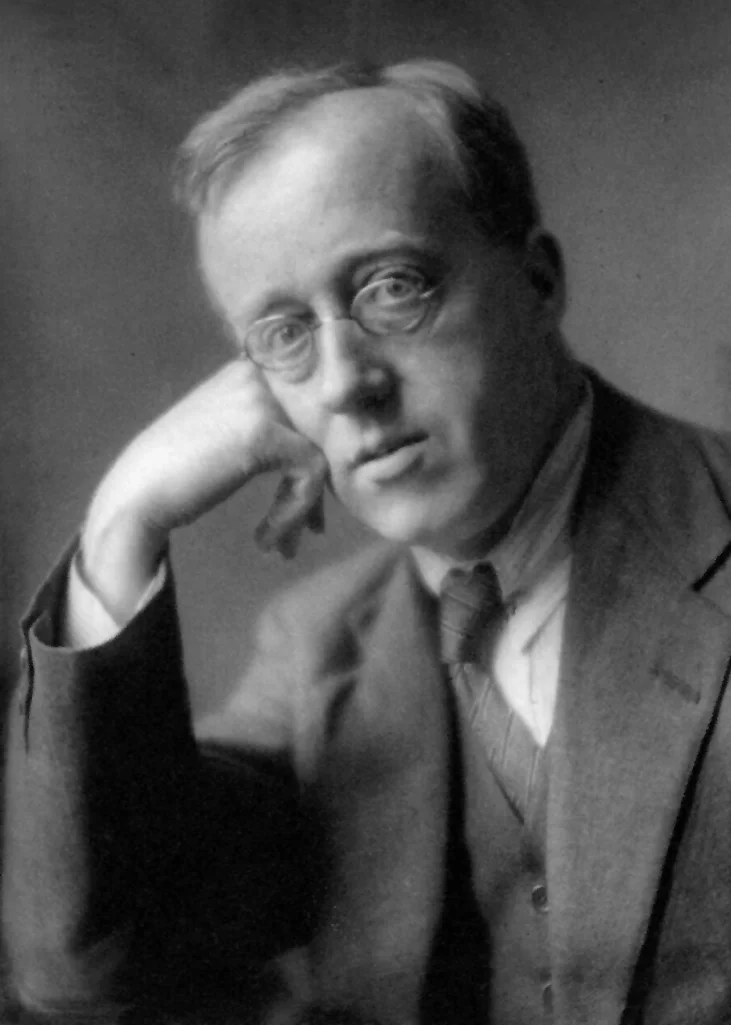
- Gustav Holst
(1874–1934) - Work
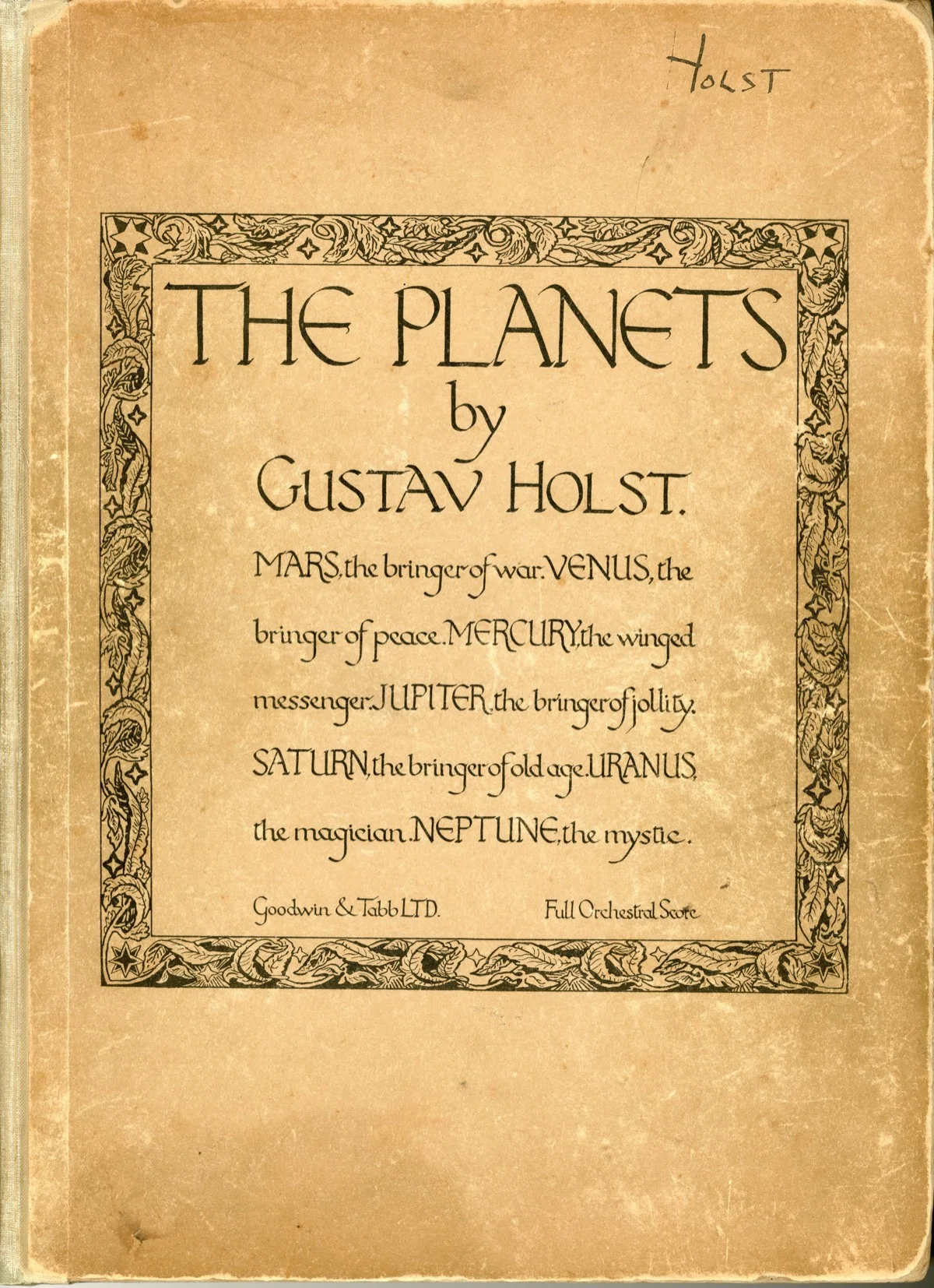
- The Planets, Op. 32
- Composed
- 1914–1917
- Premiere
- September 29, 1918, Queen’s Hall, London (private); November 15, 1920 (public)
- Instrumentation
- 4 flutes (2 piccolos, alto flute, bass flute), 3 oboes (cor anglais, bass oboe), 3 clarinets (bass clarinet), 3 bassoons (contrabassoon), 6 horns, 4 trumpets, 3 trombones, tenor tuba, tuba, timpani, percussion, 2 harps, celesta, organ, strings, women’s chorus (Neptune)
- Movements
- 7 movements
I. Mars, the Bringer of War
II. Venus, the Bringer of Peace
III. Mercury, the Winged Messenger
IV. Jupiter, the Bringer of Jollity
V. Saturn, the Bringer of Old Age
VI. Uranus, the Magician
VII. Neptune, the Mystic - Duration
- Approx. 50 minutes
One of the most common misconceptions about Holst’s The Planets is that it’s about astronomy. It isn’t. There’s no Earth, no Moon, and — most telling of all — no Sun. The work is about astrology: the seven planets of the astrological tradition, each representing a facet of the human character.
Holst became fascinated with astrology around 1913, introduced to it by his friend Clifford Bax. He began studying horoscopes seriously — not as a believer, but as an artist captivated by the archetypes. War. Peace. Messenger. Joy. Old Age. Magic. Mystery. What if each of these could be a piece of music?
The result, composed between 1914 and 1917 — the years of the First World War — became the most popular orchestral suite in the English-speaking world.
Mars, the Bringer of War
The suite opens with the most ferocious music Holst ever wrote — and arguably the most vivid depiction of mechanized warfare in all of orchestral music. A relentless 5/4 ostinato (five beats per bar, an unusual and destabilizing meter) drives the entire movement forward like a war machine that cannot be stopped.
Holst composed “Mars” in 1914, just as the First World War was beginning. Whether the music was prophetic or reactive has been debated ever since. Either way, the result is terrifying: col legno strings (hitting the strings with the wood of the bow), screaming brass, pounding timpani. The movement doesn’t end — it detonates.
Venus, the Bringer of Peace
After the carnage of Mars, Venus arrives as pure balm. Solo horn calls float over gentle strings. Flutes and oboes weave garlands of melody. The orchestration is exquisite — Holst uses the orchestra like a painter using watercolors, every shade transparent.
This is peace not as the absence of war, but as something actively beautiful. The contrast with Mars is deliberate and devastating.
Mercury, the Winged Messenger
A quicksilver scherzo. Darting figures in the woodwinds, glinting celesta, rapid-fire exchanges between sections. This is the shortest movement in the suite and the lightest — a palate cleanser that dazzles with sheer orchestral dexterity.
Jupiter, the Bringer of Jollity
The most famous movement. It opens with an irresistible, rollicking energy before arriving at the great central melody — one of the most beloved tunes in British music. Holst later adapted it as a hymn, “I Vow to Thee, My Country,” which has become a staple at weddings, state occasions, and rugby matches. The melody is so universally known that it has taken on a life entirely independent of The Planets.
But don’t let the familiarity of the tune distract you from the craftsmanship. Holst builds this movement with the skill of a symphonist: the jollity has weight, the exuberance has structure, and the return of the great theme at the end has a grandeur that earns every note.
Saturn, the Bringer of Old Age
Holst himself said Saturn was his favorite movement. It is also the most profound. A slow procession of chords — tick-tocking like a clock — suggests the relentless passage of time. Flutes play high, fragile melodies. The music gradually builds to a climax of overwhelming grandeur: not youth’s triumph but age’s acceptance. As the final pages unfold, the ticking slows and fades. Time runs out.
Uranus, the Magician
A raucous, stomping scherzo that sounds like a sorcerer’s apprentice gone wrong. Bassoons open with a four-note motif (B–A–G–E, which spells “BAGE” — nonsense, but musically unforgettable). The whole orchestra joins in a wild, increasingly unhinged dance. The climax is a massive organ chord that swallows everything. Then — silence. The magic is spent.
Neptune, the Mystic
The suite ends not with a bang but with a dissolve. An offstage women’s chorus — wordless, ethereal — sings over shimmering orchestral textures. The music has no clear pulse, no melody in the conventional sense. It simply floats.
Holst’s final instruction is extraordinary: the women’s chorus continues to repeat their phrase as the door to their room is slowly closed. The sound fades not because the music stops, but because we can no longer hear it. The piece ends in mid-phrase, vanishing into the void. In 1917, this was radical. It remains one of the most haunting endings in all orchestral music.
The Premiere and Adrian Boult
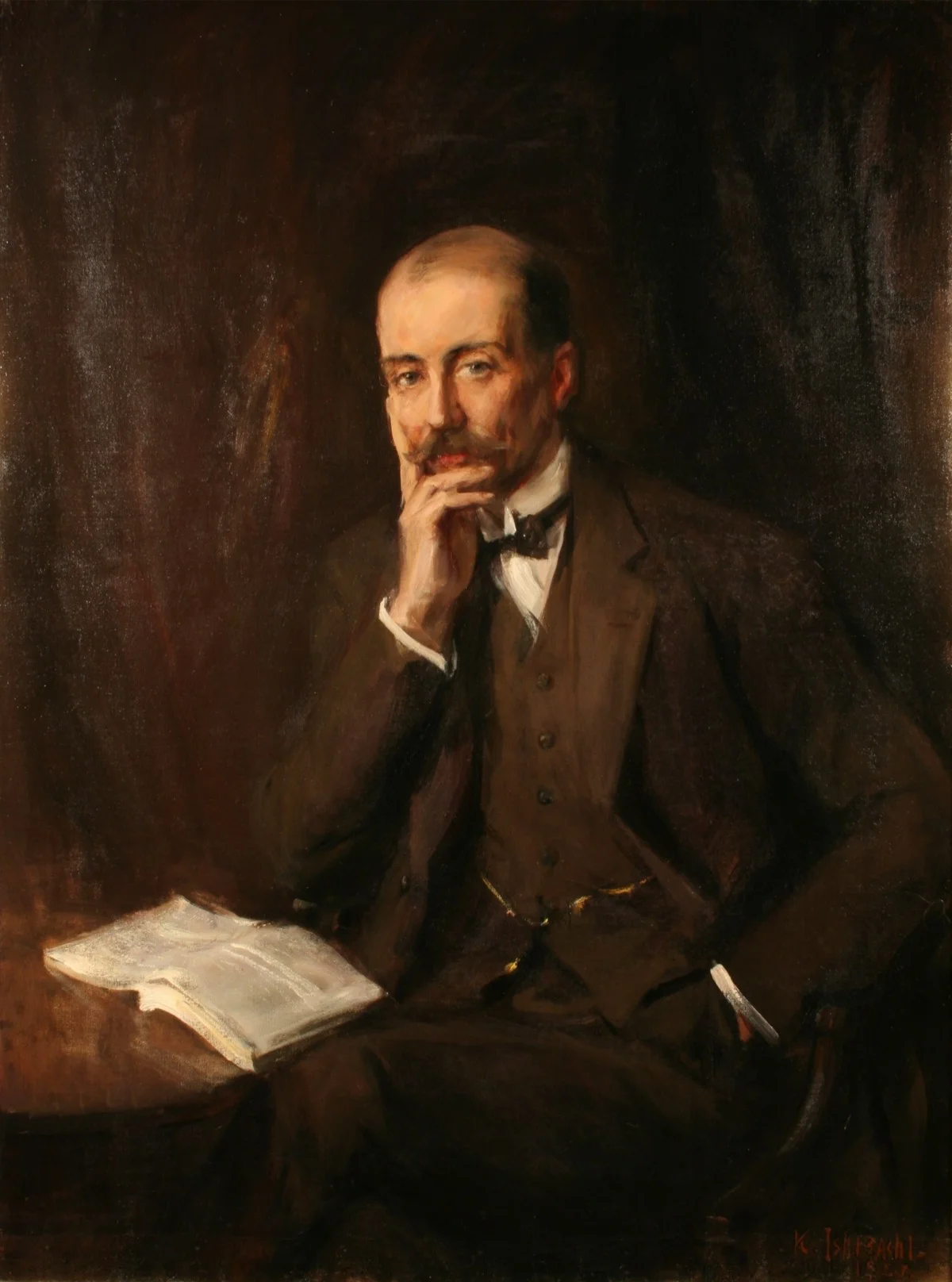
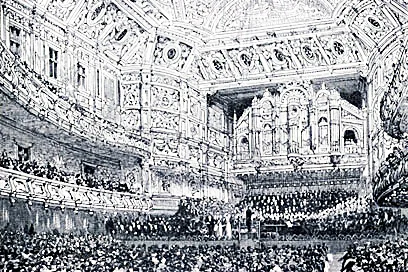
The private premiere on September 29, 1918, was conducted by Adrian Boult, then a young and largely unknown conductor. Holst, too ill to conduct himself, entrusted the entire performance to Boult. The audience was small and select, but the impact was immediate.
The first full public performance came on November 15, 1920, with Albert Coates conducting. The work was an instant sensation. Boult went on to conduct The Planets throughout his career, recording it multiple times, and his interpretations remain benchmarks.
Recommended Recordings
Herbert von Karajan / Berlin Philharmonic (1981) — Massive orchestral power. Mars is seismic; Neptune is otherworldly. The benchmark recording.
Adrian Boult / London Philharmonic (1978) — The conductor who premiered the work. Authority that comes from a lifetime of living with this music.
Simon Rattle / Berlin Philharmonic (2006) — A brilliantly detailed modern reading. Saturn is especially fine.
John Eliot Gardiner / Philharmonia Orchestra (1994) — Lean, transparent, and fiercely energetic. Mars is explosive.
Follow the Score
The full score is freely available at IMSLP. View the The Planets, Op. 32 score on IMSLP
Frequently Asked Questions
When and why was The Planets, Op. 32 composed?
The work was composed in 1914–1917 Premiere September 29, 1918, Queen’s Hall, London (private. The premiere took place September 29, 1918, Queen’s Hall, London (private); November 15, 1920 (public) Instrumentation 4 flutes (2 piccolos, alto flute, bass flute), 3 oboes (cor anglais, bass oboe), 3 clarinets (bass clarinet), 3 bassoons (contrabassoon) , 6 horns, 4 trumpets, 3 trombones, tenor tuba, tuba , timpani , percussion, 2 harps, celesta, organ, strings , women’s chorus (Neptune). 50 minutes { "@context": "https://schema.org", "@type": "MusicComposition", "name": "The Planets, Op.
How many movements does The Planets, Op. 32 have and how long is it?
The work is in 7 movements. os, alto flute, bass flute), 3 oboes (cor anglais, bass oboe), 3 clarinets (bass clarinet), 3 bassoons (contrabassoon) , 6 horns, 4 trumpets, 3 trombones, tenor tuba, tuba , timpani , percussion, 2 harps, celesta, organ, strings , women’s chorus (Neptune) Movements 7 movements I. A relentless 5/4 ostinato (five beats per bar, an unusual and destabilizing meter) drives the entire movement forward like a war machine that cannot be stopped.
What makes The Planets, Op. 32 distinctive or unusual?
A relentless 5/4 ostinato (five beats per bar, an unusual and destabilizing meter) drives the entire movement forward like a war machine that cannot be stopped. Holst’s final instruction is extraordinary: the women’s chorus continues to repeat their phrase as the door to their room is slowly closed.
Which recordings of The Planets, Op. 32 are recommended for first-time listeners?
32", "composer": { "@type": "Person", "name": "Gustav Holst" }, "description": "Not astronomy but astrology — Holst’s The Planets, a complete listening guide", "inLanguage": "en", "url": "https://theclassicnote.com/holst-the-planets-astrology-to-orchestra/" } One of the most common misconceptions about Holst’s The Planets is that it’s about astronomy. A performance of overwhelming orchestral power and precision. The Premiere and Adrian Boult The private premiere on September 29, 1918, was con…
What is the historical significance of The Planets, Op. 32?
The audience was small and select, but the impact was immediate.
Why is there no Earth in The Planets?
Because the work is based on astrology, not astronomy. In astrology, Earth is not one of the seven traditional planets. Nor does Pluto appear — it wasn’t discovered until 1930, after the suite was completed.
Why did Holst say Saturn was his favorite?
He said it was the movement that came closest to what he heard in his head. Its meditation on aging and mortality clearly resonated with him personally — Holst was often in poor health throughout his life.
Where does the “I Vow to Thee, My Country” melody come from?
From the central section of “Jupiter.” Holst adapted it as a hymn tune in 1921. It has since become one of the most performed hymns in British culture.
Further Reading
- → Symphony Beginner’s Guide — Three Essential First Listens
- → The Classic Note Composer & Works Map
- → Mussorgsky: Pictures at an Exhibition
🎼 View the Score — Free score download at IMSLP
How many movements are in Holst’s “The Planets” and how long is the suite?
Gustav Holst’s “The Planets, Op. 32” is an orchestral suite composed between 1914 and 1917. The work contains seven movements, each named for a planet and its corresponding astrological character, and has a total duration of approximately 50 minutes.
What makes the “Mars” movement from Holst’s “The Planets” sound so intense?
“Mars, the Bringer of War” creates its aggressive character through a persistent, hammering rhythm in an unusual 5/4 time signature. Holst utilizes a large, powerful brass section and dissonant harmonies to build a relentless and menacing atmosphere of mechanical conflict.
What is the famous hymn tune in the “Jupiter” movement of “The Planets”?
The broad, stately melody in the central section of “Jupiter, the Bringer of Jollity” is an original theme by Holst. At the request of a friend, Holst later adapted this melody to set the poem “I Vow to Thee, My Country,” and this hymn setting is now widely known as “Thaxted.”
Why did Holst not write a movement for Pluto in “The Planets”?
Holst conceived the suite based on the seven planets known at the time of its composition, which concluded in 1917. Pluto was not discovered until 1930, and Holst’s concept was astrological rather than astronomical, so he expressed no interest in adding a new movement for the later-discovered planet.