- Composer
- Ludwig van Beethoven
(1770 to 1827) - Work
- Symphony No. 3 in E-flat major, Op. 55, Eroica
- Composed
- mainly 1803 and 1804
- First private performance
- 9 June 1804, palace of Prince Lobkowitz, Vienna
- First public performance
- 7 April 1805, Theater an der Wien, Vienna
- Dedication
- Prince Joseph Franz Maximilian Lobkowitz
- Instrumentation
- 2 flutes, 2 oboes, 2 clarinets, 2 bassoons, 3 horns, 2 trumpets, timpani, strings
- Movements
- I. Allegro con brio (E-flat major)
II. Marcia funebre: Adagio assai (C minor)
III. Scherzo: Allegro vivace (E-flat major)
IV. Finale: Allegro molto (E-flat major) - Duration
- about 50 minutes
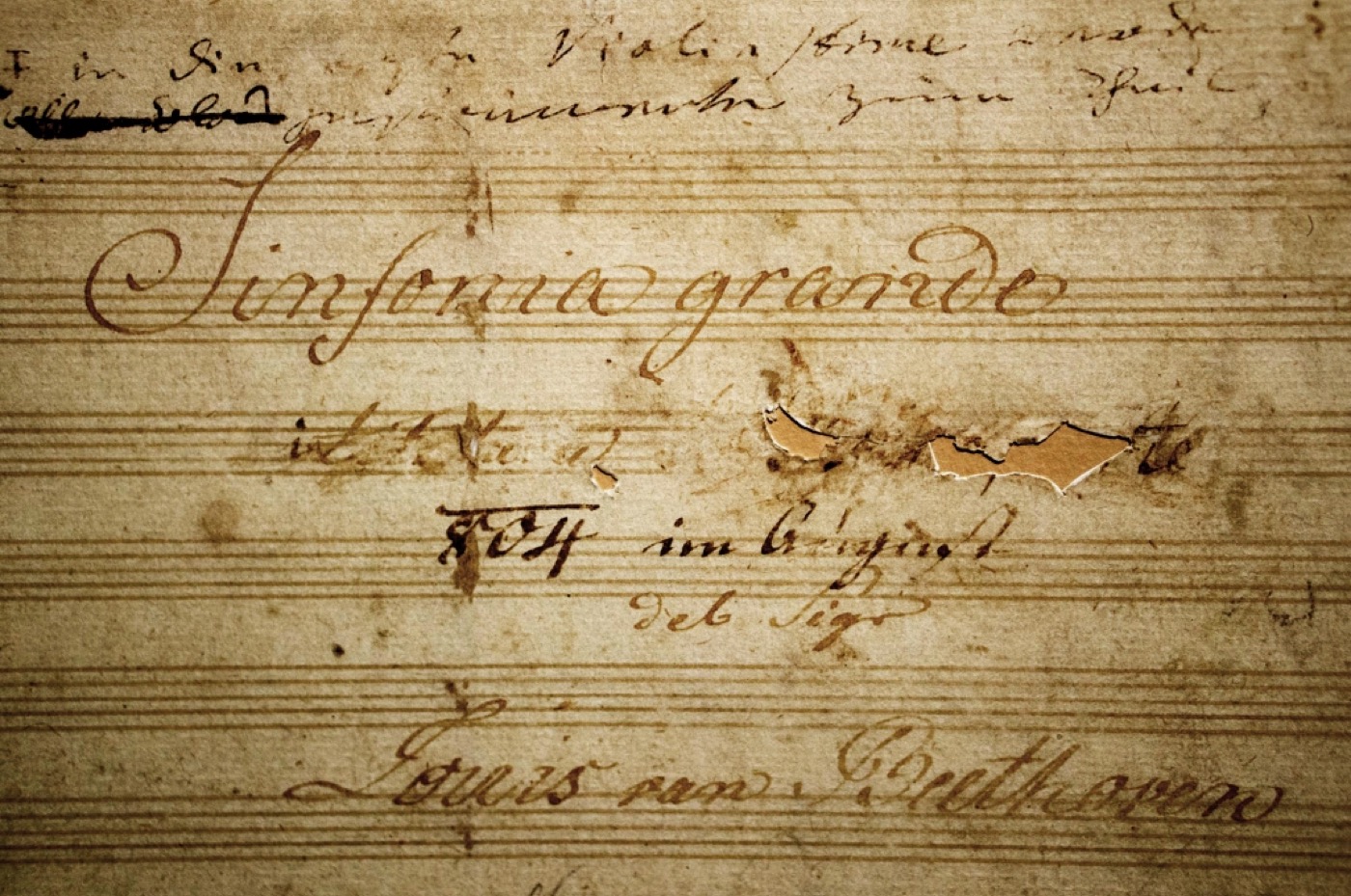
There is a hole in a piece of paper in Vienna, and it is the most famous hole in music. It sits on the title page of a manuscript held by the Gesellschaft der Musikfreunde, and it is there because Beethoven took a razor to the page and scraped until the paper gave way.
Almost every retelling of this story gets a detail wrong, and the wrong detail is the good one. Beethoven did not tear the page in half. He erased it. He went at the words intitolata Bonaparte with a blade, methodically, and kept going past the point where the ink was gone. That is a different kind of anger from a dramatic rip. It takes longer. You have to stay angry the whole time.
What follows is a guide to what that anger produced: a symphony of about 50 minutes in four movements that asks more of a first-time listener than almost anything written before it. What to listen for, the four movements, and then the recordings worth your time plus the famous one I would not start with.
The title page, and what the story usually gets wrong
Start with the object, because the object corrects the legend. Beethoven’s own autograph of the Eroica has not survived. What sits in Vienna is a copyist’s score that he kept until he died and marked up himself, his corrections still visible in darker ink and red chalk, which makes it the closest thing we have to his working text of the symphony. It was bought at his estate auction in November 1827 by the pianist and composer Joseph Dessauer, who handed it to the Gesellschaft der Musikfreunde in 1870.
The trigger was news out of Paris. Napoleon proclaimed himself Emperor in May 1804, and when word reached Vienna, the dedication came off. Beethoven’s student Ferdinand Ries left an account of a furious scene, and Ries is the source everyone quotes. But Ries wrote his memoir decades after the fact, and the paper in Vienna shows a scraped crater where the words used to be. When a secondhand memory and a physical object disagree, believe the object.
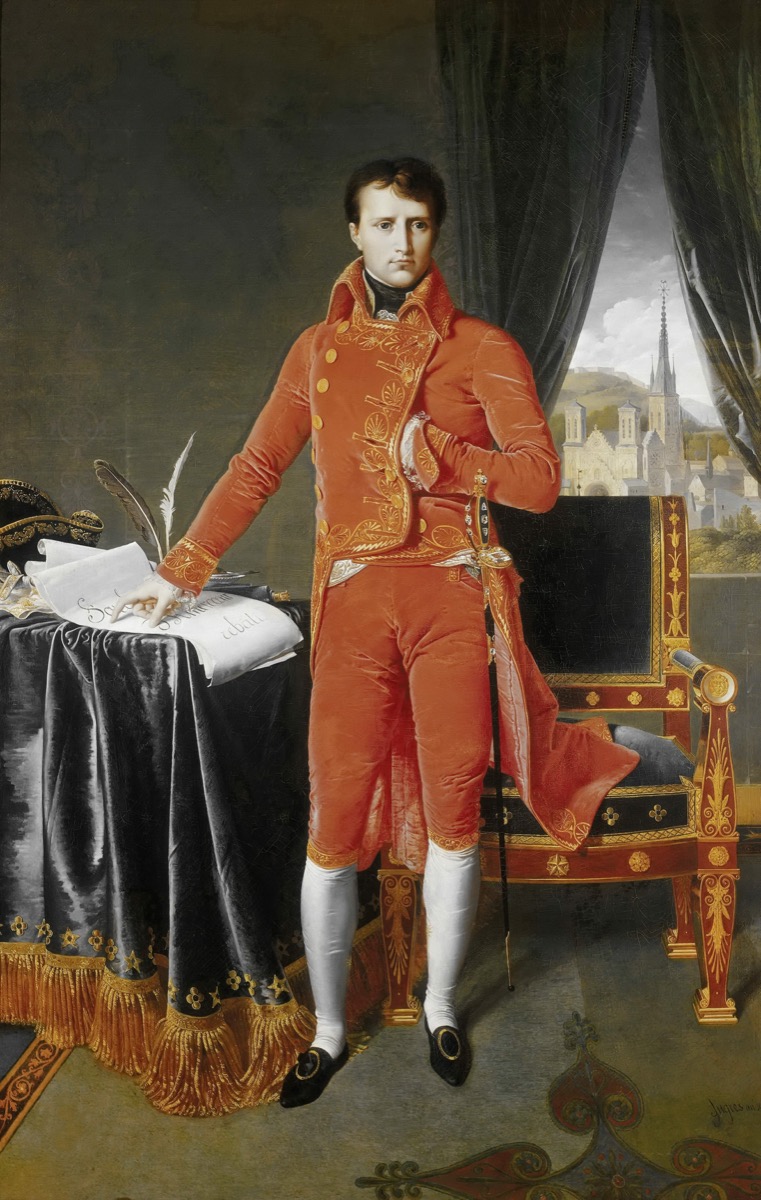
The work went out into the world under a new name. It was published in 1806 with an Italian heading that called it Sinfonia eroica and described it as composed to celebrate the memory of a great man. The dedication landed on Prince Joseph Franz Maximilian Lobkowitz, the aristocrat who had paid for the exclusive rights and hosted the symphony first.
People still argue about who the great man is, and the ambiguity turns out to be load-bearing. A symphony about one specific Frenchman would have aged badly. A symphony about the idea of greatness and its collapse has not aged at all.
What Beethoven had just survived
The Eroica does not make full sense without the document that came before it. On 6 October 1802, in the Viennese village of Heiligenstadt, Beethoven wrote a letter to his brothers Carl and Johann that he never sent. He was in his early thirties and going deaf. The letter reads like a man talking himself out of ending his life, and the argument that wins is that he has not yet written the music he can hear inside himself.
He never showed it to anyone. Anton Schindler and Stephan von Breuning found it among his papers in March 1827, after his death, and it was published in October 1827.
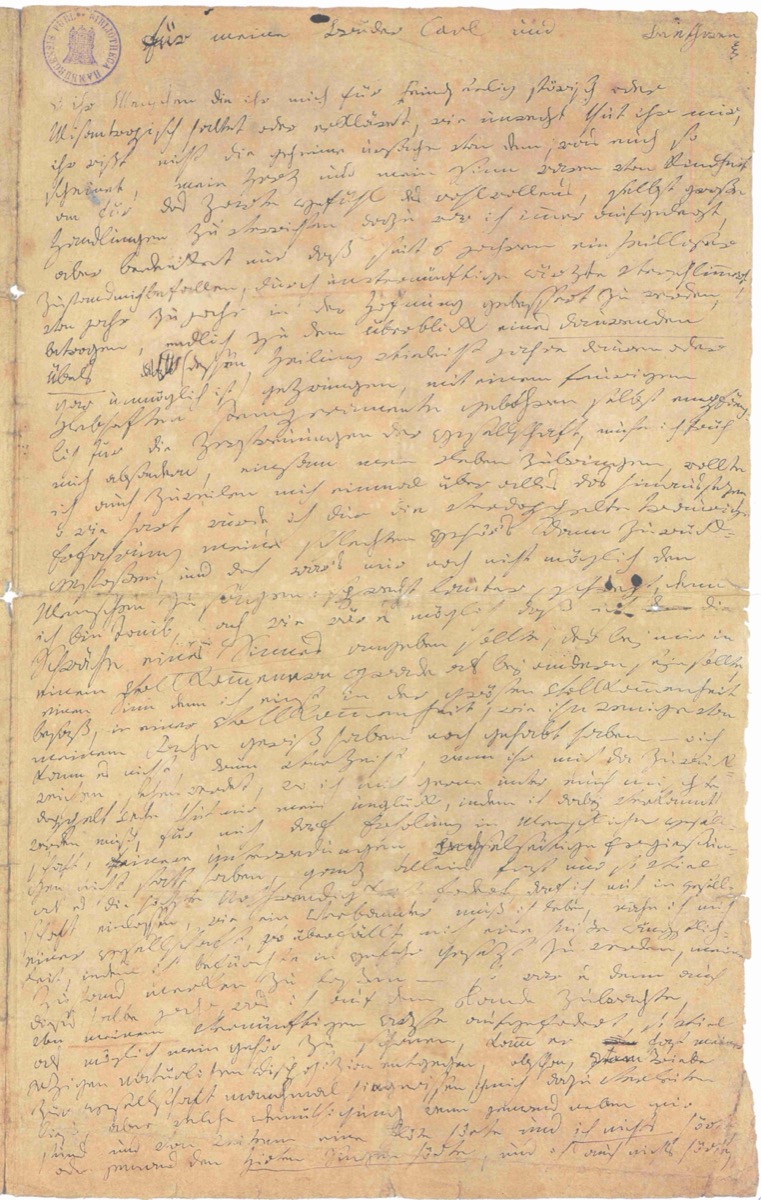
I am wary of drawing straight lines from a composer’s biography to his notes, and you should be too. But the chronology is hard to ignore. The letter is from October 1802. The symphony was written mainly in 1803 and 1804. And the piece that came out the other side is combative and enormous, and it puts a funeral march in the second slot as if to say: yes, I know how this ends, and I am going to keep going anyway.
What to listen for
Four things carry this symphony. Learn them and the 50 minutes stop feeling like a long haul.
Scale as an argument. The Eroica runs roughly twice the length of a typical Haydn or Mozart symphony, and the first movement alone outlasts some complete Haydn symphonies. Beethoven uses the extra time to develop material long past the point where his contemporaries would have wrapped up, so the music keeps arriving somewhere you did not know the theme could reach.
Rhythm used as violence. The main theme is a plain E-flat major arpeggio, the kind of tune a bugle could play. Beethoven then fights his own three-beat bar with accents in the wrong places, stacking off-beat hammer blows until the meter feels shoved. In the development this escalates into grinding dissonant chords that still sound like something breaking.
A third horn. Symphonies before this one asked for two horns. The Eroica asks for three, the first symphony to do it. From inside an orchestra you feel that third horn as a change in the floor of the sound: the brass can hold a full chord on its own without borrowing from the woodwinds, which is why the Scherzo trio sounds like a hunting party rather than a pair of signals.
A theme that mattered enough to reuse. The finale is built on material Beethoven had already used twice, in the finale of his ballet The Creatures of Prometheus, Op. 43, and in the seventh of the 12 Contredanses, WoO 14, both from the winter of 1800 and 1801. Prometheus is the figure who steals fire and gets punished for it. Nobody has to tell you that is thematically convenient.
Movement by movement
I. Allegro con brio
Two chords, then the cellos, and by bar seven the tune has slipped onto a note that does not belong to the key. That wrong note seeds the entire movement, and Beethoven spends the next quarter of an hour arguing with it.
The moment to wait for is the horn. Two bars before the recapitulation, at bars 394 and 395, a horn creeps in with the main theme while the strings are still hovering on the old harmony. For a couple of seconds two different keys are true at once. Ferdinand Ries, hearing it in rehearsal, said the horn player had come in wrong and nearly got his ears boxed for it. He was hearing correctly and judging wrongly, which is a very human way to be wrong, and it tells you exactly how strange this sounded in 1805.
If a conductor smooths that entry over so it sounds like a normal cue, they have removed the point. It is supposed to feel like a mistake for about one second.
II. Marcia funebre: Adagio assai
A funeral march in C minor, and the emotional floor of the whole symphony. The tread comes from the basses; the tune sits above it in the first violins, with a dry drum-roll figure underneath that is actually the strings imitating muffled percussion.
Two things to know in advance. The middle turns to C major and the oboe gets something close to consolation, which makes the return of the minor worse rather than better. Then, near the end, the march theme comes apart: it stops being a melody and becomes fragments with silence between them, the musical equivalent of somebody unable to finish a sentence. In a great performance you can hear the audience deciding not to cough.
III. Scherzo: Allegro vivace
After all that grief, a movement that arrives at a sprint. It opens almost inaudibly, a whispering perpetual motion in the strings with the tune trying to break through and failing, and the joke is that the payoff keeps getting delayed until the whole orchestra finally lands on it.
The trio is the reason those three horns are in the score: a hunting call in three real parts that should sound like open air. This movement is the hinge of the whole piece. You cannot go from a funeral march straight into cheerful variations; the scherzo is what resets the pulse in between.
IV. Finale: Allegro molto
The strangest structural decision in the symphony. Instead of a driving sonata finale, Beethoven writes variations, and he opens on the bare bass line that sits under the tune, plucked, alone, sounding like an accident. He varies that bass several times before the melody finally shows up on top, which is a genuinely funny piece of withholding.
From there it builds through a fugue and a slow, hymn-like variation that answers the funeral march, then a coda that jumps to Presto and slams the door. The sequence matters: the celebration only arrives after the finale has answered the funeral march, and the last thing it settles is the wrong note from bar seven.
Four recordings, and where I would start
The Eroica splits performers more than almost any Beethoven symphony, and the split is mostly about tempo and weight. In 1817 Beethoven published metronome marks for his first eight symphonies, and the one for this first movement is a dotted half note at 60, which is fast. Very fast. Fast enough that most of the twentieth century quietly ignored it. Which side of that fight a conductor is on tells you most of what their Eroica will sound like.
John Eliot Gardiner / Orchestre Revolutionnaire et Romantique (Archiv Produktion, released 1994)
My pick for a first listen, and my pick overall. Period instruments, gut strings, hard sticks on the timpani, and tempos close to what Beethoven actually wrote down. Timbre does as much work here as tempo. Natural horns have a rough, uneven grain that modern horns polish away, so the third-horn writing in the Scherzo trio sounds like the outdoor signal it is imitating. The hammered dissonances in the first movement development actually hurt. The cost is that the funeral march loses some of the granite weight that a big modern string section gives you. I will take that trade.
🎧 Also on: Apple Music · Spotify
Paavo Jarvi / Deutsche Kammerphilharmonie Bremen (RCA Red Seal, recorded August 2005)
The modern-instrument answer to Gardiner, and the one I recommend if period sound is not for you. A chamber-sized orchestra playing with modern polish and historically informed tempos, recorded with enough clarity that you can follow inner voices that normally vanish. The finale is where this one wins: the plucked bass line at the opening is placed so precisely that the withholding joke actually lands. The trade-off is a certain coolness. Nothing here will make your hair stand up the way the wartime Vienna performance does.
🎧 Also on: Apple Music · Spotify
Wilhelm Furtwangler / Vienna Philharmonic (December 1944)
Save this one for later, and give it your whole attention. Furtwangler conducted the Vienna Philharmonic in the Eroica in December 1944, in a city that was losing a war, and the tape sounds like it. Tempos stretch and snap back with no regard for consistency, the funeral march is nearly unbearable, and the sound is what you would expect from a wartime broadcast transfer. In exchange you get a performance that seems to be happening to the players rather than executed by them. Come here third, once you know the piece well enough to hear what is being distorted.
▶ Listen on YouTube · Apple Music · Spotify
Herbert von Karajan / Berlin Philharmonic (Deutsche Grammophon, cycle recorded December 1961 to November 1962, released 1963)
The famous one, and the one I would not start with. Karajan’s Berlin cycle is beautifully engineered and the string sound is extraordinary, a single burnished object rather than sixty players. That is exactly the problem here. The Eroica is a work about roughness and things not fitting, and Karajan sands the joins: the horn entry before the recapitulation comes out intentional and elegant. It should not sound elegant. Hear it for what a great orchestra can do, after you know why the piece is supposed to be uncomfortable.
▶ Listen on YouTube · Apple Music · Spotify
One correction to a claim that circulates widely online: Carlos Kleiber never recorded the Eroica. His Beethoven on record is the Fifth, the Seventh and some Fourth and Sixth material. If you see an Eroica attributed to him in a recommendation list, that list was not checked.
Follow the score
If you read music even a little, the fastest way to hear the structure is to watch it go by. The video below runs the complete symphony with the score scrolling in sync, which makes the bass-line trick at the start of the finale obvious in a way no description manages.
The full score is also free to download at IMSLP: Symphony No. 3, Op. 55 on IMSLP. Bars 394 and 395 in the first movement are the ones to find first.
Sources and notes
Dates, instrumentation, the bar numbers for the horn entry and the Prometheus and contredanse connections were checked against the standard reference literature on the symphony. The physical facts about the title page, the razor and the estate auction come from the Gesellschaft der Musikfreunde’s own description of the manuscript it holds. Recording data was checked against label and discography listings. Where the record is genuinely contested, such as the identity of the great man or how much weight to give Ries’s memoir, I have said so rather than picking a side.
Where to go next
If the Eroica landed, the obvious next step is the symphony everyone knows the first four notes of, and there the recording question gets even sharper: the best recording of Beethoven 5, and the one to skip. And if the Op. 55 and WoO 14 business above raised a question, we have an answer for it: what K., BWV, D. and Hob. actually mean. For a different kind of ending to a symphony, one that refuses the triumph the Eroica insists on, try why Tchaikovsky’s Pathetique ends in silence.