- Composer
- Mahler
(1860–1911) - Work
- Symphony No. 1 in D major Titan
- Key
- D major
- Composed
- 1884–1888
- Movements
- 4 movements
I. Langsam, schleppend (D major)
II. Kräftig bewegt (A major)
III. Feierlich und gemessen (D minor)
IV. Stürmisch bewegt (F minor → D major) - Instrumentation
- Flutes 4 (Piccolo), Oboes 3 (English Horn), Clarinets 4 (E♭/Bass), Bassoons 3 (Contrabassoon), Horns 7, Trumpets 5, Trombones 4, Tuba, Timpani 2, Percussion, Harp, Strings
- Premiere
- November 20, 1889, Budapest
Half the audience walked out. The other half sat in frozen silence. A critic wrote that the composer “should stick to conducting.” Another called the music the product of “a disordered mind.”
It was November 20, 1889. The hall was Budapest’s Vigadó concert venue. The composer was 28 years old, still employed as a staff conductor for someone else’s operas. His name was Gustav Mahler, and the piece he had just premiered would take nearly 70 years to get the recognition it deserved.
Today, orchestras program Mahler’s First Symphony more often than they program most Beethoven. That reversal — from catastrophic premiere to permanent fixture — is one of the stranger stories in classical music. And the symphony itself is the reason why.
Why “Titan”? The Subtitle Mahler Gave and Then Took Back
The name comes from a novel. Jean Paul — the pen name of Johann Paul Friedrich Richter, one of the most widely read German writers of the late 18th century — wrote a sprawling, eccentric novel called Titan about a young man wrestling with ambition, love, and the world’s indifference. Mahler found himself in that character, and when he first presented his symphony publicly in 1893 and 1894, he gave it Jean Paul’s title.
Then he withdrew it. Permanently.
His reasoning: music shouldn’t need a literary programme to explain itself. He said the symphony “begins with the awakening of nature” and ends with “the victory of the human spirit.” He wanted listeners to hear those things directly, without a novelist’s hand pointing the way. Fair enough. But the nickname survived him by over a century.
Here’s the part that gets interesting: Mahler also insisted that the novel’s plot had nothing to do with the symphony’s content. So why borrow the title at all? The honest answer seems to be that he recognized something temperamental in Jean Paul’s protagonist — the outsized ambition, the refusal to fit into established categories, the mix of comedy and grief — and reached for it. Not as a programme, but as a mirror.
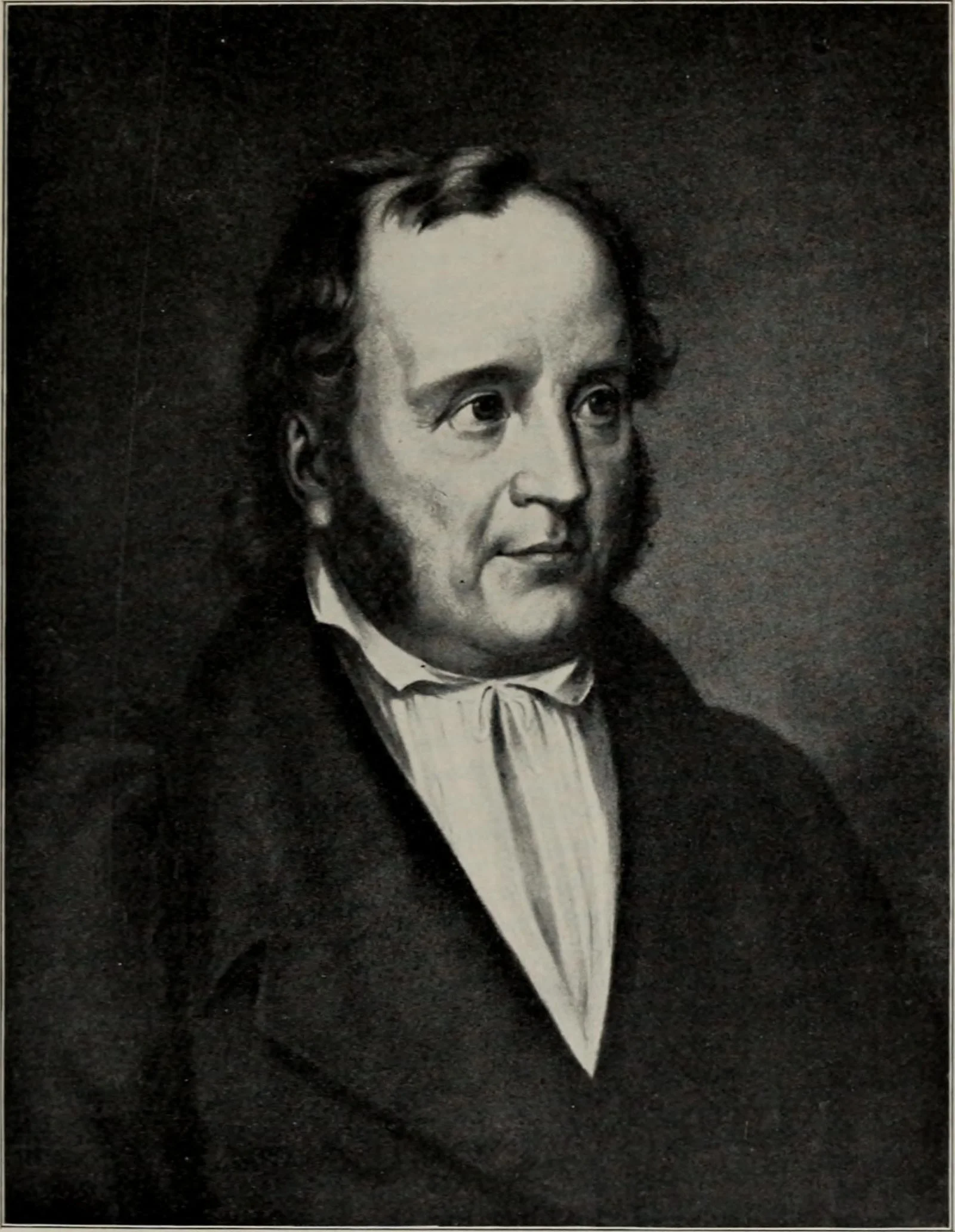
The Man Behind the Music — Mahler in 1888
Before we get to the notes, consider who wrote this.
In 1887, Mahler was the second conductor at the Leipzig Opera — meaning he covered for the first conductor when that person was unavailable. The first conductor was Arthur Nikisch, who happened to be one of the most celebrated conductors in Europe at the time. Mahler got the shifts nobody else wanted.
By night, he composed. The symphony that would become the “Titan” was drafted in six weeks in early 1888 — an extraordinary rate of output for a piece of this scale. The musical material came from his own life: from the forests and village squares of Kaliště, the small Bohemian town where he grew up, from the folk dances and military band marches he’d absorbed as a child, and from his own song cycle Songs of a Wayfarer, which he’d written around the same time.
Mahler was a Bohemian-born Jew writing German music in the Austro-Hungarian Empire. He described himself as “thrice homeless”: a Bohemian among Austrians, an Austrian among Germans, a Jew among the world at large. That displacement — the feeling of belonging fully to no single tradition — shows up in every movement of this symphony. High culture and low culture collide, sometimes violently. The symphony contains a nursery rhyme and a funeral march. It contains birdcalls and military fanfares. It contains a country dance that tips into the grotesque.
None of this was accidental. Every collision was chosen.
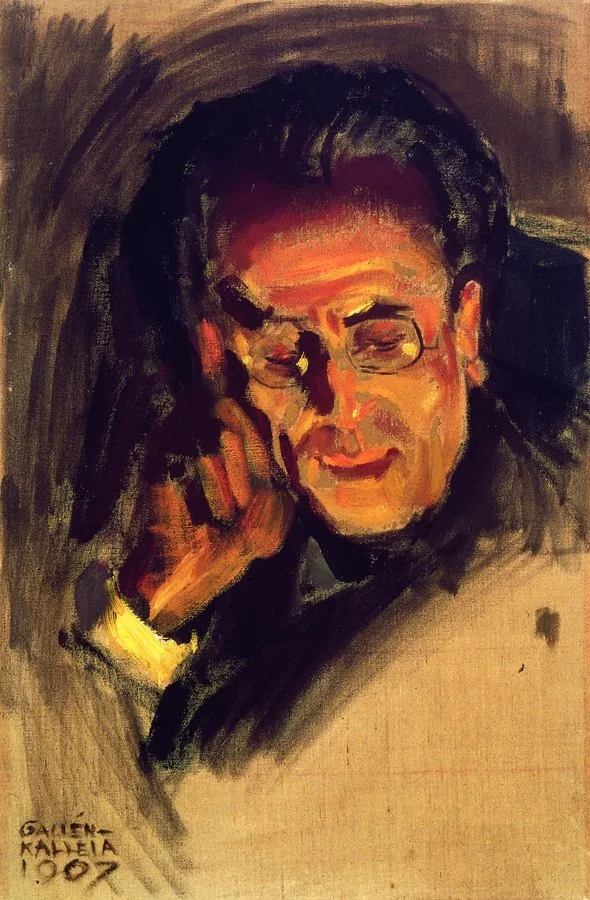
The First Movement: A World Coming into Focus
The symphony opens with silence, then with a single note — A, held by all the strings across seven octaves. It’s barely a sound at all. More like a presence. Mahler marked it “like a sound of nature.”
Into that suspended haze, a descending fourth appears in the clarinets. Then another. Then a trumpet fanfare from offstage — Mahler explicitly instructed the brass to play from behind the stage, so the sound arrives as if from a great distance. Birdcalls accumulate. The texture thickens almost imperceptibly.
This introduction is unhurried to the point of deliberate difficulty. Audiences expecting the bold opening gestures of Beethoven or Brahms will be confused. That confusion is the point. The world isn’t assembled yet. We’re watching it come together, element by element.
When the main theme finally arrives, you may recognize it. It comes from “Ging heut’ morgen übers Feld” — “I walked through the fields this morning” — the second song in Mahler’s Lieder eines fahrenden Gesellen (Songs of a Wayfarer). Mahler used his own song as symphonic material, weaving the melody of personal grief and youthful wandering into a much larger canvas. It’s one of the more audacious acts of artistic self-recycling in the repertoire, and it works.
The joy in this theme is real and unclouded — for a while. Listen carefully and you’ll hear something darker running underneath, a restless undercurrent that never quite resolves. Mahler doesn’t let his protagonist feel happy without qualification. Even in the first movement, the shadow is already there.
When you time the opening, the differences between conductors become audible. Abbado’s 2009 Lucerne recording stretches the introduction to nearly eleven minutes, each layer entering with extreme patience; Bernstein’s 1966 New York account moves through it in closer to nine. That gap isn’t just tempo — it’s a philosophical choice about how long to sustain ambiguity before committing to arrival. Iván Fischer with the Budapest Festival Orchestra pulls back even further at the moment the main theme enters, giving the melody a quality of something remembered rather than announced. These are not right-or-wrong readings. Mahler’s score says “Langsam, schleppend” — slow, dragging — but leaves almost everything else to the conductor’s judgment. The opening movement rewards repeated listening partly because the same notes can feel completely different depending on who is standing at the podium.
The Second Movement: When “Folk Music” Isn’t Simple
The scherzo uses a Ländler — an Austrian country dance, rougher and heavier than a Viennese waltz. This is the music of village fairs, beer gardens, and stamping feet. Mahler knew this world from childhood, and he reproduced it here with affection and precision.
But there’s an edge to the affection. The Ländler is not a straight celebration. It stumbles occasionally, turns slightly ironic, loses the clean beat that village dancing requires. Mahler’s folk music always carries the weight of someone who loves a place enough to see its flaws. The nostalgia is real, and so is the knowledge that you can’t go back.
The trio section — the contrasting middle passage — shifts the atmosphere entirely. The tempo drops, the strings take on a singing line that is genuinely warm, and for about two minutes the stamping dance gives way to something almost tender. There are few places in this symphony where the music breathes without irony. This is one of them. Then the main Ländler returns, the roughness reassembles, and the interruption becomes a memory. Mahler uses this conventional ABA structure not as formality but as argument: the warmth is real, but it is parenthetical. Life interrupts itself with beauty and then carries on regardless.
Something worth catching on a score-read or in a detailed recording: watch the double basses in the scherzo. Mahler gives them unusual independence here — not just supporting the harmonics but carrying rhythmic weight that the other strings sometimes work against. The slight heaviness this creates is part of the point. Country dancing is not elegant.
There’s an interesting footnote here about what this movement used to be. The original symphony had five movements. Between the first and second, Mahler inserted a gentle, lyrical piece called “Blumine” — a serenade-like fragment built around a tender trumpet melody. He’d written it earlier for a theatrical piece and recycled it here. Then he cut it, deciding the movement was too soft, too self-indulgent, too much of a detour from the symphony’s dramatic drive.
The Blumine score went missing for decades. Donald Mitchell, a British musicologist, rediscovered it in 1966. Benjamin Britten conducted its revival performance the following year. It’s occasionally heard today as a curiosity — Mahler’s deleted scene — and hearing it makes clear why he cut it. Nice piece. Wrong context. The four-movement version is sharper, angrier, and more itself.
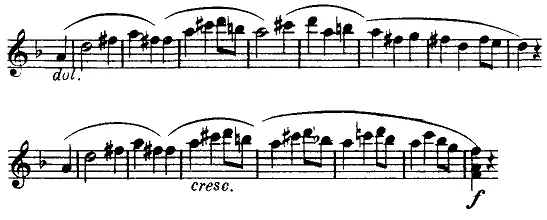
The Third Movement: The Joke That Isn’t Funny
This is the movement that derailed the 1889 premiere. And it’s the movement that, once you understand what Mahler is doing, reveals the most about how his mind worked.
It opens with a solo double bass playing “Frère Jacques” — the French nursery round that everyone learns in elementary school — in a minor key. A funeral march built on a children’s song. One by one, other instruments join in canon, the melody building into a full processional cortège.
Why “Frère Jacques”? The short answer is that Mahler grew up in Bohemia hearing this tune sung in minor, which was common in that region. It wasn’t a subversive choice for him — it was simply the version he knew. The fact that audiences elsewhere recognized it as a cheerful major-key tune only intensified the dissonance.
Mahler was explicit about his source image: a woodcut by the Austrian painter Moritz von Schwind titled The Huntsman’s Funeral, in which forest animals carry a dead hunter to his grave. The animals’ expressions are ambiguous. Are they grieving? Celebrating? The picture holds both possibilities simultaneously, and so does the music. The procession is genuinely solemn and genuinely absurd at the same time.
Midway through, the tone shifts completely. A passage of surprising tenderness arrives — Mahler quotes from “Die zwei blauen Augen” (The Two Blue Eyes), the last song of the Wayfarer cycle — before the grotesque march reassembles and finishes its circuit.
For the Budapest audience in 1889, this was indefensible. A symphony was supposed to be elevated, unified in emotional register, free from the contamination of street-level irony. Mahler had written a funeral march based on a nursery rhyme, interrupted it with a bittersweet quotation, and called it a symphony movement. The critics said: this is chaos. Mahler said: this is life.
He was right, obviously. But he was about 70 years ahead of the audience that would agree with him.
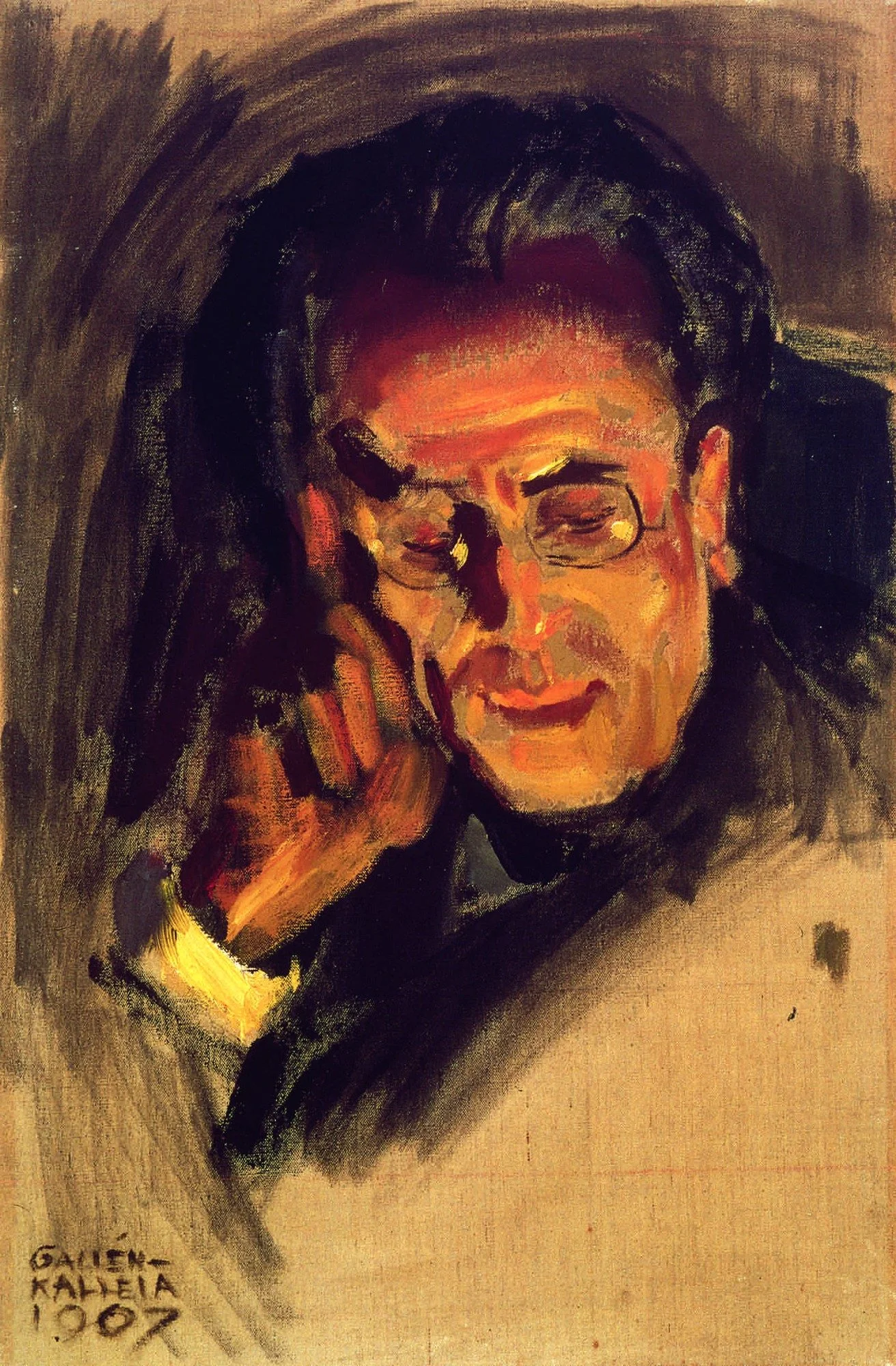
The Fourth Movement: From Floor to Ceiling
The finale’s original subtitle was “Dall’Inferno al Paradiso” — “From Hell to Paradise.” It’s Italian because Mahler was referencing Dante. And it’s not an overstatement.
The movement opens with a cymbal crash of maximum violence — one of the most shocking entrances in the symphonic literature. The third movement ended quietly. This is an ambush.
What follows is 20-plus minutes of escalating struggle in F minor. Themes from earlier movements reappear, transformed beyond recognition and then back again. The music reaches climax after climax, each one collapsing before the next attempt. Mahler was describing something specific here — the notes he attached to early performances mention “the sudden eruption of the heart desperately wounded.” That’s not metaphor. That’s the formal structure of the movement.
The turning point, when it finally arrives, is physical. Mahler marked the score “Schalltrichter auf!” — bells up. The seven horns stand from their chairs and raise their instruments toward the audience. He meant it literally and it’s always done literally. Seven standing horn players, bells pointed at the house, playing the main theme in D major at full force, joined by the full brass section. The timpani thunders. The ending is not gifted — it’s seized.
People get emotional at this moment in concert halls. Not because the music is designed to manipulate them, but because the formal logic of the preceding hour actually earns it. The symphony’s emotional accounting is precise. Every movement of despair was accrued as a debt; the finale pays it back with interest.
Why 1889 Failed and Why 1960 Didn’t
The Budapest audience’s reaction wasn’t stupid. It was logical, given what they expected from a symphony.
In 1889, the symphony was still being defined by the Brahms-Beethoven tradition: large-scale, formally rigorous, elevated in tone, unified in emotional register. The idea of mixing high and low — of putting nursery rhymes, country dances, and tavern tunes alongside formal development in a single work — was not just unusual, it was considered a category error. Like mixing genres in a way that made neither work properly.
Mahler made another mistake by his audience’s standards: the symphony was too personal. The autobiographical sources — the songs, the childhood memories, the Bohemian folk material — were too close to the surface. Symphonies were supposed to be universal. This one felt like someone’s diary set to orchestra.
The rediscovery came in the 1960s, largely through Leonard Bernstein, who programmed Mahler relentlessly with the New York Philharmonic and recorded the complete symphonies. Bernstein understood what Mahler was doing: anticipating modernism’s embrace of irony, collage, and emotional extremity. By 1960, audiences had lived through two world wars, had absorbed jazz, rock, and film scores, and had a completely different relationship to genre mixing than audiences of 1889. Mahler’s “chaos” looked, from there, like prophecy.
Mahler himself seemed to know this was coming. He told his contemporaries: “My time will come.” It did. Just not in his lifetime.
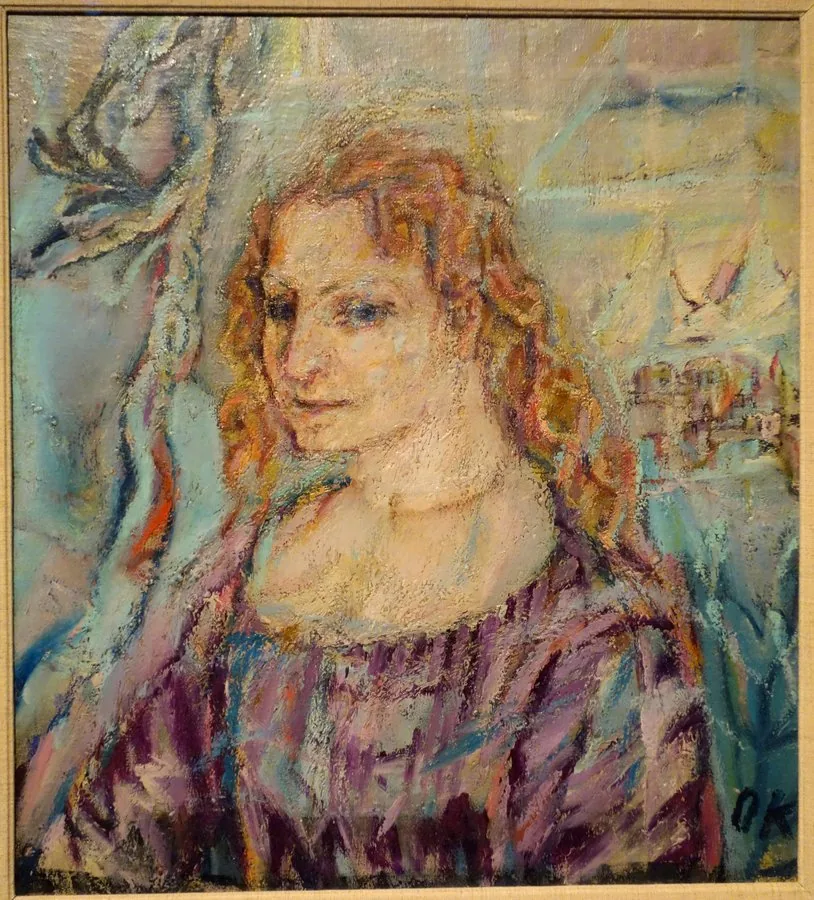
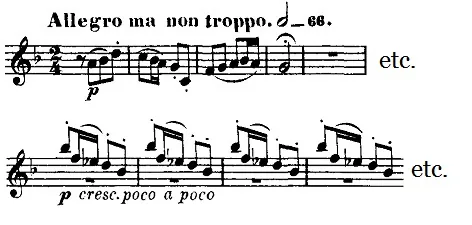
The score itself remains one of the most direct entry points into Mahler’s orchestral language. The opening movement’s layered introduction — strings sustaining a single note across seven octaves, birdcalls entering gradually, the descending fourth appearing in the winds — is precisely documented in the manuscript.
What the Symphony Does to First-Time Listeners
If you ask people what they remember from a first hearing of the Titan, the answers cluster predictably. Almost everyone mentions the third movement funeral march — “Frère Jacques” in minor, solo bass, then slowly accumulating into something uncanny. Hearing a nursery tune recast as a death march creates a durable impression. It’s audible once; it doesn’t leave you.
The second most common reaction is to the finale’s climax — specifically, the moment the horns stand and the full brass section erupts in D major. People who have heard hundreds of concerts describe this particular moment as one that still lands physically. The accumulated tension of the preceding 50 minutes is genuine; the release is proportional to it. Mahler doesn’t manufacture a catharsis out of nothing. By the time the horns rise, the emotional accounting of the whole symphony has been set up carefully enough that the resolution earns its weight.
What surprises people on second and third hearings is how much humor is in the music. Mahler is not a composer commonly associated with wit, but this symphony is full of it — the deliberate absurdity of the funeral march, the slightly knowing exaggeration in the scherzo’s folk-dance stumbling, the way the first movement builds toward grandeur and then almost deflates before committing. Comedy and grief operate simultaneously throughout. Learning to hear both at once is the point at which the symphony starts to make complete sense.
First-time listeners often describe being confused by the introduction to Movement I — justifiably so, since it deliberately withholds a clear melodic destination for the better part of ten minutes. The common advice is to let the confusion stand rather than fight it. Mahler knew what he was doing with that extended ambiguity, and the arrival of the main theme lands harder because of the wait. The same patience applies to the finale: the movement fails several times before it succeeds, and those failures are structural, not accidental. Sitting with the false endings rather than bracing against them is how the final resolution becomes satisfying rather than merely loud.
Recommended Recordings
There are dozens of excellent recordings of the First. Here are four worth knowing:
Leonard Bernstein / New York Philharmonic (1966, Sony) — The performance that launched the Mahler revival. Bernstein’s reading is fast, direct, and emotionally unguarded. Some find it too exposed; most find it irresistible. This is the recording to start with.
Claudio Abbado / Lucerne Festival Orchestra (2009, Accentus Music) — Abbado’s late-career Mahler is in a different register entirely: slower, more detailed, every inner voice audible. The Lucerne ensemble’s transparency lets you hear things you’ve missed in denser recordings. For a second or third listen.
Bruno Walter / Columbia Symphony Orchestra (1961, CBS/Sony) — Walter studied with Mahler directly. His account carries a different kind of authority — not interpretive boldness, but a sense of what the composer actually intended. Essential for anyone going deeper.
Iván Fischer / Budapest Festival Orchestra (2012, Channel Classics) — Recorded in the city where the symphony was premiered and booed. Fischer’s reading has a nervous energy and textural specificity that’s hard to find elsewhere. The best modern account.
If you’re approaching Mahler’s Second Symphony (“Resurrection”) next, the First is the right preparation — same dramatic logic of struggle and eventual redemption, but on a larger canvas with chorus and soloists added.
Follow the Score
The full score is freely available at IMSLP. View the Symphony No. 1 score (IMSLP)
Frequently Asked Questions
Why is Mahler’s First Symphony called the “Titan”?
Mahler borrowed the title from Jean Paul’s novel Titan (1800–1803), a sprawling Romantic work about a young man’s struggle with ambition and existence. He used the subtitle for performances in 1893 and 1894, then withdrew it, insisting the symphony needed no literary explanation. The nickname stayed in use anyway and has never left.
What is the famous funeral march in Mahler’s First Symphony?
The third movement opens with a solo double bass playing “Frère Jacques” — the French nursery round — in a minor key. The movement was inspired by a woodcut, The Huntsman’s Funeral, showing forest animals carrying a dead hunter to his grave. The tone moves between solemn processional and something closer to black comedy, which was exactly the point. It’s the movement that most shocked the 1889 premiere audience.
How long is Mahler’s Symphony No. 1 and how many movements does it have?
The symphony runs approximately 50–60 minutes in most performances, depending on the conductor’s tempos. It has four movements in its final version. An earlier version included a fifth movement called “Blumine,” which Mahler cut after early performances. The movement was lost for decades, rediscovered in 1966, and occasionally performed separately as a historical curiosity.
Why did the 1889 premiere fail so badly?
The Budapest audience in 1889 expected symphonies to follow the formal, emotionally unified tradition established by Beethoven and continued by Brahms. Mahler’s First broke most of those conventions: it opened with an extended, almost textureless introduction; it used a country dance for its scherzo; its third movement was a funeral march built on a nursery rhyme; and its finale alternated between extended despair and explosive triumph. Critics called it chaotic and disordered. Nearly 70 years passed before the wider classical world caught up to what Mahler was attempting.
Is Mahler’s First Symphony a good starting point for newcomers?
Yes, for most people. At around 55 minutes, it’s one of Mahler’s shorter works, and its emotional arc — from nature slowly awakening to a finale of hard-won triumph — is accessible even on a first listen. The “Frère Jacques” funeral march in the third movement is immediately memorable, and the finale’s horn-standing climax tends to stay with listeners. If you find it confusing initially, start with the third movement and then go back to the beginning.
Why do the horns stand up at the end of the fourth movement?
Mahler marked the score “Schalltrichter auf!” — bells up — instructing all seven horn players to stand and raise their instruments toward the audience. The effect is acoustic and theatrical: the sound projects directly rather than being absorbed by the player’s posture, and the visual spectacle signals that something exceptional is happening. Conductors and orchestras still follow this instruction literally, and the moment is one of the most recognized endings in the symphonic repertoire.