- Composer
- Franz Schubert
(1797–1828) - Work
- Symphony No. 7 in B minor, D. 759 “Unfinished”
- Composed
- 1822
- Premiere
- December 17, 1865, Vienna
- Key
- B minor
- Instrumentation
- 2 flutes, 2 oboes, 2 clarinets, 2 bassoons, 2 horns, 2 trumpets, 3 trombones, timpani, strings
- Movements
- 2 movements (unfinished)
I. Allegro moderato (B minor)
II. Andante con moto (E major) - Duration
- Approx. 25 minutes
In 1865, on an autumn day, a 71-year-old man finally revealed a long-kept secret.
A mansion in Graz, Austria. The elderly musician Anselm Hüttenbrenner received a visitor: Johann von Herbeck, chief conductor of the Vienna Court Opera. Herbeck had traveled all this way for a single reason — to confirm a rumor that had circulated through the music world for decades.
“Do you happen to have a symphony manuscript by Schubert?”
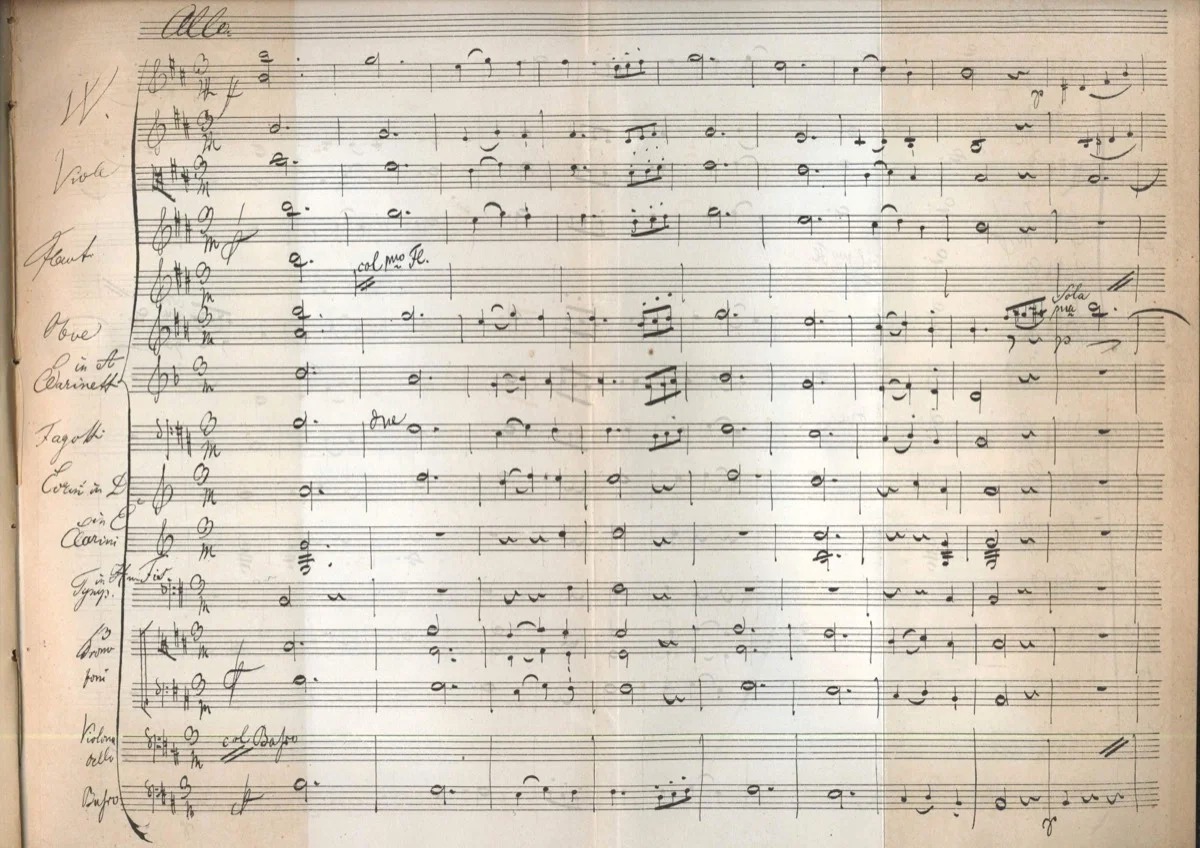
Hüttenbrenner hesitated, then reached into the depths of a drawer and produced a yellowed bundle of manuscript pages. A symphonic score of two movements, with two pages of a third movement’s opening attached. Like a letter abandoned mid-sentence, the music simply stopped.
The time it took for this manuscript to see the light of day: exactly 37 years. Franz Schubert began writing this work in 1822 and died at 31 in 1828. The score finally emerged in 1865.
Symphony No. 7 in B minor, D. 759 — the most famous mystery in the history of music, known as the “Unfinished Symphony.” Why did Schubert abandon this masterpiece? What were the motives of the friend who hid the manuscript for 37 years? And how can two movements alone constitute a perfect symphony? Let us enter this 200-year-old mystery.
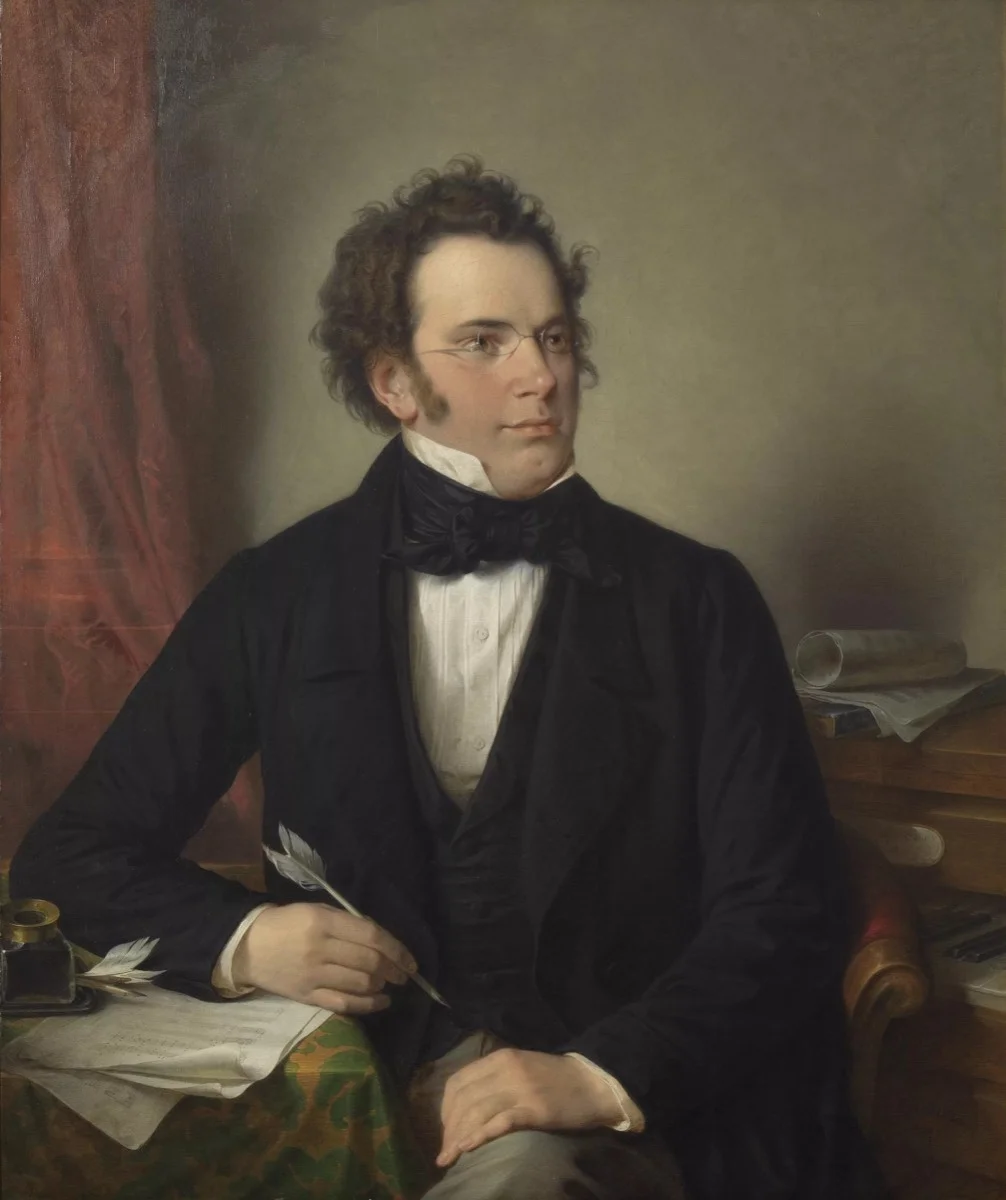
A Young Man’s Dark Autumn at Twenty-Five
Autumn 1822, Vienna. At 25, Franz Schubert was in the most dazzling period of his life. He had already completed over 600 songs. Masterpieces like “Erlkönig” and “Gretchen am Spinnrade” had electrified Vienna’s music salons, and he was building his reputation by premiering new works each week at the informal “Schubertiades” among friends.
But Schubert harbored a private frustration. Though hailed as the king of song, he had yet to find his own voice in the symphony. His earlier symphonies were essentially apprentice works, still in the shadow of Haydn and Mozart. Twenty-five was the age at which Mozart was already pouring out masterpiece symphonies. Schubert would have felt that acutely.
That October, Schubert began a symphony entirely unlike anything before it. The key alone was radical: B minor. In an era when bright, grand symphonies were the norm, this was a dark, unsettled choice. Neither Beethoven, Haydn, nor Mozart ever wrote a symphony in B minor. Schubert chose a road no one had taken.
From the very first bars of the Allegro moderato, something has changed. Cellos and double basses murmur a low, dark melody. The feeling of something approaching through fog. This opening alone is a declaration of independence from the world of Haydn and Mozart. This is why scholars call this work “the first Romantic symphony.”
When oboe and clarinet take up the first theme, something remarkable happens. Two horns modulate to G major in just four bars. Normally a symphonic key change requires an elaborate transition passage. Schubert overturns the entire tonal world in four bars — an audacity that would have alarmed any theorist of the day.
Then comes the cello’s second theme. Once you hear this melody, it lodges in your mind for days. The American music columnist Sigmund Spaeth even set words to it: “This is… the sym-pho-ny… that Schubert wrote… and never fi-nished…” A joke, yes — but proof of how addictive the tune is.
The second movement, Andante con moto, opens in E major. The first movement’s anxiety and fury have been peeled back; in their place, lyricism and resignation alternate. The opening theme, sung by horns and low strings, offers comfort yet aches. When the second theme turns to the minor, the tenderness deepens. The movement’s close feels like someone quietly leaving a room — so softly you don’t even hear the door shut.
And then the third movement — the Scherzo. Schubert wrote exactly two pages of the orchestral score and stopped. The piano sketch was nearly complete, but the orchestration ended there. The second paragraph of the Trio was left blank even in the sketch. Like a period placed mid-sentence, never to be revisited.
Here is the decisive puzzle: Schubert lived another six years after setting down his pen. During those six years he produced the Wanderer Fantasy, the song cycle Die schöne Müllerin, the String Quartet “Death and the Maiden,” the Trout Quintet, the monumental “Great” C major Symphony, and his last three piano sonatas. He had both the time and the ability. So why did he never return to this symphony?
Syphilis, and the Real Reason the Pen Stopped
In late 1822 or early 1823, catastrophe struck Schubert’s life: a syphilis diagnosis. In that era, syphilis was effectively a death sentence. Antibiotics didn’t exist; the only treatment — mercury therapy — was crueler than the disease. Mercury applied to the skin, ingested, inhaled as vapor. Hair loss, tooth damage, organ failure followed. Records indicate Schubert lost all his hair during this period and had to wear a wig.
The timing of his illness and the abandonment of the symphony overlap with chilling precision. The most widely accepted hypothesis among musicologists: Schubert set down his most ambitious symphony in the shock of early syphilis symptoms. The dark B minor may have suddenly felt too personal, too close to his own unfolding tragedy. Could he have continued writing what had become the soundtrack to his own fate?
But the counterargument is formidable. Immediately after the diagnosis, Schubert completed the Wanderer Fantasy — a work of extreme technical difficulty. His compositional powers were clearly intact. This leads to a second hypothesis.
The triple-time trap. The first movement is in 3/4, the second in 3/8, and the planned Scherzo also in 3/4. Three consecutive movements in triple time is almost unprecedented in Classical-era symphonies. Haydn, Mozart, and Beethoven never used this pattern. If a fourth movement continued similarly, the structure would feel monotonous — something Schubert must have sensed. The piano sketch for the Trio section shows clear signs of stalling.
A third hypothesis is bolder still. What if the fourth movement actually exists? British musicologist Brian Newbould argued that the B minor entr’acte from the 1823 incidental music for Rosamunde was originally this symphony’s finale. Same key, same orchestration, same compositional style. His theory: Schubert repurposed the fourth movement for a theatrical production that needed music urgently. The evidence is circumstantial, but if true, it means the “Unfinished” Symphony was once finished — a stunning reversal.
Perhaps all of these factors conspired together. The shock of syphilis, a structural impasse, the lure of new works. Only one thing is certain: Schubert himself never wrote a single word about why this symphony remained unfinished.
37 Years of Silence — Why Did Hüttenbrenner Hide the Score?
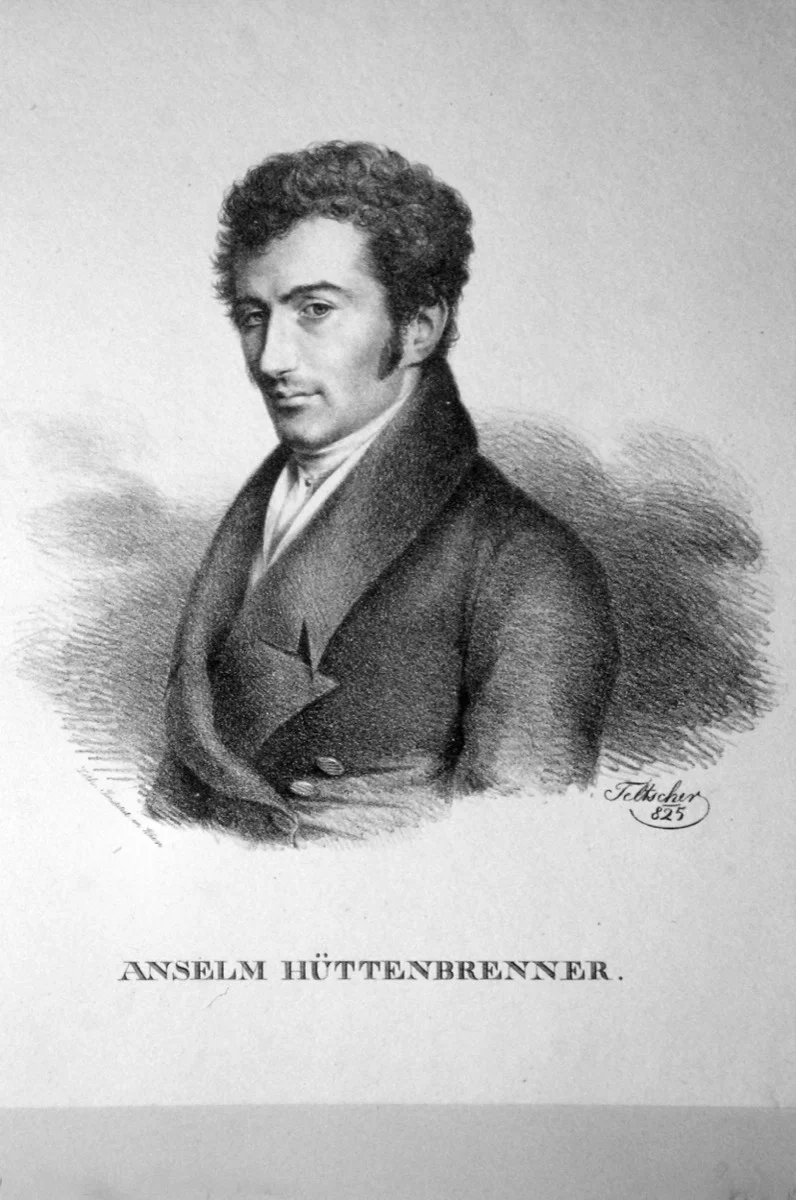
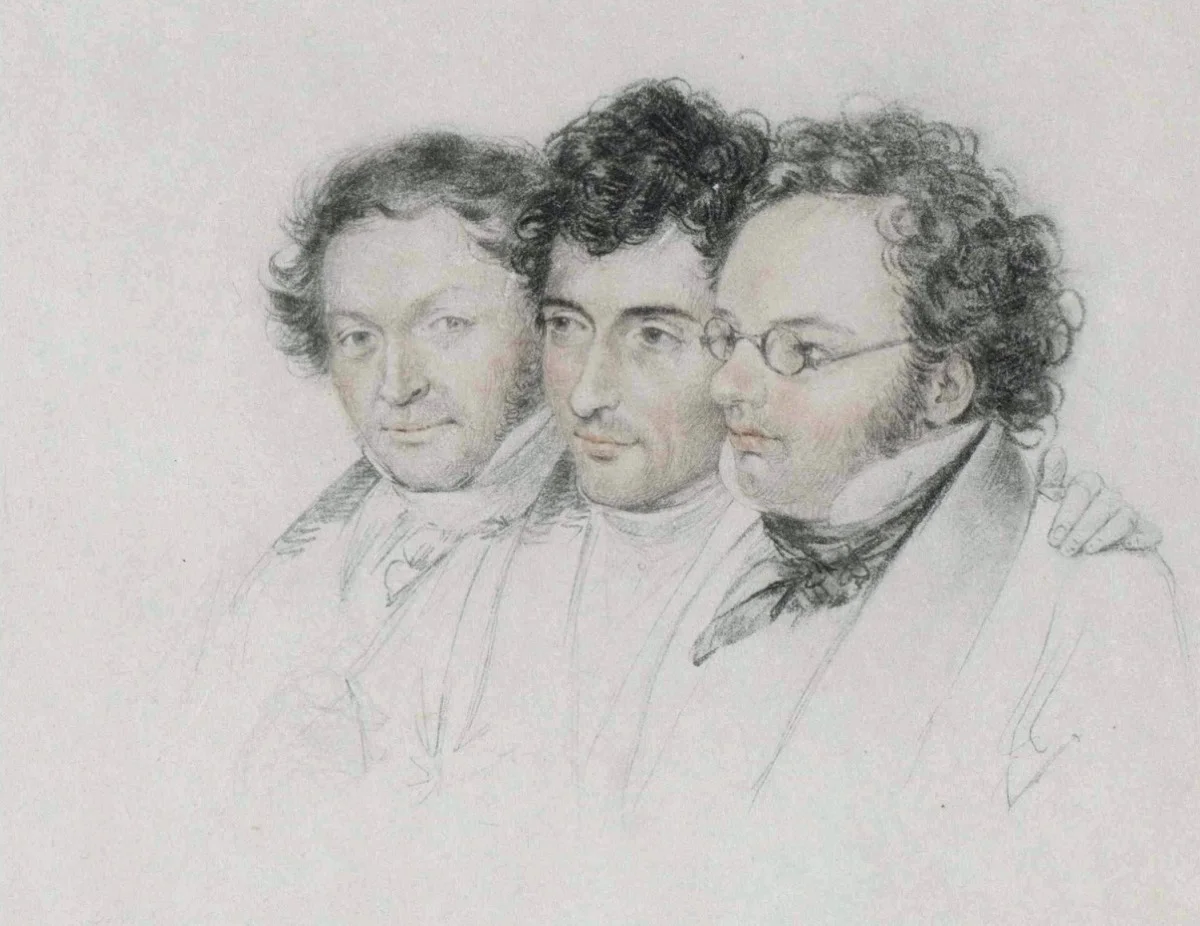
In 1823, the Graz Music Society (Steiermärkischer Musikverein) awarded Schubert an honorary diploma. In gratitude, Schubert decided to dedicate a symphony to the society and sent the manuscript to Anselm Hüttenbrenner, a longtime friend and key member of the society — a two-movement full score with the opening of a third movement attached.
Hüttenbrenner never passed the manuscript on. He never arranged a performance, never mentioned its existence. Not even after Schubert’s death in 1828. For 37 years, total silence.
Scholars have proposed several explanations.
First, embarrassment over its incomplete state — two movements might have seemed unsuitable for a formal concert. But then he could have returned it to Schubert or explained the situation. That accounts for a year or two, not 37.
Second, possessiveness. Hüttenbrenner was himself a composer — serious enough to have studied under Beethoven, though not blessed with genius. Holding a manuscript of such orchestral mastery by a friend who surpassed him may have offered a kind of consolation.
Third — and the most human explanation — guilt. At first it was probably simple delay or forgetfulness. After a year, then five, the question “Why didn’t you hand it over?” becomes frightening. After ten years, there’s no excuse. After Schubert’s death, the fact of having neglected a friend’s legacy becomes a secret too shameful to speak. The longer you wait, the harder confession becomes.
Finally, in 1865, the 71-year-old Hüttenbrenner must have sensed his own time running out. When Herbeck, who had doggedly pursued the rumor, arrived at his door, he at last opened the drawer. Hüttenbrenner died three years later. Had he not surrendered the score, this symphony might have been lost forever.
December 17, 1865: The First Sound After 43 Years
Herbeck immediately prepared the premiere. December 17, 1865, Vienna. There was a problem: a two-movement symphony was awkward for a concert program. Herbeck’s compromise was to append the finale of Schubert’s Symphony No. 3 in D major as a makeshift third movement.
Frankly, it was a poor decision. Compared to the depths the two movements had plumbed, the Third Symphony’s finale was too light, too bright. The keys didn’t match — B minor and D major. It was like grafting a sitcom ending onto a weighty tragedy.
Yet the audience’s response swept past that imbalance. The eminent Viennese critic Eduard Hanslick wrote a rapturous review. A work that had slept in a drawer for 43 years captured Vienna’s heart in a single evening. Two years later, in 1867, C.A. Spina published the first edition of the two-movement score.
The symphony spread across Europe with remarkable speed. A telling change followed: at some point, conductors stopped appending extra movements. They began performing just the two. Remarkably, nobody felt anything was missing.
A Perfect Symphony in Two Movements
Attempts to complete the Unfinished have continued for nearly 200 years. Brian Newbould orchestrated the Scherzo from the piano sketch; in 2019, a Huawei-sponsored AI project generated third and fourth movements by learning Schubert’s style.
The results? Technically impressive, musically unconvincing. The reason is simple: these two movements already contain a complete narrative.
The first movement is a drama of colliding anxieties and yearnings. It begins in darkness, swings between luminous melody and violent eruption, and returns to darkness. When three trombones roar out the theme at the climax, this is no longer Mozart’s world. It is purely Schubert’s language.
The second movement is the lyricism and solace that follow the storm — but not full resolution. It’s closer to a quiet whisper: “It will be all right.” Not a guarantee, but a hope. Not a promise, but a consolation.
The relationship between these two movements is that of a question and an incomplete answer. If a third or fourth movement arrived to deliver a decisive conclusion, the beauty of uncertainty at the heart of this work would be destroyed. A paradox: unfinished, therefore perfect. As with so many things in life, leaving the answer open yields a deeper resonance.
The “Eroica” cries, “This is how I will live.” The Unfinished whispers, “I don’t know why I must live this way.”
Sometimes a whisper lasts longer than a shout.
Schubert died on November 19, 1828, at 31, six years after writing this symphony. The official cause was typhoid fever, though syphilis complications are widely suspected. One of his last wishes was to be buried beside Beethoven, the composer he revered. The wish was granted. At Vienna’s Central Cemetery, the two masters lie side by side.
The Unfinished Symphony may be Schubert’s self-portrait. A short life of 31 years, over a thousand works, a genius barely recognized in his lifetime. Unfinished in itself — and in itself, perfect.
Follow the Score
The full score is freely available at IMSLP. View the Symphony No. 8 ‘Unfinished’, D.759 score on IMSLP
Frequently Asked Questions
What is the correct numbering — Symphony No. 7 or No. 8?
It was traditionally called No. 8, but the revised Deutsch catalogue and the Neue Schubert-Ausgabe now classify it as No. 7. The catalogue number is D. 759. Concert programs often list both: “Symphony No. 8 (7) in B minor ‘Unfinished.'” Both numbers refer to the same work.
Any recommended recordings for a first listen?
Claudio Abbado’s 1989 Ferrara live recording is superb for newcomers — faithful to Schubert’s lyricism while maintaining tension throughout. For a more distinctive interpretation, try Iván Fischer with the Budapest Festival Orchestra, whose vibrant account brings out the dramatic contrasts with modern clarity.
Have there been completed versions of this symphony?
Several. Brian Newbould orchestrated the Scherzo from the piano sketch and placed the Rosamunde entr’acte as a fourth movement — the most academically respected attempt. Today, most conductors and audiences prefer the original two movements as they stand. The unfinished state is, after all, part of the work’s identity.
Further Reading
- → Symphony Beginner’s Guide — Three Essential First Listens
- → The Classic Note Composer & Works Map
🎼 View the Score — Free score download at IMSLP
Why is Schubert’s Symphony No. 8 called the “Unfinished”?
The symphony is named “Unfinished” because Franz Schubert completed only two of the traditional four movements. He began composing the work in 1822, writing a full Allegro moderato and an Andante con moto. While sketches for a third movement exist, he ultimately set the piece aside for reasons that remain a historical mystery.
How many movements does the “Unfinished” Symphony have?
Schubert’s Symphony No. 8 consists of two complete movements. The first is a dramatic Allegro moderato in B minor, and the second is a lyrical Andante con moto. A standard performance of these two movements typically lasts around 25 minutes.
When was the “Unfinished” Symphony first performed?
Although Schubert composed the symphony in 1822, it was not performed during his lifetime. The manuscript was discovered by conductor Johann von Herbeck in 1865, held by Schubert’s friend Anselm Hüttenbrenner. The symphony’s world premiere finally took place in Vienna on December 17, 1865.
What is the mood of Schubert’s “Unfinished” Symphony?
The symphony is known for its deeply personal and romantic character, shifting between dramatic tension and gentle lyricism. The opening movement in B minor establishes a sense of mystery and pathos, while the second movement provides a more peaceful, reflective contrast. Its emotional depth and beautiful melodies have made it one of Schubert’s most famous works.