- Composer
- Pyotr Ilyich Tchaikovsky
(1840–1893) - Work
- Symphony No. 6 in B minor, Op. 74 “Pathétique”
- Composed
- February–August 1893
- Premiere
- October 28, 1893, St. Petersburg
- Key
- B minor
- Instrumentation
- 3 flutes (piccolo), 2 oboes, 2 clarinets, 2 bassoons, 4 horns, 2 trumpets, 3 trombones, tuba, timpani, cymbals, bass drum, tam-tam, strings
- Movements
- 4 movements
I. Adagio – Allegro non troppo (B minor)
II. Allegro con grazia (D major, 5/4 time)
III. Allegro molto vivace (G major)
IV. Finale: Adagio lamentoso (B minor) - Duration
- Approx. 46 minutes
Tchaikovsky’s Symphony No. 6 “Pathétique” is the most dramatic farewell in the history of classical music. This guide explores the mystery behind the composer’s death just nine days after the premiere, the radical structure of its four movements, key listening points, and the finest recordings. Whether you’re hearing the Pathétique for the first time or returning to it, this is where to start.
On the night of October 28, 1893, in St. Petersburg, the 53-year-old Tchaikovsky raised his baton.
It was the premiere of his new symphony — the work he was certain would be “the greatest thing I’ve ever written.” The one he’d described in a letter to his nephew as having been “composed through floods of tears.” When the orchestra finished, applause broke out.
But the audience must have felt slightly bewildered.
The symphony ended strangely.
Quietly. Very quietly. As though a final breath had been drawn.
Nine days later, Tchaikovsky was dead.
A Riddle No One Would Solve
In February 1893, while traveling, Tchaikovsky wrote to his nephew Vladimir Davydov — “Bob,” the young man he loved most dearly.
“An idea for a new symphony has come to me. This time with a programme. But the programme will remain a riddle — let them try to guess it. The symphony is saturated with myself. I wept copiously while composing it during the journey.”
He also wrote to his brother Modest: “You remember I destroyed a symphony I’d finished because I wasn’t happy with it. This time I won’t tear it up. It’s the best thing I’ve ever done. The finale will be a slow Adagio.”
“The programme is a riddle.” What Tchaikovsky concealed remains unknown to this day. Death? Farewell? Love? He never told.
Come to think of it, the symphony itself is the riddle.
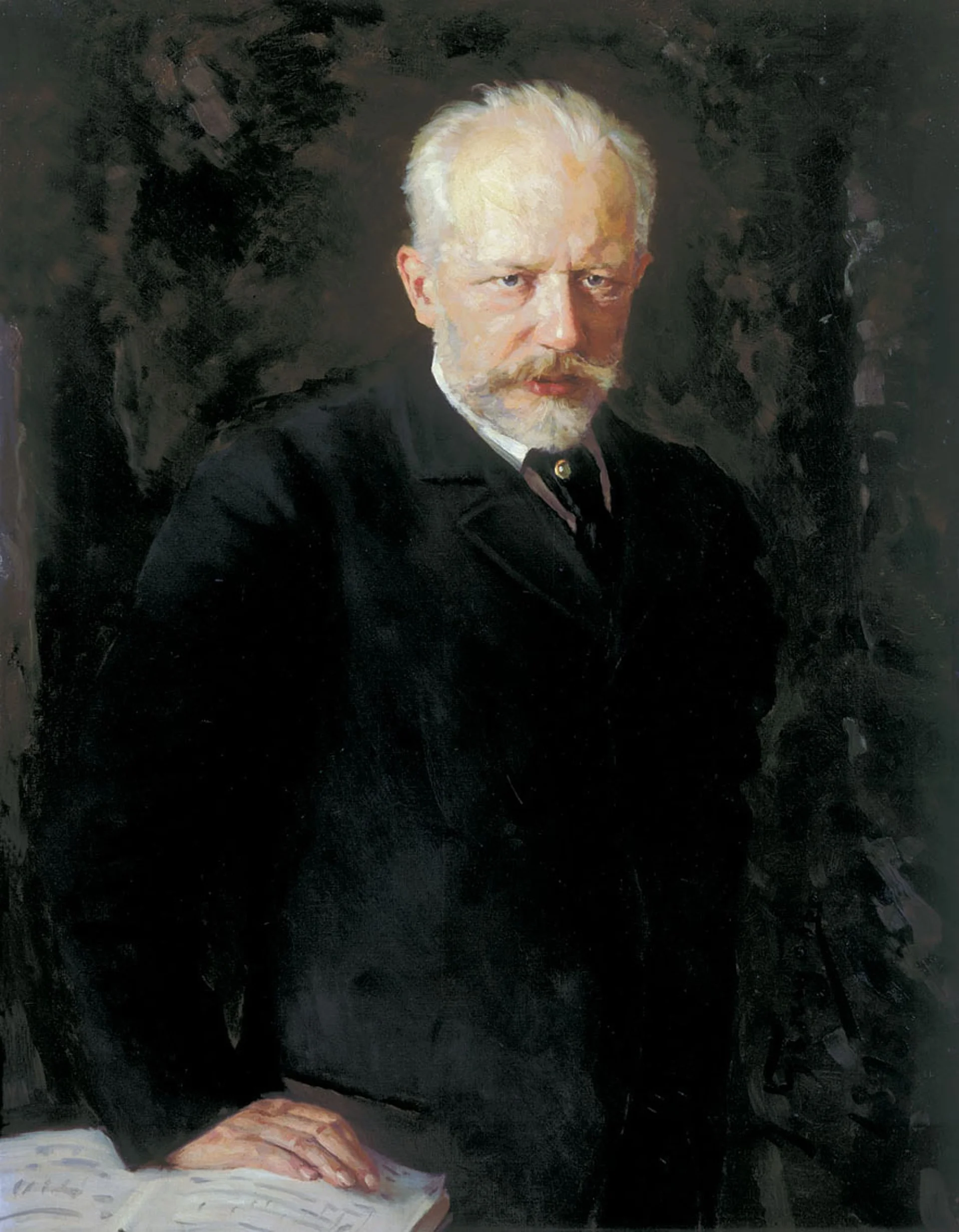
What If a Symphony Ends Like This?
Symphony No. 6 in B minor, Op. 74, “Pathétique.” What made this work extraordinary from the outset was its structure.
This four-movement symphony upended convention. Beethoven, Brahms, Schumann — they all ended their symphonies with a muscular rush toward a blazing finish. Timpani thundering, brass ablaze, the audience rising to its feet. That was the law of the symphony.
Tchaikovsky broke it.
The first movement — a melody emerging from mist, expanding into ferocity. Lyrical beauty colliding with anguish. The second movement — in 5/4 time, an alien meter for audiences of the day. A dance that limps yet remains graceful. The third movement — this is where the audience clapped. It sounded like a victory march. Many gave a standing ovation when it ended. The performance wasn’t over.
Then the fourth movement. Adagio lamentoso. “Slowly, with lamentation.”
The moment the third movement’s euphoria subsides, the strings begin to descend. A sinking melody. Sound growing thinner and thinner. The final notes dissolve into ppp — the softest possible. The symphony evaporates.
No symphony had ever ended this way. Tchaikovsky was the first.
The London Symphony’s crystalline sound brings every detail of the Pathétique to life. From the lyrical theme of the first movement expanding into fury, to the moment everything vanishes in the fourth — the structural audacity of this work hits you all at once.
The Premiere Was That Quiet
During rehearsals, the orchestra members showed little reaction. Tchaikovsky grew anxious. But the premiere itself wasn’t bad. According to Modest’s account, there was applause and the composer was called out several times. “But it wasn’t the kind of wild enthusiasm he’d received before.”
The real response came after his death. When conductor Eduard Nápravník led a memorial performance 21 days later — that was when the audience finally understood what this music was.
Whether his death made the symphony sound different, or whether it had always been that way and the premiere audience simply hadn’t grasped it — either way, Tchaikovsky never heard his symphony received as it deserved.
A Glass of Unboiled Water
The evening of November 1, 1893. Tchaikovsky attended a performance of Ostrovsky’s play at the Alexandrinsky Theatre with his brother Modest, nephew Vladimir, and composer Glazunov. After the show, they moved to Leiner’s restaurant on Nevsky Prospekt.
Cholera was sweeping the city. Authorities had ordered all restaurants to serve only boiled water. Tchaikovsky asked for a glass of water. The waiter said there was no boiled water available. Tchaikovsky asked for cold, unboiled water instead.
His companions protested. Tchaikovsky smiled.
“I’m not afraid of cholera.”
He drank.
The next morning, instead of taking tea in the sitting room as usual, he was lying in bed. Three days later, cholera symptoms appeared. His kidneys began to fail. At 3 a.m. on November 6, 1893, he died. He was 53.
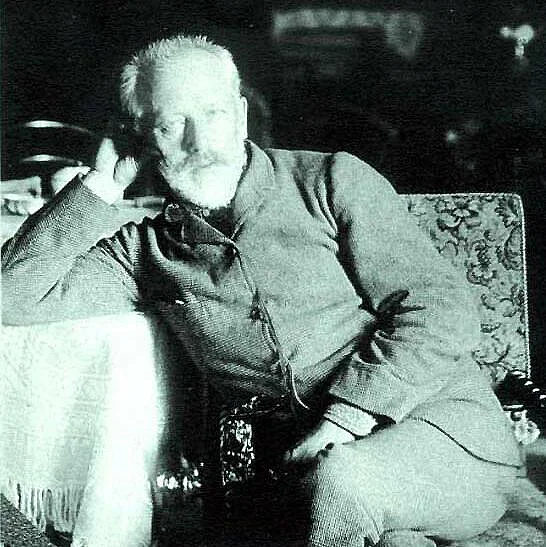
Rimsky-Korsakov Found It Strange
The handling of the death was irregular.
Cholera is highly contagious. Regulations at the time required the body to be sealed immediately and kept from public view. But Tchaikovsky’s body was laid out in Modest’s apartment with the doors wide open. Mourners came and went. Some kissed his face.
Sergei Diaghilev — then a university student, later the founder of the Ballets Russes — rushed to the apartment upon hearing the news. He recalled that when he arrived, the place was nearly empty: only Rimsky-Korsakov, the singer Nikolai Figner, and himself were there to lift and move the body.
Rimsky-Korsakov wrote in his memoirs: “Despite the cause of death being cholera, anyone was allowed to attend the memorial service. It was a strange thing.” In later editions, this passage was deleted.
Why deleted? Because someone found the sentence inconvenient.
The Court of Honor
In 1979, the Russian musicologist Alexandra Orlova published a theory: Tchaikovsky’s death was suicide — coerced suicide.
According to her account, a group of alumni from the Imperial School of Jurisprudence convened an unofficial “court of honor” and summoned Tchaikovsky. The charge was homosexuality — a punishable offense in Tsarist Russia. One alumnus had threatened to deliver a petition to the Tsar. The court allegedly ordered Tchaikovsky to take his own life. Poison was used, and the death was disguised as cholera.
This theory remains unverified. The biographer Alexander Poznansky meticulously analyzed contemporary records and supported the cholera account. Cholera was widespread across all social classes, and multiple similar deaths were recorded in St. Petersburg that autumn.
We don’t know. The truth was buried with him.
This is the Pathétique played by a Russian orchestra in St. Petersburg’s Mariinsky Theatre. Pay attention to how musicians from the very city where Tchaikovsky held his premiere interpret this work — especially the resignation and dissolution of the fourth movement, rendered through a distinctly Russian sensibility.
Where the Name “Pathétique” Came From
Tchaikovsky initially planned to call it simply “Programme Symphony.” But he worried people would ask what the programme was — and that was an answer he didn’t want to give.
So his brother Modest suggested a title: the Russian word Pateticheskaya (Патетическая), meaning “passionate” or “full of emotion.” Not sad. Not pitiable. When it was translated into French as Pathétique, and then into other languages, the meaning shifted toward “sorrowful and tragic.”
The word “Pathétique” carries a weight Tchaikovsky may not have intended. But in the end — it may be the most honest translation of all.
Here’s an amusing footnote: Beethoven also has a famous Pathétique — his Piano Sonata Op. 13. English-speaking musicians took to calling Tchaikovsky’s symphony “The Pathetic” to distinguish the two. One suspects Tchaikovsky would not have been amused.
Which Recording Should You Hear?
The Pathétique has been recorded countless times. Two stand above the rest.
Mravinsky’s 1960 recording with the Leningrad Philharmonic is the stuff of legend. The fourth movement is where it sets itself apart. The emotion is held in check — cool but never cold — as the music glides toward extinction. Where other performances say “this is sad,” Mravinsky says “this is acceptance.” Somehow, that lands harder.
Karajan’s recording with the Berlin Philharmonic is luminous. The brass in the first and third movements is overwhelming in its richness. And then, the instant the dazzling third movement ends and the fourth begins, all that brilliance is extinguished at once. The contrast is devastating.
Karajan’s 1973 recording. The moment the third movement’s blazing energy dies and the fourth movement begins, every last trace of light is snuffed out. If you’re hearing the Pathétique for the first time, try comparing this recording with the Noseda performance above.
The Way a Symphony Ends
On October 28, 1893, Tchaikovsky set down his baton. Into the silence he had created.
Cholera or poison, illness or coerced suicide — 130 years on, we still don’t know. But one thing is certain: that premiere was his final stage. The premiere of the very work he’d called “the most me of anything I’ve written.”
The Sixth Symphony dies as it ends. Whether the composer knew that when he wrote it, no one can say. But as it turned out — this music became the most honest farewell imaginable. No fanfare, no spectacle. Just a vanishing.
Press play, and you’ll understand. The moment the last note dissolves, you’ll know why you need a moment before you move.
Follow the Score
The full score is freely available at IMSLP. View the Symphony No. 6 ‘Pathétique’, Op. 74 score on IMSLP
Frequently Asked Questions
Is Tchaikovsky’s Sixth Symphony a suicide note?
There is no evidence to confirm this. Tchaikovsky called it “the greatest thing I’ve ever written,” but never described it as a farewell. However, the combination of his death nine days after the premiere, the fourth movement’s dissolving structure, and his remark that “the programme will remain a riddle” has cemented the interpretation of the work as a musical last testament.
Did Tchaikovsky die of cholera or suicide?
The official cause of death is cholera. In 1979, Alexandra Orlova proposed a theory of coerced suicide by a “court of honor,” but biographer Alexander Poznansky and others support the cholera account. The scholarly consensus remains unresolved.
Which movement should a first-time listener start with?
Ideally, listen to the entire symphony in one sitting — it takes about 45 minutes. But if time is short, listen to the third and fourth movements back to back. The contrast between the triumphant march and the fourth movement’s sudden extinction is where the heart of this work lies.
Further Reading
- → Symphony Beginner’s Guide — Three Essential First Listens
- → The Classic Note Composer & Works Map
🎼 View the Score — Free score download at IMSLP
Why is Tchaikovsky’s 6th Symphony called the ‘Pathétique’?
The title “Pathétique” comes from the Russian “Патетическая” (Pateticheskaya), suggested by the composer’s brother Modest, meaning “passionate” or “emotional.” Tchaikovsky premiered the work in 1893, and its French translation, implying a more sorrowful and pathetic quality, became widely adopted. The symphony, set in B minor, was dedicated to his nephew, Vladimir “Bob” Davydov.
What is the story or meaning behind the Pathétique Symphony?
Tchaikovsky stated that his final symphony had a secret program but never revealed its specific narrative, declaring it would remain an “enigma.” The work’s trajectory from a brooding opening to a devastatingly slow and fading finale has led many to interpret it as a personal statement on life and death. He conducted its first performance just nine days before he died.
How many movements are in Tchaikovsky’s 6th Symphony?
Tchaikovsky’s Symphony No. 6 features four movements, but it unconventionally concludes with a slow movement, an Adagio Lamentoso. This structure breaks from the tradition of ending a symphony with a fast, energetic finale. The entire work typically has a duration of about 45 to 50 minutes.
What instruments are used in Tchaikovsky’s 6th Symphony?
The symphony is scored for a large Romantic orchestra, including piccolo, flutes, oboes, clarinets, bassoons, horns, trumpets, trombones, and tuba. The percussion section features prominent timpani and a tam-tam (gong) that adds a dramatic, funereal crash in the final movement. A full string section provides the core emotional weight of the piece.