Most people don’t go looking for Boléro. It finds them — in a movie, in an ice rink, in a commercial where a single drum keeps ticking under something that won’t stop building. Then they spend the next fifteen minutes wondering why one tune, played over and over without changing a single note, refuses to let go. That reaction isn’t a failure of the piece. It is the piece. Maurice Ravel built Boléro as a machine for exactly that feeling, and he was blunt about how little music, in the ordinary sense, he thought it contained.
The Night Someone in the Audience Called the Composer Mad
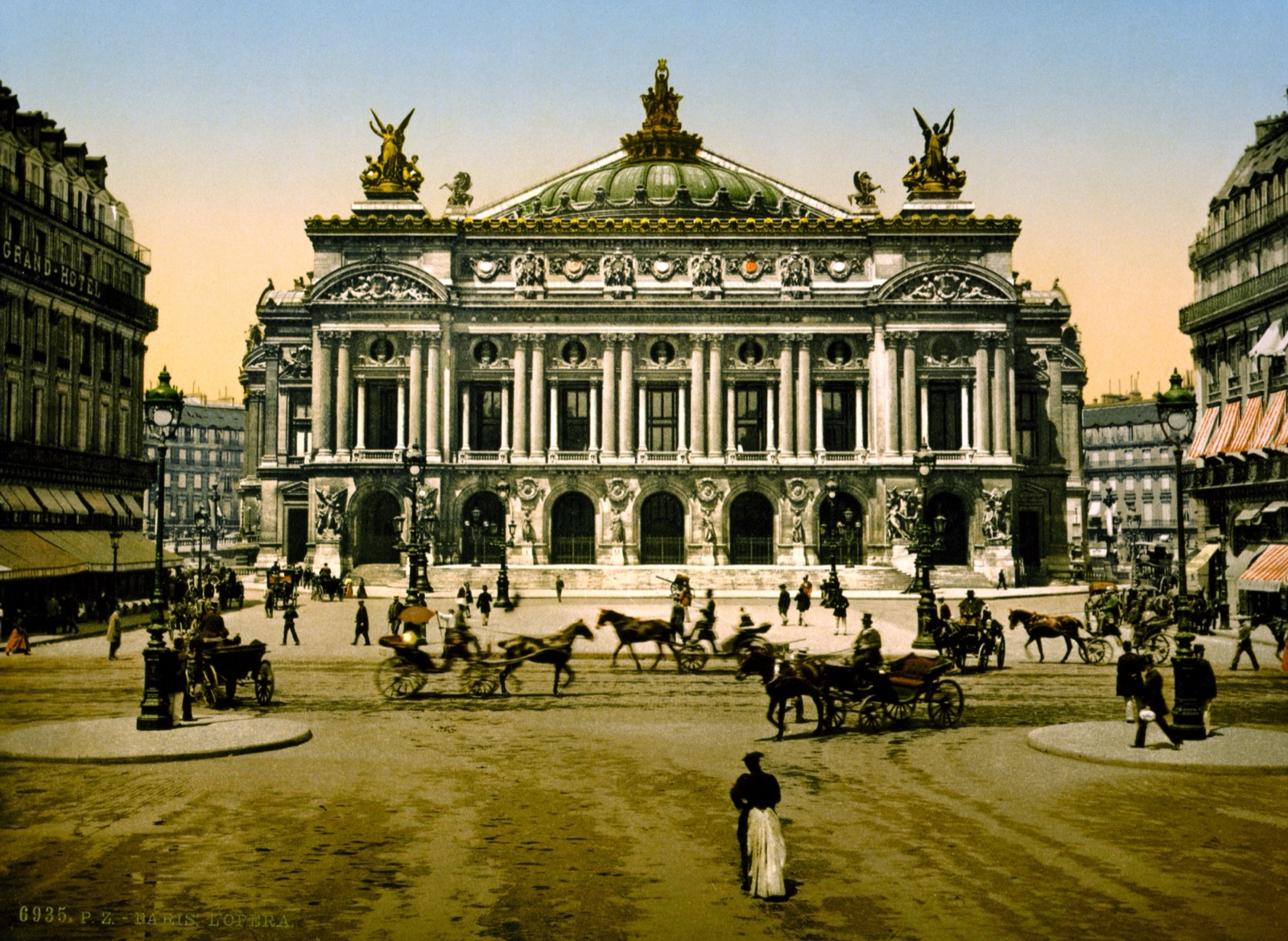
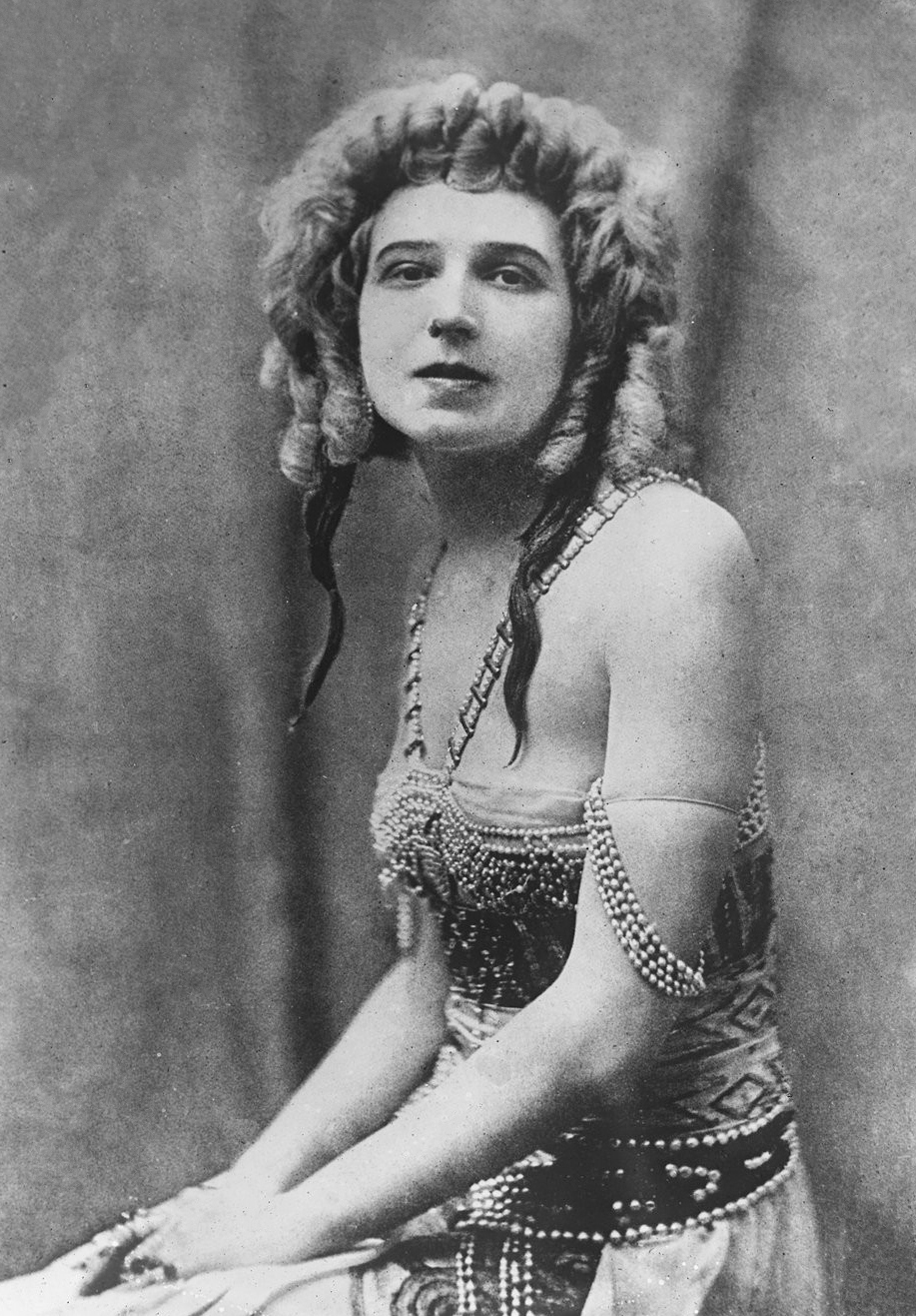
The scene, as it’s usually told, runs like this. It is the evening of the premiere at the Paris Opéra in 1928: Ida Rubinstein’s ballet company on stage, choreography by Bronislava Nijinska, Walther Straram conducting. The curtain rises on near-darkness, and a snare drum starts — dry, quiet, repeating a pattern it will never abandon. A flute lays a slightly weary melody over the top. Nothing develops. The rhythm doesn’t shift, the tune doesn’t modulate, and yet the sound keeps swelling as instrument after instrument piles on. Somewhere in the hall, the story goes, a woman rose and called out that the composer was mad.
When the remark got back to Ravel, he is said to have taken it as a compliment: that listener, he reportedly replied, had understood the piece exactly. Treat the anecdote as anecdote — it’s the kind of story that hardens into legend with retelling — but it survives because it captures something true. Boléro is deliberately, almost provocatively, one thing repeated. Whether that hypnotizes you or drives you up the wall, the composer got the response he was engineering.
Why Boléro Repeats the Same Tune for Fifteen Minutes
This is the question everyone actually types into a search bar, so here’s the answer plainly: the repetition is the experiment. Ravel wanted to find out whether timbre and volume alone — with no harmonic development, no new themes, no formal twists — could hold a room for a quarter of an hour. Strip a piece down to one melody and one rhythm, then change nothing but who plays it and how loud. Could that still work as music? He decided to find out on purpose.
He was equally blunt in describing the result. Ravel called it a piece with no music in it — “orchestral tissue without music,” an essay in orchestration and nothing more. That wasn’t false modesty. He genuinely meant that the elements usually treated as the substance of music — a story told through harmony, themes that grow and transform, a shape that goes somewhere — were switched off here. What’s left is pure sound-craft: the same idea, recoloured again and again, getting louder.
The blueprint is almost comically spare. A snare drum plays one two-bar pattern from the first bar to the last — around 169 repetitions. Two melodies trade off, note for identical note, over an unbroken crescendo from near-silence to full orchestra. The harmony sits stubbornly in C major until a single brief swerve to E major right before the end. That’s the whole design. No development section, no counterpoint in the textbook sense, no relief. Igor Stravinsky rattled Paris with The Rite of Spring through dissonance and rhythmic violence; Ravel got a comparable grip on an audience using the opposite tools — sheer sameness, patiently amplified.
The idea itself came out of a dead end. In 1927 Rubinstein — dancer, actress, and one of the boldest arts patrons of her day — asked Ravel to orchestrate pieces from Isaac Albéniz’s Iberia for a ballet. Ravel, already France’s most admired orchestrator (his version of Mussorgsky’s Pictures at an Exhibition had all but replaced the piano original in concert life), was the obvious hand for the job. Then the rights fell through: the Spanish conductor Enrique Arbós held the exclusive orchestration rights to Iberia. Arbós offered to step aside, but Ravel had already changed course — he would write something of his own instead. On holiday at Saint-Jean-de-Luz that summer, he picked out a tune with one finger, told a friend it had an insistent, nagging quality, and set about repeating it without development while the orchestra slowly grew. Boléro was that afterthought.
What to Listen For: The March of Instruments
If the piece is just one tune, why doesn’t it get boring? Because Ravel never lets the same colour speak twice in a row. Each time the melody comes around, he hands it to a different instrument — or a different blend — so the identical theme keeps arriving in a new voice. Once you hear this happening, Boléro stops being repetitive and becomes a slow-motion tour of the orchestra. This is the thing to actually track on a first listen.
The opening is deceptively plain: a flute, thin and a little sleepy, states the tune over the drum. Then a clarinet takes it, warmer. Nothing unusual yet. The wit shows up on the third pass, when the melody goes to the bassoon — normally a dark, low-register instrument — pushed up near the top of its range, where it turns nasal and slightly comic, like a bassoon singing in falsetto. Players dread this passage; holding that high register steady without the note cracking takes real nerve.
Then the strange voices file in: a shrill high E♭ clarinet, an oboe d’amore with its rounder, older tone, a muted trumpet that sounds like it’s playing from the next room. By the time the soprano and tenor saxophones show up — jazz-club instruments standing in a concert hall — the piece has quietly walked across several borders. In the final stretch the instruments stop taking turns and start stacking: horns doubled with piccolo, celesta glinting on top, trombones sliding through with a broad glissando. What began as a single whisper becomes a crowd, then a wall of sound. The melody never changed. The lighting on it changed constantly. Follow one instrument at a time and the design opens up.
How Most of Us Actually Met Boléro: Bo Derek and a Perfect 6.0
Here’s the part the concert-hall write-ups tend to skip: for a huge share of English-speaking listeners, Boléro didn’t arrive from a symphony program at all. It arrived from a movie and an ice rink.
The movie was 10, Blake Edwards’s 1979 comedy, in which Dudley Moore’s character is convinced that Boléro is the ideal soundtrack for sex — and the film plays it, at length, during a scene with Bo Derek. The joke and the sensuality stuck. Overnight, a fifteen-minute French orchestration study became shorthand in American pop culture for slow-burn seduction. It even had a tidy coincidence baked in: the first two letters of Boléro and of Bo Derek’s name line up — BO and Bo — which the film’s fans noticed immediately.
The ice rink was Sarajevo. At the 1984 Winter Olympics, the British ice dancers Jayne Torvill and Christopher Dean skated their free dance to a specially arranged, compressed Boléro — opening on their knees, barely moving for the first several seconds so the routine would fit inside the time limit — and won gold, earning nine perfect 6.0 scores for artistic impression from all nine judges. In Britain it became one of the most-watched sporting moments of the decade, the version of Boléro an entire generation heard first. If you grew up anywhere in the Commonwealth, this is probably where the tune lives in your memory before Ravel ever gets a mention.
▶ Watch Torvill and Dean’s 1984 Sarajevo Boléro
That afterlife is worth sitting with, because it explains the piece’s strange double status. In the concert hall it’s an orchestration lecture; in the wider culture it’s the most famous slow build in music, borrowed endlessly for skating programs, ad campaigns, and comedy. Both things are true, and Ravel’s design is what makes it portable: a single unstoppable crescendo works whether you’re watching an orchestra sweat or two skaters lying on the ice.
The Perfectionist Who Failed Five Times
None of this came from a careless or prolific composer. Ravel released a small, tightly controlled body of work, precisely because he refused to let go of anything that didn’t meet his standards. The most public proof came early. He entered the Paris Conservatoire’s grandest competition, the Prix de Rome, and never won it; his fifth and final attempt, in 1905, ended with him eliminated in the preliminary round despite already being a recognised composer. The French press exploded. The episode became known as l’affaire Ravel, and the fallout reached the top: the Conservatoire’s director, Théodore Dubois, resigned, and Gabriel Fauré took over.
His long, tangled relationship with Claude Debussy — the two of them forever filed under an Impressionism label both men disliked — ran on the same current of independence. Close in the early 1900s, cooler later, mutually influential throughout. When Debussy died in 1918, Ravel mourned him and kept championing his music. If you want to hear where Ravel’s ear for orchestral colour came from and where it went next, Debussy’s La Mer is the natural companion listen — the same French obsession with timbre as a load-bearing element, aimed at the sea instead of a dance floor.
Was Boléro a Symptom? The Brain-Disease Question
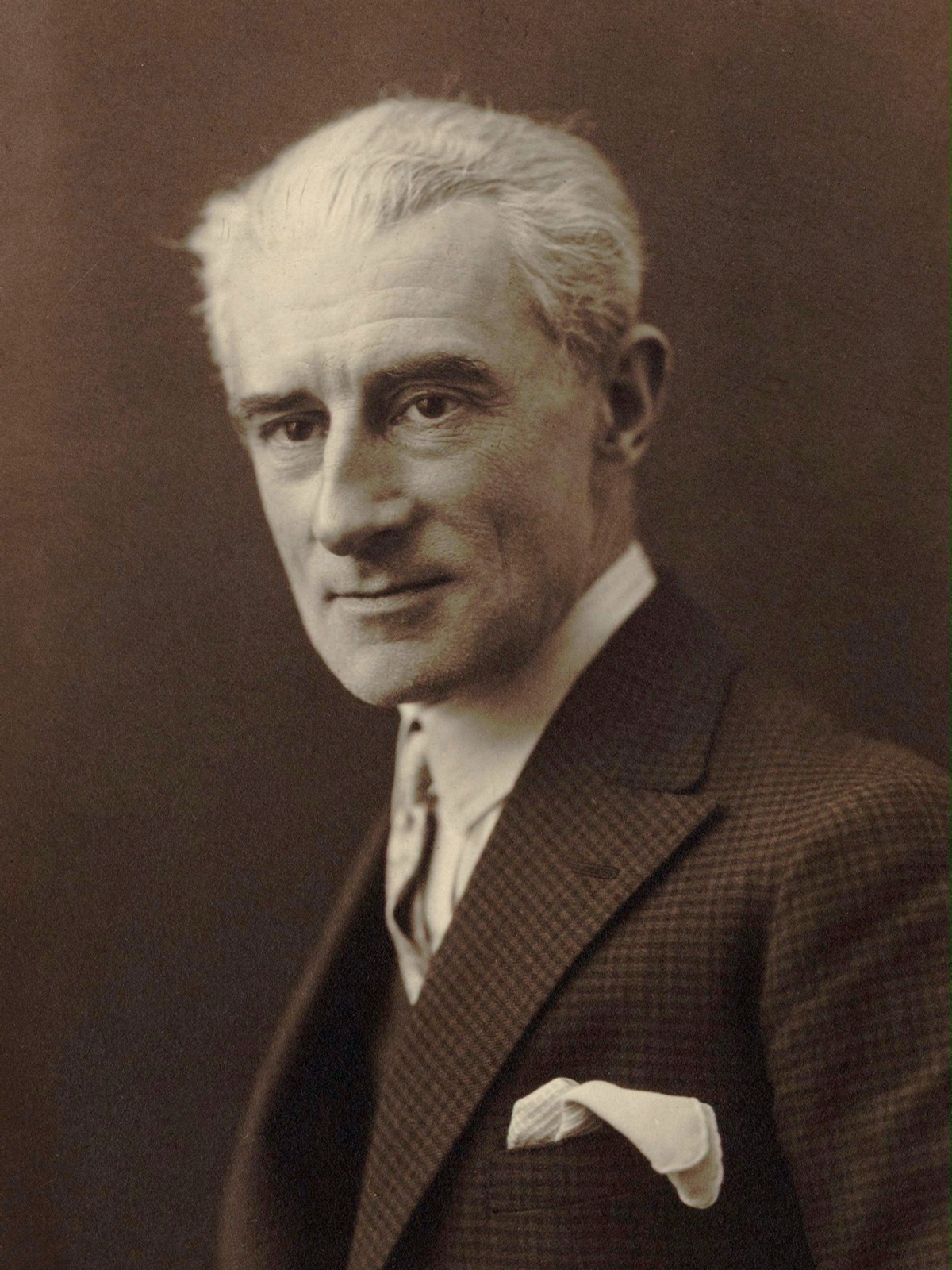
There’s a haunting theory attached to Boléro, and it maps onto a real question people search for, so it’s worth handling carefully rather than dodging. From 1933 onward, Ravel showed signs of a neurological decline: his handwriting fell apart, familiar words slipped away from him, and — most cruelly — he reportedly kept hearing music in his head that he could no longer write down. He died in December 1937, following brain surgery, without regaining consciousness.
Because Boléro is built on relentless, near-compulsive repetition, some researchers have wondered whether it was an early creative fingerprint of that illness. In a 2002 paper in the European Journal of Neurology, the neurologists Amaducci, Grassi, and Boller argued that Ravel’s late works may bear the influence of a degenerative brain disease. It’s a genuinely debated hypothesis, not an established fact, and there’s a strong counterargument: in 1927 and 1928 Ravel was healthy enough to undertake a demanding concert tour of North America, and his compositional planning in these years was lucid and deliberate rather than erratic. No definitive diagnosis has ever been agreed on. The tidiest explanation may be the one Ravel gave himself — that Boléro is an orchestral experiment pushed as far as it would go, not a symptom that needs decoding.
Which Boléro to Hear First
Because the whole piece is one long climb, the interpretive question is almost entirely about pace. Take it too fast and the crescendo has nowhere to grow; the tension leaks out early. Ravel felt this strongly. When Arturo Toscanini conducted it noticeably faster than the composer intended, on tour in Paris in 1930, the two clashed openly — the exchange is usually reported as Ravel objecting to the speed and Toscanini insisting the quicker tempo was the only way to make the piece land. Ravel’s position was simple: rush it and you’ve changed what it is. So when you’re choosing what to put on, favour patience over flash.
Alondra de la Parra / WDR Symphony Orchestra (live video). My pick for a first encounter, embedded above. The camera does half the teaching — you see each soloist take the tune — and the reading is unhurried enough that the build actually builds. Start here if you’ve never followed the piece all the way through.
Danish National Symphony Orchestra (live video). A clean, well-paced concert performance with excellent sound. It’s the one to reach for once you know the shape and just want to feel the crescendo land in a full hall, without a conductor pressing the tempo. Watch it below.
For historical curiosity, it’s worth knowing that a recording was made in 1930 under Ravel’s own supervision, with Piero Coppola conducting — as close as we can get to the composer’s intended tempo, and a useful reference point for just how measured he wanted it. If Boléro is your on-ramp to orchestral music generally, our beginner’s guide to your first seven pieces is the sensible next stop.
Frequently Asked Questions
Why does Boléro repeat the same melody the whole time?
By design. Ravel set out to test whether timbre and volume alone — with no harmonic development, no new themes, and no change of form — could hold a listener for roughly fifteen minutes. The repetition isn’t a limitation he failed to overcome; it’s the entire point of the experiment.
How long is Boléro?
Usually between about fourteen and eighteen minutes, depending on the conductor’s tempo. Ravel wanted it slow and steady, and objected when Toscanini took it faster, arguing that speed changed the character of the piece.
Is Boléro connected to Ravel’s brain illness?
It’s a debated hypothesis, not a fact. Some researchers have suggested the work’s compulsive repetition could be an early sign of the neurological disease that later disabled Ravel. But he was healthy and touring when he wrote it in 1927–28, and no diagnosis has ever been settled. Treat it as an interesting theory, not the accepted explanation.
Why is Boléro so famous outside classical music?
Two big moments carried it into popular culture: the 1979 film 10, which used it as seduction music, and Torvill and Dean’s 1984 Olympic ice dance, which won gold with nine perfect artistic scores. Its single unstoppable crescendo travels well, so it keeps turning up in films, adverts, and skating routines.
What does the snare drummer actually do in Boléro?
They play the same two-bar pattern from the first bar to the last — around 169 times — while slowly raising the volume from almost inaudible to very loud, without ever rushing or dragging. Any wobble in tempo or dynamics distorts the whole structure, which is why it’s considered one of the most nerve-wracking sustained tasks in the orchestra.