📜 악보 지점: Tchaikovsky-PC2-Mvt2-cello-with-piano-accompaniment-piano-as-rhythm-section –>
🎬 유튜브에서 찾기: Tchaikovsky Piano Concerto No.2 full performance best recording
III. Allegro con fuoco
The finale is, surprisingly, short. After roughly thirty-eight to forty minutes of music in the first two movements, you get a fast, rough-edged six or seven minutes to close out. Two Russian-flavoured themes; brisk dispatch; minimal of the speed-changing rubato that the composer often layered on elsewhere. For Tchaikovsky, the third movement is almost businesslike.
Why he eased off here is a question with several possible answers. The most common theory is that he had simply burned through too much energy in the first two movements. Another is that his composing pace in the early 1880s was generally swift, and the finale reflects that. Either way, the listener arrives at the end of the piece with the faint, slightly comic sense of wait, that’s it?, and then it is over.
And here is the unexpected payoff: that restrained finale actually balances the whole work. If the first two movements had been followed by a third in the same exhausting register, both the audience and the composer would have collapsed at the end. By easing off in the third movement, Tchaikovsky may have saved his own piece — and our nervous systems.
🎬 유튜브에서 찾기: Tchaikovsky Piano Concerto No.2 full performance best recording
Three Reasons You Owe This Concerto a Hearing
If you have read this far, the case is essentially made. Let us spell it out anyway.
First, anyone who has listened to the Tchaikovsky First a hundred times — which is most of us — might feel a faintly uncomfortable thought creeping in. The composer himself, in writing, said the Second was the better piece. To have heard the First on loop for years and never properly listened to the one Tchaikovsky preferred is, at minimum, an oversight worth correcting. Cases of a composer’s own ranking running directly opposite to posterity’s are vanishingly rare. You should at least put your own ears on this one before deciding who is right.
Second, if you are at all curious about late-Romantic experiments with concerto form, the second movement is essentially required listening. Start from bar one, follow the solo violin in, and stay with it through the cello’s entrance. You are listening to a structural idea that predates the Brahms Double Concerto by seven years. You will get the rough shape of an entire compositional decade in roughly thirty bars — faster than any history book can give you.
Third, if you care at all about the ethics of posthumous editing — about what we owe a dead composer who left an explicit refusal behind — then there is a particular weight to listening, in 2026, to the original score. One hundred and fifty bars were not just minutes of music. They were a deliberate, signed-and-dated formal gesture. The fact that you can finally hear them, undamaged, is a privilege the twentieth century mostly did not enjoy. That is all.
The listening order is simple. Start with Hough/Vänskä on Hyperion (2009, Urtext). Then put on Gilels/Maazel (1971 EMI, Siloti cut) and listen to the second movement in particular. Once you have done both, you will hear what was taken out. You don’t need to know the bar numbers; the absence is audible.
Recordings — The Urtext Camp vs. The Cut Camp
The Urtext Camp
Stephen Hough / Osmo Vänskä / Minnesota Orchestra (Hyperion, 2009) — My first recommendation, and not by a small margin. The reason is structural: this is the recording in which the triple-concerto character of the second movement comes through most clearly. The textures between piano, violin, cello, and orchestra are exceptionally clean, and the entrances of the two string soloists are timed with the kind of precision that lets you actually hear what is happening formally. The set also includes both concertos as a complete box, which makes the First-versus-Second comparison effortless. Gramophone Editor’s Choice on release, and it has held up.
The honest caveat: Hough is a thoughtful, balanced player, and some listeners find that exact quality cold. If you come to Russian music expecting wild abandon and barely controlled passion, this performance can feel a touch reserved. Hough is closer to “academically correct Tchaikovsky” than to “Tchaikovsky-as-emotional-grenade.” Knowing that going in will spare you disappointment.
Peter Donohoe / Rudolf Barshai / Bournemouth Symphony Orchestra (EMI, 1986) — The recording that arguably started the entire Urtext revival. Donohoe’s first-movement cadenza has an almost destabilising length to it, in the best sense; the dynamic shifts are theatrical. You hear it once and the memory sticks. The recorded history of the Second basically splits into before-this-record and after-this-record. Allow me a small overstatement: this disc rewrote the conversation.
That said, mid-1980s EMI sound has not aged with full grace; the recording is a little stiff by current engineering standards, and the orchestral colour leans toward British restraint rather than Russian heat. If you want raw, idiomatic Russian sonority, this is not the answer. If you want to understand why the Urtext came back, it is essential.
Mikhail Pletnev / Vladimir Fedoseyev / Russian National Orchestra (Virgin Classics, 1990) — One of those rare cases where “intellectual” lands as a compliment rather than a polite dismissal. Pletnev’s pacing in the second movement makes the triple-concerto argument with quiet authority — you don’t need anyone to explain the structural point to you, because you can already hear him laying it out. The balance between the two string soloists and the piano is calibrated with a delicacy that very few other pianists even attempt.
The downside is Pletnev’s signature cool clarity, which can make the whole work feel slightly under glass. If you are someone who wants Tchaikovsky to ache, to weep, to grab you by the collar — this is not that record. Recommended for listeners who do not require tears from their Tchaikovsky.
The Cut Camp
Emil Gilels / Lorin Maazel / New Philharmonia Orchestra (EMI, 1971) — The reference recording for the abridged tradition, and a textbook demonstration of why twentieth-century audiences let Siloti’s edit go unchallenged for so long. Gilels’s octaves are forged out of something harder than iron. The pacing is seamless. The tone is unmistakable. This is great playing, period.
The asterisk is unavoidable: what you are listening to is not exactly the piece Tchaikovsky wrote, but the piece Siloti edited. If you want to know the composer’s intent first, this is not the recording to start with. It is a great performance bolted to a compromised text, and you have to be okay with that pairing.
Shura Cherkassky / Yuri Ahronovitch / London Philharmonic (Decca, 1980) — A document of nineteenth-century salon pianism quietly persisting into the late twentieth. Cherkassky’s free-handed rubato — that habit of stretching and compressing the beat at will — and the way he colours individual notes are products of a vanished era. Recordings like this are not going to be made again.
That historical interest is the main reason to seek it out. By modern standards of textual fidelity and rhythmic discipline, the playing can sound discursive. If you want a tightly groomed Tchaikovsky, point yourself at Hough or Donohoe. If you want to hear what an inherited tradition sounds like in its last working generation, Cherkassky is the recording.
The compressed verdict: Hough first; Gilels next as the comparison case; Donohoe and Pletnev for the next layer of depth; Cherkassky for the historical perspective once everything else has clicked into place.
Recommended Video Performances
In addition to the targeted clips embedded above, two full-length performances are worth queuing up if you want to hear the work end to end.
🎬 유튜브에서 찾기: Tchaikovsky Piano Concerto No.2 full performance best recording
Following Along with the Score
The two excerpts below are the visual anchors for the analysis in this article: the first-movement octave opening, and the moment in the second movement where the triple-concerto stretch begins.
📜 악보 지점: Tchaikovsky-PC2-Op44-Mvt1-m1-16-piano-octave-introduction –>
📜 악보 지점: Tchaikovsky-PC2-Op44-Mvt2-m1-30-violin-solo-entrance-triple-concerto-begins (IMSLP 링크 미등록)
📜 악보 지점: Tchaikovsky-PC2-Op44-Mvt1-opening-m1-16-octave-fusillade –>
🎬 유튜브에서 찾기: Tchaikovsky Piano Concerto No.2 full performance best recording
II. Andante non troppo
This is the triple-concerto movement we just spent several paragraphs on. Worth a brief recap.
The piano takes one short breath, the solo violin walks on, and within thirty bars the cello has joined to make it a duet. The two strings then carry the music for the rest of what is — at minimum — half of an eighteen-to-twenty-minute movement. The piano, our official protagonist, sits at the side of the stage like a friend playing rhythm guitar while the lead singers handle the chorus.
When the piano finally returns to centre stage, the effect is genuinely strange — a kind of oh right, that’s what this piece was supposed to be sensation. You exhale, and at the same time you start to wonder what category of music you have just been listening to for the past ten minutes.
Siloti cut about 150 measures out of this duet stretch. In his edition, the second movement is tidier; the duet passes more briskly; the piano never feels missing for very long. The abridgement does make the piece more conventional. What it does not do is preserve the trick — the structural sleight of hand by which Tchaikovsky pretends to be writing one kind of piece and quietly hands you another. Which version you choose is up to you, but if you want what the composer actually wrote, the answer is unambiguous.
📜 악보 지점: Tchaikovsky-PC2-Mvt2-cello-with-piano-accompaniment-piano-as-rhythm-section –>
🎬 유튜브에서 찾기: Tchaikovsky Piano Concerto No.2 full performance best recording
III. Allegro con fuoco
The finale is, surprisingly, short. After roughly thirty-eight to forty minutes of music in the first two movements, you get a fast, rough-edged six or seven minutes to close out. Two Russian-flavoured themes; brisk dispatch; minimal of the speed-changing rubato that the composer often layered on elsewhere. For Tchaikovsky, the third movement is almost businesslike.
Why he eased off here is a question with several possible answers. The most common theory is that he had simply burned through too much energy in the first two movements. Another is that his composing pace in the early 1880s was generally swift, and the finale reflects that. Either way, the listener arrives at the end of the piece with the faint, slightly comic sense of wait, that’s it?, and then it is over.
And here is the unexpected payoff: that restrained finale actually balances the whole work. If the first two movements had been followed by a third in the same exhausting register, both the audience and the composer would have collapsed at the end. By easing off in the third movement, Tchaikovsky may have saved his own piece — and our nervous systems.
🎬 유튜브에서 찾기: Tchaikovsky Piano Concerto No.2 full performance best recording
Three Reasons You Owe This Concerto a Hearing
If you have read this far, the case is essentially made. Let us spell it out anyway.
First, anyone who has listened to the Tchaikovsky First a hundred times — which is most of us — might feel a faintly uncomfortable thought creeping in. The composer himself, in writing, said the Second was the better piece. To have heard the First on loop for years and never properly listened to the one Tchaikovsky preferred is, at minimum, an oversight worth correcting. Cases of a composer’s own ranking running directly opposite to posterity’s are vanishingly rare. You should at least put your own ears on this one before deciding who is right.
Second, if you are at all curious about late-Romantic experiments with concerto form, the second movement is essentially required listening. Start from bar one, follow the solo violin in, and stay with it through the cello’s entrance. You are listening to a structural idea that predates the Brahms Double Concerto by seven years. You will get the rough shape of an entire compositional decade in roughly thirty bars — faster than any history book can give you.
Third, if you care at all about the ethics of posthumous editing — about what we owe a dead composer who left an explicit refusal behind — then there is a particular weight to listening, in 2026, to the original score. One hundred and fifty bars were not just minutes of music. They were a deliberate, signed-and-dated formal gesture. The fact that you can finally hear them, undamaged, is a privilege the twentieth century mostly did not enjoy. That is all.
The listening order is simple. Start with Hough/Vänskä on Hyperion (2009, Urtext). Then put on Gilels/Maazel (1971 EMI, Siloti cut) and listen to the second movement in particular. Once you have done both, you will hear what was taken out. You don’t need to know the bar numbers; the absence is audible.
Recordings — The Urtext Camp vs. The Cut Camp
The Urtext Camp
Stephen Hough / Osmo Vänskä / Minnesota Orchestra (Hyperion, 2009) — My first recommendation, and not by a small margin. The reason is structural: this is the recording in which the triple-concerto character of the second movement comes through most clearly. The textures between piano, violin, cello, and orchestra are exceptionally clean, and the entrances of the two string soloists are timed with the kind of precision that lets you actually hear what is happening formally. The set also includes both concertos as a complete box, which makes the First-versus-Second comparison effortless. Gramophone Editor’s Choice on release, and it has held up.
The honest caveat: Hough is a thoughtful, balanced player, and some listeners find that exact quality cold. If you come to Russian music expecting wild abandon and barely controlled passion, this performance can feel a touch reserved. Hough is closer to “academically correct Tchaikovsky” than to “Tchaikovsky-as-emotional-grenade.” Knowing that going in will spare you disappointment.
Peter Donohoe / Rudolf Barshai / Bournemouth Symphony Orchestra (EMI, 1986) — The recording that arguably started the entire Urtext revival. Donohoe’s first-movement cadenza has an almost destabilising length to it, in the best sense; the dynamic shifts are theatrical. You hear it once and the memory sticks. The recorded history of the Second basically splits into before-this-record and after-this-record. Allow me a small overstatement: this disc rewrote the conversation.
That said, mid-1980s EMI sound has not aged with full grace; the recording is a little stiff by current engineering standards, and the orchestral colour leans toward British restraint rather than Russian heat. If you want raw, idiomatic Russian sonority, this is not the answer. If you want to understand why the Urtext came back, it is essential.
Mikhail Pletnev / Vladimir Fedoseyev / Russian National Orchestra (Virgin Classics, 1990) — One of those rare cases where “intellectual” lands as a compliment rather than a polite dismissal. Pletnev’s pacing in the second movement makes the triple-concerto argument with quiet authority — you don’t need anyone to explain the structural point to you, because you can already hear him laying it out. The balance between the two string soloists and the piano is calibrated with a delicacy that very few other pianists even attempt.
The downside is Pletnev’s signature cool clarity, which can make the whole work feel slightly under glass. If you are someone who wants Tchaikovsky to ache, to weep, to grab you by the collar — this is not that record. Recommended for listeners who do not require tears from their Tchaikovsky.
The Cut Camp
Emil Gilels / Lorin Maazel / New Philharmonia Orchestra (EMI, 1971) — The reference recording for the abridged tradition, and a textbook demonstration of why twentieth-century audiences let Siloti’s edit go unchallenged for so long. Gilels’s octaves are forged out of something harder than iron. The pacing is seamless. The tone is unmistakable. This is great playing, period.
The asterisk is unavoidable: what you are listening to is not exactly the piece Tchaikovsky wrote, but the piece Siloti edited. If you want to know the composer’s intent first, this is not the recording to start with. It is a great performance bolted to a compromised text, and you have to be okay with that pairing.
Shura Cherkassky / Yuri Ahronovitch / London Philharmonic (Decca, 1980) — A document of nineteenth-century salon pianism quietly persisting into the late twentieth. Cherkassky’s free-handed rubato — that habit of stretching and compressing the beat at will — and the way he colours individual notes are products of a vanished era. Recordings like this are not going to be made again.
That historical interest is the main reason to seek it out. By modern standards of textual fidelity and rhythmic discipline, the playing can sound discursive. If you want a tightly groomed Tchaikovsky, point yourself at Hough or Donohoe. If you want to hear what an inherited tradition sounds like in its last working generation, Cherkassky is the recording.
The compressed verdict: Hough first; Gilels next as the comparison case; Donohoe and Pletnev for the next layer of depth; Cherkassky for the historical perspective once everything else has clicked into place.
Recommended Video Performances
In addition to the targeted clips embedded above, two full-length performances are worth queuing up if you want to hear the work end to end.
🎬 유튜브에서 찾기: Tchaikovsky Piano Concerto No.2 full performance best recording
Following Along with the Score
The two excerpts below are the visual anchors for the analysis in this article: the first-movement octave opening, and the moment in the second movement where the triple-concerto stretch begins.
📜 악보 지점: Tchaikovsky-PC2-Op44-Mvt1-m1-16-piano-octave-introduction –>
📜 악보 지점: Tchaikovsky-PC2-Op44-Mvt2-m1-30-violin-solo-entrance-triple-concerto-begins (IMSLP 링크 미등록)
The full Jurgenson 1881 first edition is freely available on IMSLP. Following the score while listening makes the triple-concerto structure of the second movement immediately obvious — you can track, bar by bar, where the piano steps back and where the two string soloists take over the line. Once you have seen it on the page, you will not be able to un-hear it.
Frequently Asked Questions
Did Tchaikovsky really think the Second was better than the First?
Should I listen to the Urtext or the Siloti abridgement first?
The second movement is almost twenty minutes long. Do I really need to sit through it?
What exactly was the relationship between Siloti and Tchaikovsky?
Why did the world premiere happen in New York?
Is the second movement actually a triple concerto?
Further Reading
- Tchaikovsky Piano Concerto No. 1 — The starting point of the entire tragedy: the 1875 Christmas Eve audition with Rubinstein, and how the rift was eventually mended.
- Tchaikovsky Violin Concerto — Another reluctant dedicatee, and another awkward early reception: Adolph Brodsky and the composer’s complicated relationship with him.
- Rachmaninoff Piano Concerto No. 2 — Siloti’s other famous pupil, and how the same Moscow Conservatory lineage produced a very different fate for a different concerto.
- Composer
- Pyotr Ilyich Tchaikovsky
(1840–1893) - Work
- Piano Concerto No. 2 in G major, Op. 44
- Composed
- October 1879 – May 1880 (composer’s own revision 1888)
- Movements
- Three
I. Allegro brillante e molto vivace (G major)
II. Andante non troppo (D♭ major)
III. Allegro con fuoco (G major) - Scoring
- Solo piano
2 flutes, 2 oboes, 2 clarinets, 2 bassoons
4 horns, 2 trumpets, 3 trombones
Timpani
Strings
(Mvt II adds solo violin and solo cello) - World Premiere
- 12 November 1881, Steinway Hall, New York
Madeleine Schiller, piano / Theodore Thomas, conductor
Russian premiere: 30 May 1882, Moscow Conservatory
Sergei Taneyev, piano / Anton Rubinstein, conductor - Publisher
- P. Jurgenson, 1881 (Urtext)
Alexander Siloti abridged edition, 1897 (posthumous) - Dedicatee
- Nikolai Rubinstein (who died eight months before the premiere)
- Duration
- Approx. 45 min (Urtext) / 33–36 min (Siloti cut)
On 12 November 1881, an Australian-born pianist walked onto the stage of New York’s Steinway Hall and gave the world premiere of a new Russian piano concerto. The composer of that concerto found out about it weeks later, from a newspaper.
A composer learning about the first performance of his own concerto via the morning paper is the kind of detail that should embarrass everyone involved. It also turns out to be a perfect preview of the strange century this piece was about to have.
Because the Tchaikovsky Second that audiences have been listening to for roughly the last hundred years is not, in fact, the concerto Tchaikovsky wrote. It is a version edited — without permission, after his death — by the husband of his cousin. Yes, really.
The Concerto Tchaikovsky Thought Was Better Than the First
Let us begin with a fact most people somehow do not know. Of his two piano concertos, Tchaikovsky considered the Second — not the famous First — the better piece.
On 9 May 1880, he wrote to his patron Nadezhda von Meck and told her, in plain words, that the new concerto pleased him far more than the First (Letter 1490). That autumn, finishing the score on his sister Aleksandra’s estate at Kamenka in Ukraine, he repeated the same judgement to several other correspondents. This was not a passing remark made in one heated letter; it was a position he kept returning to.
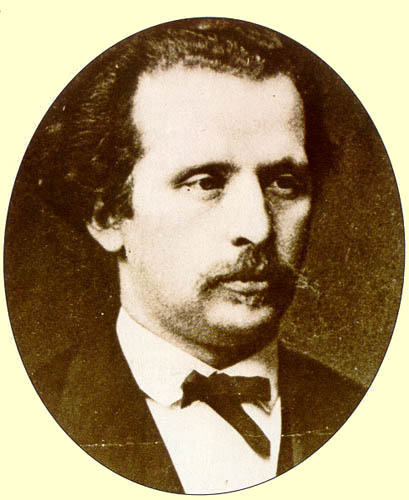
Now, you can argue that Tchaikovsky was hardly a neutral witness about his own First Concerto. On Christmas Eve 1875, Nikolai Rubinstein, the formidable director of the Moscow Conservatory, listened to Tchaikovsky play through the freshly completed First and tore into the piece to the composer’s face, dismissing it as unplayable, worthless stuff. The composer fled the room. He never forgot the humiliation. He carried it with him to the grave.
So yes, when Tchaikovsky sat down to write the Second, he probably needed to convince himself — consciously or not — that this time would be different. Fine. But then imagine telling him, a century and a half later, that posterity would file the First under “iconic concerto, must-hear repertoire” and the Second under “decent but you can skip it.” He would look at you with the kind of expression usually reserved for finding a hair in soup.
It is genuinely rare for a composer’s own ranking of his works to be flipped so completely by later audiences. And as we are about to see, that flip did not happen by accident. Someone helped it along.
A Russian Concerto That Premiered in New York
Back to that premiere. The soloist at Steinway Hall on 12 November 1881 was Madeleine Schiller, an Australian-born pianist mostly active in the United States. Today her name barely surfaces outside footnotes.
The conductor was Theodore Thomas, and unlike Schiller his name actually deserves more circulation than it gets. Almost single-handedly, Thomas built the institutional foundation of orchestral music in the United States in the second half of the nineteenth century. He founded what became the Chicago Symphony. He ran a touring orchestra under his own name out of New York.
The awkward part is that Tchaikovsky learned about all of this after the fact, mostly by letter and by clipped newspaper notice. How much he had agreed to in advance, and when exactly he heard about Schiller’s American premiere, are questions that still need cleaner primary-source documentation. The honest summary is: he appears to have learned about the performance after it happened, rather than blessing the project in advance. That is as much as we can say without overreaching.
The Russian premiere did not come until the following 30 May, at the Moscow Conservatory, with Sergei Taneyev at the piano and Anton Rubinstein on the podium. Anton was the older brother of Nikolai Rubinstein — the man to whom Tchaikovsky had dedicated the concerto, and who, as we are about to see, never lived to hear it. The premiere carried that ghost in the room.
So Russian audiences heard their own composer’s new concerto half a year after Americans did. If you want a quick snapshot of which way nineteenth-century musical traffic was flowing toward the end of the century, that is your snapshot. It also tells you something about the strange distance that had opened up between Tchaikovsky and one of his own works.
A Dedication the Dedicatee Never Heard
Nikolai Rubinstein, mentioned above, was both the first listener and the harshest critic of Tchaikovsky’s First Piano Concerto. On that Christmas Eve in 1875, Tchaikovsky brought the freshly finished First to an empty Conservatory classroom and played the whole thing through for Rubinstein. Rubinstein listened in silence to the end, sat for a long pause, and then opened his mouth and tore the piece apart.
Tchaikovsky walked out. He also made a vow that day — that he would not change a single note of the First Concerto. He did not.
And yet, six years later, when he finished the Second Concerto, he dedicated it to that same Nikolai Rubinstein. The gesture was a kind of armistice. The First had inflicted a wound; the Second was meant to suture it. There was also, beneath the courtesy, a quiet challenge: this one, even you cannot dismiss.
The challenge never got delivered. In March 1881, Rubinstein died in Paris of what was probably tuberculosis. He was forty-five. The New York premiere was exactly eight months away.
On 26 March 1881, Tchaikovsky wrote again to von Meck. “Nikolai Grigoryevich [Rubinstein] would have played it superbly. Without him I do not know to whom I should entrust it” (Letter 1727). The man to whom the score was dedicated, the only pianist the composer trusted with it, the very person the piece was supposed to win over — gone, before he could hear a single note of his own dedication.
That gap mattered. With Rubinstein out of the picture, Tchaikovsky’s mental image of an ideal premiere collapsed, and the path was clear for an obscure American performance with a soloist he had never met to become the work’s first hearing. It was the first kink in a fate that was already starting to bend.
The 1893 Refusal Letter, and the 1897 Abridgement
Here is where the story stops being unfortunate and starts being damning.
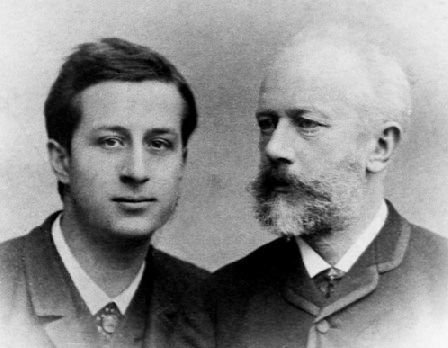
Enter Alexander Siloti, a pianist of real stature in his day. He was Tchaikovsky’s former student at the Moscow Conservatory. He was also, conveniently, family — the husband of one of Tchaikovsky’s cousins. Two relationships overlapping on the same man.
In the spring of 1893, Siloti wrote to his old teacher. The Second Concerto’s slow movement, he suggested, was simply too long; audiences were drifting; would the composer consider letting him snip a few measures here, tighten a passage there, generally make the piece more presentable to the modern concertgoer?
Tchaikovsky’s reply, dated 26 March 1893 and catalogued as Letter 4977, can be summed up in one sentence. Specifically, this sentence:
“I hate to alter a single note of what I have written … the work is, after all, mine.”
That is not a polite refusal. That is a door closing in a particular tone of voice. You will not find many letters from a major nineteenth-century composer to a former student that are this direct.
Seven months later — 6 November 1893 — Tchaikovsky died, suddenly, of what was probably cholera. The composer was no longer in any position to defend his own score. Siloti waited four years. Then he picked up the scissors.
In 1897, Siloti issued his own abridged edition of the Second Concerto through P. Jurgenson, the same firm that had published the original. His teacher was not available to send another letter. The cut to the second movement alone runs to roughly 150 bars. The first and third movements were also touched up. Compare the two scores side by side and there are pages where you genuinely have to remind yourself they are supposed to be the same piece.
This is not, unfortunately, where the story ends — as a curious one-off act of posthumous editing by a relative with poor manners. Siloti was one of the most influential pianists of his generation, and the edition he stamped with his own name slid quietly into the role of de facto standard. For most of the twentieth century, when you bought a recording of “Tchaikovsky Piano Concerto No. 2,” you were buying Siloti’s edit. Gilels recorded it. Cherkassky recorded it. Postnikova recorded it. The Tchaikovsky Tchaikovsky actually wrote went almost a hundred years without being widely heard.
The slow turn back to the Urtext began in earnest with Peter Donohoe’s 1986 EMI recording. It crystallised in 2009, when Stephen Hough and Osmo Vänskä recorded the unabridged score with the Minnesota Orchestra for Hyperion. It took roughly a century for audiences to be able to hear the Second Concerto Tchaikovsky actually wrote.
A student knew his teacher had refused, in writing, to alter a single note. He did it anyway, after the teacher was dead. That edition went on to define the work’s public face for a century. We can pretend this is a minor footnote of music history. It is not. In the entire concert repertoire, posthumous edits that override an explicit refusal from the composer are remarkably rare. The closest parallel is Brahms publishing the 1841 version of Schumann’s Fourth Symphony in 1891 against Clara Schumann’s wishes.
A Triple Concerto in Concerto’s Clothing — The Second Movement’s Hidden Form
Step away from biography for a moment and let us look at what is actually inside the score. The Andante non troppo of Tchaikovsky’s Second is something close to eighteen to twenty minutes long. That alone puts it well past the average length of a Romantic slow movement. But the length is not the strange part.
The strange part is that in this piano concerto, there is a passage where the piano is no longer the lead.
The movement opens with a brief, breathing piano gesture, and then — surprisingly soon — a solo violin steps forward. For roughly the first thirty bars, the violin carries the main material on its own. Then a solo cello enters, and the two string soloists settle in for an extended duet. They keep going. And going. For more than 130 bars, the violin and cello hold the melodic line between them, while the piano, our supposed star, retreats to background accompaniment patterns. No glittering octaves. No crashing cadenza. Just the keyboard quietly chording underneath two strings for the length of a full sonata exposition.
A piano concerto in which the piano spends 130 measures playing second fiddle. To, literally, a fiddle. And a cello.
What this is, in effect, is a single movement of a triple concerto smuggled inside a piano concerto. Nothing on the cover tells you this is going to happen. The title page says “Piano Concerto.” Audiences for the better part of a century played along, possibly because they had been handed the Siloti edition, which made the whole thing shorter and the triple-concerto stretch less noticeable.
Now factor in the historical timeline and the thing starts to look bolder still. Brahms’s Double Concerto for violin and cello dates from 1887. Chausson’s Concert for violin, piano, and string quartet is from 1891. Tchaikovsky finished this movement in 1880. He got there first, by seven years over Brahms, and yet when anyone today wants an example of late-Romantic chamber-concerto experimentation, the Brahms Double is the name that springs to mind. The Tchaikovsky almost never comes up. It should.
And of those roughly 150 bars Siloti cut from the second movement, a large share lands squarely in this triple-concerto territory. One hundred and fifty bars. That much of it, gone. What the Siloti listener lost was, more than anything else, the moment when the piano concerto stops being a piano concerto and turns into something else for a while. From Siloti’s point of view, perhaps he was trimming the section audiences found least engaging. From a structural point of view, he was erasing the work’s single most adventurous formal stroke.
There is a popular story that the violin and cello solos were written with two specific Moscow Conservatory colleagues in mind — Adolph Brodsky and Wilhelm Fitzenhagen. It is a nice story, but the direct evidence in Tchaikovsky’s surviving letters is thin. Treat it as plausible tradition rather than confirmed fact.
📜 악보 지점: Tchaikovsky-PC2-Mvt2-violin-solo-entry-m1-30-violin-solo-entrance (IMSLP 링크 미등록)
Listening, Movement by Movement
I. Allegro brillante e molto vivace
The first movement does not so much begin as detonate. From bar one, the piano launches a barrage of full-handed octaves; the orchestra answers with the same figure. This is not a concerto opening that wants to politely introduce itself. It wants you in your seat, paying attention, immediately.
Tchaikovsky then spends a long stretch turning the material over from every angle, and the soloist passes through two cadenzas — those moments where the orchestra falls silent and the pianist is left alone, ideally to do something extravagant. The first cadenza is short and somewhat formal. The second, in the Urtext, is dramatically longer than what Siloti left behind. The Siloti edition’s biggest first-movement cut lands right here, which is why playing the abridged version always seems to release the dramatic tension a few beats early. The pressure cooker loses its lid before it has finished cooking.
The first movement runs close to twenty minutes on its own in the Urtext, and the obvious conclusion is that Tchaikovsky was not trying to write a tidy, audience-friendly opener. The movement is long. It is loud. At times it is genuinely sprawling. There are listeners who will tell you, honestly, that they don’t want to hear it twice. There are others — and I would gently suggest you might end up in this camp — for whom the sprawl is the point, and once you fall into the texture you don’t really want it to stop.
📜 악보 지점: Tchaikovsky-PC2-Op44-Mvt1-opening-m1-16-octave-fusillade –>
🎬 유튜브에서 찾기: Tchaikovsky Piano Concerto No.2 full performance best recording
II. Andante non troppo
This is the triple-concerto movement we just spent several paragraphs on. Worth a brief recap.
The piano takes one short breath, the solo violin walks on, and within thirty bars the cello has joined to make it a duet. The two strings then carry the music for the rest of what is — at minimum — half of an eighteen-to-twenty-minute movement. The piano, our official protagonist, sits at the side of the stage like a friend playing rhythm guitar while the lead singers handle the chorus.
When the piano finally returns to centre stage, the effect is genuinely strange — a kind of oh right, that’s what this piece was supposed to be sensation. You exhale, and at the same time you start to wonder what category of music you have just been listening to for the past ten minutes.
Siloti cut about 150 measures out of this duet stretch. In his edition, the second movement is tidier; the duet passes more briskly; the piano never feels missing for very long. The abridgement does make the piece more conventional. What it does not do is preserve the trick — the structural sleight of hand by which Tchaikovsky pretends to be writing one kind of piece and quietly hands you another. Which version you choose is up to you, but if you want what the composer actually wrote, the answer is unambiguous.
📜 악보 지점: Tchaikovsky-PC2-Mvt2-cello-with-piano-accompaniment-piano-as-rhythm-section –>
🎬 유튜브에서 찾기: Tchaikovsky Piano Concerto No.2 full performance best recording
III. Allegro con fuoco
The finale is, surprisingly, short. After roughly thirty-eight to forty minutes of music in the first two movements, you get a fast, rough-edged six or seven minutes to close out. Two Russian-flavoured themes; brisk dispatch; minimal of the speed-changing rubato that the composer often layered on elsewhere. For Tchaikovsky, the third movement is almost businesslike.
Why he eased off here is a question with several possible answers. The most common theory is that he had simply burned through too much energy in the first two movements. Another is that his composing pace in the early 1880s was generally swift, and the finale reflects that. Either way, the listener arrives at the end of the piece with the faint, slightly comic sense of wait, that’s it?, and then it is over.
And here is the unexpected payoff: that restrained finale actually balances the whole work. If the first two movements had been followed by a third in the same exhausting register, both the audience and the composer would have collapsed at the end. By easing off in the third movement, Tchaikovsky may have saved his own piece — and our nervous systems.
🎬 유튜브에서 찾기: Tchaikovsky Piano Concerto No.2 full performance best recording
Three Reasons You Owe This Concerto a Hearing
If you have read this far, the case is essentially made. Let us spell it out anyway.
First, anyone who has listened to the Tchaikovsky First a hundred times — which is most of us — might feel a faintly uncomfortable thought creeping in. The composer himself, in writing, said the Second was the better piece. To have heard the First on loop for years and never properly listened to the one Tchaikovsky preferred is, at minimum, an oversight worth correcting. Cases of a composer’s own ranking running directly opposite to posterity’s are vanishingly rare. You should at least put your own ears on this one before deciding who is right.
Second, if you are at all curious about late-Romantic experiments with concerto form, the second movement is essentially required listening. Start from bar one, follow the solo violin in, and stay with it through the cello’s entrance. You are listening to a structural idea that predates the Brahms Double Concerto by seven years. You will get the rough shape of an entire compositional decade in roughly thirty bars — faster than any history book can give you.
Third, if you care at all about the ethics of posthumous editing — about what we owe a dead composer who left an explicit refusal behind — then there is a particular weight to listening, in 2026, to the original score. One hundred and fifty bars were not just minutes of music. They were a deliberate, signed-and-dated formal gesture. The fact that you can finally hear them, undamaged, is a privilege the twentieth century mostly did not enjoy. That is all.
The listening order is simple. Start with Hough/Vänskä on Hyperion (2009, Urtext). Then put on Gilels/Maazel (1971 EMI, Siloti cut) and listen to the second movement in particular. Once you have done both, you will hear what was taken out. You don’t need to know the bar numbers; the absence is audible.
Recordings — The Urtext Camp vs. The Cut Camp
The Urtext Camp
Stephen Hough / Osmo Vänskä / Minnesota Orchestra (Hyperion, 2009) — My first recommendation, and not by a small margin. The reason is structural: this is the recording in which the triple-concerto character of the second movement comes through most clearly. The textures between piano, violin, cello, and orchestra are exceptionally clean, and the entrances of the two string soloists are timed with the kind of precision that lets you actually hear what is happening formally. The set also includes both concertos as a complete box, which makes the First-versus-Second comparison effortless. Gramophone Editor’s Choice on release, and it has held up.
The honest caveat: Hough is a thoughtful, balanced player, and some listeners find that exact quality cold. If you come to Russian music expecting wild abandon and barely controlled passion, this performance can feel a touch reserved. Hough is closer to “academically correct Tchaikovsky” than to “Tchaikovsky-as-emotional-grenade.” Knowing that going in will spare you disappointment.
Peter Donohoe / Rudolf Barshai / Bournemouth Symphony Orchestra (EMI, 1986) — The recording that arguably started the entire Urtext revival. Donohoe’s first-movement cadenza has an almost destabilising length to it, in the best sense; the dynamic shifts are theatrical. You hear it once and the memory sticks. The recorded history of the Second basically splits into before-this-record and after-this-record. Allow me a small overstatement: this disc rewrote the conversation.
That said, mid-1980s EMI sound has not aged with full grace; the recording is a little stiff by current engineering standards, and the orchestral colour leans toward British restraint rather than Russian heat. If you want raw, idiomatic Russian sonority, this is not the answer. If you want to understand why the Urtext came back, it is essential.
Mikhail Pletnev / Vladimir Fedoseyev / Russian National Orchestra (Virgin Classics, 1990) — One of those rare cases where “intellectual” lands as a compliment rather than a polite dismissal. Pletnev’s pacing in the second movement makes the triple-concerto argument with quiet authority — you don’t need anyone to explain the structural point to you, because you can already hear him laying it out. The balance between the two string soloists and the piano is calibrated with a delicacy that very few other pianists even attempt.
The downside is Pletnev’s signature cool clarity, which can make the whole work feel slightly under glass. If you are someone who wants Tchaikovsky to ache, to weep, to grab you by the collar — this is not that record. Recommended for listeners who do not require tears from their Tchaikovsky.
The Cut Camp
Emil Gilels / Lorin Maazel / New Philharmonia Orchestra (EMI, 1971) — The reference recording for the abridged tradition, and a textbook demonstration of why twentieth-century audiences let Siloti’s edit go unchallenged for so long. Gilels’s octaves are forged out of something harder than iron. The pacing is seamless. The tone is unmistakable. This is great playing, period.
The asterisk is unavoidable: what you are listening to is not exactly the piece Tchaikovsky wrote, but the piece Siloti edited. If you want to know the composer’s intent first, this is not the recording to start with. It is a great performance bolted to a compromised text, and you have to be okay with that pairing.
Shura Cherkassky / Yuri Ahronovitch / London Philharmonic (Decca, 1980) — A document of nineteenth-century salon pianism quietly persisting into the late twentieth. Cherkassky’s free-handed rubato — that habit of stretching and compressing the beat at will — and the way he colours individual notes are products of a vanished era. Recordings like this are not going to be made again.
That historical interest is the main reason to seek it out. By modern standards of textual fidelity and rhythmic discipline, the playing can sound discursive. If you want a tightly groomed Tchaikovsky, point yourself at Hough or Donohoe. If you want to hear what an inherited tradition sounds like in its last working generation, Cherkassky is the recording.
The compressed verdict: Hough first; Gilels next as the comparison case; Donohoe and Pletnev for the next layer of depth; Cherkassky for the historical perspective once everything else has clicked into place.
Recommended Video Performances
In addition to the targeted clips embedded above, two full-length performances are worth queuing up if you want to hear the work end to end.
🎬 유튜브에서 찾기: Tchaikovsky Piano Concerto No.2 full performance best recording
Following Along with the Score
The two excerpts below are the visual anchors for the analysis in this article: the first-movement octave opening, and the moment in the second movement where the triple-concerto stretch begins.
📜 악보 지점: Tchaikovsky-PC2-Op44-Mvt1-m1-16-piano-octave-introduction –>
📜 악보 지점: Tchaikovsky-PC2-Op44-Mvt2-m1-30-violin-solo-entrance-triple-concerto-begins (IMSLP 링크 미등록)
The full Jurgenson 1881 first edition is freely available on IMSLP. Following the score while listening makes the triple-concerto structure of the second movement immediately obvious — you can track, bar by bar, where the piano steps back and where the two string soloists take over the line. Once you have seen it on the page, you will not be able to un-hear it.
Frequently Asked Questions
Did Tchaikovsky really think the Second was better than the First?
Should I listen to the Urtext or the Siloti abridgement first?
The second movement is almost twenty minutes long. Do I really need to sit through it?
What exactly was the relationship between Siloti and Tchaikovsky?
Why did the world premiere happen in New York?
Is the second movement actually a triple concerto?
Further Reading
- Tchaikovsky Piano Concerto No. 1 — The starting point of the entire tragedy: the 1875 Christmas Eve audition with Rubinstein, and how the rift was eventually mended.
- Tchaikovsky Violin Concerto — Another reluctant dedicatee, and another awkward early reception: Adolph Brodsky and the composer’s complicated relationship with him.
- Rachmaninoff Piano Concerto No. 2 — Siloti’s other famous pupil, and how the same Moscow Conservatory lineage produced a very different fate for a different concerto.