Two violinists, both playing muted, and an orchestra that has already walked out the door. That is how Haydn’s Symphony No. 45 finishes, and it is why this eighteenth-century court music still gets programmed as a stunt.
You have heard the story: homesick players, a composer who wrote them an exit, a prince who took the hint. Most of that holds up. But the version people repeat most confidently — that the symphony rescued the orchestra from being disbanded — was flagged as false by the man who first put the anecdote into print. And the hardest surviving evidence for any of it is not a letter. It is a paperwork request for two pieces of brass tubing.
The season that would not end
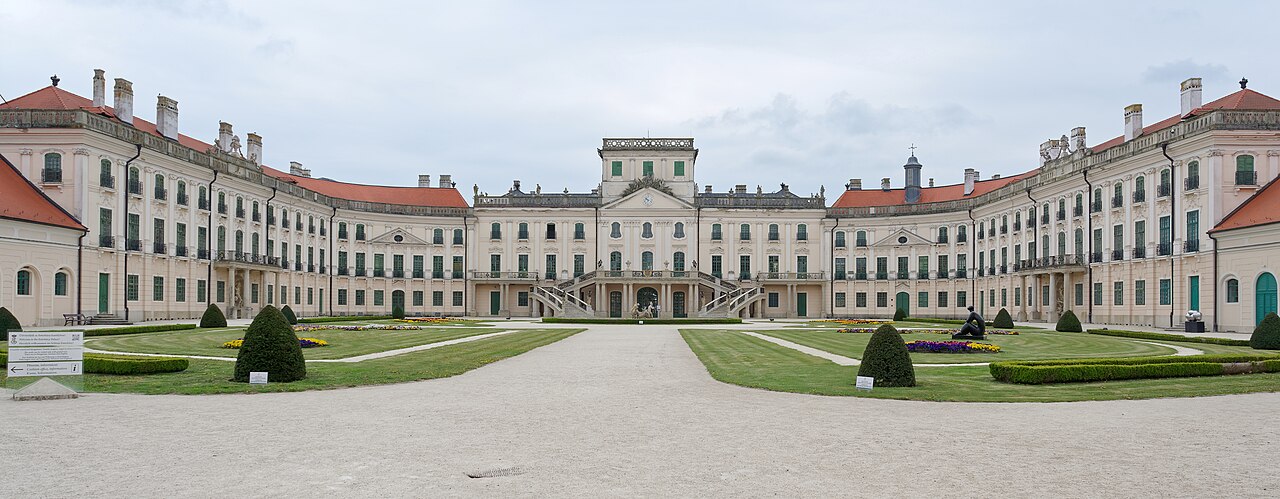
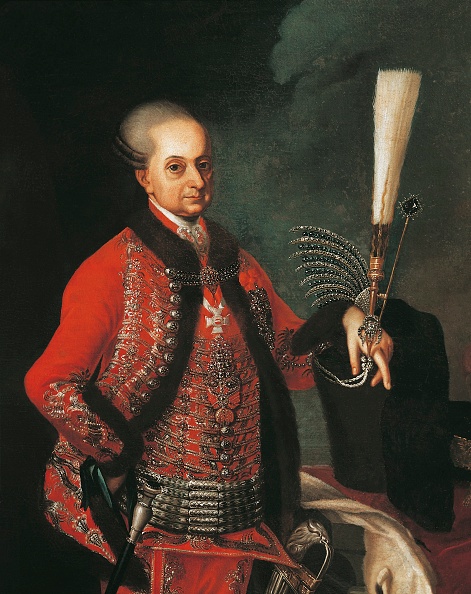
Prince Nikolaus Esterhazy built himself a palace in the marshland southeast of Vienna and spent as much of the year there as he could get away with. Opera house, marionette theatre, and a resident orchestra of professionals who were very good and very far from home. Families did not live on the estate. When the court went to the country, the players went alone.
Haydn composed his Symphony No. 45 in F-sharp minor, Hob. I:45, in 1772 at Esterhaza, and the season that year ran long. The account comes from Georg August Griesinger, who published his Biographische Notizen uber Joseph Haydn in 1810 after interviewing the composer in old age. In Griesinger’s telling the Prince stayed on for several extra weeks against his usual habit, the married men went to their Kapellmeister, and Haydn’s answer was a symphony in which the instruments fall silent one after another, each player putting out his light, packing up his part and leaving with his instrument under his arm.
So the candles are not a later theatrical embellishment. They are in the earliest written version of the story. What Griesinger did reject is the other version already circulating in his lifetime: that Haydn used the symphony to talk the Prince out of dissolving the whole musical establishment. Griesinger called that one more poetic than historically correct. It is the version you will still find in concert programmes, and it is the part to stop repeating.
The paperwork: two half-step slides
Here is the detail that turns a charming anecdote into something you can hold. On 22 October 1772 Haydn signed an order, preserved in the Esterhazy archives, for two special half-step slides for the horn players. A half-step slide lengthens the horn’s tubing just enough to drop the instrument a semitone. Natural horns had no valves; a player retuned by swapping crooks, and the set he carried covered the ordinary keys. F-sharp was not one of them.
That order is dated, filed and signed — the most solid thing in the whole episode. It also tells you the choice of key was deliberate enough to be worth a requisition and a wait. The Farewell Symphony is apparently the only known 18th-century symphony ever written in the key of F-sharp minor. Haydn did not wander into it. He committed to it, in writing, with lead time.
Why should that matter to you, at home with headphones on? Because it changes the sound of the band. Horns dropped a semitone by a slide sit darker and more effortful than horns on a comfortable crook, and F-sharp minor pushes string players onto notes that ring less openly than the period’s standard keys. On a good period-instrument recording you can hear that friction. It is not a flaw in the playing. It is the piece.
What to listen for
Four things, none needing you to read music.
The exposition goes to the wrong place. A minor-key first movement of this period normally swings from the home key into the relative major — the bright partner key that sits a third above. Haydn refuses. The exposition of the first movement modulates to C-sharp minor instead of the relative major, so the moment that should feel like the sun coming out stays overcast. That single decision sets the temperature for everything after it.
New material shows up where it should not. The unwritten rule of a development section is that you work with what you already introduced. Haydn breaks it: just before the recapitulation of the first movement, new material is introduced. You will notice it as a passage that sounds like it belongs to a different, calmer piece, arriving at the exact point where the music should be gathering itself to come home.
The cadences refuse to land. In the third movement, the main peculiarity of the minuet is that the final cadence of each section is made very weak, falling on the third beat, which creates a sense of incompleteness. In a dance movement that exists to be square and reassuring, every phrase quietly fails to close the door. By the time the finale plays its fake ending, you have already been trained to distrust endings for two movements.
The slow movement whispers on purpose. The Adagio begins with a relaxed melody played by muted violins, and Haydn stretches its dissonant suspensions — notes that hang on past the chord that should resolve them — to extraordinary lengths in the recapitulation. Mutes on, in a symphony that ends with two muted violins alone: the ending is prefigured here, and almost nobody says so.
Movement by movement
The whole thing runs about twenty-five minutes. The plan: Allegro assai in 3/4 in F-sharp minor; Adagio in 3/8 in A major; Menuet e Trio, Allegretto, in 3/4 in F-sharp major; Finale, Presto then Adagio, in 2/2 then 3/8. The scoring is small — two oboes, bassoon, two horns, strings — which is why the thinning-out at the end reads so clearly.
I. Allegro assai. No slow introduction. The strings come in already agitated, driving down through the F-sharp minor chord, and never really relax their grip. This is the standard posture of Haydn’s Sturm und Drang years. The intruder passage before the recapitulation is the tell that this one goes somewhere the neighbouring symphonies do not.
II. Adagio. Muted, in A major, with a small repeated hiccuping figure that keeps interrupting the line like someone catching their breath. It is the only place in the symphony where the pressure comes off, and even here the suspensions ache longer than they should.
III. Menuet e Trio. F-sharp major, and the sound of a court dance that cannot quite finish a sentence. The horns get their moment here; the two players who waited on those slides finally have something to show for it.
IV. Finale: Presto – Adagio. The Presto is a hard, fast F-sharp minor finale that behaves itself right up until it reaches a passage that sounds very much as if it were the end of the symphony but suddenly breaks off. Then a long coda-like section begins in 3/8 and modulates from A major to F-sharp major, and the players start to go.
🎧 Also on: Apple Music · Spotify
The video above runs the whole symphony with the score scrolling underneath. If you have never followed a score before, this is an unusually forgiving place to start: in the last movement you can literally watch staves stop having notes on them.
The exit, and who is left holding it
The departures are written into the parts, not improvised on the night. First oboe and second horn go first, each with a solo on the way out. Bassoon leaves next with nothing. Then second oboe and first horn, again with solos; then the double bass, with a solo; then cello, the rank-and-file violins, and viola. Each player who leaves gets a last thing to say, or pointedly does not.
Sinfonia Rotterdam under Conrad van Alphen play the whole symphony here, and this is the one to watch rather than only hear — the last five minutes stop being a texture experiment and become theatre the moment you can see chairs emptying. Audio-only recordings lose about half of what the finale does.
🎧 Also on: Apple Music · Spotify
At the end there are just two muted violins left, played by Haydn himself and his concertmaster, Luigi Tomasini. That is the detail worth sitting with. The Kapellmeister who carried the complaint upstairs wrote himself into the last bars of it — not walking out with the staff, not standing apart from them either, but still at his desk once the room has emptied. It is a man placing himself precisely inside a workplace dispute, in notation rather than a memo.
And the harmonic joke lands at the same moment. A symphony that began in F-sharp minor ends in F-sharp major — same home note, opposite lighting. Nothing is resolved dramatically; the room just changes colour while it empties. If you like endings that do something structurally strange with the audience’s expectations, our piece on the applause trap Tchaikovsky built into the Pathetique covers the other end of that tradition.
How much of the story should you believe?
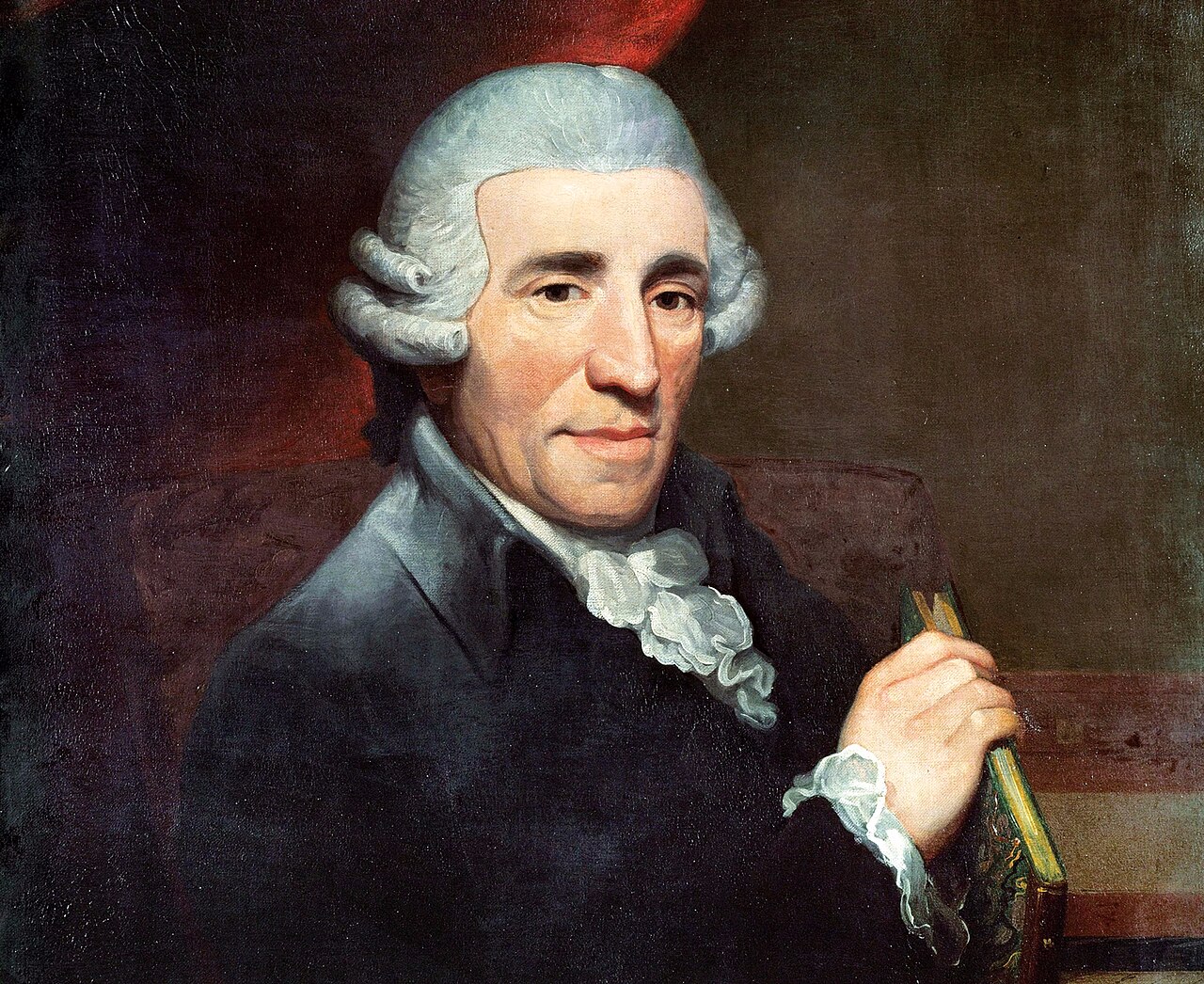
Two biographies are the source of everything anecdotal here, and both were assembled at the end of Haydn’s life. Georg August Griesinger published his account in 1810, and Albert Christoph Dies published his own biographical account of Haydn in 1810 as well. Both men were working from an elderly composer’s recollection of an autumn nearly four decades earlier. That is not nothing — Griesinger names Haydn as his source and is generally careful — but it is memory, not documentation.
The scholar who pushed hardest on this is James Webster, who published Haydn’s Farewell Symphony and the Idea of Classical Style with Cambridge University Press in 1991. Webster does not throw the anecdote out. His argument runs in a different direction: he holds that many of Haydn’s strongest instrumental works are through-composed, with their movements bound into a single cycle rather than assembled as four separate pieces, and he uses Symphony No. 45 as the central demonstration.
That reading is the useful one for a listener, because it survives without the story. Take the homesick musicians away and the piece still coheres: wrong-key exposition, weak cadences, intruding material, false ending, drift to F-sharp major. Those decisions answer each other across twenty-five minutes. The anecdote explains why anyone remembers this symphony. It does not explain why it is good.
My own position, for what it is worth: believe the outline, hold the dialogue loosely, and treat the horn order as the anchor. Anecdotes drift over thirty-eight years. Requisitions do not. This is the same discipline worth applying to any composer-legend that has been polished by retelling — the twenty-one-year myth around Brahms’s First Symphony is a close cousin.
Recordings: what I would actually put on
Nikolaus Harnoncourt / Concentus Musicus Wien / Teldec, released 1990 — the one to start with. The case for period instruments here is specific rather than ideological: the natural horns sound like equipment being pushed, which is what that October order implies they were. Harnoncourt also drives the first movement hard enough that the C-sharp minor arrival stings instead of just passing. The trade-off is a lean string sound and an austere slow movement. If period-instrument Haydn has never worked for you, this will not be the conversion.
▶ Listen on YouTube · Apple Music · Spotify
Trevor Pinnock / The English Concert / Deutsche Grammophon Archiv — the cleanest finale. Pinnock’s band plays with a transparency that makes the departures legible: you hear exactly which line has gone, which matters in a movement whose whole argument is subtraction. Where Harnoncourt leans into roughness, Pinnock stays polished — a little too civilised, for some ears, in a piece about people wanting to go home. The set also gives you the surrounding minor-key symphonies.
▶ Listen on YouTube · Apple Music · Spotify
Adam Fischer / Austro-Hungarian Haydn Orchestra / Nimbus — modern instruments, right room. Fischer and the Austro-Hungarian Haydn Orchestra recorded the complete Haydn symphonies for Nimbus in the Haydnsaal of the Esterhazy Palace, which gives this account something no studio can fake: the acoustic the music was built for. Modern instruments, warmer than either period version, with a finale that is more elegiac than witty. Pick this if the Harnoncourt sound world is a barrier; skip it if you specifically want to hear the horns struggle.
▶ Listen on YouTube · Apple Music · Spotify
Antal Dorati / Philharmonia Hungarica / Decca — for completists only. Dorati’s complete Haydn symphony cycle for Decca was recorded between 1969 and 1972 and remains the reference survey of the repertoire. On this particular symphony it is not my first choice: sturdy, slightly generic next to the three above, and the finale never quite sharpens. But if you plan to spend a year on Haydn rather than an afternoon on this one, start here.
▶ Listen on YouTube · Apple Music · Spotify
Where the facts here came from
The date, key, scoring, movement plan, order of departures, horn-slides order and the identification of the two remaining violinists come from the standard reference account of the work, which cites the Esterhazy archive material. The anecdote traces to Griesinger and to Dies, both published in 1810; Griesinger’s rejection of the disbanding version is in his own text, not a modern gloss. The through-composed reading is Webster’s, and it is one scholarly position rather than settled consensus. Recording metadata was checked against label and catalogue listings; where a session year was not verifiable I left it out rather than guess. Found an error? Tell us and we will fix it in place.
One last suggestion. Play the finale twice: once watching the video, once with your eyes shut, listening only to what remains after each departure. The piece is far stranger as an exercise in subtraction than as a joke about going home. For another work that doubles as a document written at an employer, our guide to Bach’s Mass in B minor takes the same angle from the other end of the century.