On the evening of 27 February 1814 a Viennese audience filed into the Redoutensaal to hear cannons. Almost literally: the draw that night was Wellington’s Victory, Beethoven’s battle piece with musket volleys and artillery written into the score, and the city had spent the winter losing its head over it. Also on the bill, back by demand, was the Seventh Symphony. Third in the queue for anyone’s attention, getting its first performance that evening, was the Symphony No. 8 in F major, Op. 93.
The Eighth went over politely. Politely is the problem. The reviewer for the Allgemeine musikalische Zeitung filed the most Viennese verdict imaginable: the applause it received was not accompanied by that enthusiasm which distinguishes a work which gives universal delight; in short, as the Italians say, it did not create a furor. Beethoven, by Carl Czerny’s account, was angry about it. When Czerny later asked why the Eighth had not caught on the way the Seventh did, the answer was that the Eighth is so much better.
Two centuries on, it is still the Beethoven symphony people skip on the way from the Seventh to the Ninth. I think he was right and the room was wrong, for a practical reason: this piece hides its best material where it only pays off on a second hearing. Here is where to look, and which recordings find it.
The Night It Lost the Room
The programme was stacked against it before a note sounded. Wellington’s Victory is civic theatre — Vienna was still exhaling after Napoleon’s collapse, and a work staging the British thrashing the French at Vitoria, percussion standing in for gunfire, was going to bring that house down regardless of its musical merits. The Seventh had already been cheered at its own first performance ten weeks earlier and repeated since. The Eighth walked out to face both, brand new, twenty-five minutes long, and in the mood to make jokes.
Beethoven conducted. He was going deaf and insisted on leading anyway; contemporary reports say the orchestra quietly took its cues from the principal violinist rather than his gestures. A symphony whose punchlines depend on split-second timing got a reading held together by damage control.
His own name for the work was affectionate: my little Symphony in F, which separated it from the Sixth, the Pastoral, a much longer piece in the same key. Little was a size label, not a demotion. George Bernard Shaw later took Beethoven’s side outright and wrote that in all subtler respects the Eighth is better. Subtler is exactly the wrong quality to bring to a hall waiting for artillery.
The Metronome Story Is a Forgery, Not a Fun Fact
Almost every programme note repeats the same anecdote. The ticking second movement, they say, began as a canon Beethoven improvised at a dinner for Johann Nepomuk Mälzel — Ta ta ta, lieber Mälzel, WoO 162 — celebrating Mälzel’s new metronome, and he recycled the tune into the Eighth. On the current evidence it runs backwards.
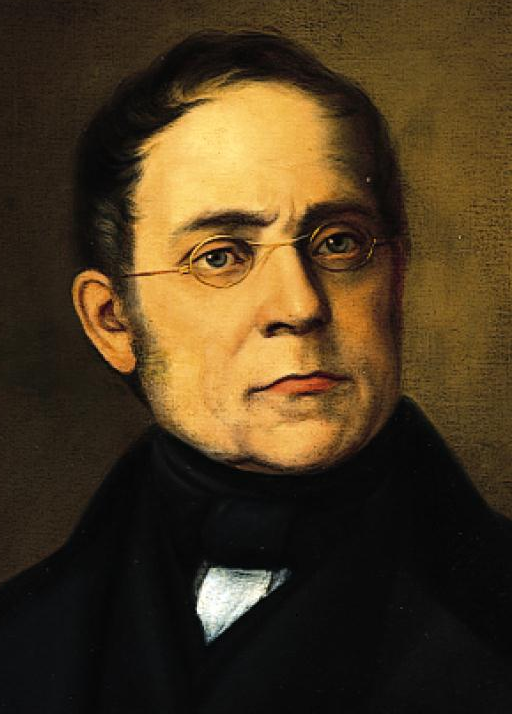
Everything traces to Anton Schindler, Beethoven’s late-life assistant and first biographer, who printed the canon in Hirschbach’s Musikalisches Repertorium in February 1844 and spelled out its supposed link to the metronome. The Beethoven-Haus catalogue notes that no authentic manuscript for WoO 162 exists, that Schindler’s own accounts of its origin contradict each other, and that the theme looks lifted from the symphony rather than into it. Their working attribution is a Schindler forgery.
That word is not rhetorical. In 1977 the critic Peter Stadlen showed in The Musical Times that Schindler had filled blank spaces in Beethoven’s conversation books with roughly 150 invented entries, written after Beethoven’s death and dressed to match the surrounding discussions; Dagmar Beck and Grita Herre, editing those books, began cataloguing the falsifications the same year. Schindler is the origin point for a large share of the Beethoven anecdotes that feel too good to check, and he had a documented habit of manufacturing the evidence.
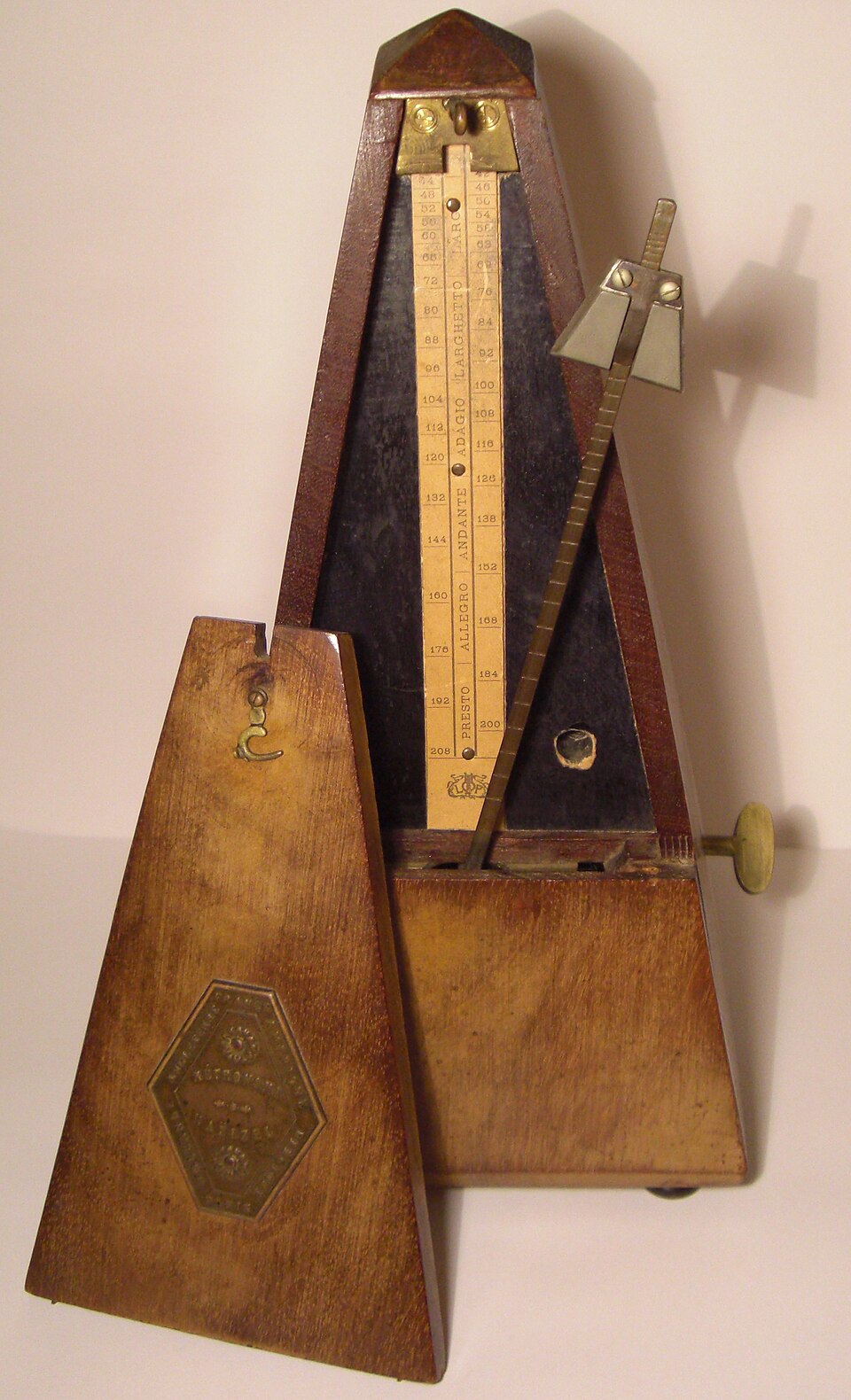
The chronology does not help either. Mälzel did not invent the mechanism he is named for: he called on the Amsterdam inventor Dietrich Nikolaus Winkel in 1815, admired Winkel’s pendulum device, added a scale of beats per minute and patented the result as his own. The symphony was finished three years before that visit. The musicologist A. Peter Brown proposes a better model anyway — Haydn’s Clock Symphony, whose slow movement runs on the same deadpan tick. That fits what the Eighth does everywhere else: it looks back at Haydn and Mozart with a straight face and an elbow in the ribs. For Haydn’s own structural comedy, start with our piece on the Farewell Symphony.
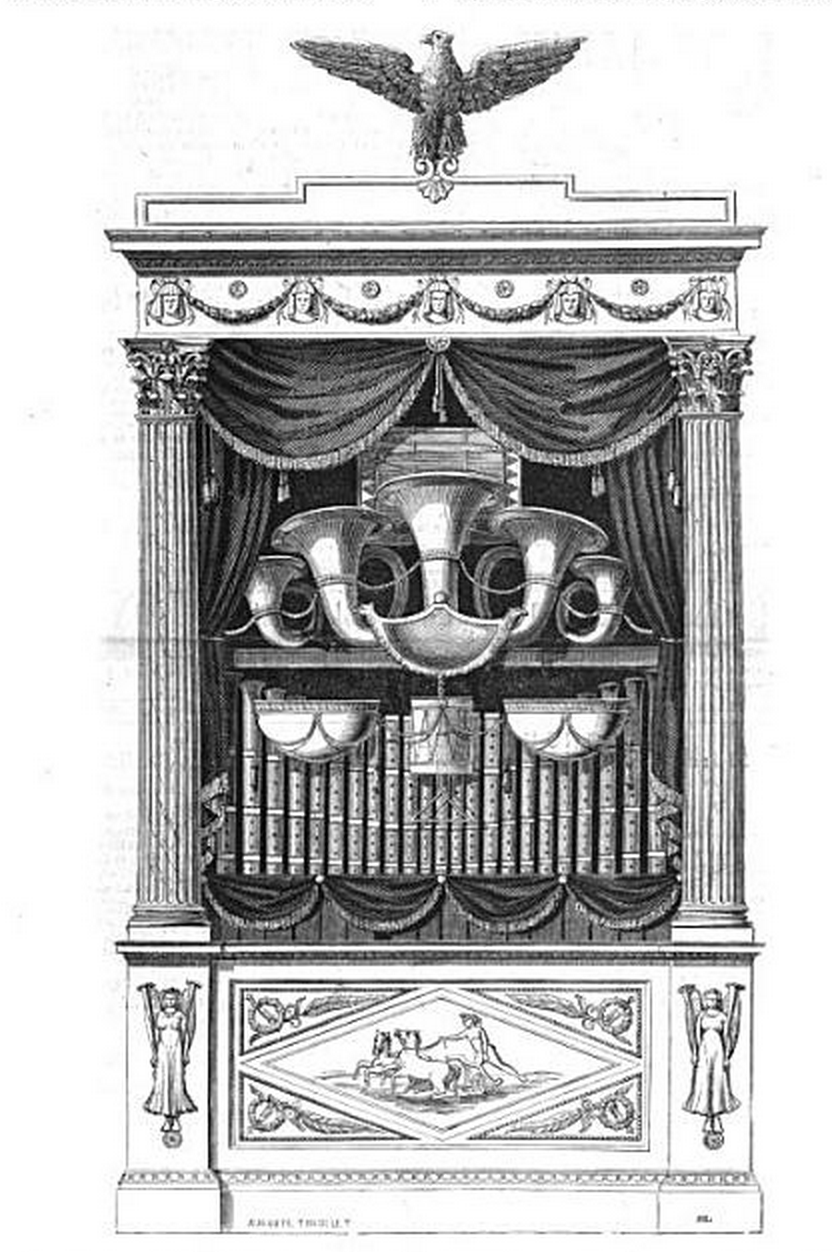
None of this makes Mälzel irrelevant. He built Beethoven’s ear trumpets, and in 1813 he talked him into writing for the panharmonicon, his mechanical orchestra — the machine Wellington’s Victory was originally conceived for, before it grew into the crowd-pleaser that upstaged the Eighth. The metronome parody is still a story Schindler made up.
What to Listen For
Four mechanisms carry this symphony. Learn them and it stops sounding like light relief between two masterpieces.
The climax lands in the wrong place. In the first movement the dramatic peak arrives not at the end of the development, where the era’s grammar expects it, but at the moment the opening theme returns — and that return is marked fff, a dynamic Beethoven almost never writes. The theme is built in three four-bar blocks, loud then soft then loud; at the return he simply deletes the soft middle block. Same tune, manners removed, triple forte. Most conductors under-play it.
The ticking is a structure, not a gag. The second movement sits in B flat major and runs on even staccato sixteenth notes in the winds from first bar to last. Charles Rosen described its shape as slow-movement sonata form: exposition, no development, a quick modulation back and straight into the recapitulation. There is no adagio and no andante anywhere in this symphony; the nearest thing to a slow movement is marked Allegretto scherzando, slightly fast and joking. Listen for the flurry of sixty-fourth notes near the end, thrown by the whole orchestra at once — long heard as the mechanism breaking.
The minuet thumps on purpose. By 1812 Beethoven had spent years replacing the minuet with the scherzo, so Tempo di menuetto as a heading is already a backward glance. What he writes under it is not courtliness: after the upbeat he stacks sforzando accents on five consecutive beats, the rhythmic equivalent of a dancer landing flat-footed. Then the trio hands the tune to horns and clarinet and the texture opens into something tender. Stravinsky singled out the orchestration of this trio for praise, and he was not generous about Beethoven’s scoring as a rule.
One wrong note runs the finale. A few bars in, the whole orchestra roars out a fortissimo C sharp, a note with no business in F major, then drops it and carries on. It returns. Deep in the coda Beethoven cashes it: Donald Tovey’s description in Essays in Musical Analysis (1935) is that the note had been held in reserve to batter at the door of some immensely distant key, at which point the theme bursts out in F sharp minor — a semitone above home, which harmonically is the far side of the world. The finale is also the first symphonic movement with the timpani tuned in octaves, a trick reused in the scherzo of the Ninth; if that is your entry point to late Beethoven, we ranked the best recordings of the Ninth separately.
Beethoven’s own metronome mark for the finale is a whole note at 84, faster than most orchestras play it. That number is the biggest fork in this piece’s recorded history, and everything below follows from how far a conductor will go toward it.
Movement by Movement in Twenty-Five Minutes
A complete performance to follow along with — the Frankfurt Radio Symphony under Andrés Orozco-Estrada, my pick for the best free full video of the piece. A big modern orchestra playing with chamber-music transparency, and the camera actually shows you the wind articulation in the second movement.
I. Allegro vivace e con brio
No slow introduction: the theme is simply there, in 3/4, walking. Sonata form with a substantial coda. Track the volume architecture — loud, soft, loud in the opening blocks, then the amputated fff return. It ends quietly, Beethoven declining to hand you a big finish to applaud.
II. Allegretto scherzando
Roughly four minutes of clockwork. The winds tick, the strings sing over the top, and the humour comes entirely from the orchestra refusing to acknowledge what it is doing. Performers who wink here kill it; deadpan is the only approach that works. Then the sixty-fourth-note burst arrives and the apparatus falls apart in two seconds.
III. Tempo di menuetto
The odd one. Ternary form, coarse accents, a heavy tread where a minuet should be light, then a trio of real beauty for horns and clarinet. A performance that makes this movement elegant has smoothed out the point: it should feel like a period costume worn slightly wrong.
IV. Allegro vivace
The weightiest of the four — sonata rondo, very fast, the most ambitious thing here. The strings scurry in near-silence, the rogue C sharp detonates, the timpani rumble in octaves, and the coda is long enough that some writers argue it is too big to be called a coda. A payoff that exists only because of a note dropped twenty minutes earlier: that is the architecture Beethoven ranked above the Seventh, and on this point I am with him.
Four Recordings, Ranked
Nikolaus Harnoncourt / Chamber Orchestra of Europe (Teldec, live in Graz, 1990) — my first choice. A modern-instrument band playing with historically informed articulation, which is exactly what this piece needs. The winds in the Allegretto are short and dry rather than legato, so the ticking reads as a mechanism instead of a hum, and the minuet keeps its thump. Harnoncourt treats the comedy as structure rather than charm: the fff return in the first movement is genuinely violent, the finale’s C sharp an intrusion rather than an accent. Caveat: it is live, you hear the room, and the strings are leaner than the Vienna-and-Berlin tradition trained most of us to expect. That leanness is why it works. ▶ Listen on YouTube
John Eliot Gardiner / Orchestre Révolutionnaire et Romantique (Archiv, cycle released 1994) — the period-instrument answer. Gut strings, valveless horns, hard timpani sticks, tempi that take Beethoven’s metronome marks seriously. The finale is the fastest here and the one where the wrong note truly startles, because the texture is transparent enough that a unison C sharp has nowhere to hide. The trade-off: the horns in the trio sound rawer and more effortful than modern players manage, and if that reads as insecurity rather than character you will not enjoy it. The most informative version of the piece, and my second favourite. ▶ Listen on YouTube
Riccardo Chailly / Gewandhausorchester Leipzig (Decca, cycle released 2011) — the fast modern option. Chailly built his cycle around giving Beethoven’s metronome markings the benefit of the doubt with a full-size orchestra, and in the outer movements the result is exhilarating: sprightly, dancing, precisely drilled. Where I part company is the Allegretto, which comes out lucid and unfunny — flawless ensemble works against you there, because the joke needs the ear to hear effort in the machinery. Buy it for the finale at speed with modern engineering. ▶ Listen on YouTube
Herbert von Karajan / Berlin Philharmonic (Deutsche Grammophon) — glorious sound, missing the joke. Karajan recorded the cycle with the Berliners three times; the 1963 set is the one I return to for sheer orchestral tone, and the Eighth gets the same lacquered treatment as the Ninth. That treatment is the problem. The C sharp becomes an expressive emphasis inside a continuous line, registering as intensity rather than as an object that does not belong, and the minuet turns graceful. Love this orchestra’s sound and you will love it; trying to hear why Beethoven ranked the Eighth above the Seventh, start elsewhere. ▶ Listen on YouTube
One more, free: the Netherlands Chamber Orchestra. About forty players makes the wind writing in the Allegretto almost diagrammatic — you can count the parts. The clearest demonstration available of what the ticking actually consists of.
How to Hear It the First Time
Do not put the Eighth on directly after the Seventh. That was the Redoutensaal’s mistake: a piece built on wit loses every side-by-side contest with a piece built on momentum. Give it its own twenty-five minutes.
First pass, let it run and enjoy the surface, which is genuinely cheerful. Second pass, same sitting, listen for two things only — the opening theme crashing back at triple forte, and the single wrong note in the finale. Both are setups whose payoffs arrive minutes later, so once you have located them the shape snaps into focus. That is the design Beethoven was defending to Czerny. Vienna in 1814 heard it once, sandwiched between a hit and a spectacle. We can do better than that.
Where to go next: the Fourth Symphony is the other even-numbered Beethoven that gets programmed out of the repertoire by its neighbours, and the Eroica is where the habit of hiding structural arguments inside the drama starts.
Where These Facts Come From
Premiere details, the contemporary review, Czerny’s report of the reply and the analytical points come from the standard reference literature (Steinberg, Hopkins, Rosen, Tovey) as cited in the work’s Wikipedia entry, cross-checked against the Eastman School of Music’s Beethoven guide. The attribution of WoO 162 to Schindler follows the Beethoven-Haus Bonn catalogue. Recording metadata comes from label and discography listings; published durations vary between roughly twenty-five and twenty-seven minutes. The verdicts on the recordings are mine.