Beethoven’s Fourth is the one that gets left off the season. Orchestras program the Third, the Fifth, the Seventh and the Ninth, and the Fourth waits its turn behind them like a younger sibling who never learned to shout. That reputation is earned in the first ten seconds and disproved by the next twenty minutes — which is why it’s my pick for the first Beethoven symphony anyone should hear end to end.
Here’s the case. The Fourth is short, it never lectures you, and it opens with thirty-eight bars that flatly refuse to tell you what key you are in. If you know where to put your attention, this is a half-hour that pays back more per minute than the Eroica does. Below: the patronage mess behind it, the specific things to listen for, a movement-by-movement walk, and four recordings with a committed verdict at the end.
The count who paid twice and went home with one symphony
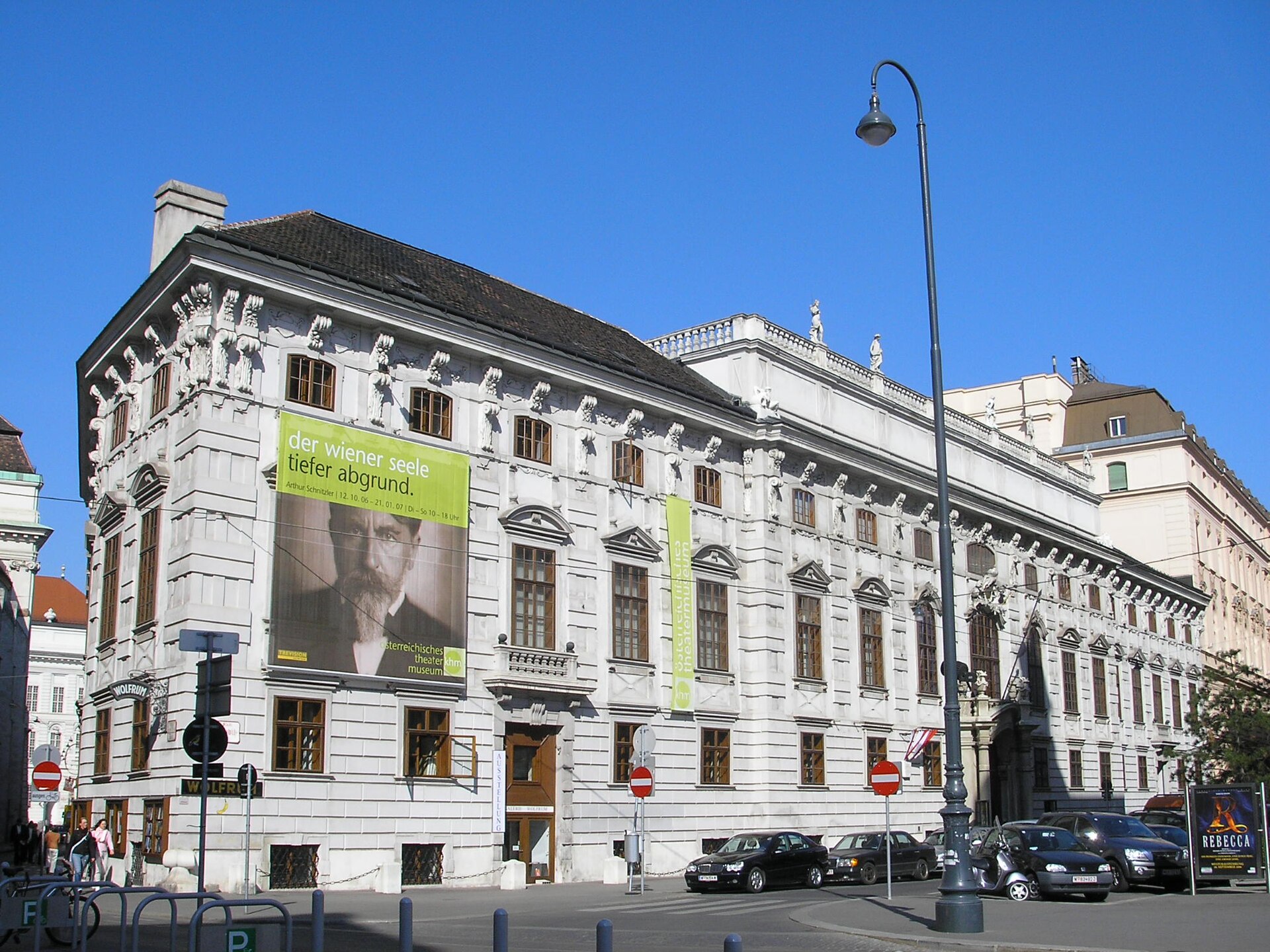
The Fourth exists because of a house guest situation that went badly. In the autumn of 1806 Beethoven was staying at Prince Lichnowsky’s estate in Upper Silesia. The two of them fell out — the argument involved Lichnowsky wanting Beethoven to play for French officers — and Count Franz von Oppersdorff, who was present, physically stepped between them. Beethoven then moved on to Oppersdorff’s own estate at Oberglogau.
Oppersdorff kept a private orchestra, and he put it to work: they played Beethoven’s Second Symphony for the composer, and Beethoven liked what he heard. A commission followed. Beethoven completed the new symphony in October 1806, and Oppersdorff’s 500 guilders bought him six months of exclusive private use of it; publication and the formal dedication to Oppersdorff came two years later.
So far this is ordinary aristocratic patronage. Then it gets awkward. In February 1807 Oppersdorff paid a further 500 florins toward the Fourth. In June 1807 he commissioned a second symphony — the Fifth — for another 500 guilders, and advanced Beethoven 200 of it early. Beethoven finished the Fifth and brought it to Oppersdorff in November 1808 to collect the balance. The dedication went to Count Razumovsky and Prince Lobkowitz.
Program notes flatten all of this into four words: dedicated to Count Oppersdorff — the name the orchestral parts have carried since they were published in March 1809. The dedication is the smaller half of the story, and no further Oppersdorff commissions are documented after the Fifth. Whether Beethoven treated the count badly or was juggling three patrons in a system that encouraged exactly that is a judgment, not a documented motive — the record shows payments and dedications, not what he was thinking.
One more twist worth having in your head when the piece starts. The first performance came in March 1807 at a private concert in Prince Lobkowitz’s Vienna palace — not on Oppersdorff’s estate, and not with the orchestra that had been paid for exclusivity. The first public performance waited until April 1808, at the Burgtheater in Vienna.
What to listen for: thirty-eight bars that won’t tell you the key
The symphony is in B♭ major. The slow introduction to the first movement is not. It runs thirty-eight bars in the parallel minor before the Allegro vivace arrives, and those bars are the most interesting real estate in the piece.
Name the mechanism and it stops being vague atmosphere. Three things are happening at once. The harmony never cadences. Beethoven keeps sliding to chords that could resolve two or three different ways and then declining to resolve any of them, so your ear can’t lock a home key. The texture is deliberately thin. Long held notes in the winds over a bare descending figure in the strings, mostly pianissimo — there’s almost nothing to hold on to rhythmically either, which removes the second cue you’d normally use to orient yourself. The register is low and spread wide. Basses at the bottom, sustained winds far above, with the middle of the orchestra largely empty.
Take away key, pulse and middle register and you have removed everything a listener uses to know where they are. That’s not mood-setting; that’s an engineered blackout, and it’s why the arrival of the Allegro vivace lands the way it does — the orchestra doesn’t brighten so much as switch the lights on.
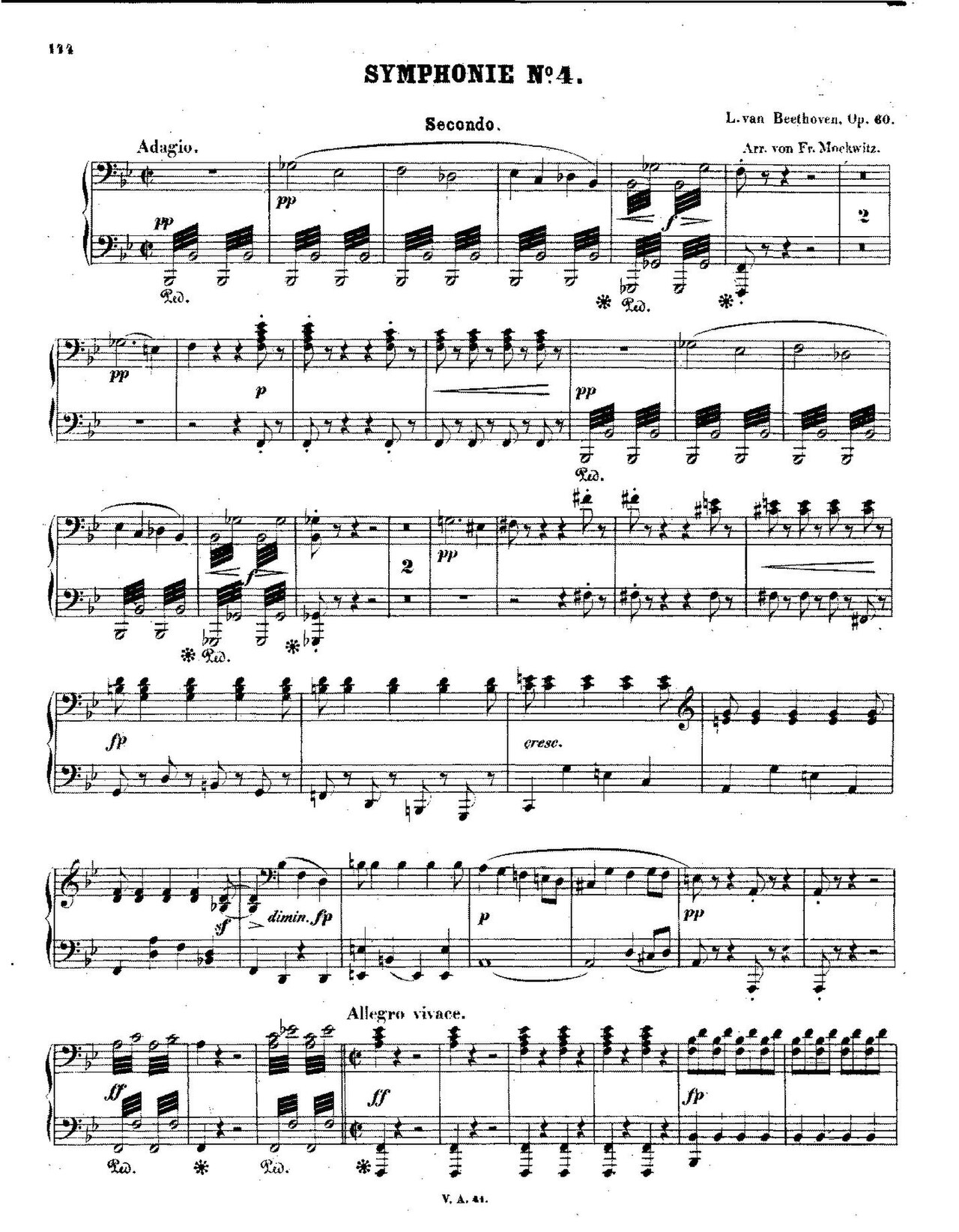
This is also the single passage that separates conductors. Some leave the introduction genuinely uncomfortable — slow, quiet, unresolved, borderline too long — and then hit the Allegro like a door being kicked. Others smooth it into something velvety and pre-announce the arrival with a crescendo, which is prettier and costs you the whole effect. Same notes, two completely different pieces. When you compare recordings, compare this first and everything else second.
Carlos Kleiber and the Bavarian State Orchestra, live — my top pick below. Start at the opening and don’t skip ahead.
The four movements, and what each one is doing
The orchestra is small by Beethoven’s standards: one flute, two oboes, two clarinets, two bassoons, two horns, two trumpets, timpani and strings. No third horn, no trombones, no piccolo. Everything you hear is being done with the forces of a late Haydn symphony, which matters — the transparency is a choice, not a limitation, and it’s why individual wind lines stick out the way they do.
I. Adagio — Allegro vivace
Past the introduction, the first theme is quick, light on its feet, and built out of short rising figures that pass around the strings rather than being announced by anybody in particular. It’s a theme made of momentum instead of melody, which is why it’s hard to hum and easy to get swept along by.
The moment to wait for is in the development, where the music quietly loses its footing again and drifts back toward the mood of the introduction — held notes, timpani ticking underneath, the key going soft-focus. Then the recapitulation breaks in. Beethoven built the same darkness-to-daylight event twice in one movement, once at the start and once in the middle, and the second time is better because you now know what it costs to get out.
II. Adagio
The slow movement is a long violin melody laid over an accompaniment figure that never stops ticking. That figure is the whole trick: a dotted rhythm that runs underneath almost continuously, strict as a metronome, while the tune above it stretches and leans wherever it likes. The freedom on top is only audible because the pulse below refuses to bend.
Listen for what happens at the very end, when the timpani take that same dotted figure alone. A rhythm you’ve been hearing as accompaniment for nine minutes suddenly turns out to have been the subject all along. Berlioz was an outspoken admirer of this movement, and it’s the stretch of the Fourth that divides audiences most sharply — the people who find it dull are, I think, listening to the tune and not the ticking.
III. Allegro vivace — Trio: Un poco meno allegro
Labelled a minuet in some editions, but nobody could dance to it. The bar-groups keep shifting so the downbeat lands where you don’t expect it, and the tempo is a scherzo tempo. What’s structurally sneaky is that Beethoven runs the minuet–trio alternation an extra time — scherzo, trio, scherzo, trio, scherzo — so a form you thought you’d finished comes back for one more round. He does it without any signal that he’s doing it.
The Trio is the wind section’s turn: oboes and clarinets carrying a broad tune over sustained horns, with the strings reduced to interjections. It’s the only place the piece lets you breathe out.
IV. Allegro ma non troppo
A finale in continuous sixteenth notes — an engine that starts in the first bar and runs to the last. The joke Beethoven saves for the end is a rhythmic one: near the close he pulls the tempo apart, the sixteenth notes come out in slow motion for a few bars as if the machine were losing power, and then the full speed snaps back for the final chords. It’s the only genuinely funny moment in the symphony and it works every time.
Whole thing runs somewhere between thirty and thirty-five minutes depending on repeats and tempo. That compactness is a feature, not an apology.
The eight bars that terrify bassoonists
From a seat in the hall, the finale is the lightest thing in the symphony. From the first bassoon’s chair it contains one of the standard nightmares of the orchestral repertoire. The passage at measures 184 to 190 hands the first bassoon the movement’s racing sixteenth-note theme with almost nothing else playing, and it sits on audition excerpt lists for the instrument alongside three other passages from the same symphony.
Two things make it brutal rather than merely fast. The bassoon’s key mechanism and reed make rapid running passages physically expensive in a way that a flute or a clarinet line at the same speed simply isn’t. And the entry is unannounced — no ritardando, no handoff, no spotlight. The texture thins and the solo is already underway, so there is nowhere to hide and no moment to gather yourself.
The finale bassoon solo, isolated. Once you’ve heard it on its own you’ll never miss it in the symphony again.
Practical tip: play the excerpt above once, then go back to a full performance and wait for it. The audience hears a bouncy little tune. You’ll hear a tightrope.
Schumann’s Greek maiden, and what the line actually claims
Every program note about this symphony quotes Robert Schumann calling it “a slender Greek maiden between two Norse giants” — the giants being the Eroica on one side and the Fifth on the other. It’s usually served up as a polite insult, evidence that even Schumann thought the Fourth was the runt.
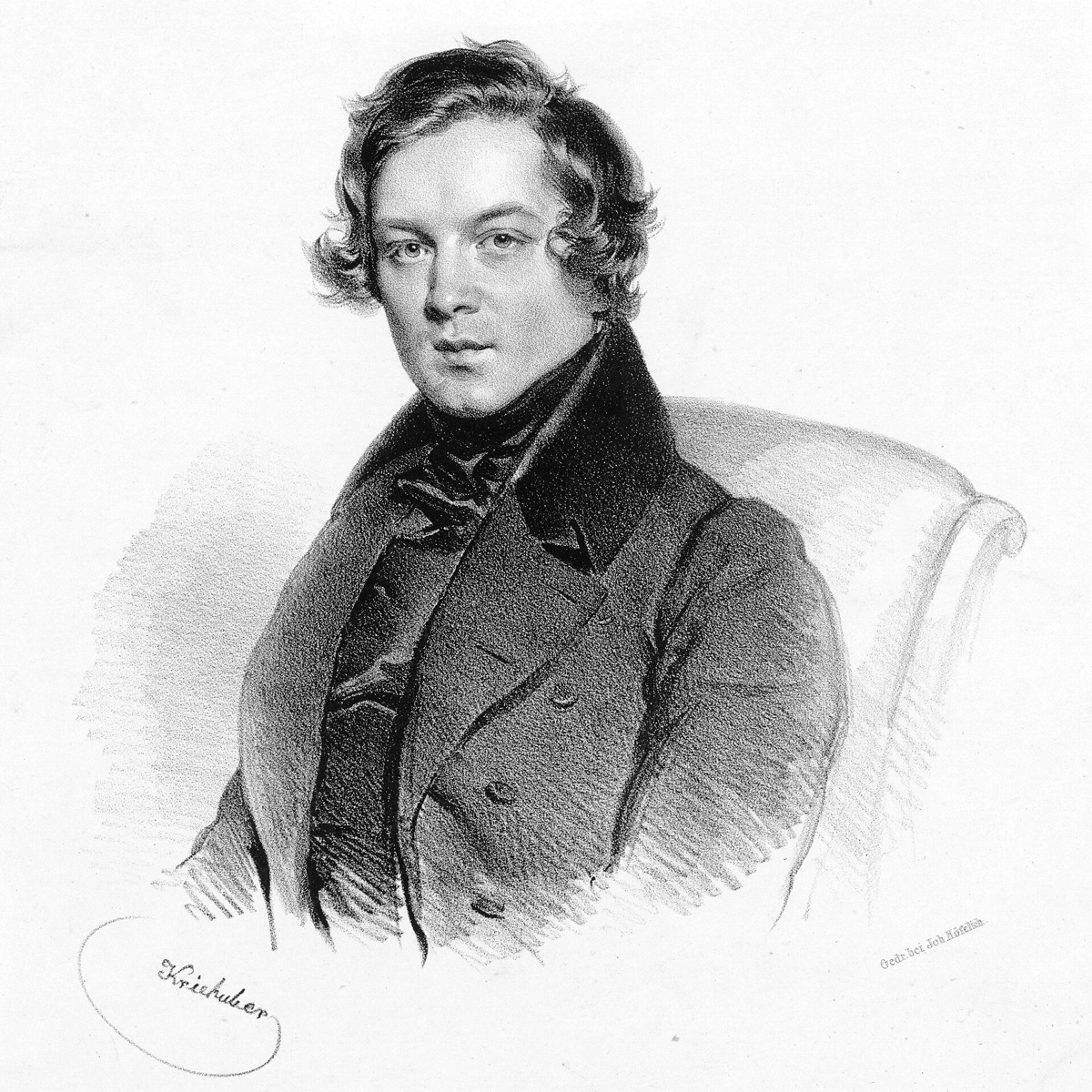
Read the image again, though. A slender Greek maiden is not a lesser thing than a Norse giant; she’s a different order of object entirely, and the comparison is doing scale, not quality. Whether Schumann meant it as praise, as apology, or as neither is a question about a nineteenth-century critic’s tone that the sentence alone can’t settle — one common argument is that later commentary flattened a remark about proportion into a verdict about worth.
What I’d say instead: the Fourth is the symphony where Beethoven proves that lightness is a technique and not a shortfall. If you want the version of him that grabs you by the collar, we’ve written about the Eroica and the myths built around it and about what Beethoven actually said about the Fifth. The Fourth is what he sounded like when he wasn’t trying to make history.
Four recordings, and the one to buy
Carlos Kleiber · Bavarian State Orchestra · live · Orfeo, C100841B
My top pick, and it isn’t close. Kleiber does the one thing most conductors won’t: he lets the introduction stay genuinely unpleasant — quiet, slack, going nowhere — and then attacks the Allegro without any preparatory swell, so the change of state is instant rather than gradual. The finale is taken fast enough to be a real risk and the Bavarian winds take it clean. Orfeo issued it with the applause left on the end, and the audience noise is part of the deal; if you want antiseptic studio sound, this isn’t it. Everyone else on this list is playing for second.
Herbert von Karajan · Berlin Philharmonic · Deutsche Grammophon, released 1963
The Fourth from the Karajan cycle of studio recordings made in 1961 and 1962 by the Berlin Philharmonic for Deutsche Grammophon, first released in 1963. This is the opposite aesthetic: everything blended, string tone thick and continuous, the introduction shaped into something beautiful rather than left as a problem. I think that costs the movement its shock — but the slow movement gains from it, because Karajan’s Berlin strings sustain that long melody better than any period-influenced band can. Buy it for the Adagio, not for bar 39.
Nikolaus Harnoncourt · Chamber Orchestra of Europe · Teldec, 1991
Teldec Classics released this in 1991, and it uses modern instruments played on period principles: short bows, hard timpani sticks, winds that cut instead of blending. If the transparency argument in the movements section interested you, this is the recording that proves it — you can hear inner parts here that are simply inaudible in Karajan. The trade-off is a certain hardness in the loud tuttis, and a Trio that’s brisker than some will want. My pick for a second copy and for anyone who wants to actually follow the counterpoint.
Riccardo Chailly · Gewandhausorchester Leipzig · Decca, 2011
Decca released Chailly’s complete Beethoven symphonies with the Gewandhausorchester Leipzig on 7 November 2011. Fast, bright, superbly engineered, and the easiest of the four to listen to on decent headphones — this is my streaming pick when you just want the piece to sound great. What it doesn’t do is make the introduction feel dangerous; Chailly is moving too briskly to let the emptiness sit. Best modern sound here, least mystery.
The verdict. Kleiber first, and if you only ever own one Fourth make it that one. Chailly if you want the best sound and no fuss. Harnoncourt if you’ve heard the piece a few times and want to hear inside it. Karajan if the Adagio is the movement you care about. All four are on the major streaming services.
If the Fourth lands for you, the natural next step is the symphony Beethoven himself preferred to its more famous neighbour — the Eighth — or our wider list of symphonies worth starting with.