Beethoven Never Said “Fate” — Symphony No. 5, Three Myths Dismantled

The Four Notes Schindler Forged

Composer
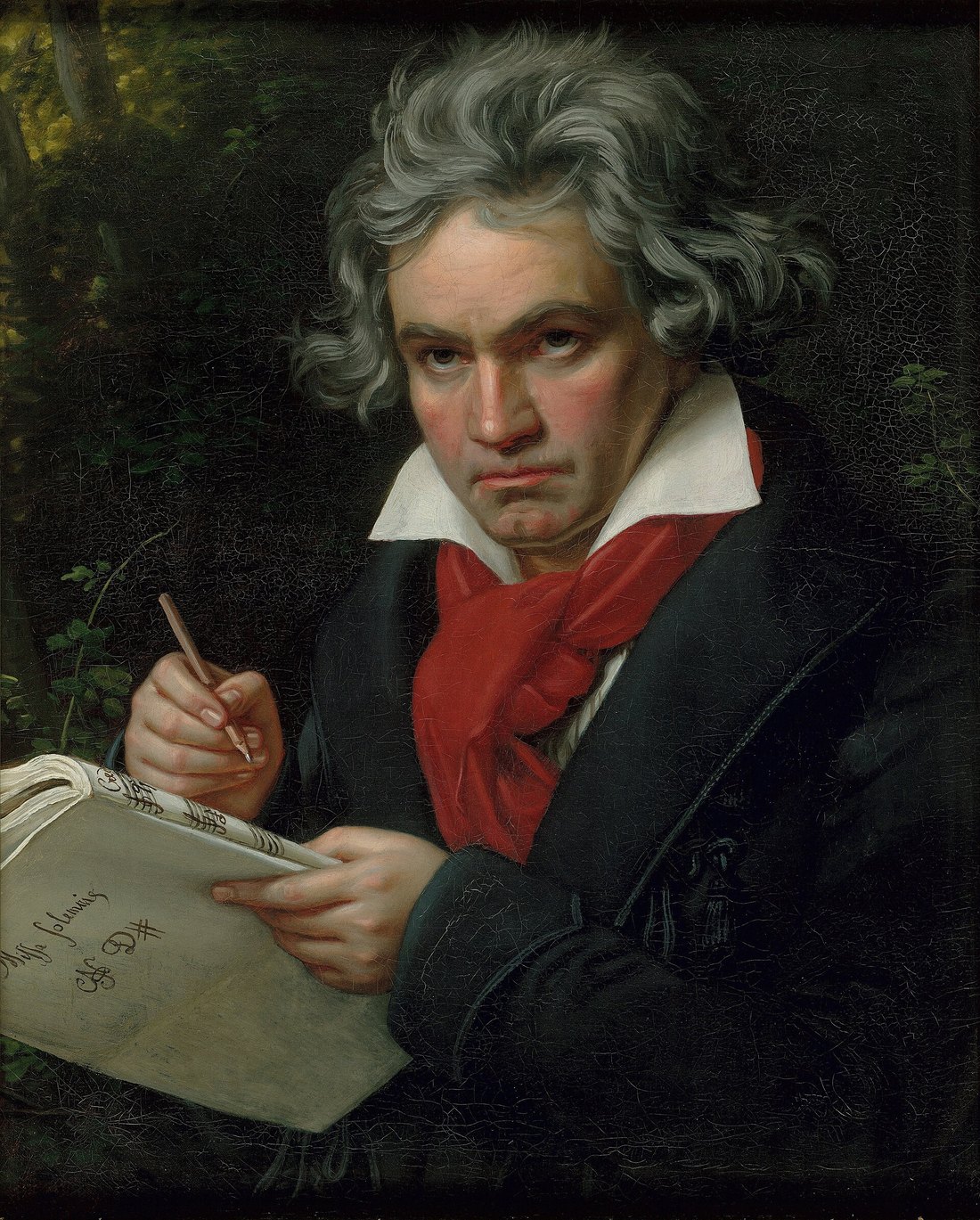
Ludwig van Beethoven
(1770–1827)
Work
Symphony No. 5 in C minor, Op. 67
Composition
1804–1808 (intensive completion 1807–1808)
Movements
Four movements

I. Allegro con brio — C minor
II. Andante con moto — A♭ major
III. Allegro — C minor (attacca)
IV. Allegro — C major

I. fast and vigorous
II. moving, flowing
III. fast (leading without pause into IV)
IV. fast
Orchestration
Piccolo · 2 Flutes · 2 Oboes · 2 Clarinets · 2 Bassoons · Contrabassoon · 2 Horns · 2 Trumpets · 3 Trombones · Timpani · Strings
Premiere
December 22, 1808, Theater an der Wien, Vienna
Conductor: Ludwig van Beethoven
Dedication
Prince Franz Joseph von Lobkowitz and Count Andreas Razumovsky
Duration
approx. 32–35 minutes

“Thus fate knocks at the door.” Beethoven never said that. Not once, not in a letter, not in a journal, not to a drinking companion at a Viennese tavern. The line was smuggled into history by a man named Anton Schindler, who spent the years after Beethoven’s death forging entries into the composer’s conversation books. In 1977, the Viennese scholar Peter Stadlen walked into the British journal Musical Times with evidence that roughly 150 entries across those notebooks had been fabricated posthumously, in Schindler’s own handwriting.

So the sentence that two centuries of program notes have quoted as Beethoven’s metaphysical self-disclosure — the one that turned a four-note figure into a philosophical event — is fiction. A man who called himself Beethoven’s secretary edited it into a notebook and signed the composer’s voice to the draft.

That isn’t the only lie the biographies have been selling. The Fifth Symphony carries at least three myths on its back: ① that Beethoven ever uttered the “fate knocks” line, ② that the 1808 premiere was a triumph, and ③ that “darkness to light” is the true essence of the piece. This article dismantles all three. Then, standing in the rubble, we ask the only question worth asking: why has this music survived for two hundred years anyway?

Myth One — The “Fate” Line Schindler Forged

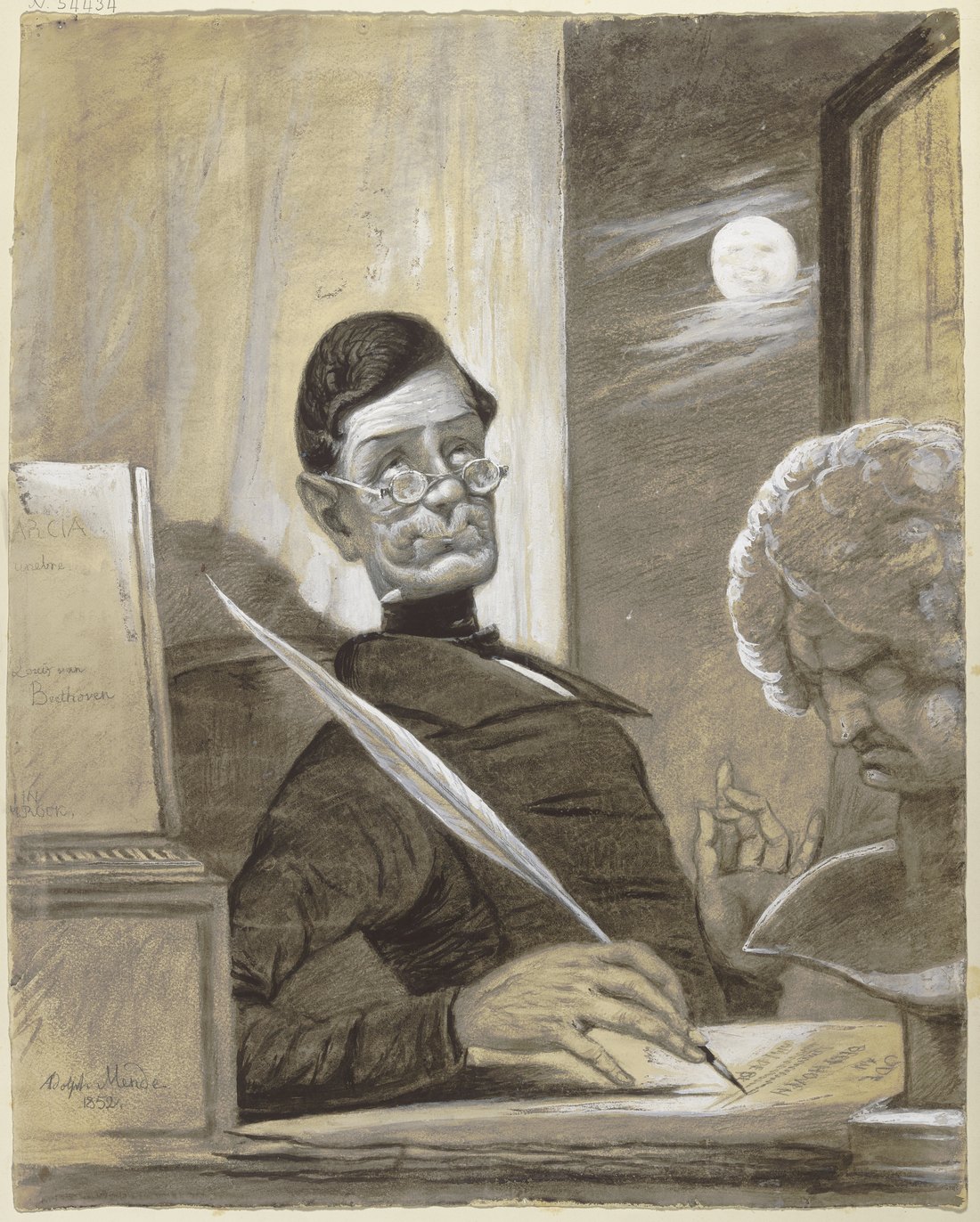
Anton Schindler. While Beethoven was alive, he called himself the composer’s closest secretary. After Beethoven died, he wrote the first official biography. Much of the Beethoven we think we know — the grumpy recluse, the unkempt genius wrestling with cosmic forces — leaks out of Schindler’s prose. The problem is that Schindler, in the formal consensus of modern musicology, is a documented forger.

In 1977, the Viennese musicologist Peter Stadlen published a paper in The Musical Times with a title that pulled no punches: “Schindler’s Beethoven Forgeries.” The content pulled fewer. Stadlen laid out handwriting analysis showing that something on the order of 150 entries in the conversation books (Konversationshefte) had been inserted after Beethoven’s death, by Schindler, in Schindler’s own hand. Theodore Albrecht, Barry Cooper, and most of the rest of serious Beethoven scholarship have since built on that finding and confirmed it. The forgery is not a fringe theory. It is the settled position.

“So pocht das Schicksal an die Pforte” — “thus fate knocks at the door.” That sentence sits squarely in the forged pile. Schindler wrote it into his own biography and attributed it to Beethoven’s living voice. No letter, no autograph score, no document in Beethoven’s own handwriting contains the line. Zero corroboration. It is the most famous musical quotation in Western culture, and Beethoven had nothing to do with it.

The interesting question isn’t whether Schindler forged the line. That’s settled. The interesting question is how the forgery survived for two hundred years. The answer is boringly human: nineteenth-century Romanticism wanted exactly this story. A deafened composer in single combat with destiny, gesturing at the cosmos — Schumann, Wagner, and Liszt amplified that frame until the entire critical tradition was echoing Schindler back to itself. Then the twentieth-century recording industry printed “Fate” on LP sleeves and the brand locked in. A secretary’s lie became a two-century franchise. The market needed the myth, so the myth stayed alive, and the forgery is still quoted on concert-program covers today.

Myth Two — December 22, 1808: Classical Music’s Worst Night

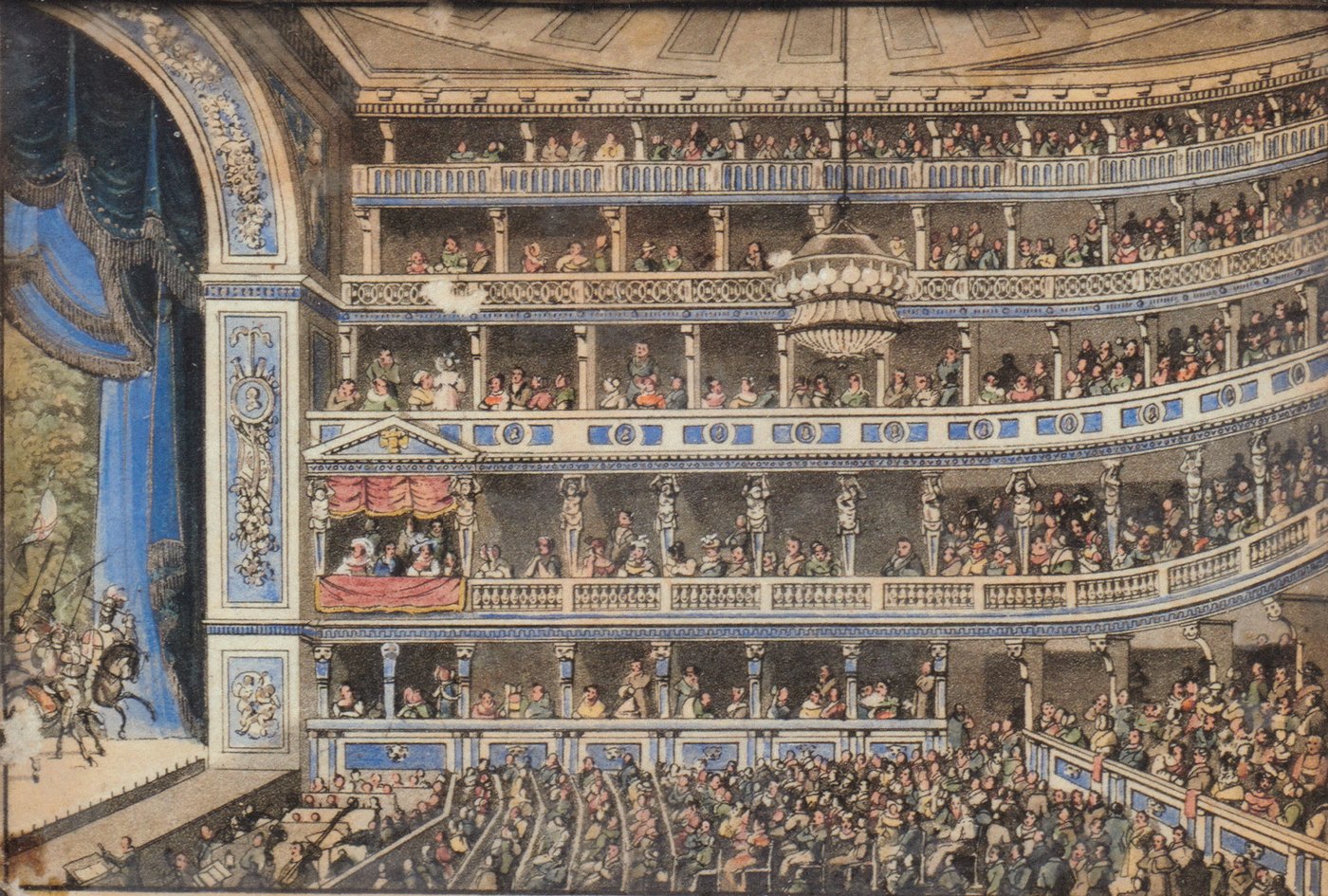
December 22, 1808, Theater an der Wien. A benefit concert that history books politely call “the Beethoven evening.” Here is the program. Read it slowly, because the sheer length of it is doing some of the narrative work:

  • Symphony No. 6, “Pastoral” — premiere
  • Concert aria “Ah! perfido”
  • Gloria from Mass in C
  • Piano Concerto No. 4 — premiere (Beethoven at the keyboard)
  • Symphony No. 5 — premiere
  • Sanctus from Mass in C
  • Improvised piano solo
  • Choral Fantasy — premiere

Total running time: over four hours. In an unheated theater. Vienna, late December. The composer Johann Friedrich Reichardt, who was in the audience that night, wrote in his Vertraute Briefe aus Wien (1810) that he was “too cold to enjoy the music.” Reichardt, for the record, was himself a professional composer. That is not a bored tourist’s complaint. That is the reaction of a fellow composer, sitting through four hours of consecutive Beethoven premieres in a freezing hall, and concluding that the temperature had rendered the program unmusical.

The disaster started at rehearsal. Beethoven and the orchestra had a falling-out. The players refused to follow his beat. The compromise they struck is the kind of thing you’d dismiss as apocryphal if the sources weren’t this solid: Ignaz von Seyfried, the house Kapellmeister, stood in a side room and actually conducted the performance while Beethoven stood in front of the orchestra beating time at them. From the audience it looked as though Beethoven was conducting. The real conductor was offstage, in another room, invisibly keeping the ship afloat. The scene comes down to us chiefly through Seyfried’s own memoirs and has been repeatedly cross-referenced in Thayer-Forbes.

And Beethoven’s hearing, by this point, was spectacularly gone. By late 1808 he had severe hearing loss; the high register had essentially vanished from his auditory world. Carl Czerny, who was a teenager in the hall that night and who would later become Beethoven’s student, watched the composer miss triplets — three-note subdivisions of a beat — while playing the Fourth Piano Concerto as soloist. Czerny wrote it down in his memoirs. Yes, that Czerny: the one whose piano exercises have tortured every pianist alive since about 1830. He saw the master of the instrument lose his bearings in a piece the master himself had written, in front of a paying Viennese audience.

Then, for the final number of the program — the premiere of the Choral Fantasy — the orchestra collapsed mid-performance. Someone lost the beat, someone turned two pages at once, the surviving sources don’t specify which. What they do specify is that Beethoven stopped the performance and restarted the piece from the beginning. The last number of a four-hour program. From bar one. Czerny is again the primary witness. One imagines the audience, coats still on, breath visible in the air, watching a deaf composer march his mutinous orchestra back to the top of the score and try again.

The evening was a financial failure. The concert was meant to raise living expenses; the take fell well short. But the failure triggered something unexpected. In 1809, King Jérôme Bonaparte of Westphalia offered Beethoven a Kapellmeister post, and to keep him in Vienna three aristocrats — Prince Lobkowitz, Prince Kinsky, and Archduke Rudolph — signed a lifetime annuity of 4,000 florins a year. The worst premiere night in recorded concert history became, accidentally, the catalyst for the biggest patronage contract of Beethoven’s career. It’s the kind of reversal you couldn’t script. An embarrassment in December yielded a financial safety net the following summer, and the Fifth Symphony stayed in Vienna because Jerome’s offer had threatened to take its composer somewhere else.

Myth Three — The Money and the Dedication Swap

There is a money problem sitting behind the Fifth Symphony that English-language biographies acknowledge and most concert-program annotations do not. Specifically, there is the matter of what Beethoven did to Count Franz von Oppersdorff.

In 1806, Count Oppersdorff — a landowner based in Olmütz — commissioned a symphony from Beethoven. Cash up front. Beethoven handed over Symphony No. 4. Then, for the next commission slot, Beethoven promised him the Fifth. So far, so transactional — a patron, a deposit, a work, and an understanding about what would come next.

Here’s the twist. In 1808, just before publication, Beethoven signed a separate deal with Breitkopf & Härtel in Leipzig and sold them the first-edition rights to the Fifth. The dedication — promised to Oppersdorff — was quietly relocated to Prince Lobkowitz and Count Razumovsky. Lobkowitz was Beethoven’s biggest patron. Razumovsky was the Russian ambassador to Vienna who had been buying string quartets from Beethoven on steady order. The dedication, in other words, followed the money and the institutional power. Oppersdorff was provincial gentry; Lobkowitz and Razumovsky were imperial-scale influence. Beethoven made the math.

Oppersdorff got part of his advance back. The episode is on page 233 of Lewis Lockwood’s Beethoven: The Music and the Life (2003) and on page 173 of Barry Cooper’s Beethoven (2000). It is almost entirely absent from popular writing about the Fifth. The reason, I suspect, is aesthetic: it doesn’t flatter the saint-composer image. Textbook treatments tend to drop details that complicate the halo. “The genius struggling nobly against fate” and “the professional maneuvering a dedication to chase a bigger paycheck” are two different stories, and the first one sells better program notes.

Early reception, for that matter, was not kind either. The January 1809 issue of the Allgemeine musikalische Zeitung called the Fifth “rough, wild, and hard to comprehend.” The work we have been taught to regard as an instant unalloyed masterpiece was, at the moment of its arrival, received as the opposite. The critical reversal took between one and two decades. The Fifth was not born canonical. It was promoted into the canon, slowly, by subsequent generations who found in it what they needed to find. Nothing about the music changed. The listeners changed.

Taking the Symphony Apart — A Revolution in Four Notes

With the three myths moved aside, let’s actually look at the piece. Not through borrowed adjectives but through what the score and the orchestration are doing — what was, in its own moment, new.

I. Allegro con brio — Four Notes Were Enough

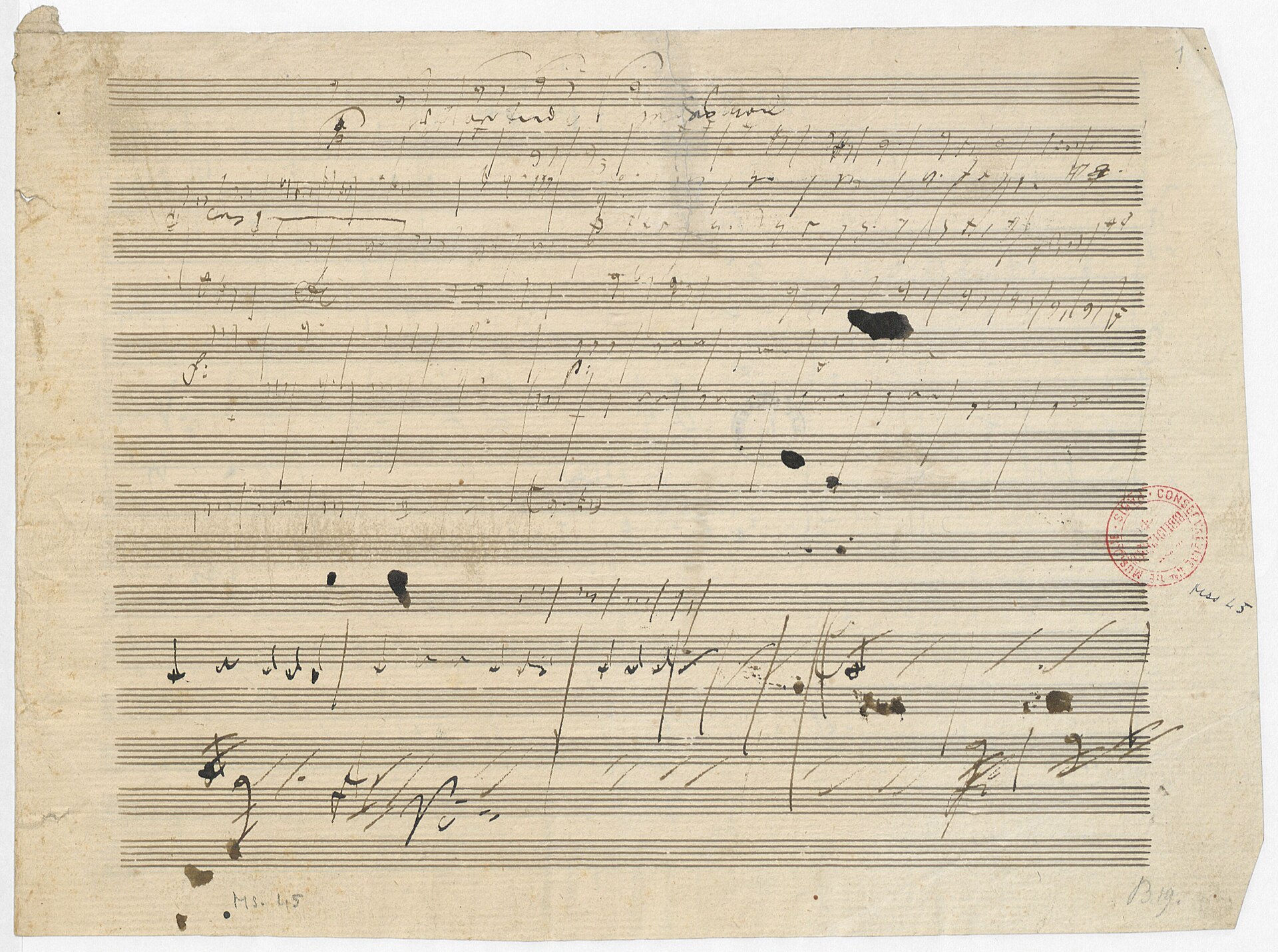
The first movement is four notes. Short-short-short-long. That is the whole germ. Symphonic first movements traditionally build on two long melodic themes — a first subject and a second subject — and develop them through a structure called sonata form. A first movement that opens with a four-note rhythmic cell instead of a melody was not, in 1808, a common thing. Before this piece, essentially unheard of. After it, still rare. This isn’t a theme. This is a spore. A unit so small it shouldn’t be able to carry a movement, and yet Beethoven builds ten minutes of structure out of it and leaves no room in the listener’s head for anything else.

The Fifth wasn’t Beethoven’s first flirtation with the rhythm, either. Variants of short-short-short-long appear already in the Piano Sonata Op. 10 No. 1, in the String Quartet Op. 74 “Harp,” and in the development section of the “Appassionata” first movement. The sketchbooks show Beethoven returning to similar rhythmic patterns over years. By the time it crystallized in the Fifth, this cell had been gestating for most of a decade. The Fifth wasn’t inspiration. It was incubation finally hatching.

The tempo of the first movement has become a battleground in the twenty-first century. Beethoven left a metronome marking of ♩=108 in 1817. That is, to most listeners, uncomfortably fast — a hurtling, propulsive pace that feels like the music is trying to outrun its own weight. Period-instrument conductors — John Eliot Gardiner, Roger Norrington — take the marking at face value. Wilhelm Furtwängler, Herbert von Karajan, and Carlos Kleiber take it dramatically slower. Whether Beethoven actually wanted ♩=108, or whether his metronome was calibrated wrong, or whether he changed his mind about the tempo later, remains a genuinely unresolved scholarly question. The argument is still live.

II. Andante con moto — A Sigh Dressed Up as a March

The second movement is a sigh. It wears march clothes, but what’s happening underneath is closer to a slow-motion lament. Technically it is a set of variations in A♭ major — specifically a double-variation form, meaning Beethoven sets up two themes and varies them alternately. Cellos and violas introduce the first theme; the woodwinds layer on the second. The two keep trading turns as the movement brightens, then darkens, then brightens again, tracing a harmonic curve the surface decorum is too polite to name out loud.

The thing to notice here is what the brass are doing. When the clarinet takes over the theme, the trumpets answer with fanfare figures. Standard early-nineteenth-century practice treated trumpets as harmonic reinforcement — they held the key down, they didn’t carry melody. Beethoven ignores this and hands actual thematic material to the brass. The trombone entrance that blows the roof off the finale is being set up, quietly, here. The Andante is doing structural work the surface doesn’t advertise. If you listen carefully to how the brass are treated as the movement develops, the finale stops being a surprise and starts being an inevitability.

III. Allegro — A Scherzo That Refuses to Be Called One

The top of the score for the third movement does not say “Scherzo.” It just says “Allegro.” The form, however, is scherzo-and-trio, by every structural measure. Scholars read the missing label as deliberate. The word “scherzo” originally meant “joke,” and whatever this movement is, joke isn’t it. It’s too dark. It’s too menacing. Labeling it as a scherzo would have been a kind of genre lie, and Beethoven refused to tell that particular lie. He kept the form and pulled the name off the door.

Cellos and double basses open the movement like something crawling under a floorboard. Over them, the horns bark out a four-note figure — the rhythm from the first movement, now wearing a horror-film mask. The trio section offers a brief burst of light, mostly to make you forget that light was possible. When the main section returns, the dynamic marking collapses to ppp — the notation for “as soft as you can possibly play and still make a sound.” The whole movement is a slow-accumulating suspense that refuses to discharge. It just builds. And builds. It doesn’t end. It prepares.

III → IV attacca — Thirty-Eight Bars of Dark

Here they are: the most famous thirty-eight bars in the symphonic repertoire. The transition from the third movement into the fourth — played attacca, without pause. The timpani tap out the four-note rhythm at ppp. Above them, the first violins hold a long C, very quietly, very slowly. For roughly thirty-eight bars the tension just sits there, humming at the bottom of the dynamic range. Then, without warning, C major detonates, and the finale is already underway before your ear has finished processing the silence it came out of.

This transition became a structural inheritance. Brahms’s First Symphony (the finale’s introduction) and several transitional passages in Mahler — including key hinges in the “Resurrection” — are direct descendants of this moment. The idea of one movement’s darkness spilling, without a break, into the next movement’s blast of light was effectively invented here. Charles Rosen, in The Classical Style (1971), described these thirty-eight bars as the moment “the Classical style reached outside itself.” He was not being decorative. He was being accurate. You can draw a line from these bars to the entire late-nineteenth-century tradition of symphonic transformation, and the line stays straight.

IV. Allegro — The Day Trombones Entered the Symphony

At the first bar of the finale, trombones enter a symphony. Not a symphony — the symphony, as a genre. This is, more precisely, the first major-composer use of trombones in a symphonic context. Before 1808, trombones lived in two musical provinces: church music and opera. They were sacred instruments, or dramatic ones. Beethoven’s decision to drag them into symphonic territory wasn’t a coloristic flourish. It was a genre rule change. After the Fifth, the trombone was a symphonic instrument. Before it, it wasn’t. The transition happens inside eight bars.

The piccolo and contrabassoon join at the same moment, which means the orchestra’s range is extending both up and down simultaneously. The scale of the C-major explosion doesn’t come from the harmony alone. It comes from the raw physical fact that the orchestra, as an instrument, just got bigger. Berlioz, in his Critical Study of Beethoven’s Symphonies (1837–1844), called these first eight bars “a turning point in music history.” He wasn’t being florid. Berlioz’s own trombone writing in the Symphonie fantastique is the direct descendant of what happens here. The whole sonic imagination of the French Romantic orchestra traces back to eight bars of Beethoven pulling the walls of the symphony wider and then never putting them back.

Who Invented “Darkness to Light”?

“Per aspera ad astra” — through hardship to the stars. The Latin tag is glued to virtually every program note about the Fifth, used to explain the C-minor-to-C-major arc. The problem is straightforward and not discussed often enough: Beethoven never applied this phrase to the Fifth. Not in writing, not on any extant manuscript, not in any verified conversation. Zero.

The most systematic challenge to the standard interpretation came from Carl Dahlhaus. In Beethoven: Approaches to His Music (1991), Dahlhaus argued that the reading of the Fifth as a “heroic victory over adversity” is a frame imposed by nineteenth-century German nationalism, which needed a national composer and found one ready-made in Beethoven. The programmatic language we use to describe the piece — struggle, destiny, triumph — is inherited commentary, not composer’s intention. Beethoven left no written program for the Fifth. No manifesto, no letter, no sketch-note that reads, “this is the story of the human soul in combat with fate.” We have been speaking for him for two centuries.

So where did the narrative actually come from? The first major source is E.T.A. Hoffmann’s review of the Fifth, published in July 1810 in the Allgemeine musikalische Zeitung. This is the text where Hoffmann wrote his famous line that music is “the key to a realm of the infinite” — a rhetorical move now regarded as the founding document of Romantic instrumental music criticism. Hoffmann wasn’t describing what Beethoven had written. He was imagining a Beethoven who suited his own metaphysical project, and writing that imagined Beethoven onto the page. Over the nineteenth century, Hoffmann’s fiction solidified into “the real Beethoven.” The man who wrote the fictional Kreisler onto the page also wrote the fictional Beethoven onto the page, and posterity has been quoting him ever since.

Then came the twentieth-century hack. In 1941, during the Second World War, the BBC began using the opening figure of the Fifth Symphony’s first movement as the opening of its broadcasts into occupied Europe. The logic was acoustic. The rhythm short-short-short-long, in Morse code, is the letter V (···—). Paired with the Belgian resistance slogan “V for Victory,” the BBC had effectively converted a German composer’s theme into an Allied weapon. They were hitting Germans with German music. From that moment, the Fifth Symphony became “the sound of humanity resisting tyranny” — a meaning Beethoven himself had never signed off on, pinned to a motif by a wartime propaganda campaign that needed a sonic logo and found one lying around in the orchestral canon. It was one of the most elegant ideological thefts of the twentieth century, and it held.

One more uncomfortable fact. If you had asked someone in 1870s Vienna which symphony stood at the top of the orchestral repertoire, Beethoven’s Fifth would not have been the automatic answer. William Weber’s audience-history study The Great Transformation of Musical Taste (2008) tracks concert programming across nineteenth-century Europe and shows the Fifth competing — not dominating — alongside works by Rossini and Mendelssohn. The Fifth’s throne was built in the twentieth century, by the recording industry. The phonograph era, the radio era, the film-music era all used and reused those four notes until, by sheer repetition, they became the most famous four notes in Western music. The canon wasn’t born. The canon was manufactured. Four bars of music, ninety years of audio infrastructure.

So Why Listen, After All That

By this point a reasonable question has formed: if every story we’ve been told about this piece is some combination of forgery, later imposition, and marketing, why has the music itself survived?

Here’s where I want to land. The power of this piece isn’t in the heroic narrative. It’s in the stubborn one. The sketchbook record shows Beethoven returning to short-short-short-long for years before the Fifth actually existed. The financial record shows him swapping a promised dedication for a better publishing deal to keep his household running. The eyewitness record shows him standing on a conducting podium while effectively deaf, while the players mutinied, while the actual conductor was hidden in a side room, and not walking away. Every one of those facts is embedded in the score you hear.

The four-note motif is, literally, a rhythm that will not let go. It doesn’t modulate into something prettier. It doesn’t apologize. It comes back, and comes back, and comes back, and grinds itself through the development until it exits on the other side transformed. This isn’t the sound of a hero. It’s the sound of a person who refuses to stop. Beethoven was that person in his own life, and that refusal is stitched into the rhythm — which is why, two hundred years later, without any program note’s help, those four notes still grab the first-time listener by the collar and don’t let go. You can strip the piece of every myth surrounding it and the effect survives. That is a fairly reliable sign that the music is doing the work itself.

What remains, once the textbook myths are cleared away, is simple. Four notes. And one man who didn’t let go of them.

Recommended Recordings — Three, With Opinions

Carlos Kleiber / Vienna Philharmonic / 1974 (Deutsche Grammophon)

This recording is perfect. Almost too perfect. The tempos are balanced, the phrasing is clean, the articulation is diamond-sharp. Every single element reads as “this is how the Fifth is supposed to go,” as if a textbook had been pressed onto vinyl. For a first encounter with the piece, I recommend it without reservation. It’s the default. Start here and you’ll internalize what the symphony’s architecture looks like. The catch is that the same perfection that makes it a great first listen can feel airless on the fiftieth. The Fifth is a rough, dangerous piece, and Kleiber’s refinement occasionally smooths the edges into a well-upholstered salon performance. You want to hear those edges eventually, and for that you need the next two recordings.

Kleiber / Vienna Philharmonic

🎬 Kleiber / Vienna Philharmonic — DG · 전설의 1975 녹음

Wilhelm Furtwängler / Berlin Philharmonic / May 1947

This is Furtwängler’s first post-denazification return to the Berlin Philharmonic. The sound quality is brutal. Mono recording, obvious distortion, audience audible throughout, and somewhere in the background the twentieth century is still finishing burning down. Put up with it. What comes through is a reading of the Fifth that tells you what the piece is supposed to do to a room. A baton that moves like a knife. Tension wound so tight you can feel the wood creaking. A finale that verges on structural demolition. The context of post-war Berlin is written into every tempo decision, into every rallentando, into the shape of each accent. This is the recording where you sacrifice audio fidelity to salvage the drama. You won’t regret it. Listeners who insist on clean sound will hate it. Everyone else will understand immediately why Furtwängler’s name still means what it means.

Furtwängler / Berlin Philharmonic

🎬 Furtwängler / Berlin Philharmonic — 종전 후 첫 복귀 콘서트 (5/25)

John Eliot Gardiner / Orchestre Révolutionnaire et Romantique / 1994 (Archiv)

Gardiner treats the 1817 metronome marking ♩=108 as gospel. The first movement flies past at a pace that makes Furtwängler’s reading feel like half-speed. The orchestra uses period instruments — gut strings, valveless horns, narrower-bore trombones, reconstructed piccolos — which means the brass and winds hit the ear with completely different textures than you’re used to from a modern Berlin or Vienna recording. The sound is smaller, sharper, more pointed, and closer to the sonic environment in which Beethoven himself would have imagined the piece. You trade Furtwängler’s drama for something else: a real sense of what the tempo Beethoven actually notated would feel like. Recommended specifically for listeners who want to interrogate the interpretive consensus rather than accept it. Taken together with the Kleiber and the Furtwängler, these three recordings give you the full spectrum of what the Fifth has been made to mean since its composer went deaf and disappeared into the score.

Gardiner / Orchestre Révolutionnaire

🎬 Gardiner / Orchestre Révolutionnaire — 시대악기(HIP) 해석

Listening With the Score

Three places in the score reward close attention. The first five bars of the first movement, where the four-note motif enters in its purest form. The thirty-eight-bar transition from the third into the fourth movement, where the timpani tap at ppp beneath a sustained string pedal. And the first eight bars of the finale, the moment trombones, piccolo, and contrabassoon walk into symphonic history. Track those three landmarks while listening and the Fifth stops being a famous tune in the ear and becomes, in your head, an actual piece of structural engineering — a set of decisions someone made about orchestral architecture that the next two centuries of composers would spend their time inheriting, arguing with, or trying to escape.

Frequently Asked Questions

Did Beethoven really never say “fate knocks at the door”?

Correct — he did not. The anecdote was inserted into the historical record by Anton Schindler, who forged entries into Beethoven’s conversation books after the composer’s death. In 1977, the Viennese scholar Peter Stadlen published the landmark paper “Schindler’s Beethoven Forgeries” in The Musical Times, laying out the forensic evidence. Theodore Albrecht and Barry Cooper have since confirmed and extended that finding. The phrase does not appear in any surviving letter, autograph score, or verified manuscript in Beethoven’s own hand. The attribution is pure forgery, and the scholarly community has been clear about that for nearly half a century.

How did Beethoven compose the Fifth if he was going deaf?

Beethoven’s hearing had been deteriorating badly since at least 1802, the year he wrote the Heiligenstadt Testament. By 1807–1808, when he was finishing the Fifth, he had severe hearing loss, particularly in the upper register. He composed through a combination of interior auditory imagination — cultivated over decades of training and sketchbook work — and tactile methods such as pressing an ear against the piano case to feel vibrations through the wood. The Fifth is, in a very real sense, a piece completed inside his head. Remarkably, he still stepped onto the podium to conduct the premiere, though owing to a rehearsal conflict, the actual conducting was done by Ignaz von Seyfried from a side room while Beethoven beat time from the front of the orchestra.

Was the December 22, 1808 premiere really a failure?

Yes — both financially and artistically. Contemporary witnesses including Reichardt, Czerny, and Seyfried documented a program running over four hours, an unheated hall, a mutiny during rehearsal that forced Seyfried to conduct from a side room, and a mid-performance collapse of the Choral Fantasy that required Beethoven to restart the piece from the beginning. Critical reception was cold. The January 1809 Allgemeine musikalische Zeitung described the Fifth as “rough, wild, and hard to comprehend.” The narrative of an “instant masterpiece” was applied retroactively by later commentators who needed the story to come out differently than it actually had.

Why is a relatively short symphony this famous?

Length and fame track different causes. The Fifth’s fame rests on the fact that its opening four-note motif is among the most instantly memorable musical patterns ever composed. That baseline was then amplified by twentieth-century media: recording-industry repetition, film scoring, and critically the BBC’s use of the motif during the Second World War — since the rhythm short-short-short-long is also Morse code for V (···—), the letter that became the Allied “V for Victory” symbol. In the nineteenth century, the Fifth was not the dominant piece in orchestral programming; it competed with works by Rossini and Mendelssohn. Its current iconic status is a twentieth-century achievement, not an inherent property of the score.

Which recording should I listen to first?

Start with Carlos Kleiber conducting the Vienna Philharmonic, 1974 (Deutsche Grammophon). The tempos, balance, and articulation sit closest to a reference interpretation and make the piece’s architecture easy to hear. Then, for contrast, listen to Furtwängler’s May 1947 Berlin Philharmonic recording for post-war drama and Gardiner’s period-instrument recording with the Orchestre Révolutionnaire et Romantique to hear the first movement at ♩=108. The tempo differences alone between those three recordings will tell you what the “Beethoven metronome” debate is actually arguing about, and will give you a working understanding of how different conductors translate identical notation into radically different pieces of music.

Why does the C-minor-to-C-major arc matter so much?

Historically, the Fifth fixed a template: a single work can complete an emotional journey through modal transformation. Minor-to-major motion existed before Beethoven, of course, but the Fifth made the structural case by using the thirty-eight-bar attacca transition from the end of the third movement into the first chord of the finale — effectively forging “darkness spilling into light” as a compositional device. Brahms’s First Symphony, Mahler’s “Resurrection,” and other large-scale symphonic hinges inherit that transition technique directly. A separate point: the narrative gloss of “per aspera ad astra” — through hardship to the stars — is a frame added by nineteenth-century German nationalism, not a program Beethoven himself wrote. The structural innovation is real. The moralizing narrative attached to it is a later edit.

Related Reading

Copyright notice · The Classic Note does not permit unauthorized reproduction, reposting, redistribution, or translation of its articles. Brief quotations are allowed only with clear attribution and a link to the original page. Please contact us for reuse or collaboration requests.