- Composer
- Frédéric Chopin (1810–1849)
- Work
- Nocturne in E-flat major, Op. 9 No. 2
- Key / Metre
- E-flat major, 12/8, marked Andante
- Forces
- Solo piano, single movement
- Composed
- c. 1830–1832 (published 1832; French and English editions 1833)
- Dedication
- Marie Pleyel
You have heard this one. Maybe in a chocolate advert, maybe under a film’s closing minutes, maybe as a ringtone you didn’t choose. If you ride the Taipei Metro, you have heard it as the arrival chime on the green Songshan–Xindian line, where an arranger gave it a soft jazz tint and turned a young exile’s salon piece into transit furniture. Chopin’s Nocturne in E-flat major, Op. 9 No. 2 is one of the most recognised pieces of music on the planet — and one of the least actually listened to.
That is a shame, because it repays attention more than almost anything its size. The piece runs about four and a half minutes. It is barely thirty-odd bars long. The main tune comes back four times, and here is the trick that holds the whole thing together: it sounds different every single time. Not by accident — by design. This guide is about what Chopin built into those bars, why the story behind them still matters, and which recordings are worth your time.
The exile who wrote it
Chopin left Warsaw in November 1830, only weeks before the November Uprising against Russian rule broke out. He was travelling west when the rebellion started; by the time it was crushed the following year, he had no country to go back to. He never returned to Poland. He settled in Paris in 1831, aged twenty-one, and stayed in France for the rest of his short life.
The Op. 9 nocturnes belong to exactly this moment — written around the turn of the 1830s, published in 1832 while Chopin was still a newcomer scrambling for a foothold in the Paris salons. Knowing that does not explain the music; Chopin left no note saying what it meant. But it changes how the quiet sits. This is not the sound of comfort. It is the sound of someone very far from home making something beautiful anyway.
A dedication with a scandal attached
Chopin dedicated the set to Marie Pleyel — born Marie Moke, wife of the piano maker Camille Pleyel, whose instruments Chopin loved for their light, singing action. She was a formidable pianist in her own right, and she came trailing one of the great romantic scandals of the age.
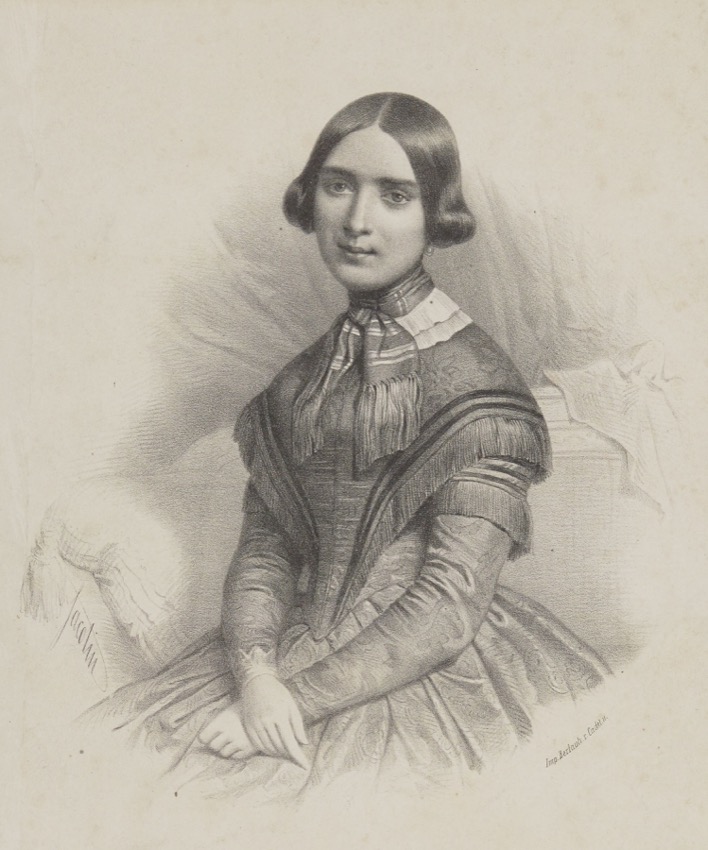
Before she was Madame Pleyel, Marie Moke had been engaged to Hector Berlioz. While he was away in Italy on his Prix de Rome, she broke it off and married Camille Pleyel instead, in 1831. Berlioz’s reaction has passed into legend: by his own telling he set off back to France meaning to shoot the whole party and then himself, and thought better of it somewhere along the road. It is worth clearing up a myth here, because it gets repeated constantly — the obsessive beloved behind the recurring idée fixe theme of Berlioz’s Symphonie fantastique was the Irish actress Harriet Smithson, not Marie Moke. Marie’s link to Berlioz is the broken engagement, not the symphony. Whether any of this coloured Chopin’s decision to dedicate Op. 9 to her, no one knows. He never said.
Field invented it. Chopin taught it to sing.
A detail that surprises most people: Chopin did not invent the nocturne. The Irish composer and pianist John Field (1782–1837) got there first, writing lyrical solo-piano pieces — a singing melody floating over a rippling left-hand accompaniment — and calling them nocturnes. Field was famous across Europe in Chopin’s lifetime, and by most accounts he was not especially charmed by his young admirer’s frail, hothouse style.
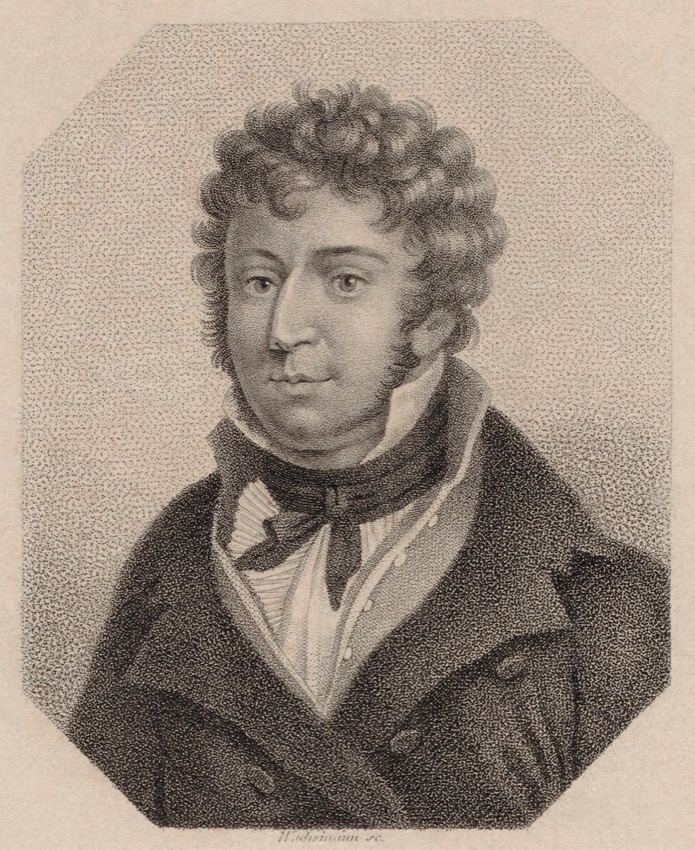
What Chopin added was opera. He adored the Italian bel canto composers, Bellini above all, and he wanted the piano’s right hand to behave like a great soprano — to lean on a note, delay a resolution, stretch a phrase and then catch up. That elastic push and pull has a name: rubato. Field made the nocturne peaceful. Chopin made it a voice.
What to listen for
The layout is simple to describe and inexhaustible to hear. It is a rondo — the main tune (call it A) alternates with a contrasting idea (B) in the pattern A–A–B–A–B–A, then a coda. The left hand keeps a steady, waltz-like 12/8 pulse the whole way through, almost like a metronome you stop noticing. Everything interesting happens above it.
The first time the melody appears, it is almost bare — a clean, unhurried line, soft and legato. The second time, ornaments start to creep in: a single note splits into two, then a little run, then a curling flourish. By the third and fourth returns the same tune is dressed in cascades of tiny notes, like a singer improvising ever more elaborate decorations on a familiar aria. It is the same person in a different outfit each time. That growing ornamentation is the piece’s engine — the reason you can hear it a hundred times and still catch something new.
Then, just before the end, Chopin writes one of the most honest instructions in the repertoire: senza tempo — without time. He hands the pianist a shower of fast notes and tells them to stop counting. Some players dispatch that passage in a couple of seconds; others stretch it toward ten. The notes are fixed; the time is not. It is the moment the composer steps back and lets the performer breathe.
If you are hearing it properly for the first time, track just three things. One: hold onto that steady left hand and notice how it never panics, no matter what the right hand does. Two: count the returns of the tune and watch the decoration thicken each time. Three: wait for the senza tempo suspension near the close, where the music seems to hold its breath. Do that, and the four minutes will feel much longer than four minutes.
Follow the score and watch the ornaments multiply on each return of the theme.
Where you have actually heard it
The Taipei Metro is only the strangest afterlife this tune has had. In Britain, a whole generation met it through a Galaxy chocolate television advert — the silk-and-firelight “Reading” campaign — and a re-recorded version was even released off the back of it. On screen it turns up constantly: it scores a quietly devastating beat in Mad Men (NPR’s classical desk wrote a whole piece on that cameo), and it drifts through The Blue Lagoon from 1980. It has surfaced in television dramas, video games and ringtone libraries too many times to list.
That ubiquity feeds itself — people recognise the tune, seek it out, and it spreads further. But recognition is not the reason it started spreading. The reason is that the melody is immediately, almost unfairly memorable, and it keeps rewarding you on the way back. Advertisers and music supervisors reach for it because it does something to a room in about eight seconds. That is Chopin’s craft, not luck.
Can you actually play it?
This is the other reason the piece never leaves circulation: half the piano students on earth want to play it. The notes look approachable, and up to a point they are — a committed intermediate player can learn to get through it. Exam boards tend to place it around the upper-intermediate to early-advanced level, though the exact grade depends on which board and which syllabus year you are looking at, so treat any single number you see online with suspicion.
The real difficulty is not in reading it — it is in voicing it. The left hand has to make wide, quiet leaps land softly and evenly while never dragging the pulse. The right hand has to make those thickening ornaments sound like spontaneous singing rather than a technical exercise, and the closing flourish has to feel free without falling apart. Playing the notes takes weeks. Making them sound like music takes years. That gap — easy to read, hard to voice — is exactly why it stays useful at every level, from a first recital to a concert stage.
Recordings worth your time
Because Chopin built so much freedom into this piece, no two pianists play it the same way — and that is not a bug, it is the point. Here is where I would start.
Arthur Rubinstein — RCA, 1965 (start here). Rubinstein’s stereo Nocturnes cycle, taped in Rome in 1965, is the reference for a reason. He tells the piece the way a good storyteller tells a familiar story: naturally, without ever pointing at his own phrasing. Nothing is exaggerated, nothing is cold. If you only hear one version, hear this one — it is the account most people who love this piece grew up with.
Arthur Rubinstein, 1965 — the reference reading.
Maria João Pires — Deutsche Grammophon, 1996 (the interior one). Pires plays it like she is listening to it herself — quieter than you expect, weighting the spaces between notes as much as the notes. The first time through you might wonder if it is too soft. Give it three minutes and the doubt evaporates; it reveals more on a second and third hearing than most recordings give you on the first. ▶ Listen on YouTube (live).
Maurizio Pollini — Deutsche Grammophon, 2005 (the precise one). Pollini’s account, from his complete Nocturnes set recorded in Munich in 2005, is all control and clarity — every ornament placed exactly, no sentimentality. Some listeners find it cool; others argue it is the most faithful to a composer who reportedly asked his own students to play with restraint rather than excess. If Rubinstein sounds like a story, Pollini sounds like the architecture underneath it. ▶ Listen on YouTube.
Valentina Lisitsa (the bold outlier). Lisitsa decorates more heavily and shapes the line more dramatically than the others — a reading some purists dislike. The counter-argument is historical: Chopin himself reportedly improvised fresh ornaments each time he played in the salon and wrote different embellishments into different students’ copies. By that logic Lisitsa is closer to the living practice than to any single frozen text. Hear it and decide for yourself.
Valentina Lisitsa — a more ornamented, freer reading.
My pick for a first listen is Rubinstein; my pick for a second, closer listen is Pires. If you want to understand why the piece divides pianists at all, put Pollini and Lisitsa side by side and hear how far the same thirty-odd bars can travel.
If this is your first step into Chopin’s piano writing, the natural next moves on this site are the stormier world of his Ballade No. 1 in G minor, our wider guide to Chopin’s piano works, and — if classical listening is still new to you — our beginner’s guide to getting started.
One last thing
Chopin never went home. When he died in Paris in 1849, at thirty-nine, his body stayed in France — but his heart, at his own request, was carried back to Warsaw, where it rests to this day inside a pillar of the Holy Cross Church. He wrote this nocturne as a homesick young man who did not yet know he would die in exile. The tune he made in those first Paris years is now a subway chime in Taiwan, a chocolate advert in Britain, and the first Chopin millions of people ever hear. Whatever he was feeling when he wrote it, it clearly travels.