- Composer
- Johann Sebastian Bach
(1685–1750) - Work
- Mass in B minor, BWV 232
- Composed
- 1724–1749
- Premiere
- 1859 (posthumous; partial performances during Bach’s lifetime)
- Key
- B minor
- Scoring
- 2 sopranos, alto, tenor, bass soloists, chorus, 2 flutes, 2 oboi d’amore, 2 oboes, 2 bassoons, horn, 3 trumpets, timpani, strings, basso continuo
- Duration
- Approx. 105 minutes
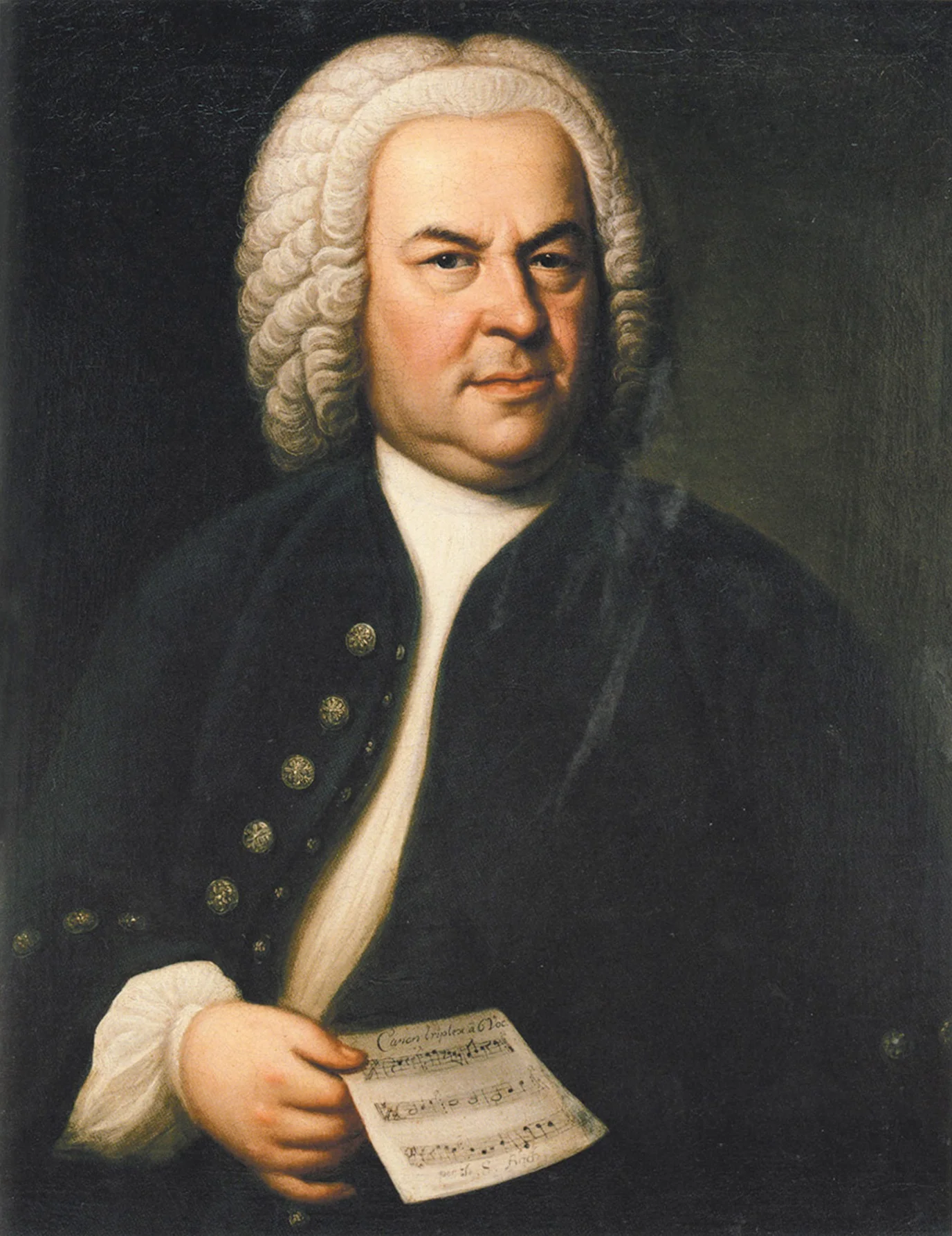
On 27 July 1733, in Dresden, forty-eight-year-old Johann Sebastian Bach stood before a new king. In one hand he held a bundle of manuscript pages; in the other, a petition. The manuscript contained portions of a mass — in plain terms, formal liturgical music for the church. The petition read: “I have suffered numerous unjust injuries in Leipzig.” The man posterity would call “the father of music” was bowing his head for a single title: Court Composer.
This article addresses two questions. First, why did Bach, a devout Lutheran, write Catholic liturgical music? Second, how did the Mass in B minor (BWV 232) grow into a colossus of twenty-seven movements lasting two hours? Whether you are new to classical music or not, this guide takes you from the backstory to the listening points in one continuous thread.
A Petition Staked on a Single Title
The story begins in Leipzig. Since 1723, Bach had served as Cantor of St Thomas’s Church — essentially the music director, running the choir and overseeing all church music. The problem was his relationship with the city authorities: disputes over pay, clashes over his authority to direct students, cuts to the music budget. Bach wanted to concentrate on music. To the bureaucrats, he was simply another employee.
Then he spotted a way out. If he could obtain the title of Court Composer from the Elector of Saxony — a figure of princely authority, roughly equivalent to a state governor — he would outrank the city officials. In February 1733, Elector Augustus II died. The entire territory entered five months of mourning, during which all public music was forbidden. Most musicians would have rested. Bach picked up his pen.
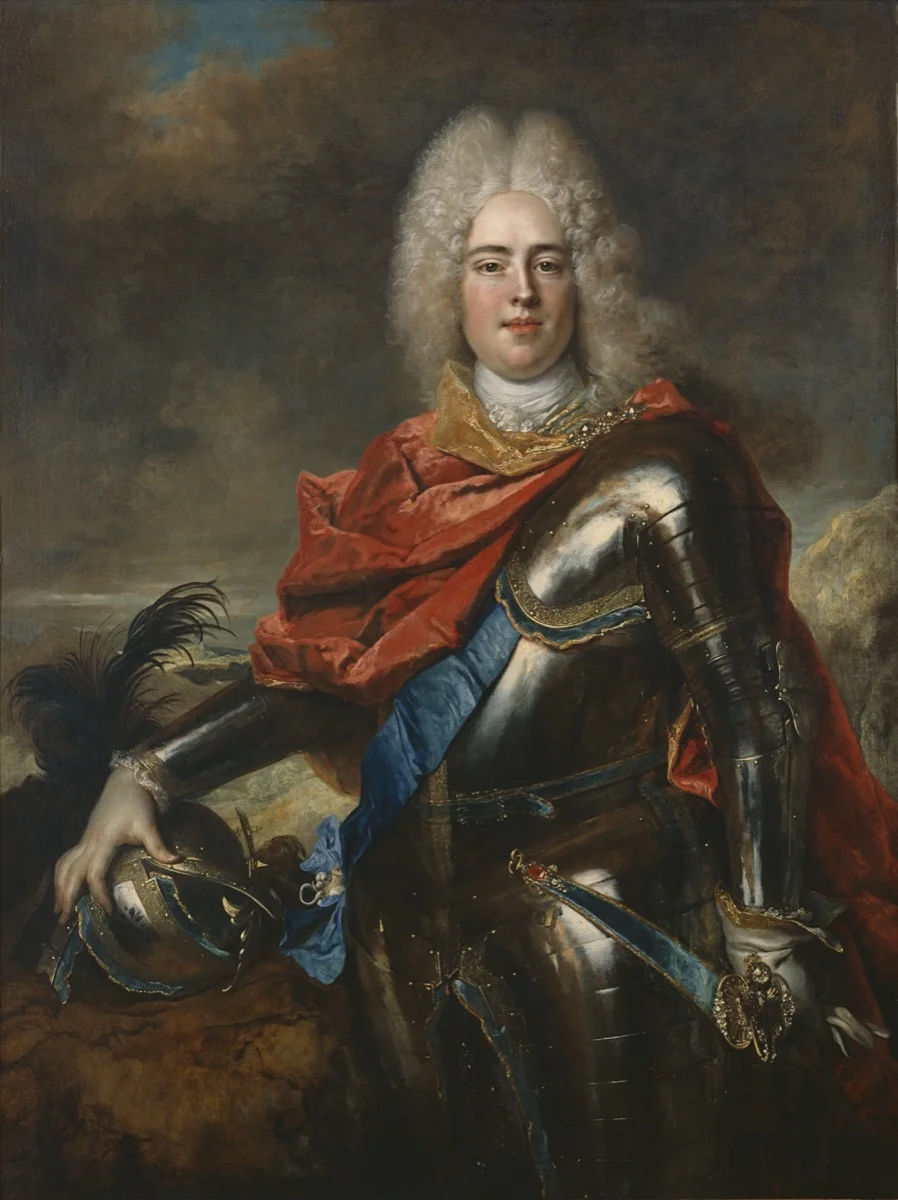
Here is where an intriguing calculation comes in. In Protestant (Lutheran) worship, only two sections of the mass were used: the Kyrie (“Lord, have mercy”) and the Gloria (“Glory to God”). But the new Elector, Augustus III, had converted to Catholicism. Bach tailored a Latin mass to a Catholic king’s tastes.
A Protestant musician offering a mass to a Catholic king — compromise of faith, or strategic calculation? Probably both. Bach was a devout Lutheran, but he was also a man who knew how to advance his career. One thing is certain: the music itself made no compromises.
The immediate outcome was inconclusive. Bach submitted his petition in 1733 but received no reply. He finally obtained the Court Composer title three years later, in 1736. Whether the music enclosed with the petition was ever actually performed remains uncertain. Scholar Arnold Schering argued for a performance in April 1733, but definitive evidence is lacking.
A Last Will and Testament: Completed in Near-Blindness
If the story ended there, it would be tidy enough. But the real drama begins here. The 1733 Kyrie and Gloria were merely the opening portion of a complete mass setting. Bach could not let the work go for the rest of his life.
In 1748–49, Bach’s body broke down rapidly. His eyesight was failing. Japanese Bach scholar Yoshitake Kobayashi analysed the handwriting of manuscripts from this period and reached a stark conclusion: the script grows increasingly rigid — a sign that his hand was trembling.
In this state, Bach attached all the remaining sections to the 1733 work: the Credo (Profession of Faith), Sanctus (Holy, Holy, Holy), and Agnus Dei (Lamb of God). Twenty-seven movements in all, roughly two hours of music, requiring five vocal soloists, two choirs, and a large orchestra including three trumpets and timpani. This was no ordinary church composition — it was operatic in scale.
And here lies the puzzle. A work of this magnitude could never have been used in a Lutheran service. So why did Bach complete it?
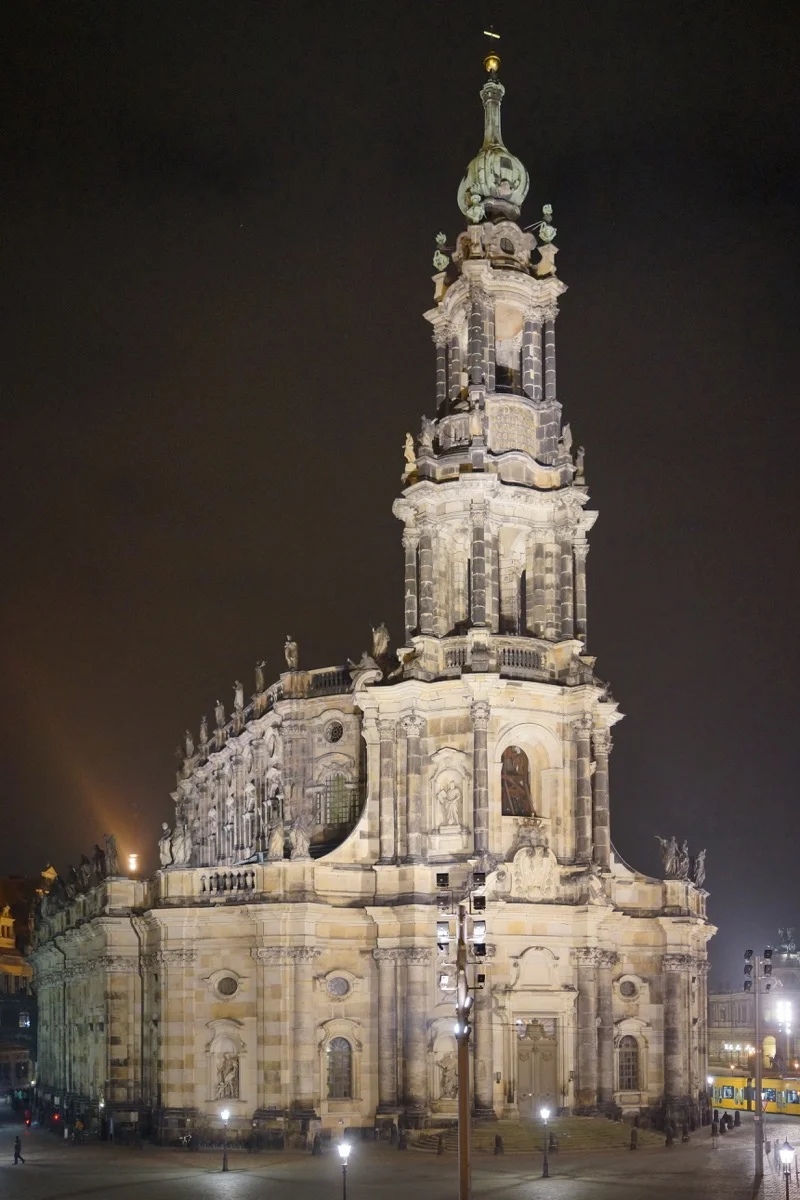
The leading hypothesis points to the Hofkirche, the Catholic court church then under construction in Dresden. Begun in 1738 and expected to open in the late 1740s, the building may have been the intended venue. But the church was completed in 1751; Bach died in July 1750. He missed his chance by a single step.
In 2013, musicologist Michael Maul proposed another theory: that Bach planned a performance at St Stephen’s Cathedral in Vienna in 1749. Whichever hypothesis holds, one fact is certain — Bach never heard a complete performance of the work in his lifetime.
The first complete performance took place a full 109 years after Bach’s death, in 1859. In those 109 years, Mozart was born and died, Beethoven wrote all nine symphonies, and the Romantic era bloomed and faded — while this score lay dormant. The manuscript was published in 1845, but no stage performance followed until 1859.
Christoph Wolff, one of the foremost Bach scholars, sees it this way: in his final years, Bach was absorbed in projects that consolidated the totality of his craft — The Art of Fugue being another example. The Mass in B minor belongs to the same impulse: an effort to gather the finest vocal music of a lifetime into a permanent form and bequeath it to posterity. In a word, it was a musical last will and testament.
After Bach’s death, his son Carl Philipp Emanuel inherited the manuscript. In the inventory of the estate, the work was listed as “the great Catholic Mass.” When it was first published in 1845, it received the title “Mass in B minor.” In fact, only five of the twenty-seven movements are in B minor; twelve are in D major. The name stuck simply because the opening Kyrie is in B minor.
The Genius of Recycling — His Final Notes
Here comes a surprising twist. A significant number of the movements in the Mass in B minor were not composed from scratch. Bach took movements from cantatas (vocal works written for church services) he had composed years earlier and adapted them to Latin texts. The technical term is “parody technique” — essentially, a self-remake.
Take the “Crucifixus” (He was crucified): its mournful repeating bass line is borrowed from Cantata BWV 12, composed in 1714. The “Sanctus” reworks a 1724 Christmas chorus, restructured in voicing and metre. For Bach, good music was too valuable to write once and file away.
This was not a matter of copy-and-paste. Bach preserved the structural skeleton of each original while altering instrumentation and key to fit the new text. Think of it as keeping a building’s load-bearing frame but completely redesigning the interior. In many respects, it is harder than starting from nothing.
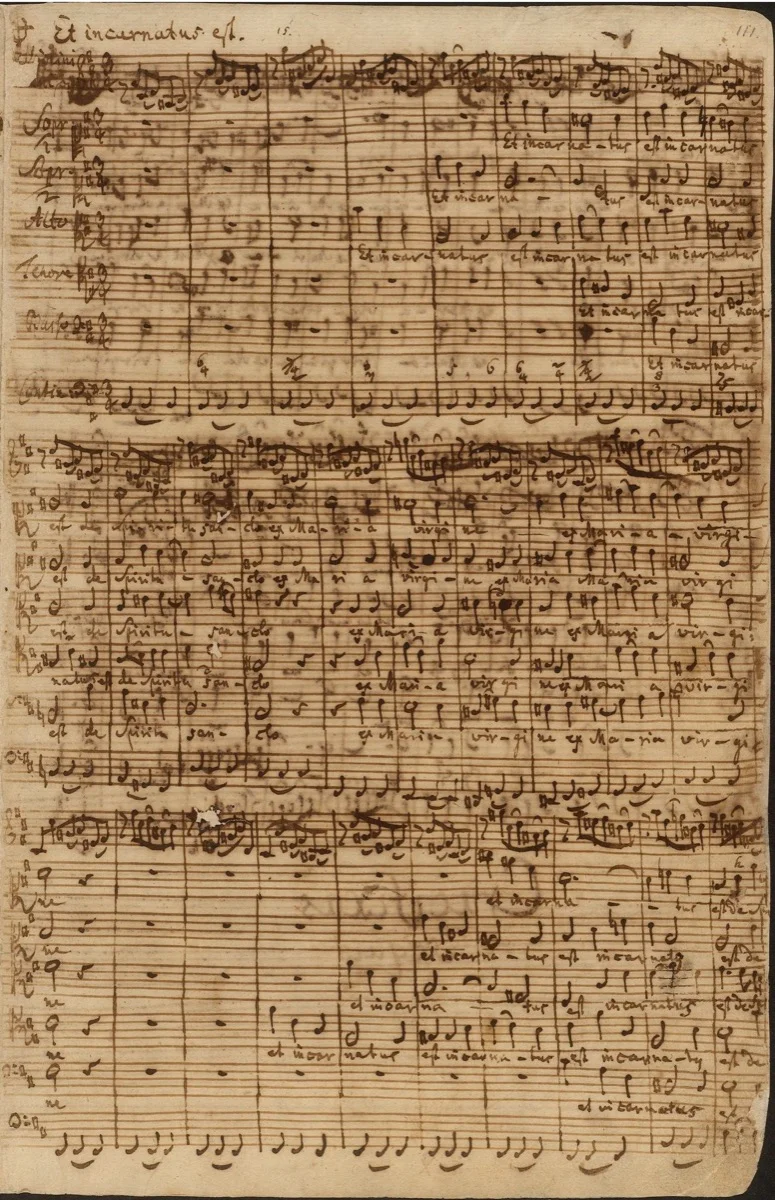
Genuinely new composition is present too. The “Et incarnatus est” (And was made incarnate) in the Credo is widely considered Bach’s final piece of original composition. Five vocal parts trace a descending line, painting in sound the image of God descending from heaven to earth. The last notes set down by a man whose sight was failing, written with a trembling hand, were a song about a god coming down to earth. It is impossible not to feel a chill.
Twenty-Seven Movements — How to Listen Without Losing Your Way
At two hours, this is admittedly not a casual listen. Here are the key landmarks.
The Mass in B minor divides into four main sections — because Bach organised the manuscript into four bundles. Only at the very end did he inscribe “S.D.G.” (Soli Deo Gloria — “To God alone be the glory”). The four bundles can be performed separately, but the signature appears only once, at the close — evidence that Bach conceived the whole as a single work.
The opening Kyrie (Lord, have mercy). Strings lay down a weighty introduction; the chorus enters with the dark resonance of B minor. A five-part fugue — the same melody entering at staggered intervals across five voices — is overwhelming. One minute in, you know: this beginning is a desperate prayer.
In the Gloria (Glory to God in the highest), the atmosphere flips. A radiant D-major chorus erupts, then suddenly falls quiet at “Et in terra pax” (And on earth, peace). The brilliant trumpets vanish; a solo voice lays itself gently over the strings. This dramatic chiaroscuro is Bach at his most characteristic.
The Credo (I believe) is the heart of the work. Pay special attention to the “Crucifixus” (He was crucified). A bass line descending by semitones repeats thirteen times — a device known as basso ostinato, or ground bass. With each cycle, another layer of anguish accumulates. When the chorus finally whispers “and was buried,” the music truly seems to descend into the tomb.
Next comes the “Et resurrexit” (And He rose again). Blazing D-major trumpets burst in without warning — from darkness into light. No matter how many times you hear it, this moment raises the hairs on your neck. It is a contrast Bach engineered with surgical precision.
One last thing. The closing movement, “Dona nobis pacem” (Grant us peace), shares its music with the earlier “Gratias agimus tibi” (We give You thanks). The work begins with a plea for mercy and ends with a melody of gratitude. The first and last pages of a two-hour journey are linked — by meticulous design.
In 2015, Bach’s autograph manuscript, held by the Berlin State Library, was inscribed on the UNESCO Memory of the World Register. Notes written by a trembling hand became part of humanity’s official memory. We may never know exactly whom Bach wrote this mass for — the court’s approval, the consecration of a new cathedral, or simply the desire to leave behind the greatest music he could. In the end, it became a prayer not for someone in particular, but for everyone.
Follow the Score
The full score is freely available at IMSLP. View the Mass in B minor, BWV 232 score on IMSLP
Frequently Asked Questions
Why did a Lutheran composer write a Catholic mass?
Initially, for pragmatic reasons: to obtain a Court Composer title. Because the new Elector was Catholic, Bach offered a Latin mass. Why he completed the entire setting at the end of his life is a matter of competing theories — the Dresden cathedral consecration, a planned Vienna performance, a desire to consolidate his life’s work. What is clear is that Bach aimed to leave behind a work of universal scope, transcending denomination.
Which movements should a newcomer start with?
If two hours feels daunting, try three movements first. Start with the Kyrie (No. 1) to feel the weight of the work. Move to the Crucifixus (No. 16) and experience the tension of its thirteen-fold descending bass. Then listen immediately to the Et resurrexit (No. 17) for the dramatic reversal. Those three alone will convey the Mass’s power.
Is it true that the autograph manuscript is a UNESCO World Heritage document?
Yes. In 2015, the autograph manuscript held by the Berlin State Library was inscribed on UNESCO’s Memory of the World Register. A masterwork of twenty-seven movements requiring five soloists and two choirs, first performed in full 109 years after the composer’s death — the designation underscores just how extraordinary its history is. 🎼 View the score — Free download on IMSLP
How long is Bach’s Mass in B Minor?
A complete performance of the Mass in B Minor typically lasts about two hours. The work is substantial, consisting of 27 distinct movements which are grouped into four major sections based on the Latin Mass Ordinary.
Was the Mass in B Minor written for Catholic or Lutheran services?
Although Bach was a Lutheran church musician, he composed the Mass in B Minor to the full Latin text of the Catholic Mass. He compiled the final version between 1748 and 1749, likely as a summation of his life’s work in sacred music, as it was never performed in its entirety during his lifetime.
Why is Bach’s Mass in B Minor considered such a great masterpiece?
The Mass is regarded as a pinnacle of classical music for its grand scale and profound synthesis of musical styles, drawing from Bach’s entire career. Completed in 1749, it stands as a comprehensive anthology of his compositional genius, from intricate counterpoint to majestic choral fugues and expressive arias.
What is the Sanctus in the Mass in B Minor?
The Sanctus is one of the work’s most brilliant movements, notable for its scoring for a six-part choir and a festive orchestra with three trumpets. Bach had composed this specific section earlier in his career, in 1724, before incorporating it into the complete mass.