In December 1884, in the provincial German town of Kassel, a twenty-four-year-old assistant conductor sat in his office and wrote poetry. Not letters, not program notes — verses about a young man rejected by the woman he loved, walking out alone into the fields. The conductor was Gustav Mahler. Those poems became four songs, and those four songs became the raw material for his First Symphony, the work that launched one of the great careers in orchestral music.
That is the whole story of Lieder eines fahrenden Gesellen in one line: a failed love affair seeded a symphony. If you have ever wondered why a melody in Mahler’s First sounds like a folk song, or why the English title feels slightly off, or which recording to start with — this is the piece that answers all three at once.
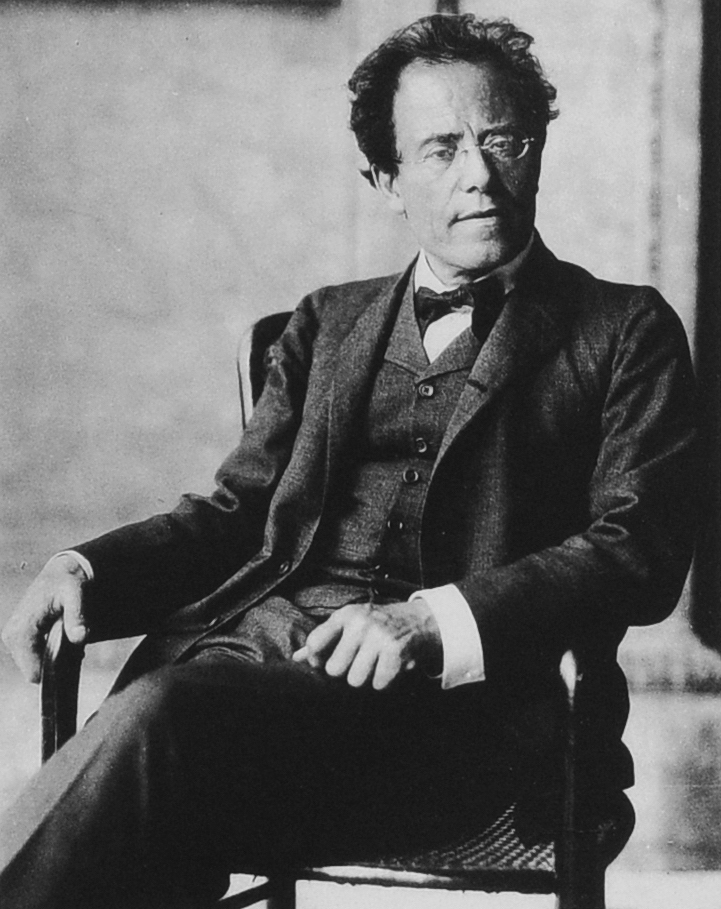
| Composer | Gustav Mahler (1860–1911) |
| Work | Lieder eines fahrenden Gesellen (Songs of a Wayfarer) |
| Composed | Songs with piano across 1884 and 1885; orchestrated by 1896 |
| Orchestral first performance | March 16, 1896, Berlin — Mahler conducting, Anton Sistermans, baritone |
| Format | Four songs for solo voice and orchestra |
| Duration | Roughly 16 to 18 minutes |
Why Wayfarer Is a Bad Translation
Start with the title, because the usual English rendering hides the point. Fahrender Geselle does not mean a dreamy wanderer. In nineteenth-century Germany a Geselle was a journeyman — a craftsman who had finished his apprenticeship but had not yet earned the rank of master, and who therefore traveled from town to town to sharpen his trade before settling. So a more honest translation is closer to Songs of a Travelling Journeyman.
That distinction is not pedantry. It is the key to the whole cycle. Mahler at twenty-four was himself exactly that: trained, gifted, and stuck in the middle rank, moving between opera posts he did not control. The man in these songs is not just lovesick. He is unsettled, unplaced, between stations in life — and so was the composer who invented him. Once you hear the title correctly, the piece stops being a sad-boy walking tour and becomes something sharper: a self-portrait of an artist who has not arrived yet.
The Symphony No. 1 Connection — the Real Reason to Care
Here is the payoff that unlocks two masterpieces at once. Once you know this song cycle, Mahler’s Symphony No. 1 makes a completely different kind of sense.
The main tune of the second song, the sunny morning walk, becomes the principal theme of the symphony’s first movement, nearly note for note. And the opening material of the fourth song, the exhausted linden-tree music, turns into the basis of the symphony’s third-movement funeral march. Same notes, transformed meaning. In the song, the melody is one heartbroken man taking a walk. In the symphony, it arrives as spring itself — nature waking up. In the song, the linden tree is one person surrendering to grief. In the symphony, that material becomes a whole funeral procession. Mahler is not recycling lazily. He is arguing that a private story is also everyone’s story, and he proves it by playing the same notes and making them mean two different things.
Kassel: Ambition, a Bad Job, and Johanna Richter
Mahler arrived in Kassel as second conductor at the Royal Theatre in his early twenties. Translate that into modern terms: assistant conductor at a mid-size regional opera house, doing the unglamorous grind while the boss took the bows. The town was provincial, the administration counted every mark, and Mahler had artistic standards nobody around him shared. He wanted full forces and correct tempos; management wanted a season that stayed on budget. He clashed with them constantly.
Into that frustration walked Johanna Richter, a soprano at the theatre. Mahler fell hard, and the feeling ran entirely one way. She stayed friendly and nothing more, while he wrote increasingly desperate letters to his family describing a loneliness he could not shake. The desperation turned into verse, and the verse turned into music. The cycle is, in the most literal sense, a diary set to an orchestra.
A Composer Who Wrote His Own Words
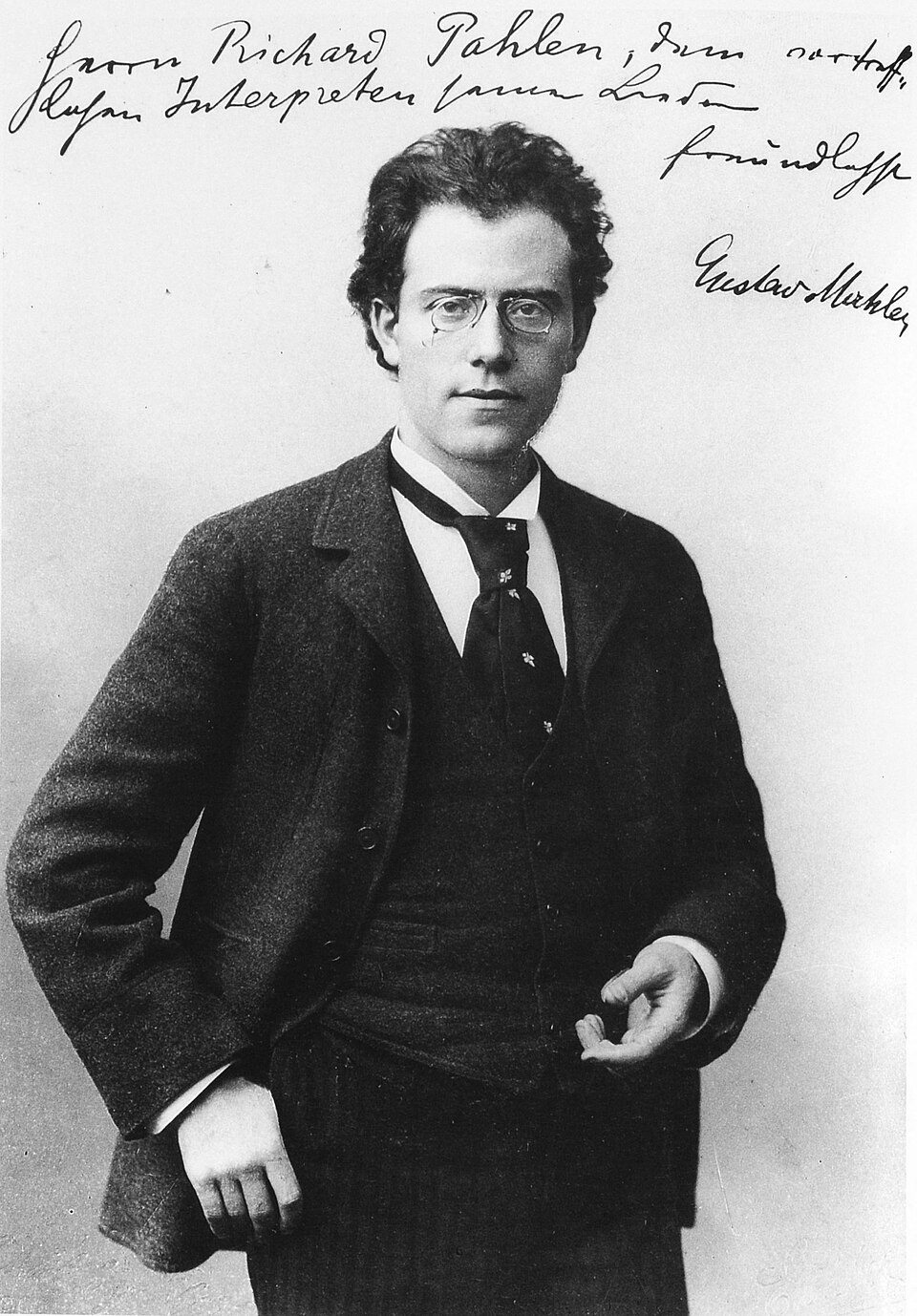
Most song composers set someone else’s poetry. Schubert reached for Goethe; Schumann reached for Eichendorff. Mahler did something rarer — he wrote the texts himself. Not from nothing: he soaked up the tone and vocabulary of Des Knaben Wunderhorn, the early-nineteenth-century anthology of German folk poetry compiled by Achim von Arnim and Clemens Brentano, a collection he would return to for the rest of his life. But the Wayfarer words are his own invention, folk in flavor and personal in a way no borrowed folk text could be. When the last song sends the young man out into the wide world because of a woman’s two blue eyes, you are not reading an allegory. You are reading the composer’s own bruise.
What to Listen For
The music never comes home. This is the cycle’s structural secret, and you do not need to read a score to feel it. Each of the four songs ends in a different key from the one it started in — the first moves from D minor to G minor, the second from D major to F-sharp major, the third from D minor to E-flat minor, the fourth from E minor to F minor. Composers call this progressive tonality. In plain terms: the music keeps walking away from where it began and never returns to its starting point, exactly like the journeyman who can never go back to the life he had before the wedding. The form is the story.
The orchestra behaves like a chamber group. Mahler scores the cycle for modest forces — paired woodwinds, a light brass section, harp, timpani, triangle, and strings, with no heavy artillery. What matters is how he uses them. Instead of blending everyone into one wall of sound, he keeps the instruments as separate voices in conversation: a line begins in the oboe, passes to the clarinet, and is picked up by a solo violin. The orchestra does not accompany the singer so much as think alongside him. That habit became the signature of Mahler’s mature symphonies, and you can hear it being born here.
Song 1 — When My Love Has Her Wedding Day
The opening is a gut punch: the woman he loves is marrying someone else, today. The key is D minor, but a wedding rhythm dances underneath the grief, which is the point — a joyful occasion wrapped around a mourning interior. Listen to the oboe, which imitates birdsong. In German Romantic music birdsong is usually a comfort; here it is unbearable, because the brighter the world looks, the more alone the grieving man feels.
Song 2 — I Walked Across the Fields This Morning
Now the mood flips to D major. Dew, birds, flowers, a beautiful countryside — after that dark opening it feels almost like happiness, and the near-miss is the whole idea. The narrator asks himself whether all this loveliness means he is finally happy, and he cannot answer; the song ends with the question still hanging. This is also the melody Mahler lifted straight into his First Symphony, so if the tune sounds familiar, that is why. Hearing the song and the symphony back to back changes how you hear both.
Song 3 — I Have a Gleaming Knife
Here the cycle breaks open. The first two songs process grief through pretty imagery; this one refuses to. The music turns jagged and unstable, the vocal line leaps across wide intervals, and the harmony never settles. This is the moment Mahler pushes toward something the next generation — Schoenberg, Berg, the expressionists — would take much further: music that declines to resolve on purpose. Singers often name it the hardest song in the set, because the emotional range is extreme and the leaps give the voice no safe middle ground.
Song 4 — The Two Blue Eyes of My Love
Exhaustion, in F minor. The wanderer reaches a linden tree and lies down to sleep. The orchestration here is Mahler at his most transparent: strings and woodwinds trading threads of melody, chamber music at orchestral scale. The ending is the reason people hold their breath in the hall — the texture thins and thins until only the low strings are left, and then nothing. Is the wanderer at peace, or simply too tired to go on? Mahler refuses to say, and that refusal is the point.
More Than a Decade in a Trunk
Mahler drafted the songs with piano accompaniment across 1884 and 1885 — and then left them in his travelling trunk. The reason is human: around the same time his large cantata Das klagende Lied had been passed over for a major Vienna prize, and the snub stung. So he shelved the songs and poured his ambition into a bigger statement instead. That statement was the First Symphony, which he first performed in 1889.
Only after the symphony existed did he go back to the songs, orchestrating and revising them across the early 1890s. The orchestral version waited until March 16, 1896, when Mahler conducted its first performance in Berlin with the Dutch baritone Anton Sistermans. (For years the wrong name circulated in program notes; the documented soloist is Sistermans.) The long delay is exactly why the symphony borrowed from the songs and not the other way around — and why the orchestral cycle sounds like a man looking back on an old wound rather than nursing a fresh one. The piano version is rawer and closer to the diary. The orchestral version has distance built into it.
Baritone or Mezzo-Soprano?
Mahler wrote the cycle for a male narrator, and a baritone sang the first performance — but he also marked the score for mezzo-soprano or baritone, which opened the door to women. The result is a discography split down the middle for a century: Fischer-Dieskau, Hermann Prey, and Thomas Hampson on one side; Christa Ludwig, Janet Baker, and Dame Janet’s successors on the other.
My honest take: both work, and they work differently. With a baritone the cycle feels like autobiography — a specific young man, this exact heartbreak. With a mezzo it widens into something about anyone driven out into the world by a loss they could not control. Neither is more correct. You are choosing between intimacy and universality, and you should own the choice rather than pretend there is a right answer.
Recommended Recordings
Dietrich Fischer-Dieskau / Wilhelm Furtwängler / Philharmonia Orchestra (1952, EMI)
The reference account, and still the one to measure others against. Fischer-Dieskau treats every syllable as if it had to fall in exactly this order, and Furtwängler keeps the orchestra restrained on the surface with something charged running underneath. The mono sound is a genuine compromise; the performance is not one. Start here if you want the words to hit hardest.
Christa Ludwig / Sir Adrian Boult / Philharmonia Orchestra (1958, EMI)
Boult keeps the orchestra moving and never lets it drag, and Ludwig’s voice is warm and authoritative throughout. The oboe in the first song is devastating. This is the mezzo case made at its most convincing.
Janet Baker / John Barbirolli / Hallé Orchestra (EMI, late 1960s)
For British listeners this is often the Wayfarer — an English mezzo and a beloved English conductor, and the recording many of them met first. Baker brings a plain-spoken tenderness that never tips into self-pity, and Barbirolli’s Hallé plays with unforced warmth. If the Ludwig feels monumental, this one feels intimate and lived-in. ▶ Listen on YouTube
Thomas Hampson / Leonard Bernstein / Vienna Philharmonic (1990, Deutsche Grammophon)
The modern reference. Hampson brings an American directness to the German text that some hear as plainness and I hear as clarity, and Bernstein draws playing of enormous detail and weight from the Vienna Philharmonic. If you want a recording that sounds like the concert hall rather than the archive, this is the one. ▶ Listen on YouTube
How the English-Speaking World Meets This Piece
Beyond the studio classics, the cycle reaches English-speaking listeners by a few well-worn paths. In Britain, the Janet Baker and Barbirolli recording above is practically the national entry point — for a whole generation of UK listeners it defined what the songs should sound like.
There is also a smaller-scale route worth knowing. Arnold Schoenberg arranged the cycle for a chamber ensemble around 1920 for his Society for Private Musical Performances, the Vienna concert club he ran to give members a close, careful hearing of new and recent music. The reduced version trades orchestral heft for transparency; the counterpoint gets clearer and the singer is never buried. It shows up regularly in chamber programs in the US and UK, and it is the version to seek out if you want to hear the individual voices Mahler wove together.
And in the United States the cycle most often arrives as a concert curtain-raiser — the orchestral song set that opens the first half before a symphony after the interval — or on record through Bernstein’s Vienna cycle. However you meet it, the reward is the same: a compact story that keeps opening up the more you know about where it came from and where it went next.
Where to Go Next
If this cycle hooked you, follow the thread forward into the work it built: our guide to Mahler’s Symphony No. 1 traces exactly how these songs became a symphony. And if you want to hear how far Mahler took the idea of private grief turned into public statement, go on to Mahler’s Symphony No. 2, the Resurrection, where the same instinct swells to an hour and a half and a full chorus.